Search results
Search for "anode" in Full Text gives 183 result(s) in Beilstein Journal of Nanotechnology.
Gas sorption porosimetry for the evaluation of hard carbons as anodes for Li- and Na-ion batteries
Beilstein J. Nanotechnol. 2020, 11, 1217–1229, doi:10.3762/bjnano.11.106
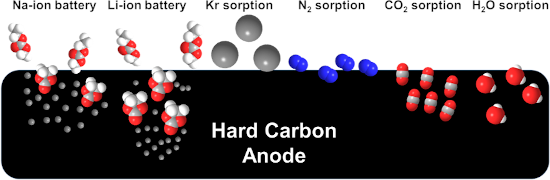
- -ku, Nagoya 464-8601, Japan 10.3762/bjnano.11.106 Abstract Hard carbons are promising candidates for high-capacity anode materials in alkali metal-ion batteries, such as lithium- and sodium-ion batteries. High reversible capacities are often coming along with high irreversible capacity losses during
- area (SSA) of the anode materials as well as the deposition of amorphous carbon films were shown to reduce irreversible capacity losses [22][23]. Ji et al. found that lower total pore volumes (determined by N2 sorption) gave rise to increased reversible sodium storage capacities for sucrose-derived HCs
- molecules can penetrate. It is important to highlight that the deviations are not artefacts from the applied models, but are real effects resulting from the unequal accessibility of the small pores for the different gas molecules. In HC anode research the use of CO2 sorption rather than N2 sorption thus


Observation of unexpected uniaxial magnetic anisotropy in La2/3Sr1/3MnO3 films by a BaTiO3 overlayer in an artificial multiferroic bilayer
Beilstein J. Nanotechnol. 2020, 11, 651–661, doi:10.3762/bjnano.11.51
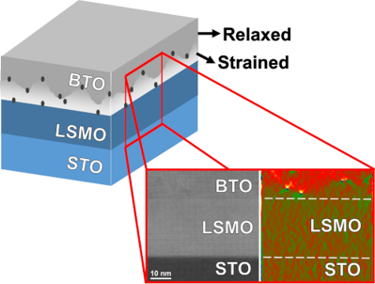
- (220) monochromator selects the Kα1 radiation from a Cu anode, providing an X-ray beam with a wavelength of λ = 1.54056 Å. Local analysis of the crystalline structure of the bilayers was carried out by HAADF-STEM in a probe-corrected FEI Titan Low Base 60-300 microscope operated at 300 kV with a





Comparison of fresh and aged lithium iron phosphate cathodes using a tailored electrochemical strain microscopy technique
Beilstein J. Nanotechnol. 2020, 11, 583–596, doi:10.3762/bjnano.11.46
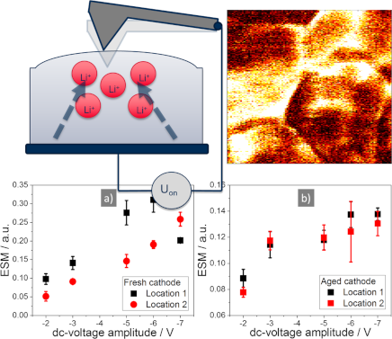
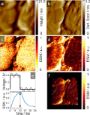
- an increase in electrochemical activity and higher lithium concentration in the anode. In general, the ionic mobility, concentration and activity in the probed volume and the material structure influence the ESM signal. Several groups already investigated LFP by ESM measurements. Chen et al. studied
- the aged full cell after cycling. Due to the anode contribution to the capacity loss in the commercial full cell setup, the cathode was additionally analysed separately. The cathode ageing is observed in the Nyquist plot in Figure S2 from the fresh and aged cathode vs lithium metal reference electrode
- anode [52][53]. The aged sample exhibits a larger first semi-circle due to ageing and the second semi-circle stays nearly constant, since the lithium reference anode is not affected by the cycling. In Figure S3, the fresh and aged cathode are cycled in a three-electrode setup combined with a fresh anode



Evolution of Ag nanostructures created from thin films: UV–vis absorption and its theoretical predictions
Beilstein J. Nanotechnol. 2020, 11, 494–507, doi:10.3762/bjnano.11.40
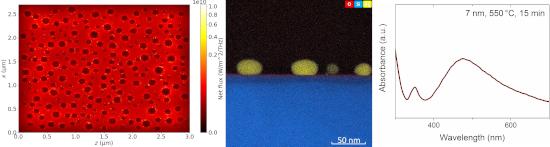
- spectrometer with 128-channel collector). XPS measurements were performed at room temperature in ultra-high vacuum (ca. 10−9 mbar). The photoelectrons were excited by an Mg Kα X-ray source. The X-ray anode was operated at 15 keV and 300 W. An Omicron Argus hemispherical electron analyzer with a round aperture




Electrochemically derived functionalized graphene for bulk production of hydrogen peroxide
Beilstein J. Nanotechnol. 2020, 11, 432–442, doi:10.3762/bjnano.11.34
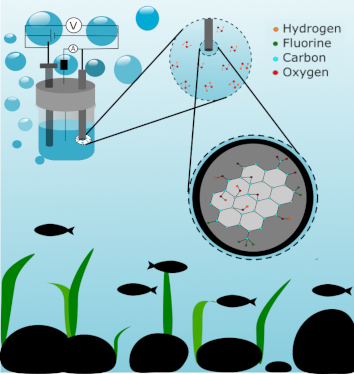
- fluoride and hydroxide ions at the anode (i.e., the higher the hydroxide ions the faster the exfoliation), which is in line with our recent report [43]. As described earlier, transmission electron microscopy (TEM) images of EEG samples indicate that the average lateral size is about 3–5 µm (more images in
- catalysts. The weight of the anode (graphite electrode) used for the electrochemical exfoliation was ≈0.374 g and the 1–2 h of exfoliation resulted in the complete consumption of graphite, delivering ≈0.180 ± 0.005 g of exfoliated functionalized graphene. Hence the average yield of this process was found to
- . After the complete consumption of the graphite rod (anode), a black precipitate was collected from the electrolyte through centrifugation and subsequently washed with 1 M H2SO4 followed by deionized water until the solution becomes neutral pH. The powder was dried at 60 °C for 12 h and used for further


Implementation of data-cube pump–probe KPFM on organic solar cells
Beilstein J. Nanotechnol. 2020, 11, 323–337, doi:10.3762/bjnano.11.24
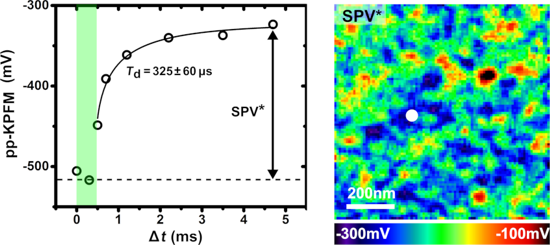
- levels of holes and electrons upon illumination, symbolized by dotted lines. (b) Organic BHJ solar cell and experimental configuration. The sample is illuminated in backside geometry. The transparent anode, the hole collecting electrode made of indium tin oxide coated with PEDOT:PSS, is grounded. The





The different ways to chitosan/hyaluronic acid nanoparticles: templated vs direct complexation. Influence of particle preparation on morphology, cell uptake and silencing efficiency
Beilstein J. Nanotechnol. 2019, 10, 2594–2608, doi:10.3762/bjnano.10.250
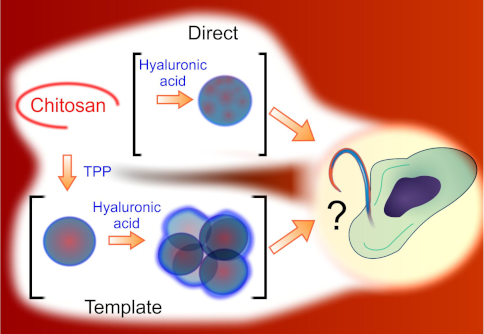
- water, 5 min with 20 mM phosphate buffer at pH 7.4 (running buffer), 1 min with 0.1 M NaOH, 1 min with deionized water, and finally 1.5 min with the running buffer. Each sample was then injected at 0.5 psi for 10 s, applying 15 kV between the anode and the injection site (normal polarity) for 60 min. At




Antimony deposition onto Au(111) and insertion of Mg
Beilstein J. Nanotechnol. 2019, 10, 2541–2552, doi:10.3762/bjnano.10.245
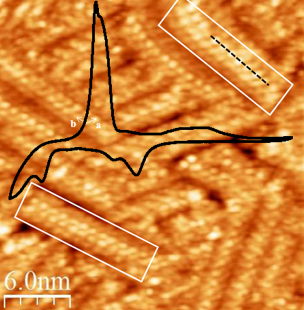
- , Egypt 10.3762/bjnano.10.245 Abstract Magnesium-based secondary batteries have been regarded as a viable alternative to the immensely popular Li-ion systems owing to their high volumetric capacity. One of the largest challenges is the selection of Mg anode material since the insertion/extraction
- “environmental friendly, non-toxic” alternative compared to Li-ion systems owing to their high volumetric capacity [1][2][3][4]. Unlike lithium, magnesium has no tendency to form dendrites during recharge [5]; but on the other hand, the Mg anode is covered with an insulation layer, which is different from the
- formation of a solid electrolyte interface (SEI) layer in Li systems. One of the main challenges in the commercialization of Mg-ion batteries is the incompatibility of the magnesium anode with the electrolytes because of the formation of this Mg2+ film. Recently, Sb has been suggested as an alternative









Design and facile synthesis of defect-rich C-MoS2/rGO nanosheets for enhanced lithium–sulfur battery performance
Beilstein J. Nanotechnol. 2019, 10, 2251–2260, doi:10.3762/bjnano.10.217
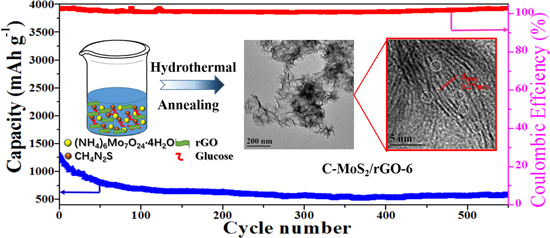
- discharge products (Li2S2 and Li2S) and sulfur result in a slow charge and discharge process and a low specific capacity [3]. Intermediate products of battery charge and discharge (Li2Sn, where 3 ≤ n ≤ 8) are soluble in the electrolyte and can also migrate to the lithium metal anode and precipitate there [4


A novel all-fiber-based LiFePO4/Li4Ti5O12 battery with self-standing nanofiber membrane electrodes
Beilstein J. Nanotechnol. 2019, 10, 2229–2237, doi:10.3762/bjnano.10.215
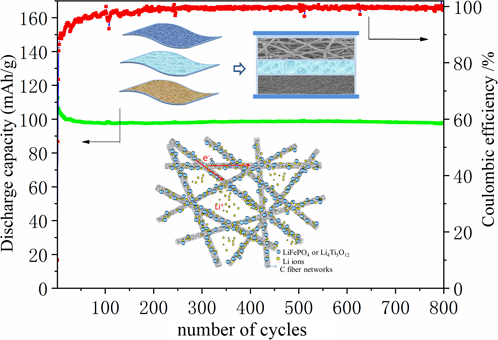
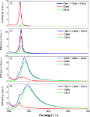
- reductive inert atmosphere. However, TiO2 itself is a relatively stable anode material [42], so the appearance of such impurities would not affect the performance of the electrode. The Raman spectra of the two fiber materials in Figure 6 show two characteristic peaks at 1350 cm−1 and 1580 cm−1 corresponding
- . Table S1 in Supporting Information File 1 lists the electrochemical performance obtained in some related works. It can be seen that the flexible self-standing LiFePO4/C fiber membrane cathode and Li4Ti5O12/C fiber membrane anode in this work show a comparable electrochemical performance. In addition
- assembled in an Ar-filled glovebox by using lithium foil as anode and 1 M LiPF6 electrolyte (ethylene carbonate/dimethyl carbonate/ethyl methyl carbonate = 1:1:1). A Celgard 2400 polypropylene membrane was used as separator. The cyclic voltammetry and electrochemical impedance spectroscopy measurements were


The importance of design in nanoarchitectonics: multifractality in MACE silicon nanowires
Beilstein J. Nanotechnol. 2019, 10, 2094–2102, doi:10.3762/bjnano.10.204

- anisotropic wet etching technique where the sculpting of the nanostructures is catalyzed by a discontinuous thin film of noble metal deposited on a substrate. The metal works as a local cathode where the reduction of oxidants occurs. The underneath semiconductor is the local anode where a charge-mediated




Facile synthesis of carbon nanotube-supported NiO//Fe2O3 for all-solid-state supercapacitors
Beilstein J. Nanotechnol. 2019, 10, 1923–1932, doi:10.3762/bjnano.10.188
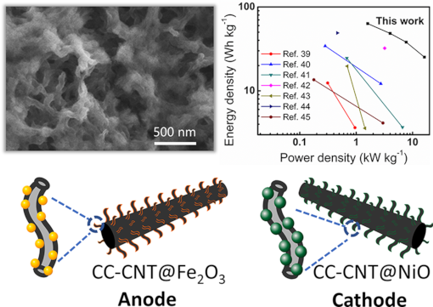
- carbon cloth–carbon nanotube@metal oxide (CC-CNT@MO) three-dimensional structures combine the high specific capacitance and rich redox sites of metal oxides with the large specific area and high electrical conductivity of carbon nanotubes. The prepared CC-CNT@Fe2O3 anode reaches a high capacity of 226
- this method to prepare CNT@NiO composites. NiO is a potential positive material offering high theoretical capacity, nontoxicity, and environmentally benign nature [25]. Through aqueous reduction, Fe2O3-coated CNT on carbon cloth (CC-CNT@Fe2O3) as anode and NiO-coated CNT on carbon cloth (CC-CNT@NiO) as
- Discussion Figure 1 shows the process of synthesizing cathode and anode, and finally, the asymmetric supercapacitor. The details can be seen in the Experimental section. Anode material CC-CNT@Fe2O3 CNTs were grown on CC by chemical vapour deposition (CVD). As shown in Figure 2a, CNTs grow homogeneously with


TiO2/GO-coated functional separator to suppress polysulfide migration in lithium–sulfur batteries
Beilstein J. Nanotechnol. 2019, 10, 1726–1736, doi:10.3762/bjnano.10.168
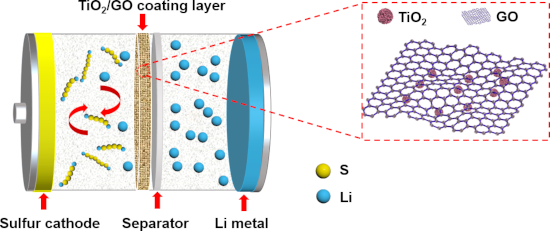
- but suffer from poor cyclic performance due to the dissolution of intermediate polysulfides. Herein, a lightweight nanoporous TiO2 and graphene oxide (GO) composite is prepared and utilized as an interlayer between a Li anode and a sulfur cathode to suppress the polysulfide migration and improve the
- issues, researchers have adopted various techniques, such as optimization of the cathode material [16][17][18], incorporation of electrolyte additives [19], and protection of the anode [20]. Recently, much attention has been directed to the development of a functional separator, which serves as an
- /GO-coated separator was introduced between the Li anode and sulfur cathode as a highly efficient polysulfide absorber. The TiO2/GO composite was prepared by dealloying, as reported elsewhere [35], and subsequent spray drying. It has been demonstrated that the utilization of the TiO2/GO composite


Tuning the performance of vanadium redox flow batteries by modifying the structural defects of the carbon felt electrode
Beilstein J. Nanotechnol. 2019, 10, 1698–1706, doi:10.3762/bjnano.10.165
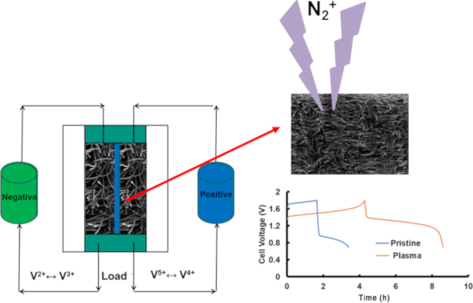
- (NHE)) reaction is very close to HER (0 V vs NHE). To minimize the HER, the negative electrode surface structure should be tuned in such a way that it tends to preferably bind V3+/V2+ ions over H+ ions. Creating oxygen functional groups on the surface of the anode is one way to achieve this [5][6
- -treated electrode is higher than that with the heat-treated electrode. Therefore, for achieving the optimum VRFB performance, the electrodes, especially the anode, must be tuned for defects such as N-substitution as well as oxygen functionality (specifically –O–C=O groups). The present study predicts that
- the combination of various plasma techniques (O2/N2) and thermal activation could produce an ideal electrode for the anode in VRFB. Conclusion When PAN-based GFD-type felts are subjected to N2 plasma treatment, defects are formed on the carbon felt. In addition to the increase in the amount of


Nanoporous smartPearls for dermal application – Identification of optimal silica types and a scalable production process as prerequisites for marketed products
Beilstein J. Nanotechnol. 2019, 10, 1666–1678, doi:10.3762/bjnano.10.162
- = 2–60°) was applied and the goniometer was equipped with a Cu anode (Cu Kα, λ= 0.15406 nm) at a voltage of 40 kV and current of 35 mA. Light microscopy (LM) and scanning electron microscopy (SEM) Light microscope imaging was performed using a Motic microscope (BA210, Motic Deutschland GmbH, Germany





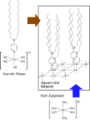
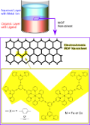
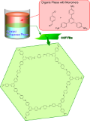
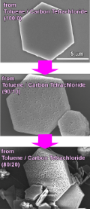
Materials nanoarchitectonics at two-dimensional liquid interfaces
Beilstein J. Nanotechnol. 2019, 10, 1559–1587, doi:10.3762/bjnano.10.153
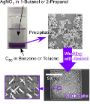
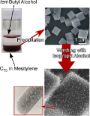
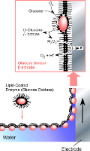
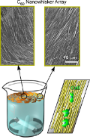
- confirmed by steady-state optical spectroscopy. Photovoltaic cells with one-dimensional C60 nanorods as active layer sandwiched by an indium tin oxide anode and an aluminium cathode exhibited enhanced photovoltaic capabilities. It also led to a significant enhancement of photogenerated charge carriers as













Rapid thermal annealing for high-quality ITO thin films deposited by radio-frequency magnetron sputtering
Beilstein J. Nanotechnol. 2019, 10, 1511–1522, doi:10.3762/bjnano.10.149

- spectroscopy (XPS) method. A SPECS spectrometer with a PHOIBOS RX 150 analyzer and a Specs XR–50 M source was operated with a monochromatic Al anode (hν = 1486.61 eV) at 300 W. The charging effect of the sample deposited onto the quartz substrate is compensated for with a Specs FG15/40 flood gun. The chemical


Synthesis of P- and N-doped carbon catalysts for the oxygen reduction reaction via controlled phosphoric acid treatment of folic acid
Beilstein J. Nanotechnol. 2019, 10, 1497–1510, doi:10.3762/bjnano.10.148
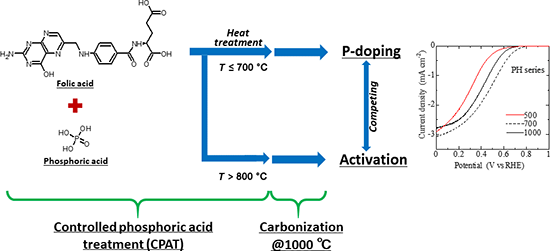
- fuel cells (PEFCs), both anode and cathode reactions are catalyzed by Pt. Compared to the anode reaction, the cathode reaction, namely the oxygen reduction reaction (ORR), is rather slow and hence requires the use of larger amounts of Pt [1], which increases the cost of PEFCs and prevents their wide
- activity, as the cathode catalyst and a commercial Pt/C catalyst as the anode catalyst is presented in Figure 10. The initial voltage was 0.86 V and the cell voltage decreased the current density. The red curve indicated the power density of the cell, which showed a maximum value of 141 mW/cm2. Discussion
- ((5 wt % solution of lower aliphatic alcohols, Aldrich), ionomer/catalyst weight ratio ≈ 0.7:1) was sprayed onto a diffusion layer (29BC, SGL CARBON GmbH). A Pt/C catalyst was used as the anode (catalyst loading = 0.3 mg·cm−2), and PH-700 was used as the cathode (catalyst loading = 3.5 mg·cm−2). A 5





Flexible freestanding MoS2-based composite paper for energy conversion and storage
Beilstein J. Nanotechnol. 2019, 10, 1488–1496, doi:10.3762/bjnano.10.147
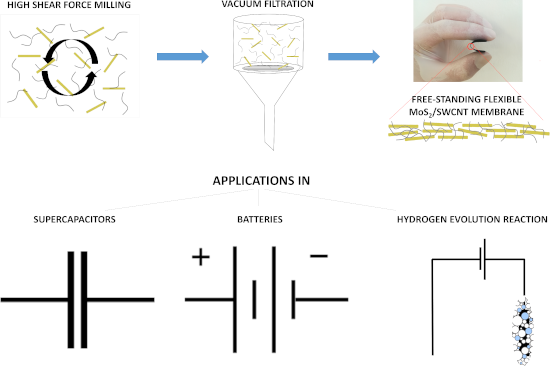
- extend their application to large energy storage systems or to the electromobility sector, an improvement in the energy storage capacity is necessary. Layered dichalcogenide materials such as molybdenum sulfide (MoS2) are promising candidates for the replacement of the commercial anode material graphite
- high flexibility and combines the high conductivity of SWCNTs and electrochemical potential of MoS2. We also show that the material finds use as an anode in LIBs, supercapacitor electrodes and HER catalyst. The application for LIBs seems particularly promising as this composite material requires no
- -based composite paper was also tested as an anode material for LIBs. Hence, the MoS2-based composite paper was used directly as an anode without any binder, carbon additive or a Cu-foil current collector. Figure 5a shows the first four cycles of the cyclic voltammetry (CV) curves of the MoS2-based


Hierarchically structured 3D carbon nanotube electrodes for electrocatalytic applications
Beilstein J. Nanotechnol. 2019, 10, 1475–1487, doi:10.3762/bjnano.10.146
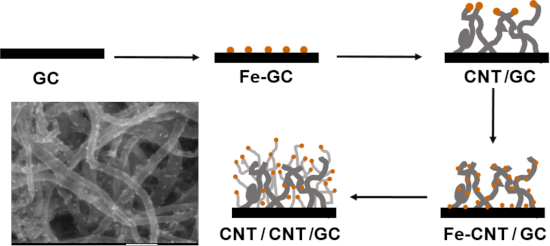
- energy conversion and storage, since they, in addition to their nonpolluting nature and low operating temperature, run on an easily handled and cheap liquid fuel. However, the slow kinetics of methanol oxidation at the anode and the methanol crossover through the electrolyte membrane from anode to





Multicomponent bionanocomposites based on clay nanoarchitectures for electrochemical devices
Beilstein J. Nanotechnol. 2019, 10, 1303–1315, doi:10.3762/bjnano.10.129
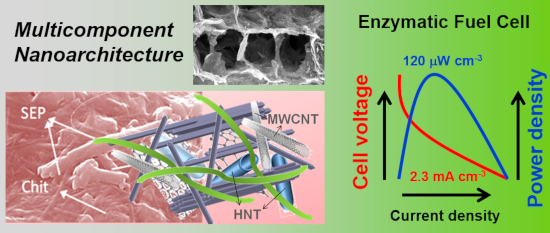
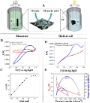
- strong and, in some cases, might cause the loss of the biological functionality [60]. Application of foam-GOx as anode in a membrane-less and open-air biofuel cell It is well known that redox mediators are required for most of the GOx-based bioelectrocatalysis applications to guarantee an efficient
- [71]: The reaction occurring on the anode surface is: while the Pt cathode catalyses the reaction: Linear sweep voltammetry (LSV) experiments were carried out to evaluate the electrocatalytic properties of the bionanocomposite Foam-GOx as 3D bio-anode. Figure 5D displays the catalytic behaviour during
- cathode surface. The presence of the acidic medium, in fact, can favour the proton migration from the anode to the cathode surface leading to an increase of the half-cell potential [70]. The power output of the EBC was different for the two pH values. Compared to pH 7 the cell working at pH 5.5 exhibits



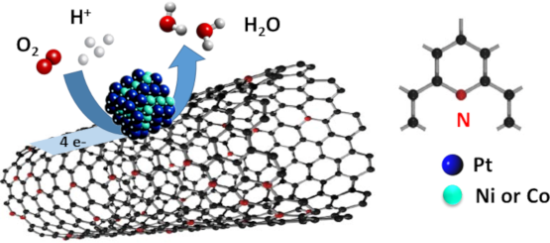
Alloyed Pt3M (M = Co, Ni) nanoparticles supported on S- and N-doped carbon nanotubes for the oxygen reduction reaction
Beilstein J. Nanotechnol. 2019, 10, 1251–1269, doi:10.3762/bjnano.10.125
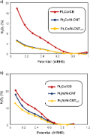
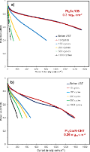
- contain 20% weigh ratio of Nafion (equivalent weight: 1000), each square centimeter of cathodic active layer contains 0.18 µmol of sulfonic acid site. The anode is composed of 0.2 mgPt·cm−2 and a Nafion content of 25%, which leads to 0.13 µmol of sulfonic acid site per square centimeter of MEA. According









Playing with covalent triazine framework tiles for improved CO2 adsorption properties and catalytic performance
Beilstein J. Nanotechnol. 2019, 10, 1217–1227, doi:10.3762/bjnano.10.121

- ) measurements were performed in an ultrahigh vacuum (UHV) Thermo-VG scientific spectrometer equipped with a CLAM4 (MCD) hemispherical electron analyser. The Al Kα line (1486.6 eV) of a dual anode X-ray source was used as incident radiation. Survey and high-resolution spectra were recorded in constant pass


In situ AFM visualization of Li–O2 battery discharge products during redox cycling in an atmospherically controlled sample cell
Beilstein J. Nanotechnol. 2019, 10, 930–940, doi:10.3762/bjnano.10.94
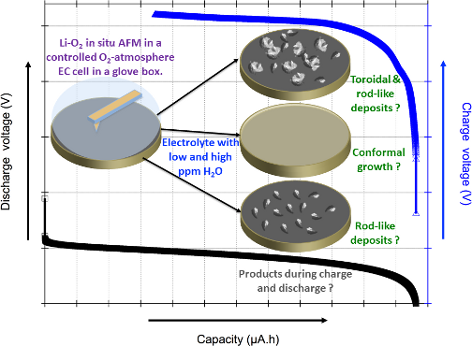
- of a donut-shaped polyethylene separator (Figure 1d) and lithium (Figure 1e) anode. The electrical contact to the lithium anode was made using stainless steel (Figure 1b). The entire assembly was performed inside of the glove box (<0.1 ppm H2O and O2), allowing the assembled cell to be free of


Fabrication of silver nanoisland films by pulsed laser deposition for surface-enhanced Raman spectroscopy
Beilstein J. Nanotechnol. 2019, 10, 882–893, doi:10.3762/bjnano.10.89
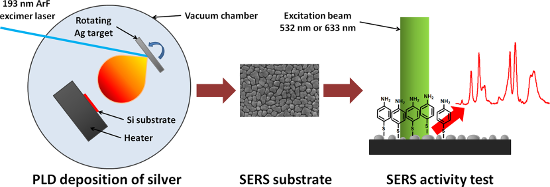
- deposited silver layers X-ray photoelectron spectroscopy (XPS) was used (XPS spectrometer, Prevac Company). The measurements were made using an X-ray source equipped with an Al anode emitting X-ray radiation with photon energy of 1486.6 eV. The analysis of registered XPS spectra was performed in the CasaXPS