


Search results
Search for "carbon nanotubes (CNTs)" in Full Text gives 139 result(s) in Beilstein Journal of Nanotechnology.
Fe3O4 nanoparticles as a saturable absorber for giant chirped pulse generation
Beilstein J. Nanotechnol. 2019, 10, 1065–1072, doi:10.3762/bjnano.10.107
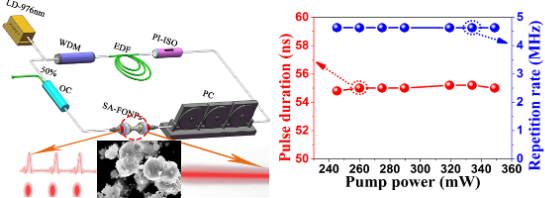
- InGaAs/GaAs-on-GaAs superlattice as a SA to realize 1557 nm, 1.2 ps, transformation-limited pulse generation [9]. Following this, carbon nanotubes (CNTs), graphene, topological insulators (TIs), transition metal disulfides (TMDs) and black phosphorus (BP) were used as SAs to realize passively mode-locked


Direct growth of few-layer graphene on AlN-based resonators for high-sensitivity gravimetric biosensors
Beilstein J. Nanotechnol. 2019, 10, 975–984, doi:10.3762/bjnano.10.98
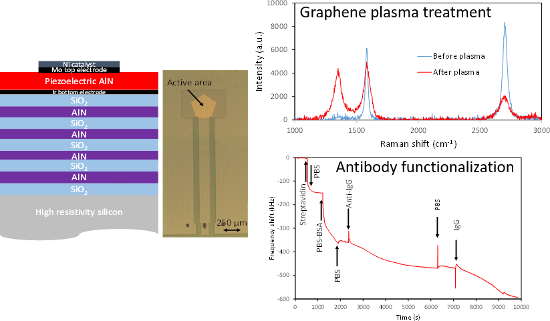
- hydrophobic graphene, which prompted us to investigate the direct non-covalent binding of streptavidin to our bare graphene hydrophobic surfaces. According to [13], streptavidin binds to the sidewalls of carbon nanotubes (CNTs) by means of hydrophobic interactions. It was expected it would bind also to


Synthesis of MnO2–CuO–Fe2O3/CNTs catalysts: low-temperature SCR activity and formation mechanism
Beilstein J. Nanotechnol. 2019, 10, 848–855, doi:10.3762/bjnano.10.85
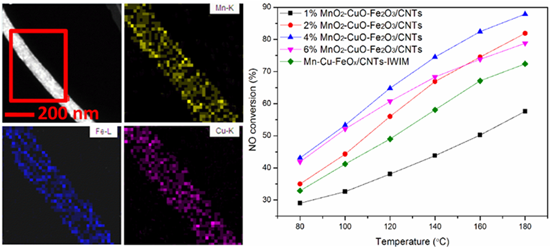
- of electrostatic precipitator and desulfurizer, where the flue gas temperature is normally below 200 °C [9]. Therefore, it is of importance to develop a SCR catalyst with high catalytic activity below 200 °C. Carbon nanotubes (CNTs), a low-dimensional material, exhibit a one-dimensional tubular


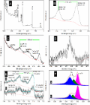


Enhancement in thermoelectric properties due to Ag nanoparticles incorporated in Bi2Te3 matrix
Beilstein J. Nanotechnol. 2019, 10, 634–643, doi:10.3762/bjnano.10.63
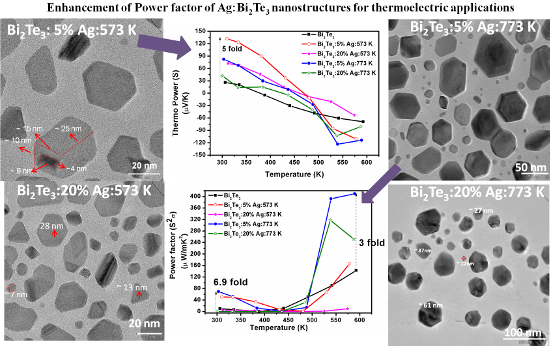
- the uniform dispersion of carbon nanotubes (CNTs) in Bi2Te3 [16]. Another group has also reported an enhancement of the Seebeck coefficient (S) in CNT/Bi2Te3 to 132 µV/K at 423 K [17]. In a recent report, a power factor of 43 µW·cm−1·K−2 for CuI-doped Bi2Te3 has been shown, which is higher than that


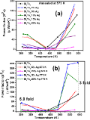

Hydrophilicity and carbon chain length effects on the gas sensing properties of chemoresistive, self-assembled monolayer carbon nanotube sensors
Beilstein J. Nanotechnol. 2019, 10, 565–577, doi:10.3762/bjnano.10.58
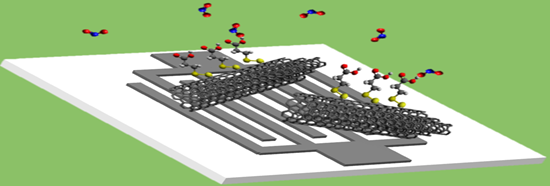
- , pristine carbon nanotubes (CNTs) present some limitations for gas sensing. For example, carbon nanotube gas sensors often suffer from slow recovery, especially when operated at room temperature, which eventually results in baseline and response drift. For that reason, it is usually necessary to heat up the


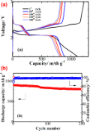
A porous 3D-RGO@MWCNT hybrid material as Li–S battery cathode
Beilstein J. Nanotechnol. 2019, 10, 514–521, doi:10.3762/bjnano.10.52
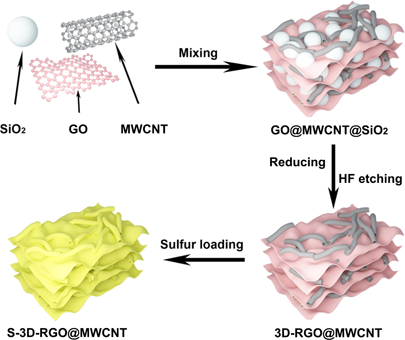
- (3D-RGO), showing a reversible capacity of 790 mAh·g−1 (at 0.2C) after 200 cycles [26]. It has been reported that three-dimensional carbon nanotubes/graphene–sulfur (3DCGS) is an excellent cathode template, revealing a final capacity of 975 mAh·g−1 after 200 cycles [24]. Carbon nanotubes (CNTs) can be


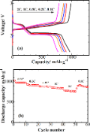

Wet chemistry route for the decoration of carbon nanotubes with iron oxide nanoparticles for gas sensing
Beilstein J. Nanotechnol. 2019, 10, 105–118, doi:10.3762/bjnano.10.10
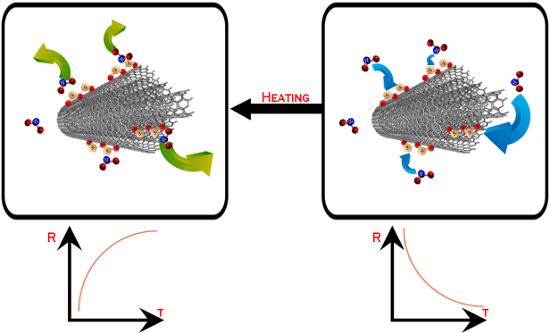
- with iron oxide nanoparticles substantially ameliorated the response towards nitrogen dioxide. Keywords: benzene detection; doping; gas sensor; metal nanoparticle decoration; multiwalled carbon nanotubes; NO2 detection; room temperature gas sensing; surface modification; Introduction Carbon nanotubes
- (CNTs) are considered to be a very interesting material, especially after being rediscovered by Sumio Iijima in 1991 when he found multiwalled CNTs in carbon soot prepared by arc discharge [1]. During the past years, CNTs have proved to possess extraordinary electrical, mechanical, physical and chemical




Graphene–graphite hybrid epoxy composites with controllable workability for thermal management
Beilstein J. Nanotechnol. 2019, 10, 95–104, doi:10.3762/bjnano.10.9
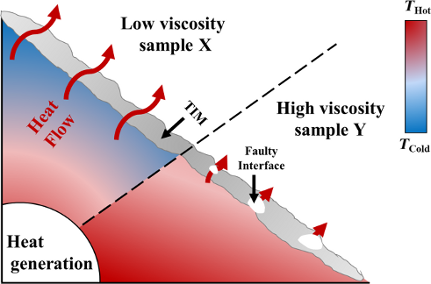
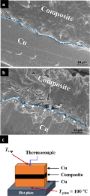
- TC enhancement, although at high loading [14][15]. Some graphitic fillers have theoretical TC values of up to several thousands of W/(m∙K) [16][17], making them natural candidates for use in TIMs. Within the group of graphitic fillers, it seemed likely that carbon nanotubes (CNTs) would be suitable



Accurate control of the covalent functionalization of single-walled carbon nanotubes for the electro-enzymatically controlled oxidation of biomolecules
Beilstein J. Nanotechnol. 2018, 9, 2750–2762, doi:10.3762/bjnano.9.257
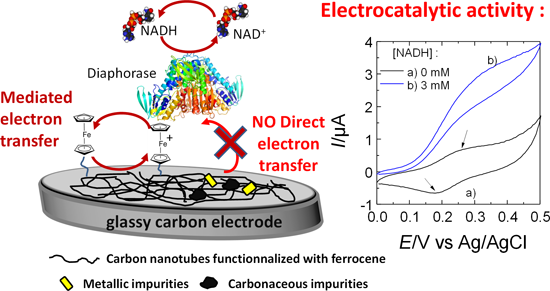
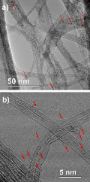
- activity is not jeopardized. Keywords: biosensing; carbon nanotubes; covalent functionalization; electrocatalysis; ferrocene; Introduction Carbon nanotubes (CNTs) have been recognized as interesting candidates for developing electrochemical sensors for almost two decades [1][2][3]. They have been used to






Nanocellulose: Recent advances and its prospects in environmental remediation
Beilstein J. Nanotechnol. 2018, 9, 2479–2498, doi:10.3762/bjnano.9.232
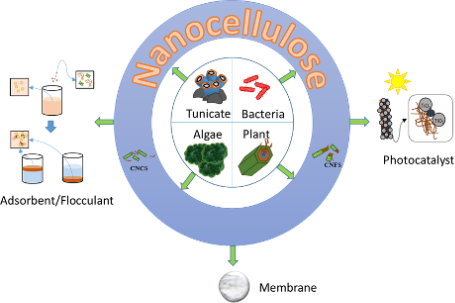
- graphitic carbon nitride [2][3], carbon nanodots [4], and two-dimensional carbon-based nanocomposites [5][6][7] are a few trending nanomaterials that have already found extensive applications in both environmental remediation and energy generation. In the past, carbon nanotubes (CNTs) have received a great


Metal-free catalysis based on nitrogen-doped carbon nanomaterials: a photoelectron spectroscopy point of view
Beilstein J. Nanotechnol. 2018, 9, 2015–2031, doi:10.3762/bjnano.9.191
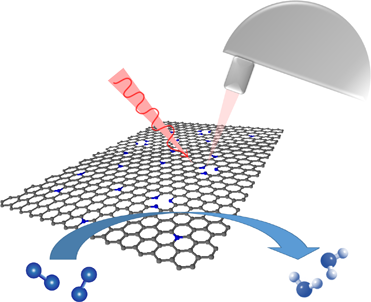
- -free catalyst for the ORR had not been considered feasible [9][10] until two fundamental milestones had risen the interest on carbon as an effective replacement of Pt for catalysis. The first one was the prediction of the remarkable electrical conducting properties of carbon nanotubes (CNTs) in 1993




Defect formation in multiwalled carbon nanotubes under low-energy He and Ne ion irradiation
Beilstein J. Nanotechnol. 2018, 9, 1951–1963, doi:10.3762/bjnano.9.186
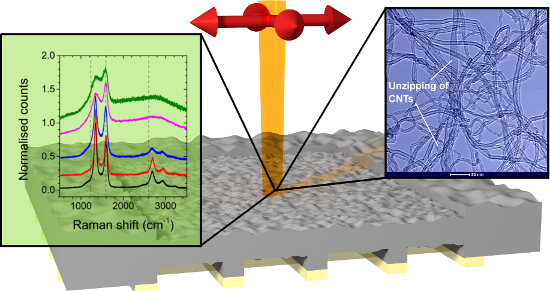
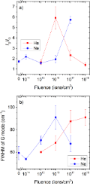
- to differences in stopping power and sputter behaviour. Keywords: carbon nanotubes; helium ion microscope; ion irradiation; Raman; simulations; Introduction Carbon nanotubes (CNTs) have been investigated intensively due to their excellent properties [1]. Modifying and tuning them by electron or ion



SO2 gas adsorption on carbon nanomaterials: a comparative study
Beilstein J. Nanotechnol. 2018, 9, 1782–1792, doi:10.3762/bjnano.9.169

- conditions), carbon-based adsorbents are particularly interesting for SO2 removal. In fact, activated carbon materials are one of the most widely used sorbents for SO2 recovery [1]. Over the past two decades, a rich family of different carbon nanomaterials such as fullerenes, carbon nanotubes (CNTs), carbon


Nitrogen-doped carbon nanotubes coated with zinc oxide nanoparticles as sulfur encapsulator for high-performance lithium/sulfur batteries
Beilstein J. Nanotechnol. 2018, 9, 1677–1685, doi:10.3762/bjnano.9.159
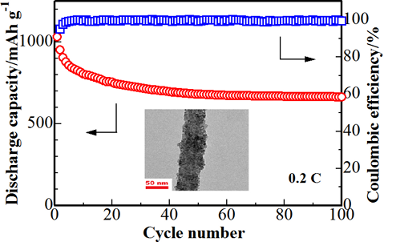
- ” or ”confine” the S atoms in the cathode, and, therefore, reduce any losses of S. As an excellent conductive agent, carbon-based materials, e.g., carbon black, graphene and carbon nanotubes (CNTs), have been widely used in Li/S composite cathode materials [3]. In addition, by doping with N and a


Cr(VI) remediation from aqueous environment through modified-TiO2-mediated photocatalytic reduction
Beilstein J. Nanotechnol. 2018, 9, 1448–1470, doi:10.3762/bjnano.9.137
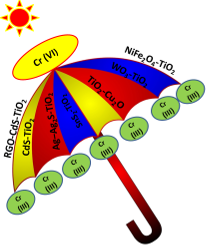
- six sections. The optical and electrochemical characteristics of modified TiO2 photocatalysts are discussed in the first section. In the second section, we have reviewed how carbon-based advanced materials like reduced graphene oxide (RGO), carbon nanotubes (CNTs) and carbon dots (CDs) improve the
- (e.g., MFe2O4) results in a smaller arc radius of the Nyquist plot, as shown in Figure 6, and hence, better charge transport is observed [97]. Modification of TiO2 with carbon-based advanced materials Advanced carbon nanomaterials, such as graphene and its derivatives, carbon nanotubes (CNTs) and
- conduction band electrons of g-C3N4 after visible light irradiation followed by transfer of electrons to Cr(VI) to produce Cr(III) [138]. Photocatalytic reduction of Cr(VI) using CNT-modified TiO2 Carbon nanotubes (CNTs) have also been shown to possess excellent electronic and conductive properties. Waldmann


The electrical conductivity of CNT/graphene composites: a new method for accelerating transmission function calculations
Beilstein J. Nanotechnol. 2018, 9, 1254–1262, doi:10.3762/bjnano.9.117
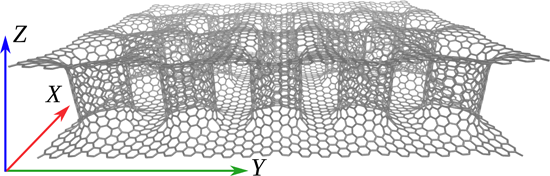
- thousands of atoms. The verification of the proposed method is carried out by exemplarily calculating the electrical characteristics of graphene and graphane films. For the first time, we calculated the transmission function and electrical conductance of pillared graphene, composite film of carbon nanotubes
- (CNTs)/graphene. The electrical conductance of different models of this material was calculated in two mutually perpendicular directions. Regularities in resistance values were found. Keywords: carbon composites; electronic properties; interpolation; quantum transport; transmission function


Electrostatic force spectroscopy revealing the degree of reduction of individual graphene oxide sheets
Beilstein J. Nanotechnol. 2018, 9, 1146–1155, doi:10.3762/bjnano.9.106
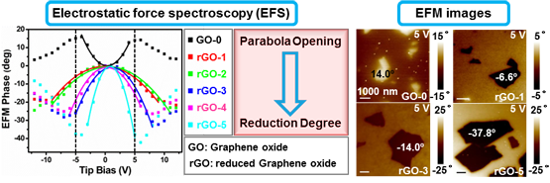
- sheets [23], carbon nanotubes (CNTs) [24] and so on. SPFM [25] and electrostatic force microscopy (EFM) [26] have revealed a step-by-step reduction process in GO sheets. However, when the reduction reactions are completed, it is hard for these methods to identify the small difference between GO sheets


Review on nanoparticles and nanostructured materials: history, sources, toxicity and regulations
Beilstein J. Nanotechnol. 2018, 9, 1050–1074, doi:10.3762/bjnano.9.98

- morphologies such as hollow tubes, ellipsoids or spheres. Fullerenes (C60), carbon nanotubes (CNTs), carbon nanofibers, carbon black, graphene (Gr), and carbon onions are included under the carbon-based NMs category. Laser ablation, arc discharge, and chemical vapor deposition (CVD) are the important


Single-crystalline FeCo nanoparticle-filled carbon nanotubes: synthesis, structural characterization and magnetic properties
Beilstein J. Nanotechnol. 2018, 9, 1024–1034, doi:10.3762/bjnano.9.95
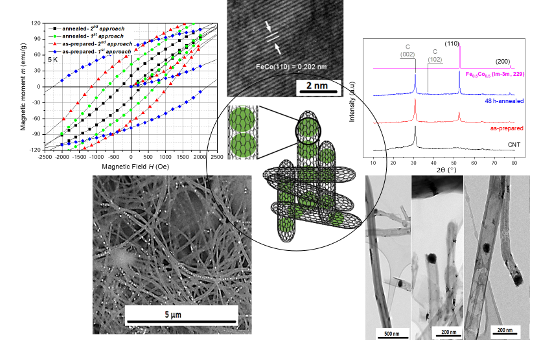
- Dresden, 01062 Dresden, Germany Kurt-Schwabe-Institut für Mess- und Sensortechnik e.V. Meinsberg, 04736 Waldheim, Germany 10.3762/bjnano.9.95 Abstract In the present work, we demonstrate different synthesis procedures for filling carbon nanotubes (CNTs) with equimolar binary nanoparticles of the type Fe
- coatings, carbon nanotubes (CNTs) have been introduced as a protective shell due to their high stability in different chemical and physical environments such as acidic, basic, high temperature and pressurized conditions [33][34][35][36]. CNTs can also act as a template to control the size and morphology of


A review of carbon-based and non-carbon-based catalyst supports for the selective catalytic reduction of nitric oxide
Beilstein J. Nanotechnol. 2018, 9, 740–761, doi:10.3762/bjnano.9.68
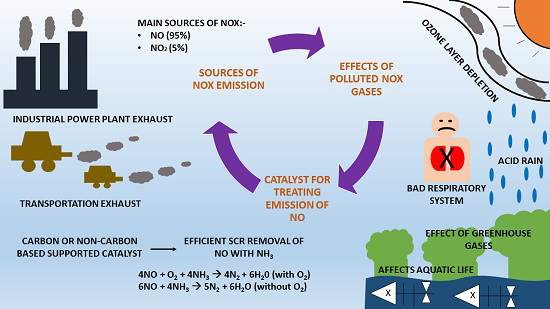
- catalyst supports for nitric oxide (NO) removal through selective catalytic reduction (SCR) with ammonia are examined in this review. A number of carbon-based materials, such as carbon nanotubes (CNTs), activated carbon (AC), and graphene (GR) and non-carbon-based materials, such as Zeolite Socony Mobil–5
- catalysts have been widely studied due to their high surface area, porosity, ability to regenerate and be reused, and good support properties [17]. Several metal oxides were impregnated with carbon-based materials such as carbon nanotubes (CNTs), activated carbon (AC), activated carbon nanofibres (ACNFs
- materials are found suitable for use in most catalytic process applications. Although carbonious materials have traditionally been used as supports for catalysts in heterogeneous catalytic processes, they are becoming more familiar as catalysts of their own [63][64][65]. Carbon nanotubes (CNTs), activated
Single-step process to improve the mechanical properties of carbon nanotube yarn
Beilstein J. Nanotechnol. 2018, 9, 545–554, doi:10.3762/bjnano.9.52
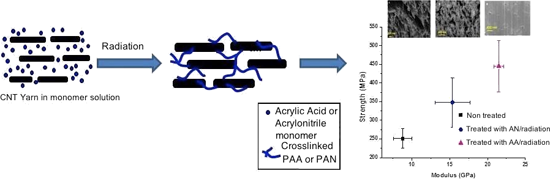
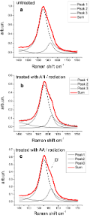
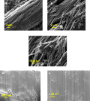
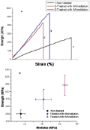
- electrical properties (Young’s modulus of 1 TPa, tensile strength above 100 GPa), carbon nanotubes (CNTs) are promising materials for various advanced technologies, including CNT-reinforced polymer composites [1][2]. Although many investigations have been carried out with these materials, it still remains a




Engineering of oriented carbon nanotubes in composite materials
Beilstein J. Nanotechnol. 2018, 9, 415–435, doi:10.3762/bjnano.9.41
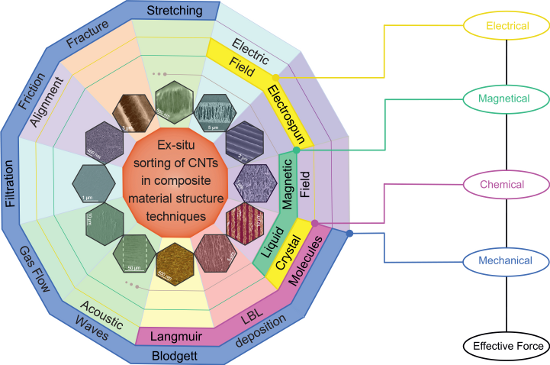
- -45639, Iran 10.3762/bjnano.9.41 Abstract The orientation and arrangement engineering of carbon nanotubes (CNTs) in composite structures is considered a challenging issue. In this regard, two groups of in situ and ex situ techniques have been developed. In the first, the arrangement is achieved during


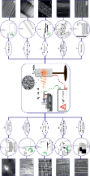


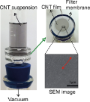


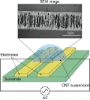


Review: Electrostatically actuated nanobeam-based nanoelectromechanical switches – materials solutions and operational conditions
Beilstein J. Nanotechnol. 2018, 9, 271–300, doi:10.3762/bjnano.9.29
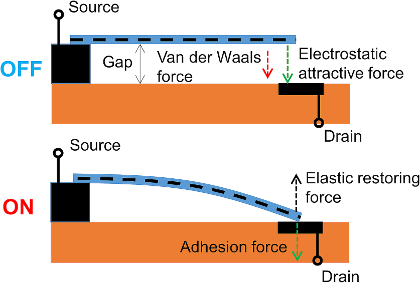
- change of the chemical composition of the contacting materials. Electrical-current-induced thermal effects have been studied in various one-dimensional nanostructures such as Si [92], Ge [10][54], carbon nanotubes (CNTs) [93][94][95], GaN [96][97] and ZnTe [98]. The evolution of a nanocontact between a


Dynamic behavior of a nematic liquid crystal with added carbon nanotubes in an electric field
Beilstein J. Nanotechnol. 2018, 9, 233–241, doi:10.3762/bjnano.9.25
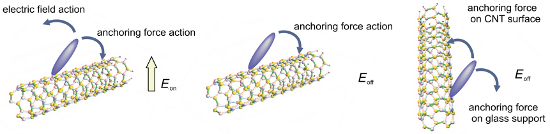
- Emil Petrescu Cristina Cirtoaje University Politehnica of Bucharest, Department of Physics, Splaiul Independenţei 313, 060042, Bucharest, Romania 10.3762/bjnano.9.25 Abstract The dynamic behavior of a nematic liquid crystal with added carbon nanotubes (CNTs) in an electric field was analyzed. A

![[Graphic 1]](/bjnano/content/inline/2190-4286-9-25-i33.svg?max-width=637&scale=1.18182) is the undistu...
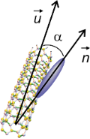
is the undistu...



Dielectric properties of a bisimidazolium salt with dodecyl sulfate anion doped with carbon nanotubes
Beilstein J. Nanotechnol. 2018, 9, 164–174, doi:10.3762/bjnano.9.19
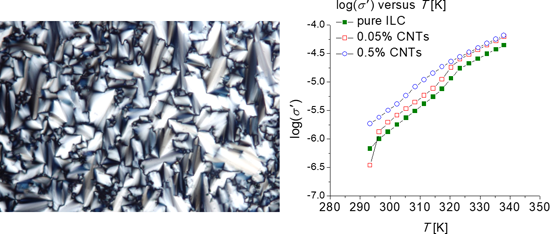
- melting and clearing points. Hence, there is the interest to design such materials for further electro-optical applications [22][23][24][25][26][27][28][29][30][31][32]. Carbon nanotubes (CNTs) and nanoparticles were also dispersed in LCs [33][34][35][36]. It is well-known that the order of the LCs can be





