


Search results
Search for "gain" in Full Text gives 466 result(s) in Beilstein Journal of Nanotechnology. Showing first 200.
On the mechanism of piezoresistance in nanocrystalline graphite
Beilstein J. Nanotechnol. 2024, 15, 376–384, doi:10.3762/bjnano.15.34
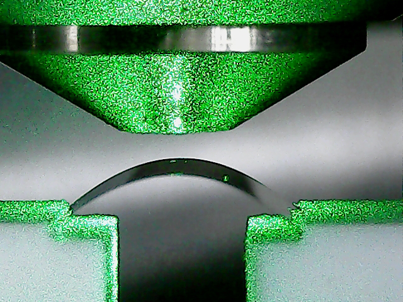
- . However, a hysteresis is observed between forward and reverse sweeps, indicating that structural changes in the films occur, which are in part irreversible. To gain insights into the strain distribution in the strained NCG, we performed in situ Raman measurements with strain as shown in Figure 3a. The


Quantitative wear evaluation of tips based on sharp structures
Beilstein J. Nanotechnol. 2024, 15, 230–241, doi:10.3762/bjnano.15.22
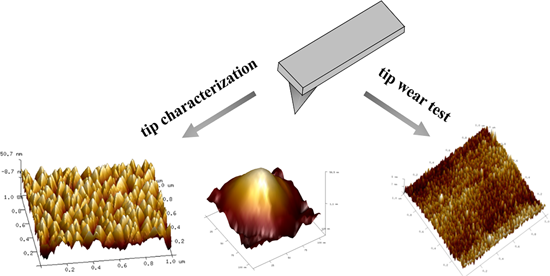
- AFM scanning. Xue et al. [18] used SEM to study the state of the probe before and after scanning under different scanning parameters and found that good scanning parameters can be obtained under low scanning speed, large integration gain, and high set point, which significantly reduces tip wear. Su et
- integral gain was gradually increased, and the scanning range was also adjusted accordingly until it reached 1 µm × 1 µm. It was important to set an appropriate scanning range for the AFM image. If the scanning range is too large, it will decrease the accuracy of the image, resulting in a less accurate




Multiscale modelling of biomolecular corona formation on metallic surfaces
Beilstein J. Nanotechnol. 2024, 15, 215–229, doi:10.3762/bjnano.15.21
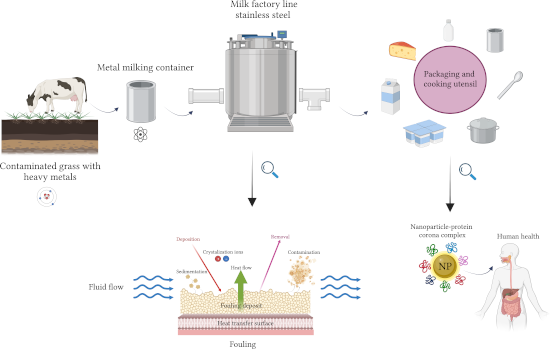
- not only gain further insight into this particular case of aluminum in milk, but also to establish a methodology by which more general molecules can be included in these simulations. We choose lactose as a prototypical example of a small molecule capable of binding to NPs, since it is present at a




Ion beam processing of DNA origami nanostructures
Beilstein J. Nanotechnol. 2024, 15, 207–214, doi:10.3762/bjnano.15.20
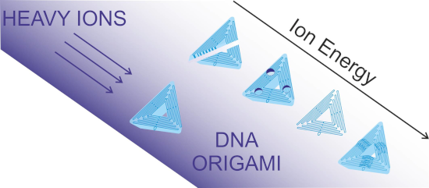
- , craters are not evident, but the sample height increases significantly with the dose. Some height gain and bloating had been observed in UV-irradiated DNA origami nanostructures at low doses [42]. In this previous work, although the samples were irradiated in solution, the AFM analysis was done in the dry
- state. The gain in height and lateral dimensions at low doses was associated to the expansion of the origami nanostructures due to gradual nicking or strand-breaking rendering the structures more loose [42]. In dry irradiations, the generated broken ends from strand breaking have restricted lateral


Enhanced feedback performance in off-resonance AFM modes through pulse train sampling
Beilstein J. Nanotechnol. 2024, 15, 134–143, doi:10.3762/bjnano.15.13
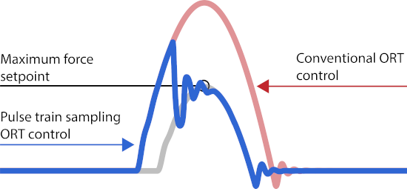
- -order hold block. Thus, the control process can be represented with a sampler, an integrator, a delay element, and a zero-order hold block (Figure 1E-v.). To analyze the reference tracking quality of the controller, we model a unity gain closed-loop system (further information in Supporting Information
- File 1, Figure S1A). In order to investigate the frequency response of the feedback controller, we define the closed-loop transfer function between error, E(s), and disturbance, D(s), in the Laplace domain as in Equation 2, where Tort, Tdelay, Ki denote the ORT period, the delay, and the integral gain
- Ki. Through simulations based on Equation 2 we have determined that the ORT period and the delay impose a limit for the integral gain value (experimental results in Figure S1B, Supporting Information File 1). In order to prevent closed-loop oscillations caused by the resonance peak, it is necessary


Nanotechnological approaches in the treatment of schistosomiasis: an overview
Beilstein J. Nanotechnol. 2024, 15, 13–25, doi:10.3762/bjnano.15.2

- . The nanoparticles avoided weight gain in infected mice, increased glutathione levels, and reduced the levels of oxidative stress markers. This work showed that selenium nanoparticles were even more effective than PZQ, reducing inflammation signs in jejunal tissue and tissue injury levels similarly to


Spatial variations of conductivity of self-assembled monolayers of dodecanethiol on Au/mica and Au/Si substrates
Beilstein J. Nanotechnol. 2023, 14, 1169–1177, doi:10.3762/bjnano.14.97
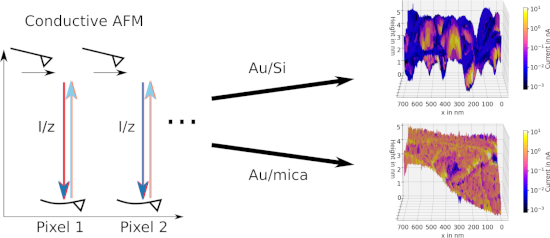
- . This was avoided in later experiments by using eutectic GaIn (eGaIn) droplets [8][9][10][11]. These are much more viscous, to the point that they are almost solid. This reduces the amount of leak currents significantly and makes studies on the conductivity of SAMs much more reliable. A more widely


Elasticity, an often-overseen parameter in the development of nanoscale drug delivery systems
Beilstein J. Nanotechnol. 2023, 14, 1149–1156, doi:10.3762/bjnano.14.95
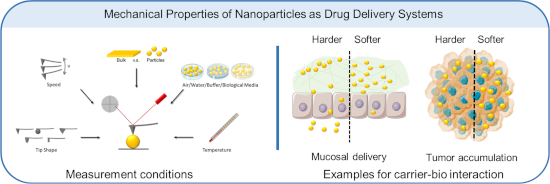
- , demonstrating the impact of these characteristics, is the life span of red blood cells. Juvenile red blood cells are able to flow through capillaries much smaller in diameter than their size due to sufficient elasticity. During their life span, they gain rigidity leading to their filtration out of the blood


A multi-resistance wide-range calibration sample for conductive probe atomic force microscopy measurements
Beilstein J. Nanotechnol. 2023, 14, 1141–1148, doi:10.3762/bjnano.14.94
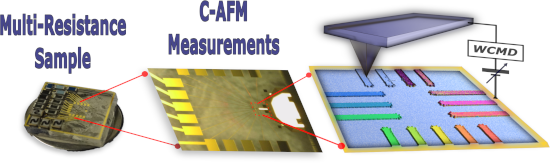
- measurement instruments (particularly the current amplifier gain), the leakage resistances, and the measurement noise (see Supporting Information File 1, sections S3 and S4). Resistance values in C-AFM imaging mode Following the calibration of the SMD resistors, C-AFM imaging measurements were conducted by
- -built external wide-range current measuring device (WCMD), connected to the AFM system operating under ambient environmental conditions (no shielding and no air conditioning system). The WCMD device consists of a current amplifier with an automatic gain regulation. It allows for, under usual AFM


A bifunctional superconducting cell as flux qubit and neuron
Beilstein J. Nanotechnol. 2023, 14, 1116–1126, doi:10.3762/bjnano.14.92
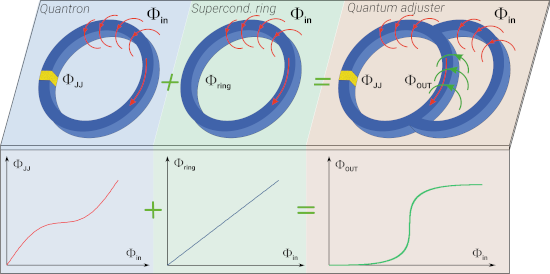
- qubit representing its quantum state restructuring the one’s spectrum in a certain way, we would have an auxiliary qubit that neither requires a highly stable reference oscillator nor a mixer to drive it. Of course, such a bifunctional cell as a qubit is not ideal; however, in some situations the gain
- -adiabatic effects impose on the potential use of the proposed cell as a neuromorphic, coupling, and tuning element in quantum computing systems. At the same time, we will also gain an understanding of the possibilities for controlling the population of levels in the simplest implementation of an adiabatic



Experimental investigation of usage of POE lubricants with Al2O3, graphene or CNT nanoparticles in a refrigeration compressor
Beilstein J. Nanotechnol. 2023, 14, 1041–1058, doi:10.3762/bjnano.14.86
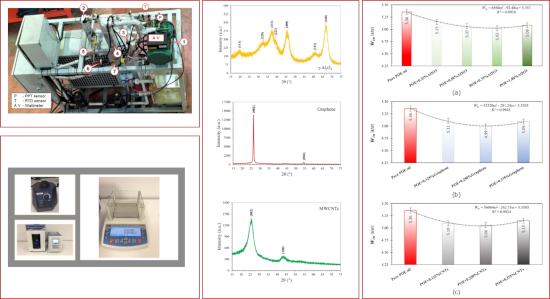
- containing Al2O3, graphene, and CNTs on the required electrical power of a refrigeration compressor. Also, the kinematic viscosity of the nanolubricants was determined to gain a better physical understanding of the nanoparticle–lubricant mixture. Validation of test results The refrigeration compressor used





A visible-light photodetector based on heterojunctions between CuO nanoparticles and ZnO nanorods
Beilstein J. Nanotechnol. 2023, 14, 1018–1027, doi:10.3762/bjnano.14.84
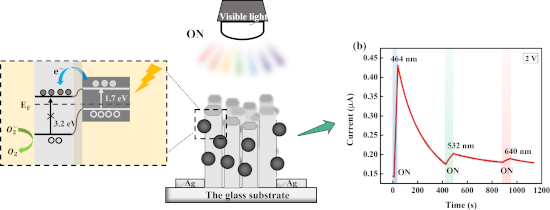
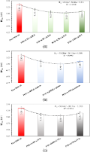
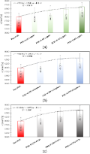
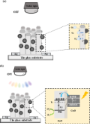
- responsivity, photoconductive gain, detectivity, and sensitivity with maximum values of 1.38 A·W−1, 4.33, 2.58 × 10¹¹ Jones, and 1934.5% at a bias of 2 V, respectively. The sensing mechanism of the p–n heterojunction of CuO/ZnO is also explored. Overall, this study indicates that the heterostructure of CuO
- product of power and area, can be calculated by using Equation 1 [48]: The photoconductive gain (G) is the other important parameter of a photodetector; it can be determined via Equation 2 [49]: The detectivity (D) describes the ability of a photodetector to detect weak optical signals. D can be
- , exhibiting weaker signals at 464 nm irradiation and the lowest photoresponse to green and red wavelengths. When illuminating with 464 nm blue light, the recorded responsivity is 0.37 mA·W−1; photoconductive gain and detectivity are 9.89 × 10⁻⁴ and 13.4 × 10⁶ Jones, respectively (Figure 6a). The sensitivity


Nanoarchitectonics of photothermal materials to enhance the sensitivity of lateral flow assays
Beilstein J. Nanotechnol. 2023, 14, 988–1003, doi:10.3762/bjnano.14.82
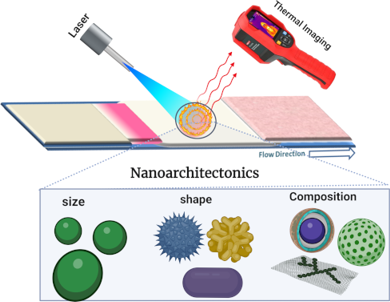
- non-radiatively in the form of phonons. The phonons generate heat in these materials [36] (Figure 4C). Transition metal sulfide nanomaterials gain much attention in photothermal applications, because of their low cost, high biocompatibility, and considerably high PCE. Nanoparticles of copper sulfide


Ni, Co, Zn, and Cu metal-organic framework-based nanomaterials for electrochemical reduction of CO2: A review
Beilstein J. Nanotechnol. 2023, 14, 904–911, doi:10.3762/bjnano.14.74
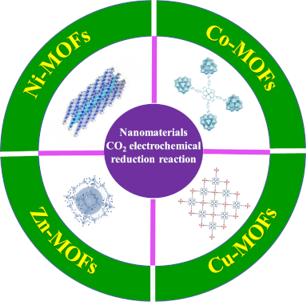
- . To gain insights into the reaction pathway and to provide explanations for the observed outcome, the research team employed computational science techniques. Density functional theory (DFT) calculations implied that Co-PMOF possessed the lowest total free energy leading to its superiority as a


Green SPIONs as a novel highly selective treatment for leishmaniasis: an in vitro study against Leishmania amazonensis intracellular amastigotes
Beilstein J. Nanotechnol. 2023, 14, 893–903, doi:10.3762/bjnano.14.73
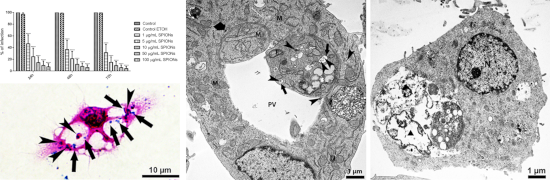
- L. major promastigotes [35]. Finally, a study showed the effect in vitro and in vivo of amphotericin B encapsulated in magnetic iron oxide nanoparticles coated with glycine-rich peptides for treating visceral leishmaniasis caused by L. donovani [12]. All these studies demonstrated the potential gain


A wearable nanoscale heart sound sensor based on P(VDF-TrFE)/ZnO/GR and its application in cardiac disease detection
Beilstein J. Nanotechnol. 2023, 14, 819–833, doi:10.3762/bjnano.14.67
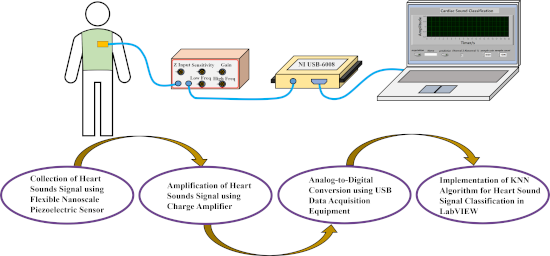
- to 2000 Hz, with a frequency sweep step of 100 Hz/s. The sound pressure was set to 65 dB, and the charge amplifier's gain was set to 100 pC/V. Figure 11 shows the voltage peaks recorded by the oscilloscope at different times during the frequency sweep. The peak open-circuit voltage significantly


Current-induced mechanical torque in chiral molecular rotors
Beilstein J. Nanotechnol. 2023, 14, 711–721, doi:10.3762/bjnano.14.57
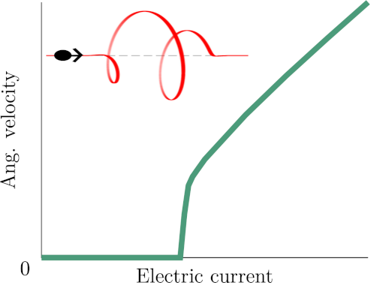
- gain of the path, ΔE, is small, usually not higher than ΔV. In the limit of fast impact velocities, Equation 6 implies that the relative decrease of the particle velocity after the collision is small. Angular momentum conservation When V(ϑ) = const., the Lagrangian in Equation 5 is invariant with
- velocity must be corrected due to energy transfer, which yields a term of the second order in μ. Switching in the SA The condition for switching is that the energy gain of the path, Equation 6, must overcome the potential barrier. In the limit of large velocities, the kinetic term (due to angular momentum
- boosts) dominates over the potential gain via angular boosts, and the condition becomes . For a single particle, the switching condition reads . Under a current, the velocity boosts can be added sequentially, and the condition becomes where we introduced the incident momentum current . The nominator of




![[Graphic 29]](/bjnano/content/inline/2190-4286-14-57-i54.svg?max-width=637&scale=1.18182)


Carbon nanotube-cellulose ink for rapid solvent identification
Beilstein J. Nanotechnol. 2023, 14, 535–543, doi:10.3762/bjnano.14.44
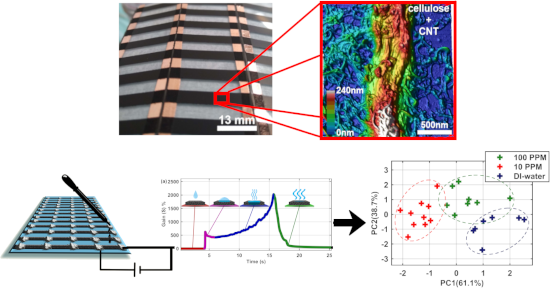
- ) and the calculated mean resistance (with standard deviation) is 1.26 ± 0.07 kΩ. A geometry optimization was also performed to find out the maximum gain response as a function of width, length, and number of painted layers (see Supporting Information File 1 for details). To better understand how MWCNTs
- , while the current was monitored until complete evaporation of the liquid. The device temperature was kept just below the boiling point of the liquid under evaluation. Afterward, the current was used to calculate the resistance, R0 (see Figure 1c), and the sensitivity gain (S), defined as S = ((R – R0
- individual sensor. The parameters analyzed by PCA were “max”, “t_max”, “slope”, and “ratio_maxmin” (defined in Supporting Information File 1 as the input features). Figure 2a and Figure 2b depict, respectively, the sensitivity gain S (for pure water, and 10 and 100 ppm of glycerin in water) and the PCA


Overview of mechanism and consequences of endothelial leakiness caused by metal and polymeric nanoparticles
Beilstein J. Nanotechnol. 2023, 14, 329–338, doi:10.3762/bjnano.14.28
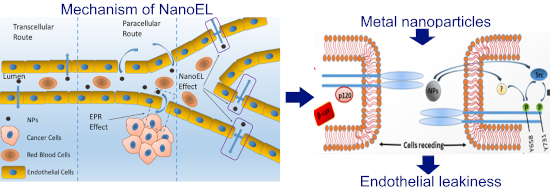
- and amplified metastatic effect in cancer patients and the accumulation of NPs in unintended organs. Therefore, it is crucial to gain a full understanding of NanoEL and to develop effective and safe inducers, which are NPs that will facilitate access to the target sites and, at the same time, reduce


High–low Kelvin probe force spectroscopy for measuring the interface state density
Beilstein J. Nanotechnol. 2023, 14, 175–189, doi:10.3762/bjnano.14.18
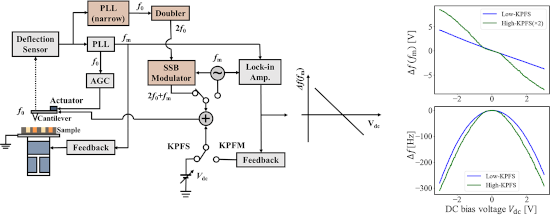
- measured using the displacement detection system was controlled by an automatic gain control (AGC) circuit to keep the cantilever vibration amplitude A constant, and the frequency shift Δf of the cantilever was measured using a phase-locked loop (PLL) circuit (SPECS GmbH: Nanonis OC4). AFM measurements



Frontiers of nanoelectronics: intrinsic Josephson effect and prospects of superconducting spintronics
Beilstein J. Nanotechnol. 2023, 14, 79–82, doi:10.3762/bjnano.14.9

- frequency range, switching from the superconducting to the resistive state due to absorption of a 10 GHz external signal [19]. Achieving a large coherent gain of the receiver, up to a factor of three, of the emitted power from two simultaneously biased arrays of Josephson junctions compared to that of the
Single-step extraction of small-diameter single-walled carbon nanotubes in the presence of riboflavin
Beilstein J. Nanotechnol. 2022, 13, 1564–1571, doi:10.3762/bjnano.13.130
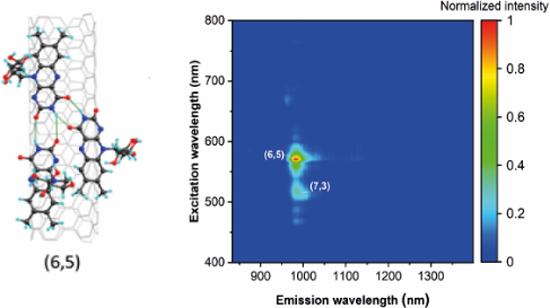
- electronic structure of nanotubes. To gain insights into the correlation between SWCNT diameter and the adsorption of riboflavin, we performed single-step chirality enrichment of SWCNT dispersions with various diameter distributions: CoMoCat SWCNTs with a mean diameter 0.81 nm [24] and Tuball nanotubes with


Coherent amplification of radiation from two phase-locked Josephson junction arrays
Beilstein J. Nanotechnol. 2022, 13, 1445–1457, doi:10.3762/bjnano.13.119
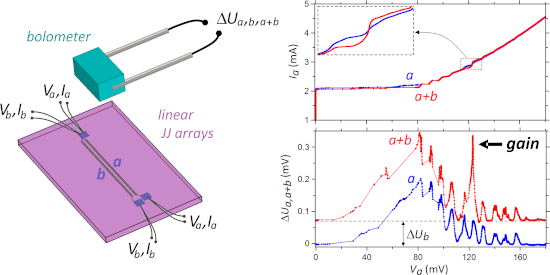
- coherent gain, up to a factor of three, of emitted power from two simultaneously biased arrays, compared to the sum of powers from two individually biased arrays. The phenomenon is attributed to the phase locking of junctions in different arrays via a common electromagnetic field. Remarkably, the gain can
- exceed the factor of two expected for a simple constructive interference of two oscillators. The larger gain is explained by an additional consequence of mutual interaction between two large arrays. Mutual phase locking of large arrays does not only result in constructive interference outside the arrays
- unlocked oscillators the power just adds up and is twice the power from a single oscillator. Therefore, the total superradiant power gain for two oscillators, defined as the ratio of coherent-to-incoherent emission, is at most two. For N oscillators, the supperradiant power increase is at most N2 times the


Density of states in the presence of spin-dependent scattering in SF bilayers: a numerical and analytical approach
Beilstein J. Nanotechnol. 2022, 13, 1418–1431, doi:10.3762/bjnano.13.117
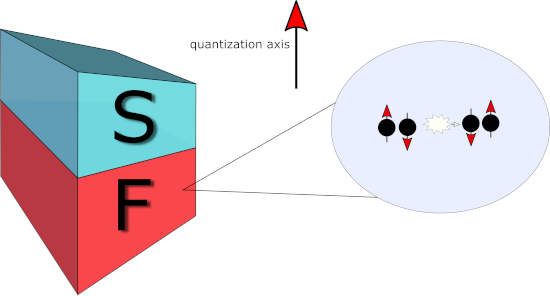
- F layer and h is the exchange field in the ferromagnetic layer [1]. Not only superconductivity is substantially suppressed due to the exchange field, but also Cooper pairs gain a finite center of mass momentum, which leads to the oscillatory behavior of the Cooper pair wave function. These


Orally administered docetaxel-loaded chitosan-decorated cationic PLGA nanoparticles for intestinal tumors: formulation, comprehensive in vitro characterization, and release kinetics
Beilstein J. Nanotechnol. 2022, 13, 1393–1407, doi:10.3762/bjnano.13.115
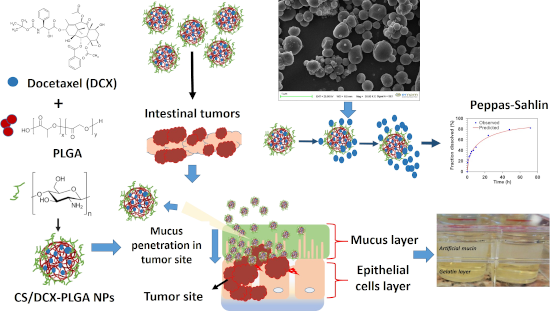
- drug delivery system loaded with docetaxel (DCX) as an anticancer drug, using poly(lactic-co-glycolic acid) (PLGA) as nanoparticle material, and modified with chitosan (CS) to gain mucoadhesive properties. In this context, an innovative nanoparticle formulation that can protect orally administered DCX





