


Search results
Search for "long-term stability" in Full Text gives 112 result(s) in Beilstein Journal of Nanotechnology.
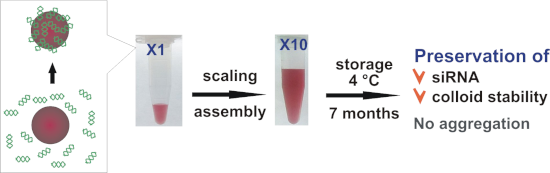
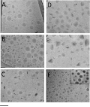
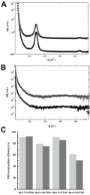
Long-term stability and scale-up of noncovalently bound gold nanoparticle-siRNA suspensions
Beilstein J. Nanotechnol. 2019, 10, 2568–2578, doi:10.3762/bjnano.10.248


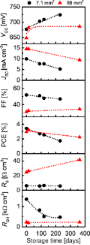
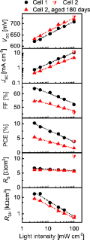
Semitransparent Sb2S3 thin film solar cells by ultrasonic spray pyrolysis for use in solar windows
Beilstein J. Nanotechnol. 2019, 10, 2396–2409, doi:10.3762/bjnano.10.230
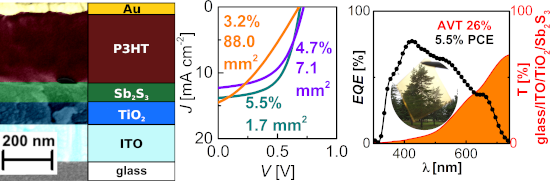
- ]. At present, tremendous research efforts have been allocated worldwide to increase the long-term stability of these solar cells [11]. As minimizing fabrication cost is crucial for commercialization, solar windows would benefit from a fully inorganic absorber that has superior stability towards



Polyvinylpyrrolidone as additive for perovskite solar cells with water and isopropanol as solvents
Beilstein J. Nanotechnol. 2019, 10, 2374–2382, doi:10.3762/bjnano.10.228
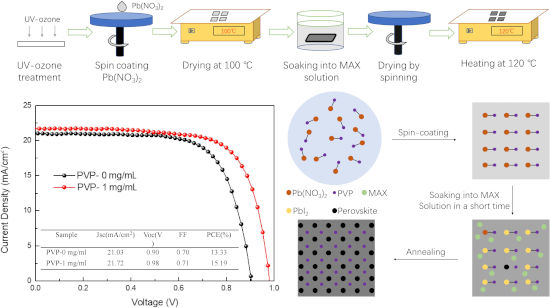
- , and the efficiency is 12.27%. This demonstrate clearly that the PVP as an additive to the aqueous solution of Pb(NO3)2 is genuinely effective in boosting the photoelectric performance of the device. In addition, we studied the long-term stability of the PSCs in ambient environment (humidity less than
- density–voltage curves of PSCs (b) EQE spectra of PSCs. The stable output current density and PCE at the max power point of PSCs. Long-term stability of solar cells over 60 d. All devices were stored in ambient environment (humidity less than 10%, room temperature). Parameters of the PSCs fabricated under




Review of advanced sensor devices employing nanoarchitectonics concepts
Beilstein J. Nanotechnol. 2019, 10, 2014–2030, doi:10.3762/bjnano.10.198
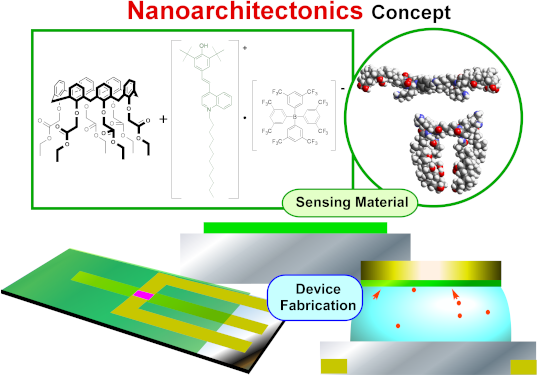
- structure was integrated into a microfluidic device. The monolayer structure of the semiconductive layer provided better sensor performance with long-term stability and high sensitivity. The minimum detection limit for melamine was approximately 10 ppb. The high performance of nanoarchitectonic
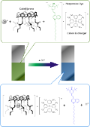
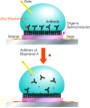
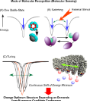
- semiconductive layer provides better sensor performance with long-term stability and high sensitivity. Features of molecular recognition at interfacial media: (i) contacts of phases with different dielectric natures to result in huge enhancement of molecular recognition; (ii) connection of extremely different





Preservation of rutin nanosuspensions without the use of preservatives
Beilstein J. Nanotechnol. 2019, 10, 1902–1913, doi:10.3762/bjnano.10.185
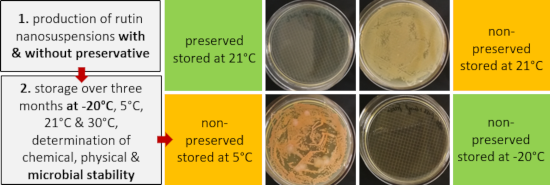
- -term stability. The freeze–thaw process for nanosuspensions is a simple concept and is suggested as alternative, when preserved nanosuspensions cannot be used. Keywords: nanocrystals; nanosuspension; no preservative; rutin; stability; Introduction Nanocrystals for pharmaceutical use were invented in
- monitored, and the results were compared to preserved nanosuspensions. The frozen nanosuspensions remained stable and possessed excellent stability over the whole time of storage, indicating that the freeze–thaw process is suitable for the production of preservative-free nanosuspensions with excellent long


Toxicity and safety study of silver and gold nanoparticles functionalized with cysteine and glutathione
Beilstein J. Nanotechnol. 2019, 10, 1802–1817, doi:10.3762/bjnano.10.175
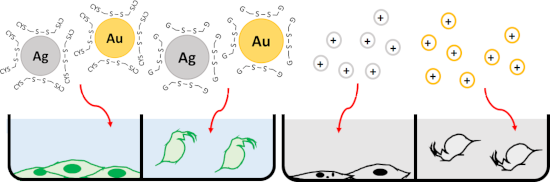
- stable NPs. Finally, we selected a molar ratio of [metallic salts]/[NaBH4]/[biothiol] = 1:10:1 for further work as it resulted in a favorable NP size (≈10 nm) and long term stability. Nuclear magnetic resonance (NMR), as an excellent tool to determine the interactions of small organic molecules with


Lipid nanostructures for antioxidant delivery: a comparative preformulation study
Beilstein J. Nanotechnol. 2019, 10, 1789–1801, doi:10.3762/bjnano.10.174
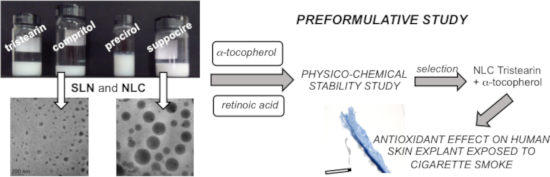
- ]. The choice of the type and concentration of the nanoparticle lipid matrix is crucial since it can affect the physico-chemical aspects of SLNs and NLCs, the encapsulation parameters, as well as the long-term stability of the formulation. Thus, in view of an industrial production, a preliminary

Kelvin probe force microscopy of the nanoscale electrical surface potential barrier of metal/semiconductor interfaces in ambient atmosphere
Beilstein J. Nanotechnol. 2019, 10, 1401–1411, doi:10.3762/bjnano.10.138
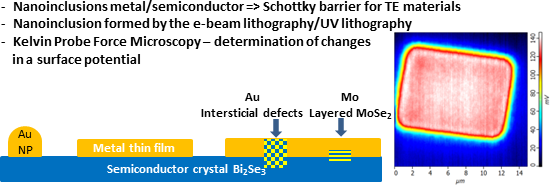
- considered solid-state heat engines. The former enables direct waste heat conversion into electrical energy very elegantly (no moving parts, long-term stability, maintenance-free, silent). Unfortunately, one of the limiting factors of this technology is still poor conversion efficiency. The conversion


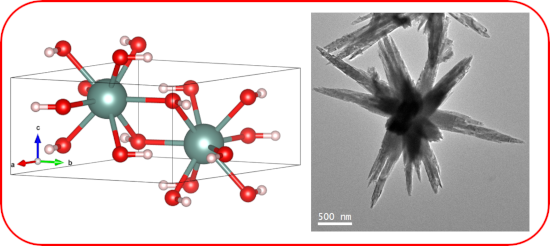
Green fabrication of lanthanide-doped hydroxide-based phosphors: Y(OH)3:Eu3+ nanoparticles for white light generation
Beilstein J. Nanotechnol. 2019, 10, 1200–1210, doi:10.3762/bjnano.10.119
- systems can be improved even more by optimizing the long-term stability of PDMS under UV irradiation since it can undergo degradation due to the breakage of bonds in organic molecules, resulting in the loss of transparency and coloration (i.e., yellowing). For instance, it was observed that residues of



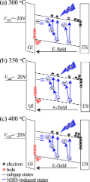
Quantitative analysis of annealing-induced instabilities of photo-leakage current and negative-bias-illumination-stress in a-InGaZnO thin-film transistors
Beilstein J. Nanotechnol. 2019, 10, 1125–1130, doi:10.3762/bjnano.10.112
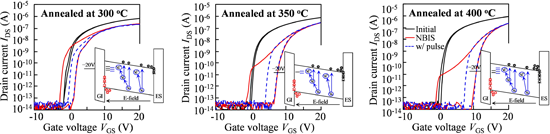
- properties and long-term stability. Therefore, many researches are devoted to reducing the density of defects during the fabrication, including the optimization of oxygen partial pressure [4], the increase of fabrication temperature, and the reduction of deposition power. In addition, post-annealing is
- this study, the TFT annealed at 350 °C exhibits an outstanding initial performance, but its long-term stability has been deteriorated to some degree under the high-energy light irradiation. Therefore, to further improve the electrical properties and bias-stress stabilities, especially against NBIS, the


Synthesis of MnO2–CuO–Fe2O3/CNTs catalysts: low-temperature SCR activity and formation mechanism
Beilstein J. Nanotechnol. 2019, 10, 848–855, doi:10.3762/bjnano.10.85
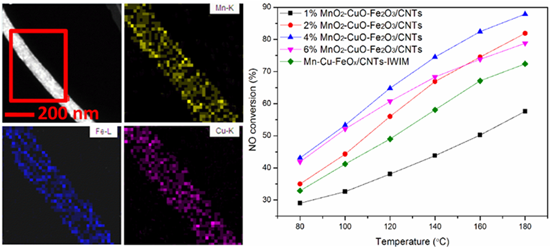
- % MnO2–CuO–Fe2O3/CNTs catalyst is higher than that of the MnO2–CuO–Fe2O3/CNTs catalyst [40]. In general, stronger acid sites and a higher number of acid sites are advantageous to the SCR reaction [41], which is corroborated by the results of the NO conversion. Cyclic and long-term stability of catalysts
- In practical applications, the cyclic and long-term stability of a catalyst are crucial factors. The cyclic and long-term stability of the optimal 4% MnO2–CuO–Fe2O3/CNTs catalyst are listed in Figure 8. Figure 8A shows that the catalytic activity of 4% MnO2–CuO–Fe2O3/CNTs in run 2 and run 3 reaches
- % at 180 °C during a test of 6 h, revealing the outstanding long-term stability. In view of the above favorable properties, the 4% MnO2–CuO–Fe2O3/CNTs catalyst will be potentially applicable in the low-temperature NO reduction with NH3. Comparison of the catalytic performance of three catalysts Table 1




Biomimetic synthesis of Ag-coated glasswing butterfly arrays as ultra-sensitive SERS substrates for efficient trace detection of pesticides
Beilstein J. Nanotechnol. 2019, 10, 578–588, doi:10.3762/bjnano.10.59
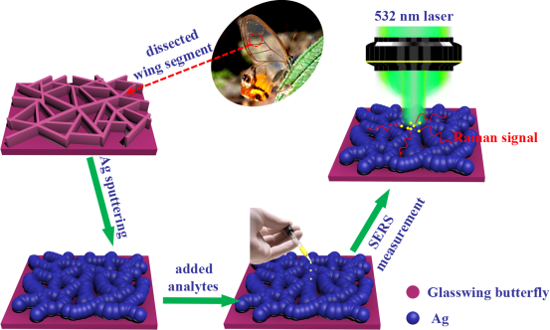
- 10.78%. The nanohybrids also exhibit a long-term stability regarding Raman enhancement, as suggested by a duration stability test over a period of 60 days. Importantly, the high-performance Ag-G.b.-20 substrate is further applied as an ultra-sensitive SERS platform for the trace detection of acephate
- localized in the narrow nanogaps where the electromagnetic field enhancement occurs. Long-term stability and SERS reproducibility of the Ag-G.b.-20 SERS substrates In addition to high SERS enhancement and sensitivity, long-term stability is another important parameter for an ideal SERS substrate. Therefore
- , the long-term stability of Ag-G.b.-20 substrates was examined under ambient conditions. Figure 5a shows the Raman spectra of 10−4 M CV recorded on the Ag-G.b.-20 substrates and the corresponding substrates stored for 15, 30, 45 and 60 days. Figure 5b clearly reveals that the integrated Raman intensity


Wearable, stable, highly sensitive hydrogel–graphene strain sensors
Beilstein J. Nanotechnol. 2019, 10, 475–480, doi:10.3762/bjnano.10.47
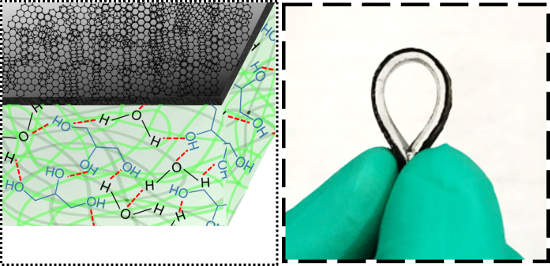
- lack of long term stability, due to the tendency of the material to lose water at high temperature and freeze at low temperature [14]. Glycerol is a commonly used, nontoxic antifreeze additive. Here, hydrogen bonding between glycerol and water competes with hydrogen bonding between the water molecules
- -hydrogel strain sensor can be attributed to the use of glycerol as a co-solvent. The hydrogel bonding between glycerol and water prevents water from being released from the polymer network, hence guaranteeing the long-term stability of the sensor. In addition, a graphene film is cast onto the WG-hydrogel


Nanoporous water oxidation electrodes with a low loading of laser-deposited Ru/C exhibit enhanced corrosion stability
Beilstein J. Nanotechnol. 2019, 10, 157–167, doi:10.3762/bjnano.10.15
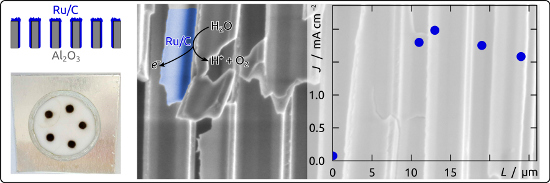
- electrocatalyst to the point that a steady state is reached upon continuous electrolysis. The current then stays stable for several hours. The comparison with the literature shows that only Kokoh et al. tested the long-term stability of their Ru-based electrocatalyst [14]. The fine dispersion of Ru in the




Electrolyte tuning in dye-sensitized solar cells with N-heterocyclic carbene (NHC) iron(II) sensitizers
Beilstein J. Nanotechnol. 2018, 9, 3069–3078, doi:10.3762/bjnano.9.285
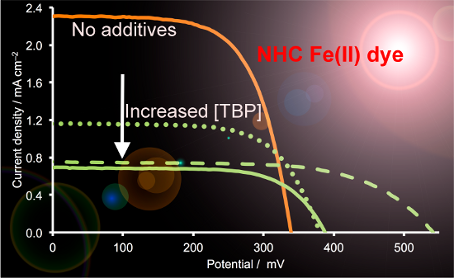
- of solvent is crucial for optimization of DSC performance and long-term stability [45][46]. Our starting point was the standard electrolyte (E1, Table 1) that we employ for DSCs with bis(diimine)copper(I) sensitizers. This electrolyte contains the additive N-methylbenzimidazole (MBI) which is known



Graphene-enhanced metal oxide gas sensors at room temperature: a review
Beilstein J. Nanotechnol. 2018, 9, 2832–2844, doi:10.3762/bjnano.9.264
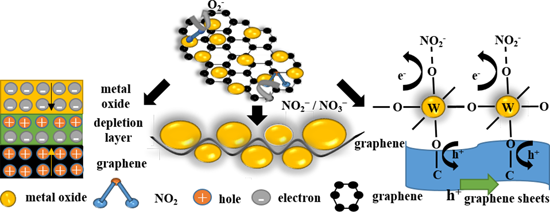
- . Although several researches demonstrate that the properties of these sensors are capable to be maintained for more than half a year, such stability has been only obtained in laboratory environments, indicating that it is difficult to have such long-term stability in the real environment. Another problem is



Controlling surface morphology and sensitivity of granular and porous silver films for surface-enhanced Raman scattering, SERS
Beilstein J. Nanotechnol. 2018, 9, 2813–2831, doi:10.3762/bjnano.9.263
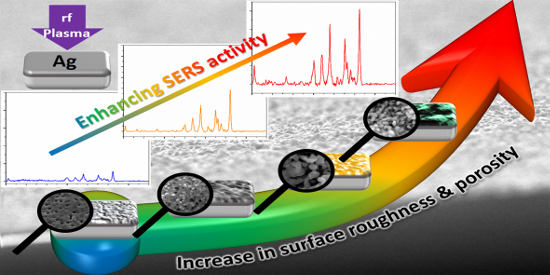
- the SERS activity can deteriorate due to surface oxidation of the silver surface [88]. For increasing the long-term stability of SERS active silver films we have studied a thin layer of dielectric Al2O3 as protective coating [89]. A 1 nm thick Al2O3 film was deposited on top of the nanoporous silver






Thickness-dependent photoelectrochemical properties of a semitransparent Co3O4 photocathode
Beilstein J. Nanotechnol. 2018, 9, 2432–2442, doi:10.3762/bjnano.9.228
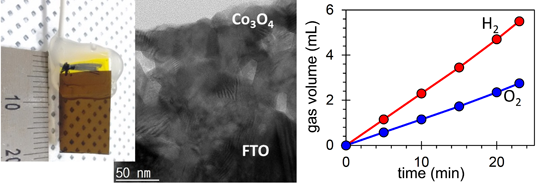
- values of the samples grown by Kirkendall diffusion. This variation is attributed to the varying porosity that does not occur shown in the compact Co3O4 film [20]. In order to investigate the long-term stability, the PEC cell was tested for 24 h as shown in Figure 6a. The PEC cell has dual Co3O4



A scanning probe microscopy study of nanostructured TiO2/poly(3-hexylthiophene) hybrid heterojunctions for photovoltaic applications
Beilstein J. Nanotechnol. 2018, 9, 2087–2096, doi:10.3762/bjnano.9.197
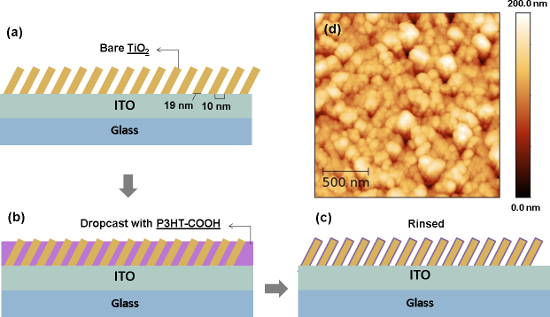
- production of renewable energy [1]. Inorganic photovoltaic cells are currently the most employed PV devices with a power efficiency ranging from 20 to 40% [2] and a long-term stability up to 20 years [3]. However, a number of drawbacks affect those technologies. Indeed, in addition to high energy consumption


Fabrication of photothermally active poly(vinyl alcohol) films with gold nanostars for antibacterial applications
Beilstein J. Nanotechnol. 2018, 9, 2040–2048, doi:10.3762/bjnano.9.193
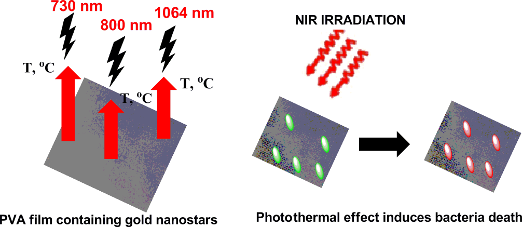
- the fact that GNSs coated with hydrophilic PEG can slightly increase the whole hydrophilicity of the films. The weight loss of the PVA-GNS films in water as a function of time is also a relevant parameter, providing information about long-term stability of the films under prolonged use. After


Metal-free catalysis based on nitrogen-doped carbon nanomaterials: a photoelectron spectroscopy point of view
Beilstein J. Nanotechnol. 2018, 9, 2015–2031, doi:10.3762/bjnano.9.191
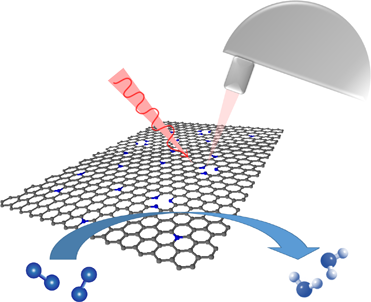
- materials, dual doping promotes long-term stability and resistance to poisoning agents for working catalysts. In general, the principle of dual doping is the introduction in the hexagonal carbon lattice of two elements with reverse electronegativity with respect to that of carbon (χ = 2.55), for example, N




Ag2WO4 nanorods decorated with AgI nanoparticles: Novel and efficient visible-light-driven photocatalysts for the degradation of water pollutants
Beilstein J. Nanotechnol. 2018, 9, 1308–1316, doi:10.3762/bjnano.9.123
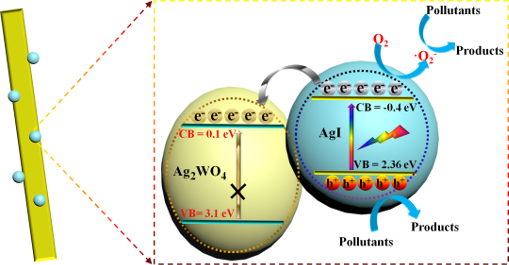
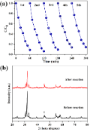
- ). These facts suggest that 0.3AgI/Ag2WO4 possesses long-term stability for photocatalytic reaction. Photocatalytic mechanism To elucidate the degradation mechanism, active-species trapping tests were performed during RhB degradation over 0.3AgI/Ag2WO4 (Figure 9) [13][48]. Figure 9 shows the effects of




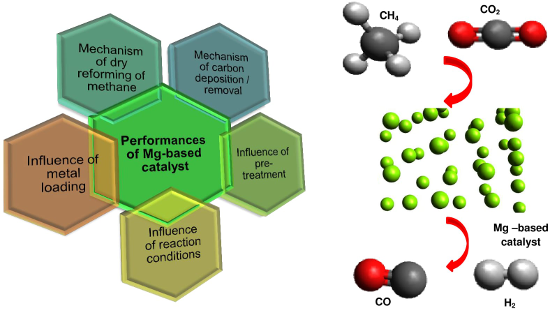
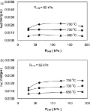
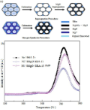
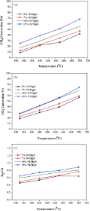
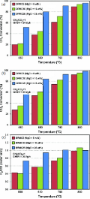
Understanding the performance and mechanism of Mg-containing oxides as support catalysts in the thermal dry reforming of methane
Beilstein J. Nanotechnol. 2018, 9, 1162–1183, doi:10.3762/bjnano.9.108






Single-crystalline FeCo nanoparticle-filled carbon nanotubes: synthesis, structural characterization and magnetic properties
Beilstein J. Nanotechnol. 2018, 9, 1024–1034, doi:10.3762/bjnano.9.95
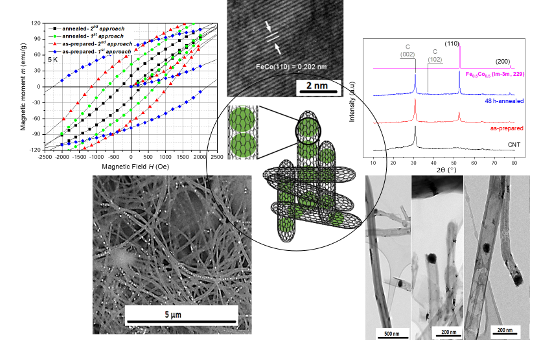
- , shape, arrangement of the magnetic nanoparticles to their magnetic, chemical, mechanical and catalytic properties [18][26][30], it is important to choose synthesis methods which guarantee the control of size and morphology as well as the long-term stability in order to allow these magnetic nanoparticles


Facile synthesis of a ZnO–BiOI p–n nano-heterojunction with excellent visible-light photocatalytic activity
Beilstein J. Nanotechnol. 2018, 9, 789–800, doi:10.3762/bjnano.9.72
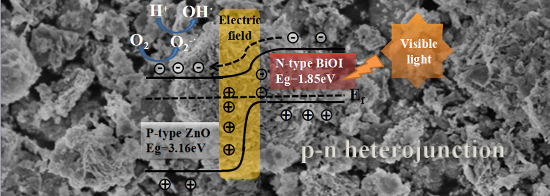
- the most widely exploited by taking advantage of their long-term stability and environmental non-toxicity, in addition to providing a low-cost alternative to the n-type semiconductor photocatalysts [14][15][16]. However, further application of these metal oxides is usually significantly limited by the





