


Search results
Search for "luminescence" in Full Text gives 170 result(s) in Beilstein Journal of Nanotechnology.
Interfacial charge transfer processes in 2D and 3D semiconducting hybrid perovskites: azobenzene as photoswitchable ligand
Beilstein J. Nanotechnol. 2020, 11, 466–479, doi:10.3762/bjnano.11.38
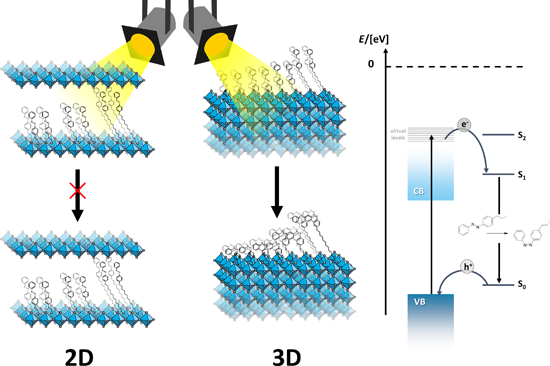
- virtual level. Usually trap states and lattice defects in the surface region lead to a high concentration of charge carriers and to radiative recombination with a bright luminescence [51][52]. Instead, electrons from the high virtual level can be transferred also to an excited state of the azobenzene




Nanoarchitectonics: bottom-up creation of functional materials and systems
Beilstein J. Nanotechnol. 2020, 11, 450–452, doi:10.3762/bjnano.11.36

- spectroscopy [37], bio-nanocomposites with clay nanoarchitectures for electrochemical devices [38], a biomimetic nanofluidic diode with polymeric carbon nitride nanotubes [39], and a unique Janus-micromotor applied as a luminescence sensor for sensitive TNT detection [40]. The variety of nanoarchitectonics

Using gold nanoparticles to detect single-nucleotide polymorphisms: toward liquid biopsy
Beilstein J. Nanotechnol. 2020, 11, 263–284, doi:10.3762/bjnano.11.20
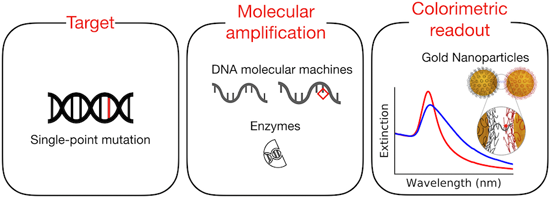
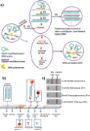
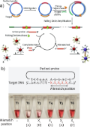
- the distance between metallic and semiconductor components by a DNA machine (Figure 11). Their system consisted of a CdS film, a composite of AuNPs (5 nm) and hairpin DNA, a primer, and polymerase and NEase. In the presence of AuNPs–hairpin DNA, the luminescence of CdS was quenched (Figure 11A). The
- luminescence was recovered after adding target DNA, causing a conformational transition from hairpin to linear DNA. This opening initiated polymerization of DNA (Figure 11C), which in turn displaced previously hybridized target DNA (Figure 11D). In such a design, one target DNA strand could open many hairpin




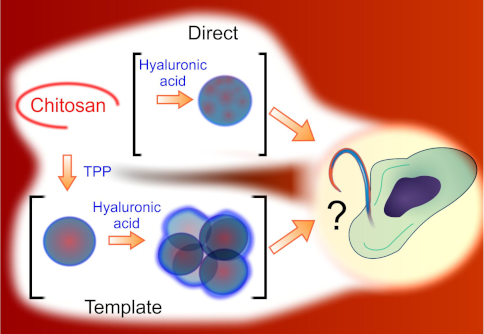
The different ways to chitosan/hyaluronic acid nanoparticles: templated vs direct complexation. Influence of particle preparation on morphology, cell uptake and silencing efficiency
Beilstein J. Nanotechnol. 2019, 10, 2594–2608, doi:10.3762/bjnano.10.250
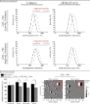
- after cell lysate centrifugation (4,500 rpm, 2 min) using the ONE Glo luciferase assay following manufacturer’s instructions. The relative luminescence units (RLU) were measured using a Synergy2 Biotek plate reader (Gen5 data acquisition software), and normalized against the total protein content (BCA



Self-assembly of a terbium(III) 1D coordination polymer on mica
Beilstein J. Nanotechnol. 2019, 10, 2440–2448, doi:10.3762/bjnano.10.234
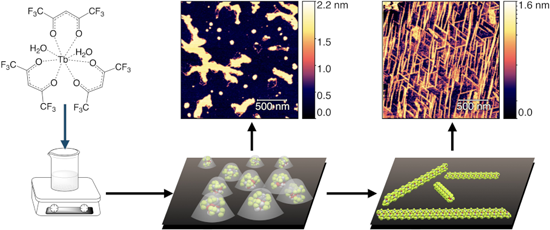
- three preferential directions 60° apart from another. The magnetic properties and the luminescence of the nanochains can be detected without the need of surface-dedicated instrumentation. The intermediate value of the observed luminescence lifetime of the deposits (132 µs) compared to that of the bulk
- (375 µs) and the CHCl3 solution (13 µs) further reinforces the idea of water-induced growth. Keywords: atomic force microscopy (AFM); luminescence; nanostructuration; polymer; self-assembly; surface; terbium complexes; Introduction The study of materials for the realization of novel magnetic [1][2][3
- ]. Moreover, TbIII ions are known to exhibit a strong green luminescence under UV irradiation [14]. Similar to what has been observed for other lanthanide ions, the luminescence emission spectrum is characterized by a line shape that is barely affected by the ionic environment because of the inner nature of




Coating of upconversion nanoparticles with silica nanoshells of 5–250 nm thickness
Beilstein J. Nanotechnol. 2019, 10, 2410–2421, doi:10.3762/bjnano.10.231
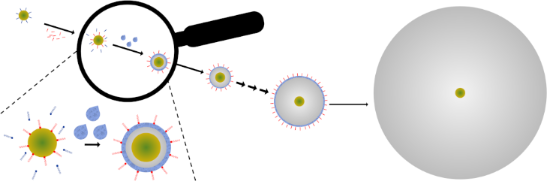
- . Accordingly, the broad signal of the amorphous silica at 2θ = 20–25° becomes more dominant with increasing thickness of the silica shell. These data indicate that the crystal structure of the UCNP cores is not changed during the silica shell formation process. Figure 3 shows the upconversion luminescence (UCL
- zeta cells DTS 1070 from Malvern Instruments. The concentration of the samples in all measurements was between 0.5 and 1 mg/mL. Measurements of the upconversion luminescence (UCL) The UCL measurements were carried out with a FluoroMax-4 spectrometer from Horiba Jobin Yvon equipped with a 2 W 980 nm


Nonlinear absorption and scattering of a single plasmonic nanostructure characterized by x-scan technique
Beilstein J. Nanotechnol. 2019, 10, 2182–2191, doi:10.3762/bjnano.10.211
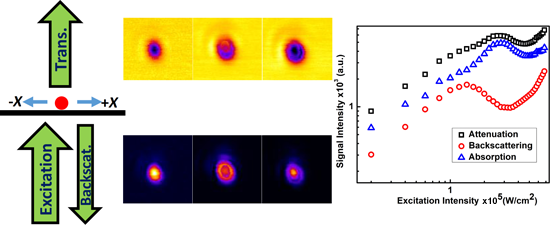
- -photon luminescence (TPL). Typically, laser intensities of gigawatts per square centimeter are necessary to induce SHG or TPL [24][25]. Yet, in our case, the excitation intensity is on the order of megawatts per square centimeter, hence, three orders of magnitude lower. In our earlier work, we suggested


Nitrogen-vacancy centers in diamond for nanoscale magnetic resonance imaging applications
Beilstein J. Nanotechnol. 2019, 10, 2128–2151, doi:10.3762/bjnano.10.207


Improved adsorption and degradation performance by S-doping of (001)-TiO2
Beilstein J. Nanotechnol. 2019, 10, 2116–2127, doi:10.3762/bjnano.10.206
- carriers, because increased photo-generated electron–hole pair recombination results in a stronger luminescence intensity. Figure 9 representatively shows the PL spectra of the 2-S0, 2-S0.5, 2-S2, 2-S3 and 2-S5 samples. For all the samples, the emission peaks are located at 421, 474 and 541 nm. The
- emission peak at 421 nm results from the interband transition of TiO2. The emission peaks at 474 and 541 nm can be attributed to the radiative recombination of the self-trapped excitons and the hydroxylated Ti3+ surface complexes, respectively [53][54]. Obviously, the luminescence intensity initially
- increases for larger RS/Ti with sample 2-S2 having the strongest luminous intensity. Then, for samples 2-S3 to 2-S5, the luminescence intensity decreases again with sample 2-S5 having the weakest intensity. In contrast, no such obvious change of the luminescence intensity with increasing RS/Ti has been




Review of advanced sensor devices employing nanoarchitectonics concepts
Beilstein J. Nanotechnol. 2019, 10, 2014–2030, doi:10.3762/bjnano.10.198
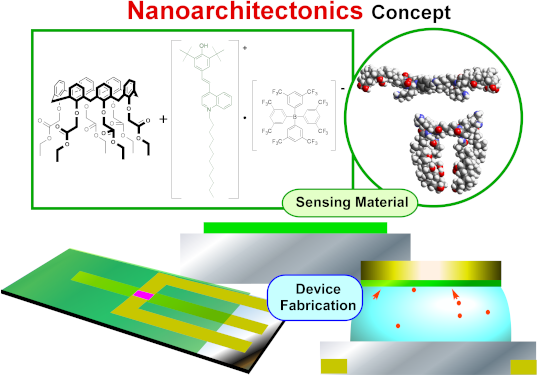
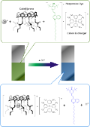
- structure and switchable luminescence capability for sensitive water detection [131]. The metal–organic framework sensor was prepared from Zn and (5-(2-(5-fluoro-2-hydroxyphenyl)-4,5-bis(4-fluorophenyl)-1H-imidazol-1-yl)isophthalic acid) ligands, the latter of which shows a characteristic excited state





Optimization and performance of nitrogen-doped carbon dots as a color conversion layer for white-LED applications
Beilstein J. Nanotechnol. 2019, 10, 2004–2013, doi:10.3762/bjnano.10.197
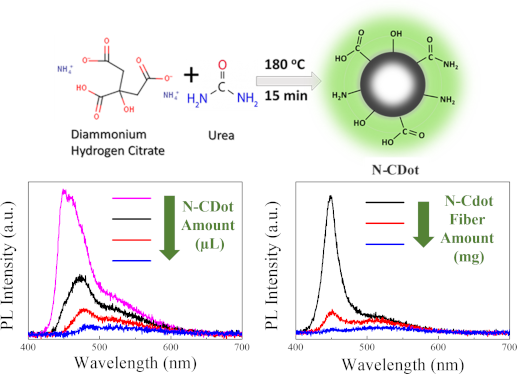
- becomes almost one at the highest amount of N-CDots (50 µL, blue line). Meanwhile, the PL intensity of the resulting PVP/N-CDot composites drops dramatically as the amount of the N-CDots increases. Such a reduction is expected due to aggregation-induced luminescence quenching (AILQ) [57][58][59], enhanced
- decreases as the N-CDot amount is increased (at fixed amount of red phosphor). This behavior possibly results from aggregation-induced luminescence quenching and enhanced scattering of the light within the composites. In the case of the sample CDR 3, adding more red phosphor at the fixed N-CDots amount


Magnetic properties of biofunctionalized iron oxide nanoparticles as magnetic resonance imaging contrast agents
Beilstein J. Nanotechnol. 2019, 10, 1964–1972, doi:10.3762/bjnano.10.193
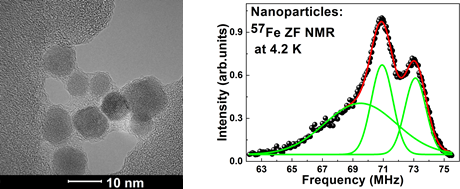
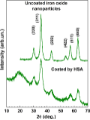
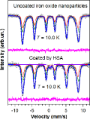
- of the intensity and position of the Raman lines indicates that the amount of magnetite is negligible compared to maghemite γ-Fe2O3. Since the Raman studies of the HSA-coated nanoparticles revealed luminescence from the HSA organic compounds, we were not able to record the Raman spectrum of these




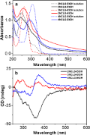
Chiral nanostructures self-assembled from nitrocinnamic amide amphiphiles: substituent and solvent effects
Beilstein J. Nanotechnol. 2019, 10, 1608–1617, doi:10.3762/bjnano.10.156
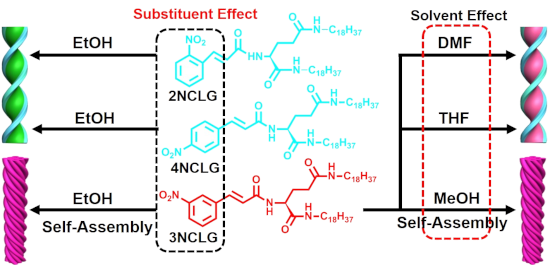
- value [29][30], solvents [31][32], temperature [33][34], and photo-irradiation [35][36]. Inverse chiral nanostructures have exhibited their tunable functions in the field of asymmetric catalysts [37][38][39], chiral separation [40][41], and circular polarized luminescence [42][43]. In this case, tunable




Janus-micromotor-based on–off luminescence sensor for active TNT detection
Beilstein J. Nanotechnol. 2019, 10, 1324–1331, doi:10.3762/bjnano.10.131
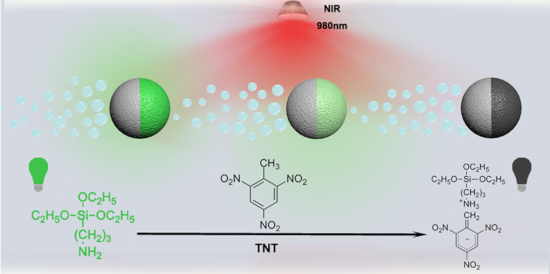
- Kuang Jie 2, Harbin 150080, China 10.3762/bjnano.10.131 Abstract An active TNT (2,4,6-trinitrotoluene) catalytic sensor based on Janus upconverting nanoparticle (UCNP)-functionalized micromotor capsules, displaying “on–off” luminescence with a low limit of detection has been developed. The Janus
- by overcoming the limitation of passive diffusion and enhancing the interaction between the reactants. However, self-propelled micromotors, to our knowledge, have never been explored for the detection of TNT. Here, we report the first example of catalytic Janus capsule micromotors as luminescence
- hydrogen peroxide fuel into oxygen at a speed of up to 110 μm s−1 (22 body lengths per second). Meanwhile, the Janus microcapsules are able to actively adsorb and detect TNT based on the luminescence quenching of the UCNPs by TNT. The combination of efficient self-propulsion and TNT detection by these


Luminescence of Tb3Al5O12 phosphors co-doped with Ce3+/Gd3+ for white light-emitting diodes
Beilstein J. Nanotechnol. 2019, 10, 1237–1242, doi:10.3762/bjnano.10.123
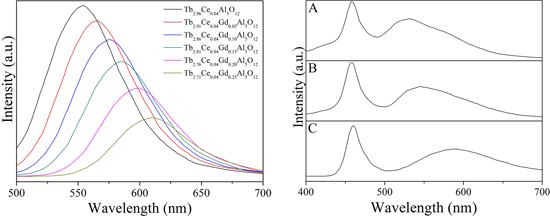
- , Jinan 250014, China 10.3762/bjnano.10.123 Abstract Tb2.96−xCe0.04GdxAl5O12 phosphors were synthesized through solid-state reactions. The influence of Gd3+ on the luminescence was investigated. Under the excitation at 460 nm, Tb2.96Ce0.04Al5O12 shows the characteristic emission band of Ce3+ with a peak
- : luminescence; Tb3Al5O12:Ce3+/Gd3+; white light-emitting diodes (WLEDs); Introduction Currently, the most popular fabrication model of white light-emitting diodes (WLEDs) is to combine blue chips with yellow Y3Al5O12:Ce3+ phosphors, which has the disadvantages of low colour-rendering index (CRI) and high
- longer than 611 nm [9]. We aimed to shift the emission wavelength of Tb3Al5O12:Ce3+ to a longer wavelength that is, however, still shorter than 611 nm. In this work, we report the synthesis and luminescence of a series of Ce3+/Gd3+-co-doped Tb3Al5O12 phosphors. The effect of co-doping Gd3+ on the


Electroluminescence and current–voltage measurements of single-(In,Ga)N/GaN-nanowire light-emitting diodes in a nanowire ensemble
Beilstein J. Nanotechnol. 2019, 10, 1177–1187, doi:10.3762/bjnano.10.117
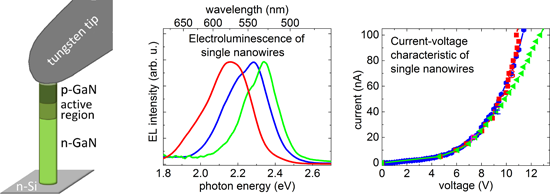
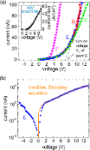
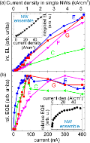
- ) behavior of single, freestanding (In,Ga)N/GaN nanowire (NW) light-emitting diodes (LEDs) in an unprocessed, self-assembled ensemble grown by molecular beam epitaxy. The data were acquired in a scanning electron microscope equipped with a micromanipulator and a luminescence detection system. Single NW
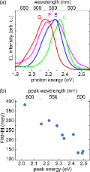
- ensemble results from the superposition of the contributions of single-NW LEDs with a substantial spread in emission properties. This finding is in agreement with the results of CL and EL studies on single NWs with a similar structure [3][4][7]. A more detailed discussion of the ensemble luminescence of
- where only one major, slightly asymmetric emission band was visible. A similar band profile of the EL spectra of single NWs has already been reported in the literature [4][7]. Hence, we assume that spectrum C shows the luminescence of a single nanowire LED. In order to better understand the emission


CuInSe2 quantum dots grown by molecular beam epitaxy on amorphous SiO2 surfaces
Beilstein J. Nanotechnol. 2019, 10, 1103–1111, doi:10.3762/bjnano.10.110
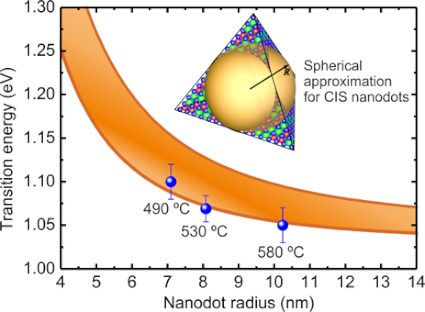
- bandgap and in agreement with the distribution of sizes. A blue-shift of the luminescence is observed as the average size of the nanodots gets smaller, evidencing quantum confinement in all samples. By using simple quantum confinement calculations, we correlate the photoluminescence peak emission energy
- influence of the CdS layer on the measured luminescence, a PL spectrum of a CdS layer deposited on glass covered with a Mo layer, measured under the same experimental conditions, is also shown in Figure 4b. No significant luminescence related with the CdS layer was observed. Intrinsic defects and surface
- superposition with the sharp Si emissions from the substrate, we used several Gaussian components to fit the CIS-related emission (solid black lines). We note that no physical meaning can be ascribed to these Gaussian components, they merely serve to estimate the peak energy of each broad luminescence spectrum


Structural and optical properties of penicillamine-protected gold nanocluster fractions separated by sequential size-selective fractionation
Beilstein J. Nanotechnol. 2019, 10, 955–966, doi:10.3762/bjnano.10.96
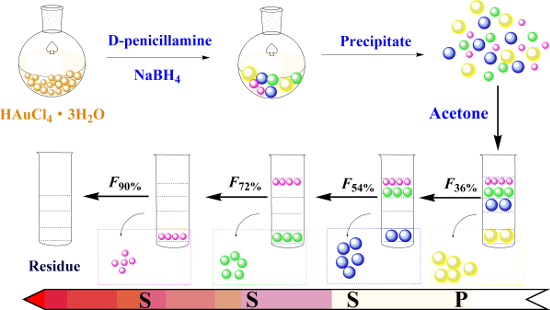
- energies on nanocluster sizes indicates that the optical luminescence of the samples comes from the quantum confinement effect. The band gap of the NCs increases with a decrease in the dimension of the AuNC quantum structure. Conclusion In this research, a highly polydisperse penicillamine-protected AuNC



Towards rare-earth-free white light-emitting diode devices based on the combination of dicyanomethylene and pyranine as organic dyes supported on zinc single-layered hydroxide
Beilstein J. Nanotechnol. 2019, 10, 760–770, doi:10.3762/bjnano.10.75
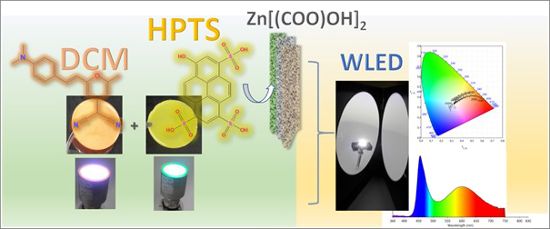
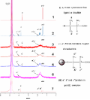
- with commercial blue or UV LEDs to generate coloured light and white light. However, most of them exhibit luminescence properties only in liquid solution when any aggregation-induced quenching is prevented. But we have shown recently that the dyes can exhibit fluorescence in the solid state when they


Outstanding chain-extension effect and high UV resistance of polybutylene succinate containing amino-acid-modified layered double hydroxides
Beilstein J. Nanotechnol. 2019, 10, 684–695, doi:10.3762/bjnano.10.68
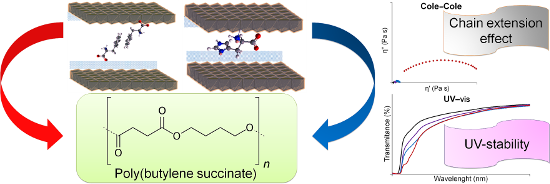
- PC spectrophotometer. Kubelka–Munk theory was applied to the LDH filler data to transform the diffuse reflectance spectra into absorption spectra. The fluorescence spectra of PBS–LDH nanocomposites were recorded with a Perkin-Elmer LS-55 luminescence spectrophotometer equipped with a front surface


Sub-wavelength waveguide properties of 1D and surface-functionalized SnO2 nanostructures of various morphologies
Beilstein J. Nanotechnol. 2019, 10, 379–388, doi:10.3762/bjnano.10.37
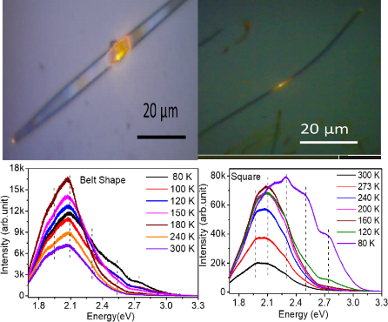
- behavior was also demonstrated in tapered and surface-functionalized SnO2 NWs. While the tapered waveguide can allow for easy focusing of light, the simple surface chemistry offers selective light propagation by tuning the luminescence. Defect-related PL in NWs is studied using temperature-dependent
- (n = 2.1) enables photonic confinement in the NW cavities. The observed waveguide nature arises from defect-controlled luminescence in the visible light range of SnO2 and detailed discussion is provided in the photoluminescence study section. For understanding the propagation of luminescence through
- cut-off width of square-shaped NWs, respectively. Importantly, these dimensions are within the scope of the cut-off dimension of NWs, and hence, propagation of luminescence is highly possible. Figure 6 shows the tapered SnO2 NB waveguide. The width of the wire at the excitation point is around 2 µm


Surface plasmon resonance enhancement of photoluminescence intensity and bioimaging application of gold nanorod@CdSe/ZnS quantum dots
Beilstein J. Nanotechnol. 2019, 10, 22–31, doi:10.3762/bjnano.10.3
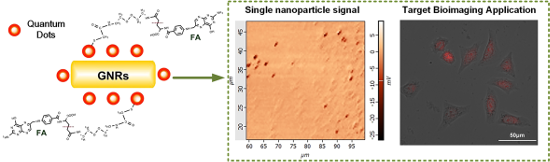
- can be easily tuned from the visible to the near-infrared (NIR) spectrum. QDs have emerged as the next generation of luminescence materials, and they have been widely used as nanoprobes for bioimaging and biosensing. As semiconductor nanocrystals, their large surface-to-volume ratio is advantageous
- nanoparticles were of low toxicity and had bright luminescence, which make them suitable for biosensor and optical detection studies. Results and Discussion The scheme for the synthesis of GNR@CdSe/ZnS and GNR@CdSe/ZnS@FA is illustrated in Figure 1. Firstly, the CdSe/ZnS QDs bind with GNRs kept at a 5 nm
- @CdSe/ZnS can be used in cell imaging studies, after conjugation with FA, we performed a MCF-7 breast cancer cell targeting imaging study, and the results as shown in Figure 8. Robust cellular uptake could be obtained from the CdSe/ZnS@FA and GNR@CdSe/ZnS@FA treated samples. The obvious luminescence and


The nanoscaled metal-organic framework ICR-2 as a carrier of porphyrins for photodynamic therapy
Beilstein J. Nanotechnol. 2018, 9, 2960–2967, doi:10.3762/bjnano.9.275
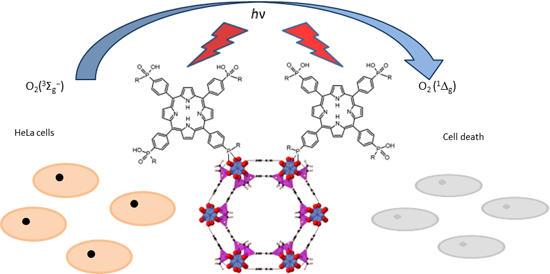
- of variable geometry enables the preparation of a large number of structures with tuneable pore sizes, topologies, and chemical nature [1][2]. Among them, MOFs with photoactivatable properties such as luminescence and photosensitization of singlet oxygen, O2(1∆g), are particularly attractive [3][4][5


Time-resolved universal temperature measurements using NaYF4:Er3+,Yb3+ upconverting nanoparticles in an electrospray jet
Beilstein J. Nanotechnol. 2018, 9, 2916–2924, doi:10.3762/bjnano.9.270
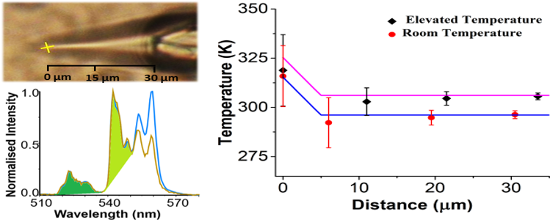
- upconverting nanoparticles (UCNPs) of NaYF4:Er3+,Yb3+ (ca. 300 nm) have been widely used to measure the temperature at the nanoscale using luminescence ratio thermometry. However, several factors limit their applications. For example, changes in the peak shape, mainly is the S-band emission, hinders their
- UCNPs minimizes tissue damage [2], is relatively free of background fluorescence [3], and has a high penetration depth [3][4]. Time-resolved temperature measurements using the luminescence intensity ratio (LIR) of UCNPs are rare [5][6]. Here we show that NaYF4:Er3+,Yb3+ UCNPs can provide time-resolved
- ][18][19][20][21][22][23][24][25][26][27], phase transitions [28][29], quantum dot luminescence thermometry [30], and ultrafast pump–probe measurements [31][32][33][34]. An optical temperature measurement has the advantage of remote sensing but is diffraction-limited with the spatial uncertainty


Variation of the photoluminescence spectrum of InAs/GaAs heterostructures grown by ion-beam deposition
Beilstein J. Nanotechnol. 2018, 9, 2794–2801, doi:10.3762/bjnano.9.261
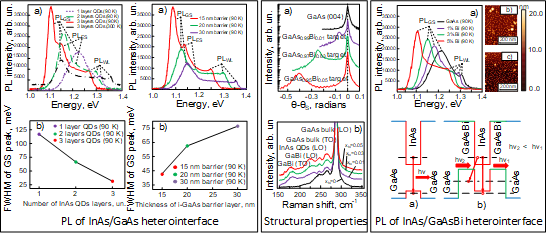
- -shift). The shift value between PLWL peaks and PLGS peaks in the samples increases by 70 meV. It is seen that the FWHM of PLGS peaks decreases with increasing number of InAs QD layers (Figure 1b). As a result, the luminescence spectrum of vertically stacked QD arrays narrows and becomes similar to the





