Search results
Search for "mechanics" in Full Text gives 176 result(s) in Beilstein Journal of Nanotechnology.
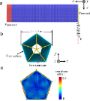
Abrupt elastic-to-plastic transition in pentagonal nanowires under bending
Beilstein J. Nanotechnol. 2019, 10, 2468–2476, doi:10.3762/bjnano.10.237
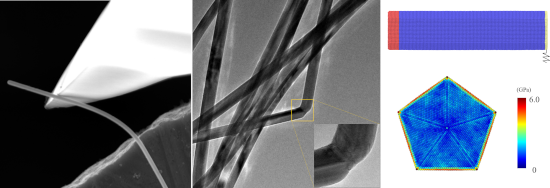
- : The cantilevered beam bending experiments were simulated using the finite element method (FEM) with COMSOL Multiphysics 5.2 solid mechanics module. For this the linear elastic material model from COMSOL was chosen. The simulations were based on a recently developed segmented pentagonal NW model [29



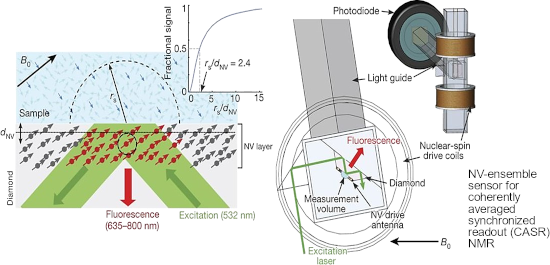
Nitrogen-vacancy centers in diamond for nanoscale magnetic resonance imaging applications
Beilstein J. Nanotechnol. 2019, 10, 2128–2151, doi:10.3762/bjnano.10.207


Long-term entrapment and temperature-controlled-release of SF6 gas in metal–organic frameworks (MOFs)
Beilstein J. Nanotechnol. 2019, 10, 1851–1859, doi:10.3762/bjnano.10.180
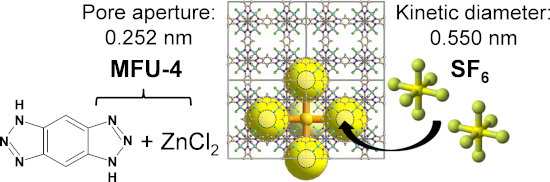
- the displayed path. To obtain a rough estimate for the energy changes along the path, molecular mechanics calculations were performed, employing the universal force field (UFF) [35] parameters as included in the GULP code [36]. In order to prevent an origin shift of the framework during transition
- of MFU-4 (Figure 5a), molecular mechanics calculations were performed, employing the universal force field (UFF) [35] parameters as included in the GULP code [36]. Force field atom types were assigned automatically within Material Studio’s Visualizer GUI [37]. The cell parameters for the cubic unit


Prestress-loading effect on the current–voltage characteristics of a piezoelectric p–n junction together with the corresponding mechanical tuning laws
Beilstein J. Nanotechnol. 2019, 10, 1833–1843, doi:10.3762/bjnano.10.178
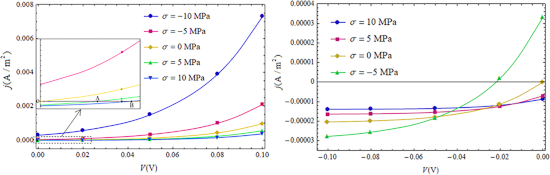
- Wanli Yang Shuaiqi Fan Yuxing Liang Yuantai Hu Department of Mechanics, Hubei Key Laboratory of Engineering Structural Analysis and Safety Assessment, Huazhong University of Science and Technology, Wuhan 430074, China 10.3762/bjnano.10.178 Abstract A model is proposed to study the diffusion of




Subsurface imaging of flexible circuits via contact resonance atomic force microscopy
Beilstein J. Nanotechnol. 2019, 10, 1636–1647, doi:10.3762/bjnano.10.159
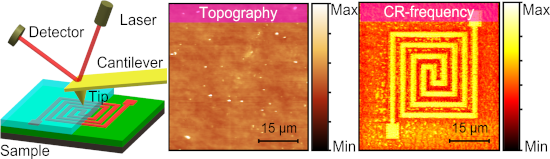
- the cantilever and the contact mechanics between the tip and the multilayer sample. Finite element analysis (FEA) was also carried out for comparison. Some qualitative clues were obtained for optimizing the imaging contrast, which were experimentally proved. Finally, imaging of structural defects in
- convenient modeling of the contact mechanics for multilayers without the requirement of a rigid substrate. In their approach, the stress and displacement fields for each layer and the substrate are first expressed in terms of harmonic Papkovich–Neuber potentials. Then, the unknown functions in the potential
- the dispersion curve. The cantilever dynamics analysis and the tip–sample contact mechanics model can provide the dispersion relation between contact resonance frequency and contact stiffness, and the relationship between contact stiffness and local mechanical properties, respectively [16][44]. The



Magnetic segregation effect in liquid crystals doped with carbon nanotubes
Beilstein J. Nanotechnol. 2019, 10, 1464–1474, doi:10.3762/bjnano.10.145
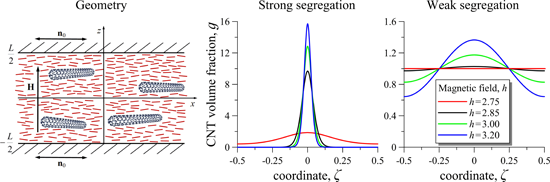
- Danil A. Petrov Pavel K. Skokov Alexander N. Zakhlevnykh Dmitriy V. Makarov Physics of Phase Transitions Department, Perm State University, 614990 Perm, Russia Institute of Continuous Media Mechanics, Russian Academy of Sciences, Ural Branch, Perm, 614013, Russia 10.3762/bjnano.10.145 Abstract We


Nanoscale spatial mapping of mechanical properties through dynamic atomic force microscopy
Beilstein J. Nanotechnol. 2019, 10, 1332–1347, doi:10.3762/bjnano.10.132
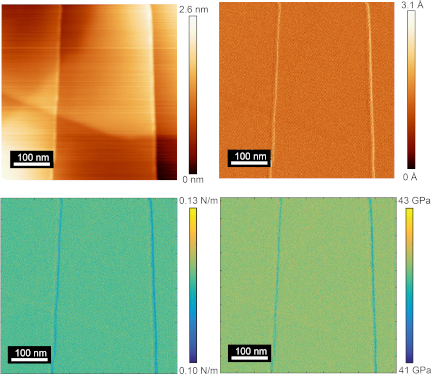
- stiffness. A logical approach is to apply the basic equations of a contact mechanics model to determine the mechanical properties. In principle either the Hertzian [30] or Derjaguin–Muller–Toporov (DMT) models [31] can be employed to calculate the mechanical properties of the contact. However, this approach
- measurements. An effective analytical molecular mechanics model of a graphene sheets [44] was employed in [41] that calculates Young’s modulus of single-walled carbon nanotubes, which extends the model for graphite platelets under infinitesimal deformation. In another study, an elastic modulus of 39.5 GPa was




Capillary force-induced superlattice variation atop a nanometer-wide graphene flake and its moiré origin studied by STM
Beilstein J. Nanotechnol. 2019, 10, 804–810, doi:10.3762/bjnano.10.80
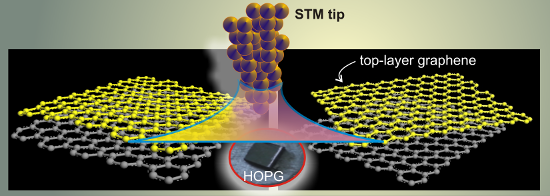
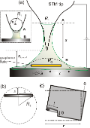
- [50] or about problems in capillary mechanics, we point out a major difference in the meniscus formation at an STM tip–surface interface. Here, the distance s, between the surface and the STM tip is not decided by the requirement for meniscus formation, rather it is defined by the STM operating


Mechanical and thermodynamic properties of Aβ42, Aβ40, and α-synuclein fibrils: a coarse-grained method to complement experimental studies
Beilstein J. Nanotechnol. 2019, 10, 500–513, doi:10.3762/bjnano.10.51
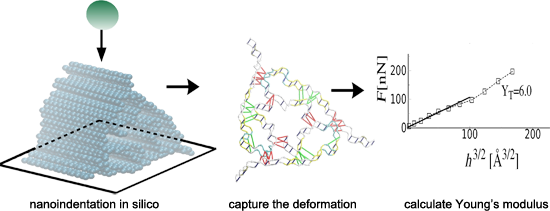
- mechanism of deformation that gives rise to the linear response can be characterized in the CG simulations. From the experimental point of view, there is a long-standing discussion in the atomic force microscopy (AFM) community whether Hertzian mechanics is applicable to all soft-matter samples explored
- force contact-modes. Here, we explore the former as it provides a dynamic picture of the whole process and it enables the characterisation of the mechanics during the early deformation stages. Moreover, we employ the CG simulation for the validation of the elastic theory. This is done by calculating the
- considered. The former refers to the way that the indentation load is measured by the deflection of the AFM cantilever. The latter is an assumption of the semi-infinite half-space approximation. Once the AFM data is obtained, it requires interpretation by using a contact mechanics theory. There is no


Biological and biomimetic surfaces: adhesion, friction and wetting phenomena
Beilstein J. Nanotechnol. 2019, 10, 481–482, doi:10.3762/bjnano.10.48

- Keywords: adhesion; air retention; contact mechanics; fluid transport; friction; functional gradients; wetting; This Thematic Series is the continuation of the previous series on the broad topic of biological and bioinspired materials and surfaces [1][2][3]. This collection of articles displays a current
Friction reduction through biologically inspired scale-like laser surface textures
Beilstein J. Nanotechnol. 2018, 9, 2561–2572, doi:10.3762/bjnano.9.238
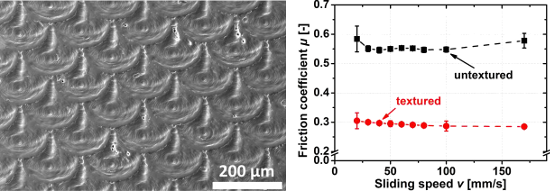
- arguments based on indentation depth do change for a sliding contact (e.g., Hamilton’s [42] instead of Hertz’s [43] solution) should be applied for the stress field. We made use of the contact mechanics solver developed and provided by Pastewka [44]. This program allows uploading white light profilometry
- images and analysing the contact mechanics. Profilometry images of all four scale sizes were taken and attention was focused on the ratio of the true to the projected contact area for a contact with a sapphire counter body. This analysis showed that, in agreement with what was postulated by Baum et al
- or micro-hydrodynamic pressure build-up as these experiments were performed under dry sliding. Understanding and exploiting this size effect phenomenon therefore will be the focus of future research. These investigations will mainly involve a detailed modelling of the contact mechanics for each


Evidence of friction reduction in laterally graded materials
Beilstein J. Nanotechnol. 2018, 9, 2443–2456, doi:10.3762/bjnano.9.229
- directions and have recently acquired great interest in technology [10]. Several authors have studied standard solid mechanics problems considering FGMs, for example, in the case of various loading conditions [11][12][13], and in problems involving fracture [14][15][16][17] or fatigue [18]. Recently, FGMs
- have also been applied to tribological studies, where it is well known that the behaviour of a system is governed by multiphysics and multiscale interactions [19]. The first application of graded materials to contact mechanics was proposed by Giannakopoulos and Suresh, who presented an analytical study


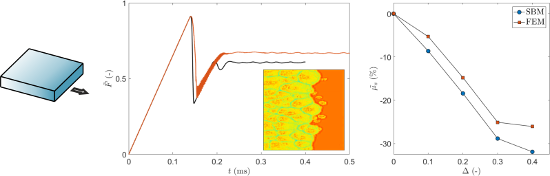
![[Graphic 5]](/bjnano/content/inline/2190-4286-9-229-i10.svg?max-width=637&scale=1.18182) as function of time for the non-graded material: SBM solution for dif...
as function of time for the non-graded material: SBM solution for dif...


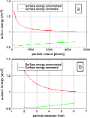
Surface energy of nanoparticles – influence of particle size and structure
Beilstein J. Nanotechnol. 2018, 9, 2265–2276, doi:10.3762/bjnano.9.211
- Dieter Vollath Franz Dieter Fischer David Holec NanoConsulting, Primelweg 3, D-76297 Stutensee, Germany Institute of Mechanics, Montanuniversität Leoben, A-8700 Leoben, Austria Department of Physical Metallurgy and Materials Testing, Montanuniversität Leoben, A-8700 Leoben, Austria 10.3762/bjnano
- classical Newtonian mechanics of multibody systems. Later developments apply potentials derived from quantum-mechanical laws. Compared to continuum thermodynamics, molecular dynamic calculations give a deeper insight into the structure of small particles. A study on structure and melting of a particle with





Recent highlights in nanoscale and mesoscale friction
Beilstein J. Nanotechnol. 2018, 9, 1995–2014, doi:10.3762/bjnano.9.190
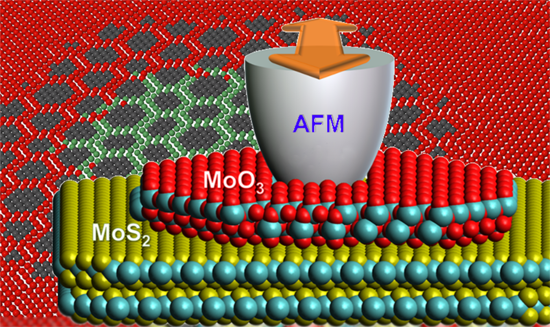
- . Manipulation of graphene nanoribbons on gold A number of nano-mechanics experiments were performed with graphene nanoribbons (GNRs) manipulated by the tip of a force microscope [58]. The structure of the GNR was determined by means of high-resolution force microscopy (CO-terminated tip), with a method
- [47], as discussed in Section “Controlled nanomovements” (see Figure 2). Pawlak et al. investigated the sliding of a single molecule on a Cu(111) surface in order to shed light on the interplay between intra-molecular mechanics and friction [183]. The experiment was realized by attaching a single


Nonlinear effect of carrier drift on the performance of an n-type ZnO nanowire nanogenerator by coupling piezoelectric effect and semiconduction
Beilstein J. Nanotechnol. 2018, 9, 1917–1925, doi:10.3762/bjnano.9.183
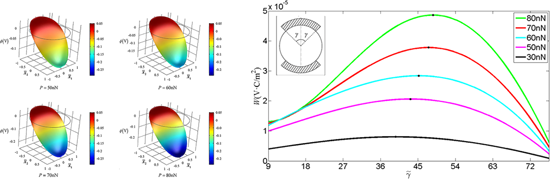
- Yuxing Liang Shuaiqi Fan Xuedong Chen Yuantai Hu Department of Mechanics, Hubei Key Laboratory of Engineering Structural Analysis and Safety Assessment, Huazhong University of Science and Technology, Wuhan 430074, China State Key Laboratory of Digital Manufacturing Equipment & Technology, Huazhong


![[Graphic 46]](/bjnano/content/inline/2190-4286-9-183-i59.svg?max-width=637&scale=1.18182) and (b) boundary electric displacement Dr at Ω for different end f...
and (b) boundary electric displacement Dr at Ω for different end f...


The inhibition effect of water on the purification of natural gas with nanoporous graphene membranes
Beilstein J. Nanotechnol. 2018, 9, 1906–1916, doi:10.3762/bjnano.9.182
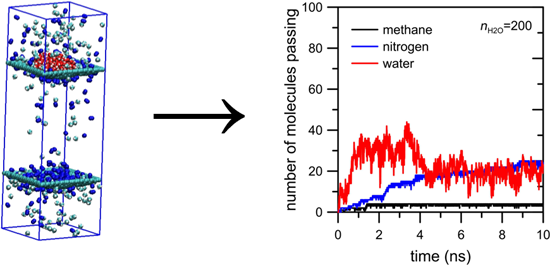
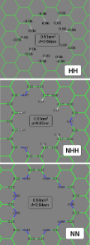
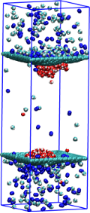
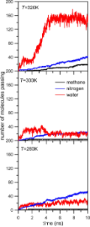
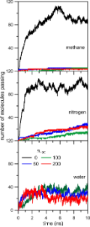
- NHH and NN were obtained by R.E.D. Server [22] using the RESP-A1A (HF/6-31G*) charge model and the Gaussian 09 quantum mechanics program (Figure 2). MD simulations were performed by putting a CH4 + N2 gas mixture composed of 200 + 200 molecules and a varying amount of TIP3P water (0 and 200 molecules






Nanocomposites comprised of homogeneously dispersed magnetic iron-oxide nanoparticles and poly(methyl methacrylate)
Beilstein J. Nanotechnol. 2018, 9, 1613–1622, doi:10.3762/bjnano.9.153
- , Večna pot 111, 1000 Ljubljana, Slovenia Institute of Electrical Power Engineering, Faculty of Electrical Engineering and Computer Science, University of Maribor, Smetanova 17, 2000 Maribor, Slovenia Institute of Mathematics, Physics and Mechanics, Jadranska 19, 1000 Ljubljana, Slovenia, Laboratory for


Excitation of nonradiating magnetic anapole states with azimuthally polarized vector beams
Beilstein J. Nanotechnol. 2018, 9, 1478–1490, doi:10.3762/bjnano.9.139
- atom, where the electrons are confined and in constant motion, so they are inevitably accelerated. In quantum mechanics it was postulated that electrons live at certain orbits, which do not radiate. And this postulate was taken for granted, since it does not contradict any experimental observation at


Atomic-level characterization and cilostazol affinity of poly(lactic acid) nanoparticles conjugated with differentially charged hydrophilic molecules
Beilstein J. Nanotechnol. 2018, 9, 1328–1338, doi:10.3762/bjnano.9.126
- with a novel reactive force field (ReaxFF) [36][37]. This force field considers both covalent and electrostatic interactions by employing a bond-order formalism and a polarizable charge description, enabling depiction of chemical bonding (bond formation and rupture) without expensive quantum mechanics


Atomistic modeling of tribological properties of Pd and Al nanoparticles on a graphene surface
Beilstein J. Nanotechnol. 2018, 9, 1239–1246, doi:10.3762/bjnano.9.115
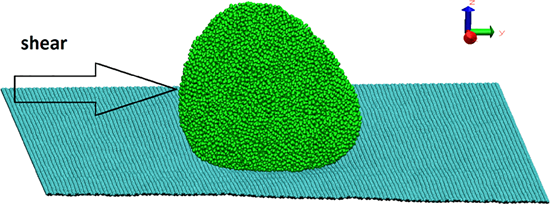
- temperature T and the pressure P fluctuate. In terms of statistical mechanics, conventional MD yields quantities averaged over the microcanonical ensemble NVE (N is the number of molecules) [12], but experiments with a constant temperature correspond to the canonical ensemble NVT. Friction and wear phenomena


A novel copper precursor for electron beam induced deposition
Beilstein J. Nanotechnol. 2018, 9, 1220–1227, doi:10.3762/bjnano.9.113
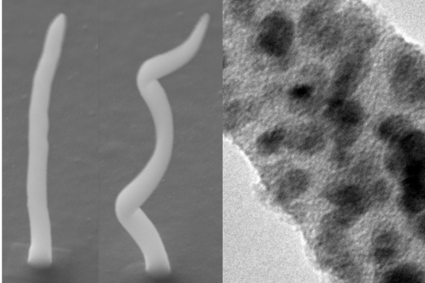
- Erlangen, Germany Institute of Optics, Information and Photonics, Friedrich-Alexander-Universität Erlangen-Nürnberg (FAU), Staudtstr. 7/B2, 91058 Erlangen, Germany Empa—Swiss Federal Laboratories for Materials Science and Technology, Laboratory for Mechanics of Materials and Nanostructures


Imaging of viscoelastic soft matter with small indentation using higher eigenmodes in single-eigenmode amplitude-modulation atomic force microscopy
Beilstein J. Nanotechnol. 2018, 9, 1116–1122, doi:10.3762/bjnano.9.103
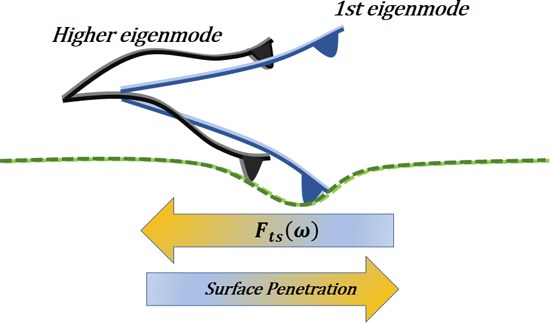
- the material, therefore the tip–sample force not only depends on tip position but also on tip velocity and higher displacement derivatives, in addition to force derivatives [11][16]. This contact-mechanics problem for viscoelastic half spaces has been formulated by independent studies [18][19][20][21
- 1 (Figure S1). The contact mechanics described by Equation 4 are strictly only valid for the approach portion of the indenter trajectory. A generalized approach has been derived by Ting, which is applicable for any arbitrary (a priori) known loading history [21]. In our simulations, where a priori


A simple extension of the commonly used fitting equation for oscillatory structural forces in case of silica nanoparticle suspensions
Beilstein J. Nanotechnol. 2018, 9, 1095–1107, doi:10.3762/bjnano.9.101
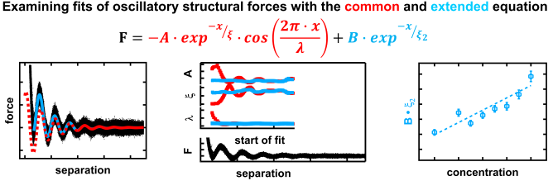
- , roughness [37] and or potential [38], or addition of varying surfactants [39]. Oscillatory structural forces can be described either theoretically via the solutions of numerical simulations [34][40][41][42] or statistical mechanics equations [43][44][45][46][47][48][49][50] or with a semi empirical approach


Review on nanoparticles and nanostructured materials: history, sources, toxicity and regulations
Beilstein J. Nanotechnol. 2018, 9, 1050–1074, doi:10.3762/bjnano.9.98

- are exposed via an extensive microscopic study. It has been shown that adhesion is ensured by sub-micrometric devices whereas flies and beetles rely on terminal setae that are of micrometer dimensions. The principle of contact mechanics, which shows that the adhesion leads to the splitting of contacts
- force in the physical form contribute to their adhesion. In recent reports, the reason for adhesion of gecko setae is due to van der Waals interaction through strong evidence [237] and rejects the capillary adhesion mechanisms. It was predicted that application of contact mechanics may help in smaller


Fatigue crack growth characteristics of Fe and Ni under cyclic loading using a quasi-continuum method
Beilstein J. Nanotechnol. 2018, 9, 1000–1014, doi:10.3762/bjnano.9.93
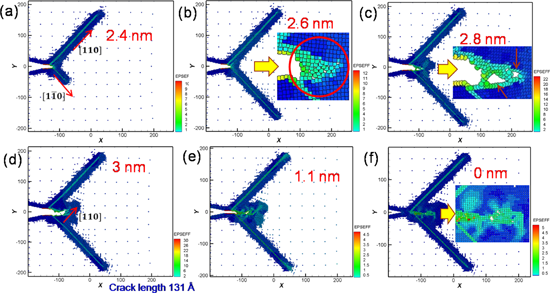
- at any orientation, the slip dislocation observed in the materials considerably affects the release of stress. Keywords: dislocations; fatigue crack growth; materials treatment effects; mechanics; shear stress; Introduction When materials undergo cyclic loading, the growth of cracks in the material
- finally leads to fracture, which is referred to as fatigue. The fatigue behavior of structures is an important topic in fracture mechanics as fatigue failure is one of the major causes of accidents. Hence, it is imperative to investigate the fatigue cracking mechanism of nanocrystals for developing good