Search results
Search for "optical absorption" in Full Text gives 137 result(s) in Beilstein Journal of Nanotechnology.
Porous silver-coated pNIPAM-co-AAc hydrogel nanocapsules
Beilstein J. Nanotechnol. 2019, 10, 1973–1982, doi:10.3762/bjnano.10.194
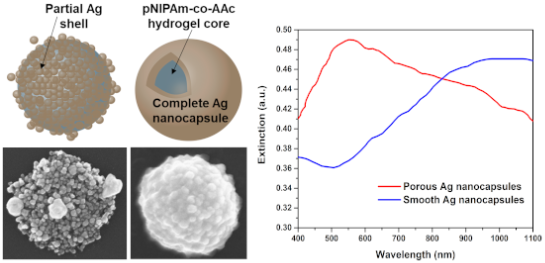
- , the structural morphology, and the optical absorption of the silver nanocapsules, as discussed in the following sections. Size and morphology of the pNIPAM-co-AAc hydrogel cores. SEM measurements were taken to determine the size of the hydrogel cores as well as to gain insight into the morphology of


Remarkable electronic and optical anisotropy of layered 1T’-WTe2 2D materials
Beilstein J. Nanotechnol. 2019, 10, 1745–1753, doi:10.3762/bjnano.10.170
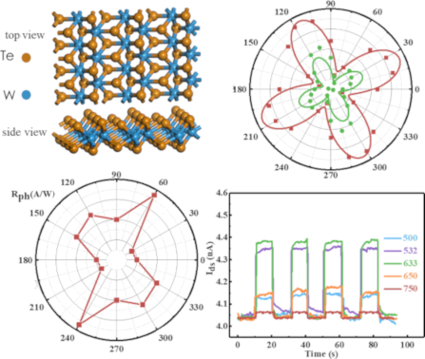
- -response is ascribed to the unique anisotropic in-plane crystal structure, consistent with the optical absorption anisotropy results. In general, 1T’-WTe2, with its highly anisotropic electrical and photoresponsivity reported here, demonstrates a route to exploit the intrinsic anisotropy of 2D materials


Rapid thermal annealing for high-quality ITO thin films deposited by radio-frequency magnetron sputtering
Beilstein J. Nanotechnol. 2019, 10, 1511–1522, doi:10.3762/bjnano.10.149
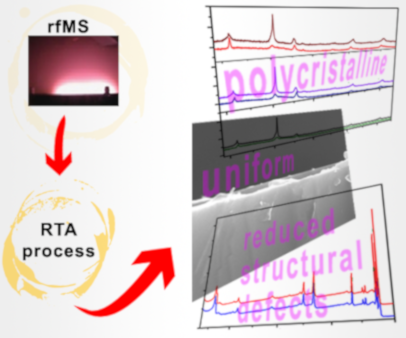
- films (84–93%) (Figure 5) allowed the determination of their optical constants by using the envelope method (Swanepoel). The optical constants were calculated for strong and low absorption domains. It is noted that optical absorption is significant in the 400–1000 nm spectral range, and the edge of the
- absorption band moves toward higher wavelengths as the thickness of the layers increases. The stronger absorption of layers after rapid annealing is influenced by the increased volume of intercrystalline regions. In the literature it is reported that optical absorption is strong in the intercrystalline
- region. Thus, increasing the volume of the intercrystalline regions together with the rapid heating of the layer leads to overall increased optical absorption. In the transmission spectra (400–1000 nm), the two envelopes TM and Tm corresponding to interference maxima and minima were plotted, and the


Fe3O4 nanoparticles as a saturable absorber for giant chirped pulse generation
Beilstein J. Nanotechnol. 2019, 10, 1065–1072, doi:10.3762/bjnano.10.107
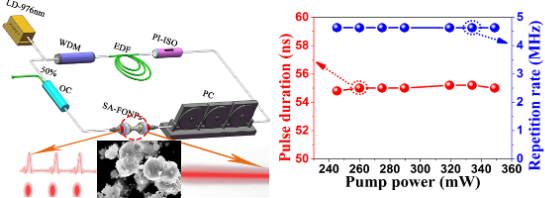
- ) Nonlinear transmission measurement setup for the Fe3O4 SA. (d) Nonlinear optical absorption characteristics of the FONP-based SA. (a) Energy-dispersive spectroscopy, (b) Raman spectroscopy, (c) X-ray diffraction pattern, and (d) UV–vis–NIR spectrum of the as-prepared Fe3O4 cluster-structured nanoparticles
- have been found to produce a charge transfer [5]. Because of the scattering loss, the material absorbs less near infrared (NIR) laser radiation in the NIR-II wavelength range (1000–1300 nm) and the light can penetrate more deeply into the material [6]. In the NIR wavelength region, the optical
- absorption band does not increase because most of the FONPs have a non-stoichiometric structure [5][7]. Therefore, FONPs are a new and promising nonlinear optical material, which can be widely applied for various photonics applications. The novel materials can be applied as a saturable absorber (SA) in fiber


Structural and optical properties of penicillamine-protected gold nanocluster fractions separated by sequential size-selective fractionation
Beilstein J. Nanotechnol. 2019, 10, 955–966, doi:10.3762/bjnano.10.96
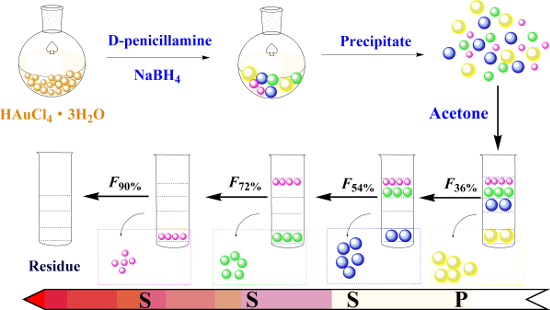
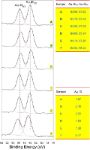
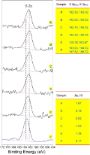
- other hand, a significant increase in the Na and Cl content is observed in the XPS spectrum of the fraction F0% (XPS data not shown). Our XPS data further demonstrates that the SSSP technique not only can narrow the size distribution of the AuNCs but also aids in purifying AuNC samples. Optical
- absorption and photoluminescence properties UV–vis absorption spectra of the AuNC crude product and the fractions are displayed in Figure 9. In order to eliminate the effect of concentration changes on the comparison of spectral shape and band position, these spectra are normalized at 250 nm. The smaller




Synthesis of novel C-doped g-C3N4 nanosheets coupled with CdIn2S4 for enhanced photocatalytic hydrogen evolution
Beilstein J. Nanotechnol. 2019, 10, 912–921, doi:10.3762/bjnano.10.92
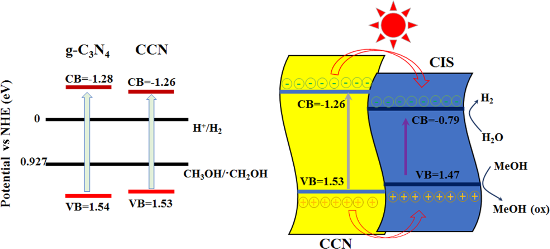
- preparation process. UV–vis diffuse reflectance spectroscopy (DRS) was used to investigate the optical absorption properties of g-C3N4, CCN and the series of CISCCN composites. As shown in Figure 6a, g-C3N4 exhibits an absorption edge at approximately 426 nm. For the CCN sample, however, the light absorption
- visible-light range. This phenomenon may be ascribed to the introduction of CdIn2S4 with slightly narrower bandgaps and the band alignment of the two materials. Furthermore, the introduction of CdIn2S4 into the matrix of CCN has an important impact on the optical absorption properties of CISCCN


Comparing a porphyrin- and a coumarin-based dye adsorbed on NiO(001)
Beilstein J. Nanotechnol. 2019, 10, 874–881, doi:10.3762/bjnano.10.88
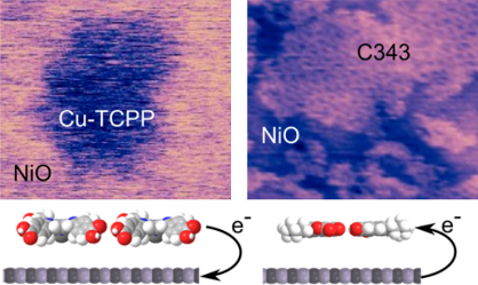
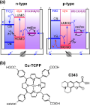
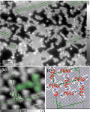
- , Switzerland 10.3762/bjnano.10.88 Abstract Properties of metal oxides, such as optical absorption, can be influenced through the sensitization with molecular species that absorb visible light. Molecular/solid interfaces of this kind are particularly suited for the development and design of emerging hybrid



Direct observation of the CVD growth of monolayer MoS2 using in situ optical spectroscopy
Beilstein J. Nanotechnol. 2019, 10, 557–564, doi:10.3762/bjnano.10.57
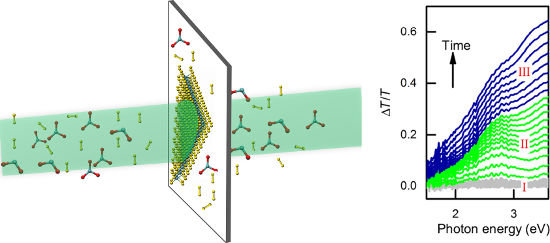
- increase of the optical absorption due to the growth of the MoS2 layer on the surfaces of the sapphire substrate. In comparison with the DR spectra of the same sample measured ex situ at room temperature (see Figure 1e), the peak C is broad and shifted to lower energy. Furthermore, the sharp absorption


Study of silica-based intrinsically emitting nanoparticles produced by an excimer laser
Beilstein J. Nanotechnol. 2019, 10, 211–221, doi:10.3762/bjnano.10.19
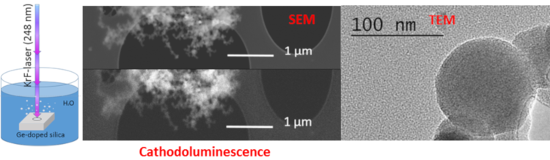
- material such as silica can significantly change the optical absorption spectrum [15][18][19]. Indeed, this can result in additional absorption bands [19] and/or change the band gap [18]. For example, it was suggested that for long-duration laser pulses, point defects can provide “seed” electrons for
- an effect can be compared to the incubation effect previously reported in [17]. This has a lower impact or takes place faster in Ge-doped glasses as a consequence of the band gap shift to lower energy and the presence of GLPC (see [18] for the optical absorption spectrum of the employed Ge-doped



Uniform Sb2S3 optical coatings by chemical spray method
Beilstein J. Nanotechnol. 2019, 10, 198–210, doi:10.3762/bjnano.10.18
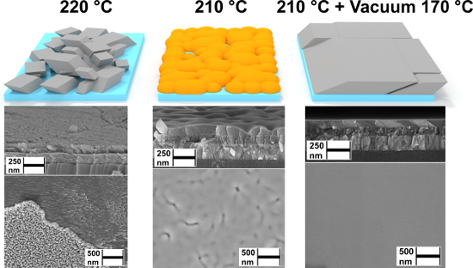
- increases at a slower rate, from around 105 cm−1 at 650 nm to more than 5 × 105 cm−1 at 300 nm. The optical absorption results are in agreement with XRD, which shows that these samples (3-220-As-dep., 3-210-170, 6-210-As-dep. and 6-200-170) contain orthorhombic Sb2S3 (Figure 2A,B). Comparing the α spectra





Amorphous NixCoyP-supported TiO2 nanotube arrays as an efficient hydrogen evolution reaction electrocatalyst in acidic solution
Beilstein J. Nanotechnol. 2019, 10, 62–70, doi:10.3762/bjnano.10.6
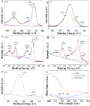
- heterojunction can lower the band gap of the material thus augment the conductivity. The material band gap can be calculated by measuring the optical absorption edge in UV–vis DRS, shown in Figure 5f. It is observed that the absorption edge showed a red shift after electrodeposition of Ni–P and NiCoP. The




Zn/F-doped tin oxide nanoparticles synthesized by laser pyrolysis: structural and optical properties
Beilstein J. Nanotechnol. 2019, 10, 9–21, doi:10.3762/bjnano.10.2
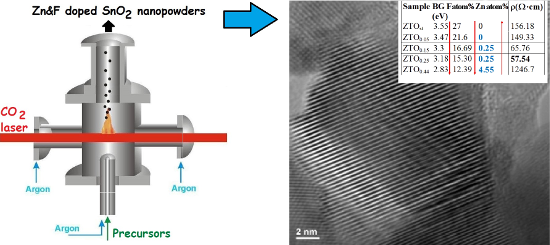
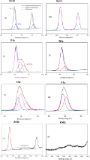
- (bottom) samples. a) The Raman spectra of the as-prepared samples; b) The dependence from the Raman and XPS analysis. a) Optical absorption spectra of the nanoparticles, b) Tauc’s plot for Zn/F-doped and undoped SnO2 nanoparticles (αhν)2 versus (hν). Electrical resistivity measurements. Evaluation of the



Femtosecond laser-assisted fabrication of chalcopyrite micro-concentrator photovoltaics
Beilstein J. Nanotechnol. 2018, 9, 3025–3038, doi:10.3762/bjnano.9.281
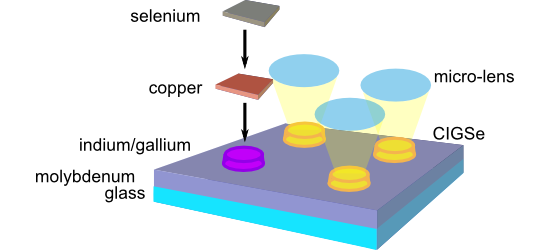
- a positive effect on efficiency and lifetime [6][7][8][9]. In addition, the small dimensions allow for exploring unconventional architectures and for revisiting optical concepts that have been discarded in the past because of high material cost and optical absorption limits. Meanwhile, fully


Oriented zinc oxide nanorods: A novel saturable absorber for lasers in the near-infrared
Beilstein J. Nanotechnol. 2018, 9, 2730–2740, doi:10.3762/bjnano.9.255
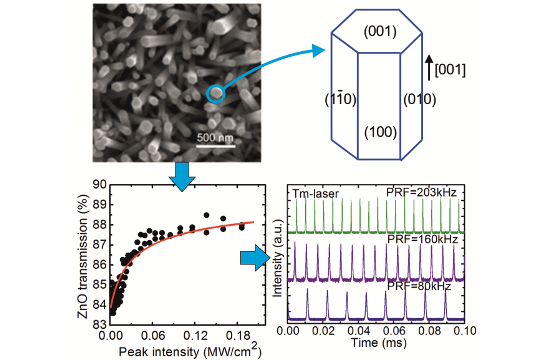
- spectroscopy The results on the optical absorption and luminescence of the ZnO NRs are summarized in Figure 3. The small-signal (internal) absorption spectra of the ZnO NRs grown for 5–15 h are shown in Figure 3a. The spectra were corrected for the Fresnel losses arising from the substrate, T(ZnO NRs) = T(ZnO
- . Here, the scattering was modelled with an empirical formula (scattering loss ≈λ−2.35) [30]. The ZnO NRs are characterized by a broadband near-IR absorption featuring two broad bands centered at ≈1.2 and ≈2 µm, Figure 3a. Let us discuss the nature of the broadband optical absorption of ZnO NRs. In


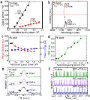

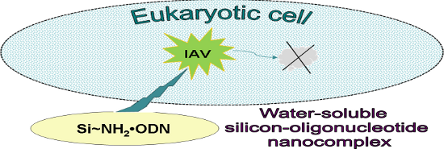
Non-agglomerated silicon–organic nanoparticles and their nanocomplexes with oligonucleotides: synthesis and properties
Beilstein J. Nanotechnol. 2018, 9, 2516–2525, doi:10.3762/bjnano.9.234
- monomers (Glen Research, USA). The optical absorption of oligonucleotides and their derivatives was measured on a Shimadzu U-1800 spectrophotometer (Shimadzu, Japan). Inductively coupled plasma mass spectrometry (ICP-MS) was performed using an Agilent 7700 ICP MS (USA) spectrometer. The IR spectrum of the


Thickness-dependent photoelectrochemical properties of a semitransparent Co3O4 photocathode
Beilstein J. Nanotechnol. 2018, 9, 2432–2442, doi:10.3762/bjnano.9.228
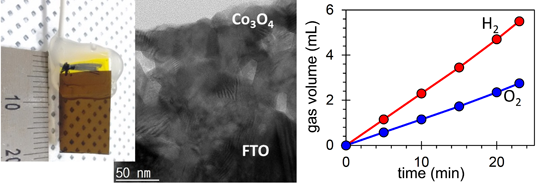
- Co3O4 film are primarily due to its enhanced porosity and optical absorption. We also studied the thickness dependent optical and electrical properties of Co3O4 film grown by reactive sputtering [17]. In fact, we can see the systematic variation of Mott–Schottky characteristics, and so of the VFB and NA



Hierarchical heterostructures of Bi2MoO6 microflowers decorated with Ag2CO3 nanoparticles for efficient visible-light-driven photocatalytic removal of toxic pollutants
Beilstein J. Nanotechnol. 2018, 9, 2297–2305, doi:10.3762/bjnano.9.214
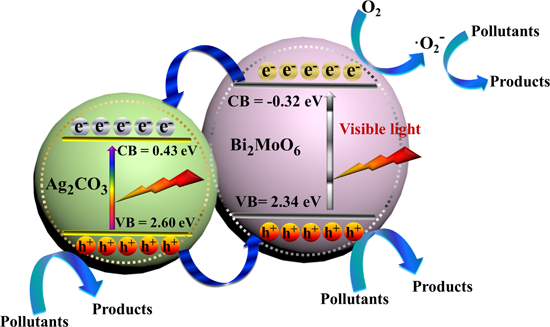
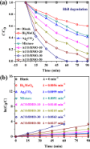
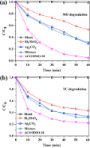
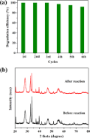
- spacings of 0.32 and 0.43 nm, which match well with the (121) planes of orthorhombic Bi2MoO6 and the (110) planes of monoclinic Ag2CO3 (Figure 3c). Moreover, the energy-dispersive spectroscopy (EDS) pattern confirmed the existence of Ag, C, O, Bi, and Mo in ACO/BMO-30 (Figure 3d). The optical absorption of




A scanning probe microscopy study of nanostructured TiO2/poly(3-hexylthiophene) hybrid heterojunctions for photovoltaic applications
Beilstein J. Nanotechnol. 2018, 9, 2087–2096, doi:10.3762/bjnano.9.197
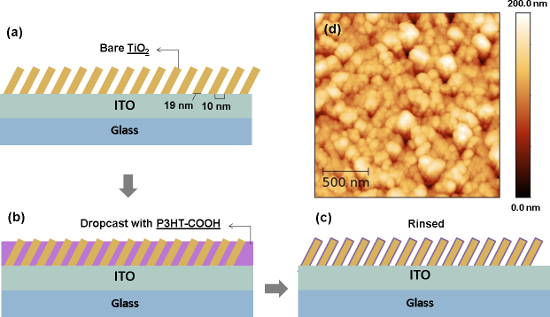
- . The success of the polymer grafting is confirmed by UV–visible optical absorption measurement across a 350–800 nm wavelength range, for which an absorption of light higher by one order of magnitude compared to bare TiO2 was measured [24]. This indicates a good P3HT impregnation along the columns, the


Optical near-field mapping of plasmonic nanostructures prepared by nanosphere lithography
Beilstein J. Nanotechnol. 2018, 9, 1536–1543, doi:10.3762/bjnano.9.144
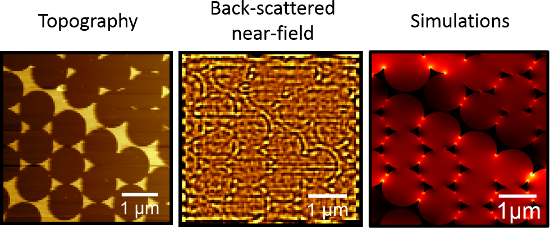
- , thickness ≈33 nm) with a P6mm symmetry was obtained [19]. The optical absorption of the sample was measured: the nanotriangles array exhibit a broad resonance between 500 and 800 nm. Experimental setup The near-field studies were performed using an AIST-NT OmegaScope 1000 TERS system equipped with a




Computational exploration of two-dimensional silicon diarsenide and germanium arsenide for photovoltaic applications
Beilstein J. Nanotechnol. 2018, 9, 1247–1253, doi:10.3762/bjnano.9.116
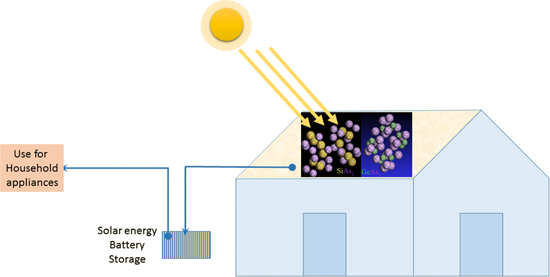
- ) GW-band structures and (b,d) BSE-optical absorption spectra of SiAs2 and GeAs2, respectively. Calculated structural parameters of SiAs2 and GeAs2 compared with the experimental values. Calculated band gaps of SiAs2 and GeAs2 for bulk, bilayers and monolayers. Supporting Information Supporting


Circular dichroism of chiral Majorana states
Beilstein J. Nanotechnol. 2018, 9, 1194–1199, doi:10.3762/bjnano.9.110
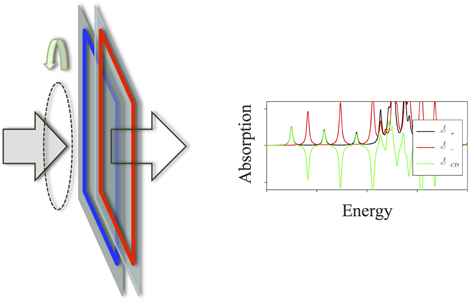
- hybrid structure made of a quantum-anomalous Hall insulator and a superconductor. The optical absorption of chiral Majorana states is characterized by equally spaced absorption peaks of both positive and negative dichroism. In the limit of a very long structure (a 2D ribbon) peaks of a single sign are
- favored. Conclusion: Circular-dichroism spectroscopy of chiral Majorana states is suggested as a relevant probe for these peculiar states of topological matter. Keywords: chiral states; circular dichroism; Majorana modes; optical absorption; topological matter; Introduction The physics of Majorana
- the connection between chiral Majorana states and optical absorption. We expect that in presence of chiral Majorana states, the optical absorption of circularly polarized light will differ for clockwise and anti-clockwise polarizations. The difference, known as circular dichroism (CD) [23][24], can


![[Graphic 14]](/bjnano/content/inline/2190-4286-9-110-i18.svg?max-width=637&scale=1.18182) . Panels a) and b) correspond to the phases in Figure 1d with one (ΔB = 2...
. Panels a) and b) correspond to the phases in Figure 1d with one (ΔB = 2...
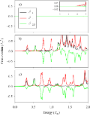
![[Graphic 15]](/bjnano/content/inline/2190-4286-9-110-i19.svg?max-width=637&scale=1.18182) ,
, ![[Graphic 16]](/bjnano/content/inline/2190-4286-9-110-i20.svg?max-width=637&scale=1.18182) and
and ![[Graphic 17]](/bjnano/content/inline/2190-4286-9-110-i21.svg?max-width=637&scale=1.18182) defined in the main text. The shown results correspond to the spe...
defined in the main text. The shown results correspond to the spe...

![[Graphic 19]](/bjnano/content/inline/2190-4286-9-110-i23.svg?max-width=637&scale=1.18182) ,
, ![[Graphic 20]](/bjnano/content/inline/2190-4286-9-110-i24.svg?max-width=637&scale=1.18182) and
and ![[Graphic 21]](/bjnano/content/inline/2190-4286-9-110-i25.svg?max-width=637&scale=1.18182) for (a) a square of Lx = Ly = 20 LU), and for (b) a rectangle of L...
for (a) a square of Lx = Ly = 20 LU), and for (b) a rectangle of L...
P3HT:PCBM blend films phase diagram on the base of variable-temperature spectroscopic ellipsometry
Beilstein J. Nanotechnol. 2018, 9, 1108–1115, doi:10.3762/bjnano.9.102
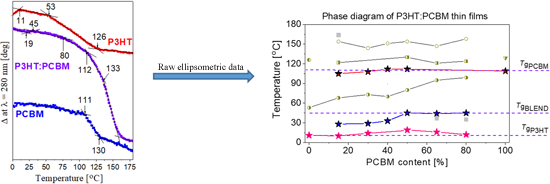
- their phase transitions using variable-temperature spectroscopic ellipsometry. We have investigated thin films of P3HT:PCBM blends deposited by spin-coating. Our studies included optical absorption spectroscopy, variable-temperature spectroscopic ellipsometry and differential scanning calorimetry. Based


Theoretical study of strain-dependent optical absorption in a doped self-assembled InAs/InGaAs/GaAs/AlGaAs quantum dot
Beilstein J. Nanotechnol. 2018, 9, 1075–1084, doi:10.3762/bjnano.9.99
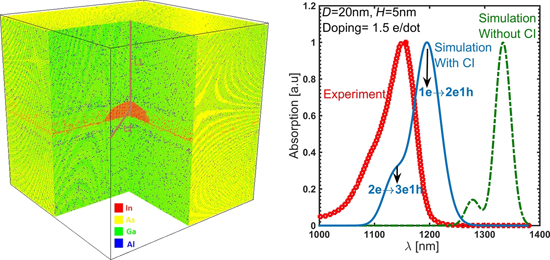
- . 10.3762/bjnano.9.99 Abstract A detailed theoretical study of the optical absorption in doped self-assembled quantum dots is presented. A rigorous atomistic strain model as well as a sophisticated 20-band tight-binding model are used to ensure accurate prediction of the single particle states in these
- ]. However, we show that the original parameter set cannot reproduce the experimental optical absorption peaks in quantum dots [9]. Using these parameters to determine strain in quantum wells does not agree with the well-known analytical solution of strain in quantum wells. Optimizing the parameters to
- the wavefunctions of the electrons and holes are localized due to these disordered band edges, as the spatial overlap between the states determines the optical absorption spectrum. Hence, one can look at the conduction and valence band edges along arbitrary lines passing through the quantum dot. This




Facile synthesis of a ZnO–BiOI p–n nano-heterojunction with excellent visible-light photocatalytic activity
Beilstein J. Nanotechnol. 2018, 9, 789–800, doi:10.3762/bjnano.9.72
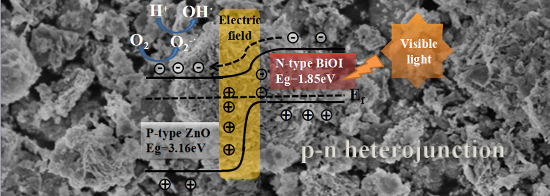
- recorded on a ASAP 2020 HD88 using the Brunauer–Emmett–Teller (BET) method at liquid nitrogen temperature 77 K. The optical absorption properties of the samples were measured by UV–vis spectra on a Hitachi U-4100 spectrophotometer equipped with an integrating sphere at room temperature in the region of 200


Mechanistic insights into plasmonic photocatalysts in utilizing visible light
Beilstein J. Nanotechnol. 2018, 9, 628–648, doi:10.3762/bjnano.9.59
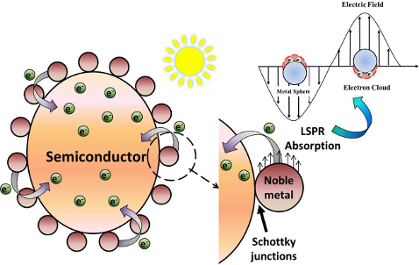
- of plasmonics are portrayed in Figure 1. Noble metals such as Au, Ag, Pt, Pd in the form of nanoparticles are a novel candidate for high absorption of visible light owing to their strong optical absorption in the entire solar region [8][9]. The unique characteristics of the LSPR effect in noble metal
- decay, H2O2 is the most stable of the molecules and can be detected separately. As of now, various methods have been employed for its quantification in photocatalysis reactions and could be classified as (1) direct optical absorption in UV and IR regions, (2) coloration and (3) fluorescence probe
- . Direct optical absorption The direct detection of H2O2 in solution by measuring UV spectra is difficult due to the weak molar absorption coefficient of H2O2 (0.01 M−1 cm−1) at 360 nm, which gradually increases up to 13 M−1 cm−1 at the wavelength of 260 nm [115]. Meanwhile, the optical absorption in the