Search results
Search for "penetration depth" in Full Text gives 130 result(s) in Beilstein Journal of Nanotechnology.
Comparison of fresh and aged lithium iron phosphate cathodes using a tailored electrochemical strain microscopy technique
Beilstein J. Nanotechnol. 2020, 11, 583–596, doi:10.3762/bjnano.11.46
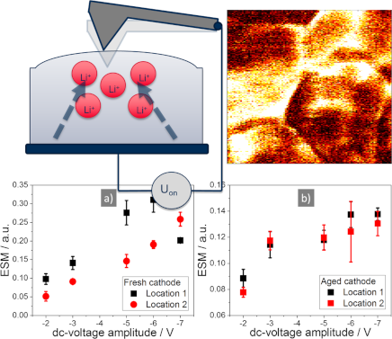
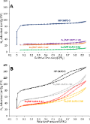
- conducted with PeakForce QNM measurements for which the deformation (penetration depth of the tip) of the measurements was evaluated (Supporting Information File 1, Figure S6). The results indicate a constant deformation for the fresh sample, while the aged cathode shows some areas with a higher deformation



Semitransparent Sb2S3 thin film solar cells by ultrasonic spray pyrolysis for use in solar windows
Beilstein J. Nanotechnol. 2019, 10, 2396–2409, doi:10.3762/bjnano.10.230
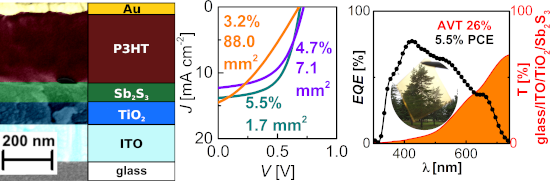
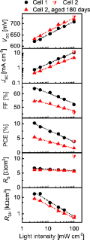
- penetration depth for light of 600 nm wavelength is about 100 nm, assuming α = 1 × 105 cm−1 (Figure 3c). Electron mobility tends to be greater in semiconductors when compared to hole mobility, although the efficacy of electron transport is also subject to change when the absorber thickness is varied. In this



Nitrogen-vacancy centers in diamond for nanoscale magnetic resonance imaging applications
Beilstein J. Nanotechnol. 2019, 10, 2128–2151, doi:10.3762/bjnano.10.207
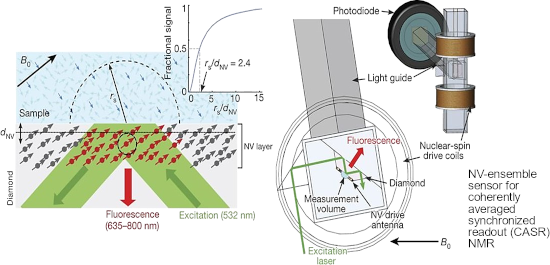
- and the integration time was 4–10 minutes for each data point used to extract the lower critical magnetic field and the absolute value of the penetration depth. Both can be improved using other protocols in NV magnetometry. These are of some of the benefits of linking superconducting material


The influence of porosity on nanoparticle formation in hierarchical aluminophosphates
Beilstein J. Nanotechnol. 2019, 10, 1952–1957, doi:10.3762/bjnano.10.191
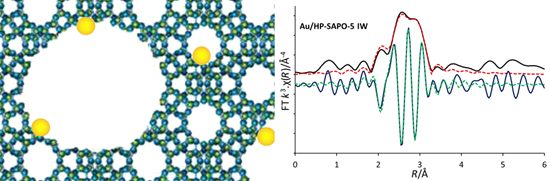
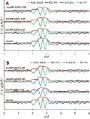
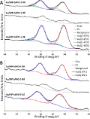
- required additional Au1 features to be accurately fit, in agreement with the Auδ+ species observed from XANES (Figure 4A). As XPS has a limited penetration depth, it will accentuate surface species, which are more likely to contain Au1 species, over the bulk [22]. In both cases the weak signal from the low
Stationary beam full-field transmission helium ion microscopy using sub-50 keV He+: Projected images and intensity patterns
Beilstein J. Nanotechnol. 2019, 10, 1648–1657, doi:10.3762/bjnano.10.160
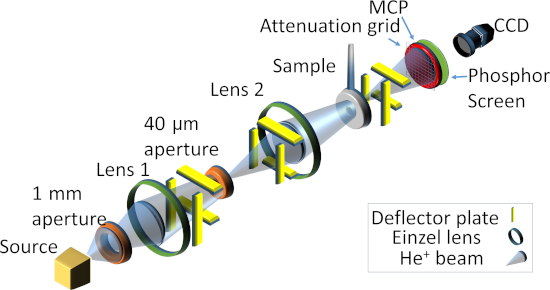
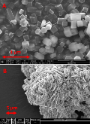
- less than 0.5 nm [1]. The short wavelength of helium ions results in a reduced diffraction limit for helium ion probes compared to electrons. Helium ions also have a smaller penetration depth than electrons of similar energy and a reduced interaction volume [2], increasing the lateral resolution. In


Superconducting switching due to a triplet component in the Pb/Cu/Ni/Cu/Co2Cr1−xFexAly spin-valve structure
Beilstein J. Nanotechnol. 2019, 10, 1458–1463, doi:10.3762/bjnano.10.144
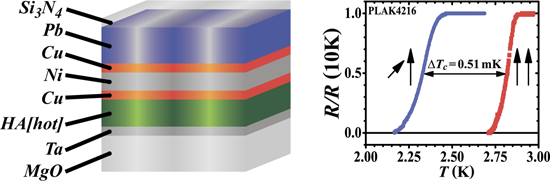
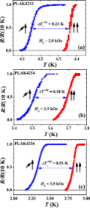
- determine the optimal thickness we measured the dependence of Tc on dPb for the heterostructure MgO/Ta(5 nm)/Ni(5 nm)/Cu(1.5 nm)/Pb(dPb)/Si3N4. Figure 1 shows the Tc(dPb) dependence for a fixed thickness of the Ni layer dNi = 5 nm, which is much larger than the penetration depth of the Cooper pairs in the



Energy distribution in an ensemble of nanoparticles and its consequences
Beilstein J. Nanotechnol. 2019, 10, 1452–1457, doi:10.3762/bjnano.10.143
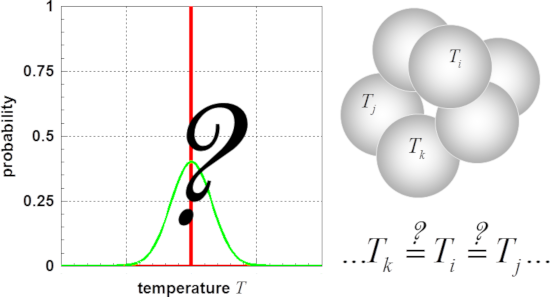
- determined by measuring the magnetic susceptibility. In bulk lead, the temperature course of this transition is described by the London equation [9]. However, in cases where the particles are smaller than the London penetration depth and the coherence length, the validity of this equation is questionable [8


Kelvin probe force microscopy of the nanoscale electrical surface potential barrier of metal/semiconductor interfaces in ambient atmosphere
Beilstein J. Nanotechnol. 2019, 10, 1401–1411, doi:10.3762/bjnano.10.138
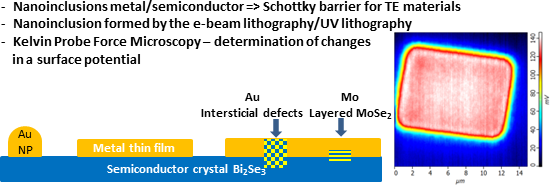
- voltage of 20 kV (which results in a penetration depth of the electrons of 1 µm into Bi2Se3) for a period of maximally 360 s. The work function (WF) was determined by utraviolet photoelectron spectroscopy (UPS) using a helium gas discharge source with He I radiation (hν = 21.22 eV). All UPS measurements


Fabrication of phase masks from amorphous carbon thin films for electron-beam shaping
Beilstein J. Nanotechnol. 2019, 10, 1290–1302, doi:10.3762/bjnano.10.128
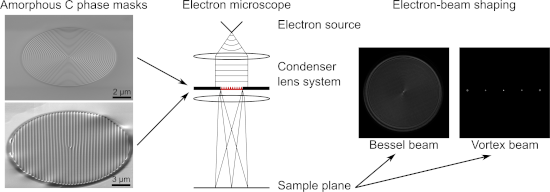
- penetration depth of the Ga ions in the material of the thin film. The thickness amplitude is smaller than expected, because even though the FIB is only scanned azimuthally along the minima, sputtering also takes place near the maxima of the sinusoidal structure and decreases the total thickness of the thin



Tungsten disulfide-based nanocomposites for photothermal therapy
Beilstein J. Nanotechnol. 2019, 10, 811–822, doi:10.3762/bjnano.10.81
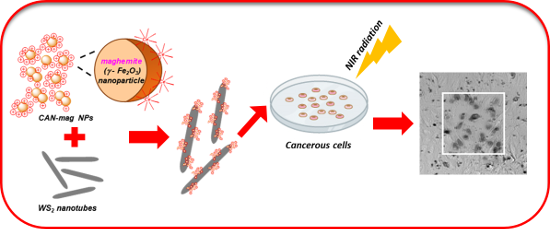
- accumulate on the tumor area, absorb light, and release it as heat, killing the cancerous cells. The light is generated by a laser, in a near-infrared (NIR) wavelength range (750–1000 nm). NIR irradiation has low off-target interaction and a high penetration depth of ca. 1–2 cm in the human body. PTT






Biomimetic synthesis of Ag-coated glasswing butterfly arrays as ultra-sensitive SERS substrates for efficient trace detection of pesticides
Beilstein J. Nanotechnol. 2019, 10, 578–588, doi:10.3762/bjnano.10.59
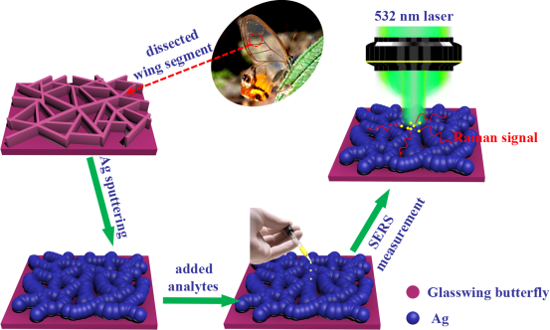
- , respectively. Therefore, the ratio of ISERS/Ibulk was calculated to be 2052.80. The Nbulk was calculated according to Equation 2: where A is the laser spot area, h is the laser penetration depth, cbulk is the concentration of the CV solution and NA is the Avogadro constant. In the Raman measurement, the
- diameter of the illumination spot was ca. 1 µm and the penetration depth was ca. 3 mm. Hence, the value of Nbulk was ca. 1.42 × 10¹⁰. According to the above analysis, when the concentration of the CV was 10−6 M, the CV molecules were absorbed as a monolayer on the surface of the Ag-G.b.-20 substrate. The


Improving control of carbide-derived carbon microstructure by immobilization of a transition-metal catalyst within the shell of carbide/carbon core–shell structures
Beilstein J. Nanotechnol. 2019, 10, 419–427, doi:10.3762/bjnano.10.41
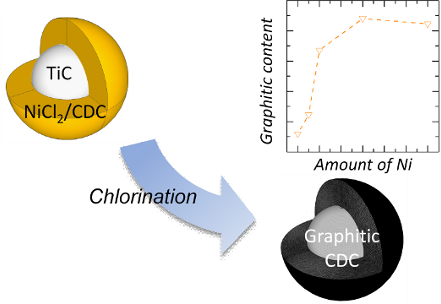
- , while the spectra of CDC-Ni10 and CDC-Ni60 are similar. The reason for the deviation from the other characterization results could be the penetration depth of the Raman laser, which probably is probing especially the shell of the core–shell material. As the initial shell is produced without


Advanced scanning probe lithography using anatase-to-rutile transition to create localized TiO2 nanorods
Beilstein J. Nanotechnol. 2019, 10, 412–418, doi:10.3762/bjnano.10.40
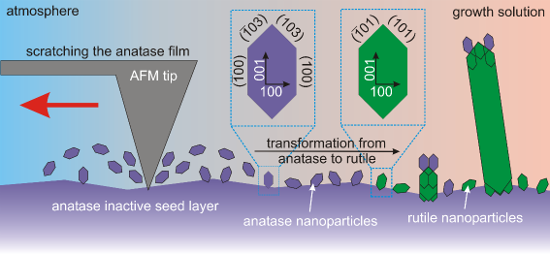
- was not observed that different probes result in changes of the presented structure. Last but not least, a look at the penetration depth of this method is taken. For this purpose, a 3 nm thin SiO2 layer was deposited on the anatase film. Even after scratching hundreds of times at the same position


Zn/F-doped tin oxide nanoparticles synthesized by laser pyrolysis: structural and optical properties
Beilstein J. Nanotechnol. 2019, 10, 9–21, doi:10.3762/bjnano.10.2
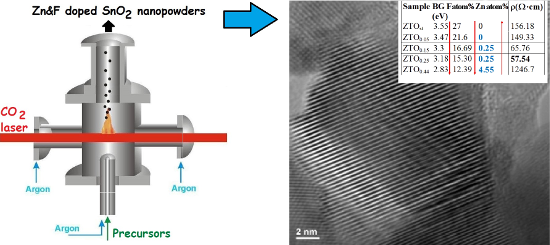
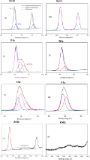
- compositional gradient in the nanopowder (the superficial F concentration is higher than in the inner zone of the nanoparticle). The XPS analysis is only sensitive to surface areas, with a penetration depth of a few nanometers, while EDX evaluates the average composition on the irradiated area (containing more
- than 1000 particles in average), thus its penetration depth exceeds the mean particle size (few tens of nanometers). Consequently, the predominant presence of F at the nanopowder surface may be evidence for the assumption that freshly formed nanoclusters have a catalytic role in the partial



Size limits of magnetic-domain engineering in continuous in-plane exchange-bias prototype films
Beilstein J. Nanotechnol. 2018, 9, 2968–2979, doi:10.3762/bjnano.9.276
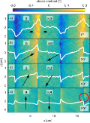
- entering the layer system orthogonally to the surface. The resulting penetration depth z and the lateral x/z distributions were extracted from the IONZ3D file of the program (Figure 5b). The lateral energy transfer distribution for each data set on the z-axis Θz(x) was approximated by a Gaussian normal
- transfer by ionization per ion. The positions of layer borders are indicated by black lines. (a) Energy loss Az as a function of the penetration depth z. (b) Spatial energy transfer distribution in the xz-plane with the ion beam at a lateral width of x = 0 nm and the surface position at z = 0 nm. (c) Beam




![[Graphic 63]](/bjnano/content/inline/2190-4286-9-276-i63.svg?max-width=637&scale=1.18182) .
. ![[Graphic 64]](/bjnano/content/inline/2190-4286-9-276-i64.svg?max-width=637&scale=1.18182) is the angle between the domain wall (DW) normal vector
is the angle between the domain wall (DW) normal vector ![[Graphic 65]](/bjnano/content/inline/2190-4286-9-276-i65.svg?max-width=637&scale=1.18182) and the local unidirectio...
and the local unidirectio...
Time-resolved universal temperature measurements using NaYF4:Er3+,Yb3+ upconverting nanoparticles in an electrospray jet
Beilstein J. Nanotechnol. 2018, 9, 2916–2924, doi:10.3762/bjnano.9.270
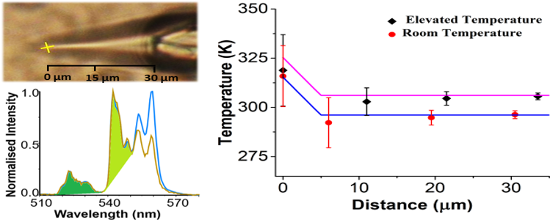
- UCNPs minimizes tissue damage [2], is relatively free of background fluorescence [3], and has a high penetration depth [3][4]. Time-resolved temperature measurements using the luminescence intensity ratio (LIR) of UCNPs are rare [5][6]. Here we show that NaYF4:Er3+,Yb3+ UCNPs can provide time-resolved


Charged particle single nanometre manufacturing
Beilstein J. Nanotechnol. 2018, 9, 2855–2882, doi:10.3762/bjnano.9.266
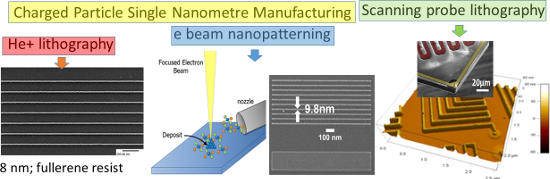
- familiar 69,71Ga+ LMIS [18]. Such a heavy ion unfortunately produces loss of resist by sputter erosion. Also, because of its size, nuclear stopping in the resist layer limits the penetration depth of the 69,71Ga+ion beam to a few tens of nanometres at typical beam energies of 20–30 keV. Thus, despite some


Disorder in H+-irradiated HOPG: effect of impinging energy and dose on Raman D-band splitting and surface topography
Beilstein J. Nanotechnol. 2018, 9, 2708–2717, doi:10.3762/bjnano.9.253
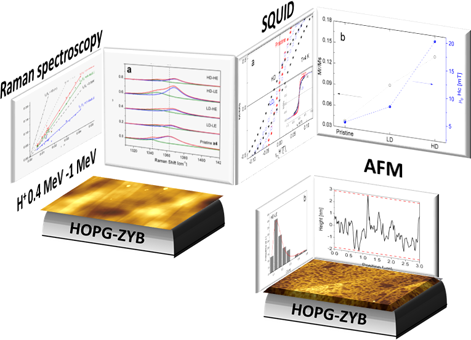
- 50 μC, assures a dose of 1016 H+ ions/cm2, while a dose of 1014 ions/cm2 is achieved with a charge of 1 μC. The irradiation energy was chosen according to the desired penetration depth of the ions in the sample, previously calculated via numeric simulations using the software SRIM [29]. Approximate
- , and in particular the D2 component, is strongly dominated by the dose rather than the H+ penetration depth (energy). This result discloses that a larger contribution of defects, originating from a rupture of C–C sp2 bond symmetry through the formation of C–H sp3 bonds, is expected in the D2 component


Nanoantenna structures for the detection of phonons in nanocrystals
Beilstein J. Nanotechnol. 2018, 9, 2646–2656, doi:10.3762/bjnano.9.246
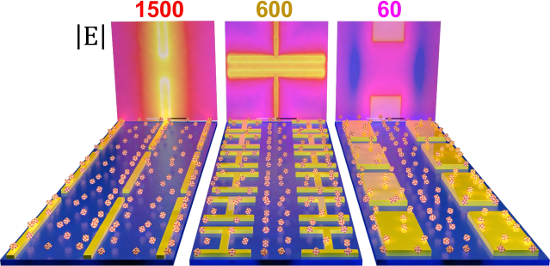
- nanoantenna arrays on the LSPR energy, as well as the LSP penetration depth into SiO2 were established [12]. We also showed that diffraction modes in linear Au nanoantenna arrays propagating along the Si surface and perpendicular to the nanoantennas [24] can be effectively employed for further enhancement of


High-temperature magnetism and microstructure of a semiconducting ferromagnetic (GaSb)1−x(MnSb)x alloy
Beilstein J. Nanotechnol. 2018, 9, 2457–2465, doi:10.3762/bjnano.9.230
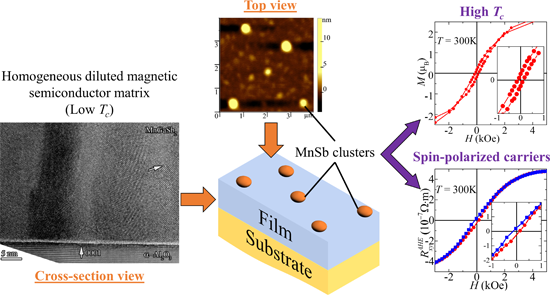
- with the effective penetration depth of the carrier (hole) wave function, lp, under triangular barrier. Taking into account that the energy gap in GaSb is Eg = 0.7 eV and the Schottky barrier height is about (1/3)Eg[21], the value of dbarrier can be estimated as 2 nm at Np = 1020 cm−3 while lp is of



Metal–dielectric hybrid nanoantennas for efficient frequency conversion at the anapole mode
Beilstein J. Nanotechnol. 2018, 9, 2306–2314, doi:10.3762/bjnano.9.215
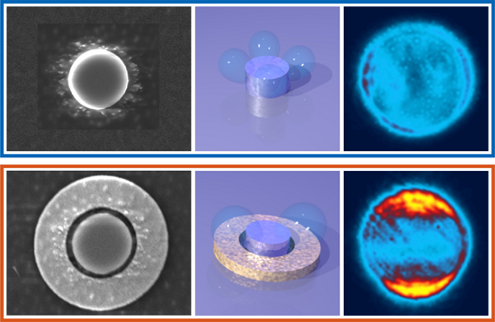
- nanoantennas is instead one of the most successful approaches to compensate for the lack of phase-matching and long interaction lengths at the nanoscale [11]. However, metals display large material losses in the visible range and limit the penetration depth of electric fields, thereby hindering the beneficial




Increasing the performance of a superconducting spin valve using a Heusler alloy
Beilstein J. Nanotechnol. 2018, 9, 1764–1769, doi:10.3762/bjnano.9.167
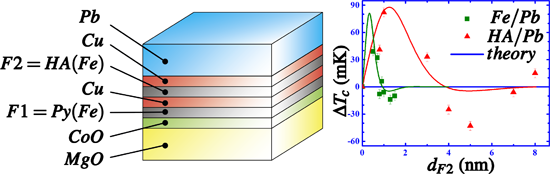
- of the HA layer and to 70% at Tsub = 600 K. In the AFM/F1/N1/F2/N2/S structure it would be advantageous to achieve a penetration depth of the Cooper pairs into F2 ferromagnetic layer as large as possible. This means that the spin polarization of the conduction band should be small. To fulfill this
- the maximum magnitude of the spin-valve effect ΔTc, the thickness dF2 of the F2 layer proximate to the S layer should be of the order or smaller than the penetration depth of the Cooper pairs into the F2 layer, . Here h is the exchange splitting of the conduction band of a ferromagnet. The thinner the
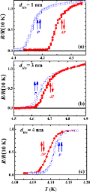

![[Graphic 4]](/bjnano/content/inline/2190-4286-9-167-i9.svg?max-width=637&scale=1.18182) on the thickness of layer F2, dF2 in the SSV heterostructures AFM/F1/N1/F2/N2/S. Tri...
on the thickness of layer F2, dF2 in the SSV heterostructures AFM/F1/N1/F2/N2/S. Tri...
Multimodal noncontact atomic force microscopy and Kelvin probe force microscopy investigations of organolead tribromide perovskite single crystals
Beilstein J. Nanotechnol. 2018, 9, 1695–1704, doi:10.3762/bjnano.9.161
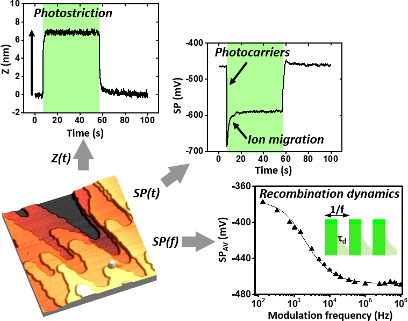
- , it has been indeed argued that the responsive layer is much thicker that the light penetration depth due to the diffusion of photocarriers in the bulk [16]. In turn, the SPV (more precisely its fast component) originates from the contributions of oppositely charged photocarriers located on either


Imaging of viscoelastic soft matter with small indentation using higher eigenmodes in single-eigenmode amplitude-modulation atomic force microscopy
Beilstein J. Nanotechnol. 2018, 9, 1116–1122, doi:10.3762/bjnano.9.103
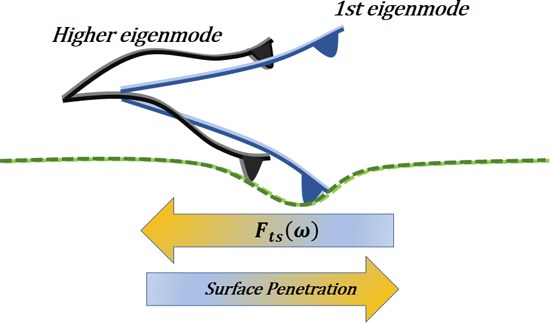
- indentation depth as a function of the setpoint ratio of the modulated amplitude. As the results show, AM-AFM using the second eigenmode has the smallest penetration depth. On the other hand, bimodal AFM leads to the greatest tip penetration, since there are “kiAi” contributions from two eigenmodes. The kinks


Bombyx mori silk/titania/gold hybrid materials for photocatalytic water splitting: combining renewable raw materials with clean fuels
Beilstein J. Nanotechnol. 2018, 9, 187–204, doi:10.3762/bjnano.9.21
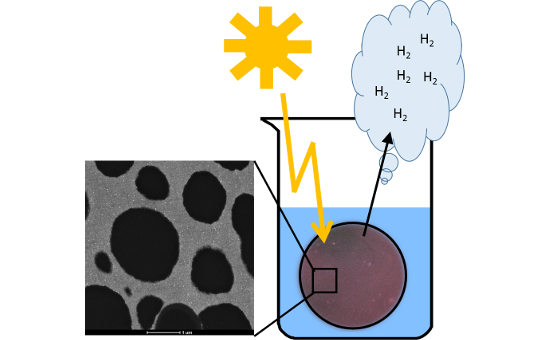
- , Supporting Information File 1) suggests that the penetration depth of the AuNP reaches up to 120 µm, judging from the purple color visible in the optical micrographs. The absence of PEO affects the color of the TS samples. TS_Au2.5 is light purple but the color is less intense than in TPS_Au2.5. Again, the
- variation of the Au salt concentration leads to a color change. In contrast to TPS_Aux, however, the surfaces of TS_Au5.6 and TS_Au6.1 do not show intensification of the purple color, but instead an increasing gray hue. Moreover, the penetration depth of the Au – again judging by the color – is 400 µm; this
- fact that the amount of HAuCl4·3H2O used for the synthesis was higher than in TPS_Au2.5. Furthermore, the particles are more clearly separated from one another. TEM also suggests that the AuNPs have a higher penetration depth in the TS-based materials than in the TPS_Aux materials, which is consistent