Search results
Search for "photocatalyst" in Full Text gives 129 result(s) in Beilstein Journal of Nanotechnology.
Construction of a 0D/1D composite based on Au nanoparticles/CuBi2O4 microrods for efficient visible-light-driven photocatalytic activity
Beilstein J. Nanotechnol. 2019, 10, 1360–1367, doi:10.3762/bjnano.10.134
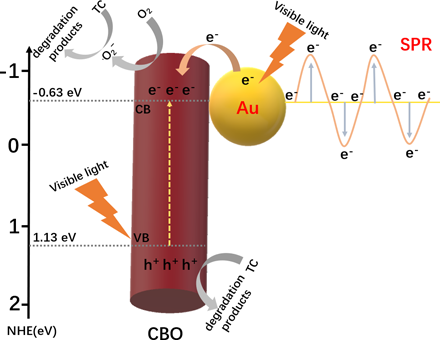
- photocatalyst consisting of Au nanoparticles (NPs) and CuBi2O4 microrods (Au/CBO) was designed and prepared by a simple thermal reduction–precipitation approach. It shows excellent photocatalytic performance in the degradation of tetracycline (TC). The maximum photocatalytic degradation rate constant for Au/CBO
- affect the SPR of Au NPs. The Au NPs promote the rapid separation of charge carriers of semiconductor [10][26][27]. Thus, we attempt to use 0D Au NPs to decorate 1D CuBi2O4 (CBO) microrods to obtain a new type of efficient 0D/1D composite photocatalyst. Herein, 0D/1D Au NP/CBO microrod composites were
- separated by centrifuged with distilled water, dried at 60 °C for 12 h to obtain the final Au/CBO composite photocatalyst. The mass ratios between Au nanoparticles and CBO microrods were 1%, 1.5%, 2.5%, 3.5% and 5%, named as 1 wt % Au/CBO, 1.5 wt % Au/CBO, 2.5 wt % Au/CBO, 3.5 wt % Au/CBO and 5 wt % Au/CBO


Imaging the surface potential at the steps on the rutile TiO2(110) surface by Kelvin probe force microscopy
Beilstein J. Nanotechnol. 2019, 10, 1228–1236, doi:10.3762/bjnano.10.122
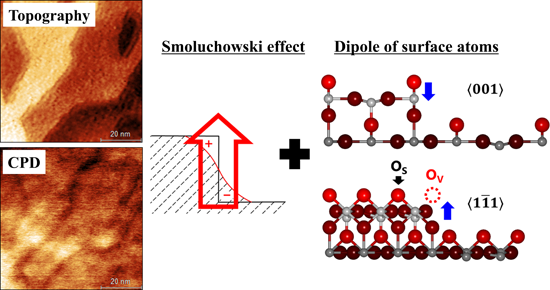
- steps in the catalytic reaction. Keywords: catalyst; Kelvin probe force microscopy; Smoluchowski effect; step; titanium dioxide; Introduction Titanium dioxide (TiO2) has attracted considerable interest for its promising applications as a photocatalyst and as catalyst support, as well as in gas sensors
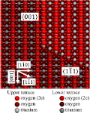
![[Graphic 16]](/bjnano/content/inline/2190-4286-10-122-i16.svg?max-width=637&scale=1.18182) and
and ![[Graphic 17]](/bjnano/content/inline/2190-4286-10-122-i17.svg?max-width=637&scale=1.18182) .
.


![[Graphic 38]](/bjnano/content/inline/2190-4286-10-122-i38.svg?max-width=637&scale=1.18182) and
and ![[Graphic 39]](/bjnano/content/inline/2190-4286-10-122-i39.svg?max-width=637&scale=1.18182) steps. (a) Topographic image...
steps. (a) Topographic image...


![[Graphic 72]](/bjnano/content/inline/2190-4286-10-122-i72.svg?max-width=637&scale=1.18182) , b)
, b) ![[Graphic 73]](/bjnano/content/inline/2190-4286-10-122-i73.svg?max-width=637&scale=1.18182) , c) reduced
, c) reduced ![[Graphic 74]](/bjnano/content/inline/2190-4286-10-122-i74.svg?max-width=637&scale=1.18182) , and d)
, and d) ![[Graphic 75]](/bjnano/content/inline/2190-4286-10-122-i75.svg?max-width=637&scale=1.18182) steps. B...
steps. B...
A highly efficient porous rod-like Ce-doped ZnO photocatalyst for the degradation of dye contaminants in water
Beilstein J. Nanotechnol. 2019, 10, 1157–1165, doi:10.3762/bjnano.10.115
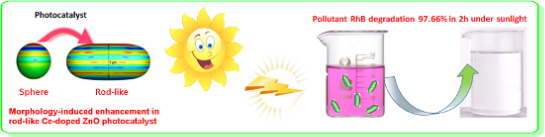
- , Parkville, Victoria 3010, Australia ARC Centre of Excellence for Nanoscale BioPhotonics (CNBP), School of Science, RMIT University, Melbourne, VIC 3001, Australia 10.3762/bjnano.10.115 Abstract A mild and simple method was developed to synthesize a highly efficient photocatalyst comprised of Ce-doped ZnO
- microstructure. The computational results showed that the dipole-like field covers the entire surface of the rod-like Ce-doped ZnO photocatalyst and is present over the entire range of wavelengths considered. The optimum degradation conditions were determined by orthogonal tests and range analysis, including the
- ) = 10 mg/L, concentration (catalyst) = 0.7 g/L, pH 9.0 and T = 50 °C. These optimum conditions supply a helpful reference for large-scale wastewater degradation containing the common water contaminant RhB. Keywords: Ce-doped ZnO; photocatalyst; rhodamine B; solar degradation; surface shape


Photoactive nanoarchitectures based on clays incorporating TiO2 and ZnO nanoparticles
Beilstein J. Nanotechnol. 2019, 10, 1140–1156, doi:10.3762/bjnano.10.114
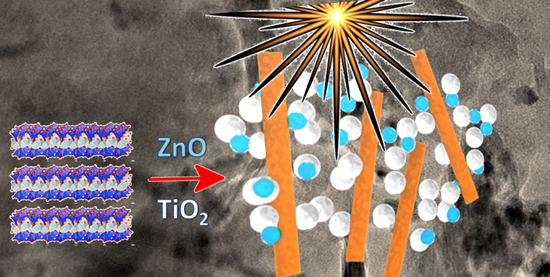
- NPs immobilization as well as on the structural stability during the photocatalytic reactions. In addition, the immobilization of NPs on clay surfaces is a key advantage for the easier recovery of the photocatalyst from the reaction medium compared to bare NPs [88][89][90][91][92][93]. Clay-based
- 2.25 eV, corresponding to a light wavelength of 550 nm suitable for a photocatalyst responsive to visible light was reported. The co-doping of N and S [149] and Cu, Ag, and Fe on TiO2@bentonite has also been reported [150]. Other authors also reported the modification of the photoactivity
- additional of ZnO providing a higher photocatalytic activity to the starting clay or the TiO2@clay nanoarchitecture. Related ZnO–TiO2@clay materials based on commercially available expanded clay aggregates (LECA), apparently belonging to the smectite family, have been also positively tested as photocatalyst



Synthesis of novel C-doped g-C3N4 nanosheets coupled with CdIn2S4 for enhanced photocatalytic hydrogen evolution
Beilstein J. Nanotechnol. 2019, 10, 912–921, doi:10.3762/bjnano.10.92
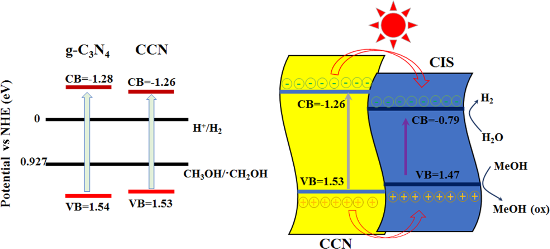
- photogenerated holes and electrons. Yang et al. designed and constructed a 2D/2D nanocomposite photocatalyst through the in situ generation of ZnIn2S4 nanoleaf structures on the surface of g-C3N4 nanosheets by a facile one-step solvothermal method with surfactant, which exhibited distinct high-speed charge
- the CCN surface, resulting in close contact (Figure 4c,d). X-ray photoelectron spectroscopy (XPS) was utilized to study the surface elemental composition of the representative composite photocatalyst CISCCN3. The survey XPS spectrum of Figure 5a shows that the CISCCN3 composite is mostly composed of C
- over CISCCN3 composites is remarkably facilitated. In addition, a further decrease in the PL emission intensity in the CISCCN3 hybrid photocatalyst can be observed. This result demonstrates that the construction of a heterogeneous interface can improve the separation and transfer of photogenerated


Reduced graphene oxide supported C3N4 nanoflakes and quantum dots as metal-free catalysts for visible light assisted CO2 reduction
Beilstein J. Nanotechnol. 2019, 10, 448–458, doi:10.3762/bjnano.10.44
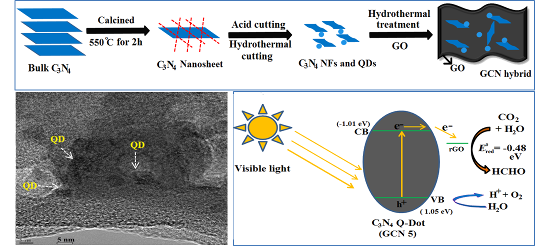
- promising for CO2 photoreduction because of their excellent activity and environmental sustainability. Keywords: CO2 reduction; metal-free hybrid; nanoflakes; photocatalyst; quantum dots; Introduction The solar-light-assisted photocatalytic reduction of CO2 into useful chemicals, such as HCOOH, HCHO, CH4
- of photo-induced electron–hole pairs and insufficient adsorption of CO2 at the catalyst surface are crucial problems preventing effective catalyst performance and CO2 reduction [11]. An ideal photocatalyst for CO2 conversion should possess a narrow bandgap and good light-harvesting properties, proper






Development of an anti-pollution coating process technology for the application of an on-site PV module
Beilstein J. Nanotechnol. 2019, 10, 332–336, doi:10.3762/bjnano.10.32
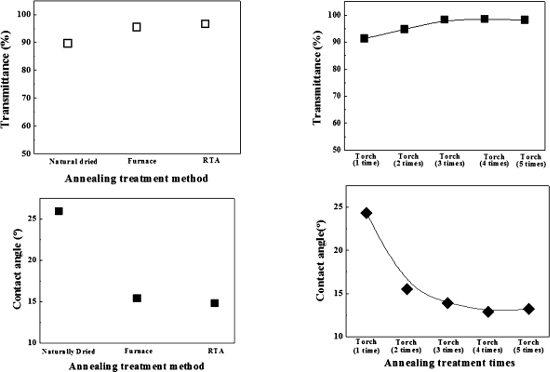
- natural water will significantly improve the economic efficiency of the maintenance of solar power generation systems [7]. Although a self-cleaning coating technique using a photocatalyst has been developed, the durability is poor due to low adhesion and hardness. Also, production is very difficult, an


Graphene-enhanced metal oxide gas sensors at room temperature: a review
Beilstein J. Nanotechnol. 2018, 9, 2832–2844, doi:10.3762/bjnano.9.264
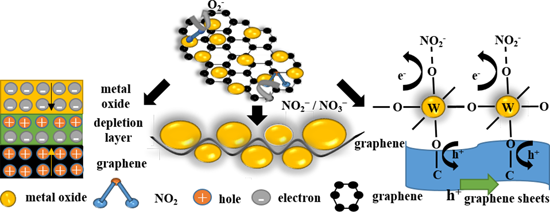
- dioxide (TiO2), as a wide-bandgap semiconductor, has been widely used as photocatalyst, and in solar cells and gas sensors [70][71][72]. In general, its operating temperature is over 200 °C, so scholars try to prepare composites with graphene to reduce its operating temperature. However, the stability of



Nanocellulose: Recent advances and its prospects in environmental remediation
Beilstein J. Nanotechnol. 2018, 9, 2479–2498, doi:10.3762/bjnano.9.232
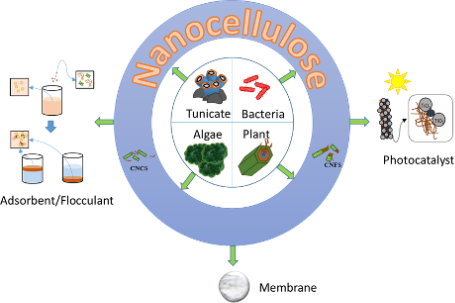
- by the action of bacteria. In this review, some invigorating perspectives on the challenges, future direction, and updates on the most relevant uses of nanocellulose in environmental remediation are discussed. The reported applications and properties of nanocellulose as an adsorbent, photocatalyst
- in an effort to improve the development and efficient use of nanocellulose in environmental remediation. Keywords: adsorbent; environmental remediation; membrane; nanocellulose; nanomaterials; photocatalyst; Review Introduction The rampant emergence of advanced, new nanomaterials is redefining many
- nanocellulose-based materials used in various applications under the category of environmental remediation, including past achievements, current advances, and potential directions. The recent developments of nanocellulose used as an adsorbent, photocatalyst, flocculant or membrane for various applications in


Hierarchical heterostructures of Bi2MoO6 microflowers decorated with Ag2CO3 nanoparticles for efficient visible-light-driven photocatalytic removal of toxic pollutants
Beilstein J. Nanotechnol. 2018, 9, 2297–2305, doi:10.3762/bjnano.9.214
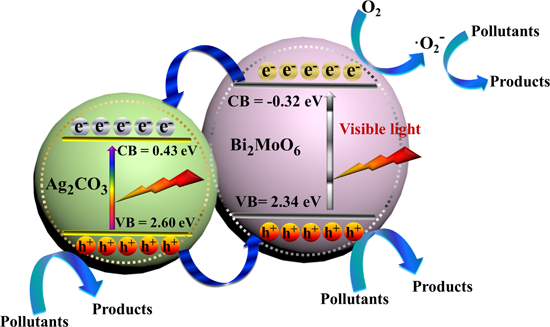
- regarded as a promising visible-light-driven (VLD) photocatalyst because of its good activity, chemical stability and nontoxicity [15][16][17]. However, the low carrier-separation rate and narrow photo-response range of Bi2MoO6 substantially lower its photocatalytic performance [18][19]. To overcome this
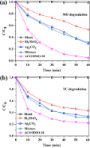
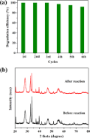
- degradation. Conclusion We synthesized a novel photocatalyst of Bi2MoO6 microflowers covered with Ag2CO3 nanoparticles by a facile procedure. The Ag2CO3/Bi2MoO6 heterostructures, especially ACO/BMO-30, showed a substantially enhanced photocatalytic performance in the removal of pollutants (RhB, MO, MB and TC
- efficient VLD photocatalyst with promising applications in environmental remediation. Experimental Materials Bi(NO3)3·5H2O, NaHCO3, NH3·H2O, Na2MoO4·2H2O, rhodamine B (RhB), methyl blue (MB), tetracycline hydrochloride (TC), methyl orange (MO), isopropanol (IPA), AgNO3, p-benzoquinone (BQ), and ammonium




Controllable one-pot synthesis of uniform colloidal TiO2 particles in a mixed solvent solution for photocatalysis
Beilstein J. Nanotechnol. 2018, 9, 1715–1727, doi:10.3762/bjnano.9.163
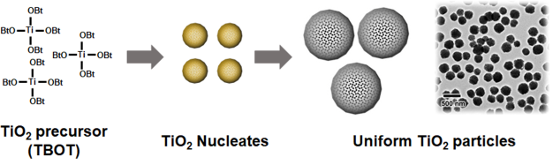
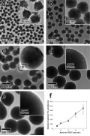
- Honda and Fujishima [12]. Over the past decade, there have been many attempts to fabricate highly active TiO2-based photocatalysts for enhanced photocatalytic efficiency [13][14][15][16][17]. It is well-known that photocatalysis over a semiconductor photocatalyst occurs in the following sequential steps
- . First, the semiconductor photocatalyst can absorb photon energy that is greater than its band gap and electrons in the valance band can be exited to the conduction band, resulting in photoexcited electron–hole pairs. Then, the photo-exited electron–hole can move to the surface of the photocatalyst
- photocatalyst must be narrow in order to facilitate the facile adsorption of the low energy photon and high harvesting efficiency under visible-light irradiation conditions [11]. To enhance charge separation efficiency and extend the lifetime of photoexcited electron–hole pairs, properties such as a crystalline




Sulfur-, nitrogen- and platinum-doped titania thin films with high catalytic efficiency under visible-light illumination
Beilstein J. Nanotechnol. 2018, 9, 1629–1640, doi:10.3762/bjnano.9.155
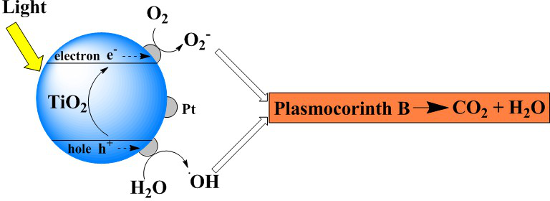
- rather there exists an optimal particle size for pure nanocrystalline TiO2 [19]. This is due to surface recombination of electron–hole pairs in samples with particle sizes smaller than 6 nm. One of the main drawbacks of using TiO2 as a photocatalyst is the width of its band gap (3.2 eV), which means the
- the form of a thin film significantly reduces some of the drawbacks of the practical application of heterogeneous photocatalysis; for instance, the need to separate the photocatalyst from the suspension after the photocatalytic reaction, or the tendency of the particles to agglomerate in aqueous


Sheet-on-belt branched TiO2(B)/rGO powders with enhanced photocatalytic activity
Beilstein J. Nanotechnol. 2018, 9, 1550–1557, doi:10.3762/bjnano.9.146
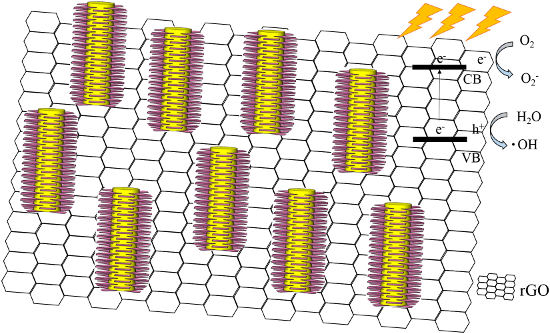
- constant of the present “sheet-on-belt” branched TiO2(B)/rGO photocatalyst is 1.7 times that of TiO2(B)/rGO and 2.9 times that of pristine TiO2(B) nanobelts. Experimental Material synthesis 1. Precursor solution: The precursor solution for precipitation of nanosheet branches was prepared following Wen et
- excitation wavelength of 360 nm. Photocatalytic activity The photocatalytic activity of the TGN and branched TGN powders were evaluated by photodegradation of phenol in water under UV light illumination. In a typical procedure, 25 mg of the photocatalyst was added to 50 mL of 10 ppm phenol aqueous solution


Cr(VI) remediation from aqueous environment through modified-TiO2-mediated photocatalytic reduction
Beilstein J. Nanotechnol. 2018, 9, 1448–1470, doi:10.3762/bjnano.9.137
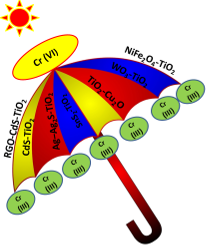
- TiO2 as a photocatalyst and the importance of its modification for photocatalytic reduction of Cr(VI) has also been addressed. In this review, the photocatalytic activity of TiO2 after modification with carbon-based advanced materials, metal oxides, metal sulfides and noble metals towards reduction of
- surface of the semiconductor. When photons with energy greater than the band gap energy of the semiconductor photocatalyst (SP) are absorbed, photogenerated electrons are excited to conduction band (CB) leaving behind holes at the valence band (VB) as per Equation 1: These photogenerated species
- widely been accepted by the research community as a green photocatalyst [75]. Irradiation using UV light on TiO2 results in the formation of eCB− and hVB+ at its CB and VB, respectively. The eCB− reduces Cr(VI) species to Cr(III) as per Equation 10 and hVB+ oxidizes water to O2 (Equation 11). In some



Ag2WO4 nanorods decorated with AgI nanoparticles: Novel and efficient visible-light-driven photocatalysts for the degradation of water pollutants
Beilstein J. Nanotechnol. 2018, 9, 1308–1316, doi:10.3762/bjnano.9.123
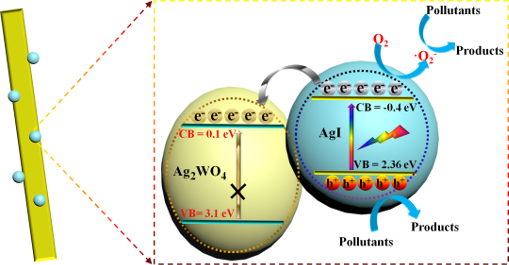
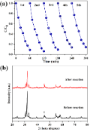
- . The active species trapping experiment reveals that active species (O2•− and h+) dominantly contribute to RhB degradation. The AgI/Ag2WO4 heterojunction photocatalyst characterized in this work holds great potential for remedying environmental issues due to its simple preparation method and excellent
- Ag2S/Ag2WO4 [40], C3N4/Ag2WO4 [39], Bi2MoO6/Ag2WO4/Ag [42] etc., have been reported to show improved VLD performance in the degradation of pollutants. To the best of our knowledge, application of AgI/Ag2WO4 as a VLD photocatalyst for the degradation of toxic pollutants remains unreported. In this study
- the CB of AgI (and more holes left behind in the valence band (VB)) could readily attack the pollutant molecules, resulting in the remarkable photocatalytic performance of AgI/Ag2WO4. Conclusion In summary, a novel heterojunction photocatalyst comprised of AgI nanoparticle-decorated Ag2WO4 nanorods




Noble metal-modified titania with visible-light activity for the decomposition of microorganisms
Beilstein J. Nanotechnol. 2018, 9, 829–841, doi:10.3762/bjnano.9.77
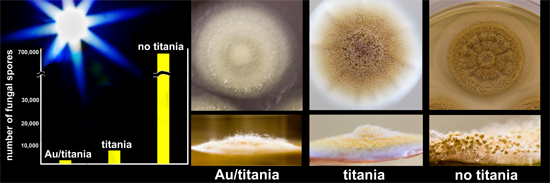
- be used for photocatalyst activation [20]. Titanium(IV) oxide (titania) is the most widely used semiconductor photocatalyst used in treatment of water/wastewater and air [21]. The major barrier for common application of titania photocatalysis is the low activity under solar radiation (mainly due to
- light action [61][62][63]. In this mechanism, the photocatalyst properties such as particle shape, size and content of NPs could influence the efficiency on interaction between NPs and bacteria [64]. To evaluate the difference between dark activity and plasmonic photocatalysis, decomposition of
- bacterial cells in titania suspension with simultaneous measurements of evolved carbon dioxide was studied for bare and modified titania with gold or silver. Our preliminary studies on TiO2(ST41) photocatalyst showed that although inactivation of bacterial cells was similar for bare and silver-modified


Facile synthesis of a ZnO–BiOI p–n nano-heterojunction with excellent visible-light photocatalytic activity
Beilstein J. Nanotechnol. 2018, 9, 789–800, doi:10.3762/bjnano.9.72
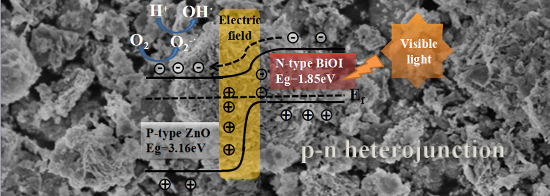
- . Recently, bismuth oxyhalides have been proposed as a new kind of narrow band gap p-type semiconductor photocatalyst material whose general formula is BiOX, where X represents Cl, Br or I. They crystallize in the tetragonal matlockite structure with space group P4/NMMS. In the crystal structure of all these
- response to visible light. Though widely investigated, BiOI suffers from its high recombination rate of photoinduced electron–holes and low charge transfer ability. Therefore, the strategies to improve the efficiency of this kind of semiconductor photocatalyst are in need. Heterogeneous processes are
- . described the synthesis of p–n heterostructures where p-type BiOI nanoplates decorated on n-type ZnO nanorod arrays which were synthesized through a solvothermal route. The high-contact areas provided by the fast charge transfer channel of BiOI and ZnO create the efficient photocatalyst [35]. Tong et al


Surface-plasmon-enhanced ultraviolet emission of Au-decorated ZnO structures for gas sensing and photocatalytic devices
Beilstein J. Nanotechnol. 2018, 9, 771–779, doi:10.3762/bjnano.9.70
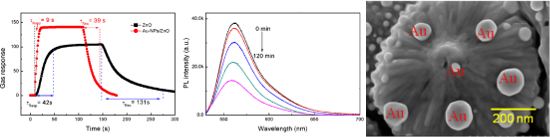
- . Keywords: Au-decorated ZnO; carrier dynamics; gas sensors; photocatalyst; SPR effect; Introduction Inorganic transition metal oxide sensor devices have attracted attention in particular for improving gas sensing, energy conversion, electronics, photocatalysis and optoelectronic devices [1][2][3][4]. Among
- ultrasonicated for 5 min to make the homogeneous distribution of photocatalyst with RhB. Before light irradiation, the cell containing the photocatalyst and the aqueous RhB solution was kept in the dark for 40 min to reach an adsorption/desorption equilibrium between the photocatalyst and RhB molecules. The RhB
- . The photocatalytic decomposition of RhB molecules is evaluated by the PL quenching of the RhB in the photocatalyst-mixed solution. The percentage of the PL quenching is calculated by the ratio of integrating the measured PL emission from 500–700 nm. XRD patterns (a), FE-SEM images of as-deposited ZnO




Combined pulsed laser deposition and non-contact atomic force microscopy system for studies of insulator metal oxide thin films
Beilstein J. Nanotechnol. 2018, 9, 686–692, doi:10.3762/bjnano.9.63
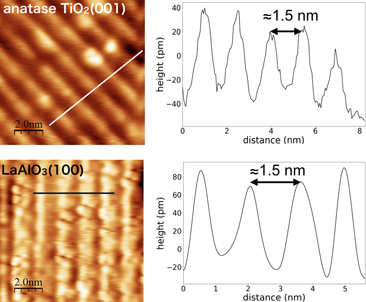
- oxides, and studies at the atomic level of both materials are still ongoing because of their high importance in materials science. Anatase TiO2 is well known as a photocatalyst, but there have been few studies using NC-AFM due to the difficulty in preparing samples [58]. Thin films of LaAlO3 epitaxially



Perovskite-structured CaTiO3 coupled with g-C3N4 as a heterojunction photocatalyst for organic pollutant degradation
Beilstein J. Nanotechnol. 2018, 9, 671–685, doi:10.3762/bjnano.9.62
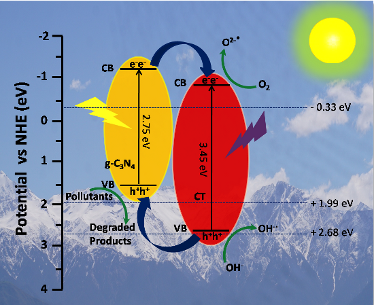
- )–CaTiO3 (CTCN) organic–inorganic heterojunction photocatalyst was synthesized by a facile mixing method, resulting in the deposition of CaTiO3 (CT) nanoflakes onto the surface of g-C3N4 nanosheets. The photocatalytic activity of the as-synthesized heterojunction (along with the controls) was evaluated by
- degradation of pollutants has been proposed and discussed. Keywords: CaTiO3; graphitic carbon nitride (g-C3N4); heterojunction photocatalyst; pollutant degradation; Introduction Photocatalysis is recognized as an attractive approach for environmental remediation and energy generation applications due to its
- potential towards utilization of solar energy [1][2][3]. Therefore, extensive efforts have been made for the design and synthesis of highly efficient and stable photocatalyst systems over the past few decades [4][5][6][7]. Hence, the development of such photocatalysts with high stability and good activity


Mechanistic insights into plasmonic photocatalysts in utilizing visible light
Beilstein J. Nanotechnol. 2018, 9, 628–648, doi:10.3762/bjnano.9.59
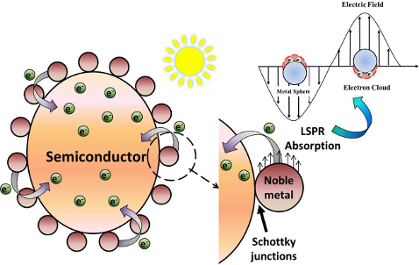
- sustainable photocatalysts that can collectively harvest visible light. However, the bottleneck in utilising the low energy photons has led to the discovery of plasmonic photocatalysts. The presence of noble metal on the plasmonic photocatalyst enables the harvesting of visible light through the unique
- strengths and weaknesses, and the interaction of the plasmonic photocatalyst with pollutants as well as the role of active radical generation and identification. The review ends with a pinnacle insight into future perspectives regarding realistic applications of plasmonic photocatalysts. Keywords
- : localized surface plasmon resonance (LSPR); noble metal; plasmonic photocatalyst; reactive radicals; Schottky junctions; visible light; Review Introduction Photocatalysts have played and will continue to play a pivotal role in environmental and energy applications in order to fulfil the needs of the





Fabrication and photoactivity of ionic liquid–TiO2 structures for efficient visible-light-induced photocatalytic decomposition of organic pollutants in aqueous phase
Beilstein J. Nanotechnol. 2018, 9, 580–590, doi:10.3762/bjnano.9.54
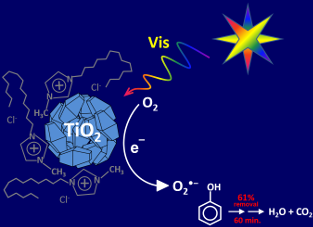
- absorption of IL–TiO2 in the visible region can be attributed to the existence of carbon species on the surface of the photocatalysts [45]. Chemical composition of ionic liquid/TiO2 composites The photocatalytic degradation is based on chemical reactions on the surface of the photocatalyst [46][47][48]. In
- reference TiO2 sample (Table 1 and Figure 6). Before the photocatalytic activity tests, phenol adsorption on the surface of the photocatalyst was tested for the samples possessing the highest photoactivity. It was observed that the concentration of phenol after 120 min in dark conditions practically did not
- degraded, indicating that OH radicals play an insignificant role in the degradation process. Interestingly, for the TiO2_O(1:3) photocatalyst, the addition of AgNO3 and tert-butyl alcohol increased the effectiveness of the photocatalytic process. As explained by Liu et al., AgNO3 may be capable of




Influence of the preparation method on the photocatalytic activity of Nd-modified TiO2
Beilstein J. Nanotechnol. 2018, 9, 447–459, doi:10.3762/bjnano.9.43
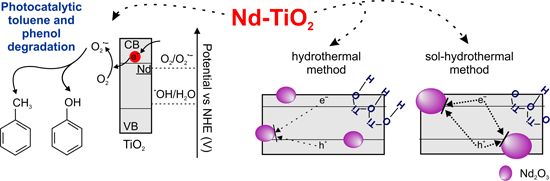
- photocatalyst for the degradation of phenol and toluene under visible light. XPS analysis revealed that the photocatalyst prepared via HT method contains a three-times higher amount of hydroxy groups at the surface layer and a two-times higher amount of surface defects than that obtained by the SHT method. The
- direct (band–band) or indirect (via a band-gap state) recombination of excited electrons and holes [38]. The Nd-TiO2 photocatalysts were characterized by a better separation ability of the photogenerated electrons and holes compared to pristine samples. In addition, the Nd-modified photocatalyst prepared
- in the corresponding 0.25% Nd-TiO2(SHT) sample (Table 3). The XPS data correspond well with the highest photocatalytic activity exhibited by the 0.25% Nd-TiO2 photocatalyst prepared via HT method (described in detail in the next section). Photocatalytic properties The photocatalytic properties of




Facile synthesis of ZnFe2O4 photocatalysts for decolourization of organic dyes under solar irradiation
Beilstein J. Nanotechnol. 2018, 9, 436–446, doi:10.3762/bjnano.9.42
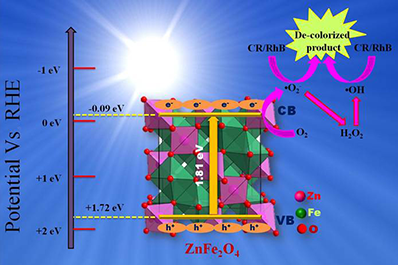
- correlates well with the lowest PL intensity, highest photocurrent and lowest particle size. Keywords: Congo red; electrochemical study; phenol; photocatalyst; rhodamine B (Rh B); ZnFe2O4; Introduction Photocatalysis is a “green” technology for the treatment of environmental pollutants with solar energy [1
- time intervals, 2 mL of the reaction solution was drawn from the conical flask with the help of a syringe followed by centrifugation to separate the photocatalyst. The solution was then analysed using a UV–vis spectrometer (JASCO 750) at 497 and 554 nm for Rh B and congo red, respectively. Sample
- ) under solar irradiation was determined. To know the self-degradation of the dye, a control experiment was carried out by exposing Congo red solution to the light source for 30 min. The results showed that the Congo red solution could not be photo-degraded in the absence of the photocatalyst. In the next


Photocatalytic and adsorption properties of TiO2-pillared montmorillonite obtained by hydrothermally activated intercalation of titanium polyhydroxo complexes
Beilstein J. Nanotechnol. 2018, 9, 364–378, doi:10.3762/bjnano.9.36
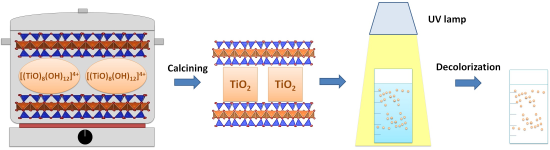
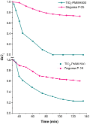
- removal of 100% MO and 97.5% RhB (with an initial concentration of 40 mg/L and a photocatalyst-sorbent concentration of 1 g/L) in about 100 minutes. The produced TiO2-pillared montmorillonite showed increased photocatalytic activity as compared to the commercially available photocatalyst Degussa P25
- temperature of 500–900 °C. The improved photocatalytic activity of the obtained TiO2-pillared MM in comparison with the commercial photocatalyst Degussa P 25 is revealed. A significant advantage of using a solution prior to sol stems from the possibility of obtaining titanium hydroxo complexes with sizes as
- 8% and 4%, respectively, thus that process can be neglected. Prior to obtaining the kinetic curves of photodegradation for the MO and RhB solutions, the photocatalyst samples were exposed to solutions of respective dyes with constant stirring in the dark for 30 min to reach adsorption–desorption