


Search results
Search for "polarity" in Full Text gives 156 result(s) in Beilstein Journal of Nanotechnology.
Effect of localized helium ion irradiation on the performance of synthetic monolayer MoS2 field-effect transistors
Beilstein J. Nanotechnol. 2020, 11, 1329–1335, doi:10.3762/bjnano.11.117
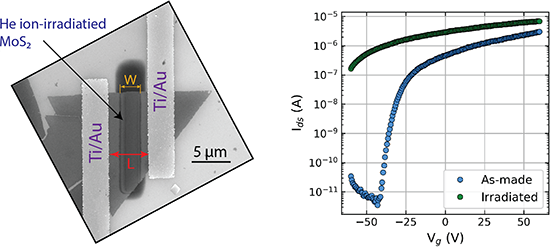
- the deposited metal–semiconductor contact interface. Recent work has shown that irradiation-induced heating of the electrode area can reverse majority carrier polarity in MoTe2 [31], while pre-treatment with a broad-beam argon ion source can decrease the contact resistance of Ni-MoS2 two-fold [32]. In


Role of redox-active axial ligands of metal porphyrins adsorbed at solid–liquid interfaces in a liquid-STM setup
Beilstein J. Nanotechnol. 2020, 11, 1264–1271, doi:10.3762/bjnano.11.110
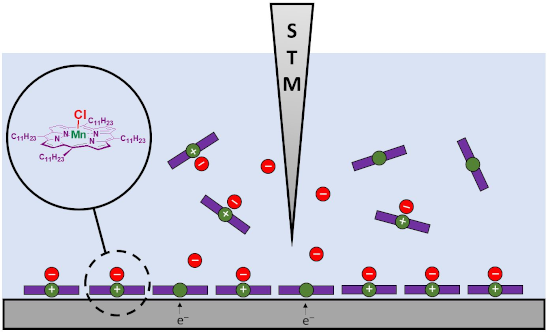
- polarity of the solvent. When a solution of MnTUPCl in the non-aromatic and less polar solvent n-tetradecane was subjected to a bias voltage in the modified STM setup, no significant additional currents were observed compared to reference experiments in which the porphyrins were absent (Table 1). This does


Multilayer capsules made of weak polyelectrolytes: a review on the preparation, functionalization and applications in drug delivery
Beilstein J. Nanotechnol. 2020, 11, 508–532, doi:10.3762/bjnano.11.41
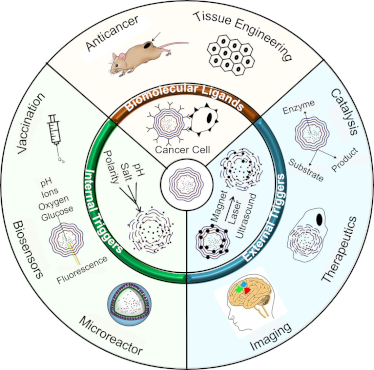
- the capsule stability is necessarily required. This led to the observation of various environmental triggers such as pH, ionic strength, polarity and temperature that play a major role in manipulating the capsule permeability by modulating the shell interactive forces [5]. Following this, successful
- , negatively charged probes were permeable into the multilayer films but with a slower diffusion rate. The main advantage of electrostatically bound assemblies is the versatility and high susceptibility towards pH, ionic strength and polarity [43]. As studied under SEM and CLSM, the walls of PAH/PSS
- thickening at elevated temperatures was responsible for trapping the macromolecules inside the capsules. The hydrophobic molecules could be loaded into multilayer capsules by changing the state of the capsules from open to closed via a polarity change [73]. Alternatively, water soluble, positively charged



Interfacial charge transfer processes in 2D and 3D semiconducting hybrid perovskites: azobenzene as photoswitchable ligand
Beilstein J. Nanotechnol. 2020, 11, 466–479, doi:10.3762/bjnano.11.38
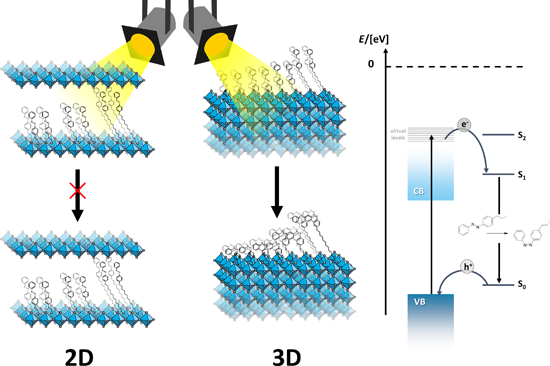
- . Irradiation, however, accelerates the process (see Supporting Information File 1, Figure S19). The conformational change is associated with a change of dipole moment from 0 D for the trans-isomer to 3 D for the cis-isomer [46]. Therefore, the polarity of the surface is reduced and particles tend to




Nanosecond resistive switching in Ag/AgI/PtIr nanojunctions
Beilstein J. Nanotechnol. 2020, 11, 92–100, doi:10.3762/bjnano.11.9
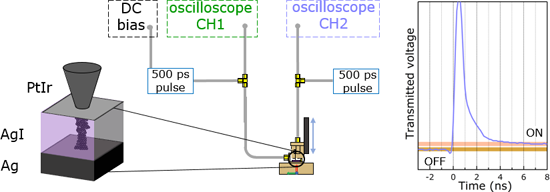
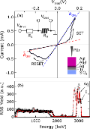
- memristor was determined numerically as Vbias = Vdrive − I·RS. As a polarity convention, a positive bias corresponds to a higher potential applied on the planar Ag electrode with respect to the PtIr tip. A representative I(V) trace acquired within 400 ms is exemplified in Figure 1a. Bipolar resistive
- switching takes place when the magnitude of Vbias exceeds approx. 100 mV at either polarity. The minor deviation of the OFF and ON state I(V) branches from their zero-bias slopes (red and blue dashed lines, respectively) up to the switching threshold voltages is a hallmark of metallic conduction indicating


Recent progress in perovskite solar cells: the perovskite layer
Beilstein J. Nanotechnol. 2020, 11, 51–60, doi:10.3762/bjnano.11.5

- adjusting the number of 2D inorganic layers. Chen et al. [59] studied the effect of the treatment with solvents of different polarities and boiling points on the crystallinity, crystal orientation, grain size and film quality of 2DRP perovskites. Dimethylacetamide (DMAC), which has a low polarity and a


Influence of the epitaxial composition on N-face GaN KOH etch kinetics determined by ICP-OES
Beilstein J. Nanotechnol. 2020, 11, 41–50, doi:10.3762/bjnano.11.4
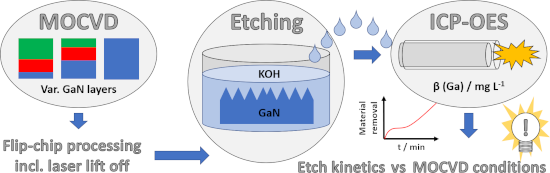
- and a 2D GaN layer with a combined thickness of 2000 nm. A, C and E contained a rudimentary MQW to allow for photoluminescence microscopy (PLM) analysis of dislocation density. Wafer processing After growth with Ga-polarity, the Ga-face of epilayers were bonded to silicon carriers with a non-ohmic


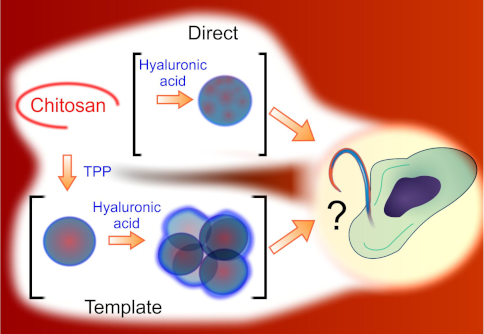
The different ways to chitosan/hyaluronic acid nanoparticles: templated vs direct complexation. Influence of particle preparation on morphology, cell uptake and silencing efficiency
Beilstein J. Nanotechnol. 2019, 10, 2594–2608, doi:10.3762/bjnano.10.250
- water, 5 min with 20 mM phosphate buffer at pH 7.4 (running buffer), 1 min with 0.1 M NaOH, 1 min with deionized water, and finally 1.5 min with the running buffer. Each sample was then injected at 0.5 psi for 10 s, applying 15 kV between the anode and the injection site (normal polarity) for 60 min. At



Long-term entrapment and temperature-controlled-release of SF6 gas in metal–organic frameworks (MOFs)
Beilstein J. Nanotechnol. 2019, 10, 1851–1859, doi:10.3762/bjnano.10.180
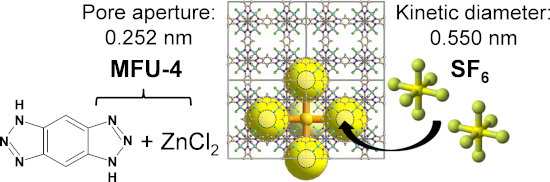
- include tuning the pore properties, such as polarity, or introducing open metal sides for a better interaction between the guest and host material [5][7][11]. Recently, we reported on an alternative approach which dealt with kinetic trapping of gas molecules in MOFs [12]. This approach is based on using


Processing nanoporous organic polymers in liquid amines
Beilstein J. Nanotechnol. 2019, 10, 1844–1850, doi:10.3762/bjnano.10.179
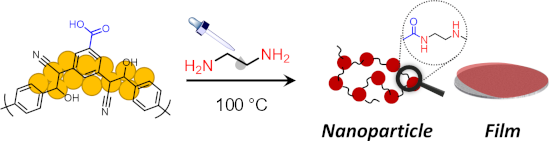
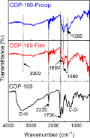
- of EDA on the nitrile groups by a nucleophilic attack [23], so that the alkylamine chain connected to the nitrile functionality can increase the polarity of the polymeric chains, making COP-100 soluble. However, as shown in Figure 4, FTIR spectra of COP-100, COP-100-Film, and COP-100-Precip. showed



Kelvin probe force microscopy of the nanoscale electrical surface potential barrier of metal/semiconductor interfaces in ambient atmosphere
Beilstein J. Nanotechnol. 2019, 10, 1401–1411, doi:10.3762/bjnano.10.138
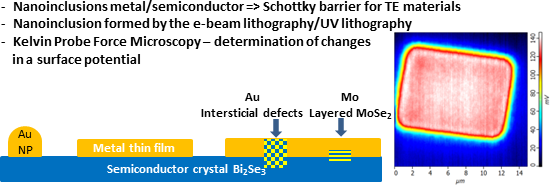
- barrier (surface contact potential) value and the polarity can be controlled by the barrier-forming metal NPs (Au, Mo) and can reflect their different chemical behavior with the Bi2Se3 matrix. These metals were selected due to the different interaction with the matrix, as Au can diffuse to the Bi2Se3


Molecular attachment to a microscope tip: inelastic tunneling, Kondo screening, and thermopower
Beilstein J. Nanotechnol. 2019, 10, 1243–1250, doi:10.3762/bjnano.10.124
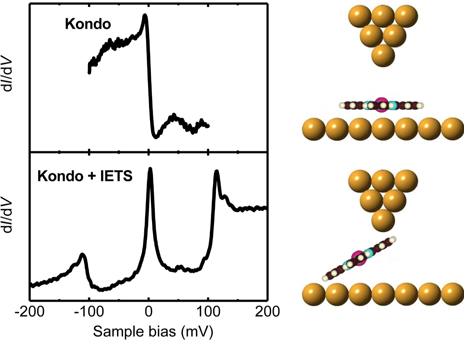
- of the MnPc junction shows a strong asymmetry with the polarity of the junction. The asymmetry is difficult to explain by simple means. However, we noticed that for the large-gap resistance (larger tip–sample distances) the effect progressively washes out, see the spectra of Figure 4a below. As a


Electroluminescence and current–voltage measurements of single-(In,Ga)N/GaN-nanowire light-emitting diodes in a nanowire ensemble
Beilstein J. Nanotechnol. 2019, 10, 1177–1187, doi:10.3762/bjnano.10.117
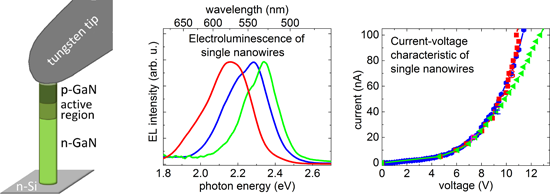
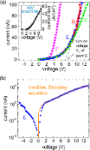
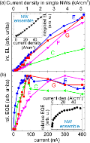
- , the intensity of which changes in a characteristic way with current. This phenomenon is caused by the N polarity of the NWs and the three-dimensional strain profile resulting from elastic relaxation at the free sidewall surfaces, as previously shown in [7]. I–V curves acquired for single-NW LEDs


Trapping polysulfide on two-dimensional molybdenum disulfide for Li–S batteries through phase selection with optimized binding
Beilstein J. Nanotechnol. 2019, 10, 774–780, doi:10.3762/bjnano.10.77
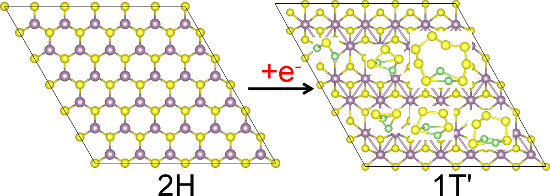
- as an efficient approach to improve the electrochemical performance. Due to the polarity of LPSs species, the interaction between LPSs and anchoring materials can be enhanced through polar–polar interactions. Graphene-based materials have been considered as anchoring materials due to their high


A comparison of tarsal morphology and traction force in the two burying beetles Nicrophorus nepalensis and Nicrophorus vespilloides (Coleoptera, Silphidae)
Beilstein J. Nanotechnol. 2019, 10, 47–61, doi:10.3762/bjnano.10.5
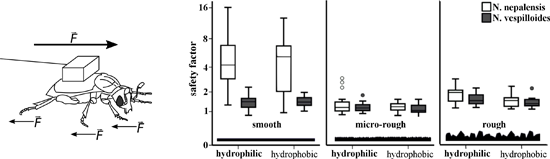
- smooth and rough surfaces with clipped claws. Both species demonstrated poor traction forces on micro-rough surfaces. Results concerning the impact of surface polarity were inconclusive, whereas roughness more strongly affected the attachment performance in both species. Nanotribometric analyses of the
- surface polarity. We conclude that the investigated morphological traits are not critical for the observed interspecific difference in attachment ability on smooth surfaces. Furthermore, interspecific differences in performance are only clear on smooth surfaces and vanish on micro-rough and rough surfaces
- respective surfaces [15][16][17]. Another property that influences insect adhesion is surface polarity, which can be affected by surface roughness, apparently reinforcing hydrophobic or hydrophilic surface characteristics. The testing of both of these surface properties in combination in our experiments has




Bidirectional biomimetic flow sensing with antiparallel and curved artificial hair sensors
Beilstein J. Nanotechnol. 2019, 10, 32–46, doi:10.3762/bjnano.10.4
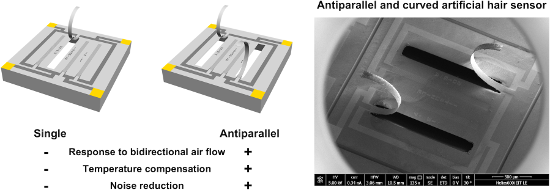
- Civile e Industriale, Pisa, I-56122, Italy 10.3762/bjnano.10.4 Abstract Background: Flow stimuli in the natural world are varied and contain a wide variety of directional information. Nature has developed morphological polarity and bidirectional arrangements for flow sensing to filter the incoming
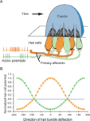
- sensor; biomimetics; flow direction; flow sensing; robotics; Introduction Biological lateral line organ Flow sensors in nature often have a morphological polarity, such as the hair cell sensors in the lateral line of fish [1], in jellyfish [2], arthropods [3][4] and crickets [5][6][7][8], as well as the
- by an axis of orientation of the individual hair cells) and morphological polarity [1]. As in the biological model, where hair cells within the same neuromast assume an antiparallel bending orientation with respect to each other, the presented antiparallel artificial hair sensors also demonstrated an


Size limits of magnetic-domain engineering in continuous in-plane exchange-bias prototype films
Beilstein J. Nanotechnol. 2018, 9, 2968–2979, doi:10.3762/bjnano.9.276
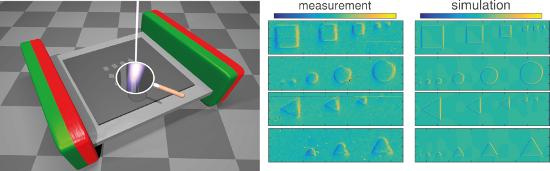
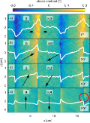
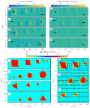
- charges of inverted polarity are, therefore, close together and cannot be detected by the MFM tip, averaging over a certain lateral range defined by the tip radius and the distance to the sample surface. The DW profile obtained for circular domains in the simulations also qualitatively reproduces the




![[Graphic 63]](/bjnano/content/inline/2190-4286-9-276-i63.svg?max-width=637&scale=1.18182) .
. ![[Graphic 64]](/bjnano/content/inline/2190-4286-9-276-i64.svg?max-width=637&scale=1.18182) is the angle between the domain wall (DW) normal vector
is the angle between the domain wall (DW) normal vector ![[Graphic 65]](/bjnano/content/inline/2190-4286-9-276-i65.svg?max-width=637&scale=1.18182) and the local unidirectio...
and the local unidirectio...
Nanocellulose: Recent advances and its prospects in environmental remediation
Beilstein J. Nanotechnol. 2018, 9, 2479–2498, doi:10.3762/bjnano.9.232
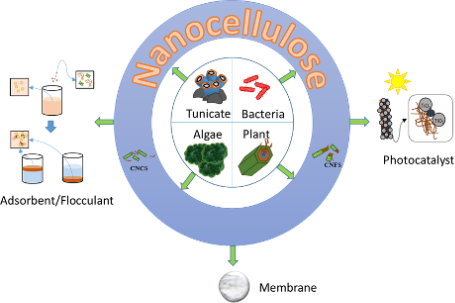
- [138]. The interaction of cellulose with various compounds could be enhanced after introducing new functional groups in order to increase the surface polarity and hydrophilicity [87]. Reported applications of cellulose-based flocculants in wastewater treatment are summarized in Table 3. Suopajärvi and


Recent highlights in nanoscale and mesoscale friction
Beilstein J. Nanotechnol. 2018, 9, 1995–2014, doi:10.3762/bjnano.9.190
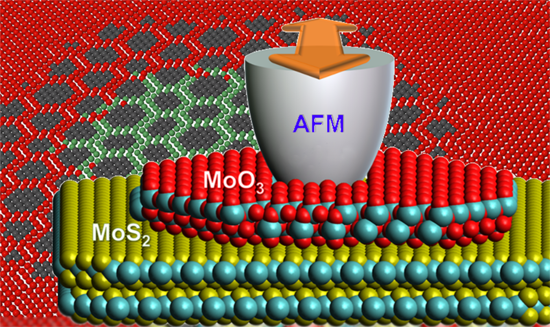
- by the action of a probing tip along a track of 100 nm on a Au(111) surface (Figure 8). The method to move the molecules is based on inelastic tunneling through which the electrons induce molecular vibrations, which then lead to increased diffusion. Depending on the polarity of the applied bias


Electromigrated electrical optical antennas for transducing electrons and photons at the nanoscale
Beilstein J. Nanotechnol. 2018, 9, 1964–1976, doi:10.3762/bjnano.9.187
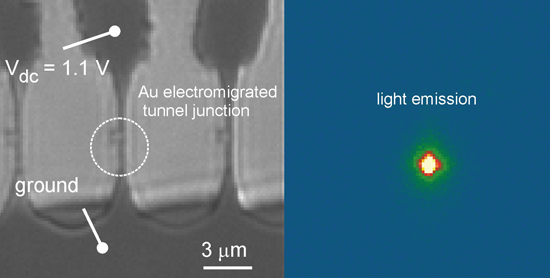
- Fowler–Nordheim plot of the JT(Vdc) characteristics discussed in Figure 3 is displayed in Figure 4a. Two clear minima are identified with respect to bias polarity at nearly symmetric values 1/ = −3.51 ± 0.16 V−1 and 1/ = 3.5 ± 0.09 V−1, corresponding to an average transition voltage |Vt| = 0.28 V. It is


![[Graphic 32]](/bjnano/content/inline/2190-4286-9-187-i38.svg?max-width=637&scale=1.18182) and
and ![[Graphic 33]](/bjnano/content/inline/2190-4286-9-187-i39.svg?max-width=637&scale=1.18182) are...
are...


Multimodal noncontact atomic force microscopy and Kelvin probe force microscopy investigations of organolead tribromide perovskite single crystals
Beilstein J. Nanotechnol. 2018, 9, 1695–1704, doi:10.3762/bjnano.9.161
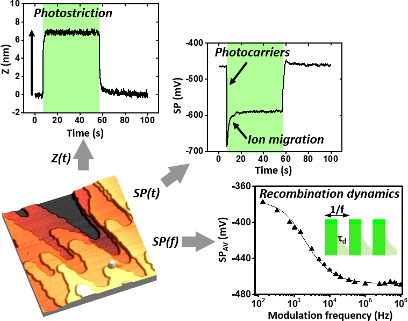
- = Wtip − Wsample, where W is the work function divided by the elementary charge in absolute value) is thus the opposite of VDC (more details about these polarity conventions can be found in [19]). In the following, the KPFM data are presented as compensation bias (Vtip = −CPD) images (also called the
- wavelengths (currently unavailable in our setup) would be necessary to draw a definitive conclusion about the wavelength dependency of the photoresponse above the bandgap. The fast surface photovoltage polarity implies that negative charges accumulate quickly under illumination beneath the surface of the
- carriers of opposite sign in the space charge region (Figure 3a). On the other hand, the opposite polarity of the slow SPV component implies that charge redistribution occurs in the system within a few seconds, which is highly likely to originate from photoinduced ion-migration mechanisms. As mentioned


Nanoscale electrochemical response of lithium-ion cathodes: a combined study using C-AFM and SIMS
Beilstein J. Nanotechnol. 2018, 9, 1623–1628, doi:10.3762/bjnano.9.154
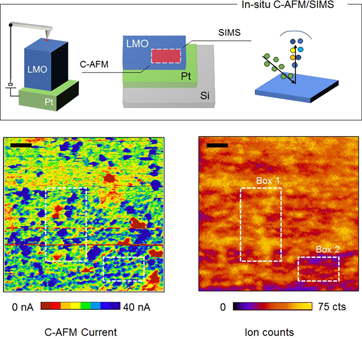
- approach to separate both components. Figure 1e,f proves that we can induce a local change in the conductivity of the layer when the tip is scanned with a negative polarity, which we relate to the presence of mobile Li ions in the LMO film. This effect, which has been already shown for other mixed ionic


Closed polymer containers based on phenylboronic esters of resorcinarenes
Beilstein J. Nanotechnol. 2018, 9, 1594–1601, doi:10.3762/bjnano.9.151
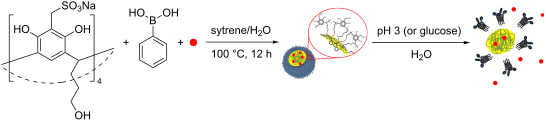
- ) was examined as a container for pH- and glucose-controlled storage and as a source of substrates. Three dyes were chosen: fluorescein (Fl), pyrene (Py) and 1,3,6,8-pyrenetetrasulfonic acid tetrasodium salt (PTS). These dyes differ in polarity but all of them are used as fluorescent probes to determine
- tendency to aggregate, precise quantification of pyrene is difficult. The analysis of the UV and fluorescent spectra of D@p(SRA-B) showed that all of the used dyes are encapsulated in the cavity of p(SRA-B) despite the difference in their polarity. For Fl@p(SRA-B), a bathochromic shift of the absorption


Photoluminescence of CdSe/ZnS quantum dots in nematic liquid crystals in electric fields
Beilstein J. Nanotechnol. 2018, 9, 1544–1549, doi:10.3762/bjnano.9.145
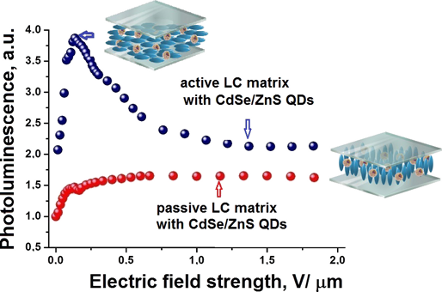
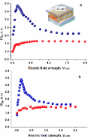
- LC monomers and dimers [21]. The peak of the maximum luminescence intensity of QDs with 5 nm core diameter is at the wavelength of 630 nm. The quantum yield of the semiconductor NPs luminescence strongly depends on the polarity of the surrounding molecules, the electrostatic properties, the
- polarizability and the dipole moment of the nanoparticles. The enhancement of the QD luminescence results from the transfer of energy, when the channels of nonradiative deactivation of QDs are eliminated [22]. The polarity of the surrounding molecules affects the optical properties of the QDs. The interaction


Tuning adhesion forces between functionalized gold colloidal nanoparticles and silicon AFM tips: role of ligands and capillary forces
Beilstein J. Nanotechnol. 2018, 9, 660–670, doi:10.3762/bjnano.9.61
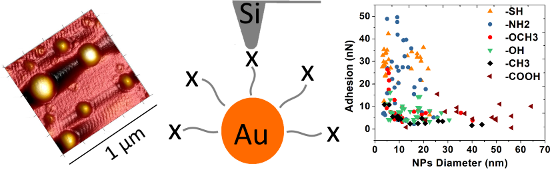
- the size and shape of the particles, and longer contact times may contribute to the increase of these interaction forces. The low values of adhesion obtained for –OH coated Au NPs can be explained by a possible contamination of the Au NPs deposited on the silicon wafer. Due to the high polarity of the
- –OH functional group compared to those of –NH2 and –SH groups, a higher adhesion value might have been expected. However, this high polarity of the tail group also confers a high reactivity to Au NPs, especially with contamination in air. As a result, the final adhesive behavior of the Au coated NPs
- that under ambient conditions an adsorbed thin water film exists at the NPs–substrate interface, that should increase the capillary forces and indirectly the adhesion between NPs and tip. On the other hand, high polarity of –COOH group increases the reactivity of NPs with airborne contaminants, which





