Search results
Search for "stainless steel" in Full Text gives 152 result(s) in Beilstein Journal of Nanotechnology.
Synthesis of nickel/gallium nanoalloys using a dual-source approach in 1-alkyl-3-methylimidazole ionic liquids
Beilstein J. Nanotechnol. 2019, 10, 1754–1767, doi:10.3762/bjnano.10.171
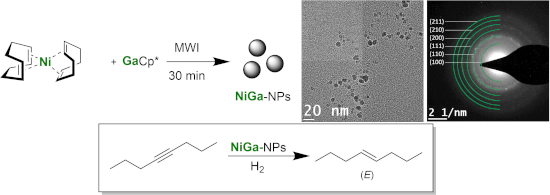
- microwave decomposition (60 min, 50 W, 230 °C) to gain 0.5 wt % nanoparticles in ionic liquid. Catalytic hydrogenation of alkynes A Büchi stainless steel autoclave with a glass inlet was charged with 0.1 g of freshly synthesized NiGa@[BMIm][NTf2] dispersion (1 wt % in total metal, 8 µmol NiGa). 2 g of




Novel hollow titanium dioxide nanospheres with antimicrobial activity against resistant bacteria
Beilstein J. Nanotechnol. 2019, 10, 1716–1725, doi:10.3762/bjnano.10.167
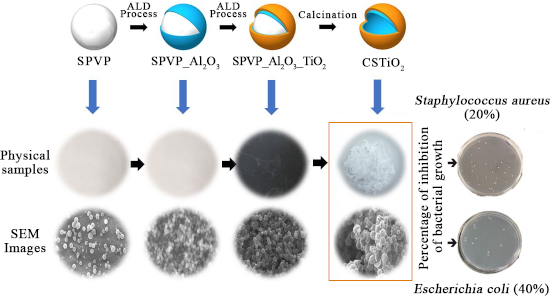
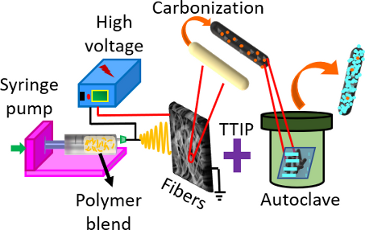
- temperature until the polymer was completely dissolved. The solution was transferred to 5 mL plastic syringes and connected through a PTFE tube to a 20-gauge blunt (0.9 mm diameter) stainless steel needle charged by a high voltage power supply in the range of 0–20 kV. The parameters were previously optimized


Growth of lithium hydride thin films from solutions: Towards solution atomic layer deposition of lithiated films
Beilstein J. Nanotechnol. 2019, 10, 1443–1451, doi:10.3762/bjnano.10.142
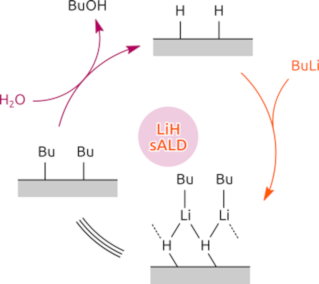
- shown schematically in Figure 1, was loaded with sample substrates. To close the chamber, a glass slide (see below in Figure 2) was sealed to the chamber with PTFE grease. The solutions were introduced into the chamber with stainless steel threaded pipes, which were connected to threads in the PTFE body


Selective gas detection using Mn3O4/WO3 composites as a sensing layer
Beilstein J. Nanotechnol. 2019, 10, 1423–1433, doi:10.3762/bjnano.10.140
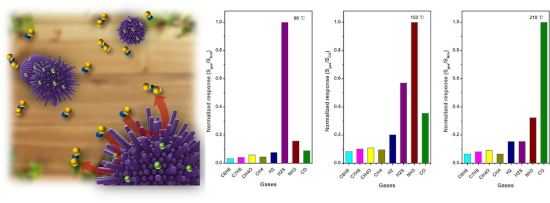
- solution was poured into an 80 mL Teflon-lined stainless steel autoclave and maintained at 200 °C inside an oven. The bluish precipitate was obtained through washing, centrifugation and drying at 80 °C. Finally, after annealing at 500 °C in air for 2 h, the as-prepared blue precursor was converted to faint


Kelvin probe force microscopy of the nanoscale electrical surface potential barrier of metal/semiconductor interfaces in ambient atmosphere
Beilstein J. Nanotechnol. 2019, 10, 1401–1411, doi:10.3762/bjnano.10.138
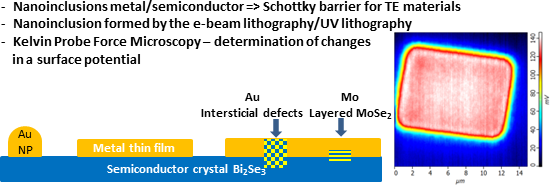
- Coating System (Bio-Rad) in Ar atmosphere (p ≈ 20 Pa, I = 18 mA, U = 1.4 kV) from pure metal sheets (Mo 4N, Au 4N). For preparing separated Au nanoparticles under the same sputtering conditions, however, a stainless steel mask (system of 100 × 500 μm2 holes, 200 holes/cm2) between the substrate and target


Glucose-derived carbon materials with tailored properties as electrocatalysts for the oxygen reduction reaction
Beilstein J. Nanotechnol. 2019, 10, 1089–1102, doi:10.3762/bjnano.10.109
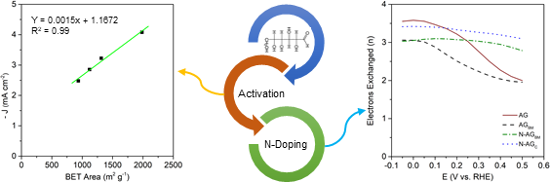
- prepared from an initial solution of glucose (HiMedia, >99%) and deionized water (produced by filtration through inverse osmose by a Panice device) in a 1:6 ratio. The solutions were mixed and then closed in a teflon-lined stainless steel autoclave and hydrothermally carbonized during 12 h at 180 °C. The


In situ AFM visualization of Li–O2 battery discharge products during redox cycling in an atmospherically controlled sample cell
Beilstein J. Nanotechnol. 2019, 10, 930–940, doi:10.3762/bjnano.10.94
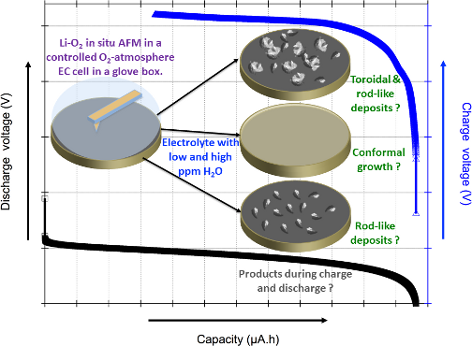
- cell design The Li/O2 cell consisted of a polyetheretherketone (PEEK) cell body (Figure 1a) with a stainless steel (SS) stub (Figure 1b) that allowed electrical contact to glassy carbon cathode (Figure 1c) as shown in Figure 1. For AFM experiments, the design challenge was to allow the AFM tip contact
- of a donut-shaped polyethylene separator (Figure 1d) and lithium (Figure 1e) anode. The electrical contact to the lithium anode was made using stainless steel (Figure 1b). The entire assembly was performed inside of the glove box (<0.1 ppm H2O and O2), allowing the assembled cell to be free of
- ] using this in situ AFM set-up we monitored surface changes on the products of a Na–oxygen discharge reaction. The terms electrochemical cell and battery are used interchangeably in this study. Upon cell assembly, electrical connections were made between the lithium and carbon stainless steel contacts


Synthesis of novel C-doped g-C3N4 nanosheets coupled with CdIn2S4 for enhanced photocatalytic hydrogen evolution
Beilstein J. Nanotechnol. 2019, 10, 912–921, doi:10.3762/bjnano.10.92
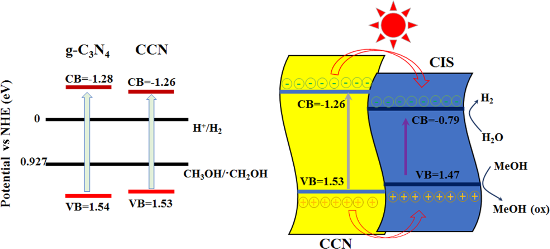
- 100 mL Teflon-lined stainless steel autoclave, sealed and maintained at 180 °C for 12 h, then cooled naturally and washed with ethanol and distilled water. The product was dried at 60 °C for 10 h. The as-prepared CdIn2S4/CCN samples with 1, 3, 5 and 10 wt % CdIn2S4 were denoted as CISCCN1, CISCCN3


An efficient electrode material for high performance solid-state hybrid supercapacitors based on a Cu/CuO/porous carbon nanofiber/TiO2 hybrid composite
Beilstein J. Nanotechnol. 2019, 10, 781–793, doi:10.3762/bjnano.10.78
- PVA/H2SO4 polymer gel electrolyte and the fabrication of SSHSC is given in Supporting Information File 1. Then, the assembly was placed between two Perspex sheets, along with stainless-steel plates as current collectors. An optical image showing different parts of the fabricated supercapacitors is


An iridescent film of porous anodic aluminum oxide with alternatingly electrodeposited Cu and SiO2 nanoparticles
Beilstein J. Nanotechnol. 2019, 10, 735–745, doi:10.3762/bjnano.10.73
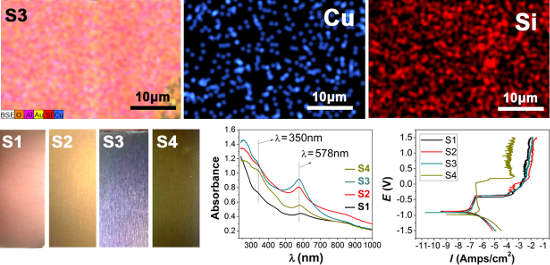
- stainless steel tube and a carbon fiber as the anode and cathode under the action of a circular electric field, respectively, resulting in a cylindrical fibrous structure. The control over the electrodeposition voltage and time allowed for the fabrication of fibers with different thicknesses, and the


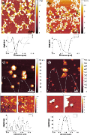
Ultrathin hydrophobic films based on the metal organic framework UiO-66-COOH(Zr)
Beilstein J. Nanotechnol. 2019, 10, 654–665, doi:10.3762/bjnano.10.65
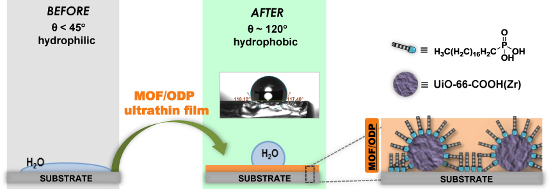
- chloride (CPVC) CHC-15 crystal holders from Inficon inside a stainless steel cell with a total volume about 200 mL. Two 9 MHz AT-cut QCM crystals (Inficon) are used in each experiment, where one uncoated disk is used as a reference to correct possible frequency drifts mainly due to temperature or gas flow


One-step nonhydrolytic sol–gel synthesis of mesoporous TiO2 phosphonate hybrid materials
Beilstein J. Nanotechnol. 2019, 10, 356–362, doi:10.3762/bjnano.10.35
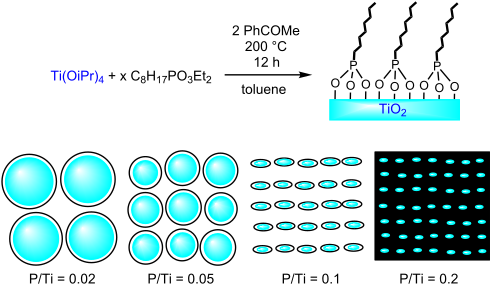
- mmol), acetophenone (1.44 g, 12.00 mmol), C8H17PO3Et2 (0 mmol, 0.24 mmol, 0.60 mmol, 1.20 mmol, or 2.40 mmol) and toluene (8.0 mL) were mixed in a stainless steel digestion vessel with a PTFE lining (23 mL). The sealed autoclave was heated in an oven at 200 °C for 12 h under autogenous pressure. After


A Ni(OH)2 nanopetals network for high-performance supercapacitors synthesized by immersing Ni nanofoam in water
Beilstein J. Nanotechnol. 2019, 10, 281–293, doi:10.3762/bjnano.10.27
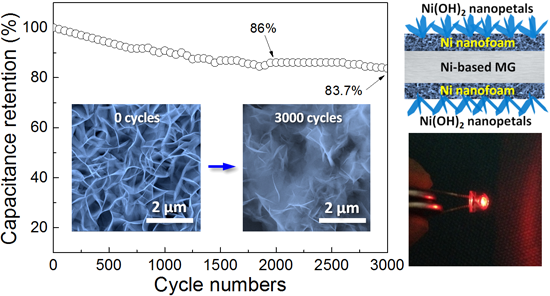
- nickel hydroxide without binders has become a hot topic in recent years. For instance, Ni(OH)2 active materials have been loaded on stainless steel [21], carbon foam [22] and three-dimensional (3D) graphite foam [23]. Furthermore, 3D porous nickel materials have been used extensively as conductive




Graphene–graphite hybrid epoxy composites with controllable workability for thermal management
Beilstein J. Nanotechnol. 2019, 10, 95–104, doi:10.3762/bjnano.10.9
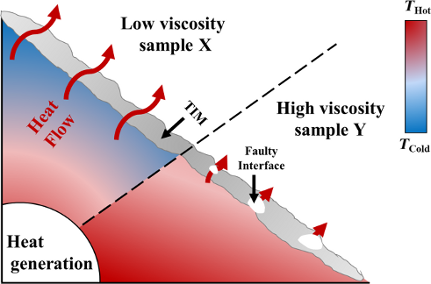
- ) operated in cone and plate arrangements (stainless steel cone, with a 40 mm diameter and a 4° cone angle) at 25 °C. The shear rate was swept between 0.01–100 1/s, and each measurement was performed at steady-state flow at a shear rate of 0.01 1/s to extract the viscosity [51][68]. Functional thermal



Magnetic and luminescent coordination networks based on imidazolium salts and lanthanides for sensitive ratiometric thermometry
Beilstein J. Nanotechnol. 2018, 9, 2775–2787, doi:10.3762/bjnano.9.259
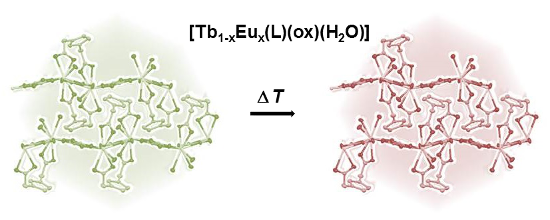
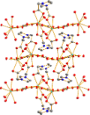
- (L)(ox)(H2O)] were obtained with Ln = Eu3+, Gd3+, Tb3+, Dy3+, Ho3+ and Yb3+ by reacting a water/ethanol solution of the lanthanide nitrate and oxalic acid (H2ox) with [HL]. The mixture was sealed in a Teflon-lined stainless steel autoclave and heated at 393 K for 72 h. After cooling to room
- /ethanol solution (1.5 mL). The solution was sealed in a Teflon-line stainless steel bomb (6 mL) and heated at 393 K for 72 h. After cooling to room temperature, the bomb was opened and colorless crystals were filtered and washed with ethanol and dried at room temperature. Yields were between 41% and 59



Optimization of Mo/Cr bilayer back contacts for thin-film solar cells
Beilstein J. Nanotechnol. 2018, 9, 2700–2707, doi:10.3762/bjnano.9.252
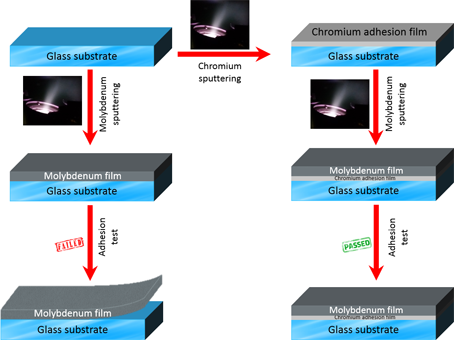
- such as glass or stainless steel [17][18][19][20][21]. Cr forms an oxide interface layer by scavenging the oxygen available on the glass surface during the sputtering process. This creates nucleation centers and promotes nucleation of the next deposited material (in this case Mo), leading to a strong
- adhesion of Mo to the substrates [22][23][24]. The Mo/Cr back contact has been already proposed in flexible thin-film solar cells on metallic foils and stainless steel [25][26][27][28]. However, in these reports Cr was used as a barrier layer to reduce/prevent impurity out-diffusion from the metallic


Nanotribology
Beilstein J. Nanotechnol. 2018, 9, 2330–2331, doi:10.3762/bjnano.9.217

- ., silicon oxide, are recognized. The quality of the surface condition is addressed experimentally by the example of cryogenically treated martensitic stainless steel [4] and theoretically by an analysis of the influence of micro-dimple textures on hydrodynamic lubrication [5]. On a more fundamental level
Electrospun one-dimensional nanostructures: a new horizon for gas sensing materials
Beilstein J. Nanotechnol. 2018, 9, 2128–2170, doi:10.3762/bjnano.9.202
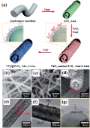
- inside a stainless steel needle. The electrospinning setup and resulting hollow fibers are shown in Figure 5. Choi et al. [75] synthesized macroporous WO3 NTs using coaxial electrospinning combined with sacrificial templating. A porous structure using colloidal polystyrene (PS) particles in a solution






Synthesis of carbon nanowalls from a single-source metal-organic precursor
Beilstein J. Nanotechnol. 2018, 9, 1895–1905, doi:10.3762/bjnano.9.181
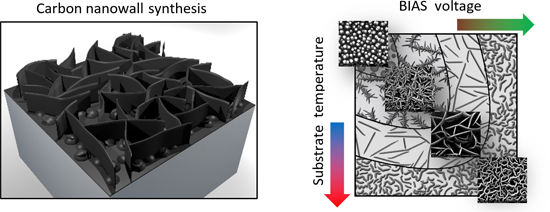
- the various deposition parameters on the growth. Silicon, stainless steel, nickel and copper are used as substrate materials. The CNWs deposited are characterized by scanning electron microscopy (SEM), Raman spectroscopy and Auger electron spectroscopy (AES). The combination of bias voltage, the
- substrate bias and the substrate temperature on the deposition process and on the structure of the synthesized CNWs. Four different kinds of substrates were chosen: stainless steel, aluminium, nickel and silicon. These materials were chosen because they differ significantly in essential properties such as
- found that the described growth model is also valid for all of the chosen materials. However, the growth regimes are shifted for the different materials. While all of the above mentioned structures are found on stainless steel and aluminium (although shifted to different bias voltage and temperature


Magnetic properties of Fe3O4 antidot arrays synthesized by AFIR: atomic layer deposition, focused ion beam and thermal reduction
Beilstein J. Nanotechnol. 2018, 9, 1728–1734, doi:10.3762/bjnano.9.164
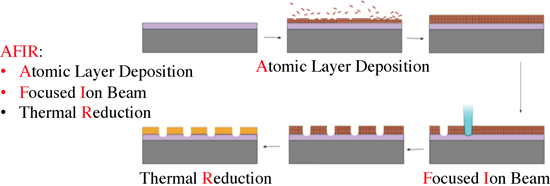
- 200 °C in stop/exposure-mode. The ferrocene (FeCp2) was held in a stainless-steel container (bottle) heated to 90 °C to ensure sufficient vapor pressure. The pulse times of ferrocene and ozone in the FeCp2/O3 cycle were 2 s and 0.2 s, respectively; the exposure and pump times were 5 s and 15 s




Multimodal noncontact atomic force microscopy and Kelvin probe force microscopy investigations of organolead tribromide perovskite single crystals
Beilstein J. Nanotechnol. 2018, 9, 1695–1704, doi:10.3762/bjnano.9.161
- inverse temperature solubility. The single crystal investigated under ultrahigh vacuum (UHV) was fixed on a stainless steel sample UVH holder with a compatible electrically conductive silver epoxy paste (EPO-TEK E4110), which was cured at room temperature (RT) over 24 hours. The sample was subsequently


Sheet-on-belt branched TiO2(B)/rGO powders with enhanced photocatalytic activity
Beilstein J. Nanotechnol. 2018, 9, 1550–1557, doi:10.3762/bjnano.9.146
- transferred to a Teflon-lined stainless steel autoclave and maintained at 200 °C for 24 h, with a heating rate of 2 °C/min. After the reaction, the precipitates were centrifugally washed with distilled water three times and then immersed in a 0.1 M HCl solution for 1 h repetitively for three times to complete


Graphene composites with dental and biomedical applicability
Beilstein J. Nanotechnol. 2018, 9, 801–808, doi:10.3762/bjnano.9.73
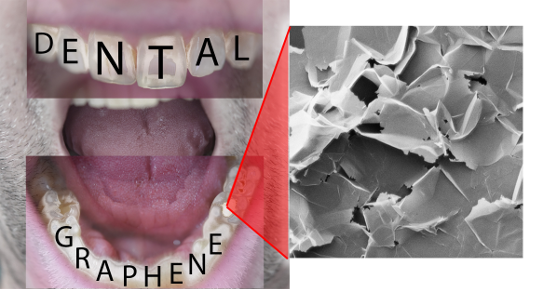
- was hand-mixed with all the poly(acrylic acid) solution for 20 s using a stainless steel spatula, and then the remaining GI powder was added and mixed for a further 20 s. Dynamic viscosity measurements The viscosity of all the poly(acrylic acid) solutions was measured with a digital viscometer
- covered with an acetate strip and aligned using nylon wedges and a locating pin. The hand-mixed GI restorative plastic mass was applied to one side of the split-mould immediately after mixing using the stainless steel spatula and allowed to flow into the mould to minimise air bubble incorporation in the


Combined pulsed laser deposition and non-contact atomic force microscopy system for studies of insulator metal oxide thin films
Beilstein J. Nanotechnol. 2018, 9, 686–692, doi:10.3762/bjnano.9.63
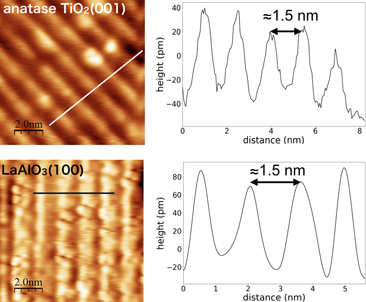
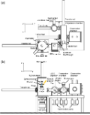
- ]. The substrate is fixed with four screws and leaf springs on the ceramic part of the sample holder. Stainless steel electrodes under the ceramic are used as connections for flowing a current through the tungsten thin film. The electrode for the flowing current is insulated from the base of the stocker


Sensing behavior of flower-shaped MoS2 nanoflakes: case study with methanol and xylene
Beilstein J. Nanotechnol. 2018, 9, 608–615, doi:10.3762/bjnano.9.57
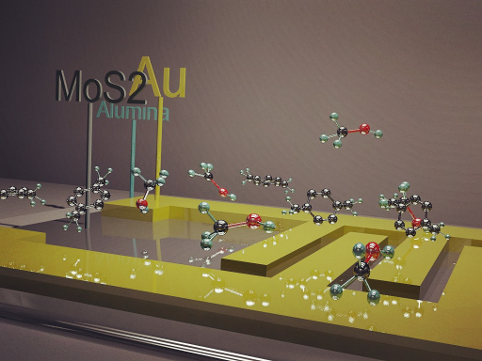
- water followed by rapid stirring for about 30 min. Subsequently, the mixture was transferred into a 50 mL teflon-lined stainless steel autoclave and maintained at 200 °C for 24 h. After cooling naturally, the black MoS2 product was collected by filtration, washed with distilled water and pure ethanol