Search results
Search for "HRTEM" in Full Text gives 225 result(s) in Beilstein Journal of Nanotechnology. Showing first 200.
Synthesis of MnO2–CuO–Fe2O3/CNTs catalysts: low-temperature SCR activity and formation mechanism
Beilstein J. Nanotechnol. 2019, 10, 848–855, doi:10.3762/bjnano.10.85
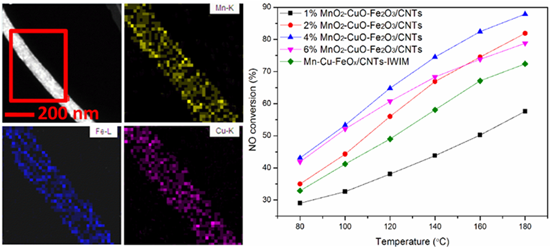
- the acid-treated CNTs and the catalysts were investigated by TEM and HRTEM (Figure 3). The acid-treated CNTs have a smooth external surface (Figure 3a) that becomes coarse after being loaded with active metal oxide (Figure 3b). Additionally, the HRTEM images show the presence of catalysts nanoflakes
- , also verifying the generation of metal oxide catalysts on the CNT surface. The EDX spectrum (Figure 3d) shows signals of Mn, Cu, Fe, O and C. Clear lattice fringes of the metal oxides cannot be observed in the HRTEM images, indicating the generation of amorphous materials, which is consistent with the
- catalysts: (a) acid-treated CNTs, (b) 1% MnO2–CuO–Fe2O3/CNTs, (c) 2% MnO2–CuO–Fe2O3/CNTs, (d) 4% MnO2–CuO–Fe2O3/CNTs, (e) 6% MnO2–CuO–Fe2O3/CNTs, and (f) Mn–Cu–FeOx/CNTs-IWIM. TEM and HRTEM images, as well as EDX spectrum of CNT-based samples: (a) CNTs, (b–d) 4% MnO2–CuO–Fe2O3/CNTs. XPS results of the as




Tungsten disulfide-based nanocomposites for photothermal therapy
Beilstein J. Nanotechnol. 2019, 10, 811–822, doi:10.3762/bjnano.10.81
- , US) and then dried at ambient temperature for 24 h. High-resolution transmission electron microscopy (HRTEM) images were acquired using a high-resolution transmission electron microscope (JEM 2100, JEOL Inc., Peabody, MA, US) equipped with a 4k × 4k CCD camera (Gatan, Pleasanton, CA, US). Samples
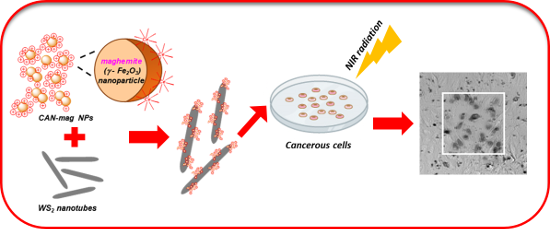
- Figure 2a and Figure 2c; cf. Figure 2d and Figure 2f), is that WS2-NT-CM is significantly less aggregated in aqueous dispersion compared to WS2-NT. Here, too, the electrostatic repulsion provided by CAN-mag is probably the reason. In the HRTEM image of WS2-NT-CM (Figure 2e), the crystalline nanoparticles
- of maghemite are easily observed, including visible lattice fringes (marked in yellow). TEM images of WS2-NT-CM-PEI (Figure 2g) and WS2-NT-CM-PAA (Figure 2i) show that the dark CAN-mag composite is surrounded by a lighter substance, namely the organic polymer (PEI or PAA). A closer look by HRTEM into






Ultrasonication-assisted synthesis of CsPbBr3 and Cs4PbBr6 perovskite nanocrystals and their reversible transformation
Beilstein J. Nanotechnol. 2019, 10, 666–676, doi:10.3762/bjnano.10.66
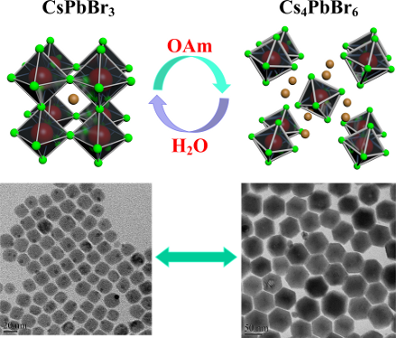
- Figure 1a, the diffraction pattern clearly indicates that orthorhombic CsPbBr3 PNCs (PDF card #18-0364) were formed. No other phases were observed, suggesting the high purity of the samples. The TEM image shown in Figure 1b demonstrates that the CsPbBr3 PNCs have a regular square morphology. HRTEM was
- nanoparticles that have been reported before [23][35][36]. The HRTEM image shown in Figure 4d demonstrates an interplanar spacing of 0.39 nm, corresponding to the (300) crystal plane of bulk Cs4PbBr6, which is also consistent with the PDF card #73-2478. The size of the Cs4PbBr6 PNCs is defined here as the
- , JEM-2100F, JEOL, Japan) with an accelerating voltage of 100 kV. High-resolution TEM (HRTEM) was carried out on a JEOL JEM-2100F instrument operating at 200 kV. The crystal phases of the products were measured using an X-ray diffractometer (XRD, D8-Advance, Bruker, Germany) with a Cu Kα radiation



Enhancement in thermoelectric properties due to Ag nanoparticles incorporated in Bi2Te3 matrix
Beilstein J. Nanotechnol. 2019, 10, 634–643, doi:10.3762/bjnano.10.63
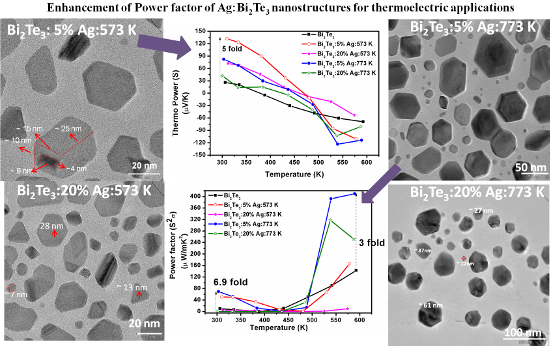
- characterized by X-ray diffraction (XRD), transmission electron microscopy (TEM), and thermoelectric measurements. XRD measurements were performed using a Bruker D8 Avance diffractometer with Cu Kα (1.5406 Å) radiation. TEM investigations were carried out using a LIBRA 200 FE HRTEM. Gatan software [22] was used
- for analysis of HRTEM images of samples. Scanning electron microscopy with energy-dispersive spectroscopy (SEM EDS) was performed using a field-emission scanning electron microscope (FE-SEM) [MIRA\\, TESCAN]. Temperature-dependent thermoelectric measurements were carried out for all samples with size
- with Bi2Te3. High-resolution transmission electron microscopy Transmission electron microscopy (TEM) and high-resolution TEM (HRTEM) images of Bi2Te3:Ag samples annealed at 573 K are shown in Figure 3. Figure 3a,b shows the bright-field image and the HRTEM image of the as-prepared Bi2Te3 samples with



A porous 3D-RGO@MWCNT hybrid material as Li–S battery cathode
Beilstein J. Nanotechnol. 2019, 10, 514–521, doi:10.3762/bjnano.10.52
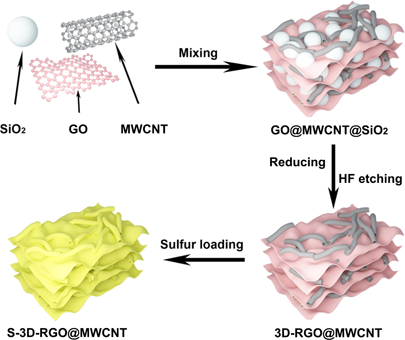
- (HRTEM, JEOL JEM-2100F) images were used for investigating surface topology. The content of sulfur in the S-3D-RGO@MWCNT composite was confirmed using thermogravimetric analysis (TGA, SHIMADZU DTG-60) in Ar atmosphere. Raman spectra were recorded on Raman spectrometer (Raman, Renishaw) using 532 nm



Reduced graphene oxide supported C3N4 nanoflakes and quantum dots as metal-free catalysts for visible light assisted CO2 reduction
Beilstein J. Nanotechnol. 2019, 10, 448–458, doi:10.3762/bjnano.10.44
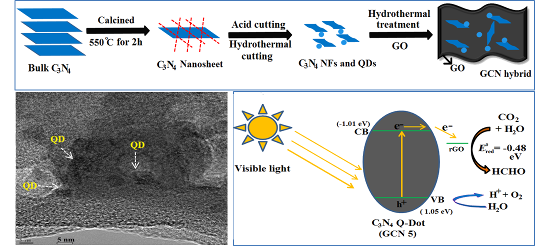
- size of the CN-5 QDs has been confirmed from the HRTEM results. Figure 9 exhibits HRTEM images of the GCN-5 QDs. It can clearly be seen that CN-5 QDs are decorated (marked by circle and arrows) onto the GO surface with an average diameter of 2–3 nm. A clear lattice spacing of 0.336 nm is also observed
- for the CN-5 QDs, which corresponds to the (002) plane of hexagonal g-C3N4, indicating crystalline nature of the QDs [40]. Hence, TEM, HRTEM, and FESEM studies confirm the morphology and size of the NFs and QDs and also confirm the presence of rGO in the hybrid material. The band gaps of the prepared





Improving control of carbide-derived carbon microstructure by immobilization of a transition-metal catalyst within the shell of carbide/carbon core–shell structures
Beilstein J. Nanotechnol. 2019, 10, 419–427, doi:10.3762/bjnano.10.41
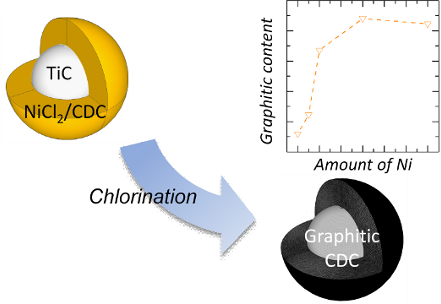
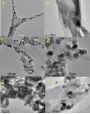
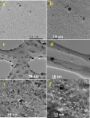
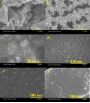
- 1200 °C to obtain the final material (Figure 1, right). The amount of nickel added was varied from 5 up to 60 mg of nickel per gram of equivalent carbide. The effect of nickel catalyst on the microstructure of final carbon was investigated using XRD, temperature-programmed oxidation (TPO), HRTEM and


Sub-wavelength waveguide properties of 1D and surface-functionalized SnO2 nanostructures of various morphologies
Beilstein J. Nanotechnol. 2019, 10, 379–388, doi:10.3762/bjnano.10.37
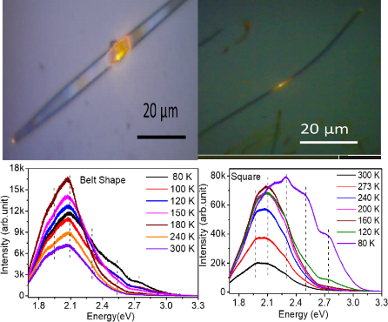
- the TEM images of the cylinder-shaped NWs grown at 1000 °C. An HRTEM image of a single NW across the width is shown in Figure 3a. The image related to the single cylindrical NW shows the crystalline (110) plane which belongs to the rutile tetragonal SnO2 with a d spacing value of 3.36 Å (Figure 3b
- not possess extended defects. Figure 4 shows the TEM images of the NB grown at 1000 °C. The HRTEM image of the single NB shows the crystalline (110) plane of the rutile tetragonal SnO2 with a d spacing of 3.36 Å (Figure 4a). The SAED pattern corroborates the single crystalline character of the NB
- , insets in 1a and 1b show a single NW with a Au nanoparticle at the tip, (c) flower creeper-like, self catalytically grown, belt-shaped NWs, and (d) NBs after ultra-sonication, where the inset shows a tapered NB. TEM images of square-shaped NWs. (a) Low-magnification image of a single NW. (b) HRTEM image


A Ni(OH)2 nanopetals network for high-performance supercapacitors synthesized by immersing Ni nanofoam in water
Beilstein J. Nanotechnol. 2019, 10, 281–293, doi:10.3762/bjnano.10.27
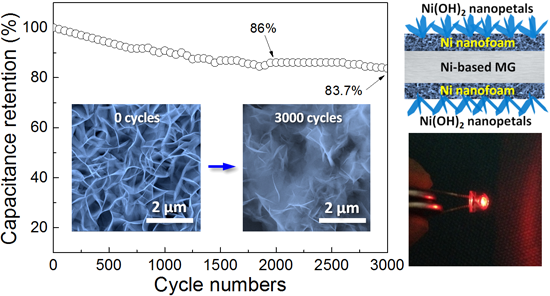
- -magnification TEM images; (d) HRTEM image; (e) SAED pattern of Ni(OH)2 nanopetals. XPS spectra of the elements of the as-spun ribbon, as-dealloyed ribbon and as-synthesized electrode: (a) survey spectrum, (b) Ti 2p, (c) Zr 3d, (d) Ni 2p and (e) O 1s. (a) CV curves of the Ni(OH)2/Ni-NF/MG-2, Ni(OH)2/Ni-NF/MG-5




Site-specific growth of oriented ZnO nanocrystal arrays
Beilstein J. Nanotechnol. 2019, 10, 274–280, doi:10.3762/bjnano.10.26
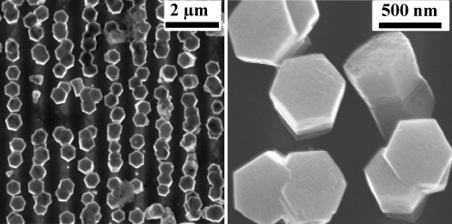
- ,e. The corresponding high-resolution TEM (HRTEM) image is recorded to further investigate the morphological characteristics of ZnO NCs. The observed sharp lattice fringes in the HRTEM image reveal the good crystallinity of twinned ZnO NCs. This is possibly due to the low ion flux arriving at the


Wet chemistry route for the decoration of carbon nanotubes with iron oxide nanoparticles for gas sensing
Beilstein J. Nanotechnol. 2019, 10, 105–118, doi:10.3762/bjnano.10.10
- size distribution for all samples. In addition, HRTEM imaging for the anchored iron oxide nanoparticles on the MWCNTs surface was performed and the selected area electron diffraction (SAED) pattern for was identified, as shown in Figure 4. The image shows the high crystallinity of the prepared iron
- structure, which confirms the HRTEM results. In the XRD pattern for Fe2O3/CNTs the characteristic peak at 25.994° attributed to plane (002) of the CNTs can be clearly identified. The other diffraction peaks at 35.6°, 43.15°, 53.28°, 57.3°, 63.12° can be attributed to planes (311), (400), (422), (511) and
- (c) and acetone (d). Different decoration densities for different decoration ratios of 1:1 (a), 1:1.3 (b) and 1:1.5 (c). High magnification HRTEM images of MWCNTs decorated with Fe2O3 nanoparticles. The inset shows the electron diffraction pattern (SAED) for the selected area. XPS core level spectra




Zn/F-doped tin oxide nanoparticles synthesized by laser pyrolysis: structural and optical properties
Beilstein J. Nanotechnol. 2019, 10, 9–21, doi:10.3762/bjnano.10.2
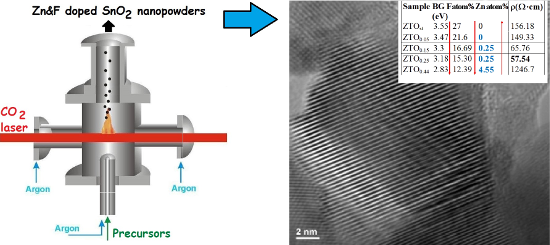
- 3a, a high-resolution TEM (HRTEM) image of a Zn/F-doped SnO2 sample (labeled ZTO0.44) and its mean size distribution (inset in Figure 3a) are presented. The polyhedral crystalline tin dioxide aggregated nanoparticles can be clearly seen in the HRTEM image. Also, a very thin disordered layer can be
- front of a monochromatic X-ray beam having a variable incidence θ angle and a constant wavelength corresponding to the Kα copper line (λ = 1.5418 Å). Transmission electron microscopy (TEM and HRTEM) using a Tecnai F30 G2 (300 kV) instrument, was used to investigate the particle morphology, as well as
- , F-doped and undoped SnO2 nanoparticles. XPS high-resolution spectra of: (a, b, c, d) Zn/F-doped SnO2 nanoparticles (sample ZTO0.44) and (e, f, g, h) F-doped SnO2 nanoparticles (sample ZTOst). a) HRTEM image of sample ZTO0.44 and its mean size distribution; b) SAED patterns of ZTOst (top) and ZTO0.44



Comparative biological effects of spherical noble metal nanoparticles (Rh, Pd, Ag, Pt, Au) with 4–8 nm diameter
Beilstein J. Nanotechnol. 2018, 9, 2763–2774, doi:10.3762/bjnano.9.258
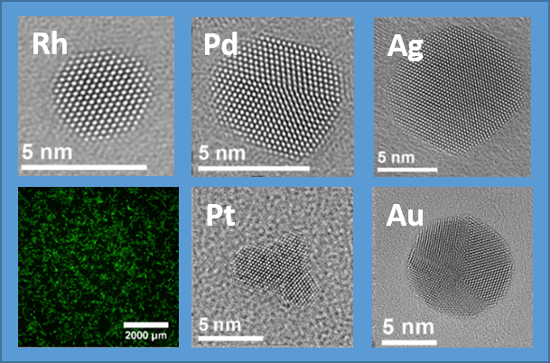
- functionalization were all the same. Size and morphology of the nanoparticles were determined by dynamic light scattering (DLS), analytical disc centrifugation (differential centrifugal sedimentation, DCS), and high-resolution transmission electron microscopy (HRTEM). Cell-biological experiments were performed to
- ), analytical disc centrifugation (differential centrifugal sedimentation, DCS), ultraviolet (UV) spectroscopy, and high-resolution transmission electron microscopy (HRTEM). All characterization data are summarized in Table 2. All nanoparticles have a neutral or negative zeta potential. This is probably due to
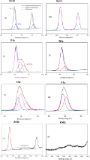
- nanoparticles (Rh, Pd, Pt, Ag, Au). In each upper right corner, a typical nanoparticle is shown in higher magnification. Particle size distributions of noble metal nanoparticles determined by high-resolution TEM imaging (HRTEM; log-normal particle size distribution fit). The histograms were analysed using a log


Accurate control of the covalent functionalization of single-walled carbon nanotubes for the electro-enzymatically controlled oxidation of biomolecules
Beilstein J. Nanotechnol. 2018, 9, 2750–2762, doi:10.3762/bjnano.9.257
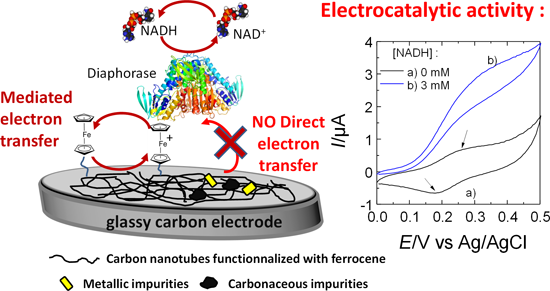
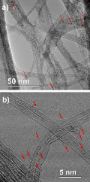
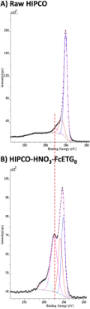
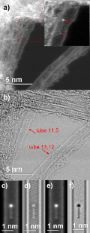
- /en/hipco, accessed August 2016). Figure 2a gives an example of the HRTEM image of this starting material. A small amount of residual iron catalyst is visible (dark particles pointed out by red arrows). Carbonaceous impurities are mainly present in the form of carbon remains of nanometric size
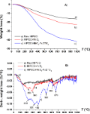
- defects introduced by tuning the irradiation time. A few milligrams of the corresponding oxidized SWCNTs were analyzed in each case before proceeding to step 2. At this stage, the samples were protected under argon gas to avoid any moisture contamination and directly analyzed by HRTEM, XPS and TGA-MS
- −1) and 5 µL of DI (5 mg·mL−1). Afterwards, 5 µL of this mixture were deposited onto the chitosan/HIPCO-Fc modified GCE and allowed to dry at ambient temperature. Analytical techniques: High-resolution transmission electron microscopy (HRTEM) and high-resolution scanning transmission electron






Size-selected Fe3O4–Au hybrid nanoparticles for improved magnetism-based theranostics
Beilstein J. Nanotechnol. 2018, 9, 2684–2699, doi:10.3762/bjnano.9.251
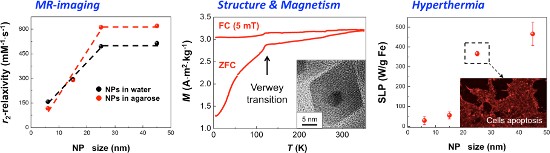
- varied while holding the Fe3O4/Au phase volume ratio almost constant. Additionally, the crystallographic orientation of Fe3O4 and Au for samples MNP-15 (with in situ synthesized Au seeds) and MNP-25 (with presynthesized Au seeds) was evaluated using bright-field high-resolution TEM (HRTEM) imaging
- reports on similar hybrids and electrodeposited epitaxial films [32][33]. HRTEM images of samples MNP-6 and MNP-44 are presented in Supporting Information File 1, Figure S2. While MNP-44 shows a similar growth mode, the smallest hybrid NPs (MNP-6) show a rather spherical shape for the Au core and
- from bottom to top – samples MNP-6, MNP-15, MNP-25 and MNP-44, respectively. The intensity of each diffractogram is normalized to the strongest peak. The red and blue vertical lines represent the angular position and relative intensity of reference bulk magnetite and gold phases. HRTEM and


Improved catalytic combustion of methane using CuO nanobelts with predominantly (001) surfaces
Beilstein J. Nanotechnol. 2018, 9, 2526–2532, doi:10.3762/bjnano.9.235
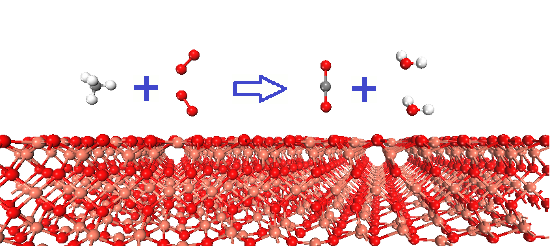
- is the SAED pattern of the selected yellow square area); (d) HRTEM along the [1] direction; (e,f) TEM images of a CuO nanobelt after catalysis tests at 650 °C. CH4 conversion against the temperature. (a) Heating profile (Tmax = 850 °C) for NBs, NWs and NPs, with 1% Pd/Co3O4 as a reference. (b


High-temperature magnetism and microstructure of a semiconducting ferromagnetic (GaSb)1−x(MnSb)x alloy
Beilstein J. Nanotechnol. 2018, 9, 2457–2465, doi:10.3762/bjnano.9.230
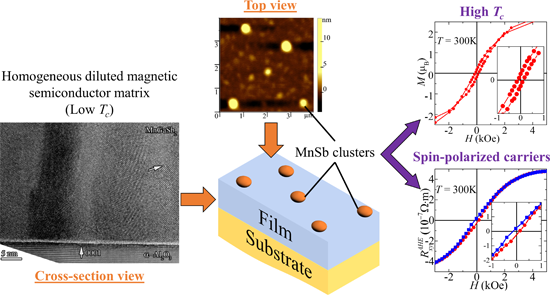
- variations. Contrast changes in the lateral direction are due to diffraction contrast arising from the columnar film microstructure, which was distinctly observed in bright-field TEM (Figure 4a) and in high-resolution bright-field TEM (HRTEM) images (Figure 4b), and even affects the HAADF TEM image (not
- presented here). Energy-dispersive X-ray microanalysis (EDX) of the film composition near the interface edge and at a distance from it yielded the ratio Mn/Ga/Sb = 30:30:40 with 2% accuracy. A HRTEM image of studied film is presented in Figure 4b. Fast Fourier-transform (FFT) analysis of the high-resolution
- and Hall slope ΔRH normalized by the corresponding values at T = 320 K. TEM images of the film cross section after annealing (sample GM3): (a) bright-field image, (b) HRTEM image. (a,d) HRTEM images of sample areas. (b,e) Corresponding two-dimensional Fourier spectra. (c,f) Calculated electronograms



Hierarchical heterostructures of Bi2MoO6 microflowers decorated with Ag2CO3 nanoparticles for efficient visible-light-driven photocatalytic removal of toxic pollutants
Beilstein J. Nanotechnol. 2018, 9, 2297–2305, doi:10.3762/bjnano.9.214
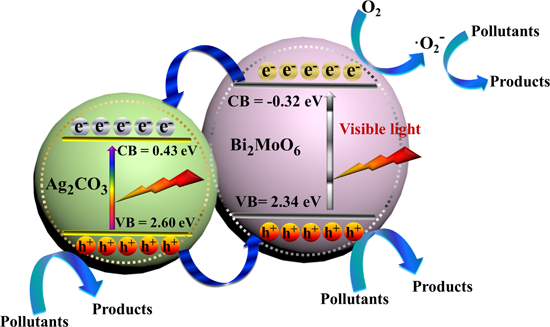
- /nanoparticles [32]. Further information about the structure of ACO/BMO-30 was collected from TEM images (Figure 3). The TEM images are in line with the SEM observations, i.e., ACO/BMO-30 exhibits a flower-like architecture loaded with Ag2CO3 nanoparticles (Figure 3a,b). The HRTEM displays two different lattice




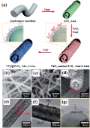
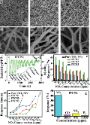
Electrospun one-dimensional nanostructures: a new horizon for gas sensing materials
Beilstein J. Nanotechnol. 2018, 9, 2128–2170, doi:10.3762/bjnano.9.202






Synthesis of a MnO2/Fe3O4/diatomite nanocomposite as an efficient heterogeneous Fenton-like catalyst for methylene blue degradation
Beilstein J. Nanotechnol. 2018, 9, 1940–1950, doi:10.3762/bjnano.9.185
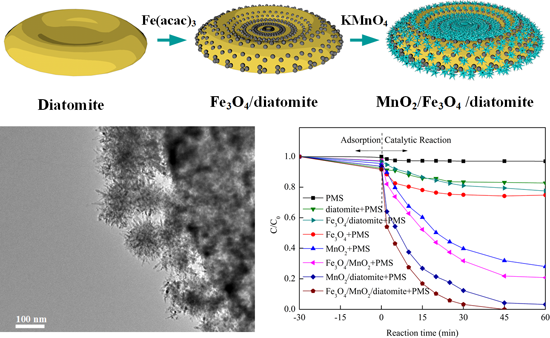
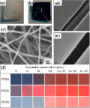
- successful loading of of iron oxide and manganese oxide in the two-step procedure. To further characterize the morphologies and structures of Fe3O4/diatomite and MnO2/Fe3O4/diatomite, transmission electron microscopy (TEM) and high-resolution transmission electron microscope (HRTEM) analyses were also
- nanoparticles [28]. The marked lattice fringe spacing of 0.28 nm in the HRTEM images (inset) is corresponding to the (331) planes of cubic magnetite [29]. Figure 4b shows the TEM images of MnO2/Fe3O4/diatomite, the nanoparticles on the surface are fully covered by a layer of rough 3D structured material. As
- seen in the magnified image (Figure 4c), a flower-like or urchin-like structure of the outer MnO2 shell can be easily observed. The crystal structure of the outer shell is analyzed by using HRTEM, as shown in Figure 4d. As a whole, the chaotic and unclear lattice fringes in the image illustrate the


Synthesis of hafnium nanoparticles and hafnium nanoparticle films by gas condensation and energetic deposition
Beilstein J. Nanotechnol. 2018, 9, 1868–1880, doi:10.3762/bjnano.9.179
- time of the NPs in the aggregation zone results in the formation of bigger NPs. Soft landing – structural characterization Structural characterization of the nanoparticles was performed by high-resolution electron transmission microscopy (HRTEM) and X-ray diffraction. In both cases the nanoparticles
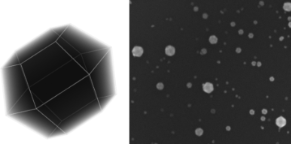
- were exposed to ambient air prior to characterization. From analysis of HRTEM images it is evident that Hf NPs have a distinct core–shell structure, consistent with a Hafnium core covered with Hafnium oxide (Figure 2). In the core the distance between adjacent planes is equal to d = 0.275 nm, value
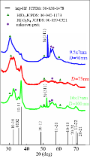
- the temperature [37] as we expect it in the vacuum system during NP growth. There are also some peaks that are due to a compound of Hf with oxygen (O) and/or nitrogen (N). This result is consistent with HRTEM measurements. The exact nature of the shell cannot be identified from the X-ray patterns






Uniform cobalt nanoparticles embedded in hexagonal mesoporous nanoplates as a magnetically separable, recyclable adsorbent
Beilstein J. Nanotechnol. 2018, 9, 1770–1781, doi:10.3762/bjnano.9.168
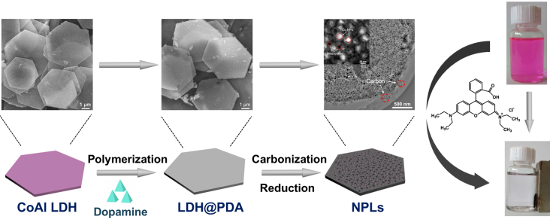
- the surface of NPLs-2.5-800 are observed clearly. A thin carbon layer is found on the edge of the platelet. An HRTEM image shows Co nanoparticles with an average diameter of 21 nm that are embedded evenly in the carbon layer (Figure 3B). The measured d-spacing value of 0.21 nm in Figure 3C


Toward the use of CVD-grown MoS2 nanosheets as field-emission source
Beilstein J. Nanotechnol. 2018, 9, 1686–1694, doi:10.3762/bjnano.9.160
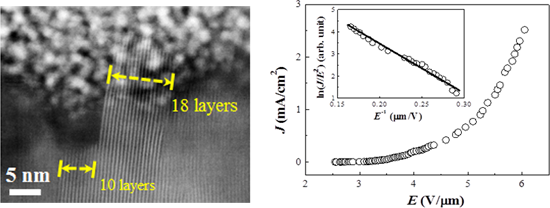
- TEM since some layers could be viewed via the bended NSs. Figure 3d is a filtered HRTEM image showing evidence of MoS2 NS stacking defects highlighted by the arrows. These defects are inherent to the fabrication process. This NSs stacking configuration could exhibit interesting properties in membrane
- sulfurization of a 50 nm Mo film at 850 °C on SiO2/Si substrates: (a) Plane-view HRTEM image; (b) high-magnification TEM image; (c) FFT pattern of panel (a); (d) filtered HRTEM image indicating the presence of sheet stacking defects (indicated by orange arrows). MoS2 sample grown by double sulfurization of a 50



Nitrogen-doped carbon nanotubes coated with zinc oxide nanoparticles as sulfur encapsulator for high-performance lithium/sulfur batteries
Beilstein J. Nanotechnol. 2018, 9, 1677–1685, doi:10.3762/bjnano.9.159
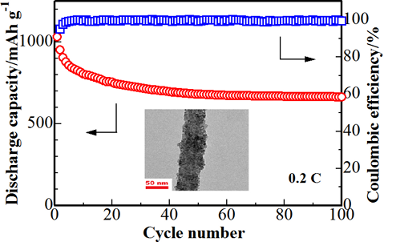
- observed in the HRTEM image of the ZnO@NCNT composite (Figure 3a), which correspond to the (002) and (101) planes of ZnO, respectively. Figure 3b shows the selected area electron diffraction (SAED) patterns of the ZnO@NCNT composite. The diffraction rings represent different planes of ZnO, revealing the
- ). Scanning electron microscopy (SEM) images were collected on a Hitachi S4800 scanning electron microscope. High-resolution transmission electron microscopy (HRTEM) images were recorded with a JEOL JEM-2100F transmission electron microscope. The elements distribution images were detected by using TEM at 160
- a battery testing system (Neware, Shenzhen) in the potential range of 1–3 V vs Li/Li+. XRD patterns of S, ZnO@NCNT and S/ZnO@NCNT composite. TGA curve of the S/ZnO@NCNT composite. (a) HRTEM image; (b) SAED patterns; (c) TEM image; (d–g) EDX mapping images of the ZnO@NCNT composite. (a) SEM image; (b


Sheet-on-belt branched TiO2(B)/rGO powders with enhanced photocatalytic activity
Beilstein J. Nanotechnol. 2018, 9, 1550–1557, doi:10.3762/bjnano.9.146
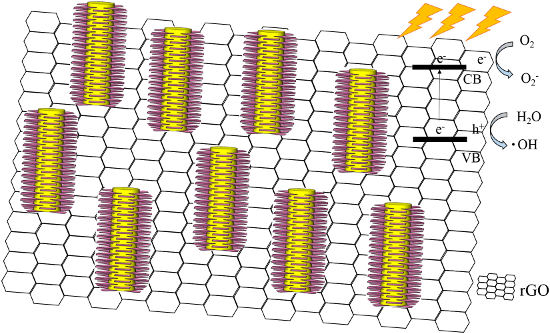
- corresponding to polycrystalline TiO2(B). The high-resolution TEM (HRTEM) image demonstrated in Figure 3c shows parallel fringes with a neighboring distance of ≈0.545 nm, corresponding to the (200) plane of TiO2(B) and distance of ≈0.382 nm, which is attributed to the (110) plane of TiO2(B). The cross-angle of
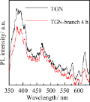
- vibrational modes of the TiO2(B) phase [28], which is in agreement with the XRD and HRTEM results. A weak Raman peak located at 1657 cm−1 can be discerned in the TGN sample, which corresponds to the G band (graphitized carbon), confirming the existence of graphene in the powders [31]. The peak intensity
- , b) TEM and (c) HRTEM image of sample TGN-branch 4 h. The inset in (b) shows the corresponding SAED pattern. Raman spectra of samples TGN and TGN-branch 4 h recorded over the range of (a) 100–1000 cm−1 and (b) 1000–2000 cm−1. (a) XPS survey spectrum and core level XPS spectra of (b) Ti 2p, (c) C 1s