Search results
Search for "aggregate" in Full Text gives 194 result(s) in Beilstein Journal of Nanotechnology.
Direct observation of oxygen-vacancy formation and structural changes in Bi2WO6 nanoflakes induced by electron irradiation
Beilstein J. Nanotechnol. 2019, 10, 1434–1442, doi:10.3762/bjnano.10.141
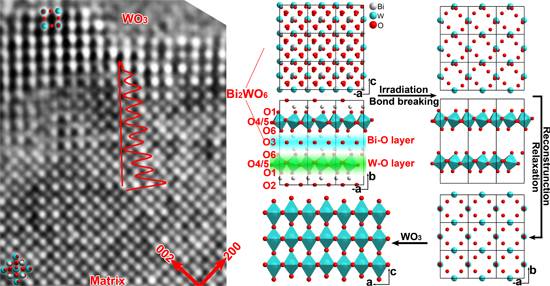
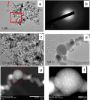
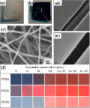
- that the released atoms tend to aggregate on the surface of the flakes, and then recrystallize into new crystallites. Moreover, larger lattice spacings (d ≈ 3.768 Å, arrows indicated in Figure 2c) were observed at the edges of the irradiated flake, resulting in stronger electron scattering at the


Multicomponent bionanocomposites based on clay nanoarchitectures for electrochemical devices
Beilstein J. Nanotechnol. 2019, 10, 1303–1315, doi:10.3762/bjnano.10.129
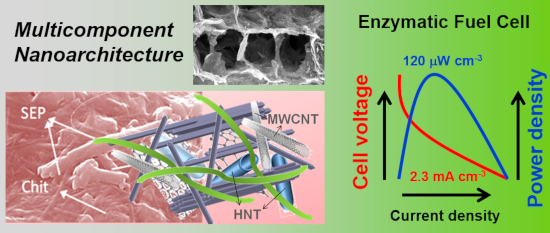
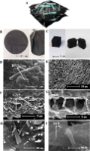
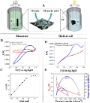
- promotes the homogeneous dispersion of diverse nanoparticulated components. It can be inferred that the disaggregated fibres of sepiolite form an interpenetrated network representing, in the present case, a steric hindrance for GNPs, MWCNTs, and HNTs to aggregate. This avoids phase segregation and particle



Photoactive nanoarchitectures based on clays incorporating TiO2 and ZnO nanoparticles
Beilstein J. Nanotechnol. 2019, 10, 1140–1156, doi:10.3762/bjnano.10.114
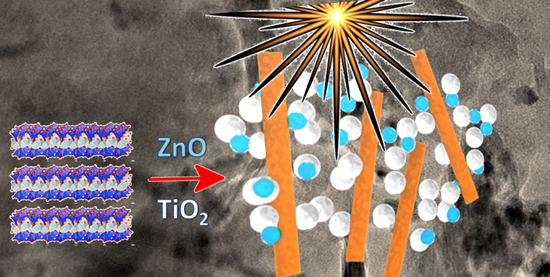
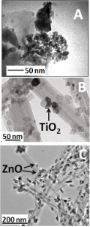
- recovery of the NPs, e.g., through filtration, can be very difficult, which may add substantial costs to industrial processes involving these materials. In addition, the tendency of the particles to aggregate, especially at high concentrations, may cause changes in the transparency and viscosity of the



Enhanced inhibition of influenza virus infection by peptide–noble-metal nanoparticle conjugates
Beilstein J. Nanotechnol. 2019, 10, 1038–1047, doi:10.3762/bjnano.10.104
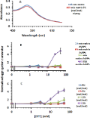
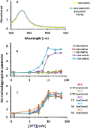
- parameter indicates a loss of ligand shell integrity and nanoparticle aggregation, the absolute value of aggregation parameter greater than 1 is not informative, since nanoparticle can aggregate in different ways that affect the UV-vis spectra differently. Thus, the inclusion of 5% (mol/mol) FluPep ligand




Tailoring the stability/aggregation of one-dimensional TiO2(B)/titanate nanowires using surfactants
Beilstein J. Nanotechnol. 2019, 10, 1024–1037, doi:10.3762/bjnano.10.103
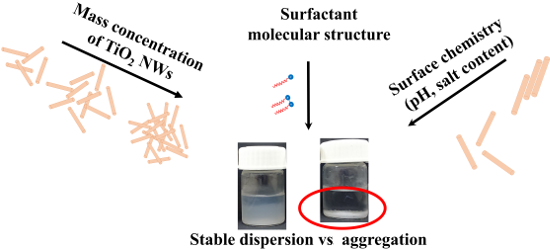
- -2-12 proved to be much more efficient in stabilizing TNW dispersions compared to DTAB. In addition, as the mass concentration of the TNWs was increased, the TNW/surfactant systems tended to aggregate. The addition of NaBr plays a significant role in enhancing the aggregation in TNW/surfactant


Correlation of surface-enhanced Raman scattering (SERS) with the surface density of gold nanoparticles: evaluation of the critical number of SERS tags for a detectable signal
Beilstein J. Nanotechnol. 2019, 10, 1016–1023, doi:10.3762/bjnano.10.102
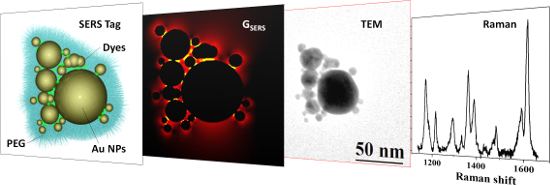
- local field enhancement in a AuNT with structure reproducing the aggregate in Figure 1B. In particular, the SERS enhancement factor (GSERS) was obtained from the 4th power of the ratio between the local electric field, Eloc, in the proximity to the surface of the metal nanostructure and the incident


Comparing a porphyrin- and a coumarin-based dye adsorbed on NiO(001)
Beilstein J. Nanotechnol. 2019, 10, 874–881, doi:10.3762/bjnano.10.88
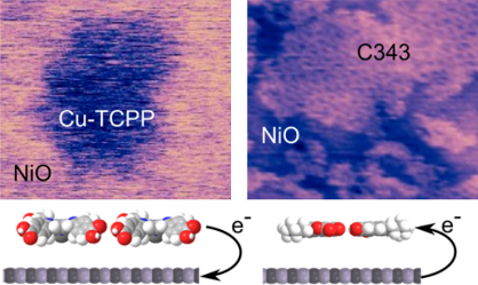
- adsorbed on the substrate, where it can be seen that Cu-TCPP exhibits either the tendency to aggregate in small clusters at step edges and defects, or to form large molecular islands (up to 70 nm in width). The fact that the island formation takes place at RT indicates a relatively high diffusion rate of



Tungsten disulfide-based nanocomposites for photothermal therapy
Beilstein J. Nanotechnol. 2019, 10, 811–822, doi:10.3762/bjnano.10.81
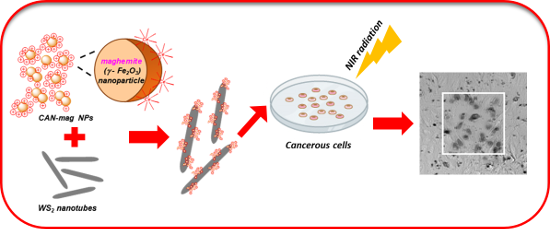
- magnetite nanoparticles into γ-maghemite (mag) nanoparticles. The cerium ion attaches to the nanoparticle, producing surface defects (an Fe–O–[CeLn] bond is formed). The cerium-doped maghemite nanoparticles are more stable than the non-doped ones, which tend to aggregate. In addition to the stabilization
- . There is another advantage of the composites over their components alone. WS2-NTs tend to aggregate, and the addition of CAN-mag reduces aggregation. Aqueous dispersions of the functionalized nanotubes stay stable for hours, while bare nanotubes in water sink almost instantly. Also, when comparing the
- not practical, because they will aggregate on the walls of the blood vessels and not reach the tumor area. The use of CAN-mag alone, on the other hand, is not good either, as it will undergo filtration by the liver [64]. So overall, there is a double advantage of WS2-NTs functionalized with CAN-Mag






An iridescent film of porous anodic aluminum oxide with alternatingly electrodeposited Cu and SiO2 nanoparticles
Beilstein J. Nanotechnol. 2019, 10, 735–745, doi:10.3762/bjnano.10.73
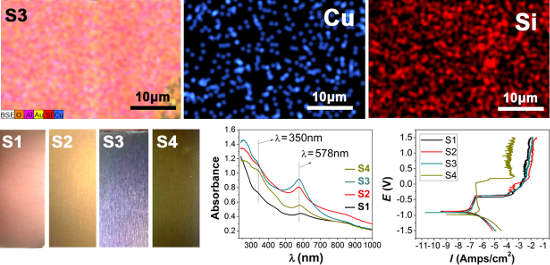
- electrodeposition [18]. The former involves the simultaneous assembly of the basic structural units such as molecules, nanomaterials, and the materials on the microscale or even larger scales to form an ordered structure. During the self-assembly process, the basic structural units organize or aggregate, in a


Features and advantages of flexible silicon nanowires for SERS applications
Beilstein J. Nanotechnol. 2019, 10, 725–734, doi:10.3762/bjnano.10.72

- important for SERS enhancement, but also the quality of the hot spots. We can see that when Ag sputtering freezes the SiNW structure, SiNWs cannot aggregate to bundles and consequently the SERS intensity decreases. A possible shift of the localized surface plasmon absorption band is out of the scope of this


Quantification and coupling of the electromagnetic and chemical contributions in surface-enhanced Raman scattering
Beilstein J. Nanotechnol. 2019, 10, 549–556, doi:10.3762/bjnano.10.56
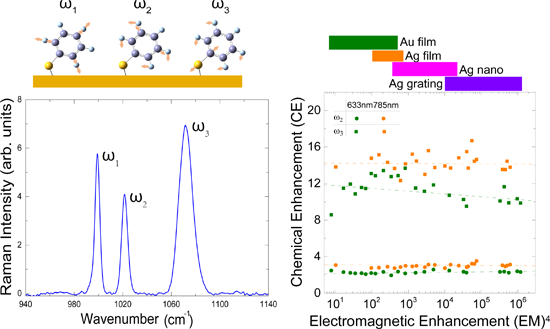
- = 1.7 × 10⁻⁹ × (Power)4 + 10 for 633 nm, respectively, within the incident laser power range of 105 to 109 mW/cm2. Interestingly, despite the differences in absolute magnitude of chemical enhancement for both modes their relative change with laser wavelength is similar. From the average of the aggregate


Heating ability of magnetic nanoparticles with cubic and combined anisotropy
Beilstein J. Nanotechnol. 2019, 10, 305–314, doi:10.3762/bjnano.10.29
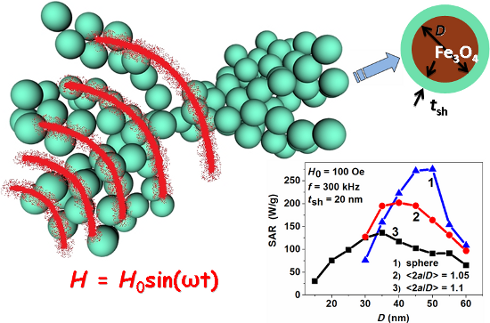
- SAR in the alternating magnetic field [3][16]. On the contrary, in biological media, nanoparticles have a tendency to aggregate because of active biological processes, such as cellular internalization in endocytic compartments [10][13]. As a result, the nanoparticles in biological media may form


Study of silica-based intrinsically emitting nanoparticles produced by an excimer laser
Beilstein J. Nanotechnol. 2019, 10, 211–221, doi:10.3762/bjnano.10.19
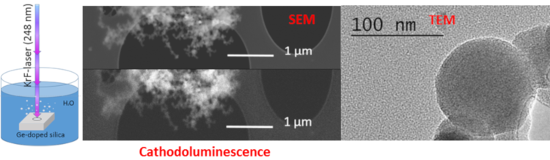
- name, the amount of Ge doping and the employed energy per pulse are indicated. Figure 1a illustrates a scanning electron microscopy (SEM) image of an agglomerate/aggregate of nanoparticles recorded for the sample A. From this image, its inset and panel b, we can observe the presence of nanoparticles of
- three elements, and the data are recorded for the same aggregate/agglomerate reported in Figure 4a. Once again, we observe a good correspondence between the morphology, studied by the SEM, and the EDX signals of the Si, Ge and O. Even in this case these elements appear quite uniform. This is additional
- last sample that we studied is a pure silica material, as reported above, where the employed energy per pulse was about 400 mJ. One of the SEM images recorded for this sample is reported in Figure 6a, which illustrates a large agglomerate/aggregate of particles and some flakes. In panel b we show



Mechanism of silica–lysozyme composite formation unravelled by in situ fast SAXS
Beilstein J. Nanotechnol. 2019, 10, 182–197, doi:10.3762/bjnano.10.17
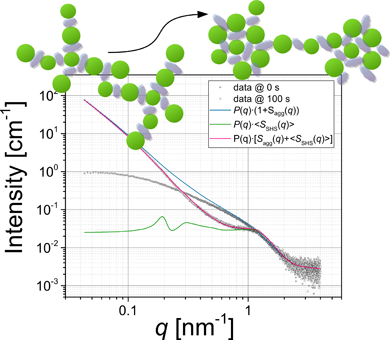
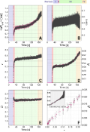
- higher at 300 s than at 150 s), which indicated a continuous increase in aggregate size from periods II and III. In time period IV the intensity of ROI V (Figure 1A) started to increase together with the silica form factor at high q (q > 1.5 nm−1, Figure 1D). This suggests that as aggregation continued
- with decreasing size [38]. However, it is unlikely that U > −3kBT, and within the considered range, the value of U will not affect our fitting results. ν is a local packing parameter, i.e., a local volume fraction within the aggregate, and for the random packing of polydisperse spheres it does not
- aggregates causing the interparticle correlations (as in Equations 5–14) and also the low-q intensity increase due to the presence of the interface between the aggregates/composites and the solvent matrix. A general expression for such an effective structure factor for particles within an aggregate/droplet



Characterization and influence of hydroxyapatite nanopowders on living cells
Beilstein J. Nanotechnol. 2018, 9, 3079–3094, doi:10.3762/bjnano.9.286
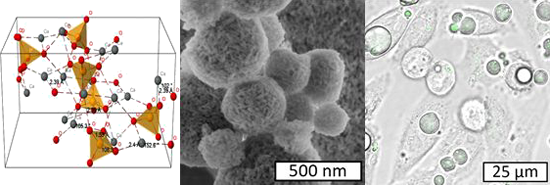
- Standardization, has defined nanoscale as a size range from approximately 1 to 100 nm. A nanomaterial is defined as a material (natural, incidental or manufactured) containing particles, in an unbound state, or as an aggregate (object composed of strongly or fused bounded particles), or as an agglomerate

![[Graphic 1]](/bjnano/content/inline/2190-4286-9-286-i2.svg?max-width=637&scale=1.18182) .
.



Polarization-dependent strong coupling between silver nanorods and photochromic molecules
Beilstein J. Nanotechnol. 2018, 9, 2657–2664, doi:10.3762/bjnano.9.247
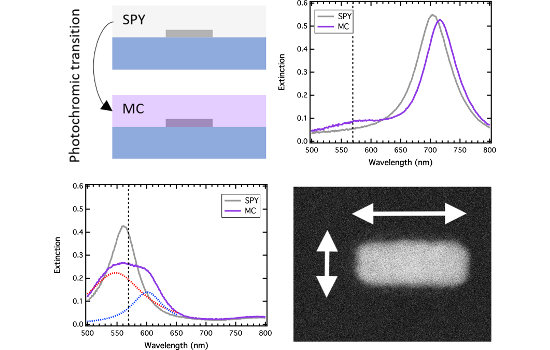
- equal to 132 and 235 nm, leading to linewidths of 655 and 697 meV. This difference in the hybrid mode linewidths has already been observed for a gold nanogroove arrays coated with a J-aggregate dye film [25]. In this work, they observed different damping rates for the hybrid modes attributed to the



Improved catalytic combustion of methane using CuO nanobelts with predominantly (001) surfaces
Beilstein J. Nanotechnol. 2018, 9, 2526–2532, doi:10.3762/bjnano.9.235
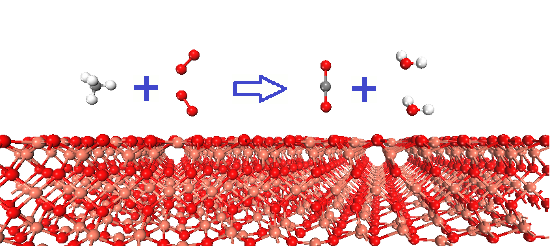
- three circles, achieving T10 = 375–378 °C, T50 = 468–475 °C, T90 = 544–562 °C and around 97% of CH4 conversion at 600 °C, indicating that the belt shape may be helpful to suppress catalyst aggregation. However, the stability is still poor as the nanobelts tend to aggregate when high temperature
- are needed to improve the thermal stability of such nanostructures as they tend to aggregate after high temperature treatment. Experimental Synthesis of CuO nanowires and nanobelts For a typical sample, 1 g of Cu(NO3)2 was dissolved in 100 mL distilled water and 30 mL ammonia solution (NH3·H2O, 0.15


Nanocellulose: Recent advances and its prospects in environmental remediation
Beilstein J. Nanotechnol. 2018, 9, 2479–2498, doi:10.3762/bjnano.9.232
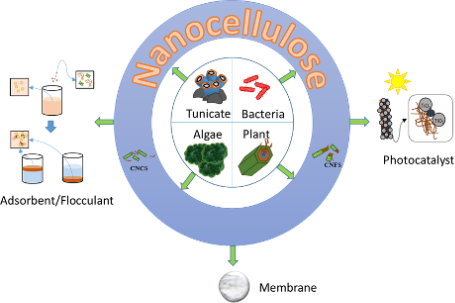
- its polymer chains. Reactive –OH groups are proven to enhance the adsorption behaviour of modified nanocellulose, especially towards organic contaminants. However, the hydrophilic nature of nanocellulose might cause it to aggregate during the drying process due to the greater number of –OH groups on
- dioxide sample. The incorporation of magnetite was able to inhibit the photodegradation of the cellulose structure during UV irradiation and this hybrid structure demonstrated high catalyst recyclability using an external magnetic field. Nanoparticles generally tend to aggregate, leading to difficulties


Electrospun one-dimensional nanostructures: a new horizon for gas sensing materials
Beilstein J. Nanotechnol. 2018, 9, 2128–2170, doi:10.3762/bjnano.9.202
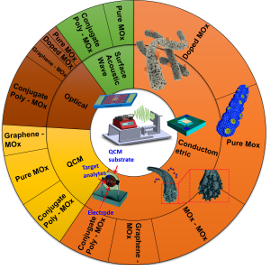
- ]. Doping with Ae metals exhibits an advantage in grain growth control [86]. For example, after thermal treatment, nanoparticle/nanograins show necked connections for each type of Ae-doped SnO2 NF. Therefore, a conduction channel can be established within each aggregate due to the space-charge layer region






SO2 gas adsorption on carbon nanomaterials: a comparative study
Beilstein J. Nanotechnol. 2018, 9, 1782–1792, doi:10.3762/bjnano.9.169

- for adsorption, the theoretical surface area is in excess of 2500 m2/g [27]. However, in practice the surface area is much lower as CNTs seldom exist as isolated SWNTs but typically aggregate to form bundles that reduce the available surface area significantly. Depending on the synthesis method, the
- Figure 2a. TEM images of CNHs (Figure 3c) reveal only few tips that are protruding out of the spherical aggregate structure indicating a bud-like CNH structure [19][20]. The high-resolution TEM images confirm the single-walled conical structure of CNHs (inset of Figure 3c). The diameter of the individual


Closed polymer containers based on phenylboronic esters of resorcinarenes
Beilstein J. Nanotechnol. 2018, 9, 1594–1601, doi:10.3762/bjnano.9.151
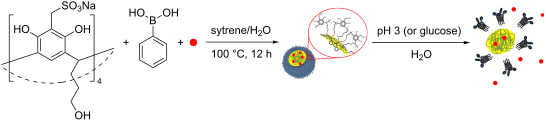
- tendency to aggregate, precise quantification of pyrene is difficult. The analysis of the UV and fluorescent spectra of D@p(SRA-B) showed that all of the used dyes are encapsulated in the cavity of p(SRA-B) despite the difference in their polarity. For Fl@p(SRA-B), a bathochromic shift of the absorption


A simple extension of the commonly used fitting equation for oscillatory structural forces in case of silica nanoparticle suspensions
Beilstein J. Nanotechnol. 2018, 9, 1095–1107, doi:10.3762/bjnano.9.101
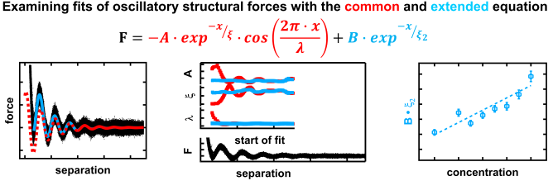
- region, protruding into the surrounding fluid, is the multiple of the number and the distance between the layers. The distance between the layers, in case of uncharged system equals the molecular, particle, aggregate or micelle diameter [1][3]. If two interfacial regions are brought to overlap by


Review on nanoparticles and nanostructured materials: history, sources, toxicity and regulations
Beilstein J. Nanotechnol. 2018, 9, 1050–1074, doi:10.3762/bjnano.9.98



Bioinspired self-healing materials: lessons from nature
Beilstein J. Nanotechnol. 2018, 9, 907–935, doi:10.3762/bjnano.9.85
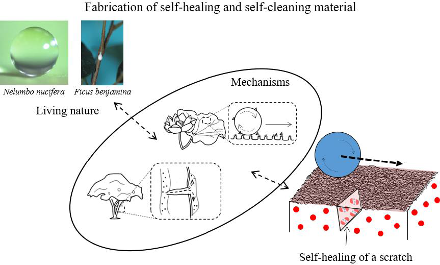
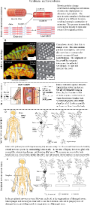
- through muscle control. Figure 2B shows an example of a chameleon that, by stretching its skin, can change the spacing and conformation of guanine nanocrystal lattices embedded in its skin [15]. In a similar fashion, some animals can use muscle control to disperse or aggregate chromatophores in the dermal








Synthesis and characterization of two new TiO2-containing benzothiazole-based imine composites for organic device applications
Beilstein J. Nanotechnol. 2018, 9, 721–739, doi:10.3762/bjnano.9.67
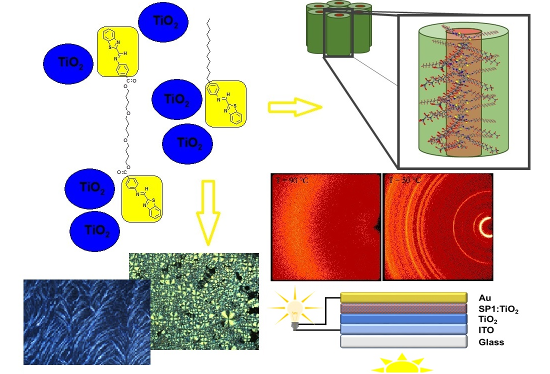
- . This may be because the thickness of this substance is too high or due to the very slow crystallization from isotropic liquid. Furthermore, both the imines (SP1 and SP2) aggregate into small islands after evaporation of solvent (not shown here). After 3 months of being kept in air atmosphere, both SP2