Search results
Search for "dielectric constant" in Full Text gives 186 result(s) in Beilstein Journal of Nanotechnology.
Biomimetic synthesis of Ag-coated glasswing butterfly arrays as ultra-sensitive SERS substrates for efficient trace detection of pesticides
Beilstein J. Nanotechnol. 2019, 10, 578–588, doi:10.3762/bjnano.10.59
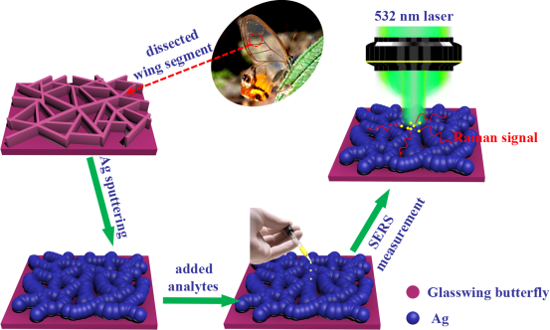
- set to 1 nm × 1 nm × 1 nm. The dielectric function of a metal is a complex entity as a function of the wavelength. Therefore, the infinite-frequency relative dielectric constant and the zero-frequency relative dielectric constant of Ag were set according to the Gai’s work [36]. In order to simulate as


Mo-doped boron nitride monolayer as a promising single-atom electrocatalyst for CO2 conversion
Beilstein J. Nanotechnol. 2019, 10, 540–548, doi:10.3762/bjnano.10.55
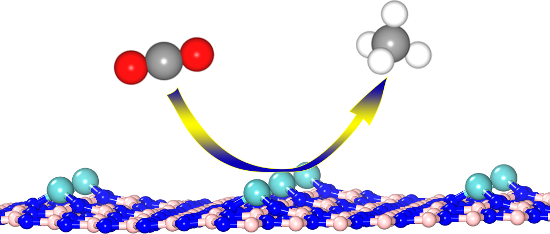
- solvent environment [60], and the dielectric constant was 78.54. To construct the modes, we first built a periodic 5 × 5 BN supercell, whose vacuum region was 15 Å along the z-direction. The single TM atoms were doped at the boron vacancy sites [45]. All of the structures were completely optimized in a


Nanocomposite–parylene C thin films with high dielectric constant and low losses for future organic electronic devices
Beilstein J. Nanotechnol. 2019, 10, 428–441, doi:10.3762/bjnano.10.42
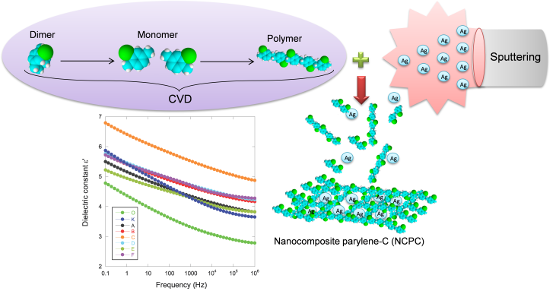
- with various contents and sizes of silver-oxide nanoparticles were investigated by broadband dielectric spectroscopy (BDS) in view of their final application. It was found that both the content and the size of the nanoparticles influence the value of the dielectric constant and the frequency-dependence
- of the permittivity. In particular, β-relaxation is affected by the addition of nanoparticles as well as the dissipation factor, which is even improved. A dielectric constant of 5 ± 1 with a dissipation factor of less than 0.045 in the range from 0.1 Hz to 1 MHz is obtained for a 2.7 µm thick NCPC
- ; Introduction Increasing the dielectric constant of gate dielectrics for oxide thin-film transistors (TFTs) improves the performance of such devices. Challenges are in the processing of these high-k dielectrics and various approaches were tested over time. Among them, low-cost and innovative methods were




A novel polyhedral oligomeric silsesquioxane-modified layered double hydroxide: preparation, characterization and properties
Beilstein J. Nanotechnol. 2018, 9, 3053–3068, doi:10.3762/bjnano.9.284
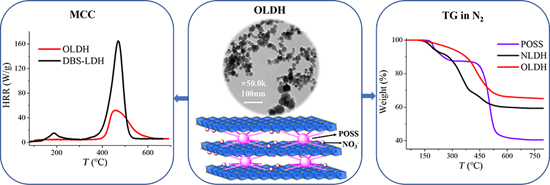
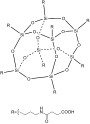
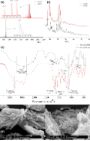
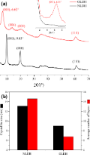
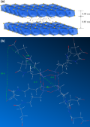
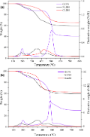
- controlled manner, making POSS a class of promising nanoscale building blocks for advanced functional nanomaterials [22][23][24]. Besides, the unique inorganic–organic architecture also endows POSS with low dielectric constant, high thermal and oxidation resistance [23][25]. And unlike traditional organic







Electrostatic force microscopy for the accurate characterization of interphases in nanocomposites
Beilstein J. Nanotechnol. 2018, 9, 2999–3012, doi:10.3762/bjnano.9.279
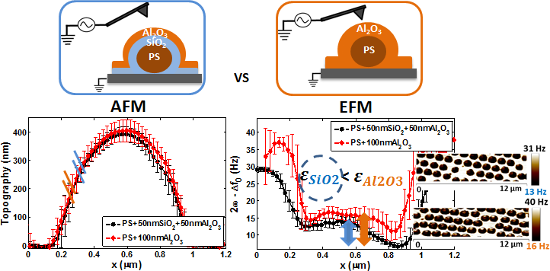
- filler. For instance, although the inorganic filler usually displays higher permittivity values than the polymer, the resulting nanofiller mixture in the matrix presents, at low nanofiller concentrations, a surprisingly lower dielectric constant than that of the two mixture components [10][11][12][13
- of the interphase. Moreover, it has been reported that water can be absorbed at the interface [15][16][17]. Water molecules within the interphase increase its effective dielectric constant, and this can explain the unexpectedly higher nanocomposite permittivity. Therefore, the local characterization




Colloidal chemistry with patchy silica nanoparticles
Beilstein J. Nanotechnol. 2018, 9, 2989–2998, doi:10.3762/bjnano.9.278
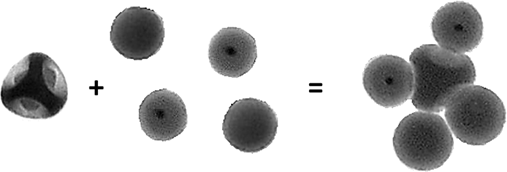
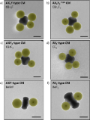
- samples was measured once again and the zeta potential values were measured using the Malvern Zetasizer 3000 HS setup (Malvern Instruments). Each measurement was performed for 30 s, the dielectric constant of solvent (water) was set to 80.4 and the Smoluchowsky factor f(κa) was 1.5. Synthesis of the CMs


In situ characterization of nanoscale contaminations adsorbed in air using atomic force microscopy
Beilstein J. Nanotechnol. 2018, 9, 2925–2935, doi:10.3762/bjnano.9.271
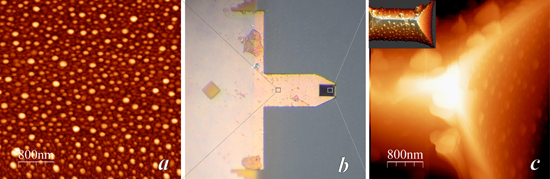
- , h is the total thickness of the dielectric films on tip and sample, ε0 is the dielectric permittivity of vacuum and ε is the relative dielectric constant [43][44][45][46]. For a purely metallic system in air or vacuum were no dielectric layer is present (h = 0), the expression simplifies to C″(d


Silencing the second harmonic generation from plasmonic nanodimers: A comprehensive discussion
Beilstein J. Nanotechnol. 2018, 9, 2674–2683, doi:10.3762/bjnano.9.250
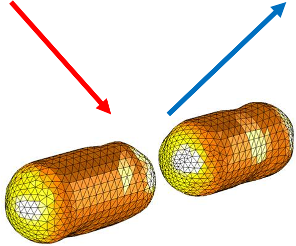
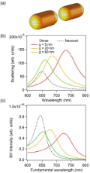
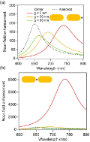
- imaginary part of the dielectric constant of gold is constant and does not modify the losses at the SH wavelength. Figure 3 shows the maximal SHG induced by the resonant excitation of the bonding dipolar mode at the fundamental wavelength for gaps ranging from 5 nm to 400 nm. For the largest gaps, the


Two-dimensional semiconductors pave the way towards dopant-based quantum computing
Beilstein J. Nanotechnol. 2018, 9, 2668–2673, doi:10.3762/bjnano.9.249
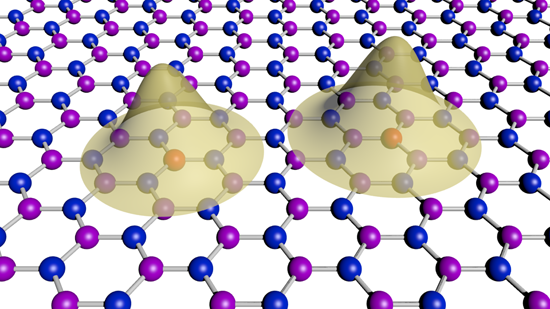
- instance, MoS2[32] or h-BN [33]) and the experimentally reported values lie in a wide range [32]. Typically, the dielectric constant of monolayer materials is expected to be smaller than their 3D counterparts, as their screening capabilities are reduced at low dimensionality [29][33]. All this variability
- the effect of a non-local dielectric function can be reproduced by a dielectric constant given by its average within the radius of the wave-function [36], dramatically simplifying the energy calculations. In [36], this simplification has been proven to be accurate for the calculation of the exciton
- describe shallow states in semiconductors, thus the band gap energy of the considered material has to be much larger than the binding energies EB. In order to implement this condition, we consider the generally unknown dielectric constant as a free parameter and estimate its minimum value required for the


![[Graphic 7]](/bjnano/content/inline/2190-4286-9-249-i7.svg?max-width=637&scale=1.18182) and energy for one electron bound to a donor pair
and energy for one electron bound to a donor pair ![[Graphic 8]](/bjnano/content/inline/2190-4286-9-249-i8.svg?max-width=637&scale=1.18182) as a function of R. For R = 2a*, ...
as a function of R. For R = 2a*, ...

Impact of the anodization time on the photocatalytic activity of TiO2 nanotubes
Beilstein J. Nanotechnol. 2018, 9, 2628–2643, doi:10.3762/bjnano.9.244
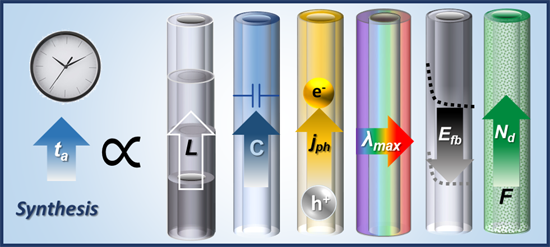
- dielectric constant of the material. From the CV curves, an increase in the capacitive current was observed towards lower potential values, which is typical for a transition to the accumulation region of n-type semiconductors. The calculated values for Eg and ND are summarized in Table 3, and compared to the


Enhancement of X-ray emission from nanocolloidal gold suspensions under double-pulse excitation
Beilstein J. Nanotechnol. 2018, 9, 2609–2617, doi:10.3762/bjnano.9.242
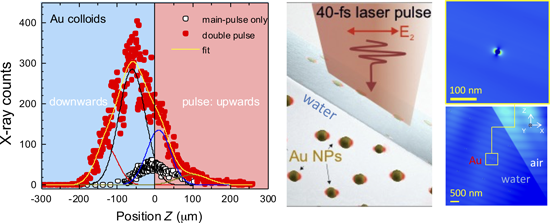
- [26], respectively. Theory: Epsilon-Near-Zero (ENZ)-Material A strong generation of X-rays is related to a large amount of absorbed energy and a high temperature [3][4]. In terms of relative permittivity (dielectric constant), εr, a transparent medium (water) with colloidal gold nanoparticles


Filling nanopipettes with apertures smaller than 50 nm: dynamic microdistillation
Beilstein J. Nanotechnol. 2018, 9, 2181–2187, doi:10.3762/bjnano.9.204
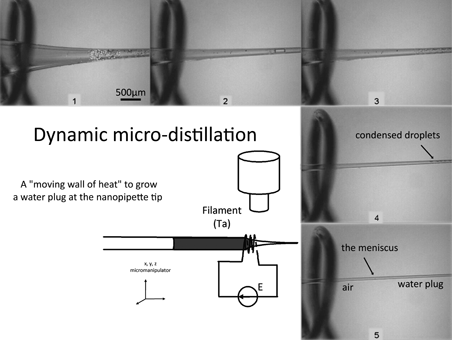
- . Results and Discussion Quartz capillaries, being of pure silica, have certain intrinsic properties (low dielectric constant, low loss factor, high volume resistivity, strength and chemical purity) that make them appropriate for the reproducible electrical measurements described below. Notably, they


Interaction-induced zero-energy pinning and quantum dot formation in Majorana nanowires
Beilstein J. Nanotechnol. 2018, 9, 2171–2180, doi:10.3762/bjnano.9.203
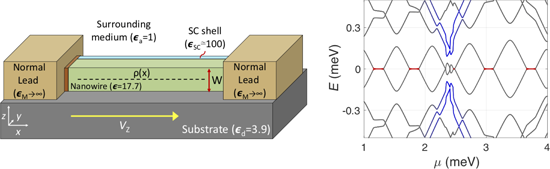
- intrinsic part of the potential satisfies an analogous equation with a uniform ε equal to that of the nanowire. The geometry depicted in Figure 1a is taken into account through a piecewise function where each material is characterized by a different dielectric constant, so that changes abruptly at the
- interfaces have on average the same sign as the free charges. We consider in Section 4 of Supporting Information File 1 the generality of our results as a function of the dielectric constant of the SC and the location of the charge density within the nanowire section. Below, in Figure 4c we show that, when



Synthesis of hafnium nanoparticles and hafnium nanoparticle films by gas condensation and energetic deposition
Beilstein J. Nanotechnol. 2018, 9, 1868–1880, doi:10.3762/bjnano.9.179
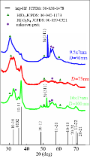
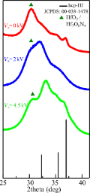
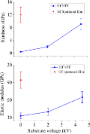
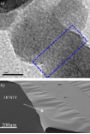
- cross section in neutron absorption [32]. Hafnium alloys are used in medical applications because they are biocompatible and exhibit high corrosion resistance as well as in aerospace technology because it can increase the mechanical strength of materials [33]. Furthermore, because of its high dielectric
- constant HfO2 and its compounds are used in the field of microelectronics for the manufacturing of integrated circuits and more particularly as gate dielectrics of metal-oxide semiconductor transistors having replaced the traditional thermally grown SiO2 dielectric [34]. More recently, HfO2 was also






Photoluminescence of CdSe/ZnS quantum dots in nematic liquid crystals in electric fields
Beilstein J. Nanotechnol. 2018, 9, 1544–1549, doi:10.3762/bjnano.9.145
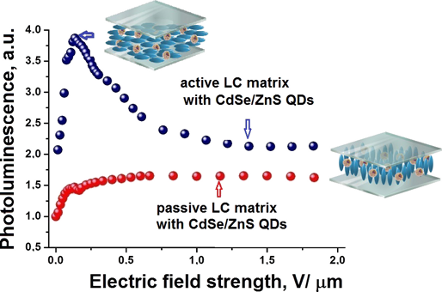
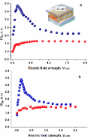
- because of a change of the boundary conditions. The luminescence quenching of QDs in the active LC matrix with an increase in the electric field strength occurs when the position of the LC director with respect to the electric field vector changes. The parallel component of the dielectric constant of the


Surface characterization of nanoparticles using near-field light scattering
Beilstein J. Nanotechnol. 2018, 9, 1228–1238, doi:10.3762/bjnano.9.114
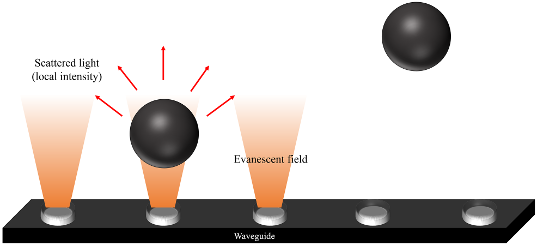
- altering the salt concentration of the suspension solution affected the velocity of particles due to the change of dielectric constant and viscosity of the solution. These findings suggest that this technique is suitable for studying particle surface changes and perhaps can be used to dynamically study
- microscope is efficient in characterization of polymer-coated nanoparticles. However, due to the fact that the nanoparticle scattering intensity depends on the dielectric constant of the material, multicomponent particle coatings, especially those on metallic or metal oxide materials such as those studied
- studies of reaction kinetics at the particle surface that result in changes in particle size, dielectric constant, or surface chemistry, which is of particular interest in protein adsorption to nanoparticles for biomedical applications. Results and Discussion Size, morphology, and elemental analysis of




Electrostatic force spectroscopy revealing the degree of reduction of individual graphene oxide sheets
Beilstein J. Nanotechnol. 2018, 9, 1146–1155, doi:10.3762/bjnano.9.106
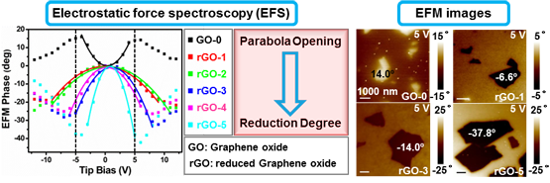
- (EFM) phase with high resolution as a function of the electrical direct current bias applied either to the probe or sample. Based on the dielectric constant difference of graphene oxide (GO) sheets (reduced using various methods), EFS can be used to characterize the degree of reduction of uniformly
- or valley EFM phases) and the EFM phase contrast at a certain tip bias less than the peak value can all indicate the degree of reduction of rGO samples, which is positively correlated with the dielectric constant. In addition, we gave the ranking of degree for reduction on thermally or chemically
- graphene domains and optimize EFM imaging [27]. The EFS is a method monitoring the EFM phases with high resolution as a function of the electrical DC bias applied either to the probe or sample. Based on the dielectric constant difference of rGO sheets reduced using various methods, EFS can characterize the


Electro-optical interfacial effects on a graphene/π-conjugated organic semiconductor hybrid system
Beilstein J. Nanotechnol. 2018, 9, 963–974, doi:10.3762/bjnano.9.90
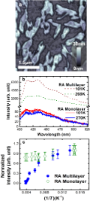
- region of the image is proportional to the dielectric constant of the material underneath the EFM tip, surface potential differences and to any accumulated charges/permanent polarization at the surface [34]. Equation 2 was used to fit all experimental data in Figure 4c–e (blue or brown solid lines in
- these plots) and Table 1 shows the respective fitting parameters. Considering, initially, parameter α in Table 1, which is related to the geometric capacitance and dielectric constant, there is no significant variation, as expected, since the geometric capacitance should remain the same. The minor
- variation of α for both functionalized graphene (Gf) and RA upon illumination may reflect slight changes on the hybrid dielectric constant upon charge transfer (doping). Such charge transfer, including photo-generated charges, may also account for the observed variation of parameter γ in Table 1, which is




Nanoscale mapping of dielectric properties based on surface adhesion force measurements
Beilstein J. Nanotechnol. 2018, 9, 900–906, doi:10.3762/bjnano.9.84
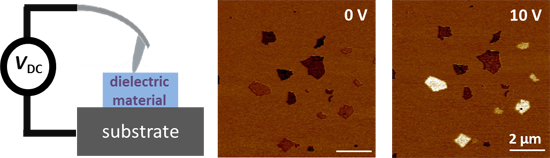
- both of the wetting and dielectric properties of the sample. Based on this principle, a quantitative analysis on the dielectric constant of macroscopic film has been realized by measuring the surface–water contact angle and adhesion force between the dielectric layer and a biased AFM tip [38]. Recently
- , Fadh, will increase due to sample polarization (Figure 1b), which is positively correlated to its dielectric constant. Therefore, adhesion force mapping under a biased AFM tip can be expected to characterize the local dielectric property distribution. An example of adhesion force mapping with a biased
- after being chemically reduced by removing some oxygen-containing groups and has a similar thickness but a larger dielectric constant than GO [21][45]. Figure 3a shows a representative height image of a mixture of GO and CRGO on a mica substrate under the tip biased at 0 V under ambient conditions (room


Effect of ferroelectric BaTiO3 particles on the threshold voltage of a smectic A liquid crystal
Beilstein J. Nanotechnol. 2018, 9, 824–828, doi:10.3762/bjnano.9.76
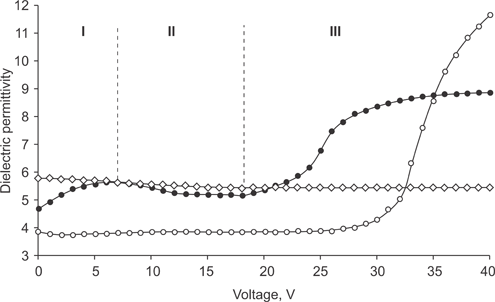
- dielectric constant of the colloid consisting of liquid crystal and ferroelectric particles can be represented in the form Here, f is the volume fraction of ferroelectric particles, εLC(E) and εFP(E) are the permittivity values of LC and ferroelectric particles both depending on the electric field strength E
- field, that leads to an increase in the dielectric constant of the colloid (the first section of the curve in Figure 3). If the applied field exceeds the threshold value, εLC(E) significantly increases, which is reflected in the dielectric permittivity of the colloid (third segment). Figure 3 shows that
- the dielectric constant of the colloid after the planar–homeotropic transition is much lower than that of the pure LC. This is due to the imperfection of the final homeotropic state (Figure 2,c). The decrease in the permittivity in the voltage range from 6 to 16 V (the second part of the curve in


Mechanistic insights into plasmonic photocatalysts in utilizing visible light
Beilstein J. Nanotechnol. 2018, 9, 628–648, doi:10.3762/bjnano.9.59
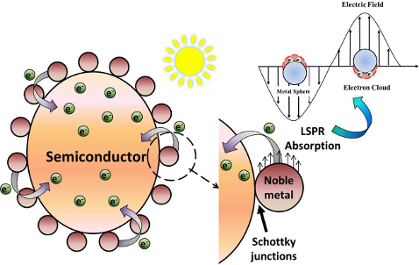
- allow the enhanced absorption of photon energy from the visible light spectrum. Larger metallic nanoparticles (>5 nm) produce a robust surface plasmon emission in the visible spectrum [10]. The intensity of the plasmon band is highly dependent on the morphology, surrounding medium dielectric constant





Facile synthesis of ZnFe2O4 photocatalysts for decolourization of organic dyes under solar irradiation
Beilstein J. Nanotechnol. 2018, 9, 436–446, doi:10.3762/bjnano.9.42
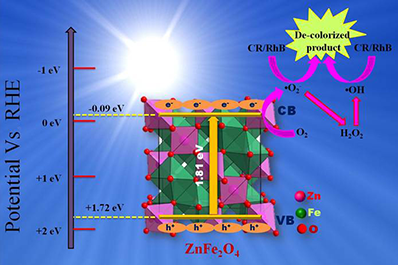
- the band edge of the prepared materials. The Mott–Schottky graphs were plotted according to Equation 2: where C, Vfb, k, T, e, ND, ε, ε0 and A are capacitance of the sample, flat-band potential, Boltzmann constant, absolute temperature, electron charge, donor density, semiconductor dielectric constant
- , dielectric constant in vacuum and area, respectively. C−2 was plotted as a function of the applied potential, Vapp. The extrapolation of the graph leads to the intersection point at the Y-axis, which gives the flat-band potential of the sample [33]. Figure 8 shows the Mott–Schottky plot of ZFO-500. The


Dynamic behavior of nematic liquid crystal mixtures with quantum dots in electric fields
Beilstein J. Nanotechnol. 2018, 9, 399–406, doi:10.3762/bjnano.9.39

- dielectric constant of the QDs (εQD) and the volumetric fraction of the quantum dots (cv). The intraction free energy between nematic molecules and a quantum dot can be calculated from the Rapini formula [21]. Considering an elliptical quantum dot with one of the axes just a little bit longer than the others


The nanofluidic confinement apparatus: studying confinement-dependent nanoparticle behavior and diffusion
Beilstein J. Nanotechnol. 2018, 9, 301–310, doi:10.3762/bjnano.9.30
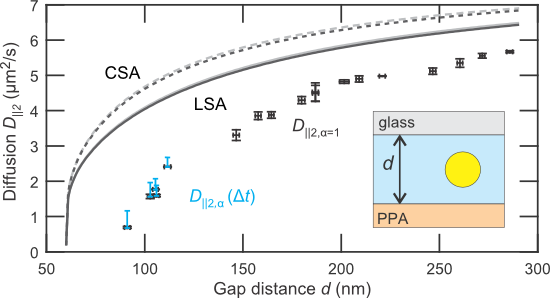
- interaction energy U(h) of a charged spherical particle at a distance h to a charged plane is given by [23][36]: where κ−1 is the Debye length, ε is the dielectric constant of the medium, ε0 is the vacuum permittivity, a is the radius, and ψP,eff and ψS,eff are the effective surface potentials of plane and



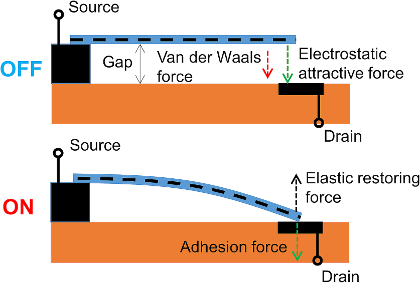
Review: Electrostatically actuated nanobeam-based nanoelectromechanical switches – materials solutions and operational conditions
Beilstein J. Nanotechnol. 2018, 9, 271–300, doi:10.3762/bjnano.9.29