


Search results
Search for "hierarchical" in Full Text gives 190 result(s) in Beilstein Journal of Nanotechnology.
Chiral nanostructures self-assembled from nitrocinnamic amide amphiphiles: substituent and solvent effects
Beilstein J. Nanotechnol. 2019, 10, 1608–1617, doi:10.3762/bjnano.10.156
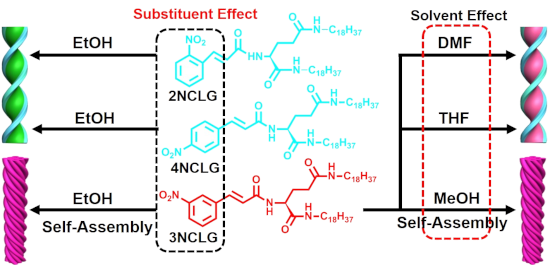
- , Beijing 100049, China Laboratory for Nanosystem and Hierarchical Fabrication, CAS Center for Excellence in Nanoscience, National Center for Nanoscience and Technology, Beijing 100190, China 10.3762/bjnano.10.156 Abstract Chiral nanostructures, such as α-helical proteins and double helix DNA, are widely




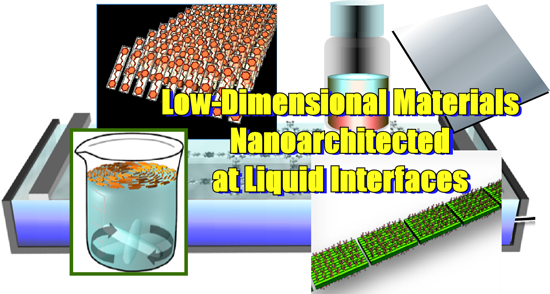
Materials nanoarchitectonics at two-dimensional liquid interfaces
Beilstein J. Nanotechnol. 2019, 10, 1559–1587, doi:10.3762/bjnano.10.153
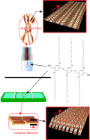
- ]. The domain sizes can be tuned by altering the mixing ratio of the two components. In a recent review article by Krafft and co-workers [199], the formation of surface nanodomains and their hierarchical organization with higher complexity with semi-fluorinated alkanes and related molecules (molecules
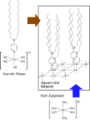
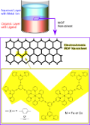
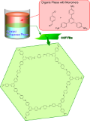
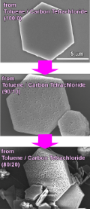
- -dimensional amorphous carbon microbelts at 900 °C and their dense graphitic versions at 2000 °C. Especially the former carbon material exhibited excellent electrochemical supercapacitive performance due to the enhanced surface area and the robust mesoporous framework motifs. The hierarchical bimodal pore













Hierarchically structured 3D carbon nanotube electrodes for electrocatalytic applications
Beilstein J. Nanotechnol. 2019, 10, 1475–1487, doi:10.3762/bjnano.10.146
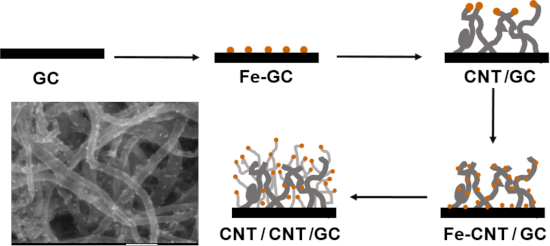
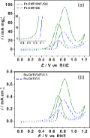
- were additionally characterized by Raman spectroscopy. In this way it is demonstrated that by varying the parameters during the electrodeposition and CVD steps, a tuning of the structural parameters of the hierarchical electrodes is possible. The suitability of the hierarchical electrodes for
- electrocatalytic applications is demonstrated using the methanol electro-oxidation as a test reaction. The Pt mass specific activity towards methanol oxidation of Pt-CNT/CNT/GC is approximately 2.5 times higher than that of Pt-CNT/GC, and the hierarchical electrode exhibits a more negative onset potential. Both
- , bottom-up synthesis approaches have been suggested, including branching or hierarchical structuring of carbon-based catalyst supports. In these approaches, one-dimensional (1D, e.g., CNTs or nano-/microfibers) or two-dimensional carbon materials (2D, e.g., graphene) are transformed into three-dimensional





Gas sensing properties of individual SnO2 nanowires and SnO2 sol–gel nanocomposites
Beilstein J. Nanotechnol. 2019, 10, 1380–1390, doi:10.3762/bjnano.10.136
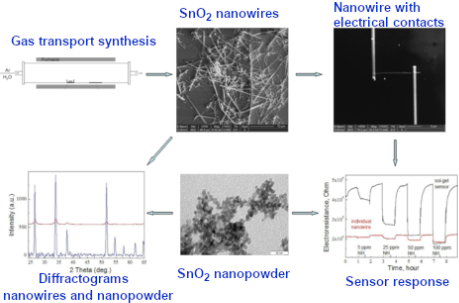
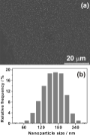
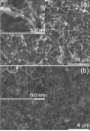
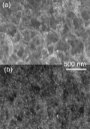
- show high sensitivity [10][11][12][13][14][15][16][17][18][19][20]. Hierarchical structures with SnO2 nanowires covered with additional nanoscale objects can be used for the improvement of electrical contacts [11][16][17]. A second direction in nanowire sensor development is the manufacturing of




A silver-nanoparticle/cellulose-nanofiber composite as a highly effective substrate for surface-enhanced Raman spectroscopy
Beilstein J. Nanotechnol. 2019, 10, 1270–1279, doi:10.3762/bjnano.10.126
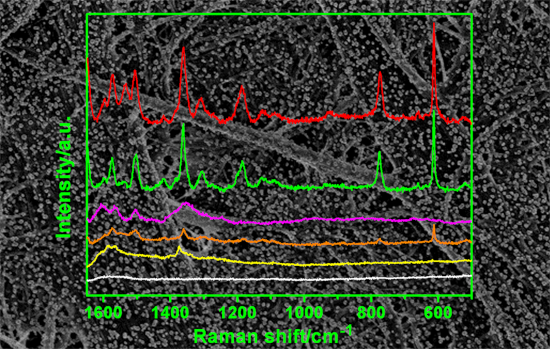
- cross-linked porous structure and the hierarchical morphologies at micro- and nanoscale of bulk cellulose lead to the creation of more hot spots by the loaded silver nanoparticles, and therefore, to higher SERS enhancement. Furthermore, cellulose materials such as filter paper are structurally porous


Angle-dependent structural colors in a nanoscale-grating photonic crystal fabricated by reverse nanoimprint technology
Beilstein J. Nanotechnol. 2019, 10, 1211–1216, doi:10.3762/bjnano.10.120
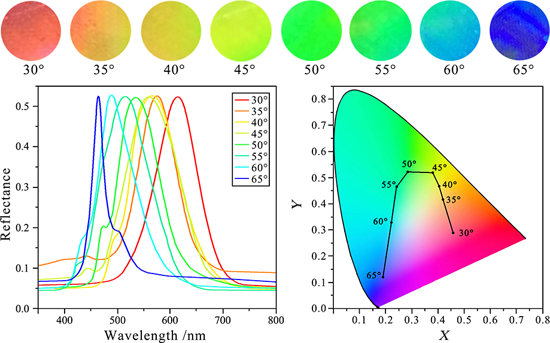
- colors. Koirala et al. investigated the transmission filtering characteristics of a grating film while changing structural parameters including the period of the grating [21]. Siddique et al. fabricated hierarchical photonic nanostructures to discuss the influence of structure patterns on the reflection


Photoactive nanoarchitectures based on clays incorporating TiO2 and ZnO nanoparticles
Beilstein J. Nanotechnol. 2019, 10, 1140–1156, doi:10.3762/bjnano.10.114
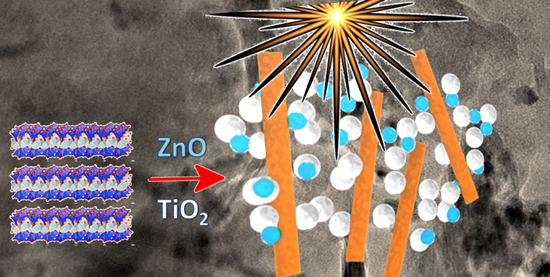
- morphologies, to immobilize these types of nanoparticles mainly plays a role in i) the control of their size and size distribution on the solid surface, ii) the mitigation or suppression of the nanoparticle aggregation, and iii) the hierarchical design for selectivity enhancements in the catalytic
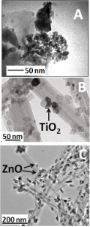
- presence of smectites as a result of the re-stacking of the exfoliated nanosheets has been reported [84]. Due to the variety of hierarchical structures and particle locations (at the external surface or in the interlayer space), the resulting particle size distribution of ZnO NPs can be very wide



Correlation of surface-enhanced Raman scattering (SERS) with the surface density of gold nanoparticles: evaluation of the critical number of SERS tags for a detectable signal
Beilstein J. Nanotechnol. 2019, 10, 1016–1023, doi:10.3762/bjnano.10.102
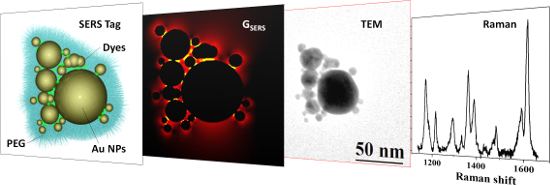
- which are shown in Figure 1B, have a hierarchical structure with one or more large Au nanoparticles surrounded by smaller particles, all grouped in a nanoaggregate with size of the order of tens of nanometers. In particular, the size distribution of the nanoaggregates is similar among the three samples


Nanoscale optical and structural characterisation of silk
Beilstein J. Nanotechnol. 2019, 10, 922–929, doi:10.3762/bjnano.10.93
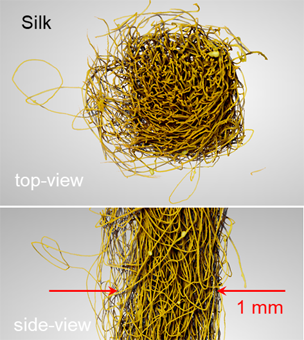
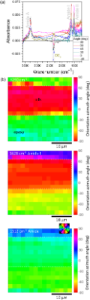
- properties of a material are interrelated. By using a wide spectrum of electromagnetic waves from visible light to terahertz radiation, it is possible to gain insights into complex hierarchical structures of composite materials. For materials with strong structural anisotropy, defined by the molecular


Synthesis of novel C-doped g-C3N4 nanosheets coupled with CdIn2S4 for enhanced photocatalytic hydrogen evolution
Beilstein J. Nanotechnol. 2019, 10, 912–921, doi:10.3762/bjnano.10.92
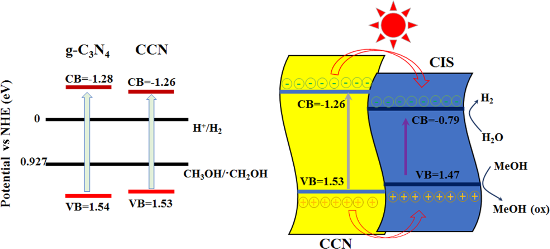
- photogenerated charge carriers and further improve the performance of photocatalysts. Wang et al. synthesized In2S3–CdIn2S4 nanotubes with hierarchical heterostructure by a self-templated method, which exhibited efficient and stable photocatalytic activity of CO2 reduction under visible-light irradiation [32
- ]. In addition, hierarchical CdIn2S4/graphene nano-heterostructures have been fabricated as efficient photocatalysts for solar H2 evolution [33]. In this study, synergy can be obtained by combining the two strategies, self-doped C-atom g-C3N4 (CCN) and hybridization with another semiconductor, to


Biomimetic synthesis of Ag-coated glasswing butterfly arrays as ultra-sensitive SERS substrates for efficient trace detection of pesticides
Beilstein J. Nanotechnol. 2019, 10, 578–588, doi:10.3762/bjnano.10.59
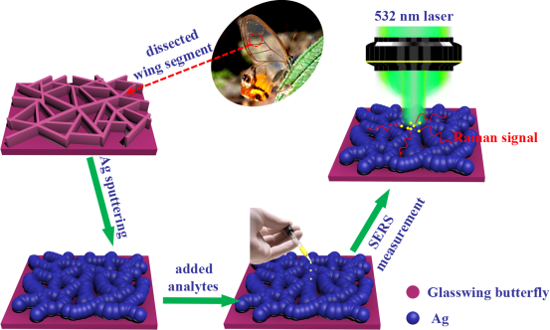
- a facile and low-cost approach to fabricate hierarchical SERS systems with high sensitivity, stability and good reproducibility. In this paper, with the aim to further improve the sensitivity and antioxidant properties as well as to achieve a high reproducibility of the substrates mentioned in our
- nanofilm thickness and the hierarchical nanogaps of 3D Ag-G.b. are the key parameters that can influence the enhancement of SERS. Therefore, we used CV as probe molecule to evaluate the SERS performance of 3D Ag-G.b. with different Ag nanofilm thicknesses. Figure 3a shows the Raman spectra of 10−4 M CV


Ultraviolet patterns of flowers revealed in polymer replica – caused by surface architecture
Beilstein J. Nanotechnol. 2019, 10, 459–466, doi:10.3762/bjnano.10.45
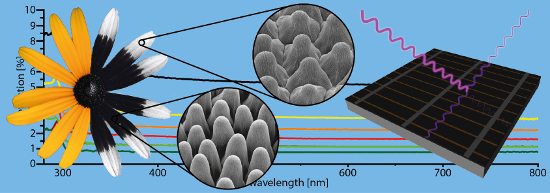
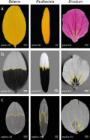
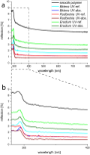
- -absorbing areas showed that, in principle, a hierarchical surface structure results in more absorption. Therefore, the results of our experiments demonstrate the structural-based amplification of UV-reflection and provide a starting point for the design of bioinspired antireflective and respectively
- strongly absorbing surfaces. Keywords: biomimetics; hierarchical structures; light absorption; light harvesting; light reflection; Introduction The outer epidermal surface of plants, the cuticle, forms the first and crucial boundary to the abiotic environment [1][2]. In most cases, this cuticle is a
- attention has been given to the possible influence of the hierarchical petal surface microarchitecture. Structural coloration and structure-based reflection of VIS- and UV-radiation is well known in animals such as butterflies, birds or beetles [15][16]. In plants, periodic structures causing iridescence


Mechanism of silica–lysozyme composite formation unravelled by in situ fast SAXS
Beilstein J. Nanotechnol. 2019, 10, 182–197, doi:10.3762/bjnano.10.17
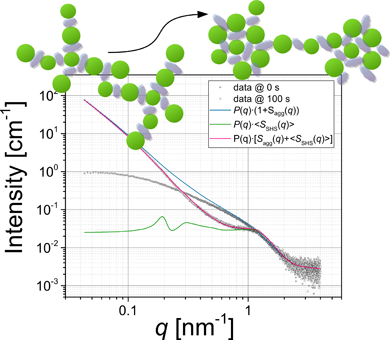
- of protein-sensitized biomedical devices and sensors [1][2][3][4][5][6]. In a broader perspective, many processes involving the assembly of nanoparticles to higher-level hierarchical structures are known to be directed by small organic molecules and macromolecules [7][8][9][10]. Such fundamental



Targeting strategies for improving the efficacy of nanomedicine in oncology
Beilstein J. Nanotechnol. 2019, 10, 168–181, doi:10.3762/bjnano.10.16
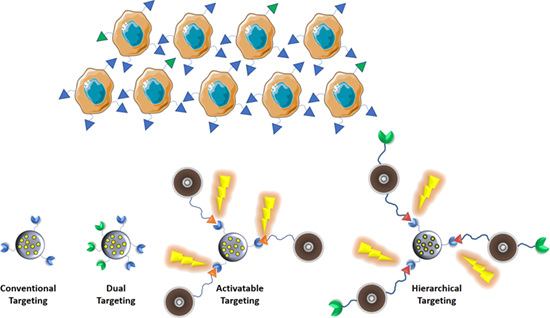
- moieties selective for organelles of the cell, which improves even more the effect of the transported agents. In the last years, more sophisticated strategies such as the use of switchable, hierarchical or double targeting strategies have been proposed for overcoming some of the limitations of conventional
- organelles, or tissues and cells, as well as the employ of hierarchical targeting will also be described to provide an insight about the great potency of targeted nanomedicines in antitumoral therapy. Review Passive targeting based on the EPR effect As mentioned above, the use of nanoparticles in oncology
- peptides [65][66]. Hierarchical and encrypted sequential targeting – novel strategies for dual targeting All targeting methodologies described above are obviously of limited clinical use. The coexistence of two active vectorization ligands at the same time and close to each other may lead to unwanted


Pull-off and friction forces of micropatterned elastomers on soft substrates: the effects of pattern length scale and stiffness
Beilstein J. Nanotechnol. 2019, 10, 79–94, doi:10.3762/bjnano.10.8
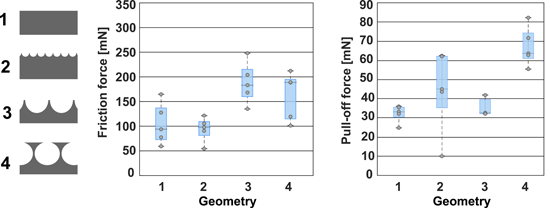
- microstructure is not considerably lower than that of coarser microstructure [14]. Greiner et al. found that with increasing aspect ratio of micropattern features, their compliance increases, resulting in a better conformability to substrate roughness [20]. Hierarchical geometries, that is, architectures with





Amorphous NixCoyP-supported TiO2 nanotube arrays as an efficient hydrogen evolution reaction electrocatalyst in acidic solution
Beilstein J. Nanotechnol. 2019, 10, 62–70, doi:10.3762/bjnano.10.6
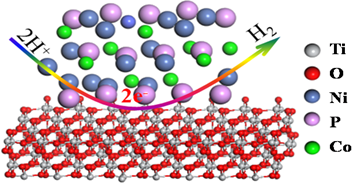
- radii of Co and Ni have been shown to be favorable to form ternary TMPs rather than secondary-metal doped phosphides [18][19][20]. As exemplified by Fu et al., hierarchical whisker-on-sheet nanostructures of NiCoP/nickel foam presented a superior performance, giving overpotentials of 59 mV and 220 mV to




Contact splitting in dry adhesion and friction: reducing the influence of roughness
Beilstein J. Nanotechnol. 2019, 10, 1–8, doi:10.3762/bjnano.10.1
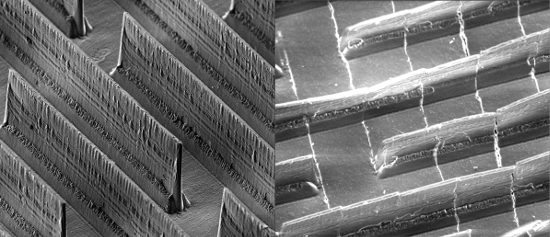
- ][2][3][4]. However, mimicking their micro- and nanoscale architecture still presents a manufacturing challenge due to their complex hierarchical geometry [3][5][6]. Instead, much simpler structures in the shape of mushrooms, wedges and flaps have been introduced to replicate the operation of


Hydrogen-induced plasticity in nanoporous palladium
Beilstein J. Nanotechnol. 2018, 9, 3013–3024, doi:10.3762/bjnano.9.280
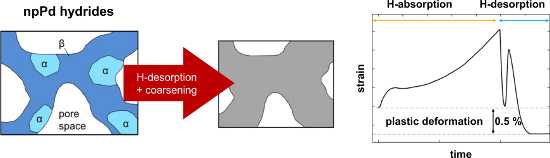
- is worth mentioning a recent study on hierarchical npPd [20], which pointed towards a positive (tensile) surface stress in the PdHβ-phase, thus a bulk contraction, and a negative (compressive) surface stress in the PdHα-phase, thus a bulk expansion. This is in agreement with the straining of the PdHα
- cycles reported for hierarchical nanoporous palladium by Shi et al. [20]. However, closer inspection suggests that the mechanism proposed here leading to plastic deformation might not be available in hierarchical npPd prepared in the mentioned work. The smaller structural size of the finer ligament


Co-intercalated layered double hydroxides as thermal and photo-oxidation stabilizers for polypropylene
Beilstein J. Nanotechnol. 2018, 9, 2980–2988, doi:10.3762/bjnano.9.277
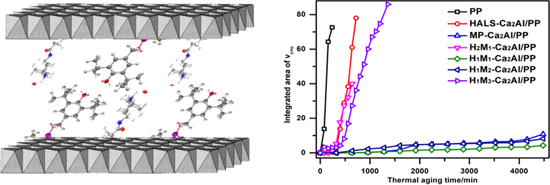
- Qian Zhang Qiyu Gu Fabrice Leroux Pinggui Tang Dianqing Li Yongjun Feng State Key Laboratory of Chemical Resource Engineering, Beijing Engineering Center for Hierarchical Catalysts, Beijing University of Chemical Technology, No. 15 Beisanhuan East Road, Beijing 100029, China Université Clermont


Ternary nanocomposites of reduced graphene oxide, polyaniline and hexaniobate: hierarchical architecture and high polaron formation
Beilstein J. Nanotechnol. 2018, 9, 2936–2946, doi:10.3762/bjnano.9.272
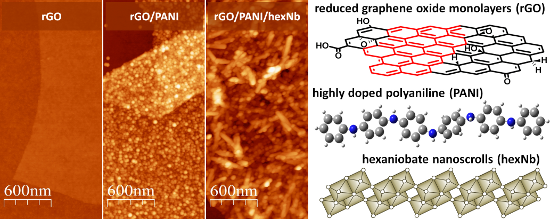
- material at 3 μm scan size. Figure 3 shows that the particles on the surface of rGO/PANI/hexNb exhibit a scroll-like shape (high aspect ratio), which is very similar to well-described hexNb nanoscrolls [7][37][38]. These results show the interesting hierarchical architecture of the ternary nanocomposite of


The effect of flexible joint-like elements on the adhesive performance of nature-inspired bent mushroom-like fibers
Beilstein J. Nanotechnol. 2018, 9, 2893–2905, doi:10.3762/bjnano.9.268
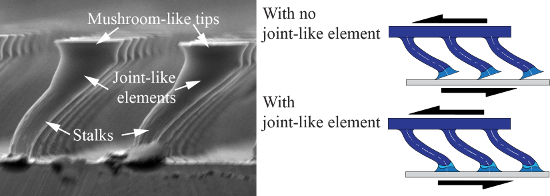
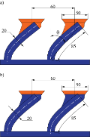
- of fibers per unit area [5][6][7]. One important material property which influences these adhesive properties the most is the elastic modulus of the material forming the fibers [5]. For instance, in geckos, which utilize a hierarchical fiber structure ranging from millimeter-scale lamellae to
- micrometer-scale setae, to the nanometer-scale spatulae at the contact level, fibers are made from beta keratin [8] which has an elastic modulus of 1–4 GPa [9]. To enhance performance, given the high elastic modulus, all of the hierarchical levels forming the adhesive patch of the gecko are tilted rather






Friction reduction through biologically inspired scale-like laser surface textures
Beilstein J. Nanotechnol. 2018, 9, 2561–2572, doi:10.3762/bjnano.9.238
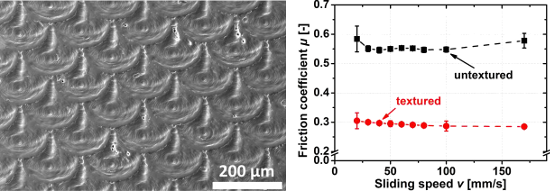
- ., the true contact decreased for the smallest to the largest scale size by about a factor of three. Size and scaling effects in biologically inspired surface textures are well known to exists, for example, in fibrillary adhesives inspired by the hierarchical hairy structures found on the feet of certain


Nanocellulose: Recent advances and its prospects in environmental remediation
Beilstein J. Nanotechnol. 2018, 9, 2479–2498, doi:10.3762/bjnano.9.232
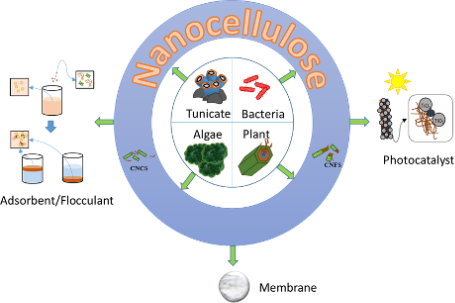
- nanocomposites with hierarchical structure. Besides, these –OH groups can be tailored for selective and improved interactions through a variety of chemical modifications [88]. The hydrophilicity of nanocellulose can be improved by inserting hydrophilic groups, such as carboxylic acids, alcohols, and amides, into


Evidence of friction reduction in laterally graded materials
Beilstein J. Nanotechnol. 2018, 9, 2443–2456, doi:10.3762/bjnano.9.229
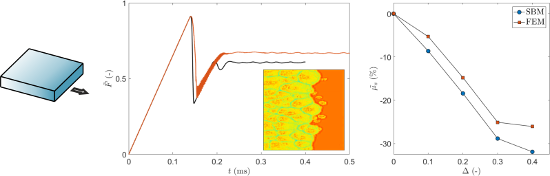
- Kingdom 10.3762/bjnano.9.229 Abstract In many biological structures, optimized mechanical properties are obtained through complex structural organization involving multiple constituents, functional grading and hierarchical organization. In the case of biological surfaces, the possibility to modify the
- ][7]. Bio-inspired solutions have thus been proposed for the design of advanced materials that mimic the hierarchical and graded structures found in nature, for use in engineering applications [8][9]. Functionally graded materials (FGMs) display a gradient in their elastic properties along one or more


![[Graphic 5]](/bjnano/content/inline/2190-4286-9-229-i10.svg?max-width=637&scale=1.18182) as function of time for the non-graded material: SBM solution for dif...
as function of time for the non-graded material: SBM solution for dif...


Adhesive contact of rough brushes
Beilstein J. Nanotechnol. 2018, 9, 2405–2412, doi:10.3762/bjnano.9.225
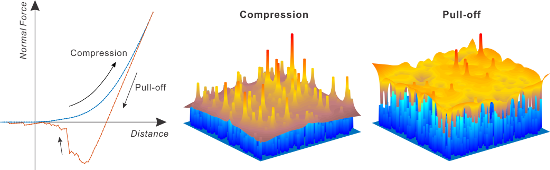
- a collection of elastic rods and assumed that the rod heights have a Gaussian distribution [12]. In the classical work of Greenwood and Williamson in 1966, they considered both the exponential and Gaussian distribution of asperity heights [13]. A detailed review of hierarchical models of rough





