Search results
Search for "impedance" in Full Text gives 197 result(s) in Beilstein Journal of Nanotechnology.
High permittivity, breakdown strength, and energy storage density of polythiophene-encapsulated BaTiO3 nanoparticles
Beilstein J. Nanotechnol. 2020, 11, 1190–1197, doi:10.3762/bjnano.11.103
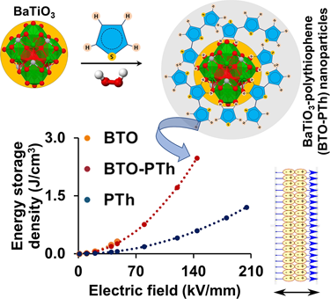
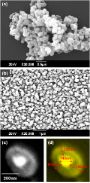
- microscopy (JEOL JSM 6490LA SEM) and atomic force microscopy (JSPM-5200 scanning probe microscope). Electrical properties of the bulk materials are measured under ambient conditions with a Wayne Kerr 6505B precision impedance analyzer and a Hipotronics HD103 3kV DC Hipot Tester. Results and Discussion




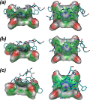
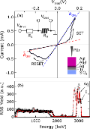
Excitonic and electronic transitions in Me–Sb2Se3 structures
Beilstein J. Nanotechnol. 2020, 11, 1045–1053, doi:10.3762/bjnano.11.89
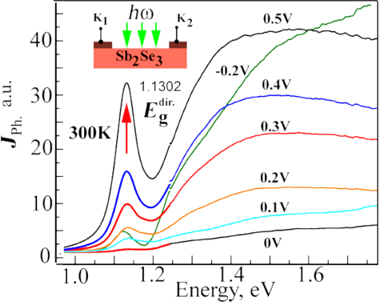
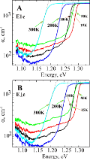
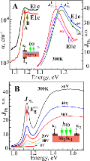
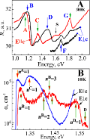
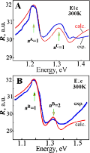
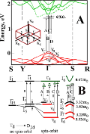
- (In–Sb2Se3) contacts, the structures were obtained by either thermal sputtering under vacuum or electrochemical deposition onto the cleaved faces of single crystals (Figure 3A). Current–voltage characteristics suggest that the contacts have an ohmic behavior. The impedance has a frequency dependence


Nickel nanoparticles supported on a covalent triazine framework as electrocatalyst for oxygen evolution reaction and oxygen reduction reactions
Beilstein J. Nanotechnol. 2020, 11, 770–781, doi:10.3762/bjnano.11.62
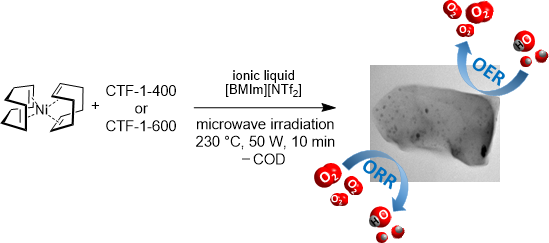
- good electrochemical ORR performance of Ni/CTF-1-600-22 was investigated by electrochemical impedance spectroscopy (EIS). As shown in Figure 7, all CTF-1-600 materials exhibited a higher conductivity than CTF-1-400. This could be ascribed to the higher graphitization degree achieved through the higher
- for ORR were performed in 1 mol/L KOH solution under air with cyclic potential sweeps between 0.6 and 1.1 V versus RHE at a 50 mV/s sweep rate for 2000 cycles. The electrochemical impedance spectroscopy (EIS) measurements were performed in 1 mol/L KOH, in a frequency range of (0.1–1) × 105 Hz and a


Exfoliation in a low boiling point solvent and electrochemical applications of MoO3
Beilstein J. Nanotechnol. 2020, 11, 662–670, doi:10.3762/bjnano.11.52
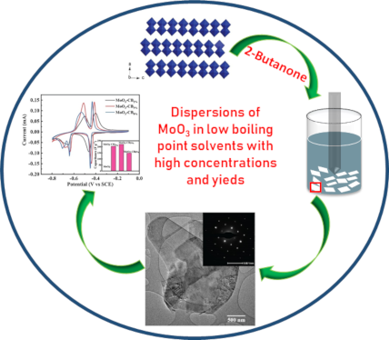
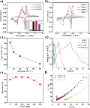
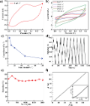
- supercapacitors [30][31]. The composite with 5 wt % CB was tested for about 500 cycles (Figure 3e). Initially the specific capacitance was found to increase, which can be attributed to the wetting of the active material in the initial cycles [26]. Electrochemical impedance spectroscopy was used to study the
- and the activation of available sites. Also, the composite shows a capacitance retention up to 94% even after 2000 cycles. Electrochemical impedance spectroscopy (EIS) is used to study the electrochemical series resistance and ideal nature of the capacitor. As shown in Figure 4f, EIS shows a typical
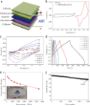
- ) CV curve at different scan rates; (c) capacitance as a function of the scan rate; (d) galvanostatic charge–discharge; (e) cyclic stability and (f) electrochemical impedance spectrum with enlarged view in the inset. Supporting Information Supporting Information File 80: Additional experimental data

Comparison of fresh and aged lithium iron phosphate cathodes using a tailored electrochemical strain microscopy technique
Beilstein J. Nanotechnol. 2020, 11, 583–596, doi:10.3762/bjnano.11.46
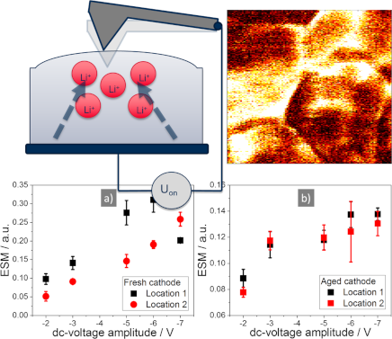
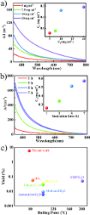
- impedance spectroscopy (EIS), potentiostatic intermittent titration technique (PITT), galvanostatic intermittent titration technique (GITT), CV). These techniques assume a simultaneous participation of all LFP particles in the electrodes when a “domino-cascade” is presumed to more accurately reflect the



Current measurements in the intermittent-contact mode of atomic force microscopy using the Fourier method: a feasibility analysis
Beilstein J. Nanotechnol. 2020, 11, 453–465, doi:10.3762/bjnano.11.37
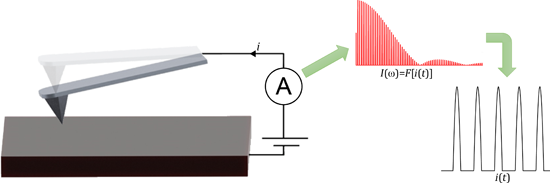
- with relatively high conductance materials do exist (e.g., FEMTO DHPCA-100, trans-impedance amplifier [48]), which could, for example, record currents in the nanoampere regime at frequencies near 1 MHz. For experiments conducted on materials with significantly lower conductivity, different approaches
- need to be taken. It is possible that the use of several amplifier stages, in contrast to the use of a single trans-impedance amplifier in most conventional C-AFM setups, could improve time resolution [49]. Since the current spectrum is not expected to exhibit arbitrary frequencies, additional lock-in
- capacitive, dielectric, and impedance properties, such that the timescale of the applied bias voltage can strongly influence the result [55][56]. One additional material-related challenge, is that in some materials the measured current is already very small (this is also the case in tunnelling experiments




High dynamic resistance elements based on a Josephson junction array
Beilstein J. Nanotechnol. 2020, 11, 417–420, doi:10.3762/bjnano.11.32
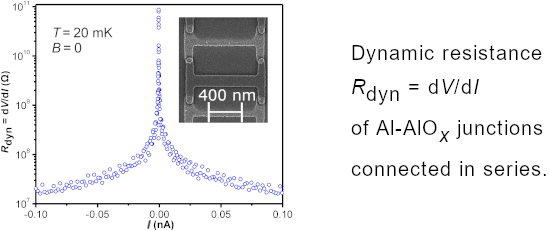
- higher than for CMOS-based devices. It is universally accepted that the limiting factor for the speed of operation of various superconducting devices is the high-frequency impedance, e.g., originating from kinetic inductance. The effect should be taken into consideration for various cryoelectronic
- impedance was demonstrated to study the QPS phenomena without the undesired impact of Johnson noise typically associated with dissipative elements [12]. The I–V dependence studied in [12] demonstrated clear and expected characteristics at low current, I → 0: the so-called “Bloch nose” (back-bending of I–V
- followed by ultrahigh vacuum deposition of materials was used for the fabrication of the nanostructures. Hybrid QPSJ samples were made of Ti, Al and aluminum oxide [12]. The high-impedance JJs studied in this paper, similar to those from [12], were fabricated from superconducting thin film Al oxidized in

Synthesis and enhanced photocatalytic performance of 0D/2D CuO/tourmaline composite photocatalysts
Beilstein J. Nanotechnol. 2020, 11, 407–416, doi:10.3762/bjnano.11.31
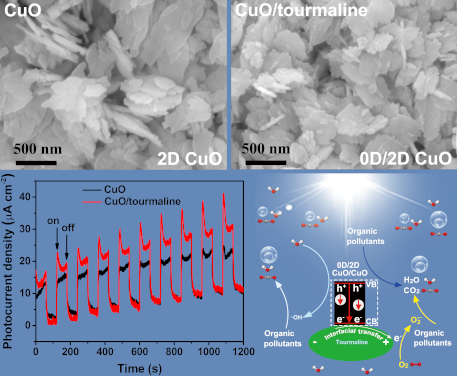
- Information File 1, Figure S1). Generally speaking, the higher the transient photocurrent density, the smaller the electrochemical impedance spectra (EIS) [33][34]. According to the time-resolved PL spectra in Figure 5d, the average fluorescence lifetime of the CuO/tourmaline composite (2.94 ns) was shortened


Implementation of data-cube pump–probe KPFM on organic solar cells
Beilstein J. Nanotechnol. 2020, 11, 323–337, doi:10.3762/bjnano.11.24
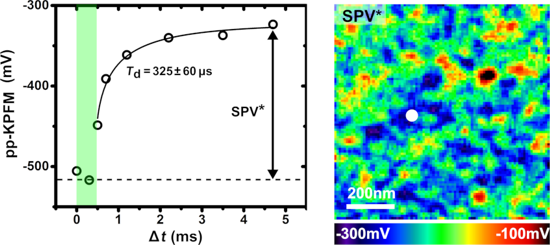
- -resolution at least as good as 1 µs can be achieved with this setup. The slight overestimation of the pulse amplitude (213 mV instead of 200 mV) originates from an impedance mismatch effect. This has been confirmed by comparing the KPFM loop response (in standard mode) to the dc bias applied from the AWG or
- multiplication stage generating the probe signal and by modifying the electric circuit for fast operation upon electrical pumping with a correct circuit impedance matching. Last, by comparing the results of pp-KPFM and of differential SPV imaging performed on the bare organic layer, an underestimation effect in
- pixel was set to 1 s, preceded by a pre-integration time of 2 s. The open circles represent calculated values obtained by integrating the pump signal over the probe-time window and by applying a correction factor to correct the impedance mismatch. The calculated data have been shifted along the y-axis




High-performance asymmetric supercapacitor made of NiMoO4 nanorods@Co3O4 on a cellulose-based carbon aerogel
Beilstein J. Nanotechnol. 2020, 11, 240–251, doi:10.3762/bjnano.11.18
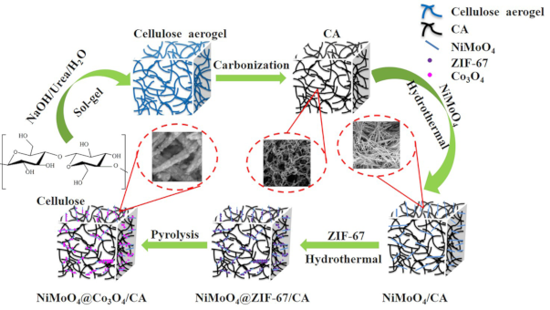
- electrodes impede the diffusion less strongly, which is attributed to the faster transport of electrons and the charge transfer resistance (Rct). Fitting the electrochemical impedance spectroscopy (EIS) plots based on the equivalent circuit model (inset of Figure 6d), reveals a solution resistance (Rs) of
- (GCD) curves at different values of the current density ranging from 0.5 to 5.0 A/g of the NiMoO4@Co3O4/CA ternary composite. (c) Specific capacitance at various values of the current density and (d) electrochemical impedance spectroscopy (EIS) plots of pure ZIF-67 derived Co3O4 and NiMoO4@Co3O4/CA




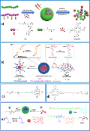
Rational design of block copolymer self-assemblies in photodynamic therapy
Beilstein J. Nanotechnol. 2020, 11, 180–212, doi:10.3762/bjnano.11.15






Nanosecond resistive switching in Ag/AgI/PtIr nanojunctions
Beilstein J. Nanotechnol. 2020, 11, 92–100, doi:10.3762/bjnano.11.9
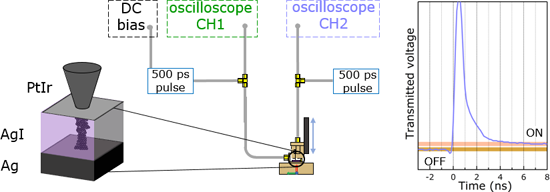
- formed in a vacuum chamber that can be evacuated down to 10−7 mbar. The thin film sample and the STM tip are mechanically attached directly to the hot lines of two impedance-matched co-planar waveguide printed circuit boards (PCBs). Their common ground is provided by a spring-loaded contact, which
- fine adjustments as well as a lateral displacement. Both PCBs are terminated with impedance-matched SMA-type connectors certified to 0–18 GHz bandwidth. These terminals are connected to the 50 Ω matched channels of a 1 GHz bandwidth and 100 ps sampling rate digital oscilloscope, as well as to nominally
- implemented on identical, impedance-matched printed co-planar waveguide circuit boards, is shown in Figure 4b. The operation of G1 and G2 relies on the recurring charging and avalanche break-down of the 2N2369-type npn transistor. Charging occurs through the 1 MΩ resistor and the 2 pF capacitor located at the


Polyvinylpyrrolidone as additive for perovskite solar cells with water and isopropanol as solvents
Beilstein J. Nanotechnol. 2019, 10, 2374–2382, doi:10.3762/bjnano.10.228
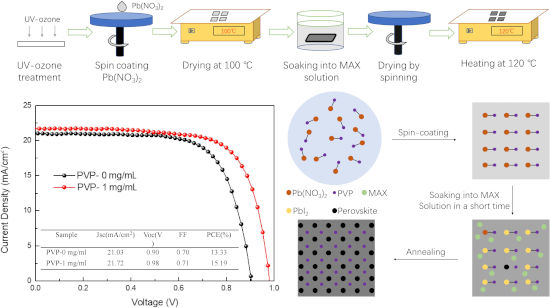
- simulator (Newport Oriel Sol3A Class AAA, 64023A Simulator), which was calibrated using a NREL standard Si solar cell. Electrochemical impedance spectroscopy (EIS) measurements were conducted by using an electrochemical workstation (CHI660d) (1 MHz to 100 Hz) and for fitting the Zview software was used. The
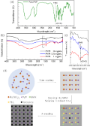
- attributed to the appearance of voids on the surface of the perovskite layer, which results in a higher recombination rate of the carriers [34]. Figure 5 shows electrical impedance spectroscopy (EIS) measurements at a voltage bias of 0 V under one-sun light intensity with the test frequency ranging from 0.1




Design and facile synthesis of defect-rich C-MoS2/rGO nanosheets for enhanced lithium–sulfur battery performance
Beilstein J. Nanotechnol. 2019, 10, 2251–2260, doi:10.3762/bjnano.10.217
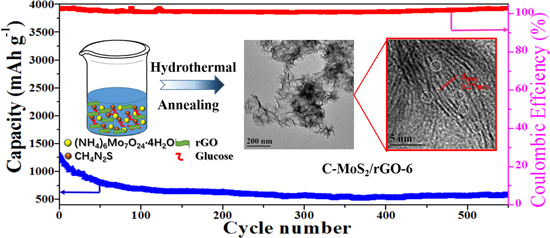
- impedance spectroscopy (EIS) measurements were achieved at the open-circuit potential between 0.01 Hz and 100 kHz. All the tests were carried out at room temperature. Results and Discussion The preparation of the C-MoS2/rGO composite is shown in Figure 1. The C-MoS2/rGO composite is synthesized by the
- overlap, indicating the superior electrochemical reversibility of the C-MoS2/rGO-6-S cathode. The electrochemical impedance spectroscopy results of MoS2-S, C-MoS2/rGO-S, C-MoS2/rGO-6-S electrodes are shown in Figure 6b. Obviously, the C-MoS2/rGO-S and C-MoS2/rGO-6-S electrodes have the minor semicircles


Nontoxic pyrite iron sulfide nanocrystals as second electron acceptor in PTB7:PC71BM-based organic photovoltaic cells
Beilstein J. Nanotechnol. 2019, 10, 2238–2250, doi:10.3762/bjnano.10.216
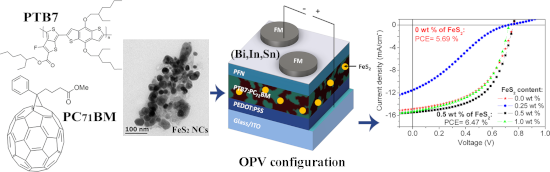
- the charge carrier transport and recombination in the devices based on PTB7:PC71BM and PTB7:PC71BM:FeS2 with 0.5 wt % FeS2, impedance spectroscopy (IS) was conducted. IS is an important technique for monitoring charge carrier transport and recombination processes in solar cells [59]. These
- impedance spectra were measured at ambient atmosphere and at room temperature under dark and illumination conditions using a frequency range from 1 to 500 kHz with an amplitude of 20 mV. The curves were simulated with the ZView software [34]. a) OPV structure. FM: Field’s metal (Bi, In, Sn); b) Chemical
- noncontact mode. Impedance spectroscopy measurements (filled color squares) and simulations (black lines) of a) PTB7:PC71BM and b) PTB7:PC71BM:FeS2 with 0.5 wt % of FeS2; c) equivalent circuit used for the IS simulations; d) Rrec values vs bias voltage of PTB7:PC71BM (blue) and PTB7:PC71BM:FeS2 (with 0.5 wt


A novel all-fiber-based LiFePO4/Li4Ti5O12 battery with self-standing nanofiber membrane electrodes
Beilstein J. Nanotechnol. 2019, 10, 2229–2237, doi:10.3762/bjnano.10.215
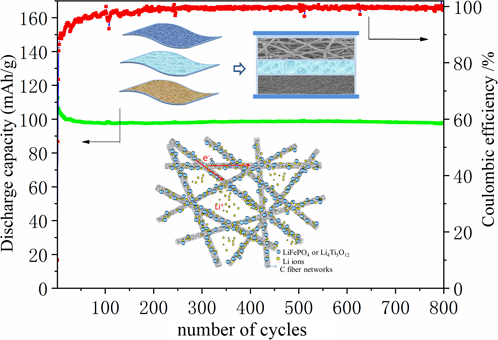
- agreement with the redox peaks in the CV curves. Figure 9 shows the electrical impedance spectroscopy curves of the two kinds of fiber membrane electrodes. It can be seen that there is a regular semicircle in the high-frequency region, which represents the magnitude of the charge transfer resistance Rct
- . The oblique line in the low-frequency region is larger than 45°, which is the impedance of the Li+ diffusion process in the electrode. Overall, although the electrodes did not use metal collectors, both electrodes showed a smaller charge transfer impedance and a smaller ion transfer impedance, which
- assembled in an Ar-filled glovebox by using lithium foil as anode and 1 M LiPF6 electrolyte (ethylene carbonate/dimethyl carbonate/ethyl methyl carbonate = 1:1:1). A Celgard 2400 polypropylene membrane was used as separator. The cyclic voltammetry and electrochemical impedance spectroscopy measurements were


Ultrathin Ni1−xCoxS2 nanoflakes as high energy density electrode materials for asymmetric supercapacitors
Beilstein J. Nanotechnol. 2019, 10, 2207–2216, doi:10.3762/bjnano.10.213
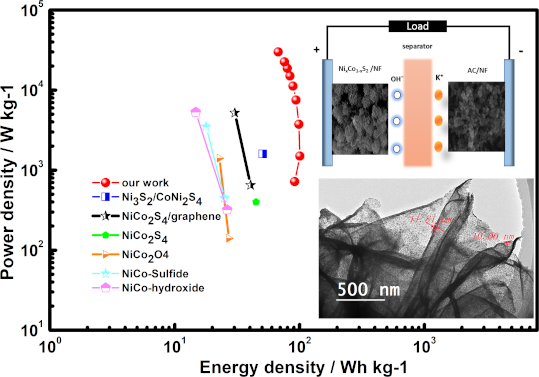
- ) at room temperature of 24 °C. Electrochemical impedance spectroscopy (EIS) of the electrode material was carried out in the frequency range from 100 kHz to 0.01 Hz at AC voltage under open-circuit conditions. The cycling stability was tested by using a LAND system (Wuhan LAND electronics). The


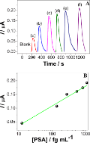
Use of data processing for rapid detection of the prostate-specific antigen biomarker using immunomagnetic sandwich-type sensors
Beilstein J. Nanotechnol. 2019, 10, 2171–2181, doi:10.3762/bjnano.10.210

- can be adapted for multiplex detection of biomarkers, in addition to PSA, by combining with other proteins. We also demonstrated that information visualization techniques, so far most commonly used for impedance spectroscopy sensing data, can be applied to amperometric results with a microfluidic


Review of advanced sensor devices employing nanoarchitectonics concepts
Beilstein J. Nanotechnol. 2019, 10, 2014–2030, doi:10.3762/bjnano.10.198

- performance depends on the impedance of whole the system, including the transistor devices and monitored cells. Since cell packing affects the sensor signal, the optimum design of such cell sensors should be tuned according to cell packing. In order to evaluate the paracellular characteristics of tightly





Facile synthesis of carbon nanotube-supported NiO//Fe2O3 for all-solid-state supercapacitors
Beilstein J. Nanotechnol. 2019, 10, 1923–1932, doi:10.3762/bjnano.10.188
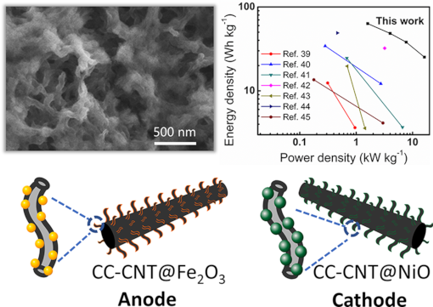
- the CC-CNT@Fe2O3 electrode. Electrochemical impedance spectroscopy (EIS) was carried out to explore the resistance of the electrode (Figure 4d). The measured curve can be well fitted by equivalent circuits, and the insert is an enlarged view in the high-frequency area. All fitted values are shown in
- counter electrode, a saturated calomel electrode (SCE) as the reference electrode, and the CC-CNT@Fe2O3 or CC-CNT@NiO as the binder-free working electrode. Electrochemical impedance spectroscopy (EIS) curves were measured in frequencies from 100 kHz to 0.01 Hz at open-circuit voltage with an AC voltage


TiO2/GO-coated functional separator to suppress polysulfide migration in lithium–sulfur batteries
Beilstein J. Nanotechnol. 2019, 10, 1726–1736, doi:10.3762/bjnano.10.168
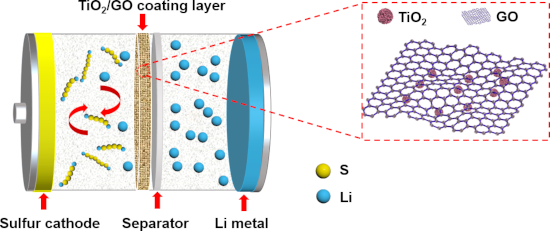
- electrochemical impedance spectroscopy (EIS) analysis to analyze the charge transfer kinetics in Li/S batteries with pristine and TiO2/GO-coated separators. Figure 8 presents the Nyquist plots of Li/S batteries with pristine and TiO2/GO-coated separators before and after cycling. As shown in Figure 8a, the charge


Hierarchically structured 3D carbon nanotube electrodes for electrocatalytic applications
Beilstein J. Nanotechnol. 2019, 10, 1475–1487, doi:10.3762/bjnano.10.146
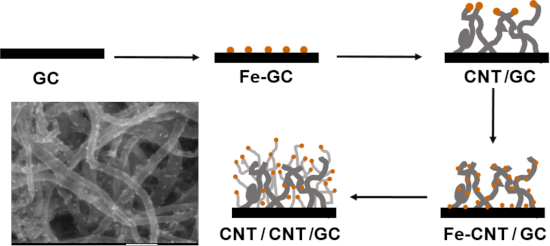
- transfer resistance with respect to the primary CNTs as determined by electrochemical impedance spectroscopy. Thus, we speculate that the improvement in Pt dispersion is due to a better conductivity within the 3D network and a facilitated electron transfer, which may facilitate Pt nucleation at the CNT





BiOCl/TiO2/diatomite composites with enhanced visible-light photocatalytic activity for the degradation of rhodamine B
Beilstein J. Nanotechnol. 2019, 10, 1412–1422, doi:10.3762/bjnano.10.139
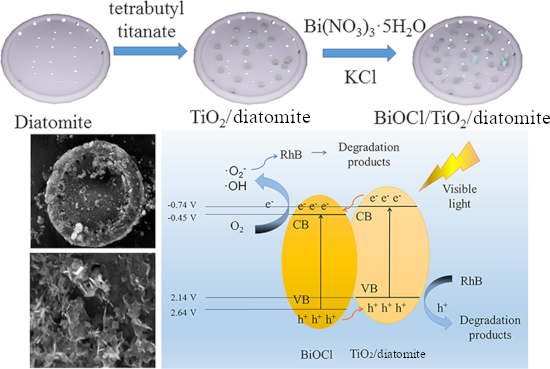
- efficiency of the samples, photoluminescence spectroscopy, photocurrent and electrochemical impedance spectroscopy were tested. The recombination rate of photogenerated carriers (electrons and holes) in photocatalysts was characterized by photoluminescence spectra. Generally, the lower the spectral intensity
- internal structure of the material to its surface [48]. BTD shows the most prominent photocurrent density, proving that the carrier recombination rate is low and the lifetime is long, which contributes to the enhancement of photocatalytic activity. Electrochemical impedance spectroscopy (EIS) is one of the
- diagram (Figure 10c), the impedance curve of the composite BTD has the smallest radius of curvature, in other words, it has the highest charge transfer efficiency and the highest utilization of photogenerated carriers. All of the above discussions show that BTD has a low electron–hole recombination rate


Construction of a 0D/1D composite based on Au nanoparticles/CuBi2O4 microrods for efficient visible-light-driven photocatalytic activity
Beilstein J. Nanotechnol. 2019, 10, 1360–1367, doi:10.3762/bjnano.10.134
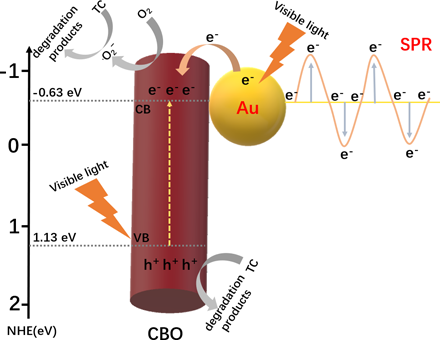
- photocatalytic activity after three cycles. This decrease of photocatalytic performance is mainly due to the mass of catalysts being inevitably lost in the recycling process [39]. Photocurrent response and electrochemical impedance spectroscopy (EIS) measurements were carried out to obtain some insights into the


Alloyed Pt3M (M = Co, Ni) nanoparticles supported on S- and N-doped carbon nanotubes for the oxygen reduction reaction
Beilstein J. Nanotechnol. 2019, 10, 1251–1269, doi:10.3762/bjnano.10.125
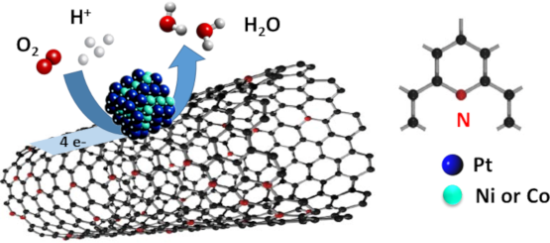
- , which is less than two times the theoretical amount of released Co. As one Co2+ cation can neutralize two sulfonic acid groups, the proton transport in the MEA integrating unwashed catalyst is almost impossible, which explains such low performance, even at low current. Electrochemical impedance spectra