


Search results
Search for "lithography" in Full Text gives 330 result(s) in Beilstein Journal of Nanotechnology. Showing first 200.
Functional nanostructures for electronics, spintronics and sensors
Beilstein J. Nanotechnol. 2020, 11, 1704–1706, doi:10.3762/bjnano.11.152

- technology including lift-off electron-beam lithography followed by ultra-high-vacuum deposition of materials that was used for fabrication of nanostructured quasi-1D chains of Josephson junctions. This was followed by the work of Mohammed et al. [12] who presented a smart vacuum technology for the design of
Out-of-plane surface patterning by subsurface processing of polymer substrates with focused ion beams
Beilstein J. Nanotechnol. 2020, 11, 1693–1703, doi:10.3762/bjnano.11.151
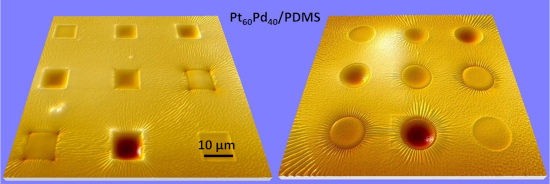
- the basis of a comparative study of the role of material-related factors in the FIB-induced surface patterning. PMMA and PC polymers are especially interesting for many reasons: PMMA is widely used as a positive resist for X-ray, deep UV [8], electron and ion-beam lithography [9]. Structural
- PMMA, it has a much higher mechanical toughness, thermal resistance, chemical stability, and as PMMA, it is widely used in optical applications. A range of publications show that, owing to its radiation susceptibility, PC can be used as a positive or negative resist for electron beam lithography [15


Fabrication of nano/microstructures for SERS substrates using an electrochemical method
Beilstein J. Nanotechnol. 2020, 11, 1568–1576, doi:10.3762/bjnano.11.139
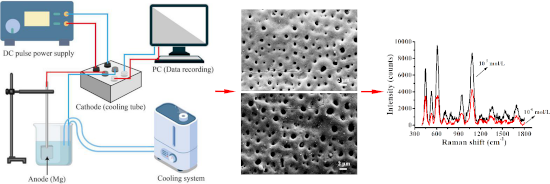
- machined by using lithography-based method [15][16][17][18][19][20]. Additionally, nanostructures are also fabricated by hybrid lithography [21][22][23][24][25][26] methods combined with dry etching or wet etching. For example, the commercial Klarite substrate [21][22][23] machined by electron beam
- lithography (EBL) and wet etching consists of 1 μm deep square-based pyramidal pits in the silicon surface. A rhodamine solution (10−4 mol·L−1) is then detected using the Klarite substrate. Candeloro et al. [24] employed EBL and reactive ion etching to machine nanoholes of 400 nm diameter and 50 nm depth
- achieved for 4-mercaptobenzoic acid molecules on the arrayed Au nanoholes. However, lithography-based methods have limitations, as they are inefficient and cannot be exploited for mass production. In addition, it is challenging to use the existing methods to fabricate more complex nanostructures. Focused


Electrokinetic characterization of synthetic protein nanoparticles
Beilstein J. Nanotechnol. 2020, 11, 1556–1567, doi:10.3762/bjnano.11.138
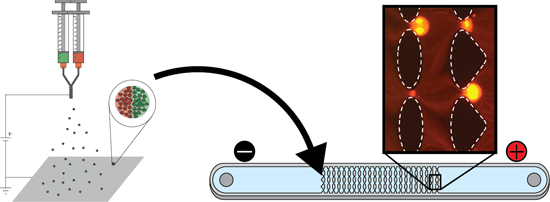
- and −17.4 ± 0.6 mV SPNP-BSA-555. The EK devices to study these particles were made using microdevice manufacturing techniques as previously described. Standard soft lithography techniques were used to cast polydimethylsiloxane (PDMS) onto molds, and the resulting microdevices were sealed with PDMS
- posts (Figure 2b and Figure S1, Supporting Information File 1) were made from PDMS employing standard soft lithography techniques. To create a device, PDMS (Dow Corning, Midland, MI) was cast onto a negative replica mold made with a silicon wafer (Silicon Inc., Boise, ID) and an SU-8 3050 photoresist



Wafer-level integration of self-aligned high aspect ratio silicon 3D structures using the MACE method with Au, Pd, Pt, Cu, and Ir
Beilstein J. Nanotechnol. 2020, 11, 1439–1449, doi:10.3762/bjnano.11.128
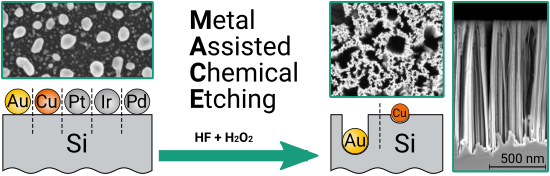
- fabrication uses cost-efficient subprocesses and omits expensive processes such as nanopatterning with high-resolution lithography. One low-cost method for the fabrication of such high aspect ratio templates and structures is metal-assisted chemical etching (MACE). This process uses a noble metal catalyst
- layers have been patterned with standard photo-resist and a proximity lithography step. The selected full wafer pattern consists of a series of open quadratic test fields. These were transferred from the photo-resist to the PMMA layer using a reactive ion etching process with oxygen. In contrast to the


Atomic defect classification of the H–Si(100) surface through multi-mode scanning probe microscopy
Beilstein J. Nanotechnol. 2020, 11, 1346–1360, doi:10.3762/bjnano.11.119
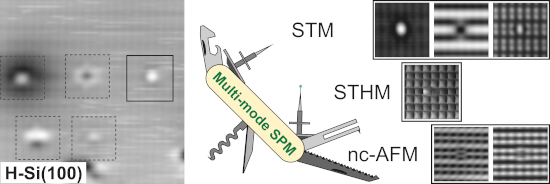
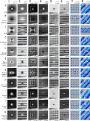
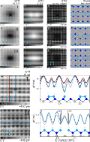
- electronic and structural behaviour of the Si(100) surface [18]. The addition of hydrogen to surface silicon atoms saturates all available bonds [19] and three surface reconstructions are commonly observed. The 2 × 1 phase – frequently used in hydrogen lithography, and can be prepared in situ resulting in



Controlling the proximity effect in a Co/Nb multilayer: the properties of electronic transport
Beilstein J. Nanotechnol. 2020, 11, 1336–1345, doi:10.3762/bjnano.11.118
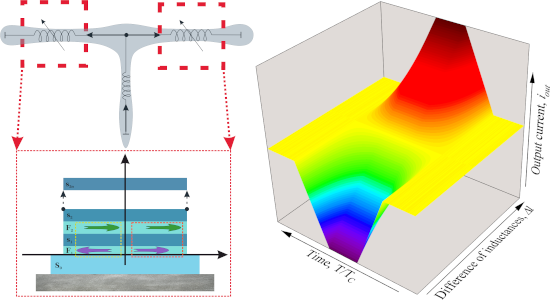
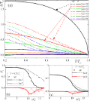
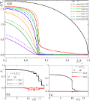
- Stuttgart. The lithography was made in the Stockholm University. Funding We acknowledge the partial financial support from Grant No. 20-69-47013 of the Russian Science Foundation (theoretical approach and calculations). R. Morari is grateful for the support from the Russian Ministry of Education and Science



Effect of localized helium ion irradiation on the performance of synthetic monolayer MoS2 field-effect transistors
Beilstein J. Nanotechnol. 2020, 11, 1329–1335, doi:10.3762/bjnano.11.117
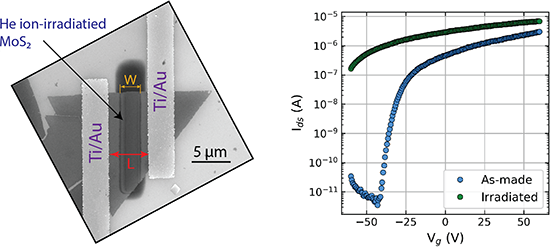
- synthesized using a CVD microreactor method, described in detail in [33], directly on 285 nm SiO2/Si substrates, which also served as the back-gate in the FET configuration. MoS2 flakes were contacted with electrodes using standard electron beam lithography on polymethyl methacrylate (PMMA) resist, followed


An atomic force microscope integrated with a helium ion microscope for correlative nanoscale characterization
Beilstein J. Nanotechnol. 2020, 11, 1272–1279, doi:10.3762/bjnano.11.111
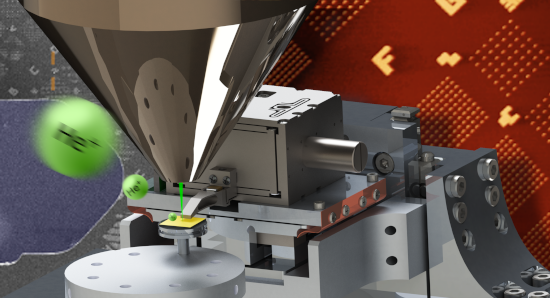
- have previously been difficult to obtain as sample preparation of such samples for SEM or TEM are often incompatible with the needs of high-resolution AFM measurements. AFM is also useful in assisting helium ion beam lithography. Many resists, including poly(methyl methacrylate) (PMMA), have higher
- sensitivities to helium ion irradiation than to electron irradiation in terms of charge per area [14]. Patterning resolution down to 4 nm has been demonstrated on HSQ resist [15], surpassing electron beam lithography, which greatly suffers from the proximity effect. In a combined AFM–HIM setup, the AFM could be
- to be navigated onto the region of interest (Figure 2b,c) to perform AFM topography imaging (Figure 2d). PMMA has traditionally been used as a positive resist in electron beam lithography. Helium ion beam lithography has emerged as a powerful technique to achieve even smaller feature size thanks to


3D superconducting hollow nanowires with tailored diameters grown by focused He+ beam direct writing
Beilstein J. Nanotechnol. 2020, 11, 1198–1206, doi:10.3762/bjnano.11.104
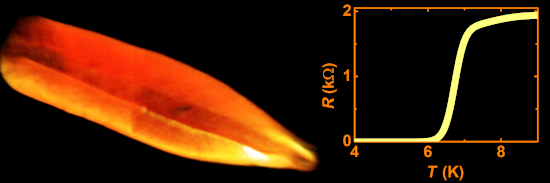
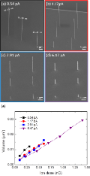
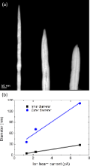
- -patterned Ti pads (150 nm in thickness) to prevent charge effects on the insulator layer (250 nm thick of SiO2) thermally grown on a silicon wafer [23]. These chips were fabricated following a routine recipe for UV optical lithography using a lift-off method. For the electron tomography and (HR)STEM
- Information File 120: Electron tomography_transversal section_hollow NW grown at 7 pA and 1.009 nC. Acknowledgements The authors highly acknowledge Rubén Valero for the UV lithography process. The microscopy works have been conducted in the “Laboratorio de Microscopías Avanzadas” at “Instituto de Nanociencia



Highly sensitive detection of estradiol by a SERS sensor based on TiO2 covered with gold nanoparticles
Beilstein J. Nanotechnol. 2020, 11, 1026–1035, doi:10.3762/bjnano.11.87
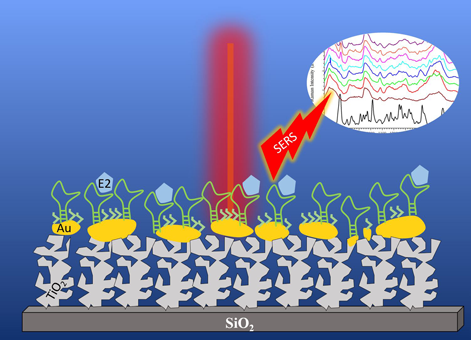
- effects [6][7][8]. Many surfaces were proposed for SERS including rough metallic surfaces [9][10], colloidal solutions [11], and structures with controlled size, distance and shape obtained via lithography techniques [2][5][12]. However, these techniques can be time-consuming and expensive. Recently, the



Electrochemical nanostructuring of (111) oriented GaAs crystals: from porous structures to nanowires
Beilstein J. Nanotechnol. 2020, 11, 966–975, doi:10.3762/bjnano.11.81
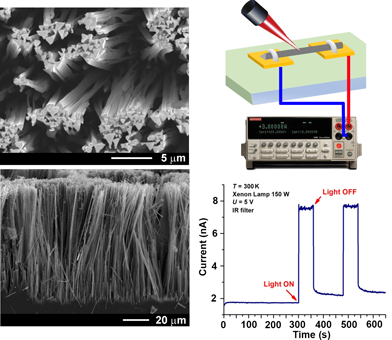
- photodetector for the IR region of the spectrum was tested, as described in the Experimental section. A special design of contacts was applied via laser beam lithography on selected nanowires. As illustrated in Figure 7A, defined regions (bright regions) were opened in the photoresist (dark regions) for further
- mounted on the cold station of a LTS-22-C-330 cryogenic system. X-ray diffraction analysis of the samples was performed with a Philips X-Pert MPD System with Cu Kα1 radiation. Electrical contacts to GaAs nanowires. The contacts were realized using laser leam lithography (µPG 101, Heidelberg Instruments




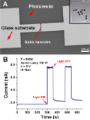

A Josephson junction based on a highly disordered superconductor/low-resistivity normal metal bilayer
Beilstein J. Nanotechnol. 2020, 11, 858–865, doi:10.3762/bjnano.11.71
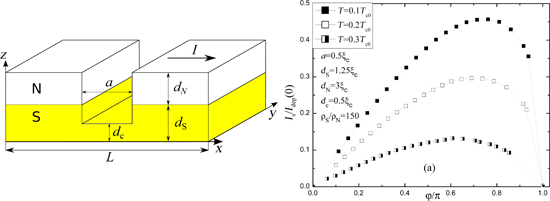
- about 5 nm, which is smaller than ξc in NbN, with the help of helium ion beam lithography. The successful implementation of this method could lead to the creation of low-temperature nanoscale Josephson junctions and arrays of them. For example, SN-S-SN junctions can be promising to use in programmable


Transition from freestanding SnO2 nanowires to laterally aligned nanowires with a simulation-based experimental design
Beilstein J. Nanotechnol. 2020, 11, 843–853, doi:10.3762/bjnano.11.69
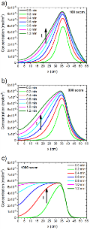
- laterally aligned NWs in sensor or electronic devices, control of the NW length is highly desired. Longer NWs can be contacted by means of standard lithography processes and do not require electron-beam lithography [12][28]. In the experiments presented in Figure 6, the process time was increased from 8 min





Integrated photonics multi-waveguide devices for optical trapping and Raman spectroscopy: design, fabrication and performance demonstration
Beilstein J. Nanotechnol. 2020, 11, 829–842, doi:10.3762/bjnano.11.68
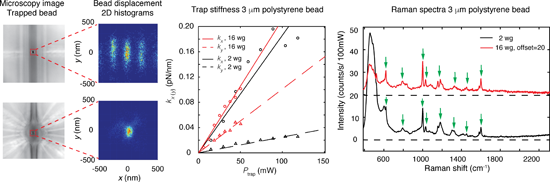
- (the typical medium in our experiments) for various waveguide thicknesses using the 3D finite-difference time-domain (FDTD) method with Lumerical’s FDTD solutions [10]. We choose a waveguide width wexc of 1 μm, which is the minimum width for the contact lithography we use. We aim for single-mode
- waveguides is completely decoupled from the silicon substrate. Then, a 100 nm thick layer of Si3N4 is deposited using low pressure chemical vapor deposition (LPCVD, Figure 5b). This layer is patterned using optical lithography and reactive ion etching (RIE) in a fluorine-based plasma, which is followed by
- LPCVD due to waveguides already present. Subsequently, 200 nm of Si3N4 is deposited using the same LPCVD process as for the excitation waveguides (Figure 5f). Using lithography, RIE and resist stripping, we produce multiple detection waveguides in this layer fanning out from the central device region


Hexagonal boron nitride: a review of the emerging material platform for single-photon sources and the spin–photon interface
Beilstein J. Nanotechnol. 2020, 11, 740–769, doi:10.3762/bjnano.11.61


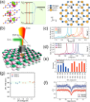


Electromigration-induced directional steps towards the formation of single atomic Ag contacts
Beilstein J. Nanotechnol. 2020, 11, 680–687, doi:10.3762/bjnano.11.55
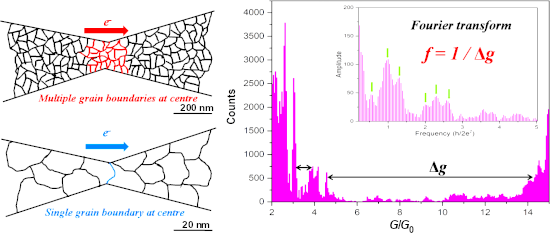
- depending on the size of the smallest constrictions. For bow-tie structures with a smallest constriction of typically 150 nm, generated by standard e-beam lithography, we observed the EM-induced formation of filamentous structures at a surface temperature of 100 K. A single electrically conducting path
- ultrathin Ag films. Experimental Low-doped Si(100) substrates (1000 Ω·cm at 300 K), which are good insulators at temperatures around 100 K, were used. Structuring was carried out by a three-step process. As a first step, we patterned the contact pads by photolithography. Secondly, electron beam lithography


Multilayer capsules made of weak polyelectrolytes: a review on the preparation, functionalization and applications in drug delivery
Beilstein J. Nanotechnol. 2020, 11, 508–532, doi:10.3762/bjnano.11.41
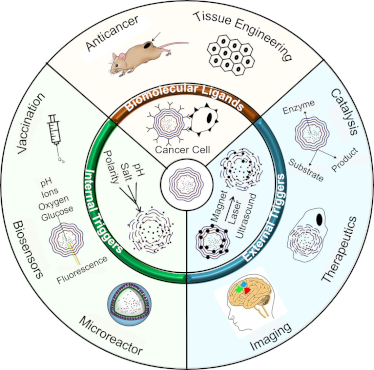
- microparticles (10–200 µm) fabricated via stop flow lithography have emerged as useful templates to form custom-shaped and flexible microcapsules of poly-ʟ-lysine (PLL) [36]. The shell was formed by diffusion of PLL into an oppositely charged hydrogel matrix, enabling an easy surface modification that can be



High dynamic resistance elements based on a Josephson junction array
Beilstein J. Nanotechnol. 2020, 11, 417–420, doi:10.3762/bjnano.11.32
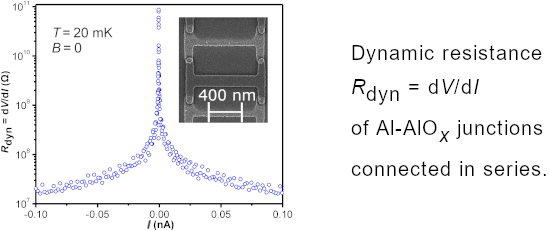
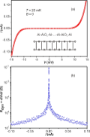
- of Jyvaskyla, PB 35, FI-40014 Jyvaskyla, Finland 10.3762/bjnano.11.32 Abstract A chain of superconductor–insulator–superconductor junctions based on Al–AlOx–Al nanostructures and fabricated using conventional lift-off lithography techniques was measured at ultra-low temperatures. At zero magnetic
- ), while at finite current values, the corresponding singularities were not so pronounced. The purpose of this paper is to provide an in-depth analysis of the I–V dependence of the same JJ chains used in the current-biasing elements in [12]. Experimental Conventional lift-off electron-beam lithography

Evaluation of click chemistry microarrays for immunosensing of alpha-fetoprotein (AFP)
Beilstein J. Nanotechnol. 2019, 10, 2505–2515, doi:10.3762/bjnano.10.241
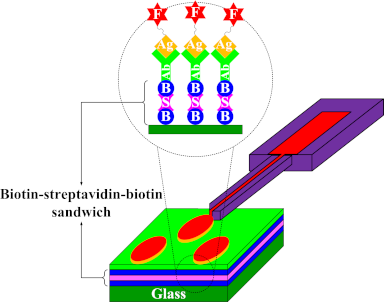
- humidity of 20%, which was determined in the previous study [25]. Figure 2c illustrates a schematic picture of the lithography process. To study the influence of time and temperature on the coupling content, after lithography, the reaction between fluorescently labeled AFP and anti-AFP was allowed to


Label-free highly sensitive probe detection with novel hierarchical SERS substrates fabricated by nanoindentation and chemical reaction methods
Beilstein J. Nanotechnol. 2019, 10, 2483–2496, doi:10.3762/bjnano.10.239
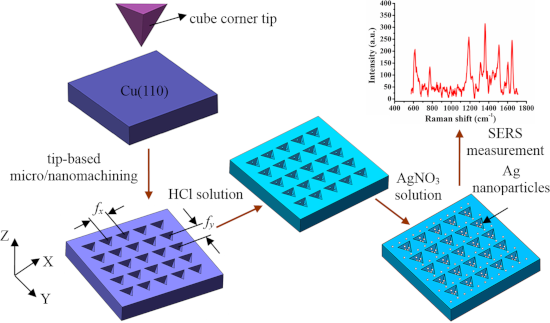
- ], nanostars [17][18], nanoantennas [19], and nanospheres [20]; these have been successfully machined by existing lithography-based technologies. Furthermore, hierarchical substrates have also been fabricated by a combination of lithography [21][22][23][24][25] and self-assembly. Matricardi et al. [21] used
- beam lithography and self-assembly methods to fabricate gold clusters of micrometer size and regular spacing. Subsequently, the detection resolution of 4-acetamidothiophenol was 0.05 g/L using the substrate. Nanoparticle cluster array structures with a size of 40 nm were fabricated by electron beam
- lithography and self-assembly methods [23]. Bacillus cereus and Staphylococcus aureus were detected with this substrate. However, the major limitation of lithography-based methods is the difficulty in machining more complex nanostructures, particularly complex 3D structures. Recently, tip-based micro


Mobility of charge carriers in self-assembled monolayers
Beilstein J. Nanotechnol. 2019, 10, 2449–2458, doi:10.3762/bjnano.10.235
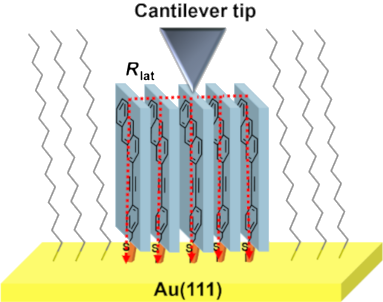
- study charge transport within 2D layers of organic semi-conductors (OSCs) using atomic force microscopy (AFM)-based lithography applied to self-assembled monolayers (SAMs), fabricated from appropriate organothiols. The extent of lateral charge transport was investigated by insulating pre-defined patches
- current transport, we have developed a new strategy using an AFM-based lithography [30]. In the context of this new approach, the so-called “nanografting” method is used to “write” differently sized regions of OSC-containing thiolates embedded into an insulating SAM matrix. Furthermore, since the
- voltage of 11.1 mV were observed, the maximum current for the HDT areas amounted at this voltage was so small that it could not be measured (i.e., I < 0.1 pA). On pristine PAT areas (prior to any AFM-based lithography), very large currents in excess of 5 nA were measured at the same voltage (11.1 mV


Deterministic placement of ultra-bright near-infrared color centers in arrays of silicon carbide micropillars
Beilstein J. Nanotechnol. 2019, 10, 2383–2395, doi:10.3762/bjnano.10.229
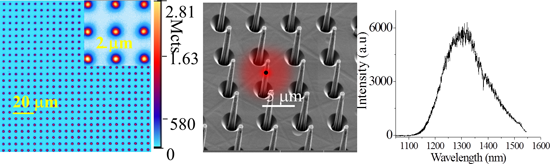
- lithography and a metallic hard mask (Ti/Ni), we have realized micropillar arrays with a height of 4.5 µm, a diameter of 700 nm, and a pitch of 4 µm. The fabrication process (Figure 1a–d) started with coating the samples with photoresist (AZ5214E) and exposing them to a UV laser (λ = 365 nm, Heidelberg µPG101


Integration of sharp silicon nitride tips into high-speed SU8 cantilevers in a batch fabrication process
Beilstein J. Nanotechnol. 2019, 10, 2357–2363, doi:10.3762/bjnano.10.226
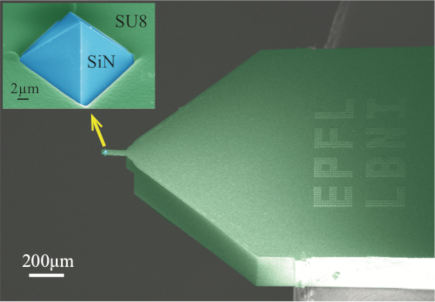
- by low-pressure chemical vapor deposition. Circular openings (20 µm diameter) are then cut into the layer by electron-beam lithography. The LSNT mask is dry-etched before the moulds are structured by anisotropic KOH (40% at 60 °C) etching. The formation of {111} facets results in four-sided pyramidal


Atomic force acoustic microscopy reveals the influence of substrate stiffness and topography on cell behavior
Beilstein J. Nanotechnol. 2019, 10, 2329–2337, doi:10.3762/bjnano.10.223
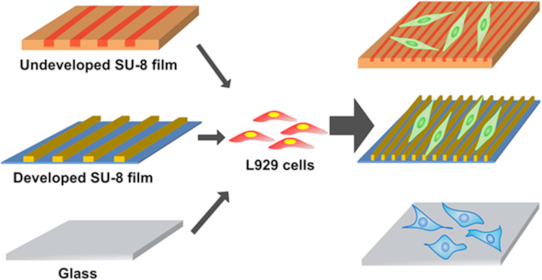
- able to characterize materials at high lateral resolution. To produce substrates of tunable stiffness and topography, we imprint nanostripe patterns on undeveloped and developed SU-8 photoresist films using electron-beam lithography (EBL). Elastic deformations of the substrate surfaces and the cells
- mechanical strength [25][26]. The patterned stiffness of the SU-8 films was induced by electron beam lithography (EBL). The approach to control the stiffness and the topography of the substrate is shown in Figure 1. The rigidity of the film was tuned by varying the electron beam dosage, while the surface
- (Supporting Information File 1, Figure S1), as measured by SEM (FEI Quanta 250 FEG, USA). The SU-8 films were then patterned by EBL using a nanopattern generation system (NPGS, V9.1, from JC Nabity Lithography Systems). The SU-8 films were exposed to the 30 kV electron beam at a beam current of 63 pA and a





