


Search results
Search for "photocatalytic" in Full Text gives 213 result(s) in Beilstein Journal of Nanotechnology. Showing first 200.
Antimicrobial metal-based nanoparticles: a review on their synthesis, types and antimicrobial action
Beilstein J. Nanotechnol. 2020, 11, 1450–1469, doi:10.3762/bjnano.11.129

- antibacterial activity against Bacillus subtilis and Enterobacter aerogenes bacteria [109]. Titanium dioxide is also an inorganic material that is widely used in several products, including cosmetics and orthodontic composites, due to its excellent whitening, photocatalytic, and antimicrobial properties [131
- ][132]. When the size of titanium dioxide is reduced to the nanoscale (TiO2 NPs), its photocatalytic property is greatly improved, generating more reactive oxygen species (ROS). ROS damages bacterial cells, DNA chains, and other cellular structures through oxidative stress. Therefore, the use of TiO2
- photocatalytic, electrochemical, and catalytic properties. Furthermore, NiO NPs exhibit anti-inflammatory properties, generating interest in the biomedical field to use these NPs as antibiotics or in cancer treatments [116][133]. NiO NPs synthesized from Eucalyptus globulus leaf extract showed excellent


Photothermally active nanoparticles as a promising tool for eliminating bacteria and biofilms
Beilstein J. Nanotechnol. 2020, 11, 1134–1146, doi:10.3762/bjnano.11.98
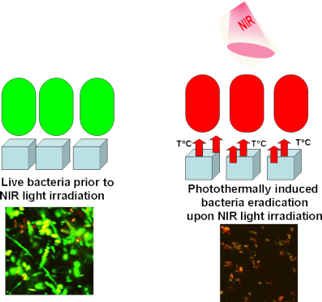
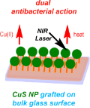
- the hybrid nature of these nanomaterials, the photothermal action can be synergistically coupled with an antibacterial ion release, antibiotic release or with photocatalytic reactions, leading to the generation of reactive oxygen species (i.e., photodynamic action). In this review we have briefly


Gram-scale synthesis of splat-shaped Ag–TiO2 nanocomposites for enhanced antimicrobial properties
Beilstein J. Nanotechnol. 2020, 11, 1119–1125, doi:10.3762/bjnano.11.96

- , antimicrobial and photocatalytic activities [3]. The main challenges of using the nanocomposites in the biomedical and textile-coating fields are to keep the synthesis processes at a low cost and to control for yield and stability issues. Currently, a number of techniques such as electron beam evaporation
- nanocomposites may also have potential to be used in wound healing, photocatalytic and toxic dye removal applications. X-ray diffraction (XRD) patterns of pure TiO2 NPs and Ag–TiO2 nanocomposites at different ratios. SEM and EDS images of the synthesized splat-shaped nanoparticles: (a) pure TiO2 NPs, (b, c) Ag


Effect of Ag loading position on the photocatalytic performance of TiO2 nanocolumn arrays
Beilstein J. Nanotechnol. 2020, 11, 717–728, doi:10.3762/bjnano.11.59
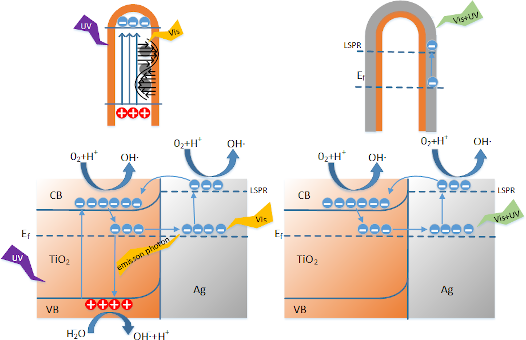
- solar energy harvesting in photovoltaic and photocatalytic applications owing to their extremely high visible-light absorption and tuned effective band gap. In this work, Ag-loaded TiO2 nanocolumn (Ag-TNC) arrays were fabricated based on anodic aluminum oxide (AAO) template by combining atomic layer
- deposition (ALD) and vacuum evaporation. The effects of the Ag loading position and deposition thickness, and the morphology, structure and composition of Ag-deposited TNC arrays on its optical and photocatalytic properties were studied. The Ag-filled TiO2 (AFT) nanocolumn arrays exhibited higher removal
- efficiency of methylene blue (MB) compared with Ag-coated TiO2 (ACT) nanocolumn arrays and pure TiO2 nanocolumns arrays. Both experimental and theoretical simulation results demonstrated that the enhanced photocatalytic performance of AFT nanocolumn arrays was attributed to the surface plasmon resonance (SPR


Preparation, characterization and photocatalytic performance of heterostructured CuO–ZnO-loaded composite nanofiber membranes
Beilstein J. Nanotechnol. 2020, 11, 631–650, doi:10.3762/bjnano.11.50
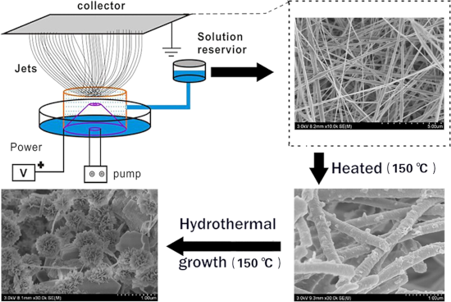
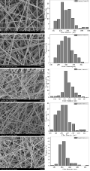
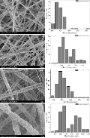
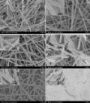
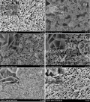
- , and properties of the CNFMs was investigated, and the optimal process parameters were determined. Then, the CNFMs obtained with optimal process parameters were applied for the photocatalytic degradation of methyl orange. It was found that the CNFMs could be reused to degrade methyl orange at least
- protection. Water pollution with organic dyes (such as congo red, methylene blue, and methyl orange) is becoming a major environmental problem. Therefore, water purification technologies, such as photocatalytic purification, electrochemical oxidation, membrane filtration, ozonation, and chlorination
- flocculation, have attracted much attention recently [1][2][3]. The photocatalytic purification of water has the advantages of high efficiency, thoroughness, and no secondary pollution. Various refractory organic pollutants in water are thoroughly oxidized to non-toxic and less harmful substances. Thus











Correction: Photocatalytic antibacterial performance of TiO2 and Ag-doped TiO2 against S. aureus. P. aeruginosa and E. coli
Beilstein J. Nanotechnol. 2020, 11, 547–549, doi:10.3762/bjnano.11.43

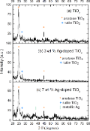
- , complete rutile TiO2 phase was obtained [7]. It was previously reported that a mixture of anatase and rutile TiO2 nanoparticles has higher photocatalytic activity than pure anatase or pure rutile TiO2 nanoparticles under UV-light excitation [8]. Furthermore, it was shown that calcination of the
- nanoparticles could increase the crystallinity of TiO2, which leads to a decrease in the photo-excited e− –h+ recombination, and thus, to an increase in the photocatalytic activity of TiO2 [9]. XRD patterns of (a) TiO2 nanoparticles, (b) 3 wt % Ag-doped TiO2 nanoparticles and (c) 7 wt % Ag-doped TiO2
Atomic-resolution imaging of rutile TiO2(110)-(1 × 2) reconstructed surface by non-contact atomic force microscopy
Beilstein J. Nanotechnol. 2020, 11, 443–449, doi:10.3762/bjnano.11.35
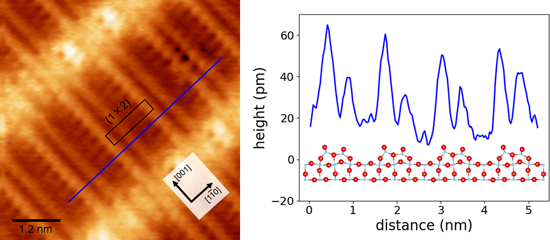
- force microscopy; (1 × 2) reconstruction; rutile; surface structure; titanium dioxide (TiO2); Introduction Titanium dioxide (TiO2) is a well-known photocatalyst and has been studied for applications in water splitting and the coating of materials [1]. To optimize the photocatalytic function, it is
- not the periodic (1 × 2) surface is a symmetric structure. The determination of the surface structure is crucial to understand the surface phenomena, such as adsorption, absorption, and decomposition in photocatalytic reactions. In this study, we characterized the periodic structure of the rutile TiO2
- believe information on the geometry of the rutile TiO2(110)-(1 × 2) reconstructed surface is useful for understanding surface phenomena, such as adsorption, absorption, and decomposition in photocatalytic reactions. Structural models of rutile TiO2(110)-(1 × 2) reconstructed surface: (a) Symmetric Ti2O3


Synthesis and enhanced photocatalytic performance of 0D/2D CuO/tourmaline composite photocatalysts
Beilstein J. Nanotechnol. 2020, 11, 407–416, doi:10.3762/bjnano.11.31
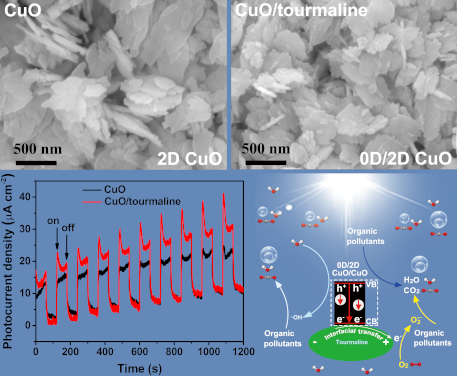
- nontoxic products. In this work, a CuO/tourmaline composite with zero-dimensional/two-dimensional (0D/2D) CuO architecture was successfully obtained via a facile hydrothermal process, and its photocatalytic activity was evaluated by the degradation of methylene blue (MB). Surface element valence state and
- photocatalytic activity for the degradation of MB, which was ascribed to the increase in the quantity of the adsorption-photoreactive sites and the efficient utilization of the photoinduced charge carriers. This study provides a facile strategy for the construction of 0D/2D CuO structures and the design of
- tourmaline-based functional composite photocatalysts for the treatment of organic contaminants in water. Keywords: 0D/2D CuO; organic contaminants; photocatalytic activity; photoinduced charge separation; tourmaline; Introduction Developing a novel semiconductor with excellent photoreactive activity toward


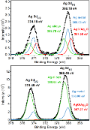
Fabrication of Ag-modified hollow titania spheres via controlled silver diffusion in Ag–TiO2 core–shell nanostructures
Beilstein J. Nanotechnol. 2020, 11, 141–146, doi:10.3762/bjnano.11.12
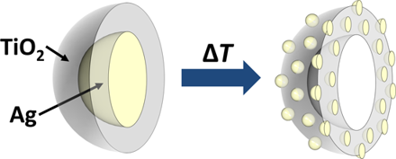
- photocatalytic properties of TiO2 and the optical properties of plasmonic NPs [2]. This combination has been shown to extent the photocatalytic activity of TiO2, which is initially limited to UV light [8], to the visible or even to the NIR range of radiation [9]. Recent examples of the fabrication of plasmonic
- obtained composite catalyst exhibits a synergistic effect between the anatase crystalline shell and the AuNPs as well as superb thermal and mechanical stability of the highly dispersed AuNPs. TiO2 HSs decorated with ultrasmall Ag nanocrystallites and exhibiting excellent photocatalytic properties were



Air oxidation of sulfur mustard gas simulants using a pyrene-based metal–organic framework photocatalyst
Beilstein J. Nanotechnol. 2019, 10, 2422–2427, doi:10.3762/bjnano.10.232
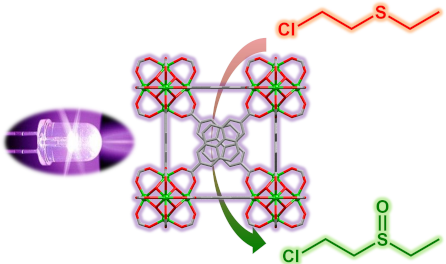
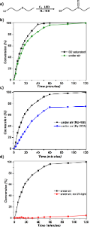
- photosensitizer for generating singlet oxygen and subsequent oxidative degradation of chemical warfare agents (CWAs). The high activity of NU-400 permits photocatalytic conversion of the 2-chloroethyl ethyl sulfide (CEES) mustard gas simulant into a benign sulfoxide derivative, in air, with less than 15 minutes
- nerve gas agents [37][38][39][40][41][42]. Here, we describe the preparation of NU-400 [43], a zirconium-based MOF based on a judiciously chosen pyrene-based linker and utilized it as a photosensitizer for the efficient production of 1O2 and hence photocatalytic conversion of the sulfur mustard simulant
- of producing singlet oxygen upon exposure to UV light [44][45], we anticipated that a MOF with isolated pyrene linkers would be a good candidate catalyst for the photocatalytic oxidation of sulfur mustard. The NU-400 material (Figure 1) was synthesized from the pyrene-2,7-dicarboxylic acid (Py-DCA




Improved adsorption and degradation performance by S-doping of (001)-TiO2
Beilstein J. Nanotechnol. 2019, 10, 2116–2127, doi:10.3762/bjnano.10.206
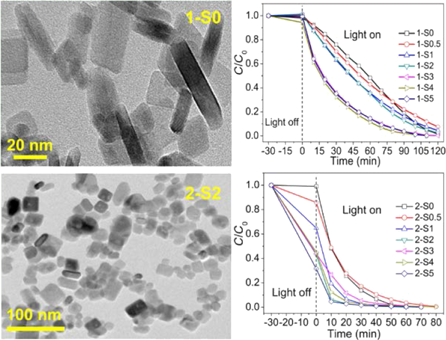
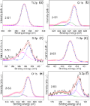
- , 2, 3, 4 and 5. The S-doped samples synthesized at 250 °C exhibit a significantly improved photocatalytic performance. More precisely, S-doping has the following effects on the material: (1) S can adopt different chemical states in the samples. Specifically, it exists in the form of S2− replacing O2
- increase in the amount of •OH and •O2− radicals. Keywords: anatase; chemical state; degradation; photocatalytic properties; S-doping; thermal chemical vapor deposition; titanium dioxide (TiO2); Introduction Anatase TiO2 with a tetragonal symmetry has widely been used for the degradation of organic
- pollutants, as well as in electrocatalysis, solar cells and self-cleaning applications. Its wide use is based on its physicochemical properties, abundance, nontoxicity, environment-friendliness and low cost [1][2][3][4][5][6][7]. The photocatalytic properties of anatase TiO2 crystals are anisotropic since




Pulsed laser synthesis of highly active Ag–Rh and Ag–Pt antenna–reactor-type plasmonic catalysts
Beilstein J. Nanotechnol. 2019, 10, 1958–1963, doi:10.3762/bjnano.10.192
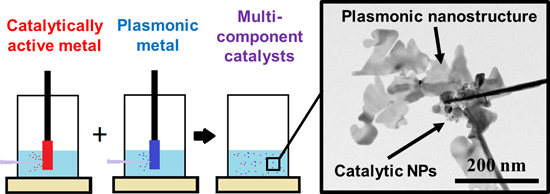
- a “forced plasmon” that efficiently generates hot charge carriers, transforming the catalytic NP into a photocatalytic NP. Here, the facile synthesis of highly active Ag–Rh and Ag–Pt heterostructures for the reduction of 4-nitrophenol through pulsed laser ablation is reported. The synthesis method
- and the apparent slight blue-shift for Ag–Pt indicates a shift from scattering to absorption. The Pt NPs, which exhibited low catalytic activity, are an outlet for plasmon decay and become photocatalytic. The hypothesis is based on the previously discussed findings that Ag nanocubes had a significant


Novel hollow titanium dioxide nanospheres with antimicrobial activity against resistant bacteria
Beilstein J. Nanotechnol. 2019, 10, 1716–1725, doi:10.3762/bjnano.10.167
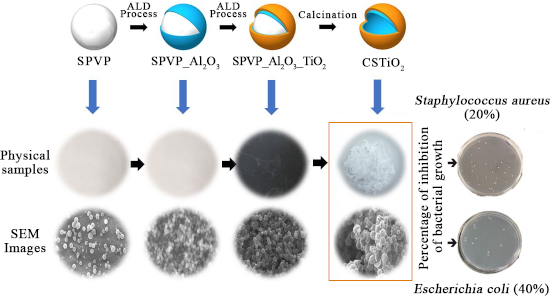
- their high stability, low cost, reusability, and high photocatalytic activity [6][7][8]. These excellent properties have been applied in many products such as foods, catalyst support, air purification, water disinfection, antibacterial, cosmetics and solar cells [9][10]. Photocatalytic TiO2 favors the
- its higher photocatalytic nature than rutile or brookite structures [39][40][41]. The small-angle X-ray scattering (SAXS) technique is a powerful technique that is based on the spatial fluctuations of the electronic density of the material that allows for the measurement of polymers, alloys, and
- -negative bacteria cells due to their cell wall structure, allowing a greater ROS formation. This tendency was already observed with TiO2 dioxide nanotubes developed in a previous work [18]. Due to the photocatalytic nature of titanium dioxide, different UV-A irradiation exposure times were studied in order


Kelvin probe force microscopy work function characterization of transition metal oxide crystals under ongoing reduction and oxidation
Beilstein J. Nanotechnol. 2019, 10, 1596–1607, doi:10.3762/bjnano.10.155
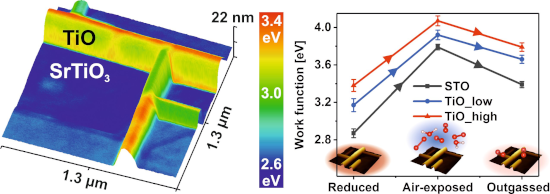
- strong response to gaseous pressures, especially oxygen and water [45]. The tool of choice that provides information on the subtle changes in the work function is KPFM, which has been employed for research on the photocatalytic activity of TiO2-based doped and undoped nanofibers [46][47] and for the


Materials nanoarchitectonics at two-dimensional liquid interfaces
Beilstein J. Nanotechnol. 2019, 10, 1559–1587, doi:10.3762/bjnano.10.153
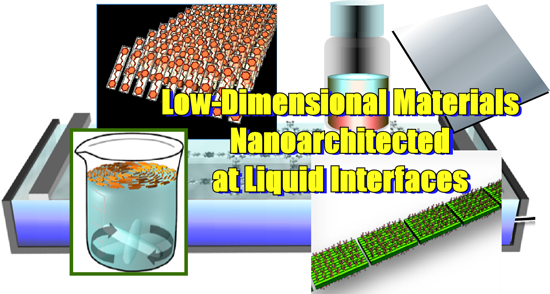
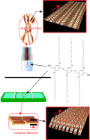
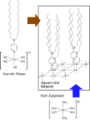
- because of their superior electric/electrochemical properties that make them suitable for energy and electrochemical applications [56][57][58][59][60]. The works include the use of two-dimensional metal oxide nanosheets for artificial photosynthesis systems, i.e., photocatalytic water splitting and













Direct observation of oxygen-vacancy formation and structural changes in Bi2WO6 nanoflakes induced by electron irradiation
Beilstein J. Nanotechnol. 2019, 10, 1434–1442, doi:10.3762/bjnano.10.141
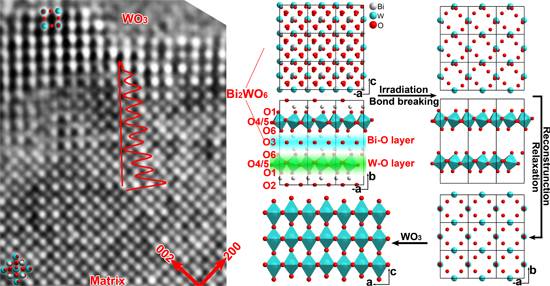
- prominent role of oxygen vacancies in the photocatalytic performance of bismuth tungsten oxides is well recognized, while the underlying formation mechanisms remain poorly understood. Here, we use the transmission electron microscopy to investigate the formation of oxygen vacancies and the structural
- ][2][3], and pyroelectric and non-linear optical properties [4][5]. Recently, Bi2WO6 has shown good performance in the degradation of organic compounds [6][7][8], and photocatalytic oxygen evolution [9][10] and CO2 reduction [11][12][13] under visible-light irradiation. Bi2WO6 is the simplest member
- be induced by chemical doping [18][19], hydrogen reduction [16] or ultra-thinning [14][20]. Surface oxygen vacancies can efficiently separate photogenerated electron–hole pairs, resulting in enhanced photocatalytic activity. Bismuth defects or dangling bonds of bismuth atoms resulting from oxygen


BiOCl/TiO2/diatomite composites with enhanced visible-light photocatalytic activity for the degradation of rhodamine B
Beilstein J. Nanotechnol. 2019, 10, 1412–1422, doi:10.3762/bjnano.10.139
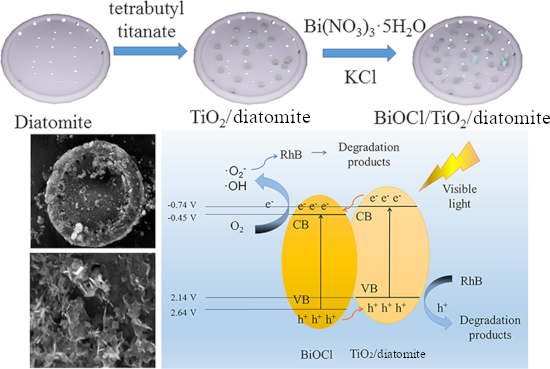
- degradation product and visible light (λ > 400 nm) was used as the light source for the evaluation of the photocatalytic properties of the prepared BTD composite. The results show that the catalytic performance of the BTD composite under visible-light irradiation is much higher than that of TiO2 or BiOCl
- alone. When the molar ratio of BiOCl to TiO2 is 1:1 and the calcination temperature is 400 °C, the composite was found to exhibit the best catalytic effect. Through the study of the photocatalytic mechanism, it is shown that the strong visible-light photocatalytic activity of the BTD composite results
- , low-cost and ease of application, which are superior to other approaches of environmental remediation [8][9]. However, the application of photocatalysis is still hindered due to the agglomeration of photocatalyst particles, the difficulty of photocatalyst recovery and low photocatalytic performance


Construction of a 0D/1D composite based on Au nanoparticles/CuBi2O4 microrods for efficient visible-light-driven photocatalytic activity
Beilstein J. Nanotechnol. 2019, 10, 1360–1367, doi:10.3762/bjnano.10.134
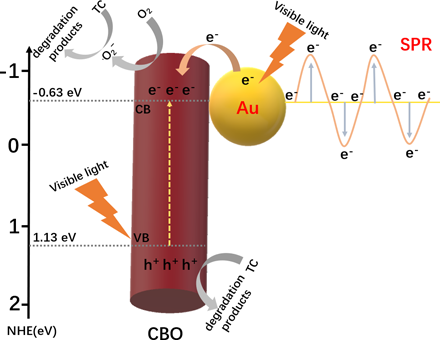
- photocatalyst consisting of Au nanoparticles (NPs) and CuBi2O4 microrods (Au/CBO) was designed and prepared by a simple thermal reduction–precipitation approach. It shows excellent photocatalytic performance in the degradation of tetracycline (TC). The maximum photocatalytic degradation rate constant for Au/CBO
- composites with 2.5 wt % Au NPs was 4.76 times as high as that of bare CBO microrods. Additionally, the 0D/1D Au/CBO composite also exhibited ideal stability. The significant improvement of the photocatalytic performance could be attributed to the improved light harvesting and increased specific surface area
- , enhancing photoresponse and providing more active sites. Our work shows a possible design of efficient photocatalysts for environmental remediation. Keywords: Au nanoparticles; 0D/1D composite; CuBi2O4 microrods; photocatalysis; photocatalytic degradation; Introduction Heterogeneous semiconductor


A highly efficient porous rod-like Ce-doped ZnO photocatalyst for the degradation of dye contaminants in water
Beilstein J. Nanotechnol. 2019, 10, 1157–1165, doi:10.3762/bjnano.10.115
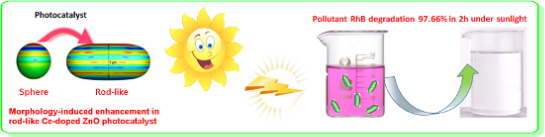
- rods and optimal synthesis conditions were determined by testing samples with different Ce/ZnO molar ratios calcined at 500 °C for 3 hours via a one-step pyrolysis method. The photocatalytic activity was assessed by the degradation of a common dye pollutant found in wastewater, rhodamine B (RhB), using
- concentration of RhB and catalyst, pH value and temperature. The results indicate that the pH value is the main influential factor in the photocatalytic degradation process and the optimal experimental conditions to achieve the maximum degradation rate of 97.66% in 2 hours are as follows: concentration (RhB
- ]. Recently, photocatalytic degradation of organic dyes using semiconductors has attracted much attention [6]. This refers to the process in which organic compounds are gradually oxidized into inorganic compounds or even H2O and CO2 under the synergistic effects of light and photocatalysis. ZnO is one of the


Photoactive nanoarchitectures based on clays incorporating TiO2 and ZnO nanoparticles
Beilstein J. Nanotechnol. 2019, 10, 1140–1156, doi:10.3762/bjnano.10.114
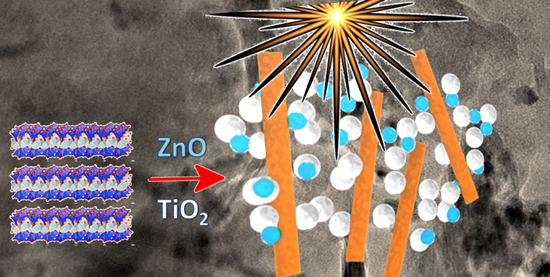
- are more efficient as photocatalysts than the corresponding bulk TiO2 and ZnO powders when they are present as NPs. This fact could be simply explained by the fact that the smaller particles normally have a larger surface-to-volume ratio. Many studies have focused on the photocatalytic activities of
- other photocatalytic reactions assisted by semiconductor photocatalysts. The use of TiO2 and ZnO NPs, particularly the anatase and wurtzite phases, as heterogeneous photocatalysts attracted great attention over the last years. Atmospheric oxygen is used as oxidant to achieve complete mineralization of
- nanoparticulated materials for photocatalytic applications as they can be considered to be chemically stable and easily available (inexpensive commercial products) [12][13][30][31][32][33]. In this context, ZnO appears as a better candidate for water cleaning compared to the more commonly used TiO2. In fact, ZnO



Tailoring the stability/aggregation of one-dimensional TiO2(B)/titanate nanowires using surfactants
Beilstein J. Nanotechnol. 2019, 10, 1024–1037, doi:10.3762/bjnano.10.103
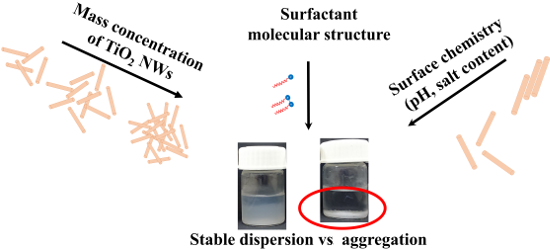
- because of their unique physicochemical properties compared to the bulk material. TNMs play an important role in various applications such as photocatalytic degradation of organic pollutants [1][2], sensors [3][4], solid oxide fuel cells [5], water purification [6][7], adsorption of radioactive and heavy


Synthesis of novel C-doped g-C3N4 nanosheets coupled with CdIn2S4 for enhanced photocatalytic hydrogen evolution
Beilstein J. Nanotechnol. 2019, 10, 912–921, doi:10.3762/bjnano.10.92
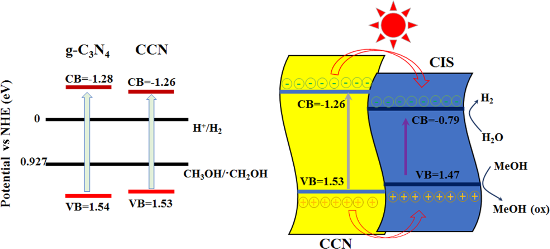
- Jingshuai Chen Chang-Jie Mao Helin Niu Ji-Ming Song School of Chemistry and Chemical Engineering, Anhui University, Hefei 230601, P.R. China 10.3762/bjnano.10.92 Abstract Photocatalytic hydrogen generation from water splitting has become a favorable route for the utilization of solar energy. An
- crystals on the surface of CCN nanosheets via a hydrothermal method. This unique architecture was able to efficiently promote the transfer and separation of photon-generated charges, enhance light absorption, and significantly increase photocatalytic H2 production. Detailed characterization was performed
- photocatalytic activity of g-C3N4 is severely restricted by the inefficient separation of photogenerated electron–hole pairs and insufficient photon absorption. Up to now, a variety of strategies such as anion doping, novel metal deposition on surfaces and the design of heterojunctions/nanocomposites have been


Rapid, ultraviolet-induced, reversibly switchable wettability of superhydrophobic/superhydrophilic surfaces
Beilstein J. Nanotechnol. 2019, 10, 866–873, doi:10.3762/bjnano.10.87
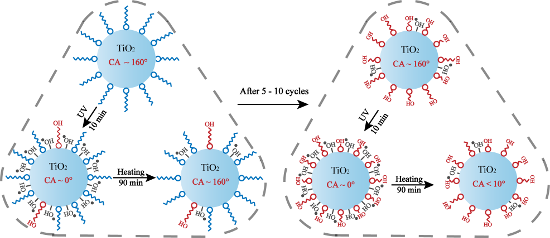
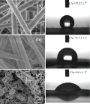
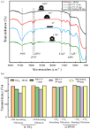
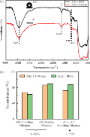
- than 165° to almost 0°. To further investigate the wettability transition, trimethoxy(alkyl)silane and Al2O3 nanoparticles (which are not photocatalytic) were mixed and spray-coated onto the glass substrates as the control samples. Then the unrecoverable change of trimethoxy(alkyl)silane under UV
- has a strong oxidizing property. In addition, the end of the fluorocarbon chains were changed into –OH groups which could decrease the WCA faster with increasing UV illumination time. It can thus be inferred that the oxidization of PFOS is due to UV illumination and the photocatalytic effect of TiO2
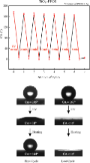
- transition to unrecovered superhydrophilicity for TiO2–PFOS and Al2O3–PFOS is 30 min and 90 min, respectively. This indicates that the oxidization time of PFOS is increased by the photocatalytic effect of TiO2. For the sample with 1.5 g PFOS, the CA of the six cycles and the images of the conversion



Electronic properties of several two dimensional halides from ab initio calculations
Beilstein J. Nanotechnol. 2019, 10, 823–832, doi:10.3762/bjnano.10.82
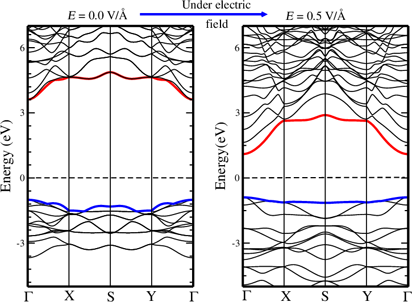
- synthesis and the photocatalytic properties of BiOX compounds under three different exposure conditions. Also, transition-metal oxychlorides MOCl (M = Sc, Ti, V, Cr, Fe) systems possess interesting electronic and magnetic properties [21][22][23][24]. Bismuth oxyhalides have been investigated as catalysts


On the transformation of “zincone”-like into porous ZnO thin films from sub-saturated plasma enhanced atomic layer deposition
Beilstein J. Nanotechnol. 2019, 10, 746–759, doi:10.3762/bjnano.10.74
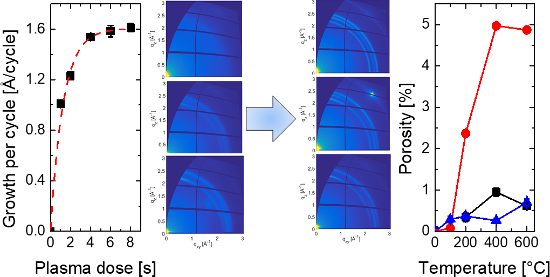
- ., for photocatalytic [75] or sensing applications [76][77]. On the zincone-like layer deposited with 1 s plasma exposure time crystallite formation began at 400 °C, as mentioned before, highlighting the role of this temperature range in the possible clogging of porosity. The relative increase in D is of





