Search results
Search for "switching" in Full Text gives 260 result(s) in Beilstein Journal of Nanotechnology. Showing first 200.
Transition from freestanding SnO2 nanowires to laterally aligned nanowires with a simulation-based experimental design
Beilstein J. Nanotechnol. 2020, 11, 843–853, doi:10.3762/bjnano.11.69
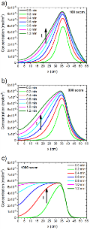
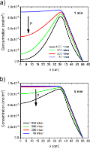
- , independent of the respective process time. Therefore, we conclude that the growth of the laterally aligned NWs happens within the first 8 min of growth and then stops (Figure 6). In order to understand this behavior, the gas switching at the beginning of the process was simulated. In Figure 7, the gas
- switching – the change from 100% Ar to the O2/Ar mixture (5% O2 in Ar) – is shown with a total volumetric flow rate of 25 sccm, an inner quartz tube diameter of 5 cm and a pressure of 20 mbar at process temperature (850 °C). Again, the gas flow was simulated from the right side of the furnace. As expected





Adsorption behavior of tin phthalocyanine onto the (110) face of rutile TiO2
Beilstein J. Nanotechnol. 2020, 11, 821–828, doi:10.3762/bjnano.11.67
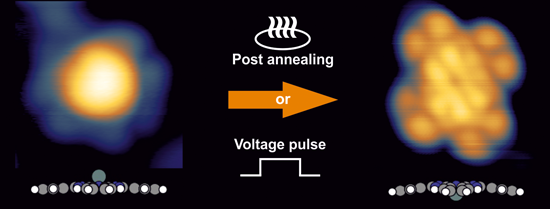
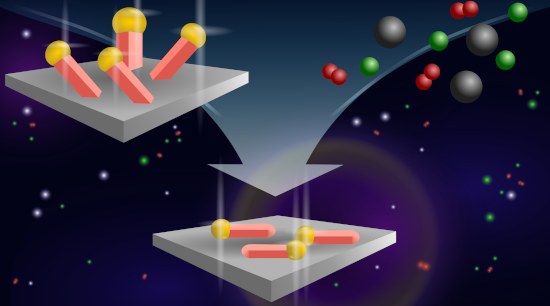
- measurements of single molecules reveal the coexistence of two conformations of molecules on the TiO2 surface. Density functional theory-based simulations (DFT) indicate that the difference originates from the position of the tin atom protruding from the molecule plane. The irreversible switching of Sn-up
- the position of a tin atom protruding from the macrocycle: “Sn-up” and “Sn-down”. Switching from the Sn-up to the Sn-down geometry can be realized by annealing the sample at 200 °C or by tip-induced manipulation (bias pulse). X-ray photoelectron spectroscopy (XPS) measurements reveal a lack of strong
- that the switching of the molecular geometry is not accompanied by the formation of a new chemical bond between the molecule and the substrate. Additionally, the XPS results allow one to exclude demetalation [19] as a possible explanation for the observed changes. In a SnPc molecule, a tin atom


Hexagonal boron nitride: a review of the emerging material platform for single-photon sources and the spin–photon interface
Beilstein J. Nanotechnol. 2020, 11, 740–769, doi:10.3762/bjnano.11.61


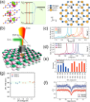


Effect of substitutional defects on resonant tunneling diodes based on armchair graphene and boron nitride nanoribbons lateral heterojunctions
Beilstein J. Nanotechnol. 2020, 11, 688–694, doi:10.3762/bjnano.11.56
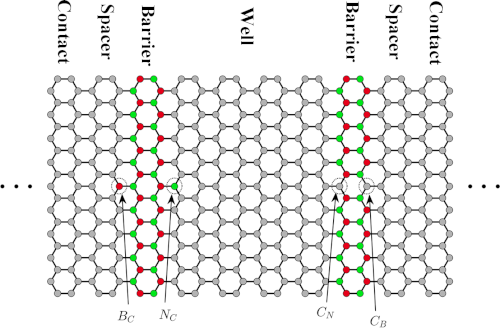
- of applications including ultra-fast switching devices, oscillators, frequency multipliers, one-transistor static memories and multi-valued memory circuits [12][17][18][19][20]. In a RTD, a material with low bandgap energy is sandwiched between two materials with larger bandgaps, i.e., a quantum well



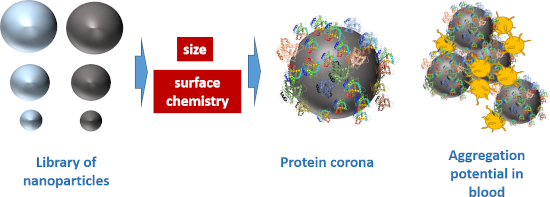
Identification of physicochemical properties that modulate nanoparticle aggregation in blood
Beilstein J. Nanotechnol. 2020, 11, 550–567, doi:10.3762/bjnano.11.44
- volume was 5 μL. The mass spectrometer was operated in data dependent mode, automatically switching between MS and MS2 acquisition. Survey full scan MS spectra (m/z 300–1600) were acquired in the Orbitrap with a resolution of 70,000. MS2 spectra had a resolution of 17,500. The twelve most intense ions




Multilayer capsules made of weak polyelectrolytes: a review on the preparation, functionalization and applications in drug delivery
Beilstein J. Nanotechnol. 2020, 11, 508–532, doi:10.3762/bjnano.11.41
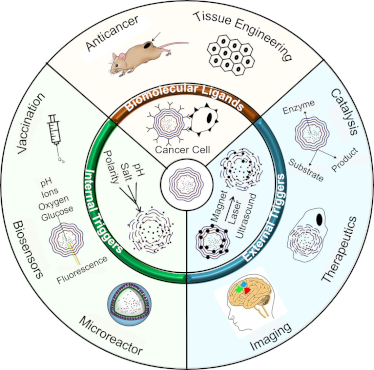
- study. Block copolymers such as PMA and PAAm-dimethyldiallylammonium chloride (PAAm-DMDAAC) were used to combine the electrostatic and hydrogen bonding interactions, making them stable over a broader pH range by switching the interactions between the electrostatic and hydrogen binding state [89]. While



Evolution of Ag nanostructures created from thin films: UV–vis absorption and its theoretical predictions
Beilstein J. Nanotechnol. 2020, 11, 494–507, doi:10.3762/bjnano.11.40
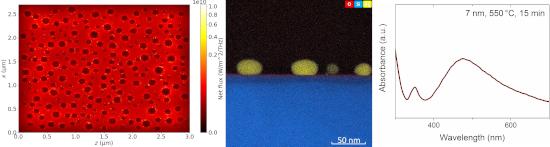
- pulse duration was set to 2.5 fs, thus it contained all frequencies within the visible light range. This allowed for the use of discrete Fourier transformation for switching from the time domain to the frequency domain and calculating the spectral response of the sample. Also, the Mie theory [18] was




Interfacial charge transfer processes in 2D and 3D semiconducting hybrid perovskites: azobenzene as photoswitchable ligand
Beilstein J. Nanotechnol. 2020, 11, 466–479, doi:10.3762/bjnano.11.38
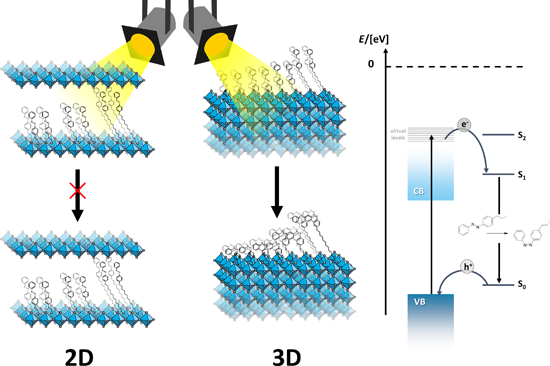
- only by a length variation but also by a significant change of the dipole moment [33][34]. Azobenzenes were used in various materials namely as liquid crystals, optical switches or for data storage [35][36]. Because of the chemical and physical changes associated with the switching process, the
- carriers from the excited perovskite are transferred to the azobenzene and induce a further switching. How is this possible, considering that the CB is below the S1 level? An energy of approximately 4.0 eV (313 nm) is more than sufficient for the perovskite to be excited. Electrons are lifted to a high




Synthesis and enhanced photocatalytic performance of 0D/2D CuO/tourmaline composite photocatalysts
Beilstein J. Nanotechnol. 2020, 11, 407–416, doi:10.3762/bjnano.11.31
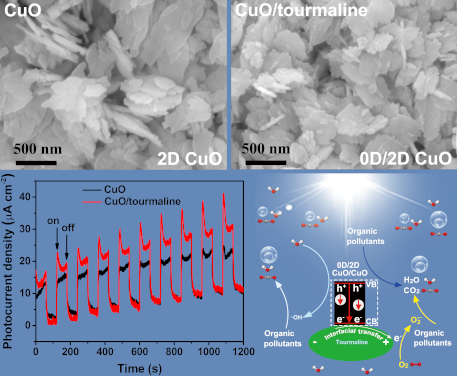
- transient photocurrent density of the CuO/tourmaline composite was higher than that of pristine CuO during the repeated switching on and off of light irradiation (Figure 5c), implying that tourmaline could facilitate the transfer of photoinduced e−, which was also confirmed by the PL spectra (Supporting


Implementation of data-cube pump–probe KPFM on organic solar cells
Beilstein J. Nanotechnol. 2020, 11, 323–337, doi:10.3762/bjnano.11.24
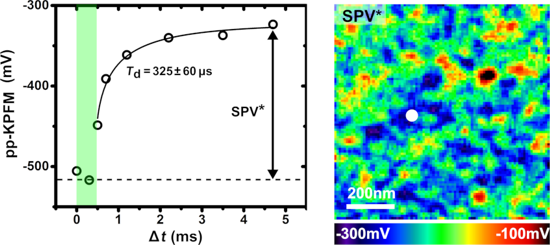
- alternative method that consists in operating the KPFM in standard mode (closed-loop z-regulation and sinusoidal bias modulation) for the topographic analysis and in switching the setup configuration to pp-KPFM with an open z-loop for the spectroscopic acquisition of VKPFM(Δt) curves (Figure 1b and Figure 2
- . Switching the controller configuration from standard KPFM to pp-KPFM was done by synchronizing the AWG unit with the spectroscopic ramps of the SPM controller by means of TTL pulses and by using predefined sequences of pulses and continuous-wave (cw) dc signals stored in the memory of the AWG. Note that in
- this configuration, the KPFM potential probed during the topographic acquisition yields a time-averaged value of the SP since the pump signal is permanently applied to the sample. A further refinement, not shown in Figure 2, consists in switching also the pump signal to a cw level during the




Nanosecond resistive switching in Ag/AgI/PtIr nanojunctions
Beilstein J. Nanotechnol. 2020, 11, 92–100, doi:10.3762/bjnano.11.9
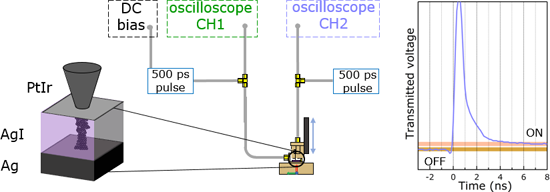
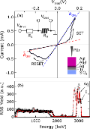
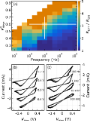
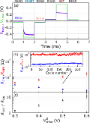
- Nanometer-scale resistive switching devices operated in the metallic conductance regime offer ultimately scalable and widely reconfigurable hardware elements for novel in-memory and neuromorphic computing architectures. Moreover, they exhibit high operation speed at low power arising from the ease of the
- electric-field-driven redistribution of only a small amount of highly mobile ionic species upon resistive switching. We investigate the memristive behavior of a so-far less explored representative of this class, the Ag/AgI material system in a point contact arrangement established by the conducting PtIr
- tip of a scanning probe microscope. We demonstrate stable resistive switching duty cycles and investigate the dynamical aspects of non-volatile operation in detail. The high-speed switching capabilities are explored by a custom-designed microwave setup that enables time-resolved studies of subsequent


pH-Controlled fluorescence switching in water-dispersed polymer brushes grafted to modified boron nitride nanotubes for cellular imaging
Beilstein J. Nanotechnol. 2019, 10, 2428–2439, doi:10.3762/bjnano.10.233
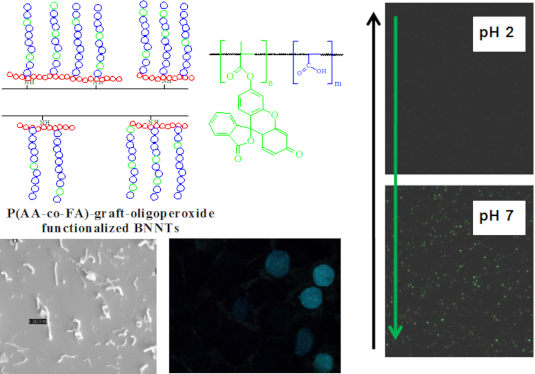
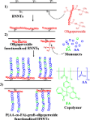
- (DU145) and are suitable for further evaluation in cellular imaging applications. Keywords: boron nitride nanotubes; cellular imaging; fluorescence; pH switching; polymer brushes; surface modification; Introduction In recent years, considerable effort has been devoted to the development of hybrid
- exhibited good dispersibility in water. pH-Controlled switching of fluorescence was demonstrated using LSCM and UV–vis. In addition, the potential of BNNTs as novel pH-switchable fluorescent water-dispersible materials for cellular imaging has been investigated. The developed hybrid structure can
- copolymer of hybrid P(AA-co-FA)-BNNT can be expected to show switching properties depending on pH. Figure 7 shows the UV–vis spectra of a water-dispersed P(AA-co-FA)-functionalized BNNTs at various pH values. All samples have the same concentration. It is known from the literature [51] that in acidic media



The role of Ag+, Ca2+, Pb2+ and Al3+ adions in the SERS turn-on effect of anionic analytes
Beilstein J. Nanotechnol. 2019, 10, 2338–2345, doi:10.3762/bjnano.10.224
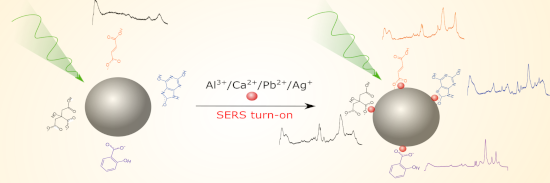
- : adsorbed cations such as Ag+, Mg2+ and Ca2+ promote the chemisorption of anionic species including Cl−, Br− and I− making possible their observation by SERS. Likewise, the Cl−, Br− and I− adions mediate the chemisorption of cationic analytes switching on their SERS spectrum [13][14]. This surface
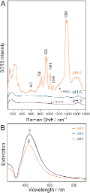
- − will displace citrate from the surface of the nanoparticles, thereby switching-off the SERS signal of citrate [13][26]. Figure 3 shows the selectively recorded SERS spectra of the organic acid mixtures. To record these, fumaric acid, salicylic acid and uric acid were added sequentially to the Al3


Liquid crystal tunable claddings for polymer integrated optical waveguides
Beilstein J. Nanotechnol. 2019, 10, 2163–2170, doi:10.3762/bjnano.10.209
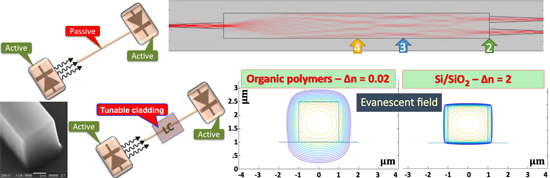
- explored. Tunable waveguides have been modeled and fabricated using polymers. Optical functions such as variable coupling and optical switching have been demonstrated. Keywords: liquid crystal; organic waveguide; photonic integrated circuit; polymer waveguide; tunable cladding; Introduction Photonic
- shows up is where N is the number of maxima in the pattern. Through modifying the characteristic length by switching the LC cladding, several tunable devices can be prepared. Since modes are characterized by a particular degree of confinement, every mode will be affected differently by a change in the
- channels, corresponding to the positions D and F in Figure 4. A refractive index change from 1.535 to 1.546 could lead to a single channel switching corresponding to positions B and D. The importance of targeting the lower refractive indices (as in the D-to-F transition) becomes evident when considering


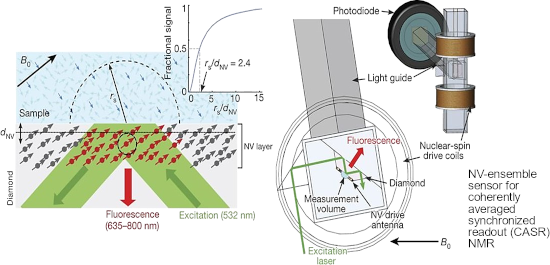
Nitrogen-vacancy centers in diamond for nanoscale magnetic resonance imaging applications
Beilstein J. Nanotechnol. 2019, 10, 2128–2151, doi:10.3762/bjnano.10.207


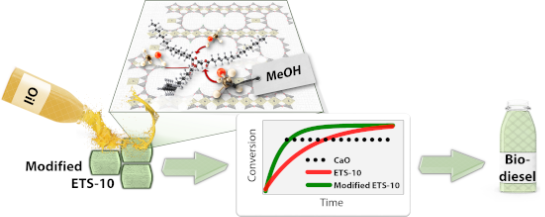
Synthesis of highly active ETS-10-based titanosilicate for heterogeneously catalyzed transesterification of triglycerides
Beilstein J. Nanotechnol. 2019, 10, 2039–2061, doi:10.3762/bjnano.10.200








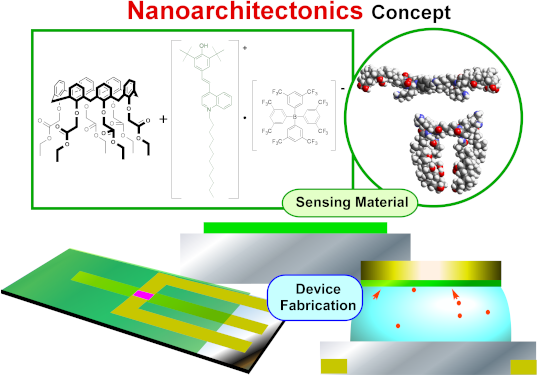
Review of advanced sensor devices employing nanoarchitectonics concepts
Beilstein J. Nanotechnol. 2019, 10, 2014–2030, doi:10.3762/bjnano.10.198
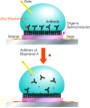
- A induced the removal of the antibody from the sensor surface through competitive binding, resulting in a capacitance increase accompanied with an increase of the drain current. The switching-on signal response of this system is in the nM range of concentration threshold for bisphenol A detection
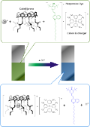
- intramolecular proton transfer. The adsorption of water molecules into the micropores induces interconversion between the hydrated and dehydrated phase, accompanied by the switching on and off of the excited state intramolecular proton transfer, resulting in sensitive switching between two-color
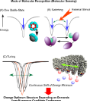
- monolayers of tens of centimeters [170]. The digital switching of helicity of binaphthyl units is also possible through macroscopic motion [171]. Furthermore, the control of nanoscopic motions of molecular machines such as molecular catchers [172][173] and molecular motors [174][175] can be accomplished by





Remarkable electronic and optical anisotropy of layered 1T’-WTe2 2D materials
Beilstein J. Nanotechnol. 2019, 10, 1745–1753, doi:10.3762/bjnano.10.170
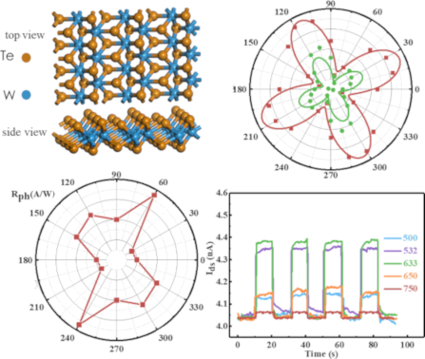
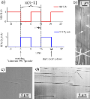
- the daylight illumination using a household lamp. Meanwhile, a rapid increase and decrease in current reached the saturation value and the minimum value within about 200 ms, achieved by switching the laser on and off. Figure 5b shows the magnified change of the 60° photocurrent curve achieved by


The impact of crystal size and temperature on the adsorption-induced flexibility of the Zr-based metal–organic framework DUT-98
Beilstein J. Nanotechnol. 2019, 10, 1737–1744, doi:10.3762/bjnano.10.169
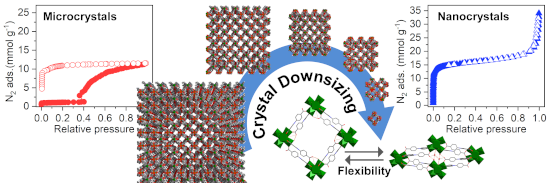
- contribution we analyze the influence of adsorption cycling, crystal size, and temperature on the switching behavior of the flexible Zr-based metal–organic framework DUT-98. We observe a shift in the gate-opening pressure upon cycling of adsorption experiments for micrometer-sized crystals and assign this to a
- examples progressively illustrate the manipulation of the adsorption properties of switching adsorbents by variation of size [9][10][11][12][13] and morphology [14] of the crystals, without changing the composition of the MOF. The reports on the MOF MIL-53 indicate an impact of crystal morphology and size



Precise local control of liquid crystal pretilt on polymer layers by focused ion beam nanopatterning
Beilstein J. Nanotechnol. 2019, 10, 1691–1697, doi:10.3762/bjnano.10.164
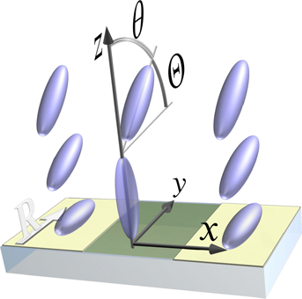
- Institute), 115409 Moscow, Russia 10.3762/bjnano.10.164 Abstract Background: The alignment of liquid crystals by surfaces is crucial for applications. It determines the director configuration in the bulk, its stability against defects and electro-optical switching scenarios. The conventional planar
- their reliable electro-optical switching [1]. The reason is of fundamental nature: Anisotropic LC phases arise due to collective intermolecular interactions in the LC bulk that allow for different LC orientations in the laboratory frame. Without external alignment, LC samples are randomly multi-domain
- example, helps avoiding topological defects [11] and accelerates switching of vertically aligned LC cells [12]. It is quantitatively characterized by the pretilt angle between the director and the surface plane. Surfaces stabilizing pretilted alignments remain rare and require more complex fabrication


Kelvin probe force microscopy work function characterization of transition metal oxide crystals under ongoing reduction and oxidation
Beilstein J. Nanotechnol. 2019, 10, 1596–1607, doi:10.3762/bjnano.10.155
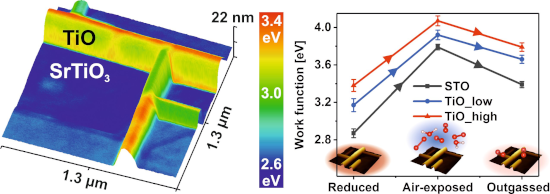
- [1], hydrogen production [2], resistive switching [3] and organic electronics [4][5] to so-called thermoelectric power generators [6]. The performance of all of the abovementioned applications is extremely sensitive to the work function (WF) of the active oxide layer. As a vast majority of


Materials nanoarchitectonics at two-dimensional liquid interfaces
Beilstein J. Nanotechnol. 2019, 10, 1559–1587, doi:10.3762/bjnano.10.153
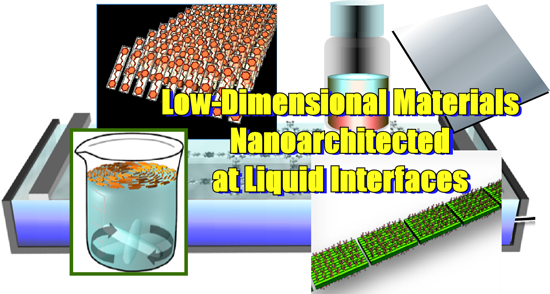
- molecular controls based on external stimuli switching [184][185][186][187][188] (basics for molecular machines, Nobel prize in 2016 [189][190][191]). The anisotropic dynamics at liquid interfaces described above are expected to play a crucial role in the production of low-dimensional materials and systems


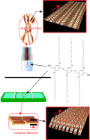

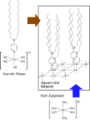










Unipolar magnetic field pulses as an advantageous tool for ultrafast operations in superconducting Josephson “atoms”
Beilstein J. Nanotechnol. 2019, 10, 1548–1558, doi:10.3762/bjnano.10.152
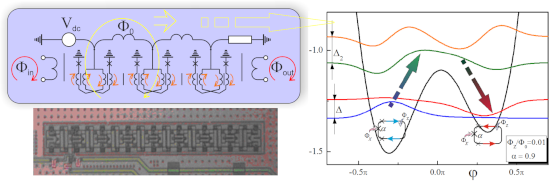
- time of population transfer (or “Not”-operation, TNOT) is normalized by TΩ = 2π/Ω. While this period is in the sub-nanosecond range, the time of the considered gate appears to be up to two orders of magnitude lower. Thus we really achieve very fast gates with switching times of the order of picoseconds
- parasitic plasma oscillations of the circuit and field in the optimal mode of operation after carrying out the required impact on the Josephson meta-atom. Conclusion In this paper we develop a theoretical concept and its experimental realization of ultrafast switching between selected eigenstates of an
- experimental scheme with the possibility to block the required transitions and to adjust the energy spectrum and matrix elements to their optimal values obtained from our theoretical consideration. Switching the regimes from the simple Λ-scheme to the specific case of a Δ-atom is shown and the possibility to


Superconducting switching due to a triplet component in the Pb/Cu/Ni/Cu/Co2Cr1−xFexAly spin-valve structure
Beilstein J. Nanotechnol. 2019, 10, 1458–1463, doi:10.3762/bjnano.10.144
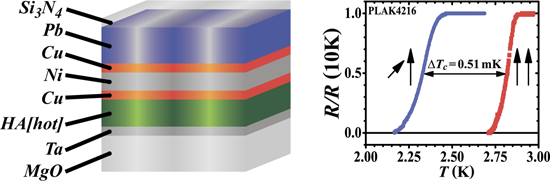
- suggests that the observed minimum and the corresponding full switching effect of the spin valve is caused by the long-range triplet component of the superconducting condensate in the multilayer. Such a large effect can be attributed to a half-metallic nature of the HA layer, which in the orthogonal
- , 5, 021019, in achieving large values of the switching effect. Keywords: ferromagnet; proximity effect; superconductor; Introduction For decades, metallic thin-film heterostructures have been in the in the focus of fundamental research in condensed matter physics and materials science. They show
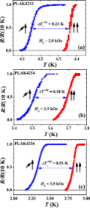
- a magnitude of the SSV effect (where and are the SC transition temperatures for the AP and P orientation of the magnetization of the F1 and the F2 layer) of 6 mK and a width of the SC transition curves δTc≈ 0.1 K. Unfortunately, the full switching between the normal and SC states could not be



On the relaxation time of interacting superparamagnetic nanoparticles and implications for magnetic fluid hyperthermia
Beilstein J. Nanotechnol. 2019, 10, 1280–1289, doi:10.3762/bjnano.10.127
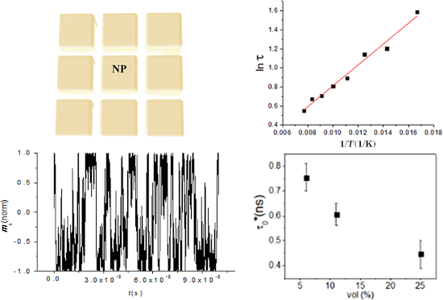
- suggest that anisotropy energy barriers and hence the switching time provided by Equation 5 may be altered by the volume fraction of the system of monodisperse (identical) nanoparticles. However, any information on the characteristic time constant τ0 is out of reach with this approach and this aspect will
- be investigated further by time-dependent simulations. Time-dependent approach: simulation and data analysis The magnetic switching of each nanoparticle in all three geometric configurations described above has been investigated via time-dependent (dynamic) micromagnetic simulations (numerical
- provides both the anisotropy energy barrier ΔE* and the relaxation time constant τ0* assumed to be affected by the interparticle interactions. It is worth noting that the above-mentioned methodology depends critically on the reliability in the determination of the relaxation time (or switching frequency