


Search results
Search for "topography" in Full Text gives 451 result(s) in Beilstein Journal of Nanotechnology. Showing first 200.
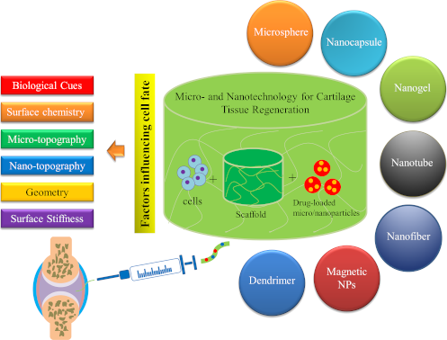
Micro- and nanotechnology in biomedical engineering for cartilage tissue regeneration in osteoarthritis
Beilstein J. Nanotechnol. 2022, 13, 363–389, doi:10.3762/bjnano.13.31


Selected properties of AlxZnyO thin films prepared by reactive pulsed magnetron sputtering using a two-element Zn/Al target
Beilstein J. Nanotechnol. 2022, 13, 344–354, doi:10.3762/bjnano.13.29
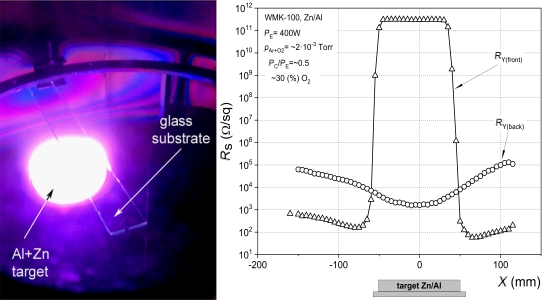
- a function of the distance from the target axis on both sides (front and back) of the substrate. The lowest measured resistivity was about 4 × 10⁻³ Ω·cm. Additionally, optical properties, surface topography, and elemental composition were determined in selected areas of the substrate. Keywords


The effect of metal surface nanomorphology on the output performance of a TENG
Beilstein J. Nanotechnol. 2022, 13, 298–312, doi:10.3762/bjnano.13.25
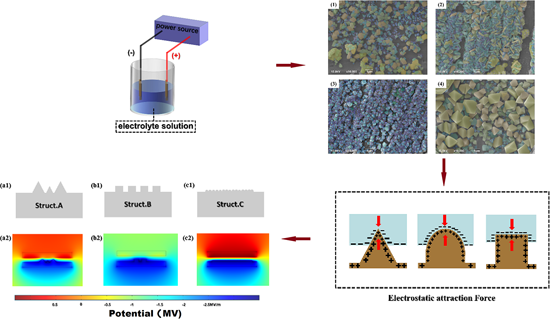
- above experiments, it can be concluded that at high temperatures and small pH values, the copper nanoscale topography grows more finely. When solution concentration and current density are high, and when the flow rate of the plating solution is low, the electrodeposited copper nanoscale structures will
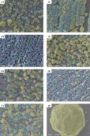
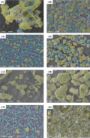
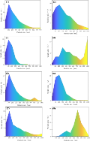
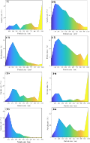
- agglomerate. Results and Discussion The XRD data (Figure 4) were processed using the JADE software to calculate the average particle sizes. SEM micrographs were screened according to the surface morphology size of the nanoparticles and colored according to the nanoscale topography size (Figure 5 and Figure 6
- particles accounted for 1% of the particles in experiment 2 (0.25 mol/L, 100 A/m2, pH 2, 45 °C). The output performance was 6.5 V, which was 37% higher than that of a copper sheet without nanoscale topography (Figure 9). The output performance of experiments 6, 12, and 15, was improved by 35% to 40% (Figure




Relationship between corrosion and nanoscale friction on a metallic glass
Beilstein J. Nanotechnol. 2022, 13, 236–244, doi:10.3762/bjnano.13.18
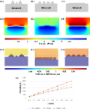
- (Figure 1b), there are no pits on the sample surface even after immersion in NaCl solution for 72 h. This weak corrosion during immersion without applied potential will be discussed in more detail below. Figure 3a shows the topography of the scan field and corresponding friction force images after 16 scan
- central repetitively scanned field and the surrounding area in the topography image. However, we do observe a contrast between these two areas in the friction force image, revealing the position of the scan field. The corresponding line-scan profiles across the scan field and surrounding area are
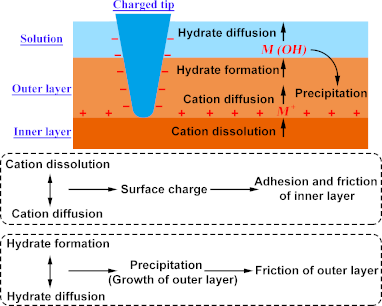
- friction and topography, on the one hand, and double layer structure, on the other hand, was observed for MG surfaces after polarization in phosphate buffer [21]. We will now discuss our experimental results in view of the double layer structure of the surface oxide film formed during immersion. The tip


Engineered titania nanomaterials in advanced clinical applications
Beilstein J. Nanotechnol. 2022, 13, 201–218, doi:10.3762/bjnano.13.15
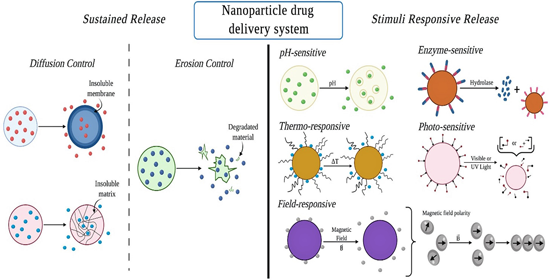
- corona alters the surface properties and transforms the physical, chemical, and biological characteristics of the nanomaterial. The types and amounts of adsorbed proteins are influenced by certain physiochemical qualities of the nanomaterial, such as the size, shape, charge as well as topography


Topographic signatures and manipulations of Fe atoms, CO molecules and NaCl islands on superconducting Pb(111)
Beilstein J. Nanotechnol. 2022, 13, 1–9, doi:10.3762/bjnano.13.1
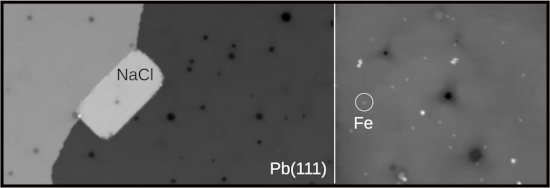
- metal surface, as observed on different noble metals [45][46]. Figure 1b and Figure 1c show STM topographic images after such process. While the surface topography remains unchanged in comparison to Figure 1a, numerous scan instabilities are now present, which we attribute to CO molecules diffusing
- (111) superconducting surface. Carbon monoxide (CO) molecules adsorbed on Pb(111). (a) STM overview image of pristine Pb(111) (Vt = −0.1 V, It = 1 pA). (b) STM image after CO deposition. The estimated coverage is below 0.2 monolayers. (c) Close-up STM topography of CO molecules diffusing on the surface


Measurement of polarization effects in dual-phase ceria-based oxygen permeation membranes using Kelvin probe force microscopy
Beilstein J. Nanotechnol. 2021, 12, 1380–1391, doi:10.3762/bjnano.12.102
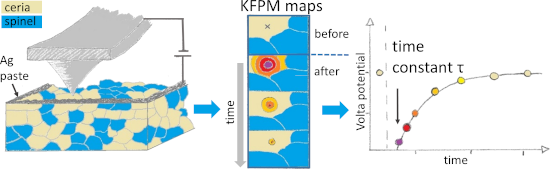
- were performed in a single-pass experiment. For this kind of measurements, the surface potential and the sample topography are mapped in a single pass in intermittent contact mode with the cantilever vibrating at its resonance frequency (i.e., the cantilever is not in lift mode during this experiment
- occur along the entire length of the grain boundary and is instead localized in one area. Neither for the positive nor for the negative polarization experiments, a change of the local sample topography was observed, which would hint at a local phase transformation. As the surface potential also relaxes


Alteration of nanomechanical properties of pancreatic cancer cells through anticancer drug treatment revealed by atomic force microscopy
Beilstein J. Nanotechnol. 2021, 12, 1372–1379, doi:10.3762/bjnano.12.101
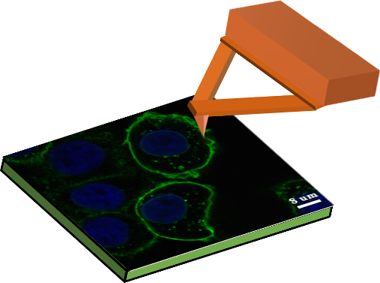
- the cancer cells from the normal ones, the mechanical properties underneath the topography of different cells were evaluated. Figure 3 shows the nanomechanical mapping, typical force–distance curve and the corresponding Young’s modulus distributions of single cells of different types. For the


A review on slip boundary conditions at the nanoscale: recent development and applications
Beilstein J. Nanotechnol. 2021, 12, 1237–1251, doi:10.3762/bjnano.12.91
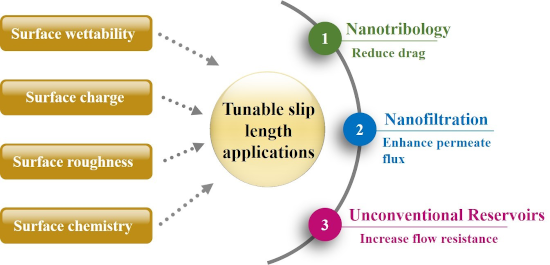
- surface roughness on the flow boundary conditions, since a perfectly smooth surface is an idealized model even at molecular scales. Numerous investigations have demonstrated that the variations of topography on the surface can drastically influence the effective slip length [81][82]. However, the
- surfaces as shown in Figure 6. Such structured surfaces, with definite dimensions of the structures, are very crucial for the design and fabrication of nanofluidic devices [83][84][85]. Many previous works have shown that the topography variation of structured surfaces can induce the variation of the


Two dynamic modes to streamline challenging atomic force microscopy measurements
Beilstein J. Nanotechnol. 2021, 12, 1226–1236, doi:10.3762/bjnano.12.90
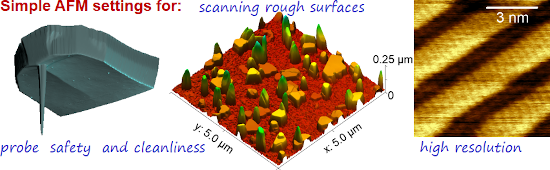
- strictly limited to the measurement of topography. When scanning in air, the interaction of the tip with the sample can be reduced, and the measurements themselves are performed more delicately when using resonance modes. In this class of AFM techniques, the probe is forced to oscillate close to its
- signal is saturated. If p = 50%, then the maximum value of δA does not exceed A0/2 and can be significantly less than h. This leads to inaccurate profile measurements. When descending from a step edge, so-called parachuting is observed and the actual topography profile is smoothed out. The climb to a
- steep topography. Likewise, when descending a steep edge, parachuting will not happen, as the probe will remain over each point as long as necessary to reach the reference level of the amplitude. Thus, the actual time taking to acquire a scan is determined both by the speed of movement between the


Open-loop amplitude-modulation Kelvin probe force microscopy operated in single-pass PeakForce tapping mode
Beilstein J. Nanotechnol. 2021, 12, 1115–1126, doi:10.3762/bjnano.12.83
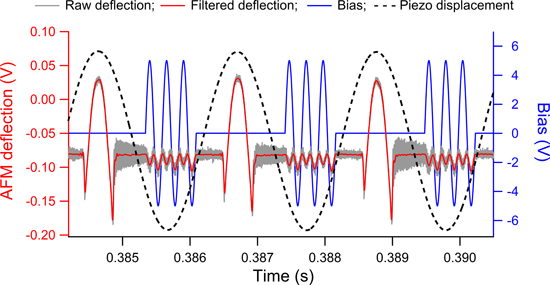
- the measured electrical tip–sample interaction is directly affixed to the topography rendered by the mechanical PFT modulation at each tap. Furthermore, because the detailed response of the cantilever to the bias stimulation was recorded, it was possible to analyze and separate an average contribution
- the out-of-contact intervals of the PFT motion. Because this method consists of a single-pass scan, the CPD determined from the acquired data at a given location can be directly affixed to the topography provided by PFT at that location; in two-pass KPFM scans, the CPD trace determined in the second
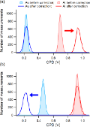
- pass is distributed over the topography line recorded in the first pass. Also, because the response to the applied bias modulation was fully acquired in the proposed OL KPFM implementation, the CPD was determined by modeling the electrostatic interaction between the AFM probe and the sample. This was





Is the Ne operation of the helium ion microscope suitable for electron backscatter diffraction sample preparation?
Beilstein J. Nanotechnol. 2021, 12, 965–983, doi:10.3762/bjnano.12.73
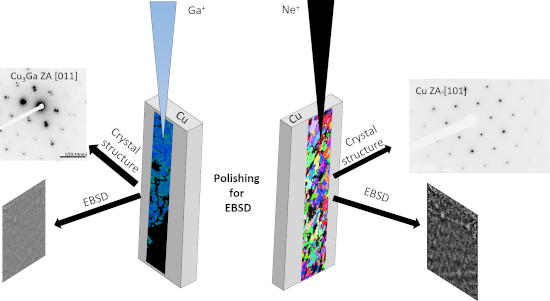
- was measured by TEM for different grains (see Supporting Information File 1). Both the TEM image and the FSD image, the latter is recorded with the EBSD detector and highlights the surface topography, show the different milling depths for different grains. Faster milling grains were milled to a 226 nm
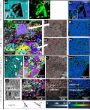
- maps were recorded and evaluated. The measurements and evaluations are shown in Figure 7a–c. The figure insets show the experiments with the lowest ion dose. The 0° incidence angle milling creates a strong surface topography in both cases, as evidenced in the forward scatter diffraction image (Figure
- 7a). Figure 7a shows an overlay of the FSD image with the phase map. A strong surface topography was expected as different grain orientations mill at different rates. As a result of the induced strong topography, a lot of the regions cannot be indexed, returning twice the amount of zero solutions for



Self-assembly of Eucalyptus gunnii wax tubules and pure ß-diketone on HOPG and glass
Beilstein J. Nanotechnol. 2021, 12, 939–949, doi:10.3762/bjnano.12.70
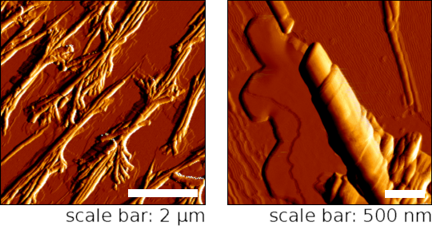
- solvent and were done in tapping mode with tapping-mode cantilevers (Tap300-G, Budget Sensors, Sofia, Bulgaria). The scan rates ranged from 0.7 to 2.3 Hz and the scan sizes from 3 × 3 to 10 × 10 µm. The maximum possible set point was used (approx. 60–70% of drive amplitude). Obtained topography and




The role of convolutional neural networks in scanning probe microscopy: a review
Beilstein J. Nanotechnol. 2021, 12, 878–901, doi:10.3762/bjnano.12.66
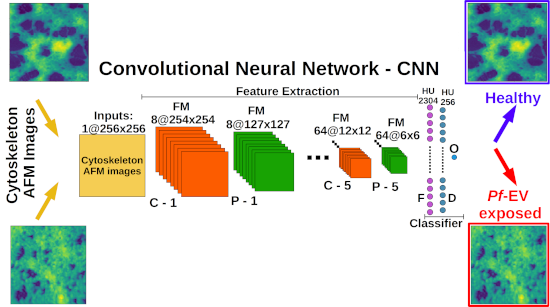
- topography, for example, adhesion, phase shift, stiffness, work function, or friction. In the following section, the utility of CNN in SPM is illustrated through several examples taken from the literature. Enhancing speed of image acquisition As discussed above, SPM imaging is inherently slow. One of the
- acquired using an enhanced scanning technique termed “ringing mode”, which simultaneously gives mappings of other surface properties together with topography [133]. In this case, it was found that whereas topography was a poor criterion for separating the two populations, adhesion was much better







A review of defect engineering, ion implantation, and nanofabrication using the helium ion microscope
Beilstein J. Nanotechnol. 2021, 12, 633–664, doi:10.3762/bjnano.12.52
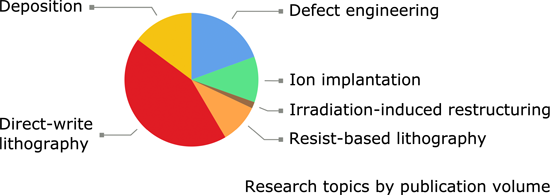
- piezoelectricity has been patterned into multilayered MoTe2 [56]. In the case of helium ion irradiation of a bulk van der Waals layered ferroelectric semiconductor crystal (CuInP2S6), local volume expansion due to helium ion implantation was observed, forming a conical surface topography within which for
- silicon substrate supporting an amorphous nanoporous aluminum oxide structure was irradiated with helium ions causing dome-shaped swelling of the substrate and thereby 3D deformation of the supported material, accompanied by enlargement of the nanopores to accommodate the new topography [96]. 3


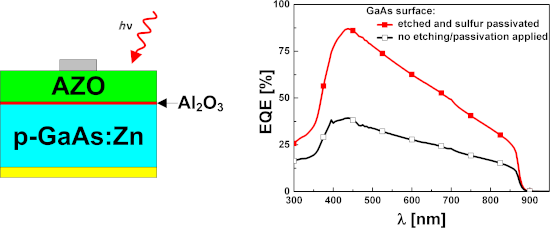
Impact of GaAs(100) surface preparation on EQE of AZO/Al2O3/p-GaAs photovoltaic structures
Beilstein J. Nanotechnol. 2021, 12, 578–592, doi:10.3762/bjnano.12.48
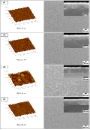
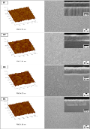
- analyzed using a scanning electron microscope (Hitachi SU-70) with a secondary electron detector operating at 15 kV. The topography of the surface of the layers was analyzed using an atomic force microscope (Bruker Dimension Icon) working in peak-force tapping mode using a ScanAsyst algorithm. A ScanAsyst
- B series, respectively. From the AFM results shown in Figure 3 and Figure 4, one can see that A1, A2, A4, B1, and B4 samples exhibit uniform surfaces by the means of polycrystalline thin film topography. By taking into consideration the roughness of the surfaces (RMS was measured for an area of 4
- and SEM and the value obtained for the AZO layer thickness was approx. 50 nm in the cross-sections. The topography of the surface depends on the substrate preparation method. The lowest roughness (by means of RMS) was found in the samples etched with ammonium hydroxide solution. Also, these samples




Properties of graphene deposited on GaN nanowires: influence of nanowire roughness, self-induced nanogating and defects
Beilstein J. Nanotechnol. 2021, 12, 566–577, doi:10.3762/bjnano.12.47
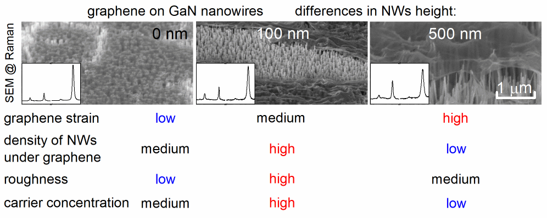
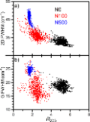
- graphene is observed in the N500 sample (Figure 1c, Figure 1f). Contrarily to the other samples, in this case graphene touches only the highest NWs and does not have any contact with the lowest ones. Furthermore, graphene in the N100 and N500 samples is pierced by some of the highest NWs. The topography of




Local stiffness and work function variations of hexagonal boron nitride on Cu(111)
Beilstein J. Nanotechnol. 2021, 12, 559–565, doi:10.3762/bjnano.12.46
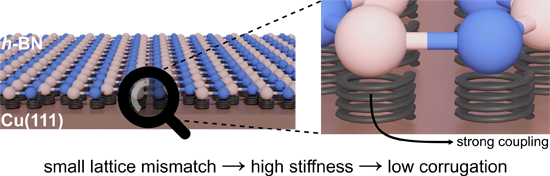
- 6.1 eV [35], which can be modulated by the Moiré pattern [30]. We analyse the substrate using STM topography, dI/dV, and frequency shift, Δf, AFM maps under low (in-gap) and high (conduction band onset) bias conditions (see Figure 2). Due to h-BN being insulating, no spectroscopic contribution is
- expected at low bias voltages making it transparent to STM, as seen in Figure 2b,d. At this bias, only Friedel oscillations due to the scattering of the Cu(111) surface-state electrons on defects and adsorbates are observed. Contrarily, as Figure 2a reveals, at higher bias, the STM topography corresponds
- images and the STM topography. Also, the Δf variation between rim and valley areas in both images changes only marginally. The additionally imaged adsorbates (dots or ring-like features) allow, thereby, the precise alignment between the subsequently acquired data sets. Work function variation While the


Influence of electrospray deposition on C60 molecular assemblies
Beilstein J. Nanotechnol. 2021, 12, 552–558, doi:10.3762/bjnano.12.45
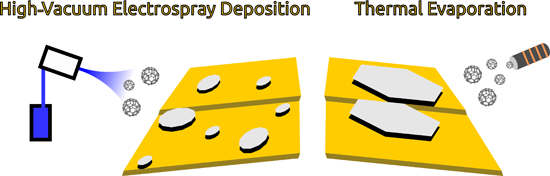
- nc-AFM topography image of a Au(111) surface covered with 0.35 monolayers of C60 molecules is shown in Figure 2a. Large clean terraces separated by monoatomic step edges are observed. On top, the adsorbed C60 molecules are seen in two possible locations. First, all step edges of the surface are
- molecules deposited on Au(111) surfaces with HV-ESD are known to form large assemblies [5]. A Au(111) surface with a coverage of 0.30 monolayers of C60 after HV-ESD, similar to that after TE in Figure 2a, is shown in the topography map in Figure 2b. Monoatomic step edges and terraces of a few hundreds of
- responsible for the nucleation of islands in the middle of the terraces. C60 on KBr(001) surface The deposition of C60 on bulk insulators is known to lead to the creation of large islands [22][31]. A typical KBr(001) surface after TE of C60 is shown in the nc-AFM topography image in Figure 3a. Large clean


Reconstruction of a 2D layer of KBr on Ir(111) and electromechanical alteration by graphene
Beilstein J. Nanotechnol. 2021, 12, 432–439, doi:10.3762/bjnano.12.35
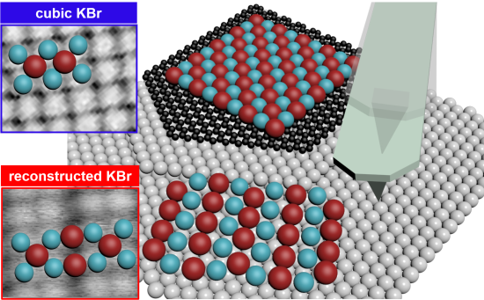
- temperature and density functional theory (DFT) calculations. The results suggest that this particular reconstruction of KBr occurs on Ir(111), due to a specific correlation of the lattice parameter. When deposited on a single layer of graphene on the same substrate, the topography of the KBr islands returns
- the iridium terraces. Figure 1a shows a large-scale topography image of a KBr island on Ir(111) measured by nc-AFM at room temperature. The monoatomic steps between the Ir terraces have a height of 235 pm as expected for Ir(111). The KBr islands are monolayers with an average height of 340 pm under
- Kelvin probe force microscopy (KPFM), as can be seen in Supporting Information File 1, Figure S3. To be able to tune this corrugated structure, a monolayer of graphene was prepared on Ir(111) before KBr deposition. Figure 4a shows a large-area topography of the Ir(111) surface, half of which is covered


Structural and optical characteristics determined by the sputtering deposition conditions of oxide thin films
Beilstein J. Nanotechnol. 2021, 12, 354–365, doi:10.3762/bjnano.12.29
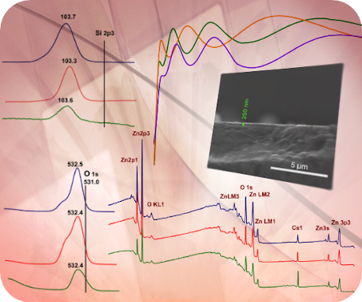
- diffraction (XRD) and X-ray photoelectron spectroscopy (XPS), while the surface topography of the samples was analyzed using scanning electron microscopy (SEM). The optical characteristics were measured for samples with the same composition but obtained with different deposition parameters, such as increasing


The patterning toolbox FIB-o-mat: Exploiting the full potential of focused helium ions for nanofabrication
Beilstein J. Nanotechnol. 2021, 12, 304–318, doi:10.3762/bjnano.12.25
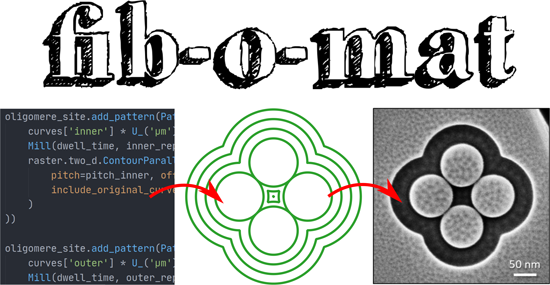
- patterning without affecting the topography of the films [32]. The local modification of the magnetic properties, in particular anisotropy and exchange coupling (including the chiral Dzyaloshinskii–Moriya interaction), originates from structural modifications, such as interface structure, atomic ordering
- curvatures in the beam path, use the local dose optimization to achieve a uniform target depth. To demonstrate the capabilities of FIB-o-mat, three different 2D material systems were patterned. Multilayers of Co/Pt were modified regarding their local magnetic response without changing their topography


The nanomorphology of cell surfaces of adhered osteoblasts
Beilstein J. Nanotechnol. 2021, 12, 242–256, doi:10.3762/bjnano.12.20
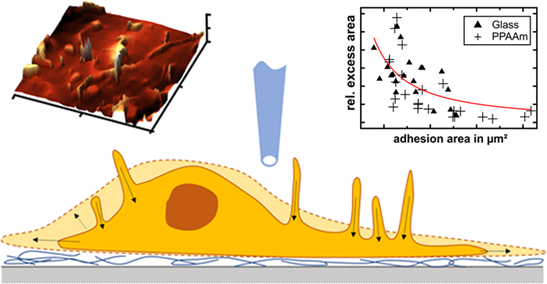
- flexible. Figure 2a shows an example of a typical SICM topography of the border region in the live state (see Figure 2b for the corresponding bright-field microscopy image). Features with lateral dimensions of approximately 1 µm × 0.8 µm protruding 100–300 nm from the surrounding (Figure 2c), at a density
- when the live-cell dynamics is suppressed upon fixation of the osteoblasts with 4% paraformaldehyde (PFA). Figure 3a shows an example of a respective SICM topography. Now, the ruffles exhibit a clearer shape and resemble similar features to those observed with electron microscopy [29][30]. Our data
- area (Aeff – Aproj). The effective surface is the undulated surface area of the three-dimensional function z(x,y) as determined from SICM topography images, and the projected area is the frame or base area Aproj = ∫∫dxdy (Figure 5b). The relative excess surface is then Figure 5a shows the relative


Extended iron phthalocyanine islands self-assembled on a Ge(001):H surface
Beilstein J. Nanotechnol. 2021, 12, 232–241, doi:10.3762/bjnano.12.19
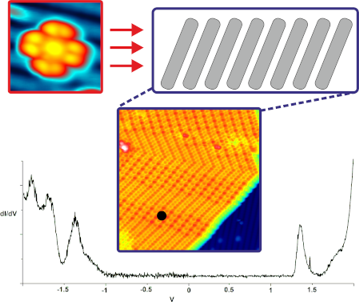
- manipulation when the molecule marked by the dashed circle suddenly appeared on a perfectly hydrogenated Ge(001):H surface area. This could be inferred from that fact that the image shows the molecule only in the upper part of the scan, whereas the lower part of the topography presents the perfectly
Imaging of SARS-CoV-2 infected Vero E6 cells by helium ion microscopy
Beilstein J. Nanotechnol. 2021, 12, 172–179, doi:10.3762/bjnano.12.13
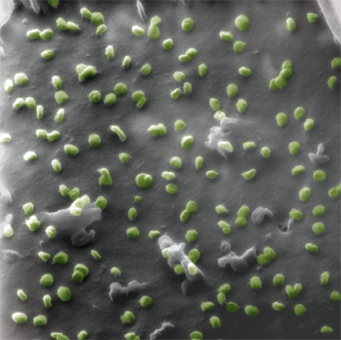
- topography or material contrast. The deposited carbon film is presumably thinner than typical conductive metal or carbon coatings for SEM imaging, and it does not show any surface masking and clustering as seen on the gold substrate in the upper left of Figure 2b2. The energy of the incident hydrocarbons is
- observed for human coronavirus229E and quantified in HeLa cells by Wang and co-workers [38]. However, the metal coating applied by Wang et al. is clearly visible at high resolution in the SEM images as a rough layer on the cell membrane that hides the true topography [25][39]. In contrast, the HIM images





