


Search results
Search for "absorption spectra" in Full Text gives 292 result(s) in Beilstein Journal of Nanotechnology. Showing first 200.
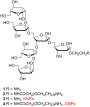
Preparation and in vivo evaluation of glyco-gold nanoparticles carrying synthetic mycobacterial hexaarabinofuranoside
Beilstein J. Nanotechnol. 2020, 11, 480–493, doi:10.3762/bjnano.11.39
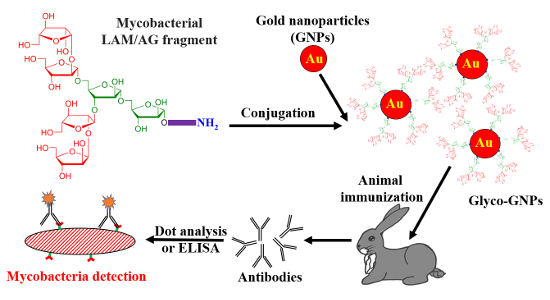
- or 4, which were purified from the excess of Ara6 glycosides 1 and 2 by centrifugation, or (3) were prepared in 0.9% NaCl from glyco-GNPs 3 or 4, which were purified by centrifugation, dissolved in 5% sucrose solution and then lyophilized. The absorption spectra of these solutions were virtually
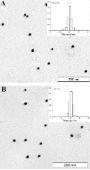
- ) does not impair the stability of the prepared glyco-GNPs 3 and 4 against aggregation as follows from the similarity of the absorption spectra (Figure 4). The prepared glyco-GNPs with pendant Ara6 moieties (Ara6-GNPs 3 and 4) were used for the immunization of rabbits. The alkalinity of the immunogen
- (GNPs) (Ara6-GNPs 3 and 4, respectively). Transmission electron microscopy (TEM) images of Ara6-GNPs 3 (A) and 4 (B). The insets show size distribution diagrams with 15 nm average diameter in both cases. Absorption spectra of solutions of Ara6C2NH2-GNPs (3) (A) and Ara6C2EG7NH2-GNPs (4) (B), prepared


Interfacial charge transfer processes in 2D and 3D semiconducting hybrid perovskites: azobenzene as photoswitchable ligand
Beilstein J. Nanotechnol. 2020, 11, 466–479, doi:10.3762/bjnano.11.38
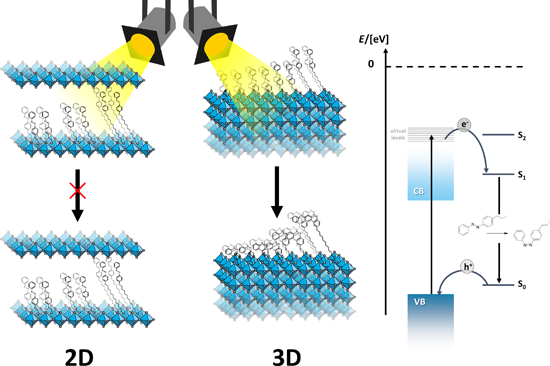
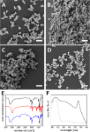
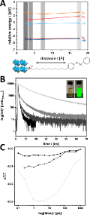
- successful functionalization. The UV–vis absorption spectra, shown in Figure 4F, confirm these findings. 3D-AzoC2 shows absorption maxima at 518 and 324 nm. The absorption at 518 nm is assigned to the excitonic bandgap of the perovskite. The absorption at 324 nm indicates the coordination of the azobenzene
- -resolved photoluminescence (PL) measurements of particles suspended in toluene were obtained using a FluoTime 300 from Picoquant spectrometer. Transient absorption spectra (TAS) were measured of drop-cast particles on glass substrates. NMR measurements of particles were carried out in a Bruker Avance III
- , 832, 765, 727 and 685 cm−1 are highlighted in grey as significant vibrations of the azobenzene. (F) Normalized UV–vis absorption spectra of 3D-AzoC2 dispersed in toluene (black) and AzoC2 in H2O (grey, dashed). (A) UV–vis absorption kinetics of 3D-AzoC2 in toluene over a time period of 600 s. (B




Nanoparticles based on the zwitterionic pillar[5]arene and Ag+: synthesis, self-assembly and cytotoxicity in the human lung cancer cell line A549
Beilstein J. Nanotechnol. 2020, 11, 421–431, doi:10.3762/bjnano.11.33
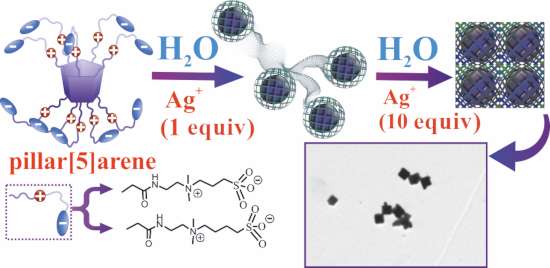
- , slit width 1 nm). Deionized water with a resistivity >18.0 MΩ cm was used to prepare the solutions. The deionized water was obtained from a Millipore-Q purification system. Recording of the absorption spectra of the mixtures of pillar[5]arenes 3 and 4 (1 × 10⁻⁵ М) with AgNO3 (1 × 10⁻⁴ М) was carried




Recent progress in perovskite solar cells: the perovskite layer
Beilstein J. Nanotechnol. 2020, 11, 51–60, doi:10.3762/bjnano.11.5

- C6H18N2O2PbI4 (EDBEPbI4) chains into 3D perovskites. The 2D/3D perovskites solved the discrepancy between PCE and stability. XRD patterns and UV–vis absorption spectra, retracing the formation of such heterojunctions, are shown in Figure 4b and Figure 4c. Doping with EDBEPbI4 gradually increases the grain size
- ][41][42][43][44][45][46][47][48][49][50][51]. Structural characterization and morphology. (a) Schematic illustration of the structure of the 2D/3D PSCs. (b) XRD patterns as a function of the 2D perovskite doping concentration and (c) UV–vis absorption spectra of the (EDBEPbI4)x(MAPbI3)1−x films. (d–g


Long-term stability and scale-up of noncovalently bound gold nanoparticle-siRNA suspensions
Beilstein J. Nanotechnol. 2019, 10, 2568–2578, doi:10.3762/bjnano.10.248
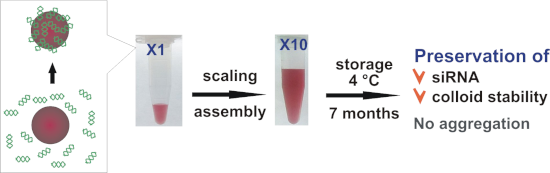
- buffers with different pH values by analyzing the optical absorption spectra in the range of 400–800 nm (Figure 2). We did not observe a wide peak in the range of 650–700 nm, which would indicate nanoparticle aggregation. This peak appeared only in the case of mixing of the AuNP-siRNA suspension with the


pH-Controlled fluorescence switching in water-dispersed polymer brushes grafted to modified boron nitride nanotubes for cellular imaging
Beilstein J. Nanotechnol. 2019, 10, 2428–2439, doi:10.3762/bjnano.10.233
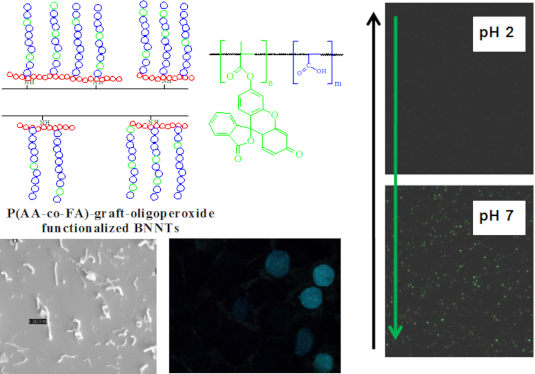
- the excitation and emission wavelengths were selected at 490 nm and 520 nm, respectively, and the fluorescently labeled nanomaterial was viewed. Ultraviolet–visible spectrometry (UV–vis) The optical absorption spectra of the BNNT suspension were registered on a double-beam UV–vis spectrophotometer
- microscopy. Figure 4a shows the absorption spectra of BNNTs, oligoperoxide-functionalized BNNTs, and P(AA-co-FA)-functionalized BNNTs dispersed in water. P(AA-co-FA)-functionalized BNNTs demonstrate a strong absorption band at λ = 490 nm, which is very close to the maximum adsorption peak of fluorescein


Design of a nanostructured mucoadhesive system containing curcumin for buccal application: from physicochemical to biological aspects
Beilstein J. Nanotechnol. 2019, 10, 2304–2328, doi:10.3762/bjnano.10.222
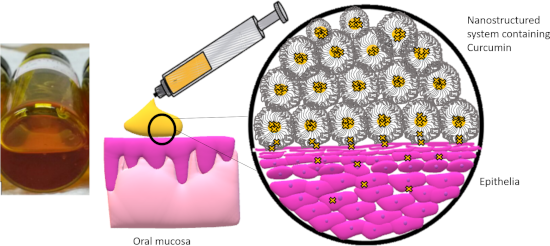
- be permeated. The permeation of CUR from polymer blends containing P407 and C974P® were performed in porcine mucosa by photoacoustic spectroscopy and the photoacoustic spectra of the formulations, tissues and permeation of CUR are shown in Figure 11. The optical absorption spectra of CUR and


Design and facile synthesis of defect-rich C-MoS2/rGO nanosheets for enhanced lithium–sulfur battery performance
Beilstein J. Nanotechnol. 2019, 10, 2251–2260, doi:10.3762/bjnano.10.217
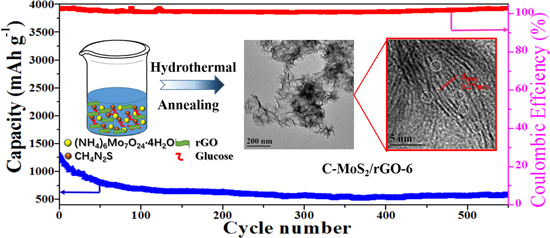
- (3 mL) as the adsorbents. Ultraviolet–visible (UV–vis) absorption spectra of these diluted solutions were collected using a Shimadzu UV 2550 spectrophotometer. Cell assembly and electrochemical measurements The working electrodes were prepared by casting a slurry of 80 wt % active materials (MoS2-S
- absorption spectra of the four solutions were also investigated to better understand the adsorption capacity. Li2S6 in solution is still not completely absorbed by the C-MoS2/rGO-4 and C-MoS2/rGO-8 composites as shown in Figure S4a (Supporting Information File 1). Consequently, the colorless solution of C
- of pristine MoS2, and C-MoS2/rGO and C-MoS2/rGO-6 composites. (c) TG curves of MoS2-S, C-MoS2/rGO-S and C-MoS2/rGO-6-S composites; (d) UV–vis absorption spectra of the pure Li2S6 solution and Li2S6 solutions with pristine MoS2, and C-MoS2/rGO and C-MoS2/rGO-6 composites (inset: photos of the Li2S6


Nontoxic pyrite iron sulfide nanocrystals as second electron acceptor in PTB7:PC71BM-based organic photovoltaic cells
Beilstein J. Nanotechnol. 2019, 10, 2238–2250, doi:10.3762/bjnano.10.216
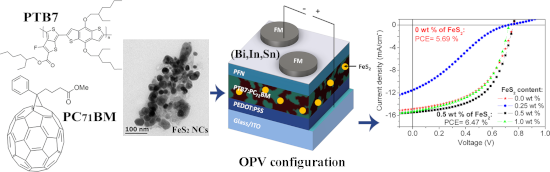
- characteristics could facilitate exciton dissociation, charge transport and collection processes, and thus increase the overall PCE value. Figure 5a shows the UV–vis absorption spectra of the OPV active layer at different concentrations of FeS2 as well as that of the pure FeS2 film. The spectrum of the PTB7
- :PC71BM active layer presents a broad absorption in the visible range (300 to 750 nm). In all absorption spectra, PTB7 peaks appeared at 630 and 700 nm and PC71BM peaks were observed at 375 and 480 nm, as reported elsewhere [51]. The FeS2 NCs do not contribute to the absorption spectra and the light


Nonlinear absorption and scattering of a single plasmonic nanostructure characterized by x-scan technique
Beilstein J. Nanotechnol. 2019, 10, 2182–2191, doi:10.3762/bjnano.10.211
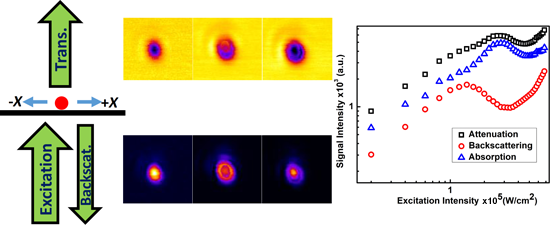
- precisely the scattering and absorption spectra, of metallic nanostructures can be completely different from their bulk counterparts. Plasmonic nanostructures, in general, are characterized by strong scattering, great photo-stability, high brightness and exceptional localization precision. In addition, SPR


Porous silver-coated pNIPAM-co-AAc hydrogel nanocapsules
Beilstein J. Nanotechnol. 2019, 10, 1973–1982, doi:10.3762/bjnano.10.194
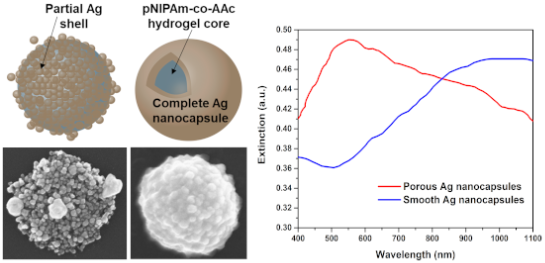
- of pDADMAC on the hydrogel particle surface, we analyzed the particles with Fourier transform infrared (FTIR) spectroscopy. Figure 1f shows the absorption spectra of pure pDADMAC and the modified hydrogel particles. The existence of stretching associated with the CH3 components at ≈1465 cm−1 and


Magnetic properties of biofunctionalized iron oxide nanoparticles as magnetic resonance imaging contrast agents
Beilstein J. Nanotechnol. 2019, 10, 1964–1972, doi:10.3762/bjnano.10.193
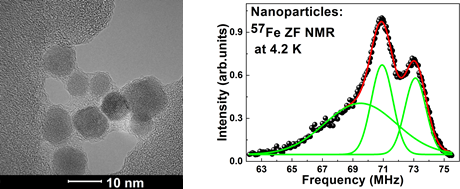
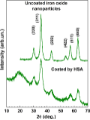
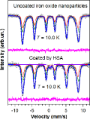
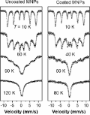
- ]. Experimental methods TEM of pure and HSA-coated MNPs was performed using a Titan 80-300 TEM/STEM (ThermoFisher Scientific, USA) operated at 300 kV. XRD spectroscopy was carried out with a Rigaku MiniFlex diffractometer using Cu Kα radiation. The Mössbauer absorption spectra of 57Fe nuclei were recorded in the




Pulsed laser synthesis of highly active Ag–Rh and Ag–Pt antenna–reactor-type plasmonic catalysts
Beilstein J. Nanotechnol. 2019, 10, 1958–1963, doi:10.3762/bjnano.10.192
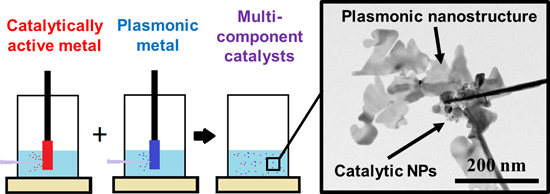
- were found to only adsorb to concavities. The 1:1 Ag–Pt system formed similar heterostructures. A series of HR-TEM images confirming the atomic makeup of the heterostructures is reported in Figure S3 (Supporting Information File 1). UV–vis absorption spectra of the monometallic and mixed colloids are
- suspensions generated via pulsed laser ablation. Rh nanoparticle groupings were observed to only adsorb to Ag nanostructure concavities. Similar Ag–Pt heterostructures formed in the mixtures of colloidal Ag and Pt suspensions. UV–vis absorption spectra of the monometallic Ag, Pt, Rh, and the colloidal Ag–Rh


Charge-transfer interactions between fullerenes and a mesoporous tetrathiafulvalene-based metal–organic framework
Beilstein J. Nanotechnol. 2019, 10, 1883–1893, doi:10.3762/bjnano.10.183
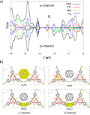
- photoinduced CT process of C60@MUV-2. Figure 8 displays the simulated absorption spectra predicted for the cluster C60@TTFTB system in the most stable arrangement B, the TTFTB ligand, and the fullerene guest (the triplet excitation energies are indicated). The high-energy region (below 400 nm) of the
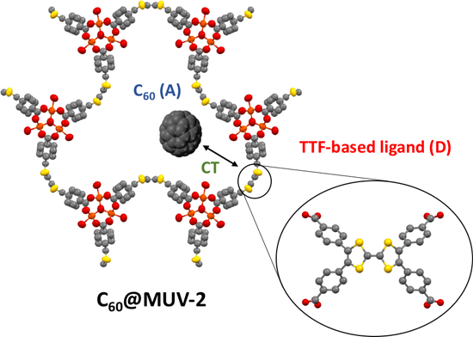
- ). Raman spectra were acquired with a micro-Raman (model XploRA ONE from Horiba, Kyoto, Japan) with a grating of 1200 gr/mm and a wavelength of 785 nm. UV–vis absorption spectra were recorded on a Jasco V-670 spectrophotometer in baseline mode from 400 to 800 nm range. The absorption spectra were measured
- ). Blue and yellow regions indicate charge depletion and accumulation, respectively. a) TDDFT absorption spectra calculated at the CAM-B3LYP/6-31G** level for host–guest C60@TTFTB (including vertical excitation energies), TTFTB ligand, and fullerene C60 (singlets and triplet energies). b) Monoelectronic




Biocatalytic oligomerization-induced self-assembly of crystalline cellulose oligomers into nanoribbon networks assisted by organic solvents
Beilstein J. Nanotechnol. 2019, 10, 1778–1788, doi:10.3762/bjnano.10.173

- , and 22.1° (Figure 7), which corresponded to 110, and 020 of the cellulose II allomorph, respectively [30]. In addition, the ATR-FTIR absorption spectra showed two characteristic peaks for the intrachain hydrogen-bonded hydroxyl groups in the cellulose II allomorph [51] at approximately 3441 and 3490
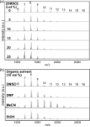
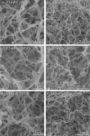
- for cellulose II are shown above the peaks. ATR-FTIR absorption spectra of the products with organic solvents. The numbers above the peaks denote the wavenumber. SEM images of the xerogels prepared from the gels synthesized with (a,b) 10 vol % DMSO, (c,d) 20 vol % DMSO, and (e,f) 10 vol % EtOH





High-temperature resistive gas sensors based on ZnO/SiC nanocomposites
Beilstein J. Nanotechnol. 2019, 10, 1537–1547, doi:10.3762/bjnano.10.151
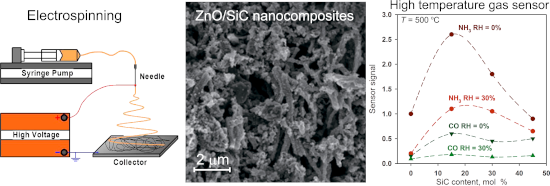
- the SiC peaks naturally increases with increasing silicon carbide content in the nanocomposites. The study of the surface composition of the synthesized materials was carried out using FTIR and XPS methods. Figure 4 shows the IR absorption spectra of ZnO, SiC, and ZnO/SiC nanocomposites. The spectrum



BiOCl/TiO2/diatomite composites with enhanced visible-light photocatalytic activity for the degradation of rhodamine B
Beilstein J. Nanotechnol. 2019, 10, 1412–1422, doi:10.3762/bjnano.10.139
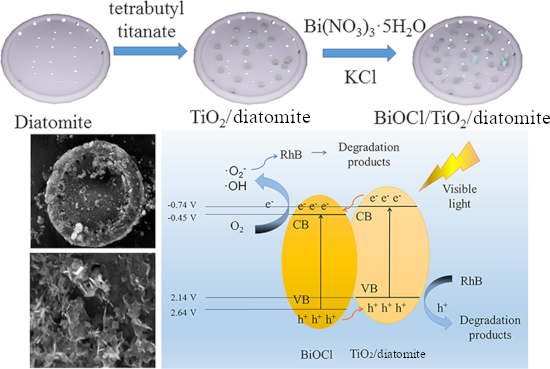
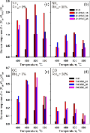
- ), and BTD prepared with different calcination temperatures (c and f). UV–vis absorption spectra (a) and band gap energy (b) of various samples. Mott–Schottky plots of BiOCl (a) and TiO2/diatomite (b). Photoluminescence spectra (a), transient photocurrent spectra (b) and electrochemical impedance spectra


Highly ordered mesoporous silica film nanocomposites containing gold nanoparticles for the catalytic reduction of 4-nitrophenol
Beilstein J. Nanotechnol. 2019, 10, 1368–1379, doi:10.3762/bjnano.10.135
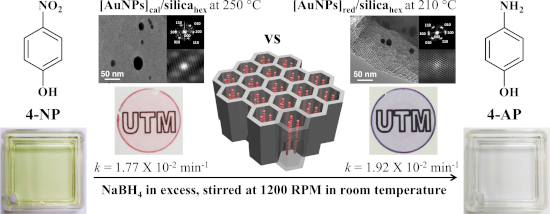
- corresponding FFT patterns (top) and auto-correlation images (bottom). Absorption spectra of a) [AuNPs]cal/silicahex and b) [AuNPs]red/silicahex films at (a) 190, (b) 210, (c) 230, (d) 250 and (e) 450 °C. The insets show representative photography images for the as-synthesized films after both heat treatments


Construction of a 0D/1D composite based on Au nanoparticles/CuBi2O4 microrods for efficient visible-light-driven photocatalytic activity
Beilstein J. Nanotechnol. 2019, 10, 1360–1367, doi:10.3762/bjnano.10.134
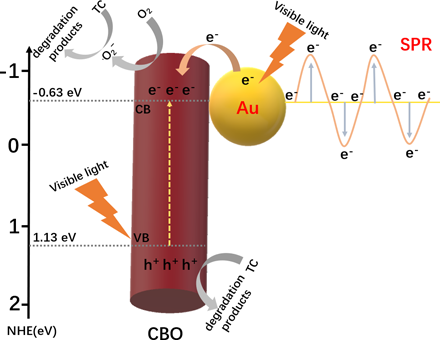
- indexed to the (111) and (200) planes of Au, respectively, suggesting the Au/CBO composite photocatalyst was successfully prepared [24]. The UV–vis absorption spectra were recorded to discuss the optical properties of the photocatalysts (Figure 2b). Evidently, the absorption edge of pure CBO extended to


Janus-micromotor-based on–off luminescence sensor for active TNT detection
Beilstein J. Nanotechnol. 2019, 10, 1324–1331, doi:10.3762/bjnano.10.131
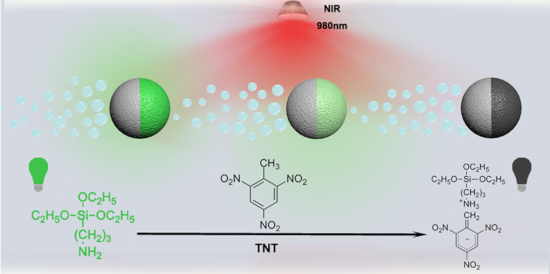
- observed using a Hitachi H-7650 microscope. UV−vis absorption spectra were recorded using a Hitachi U-4100 spectrophotometer. FTIR spectra were collected in the wavelength range from 4000 to 500 cm−1 by a Thermo Fisher 4700 Fourier transform infrared spectrophotometer with the KBr method. Upconversion


Revisiting semicontinuous silver films as surface-enhanced Raman spectroscopy substrates
Beilstein J. Nanotechnol. 2019, 10, 1048–1055, doi:10.3762/bjnano.10.105
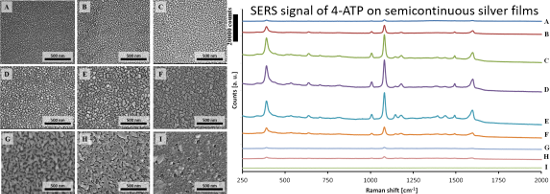
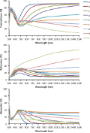
- have a different scan area than the other samples. Transmittance, reflectance and absorption spectra of A– I SSF films. SERS spectra of 4-ATP molecules on A–I SSFs. SERS signal of 1080 cm−1 band measured on SSFs A–I (Raw) and normalized by their metal coverage (Normalized). The AFM-determined




Structural and optical properties of penicillamine-protected gold nanocluster fractions separated by sequential size-selective fractionation
Beilstein J. Nanotechnol. 2019, 10, 955–966, doi:10.3762/bjnano.10.96
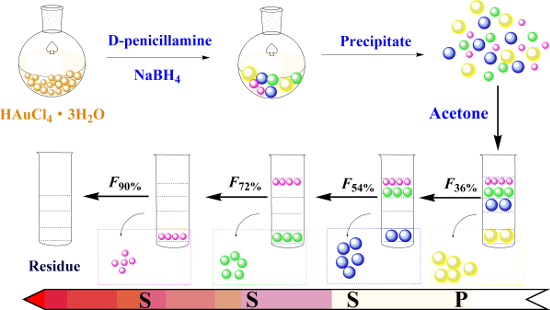
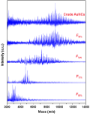
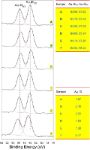
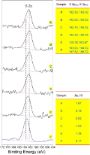
- source at 1253.6 eV (10 kV, 20 mA). Thermogravimetric analysis (TGA) measurements were conducted with a Perkin-Elmer TGA 6 thermogravimetric analyzer (Waltham, MA, USA). In addition, the UV–vis absorption spectra of the crude AuNC product and the AuNC fractions were recorded on a Cary 100 Scan UV–vis
- absorption and photoluminescence properties UV–vis absorption spectra of the AuNC crude product and the fractions are displayed in Figure 9. In order to eliminate the effect of concentration changes on the comparison of spectral shape and band position, these spectra are normalized at 250 nm. The smaller
- AuNCs possess a sharper decrease in absorbance than that of larger ones, from shorter to longer wavelengths, as could be observed in previous work [38][39]. In essence, the large AuNCs produce absorption spectra that have higher absorption than that of the small core nanoclusters. The difference in the



Nanoscale optical and structural characterisation of silk
Beilstein J. Nanotechnol. 2019, 10, 922–929, doi:10.3762/bjnano.10.93
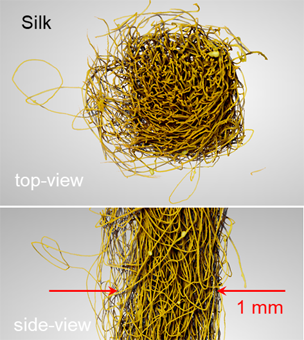
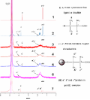
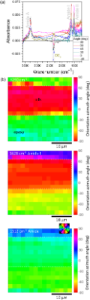
- -FTIR absorption and reflectivity spectra, shown in Figure 5. The amide-I and amide-II bands were well reproduced in the absorption spectra collected from four different single points. However, only spectra from two measurement points are displayed in Figure 5 for a better clarity of presentation


The systemic effect of PEG-nGO-induced oxidative stress in vivo in a rodent model
Beilstein J. Nanotechnol. 2019, 10, 901–911, doi:10.3762/bjnano.10.91
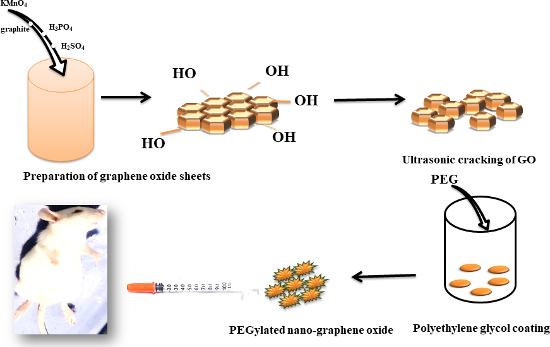
- vibrational stretching at 1240 cm−1 and 1060 cm−1 is from aromatic esters and primary alcohols (–CH2OH), respectively. Moreover, an increase in the aromatic bending is observed [43]. Ultraviolet–visible spectroscopy The UV–vis absorption spectra of nGO and PEG-nGO are shown in Figure 3. The absorption spectra


An iridescent film of porous anodic aluminum oxide with alternatingly electrodeposited Cu and SiO2 nanoparticles
Beilstein J. Nanotechnol. 2019, 10, 735–745, doi:10.3762/bjnano.10.73
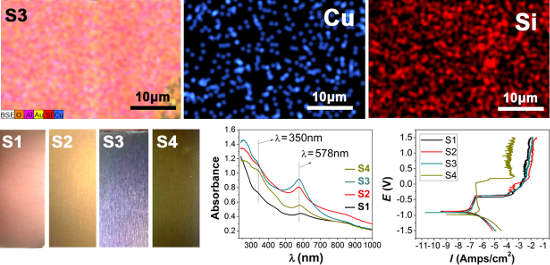
- (progressing from top to bottom); the leftmost images correspond to the mapping images of full elements. UV–vis–NIR absorption spectra of the various prepared samples. XRD patterns of the various prepared samples. Electric polarization curve for the various prepared samples. Nyquist diagram of the prepared





