Search results
Search for "atomic force microscopy" in Full Text gives 604 result(s) in Beilstein Journal of Nanotechnology. Showing first 200.
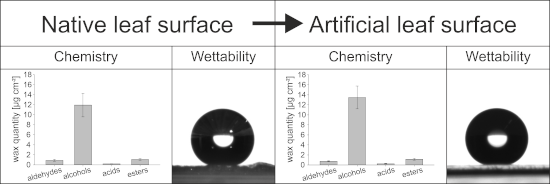
Design of a biomimetic, small-scale artificial leaf surface for the study of environmental interactions
Beilstein J. Nanotechnol. 2022, 13, 944–957, doi:10.3762/bjnano.13.83
- secondary electron detector. The working distance was 4–7 mm. Atomic force microscopy analysis of recrystallized structures The thickness of the wax coating on glass (1400 µg) was examined with an atomic force microscope (AFM, NanoWizard II, JPK instruments, Berlin, Germany). For this purpose, the
Comparing the performance of single and multifrequency Kelvin probe force microscopy techniques in air and water
Beilstein J. Nanotechnol. 2022, 13, 922–943, doi:10.3762/bjnano.13.82
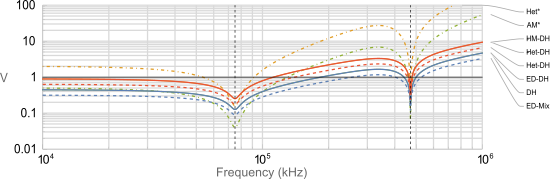
- liquid environments whilst needing the smallest AC bias for operation. Keywords: AFM; atomic force microscopy; closed loop; Kelvin probe force microscope; KPFM; open loop; performance; signal-to-noise ratio; Introduction Atomic force microscopy (AFM) is an enabling technique for the nanoscale mapping
Temperature and chemical effects on the interfacial energy between a Ga–In–Sn eutectic liquid alloy and nanoscopic asperities
Beilstein J. Nanotechnol. 2022, 13, 817–827, doi:10.3762/bjnano.13.72
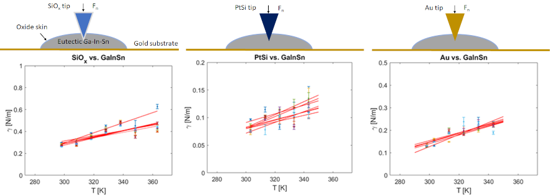
- increase of the interfacial energy as a function of the temperature, which can be explained by the reactivity between SiOx and Ga and the occurrence of chemical segregation at the liquid alloy surface. Keywords: atomic force microscopy (AFM); interfacial energy; liquid alloy; Introduction Recently, room
- atomic force microscopy (AFM) tips of different chemistries as a function of the temperature (T = 21–90 °C) by AFM force spectroscopy using an XE100 AFM equipped with a heating stage (manufactured by Park Instruments, Republic of Korea). We recorded force–distance curves with PtSi-coated Si cantilevers



Optimizing PMMA solutions to suppress contamination in the transfer of CVD graphene for batch production
Beilstein J. Nanotechnol. 2022, 13, 796–806, doi:10.3762/bjnano.13.70
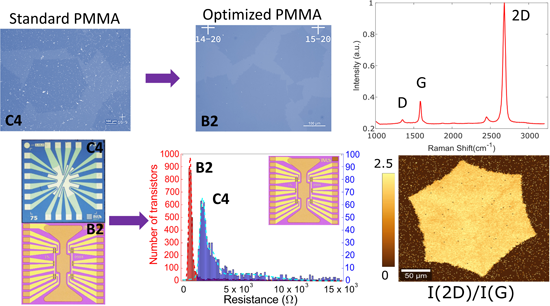
- analyzer had a pass energy of 20 eV. Atomic force microscopy The surface topographies of graphene were investigated by a Bruker Dimension Icon atomic force microscope (AFM), using PPP-NCH (NanosensorsTM) cantilevers with a tip radius smaller than 20 nm, a force constant of 42 N/m, and 250 kHz resonance




Efficient liquid exfoliation of KP15 nanowires aided by Hansen's empirical theory
Beilstein J. Nanotechnol. 2022, 13, 788–795, doi:10.3762/bjnano.13.69
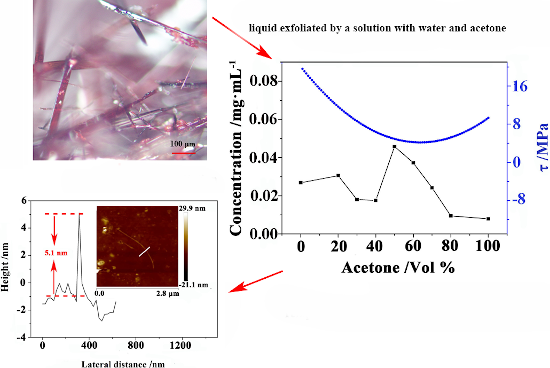
- concentration, centrifugation was not used. Measurement equipment UV−visible spectrophotometry was performed by using a Shimadzu UV-3101PC system. Atomic force microscopy (AFM) tests were performed in a Multimode 8 system. The Raman tests were performed on a WITec alpha300 RA confocal Raman microscopy system


Gelatin nanoparticles with tunable mechanical properties: effect of crosslinking time and loading
Beilstein J. Nanotechnol. 2022, 13, 778–787, doi:10.3762/bjnano.13.68
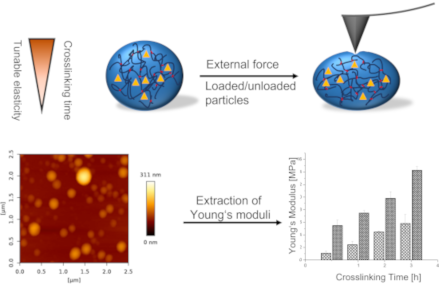
- . Keywords: atomic force microscopy; drug delivery; elasticity; gelatin nanoparticles; Young’s modulus; Introduction Developing nanoparticulate drug carriers for various diseases and application routes requires establishing controllable systems, matching the needs of the respective application to achieve
- experimental triplicate. Atomic force microscopy For AFM measurements, GNPs were electrostatically fixed on positively coated silica specimens. Samples for AFM measurements were prepared according to the following protocol: Silica wafers were cleaned in an ultrasonic bath (Elmasonic B, Elma Schmidbauer GmbH


Direct measurement of surface photovoltage by AC bias Kelvin probe force microscopy
Beilstein J. Nanotechnol. 2022, 13, 712–720, doi:10.3762/bjnano.13.63
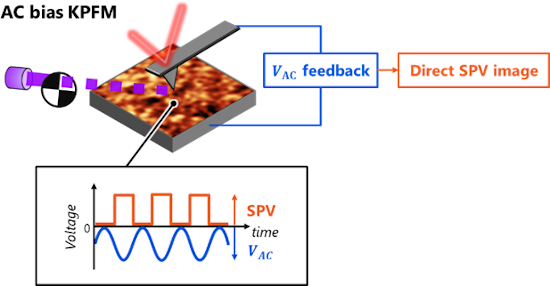
- modulated external disturbances. Keywords: atomic force microscopy; Kelvin probe force microscopy; photocatalyst; surface photovoltage; titanium dioxide; Introduction Surface photovoltage (SPV) is the change in surface potential caused by light illumination [1][2] and is measured to determine such
- time [31]. To reach sufficient sensitivity, the value should typically be larger than 1 V. Experimental The experiments were performed by customized ultrahigh-vacuum (UHV) noncontact atomic force microscopy (NC-AFM, UNISOKU) at a temperature T of 78 K with a base pressure below 5 × 10⁻¹¹ Torr. The NC
- features as band bending [3][4], the lifetimes of excited carriers [5][6][7], the minority carrier diffusion length [8][9], and the plasmonic effect [10][11][12]. The local SPV is usually measured by Kelvin probe force microscopy (KPFM) [13][14][15][16][17][18][19][20][21], which is based on atomic force


Reliable fabrication of transparent conducting films by cascade centrifugation and Langmuir–Blodgett deposition of electrochemically exfoliated graphene
Beilstein J. Nanotechnol. 2022, 13, 666–674, doi:10.3762/bjnano.13.58
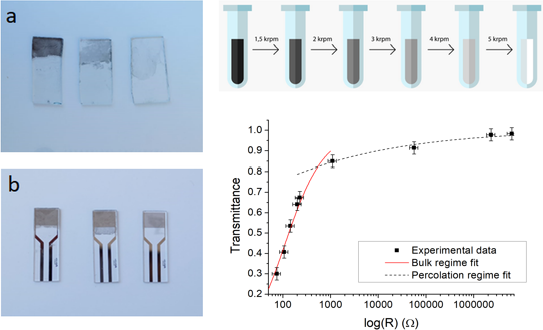
- wavelength of 660 nm and the number of graphene layers was calculated for each sample, taking into account an absorption of 2.3% for each layer of graphene, as in the work by Bonaccorso and co-workers [43]. Although atomic force microscopy (AFM) is often employed to characterize graphene films [2][12][14][44


Quantitative dynamic force microscopy with inclined tip oscillation
Beilstein J. Nanotechnol. 2022, 13, 610–619, doi:10.3762/bjnano.13.53
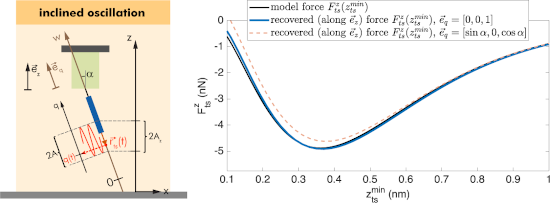
- Philipp Rahe Daniel Heile Reinhard Olbrich Michael Reichling Fachbereich Physik, Universität Osnabrück, Barbarastrasse 7, 49076 Osnabrück, Germany 10.3762/bjnano.13.53 Abstract In the mathematical description of dynamic atomic force microscopy (AFM), the relation between the tip–surface normal
- measuring a heterogeneous atomic surface. We propose to measure the AFM observables along a path parallel to the oscillation direction in order to reliably recover the force along this direction. Keywords: atomic force microscopy; cantilever; quantitative force measurement; sampling path; Introduction
- Atomic force microscopy (AFM) is a quantitative technique that allows for probing the force field above a surface in one, two, or three dimensions. While imaging in a plane parallel to the surface provides nanoscale and atomic structural information [1], force curves, usually acquired along a recording


![[Graphic 38]](/bjnano/content/inline/2190-4286-13-53-i79.svg?max-width=637&scale=1.18182) and the axis w....
and the axis w....


Revealing local structural properties of an atomically thin MoSe2 surface using optical microscopy
Beilstein J. Nanotechnol. 2022, 13, 572–581, doi:10.3762/bjnano.13.49
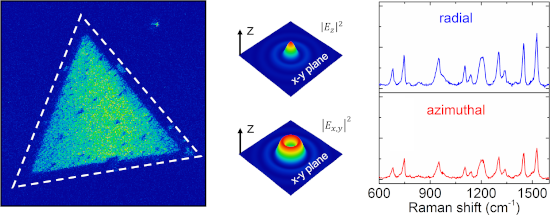
- the optical contrast, one can estimate that the thickness of the more transparent areas of the MoSe2 flake is smaller than that of other regions. To visualize the CuPc molecule distribution on the MoSe2 flake, atomic force microscopy (AFM) was used, and the results are shown in Figure 1b. The insets


Effects of substrate stiffness on the viscoelasticity and migration of prostate cancer cells examined by atomic force microscopy
Beilstein J. Nanotechnol. 2022, 13, 560–569, doi:10.3762/bjnano.13.47
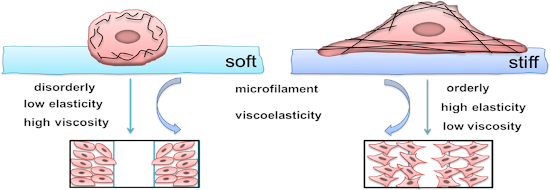
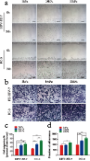
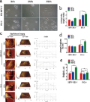
- unclear how mechanical properties regulate the cellular response to the environmental matrix. In this study, atomic force microscopy (AFM) and laser confocal imaging were used to qualitatively evaluate the relationship between substrate stiffness and migration of prostate cancer (PCa) cells. Cells
- substrate stiffness and the mechanical properties of cells in prostate tumour metastasis, providing a basis for understanding the changes in the biomechanical properties at a single-cell level. Keywords: actin cytoskeleton; atomic force microscopy; migration; prostate cancer cells; substrate stiffness
- functions have not been well appreciated [16]. In recent years, alterations in the physical properties of cells have been considered as a marker of malignant transformation of cancer cells [17][18][19]. Based on atomic force microscopy (AFM) measurements, our group found that the progression of prostate



Electrostatic pull-in application in flexible devices: A review
Beilstein J. Nanotechnol. 2022, 13, 390–403, doi:10.3762/bjnano.13.32
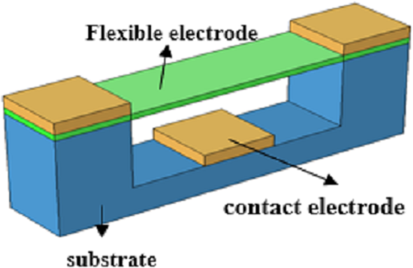
- or bottom-up processes and, subsequently, their parameters are tested. In the latter, the pull-in effect of NWs is directly studied through atomic force microscopy or transmission electron microscopy using nanomanipulators. This allows one to explore different working states without having to


Relationship between corrosion and nanoscale friction on a metallic glass
Beilstein J. Nanotechnol. 2022, 13, 236–244, doi:10.3762/bjnano.13.18
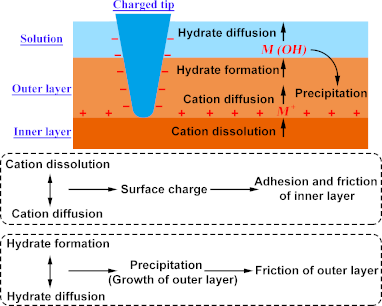
- are promising materials for microdevices, although corrosion and friction limit their effectiveness and durability. We investigated nanoscale friction on a metallic glass in corrosive solutions after different periods of immersion time using atomic force microscopy to elucidate the influence of
- surface dissolution at the interface of the two layers. The findings contribute to the understanding of mechanical contacts with metallic glasses under corrosive conditions by exploring the interrelation of microscopic corrosion mechanisms and nanoscale friction. Keywords: atomic force microscopy (AFM


Topographic signatures and manipulations of Fe atoms, CO molecules and NaCl islands on superconducting Pb(111)
Beilstein J. Nanotechnol. 2022, 13, 1–9, doi:10.3762/bjnano.13.1
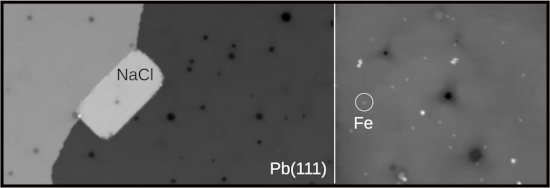
- microscopy (STM) and atomic force microscopy (AFM) are required to accurately disentangle structural and electronic properties of atomic or molecular structures on these superconducting platforms. STM/AFM generally allows for a controlled repositioning of adsorbates, both by lateral and vertical


Measurement of polarization effects in dual-phase ceria-based oxygen permeation membranes using Kelvin probe force microscopy
Beilstein J. Nanotechnol. 2021, 12, 1380–1391, doi:10.3762/bjnano.12.102
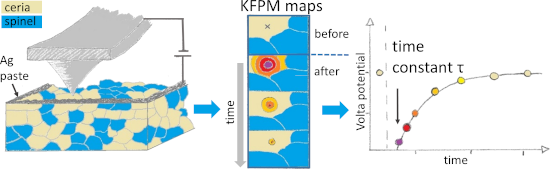
- |ceria, ceria|electron conductor, and electron conductor|electron conductor). Kelvin probe force microscopy (KPFM) is an atomic force microscopy (AFM)-based measurement method that can measure the local surface potential (or Volta potential) of the sample [18][19]. The surface potential is a sensitive


Alteration of nanomechanical properties of pancreatic cancer cells through anticancer drug treatment revealed by atomic force microscopy
Beilstein J. Nanotechnol. 2021, 12, 1372–1379, doi:10.3762/bjnano.12.101
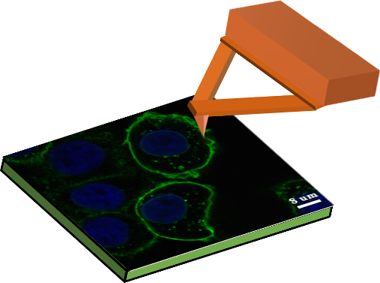
- regulation of cell activity, and hence to the health level of organisms. Here, the morphology and mechanical properties of normal pancreatic cells (HDPE6-C7) and pancreatic cancer cells (AsPC-1, MIA PaCa-2, BxPC-3) were studied by atomic force microscopy. In addition, the mechanical properties of MIA PaCa-2
- aggressive cancer cell BxPC-3. In addition, the Young's modulus of MIA PaCa-2 rises with the increasing of DOX concentration. This study may provide a new strategy of detecting cancer, and evaluate the possible interaction of drugs on cells. Keywords: anticancer drug; atomic force microscopy; nanomechanical
- from measuring the alteration of cellular mechanics, which provides a guide for the innovation and development of anticancer drugs [11]. Atomic force microscopy (AFM) has matured into a forceful nanoscale platform for imaging biological samples and quantifying biomechanical properties of living cells


Cantilever signature of tip detachment during contact resonance AFM
Beilstein J. Nanotechnol. 2021, 12, 1286–1296, doi:10.3762/bjnano.12.96
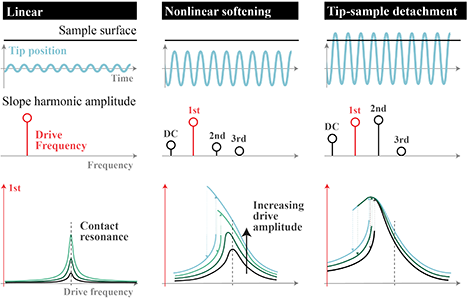
- Devin Kalafut Ryan Wagner Maria Jose Cadena Anil Bajaj Arvind Raman School of Mechanical Engineering, Purdue University, West Lafayette, IN 47907, USA 10.3762/bjnano.12.96 Abstract Contact resonance atomic force microscopy, piezoresponse force microscopy, and electrochemical strain microscopy are
- atomic force microscopy modes in which the cantilever is held in contact with the sample at a constant average force while monitoring the cantilever motion under the influence of a small, superimposed vibrational signal. Though these modes depend on permanent contact, there is a lack of detailed analysis
- connect the qualitative and quantitative behavior to experimental features. Keywords: atomic force microscopy (AFM); contact resonance; nonlinear normal mode (NNM); tip–sample detachment; photothermal excitation; Introduction Contact resonance atomic force microscopy (CR-AFM) [1][2], piezoresponse force


A review on slip boundary conditions at the nanoscale: recent development and applications
Beilstein J. Nanotechnol. 2021, 12, 1237–1251, doi:10.3762/bjnano.12.91
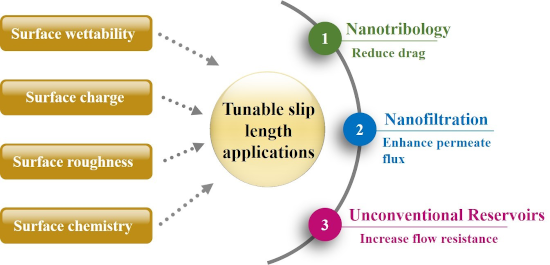
- nanoscale systems [8][34][38][39]. For example, based on surface force apparatus (SFA) and atomic force microscopy (AFM) measurements, many researchers have investigated the slippage characteristics of nanoconfined liquid flows and derived the slip length according to its correlation with the hydrodynamic


Two dynamic modes to streamline challenging atomic force microscopy measurements
Beilstein J. Nanotechnol. 2021, 12, 1226–1236, doi:10.3762/bjnano.12.90
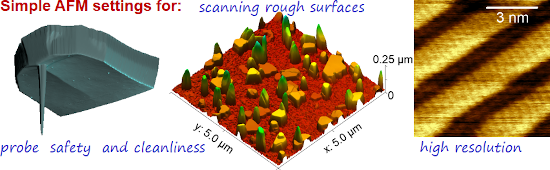
- 10.3762/bjnano.12.90 Abstract The quality of topographic images obtained using atomic force microscopy strongly depends on the accuracy of the choice of scanning parameters. When using the most common scanning method – semicontact amplitude modulation (tapping) mode, the choice of scanning parameters is
- formalized choice of the imaging parameters in these modes allows addressing a wide range of formerly challenging tasks – from scanning rough samples with high aspect ratio features to molecular resolution imaging. Keywords: atomic force microscopy; dissipation mode; scanning probe microscopy; vertical mode
- ; Introduction More than 30 years have passed since the introduction of atomic force microscopy (AFM) [1]. This technique has established itself as an indispensable tool for characterization not only in physics and chemistry, but also in related fields of research including medicine, biology, and materials


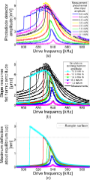
Open-loop amplitude-modulation Kelvin probe force microscopy operated in single-pass PeakForce tapping mode
Beilstein J. Nanotechnol. 2021, 12, 1115–1126, doi:10.3762/bjnano.12.83
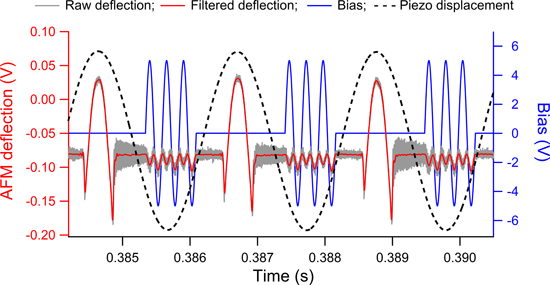
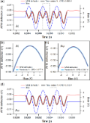
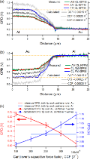
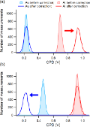
- (OL) variant of Kelvin probe force microscopy (KPFM) provides access to the voltage response of the electrostatic interaction between a conductive atomic force microscopy (AFM) probe and the investigated sample. The measured response can be analyzed a posteriori, modeled, and interpreted to include





A new method for obtaining model-free viscoelastic material properties from atomic force microscopy experiments using discrete integral transform techniques
Beilstein J. Nanotechnol. 2021, 12, 1063–1077, doi:10.3762/bjnano.12.79
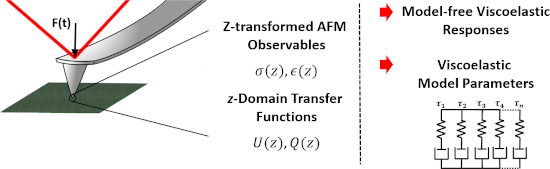
- at the micro- and the nanoscale is commonly performed with the aid of force–distance relationships acquired using atomic force microscopy (AFM). The general strategy for existing methods is to fit the observed material behavior to specific viscoelastic models, such as generalized viscoelastic models
- unbounded inputs traditionally used to acquire force–distance relationships in AFM, such as ramp functions, in which the cantilever position is displaced linearly with time for a finite period of time. Keywords: atomic force microscopy; force spectroscopy; material properties; viscoelasticity
- ; Introduction Atomic force microscopy (AFM) is a prominent technique for investigating material properties at the micro- and the nanoscale [1][2][3], within which a wide variety of instruments, probes, and analysis techniques have been developed to attempt meaningful material property extraction [4][5][6][7][8


Revealing the formation mechanism and band gap tuning of Sb2S3 nanoparticles
Beilstein J. Nanotechnol. 2021, 12, 1021–1033, doi:10.3762/bjnano.12.76
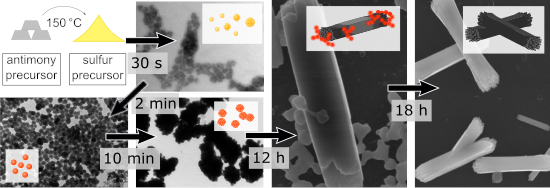
- . Atomic force microscopy (AFM) as an additional method of size determination was applied to confirm the TEM results of the sample obtained after 30 s reaction time. AFM enables imaging of the nanoparticles under milder conditions than TEM and at ambient conditions so that thermal damage of the


Molecular assemblies on surfaces: towards physical and electronic decoupling of organic molecules
Beilstein J. Nanotechnol. 2021, 12, 950–956, doi:10.3762/bjnano.12.71

- . To a lesser extent, metal oxides have also been used, for which defects and charging often pose additional challenges [44][45][46]. On electronically insulating surfaces, non-contact atomic force microscopy (AFM) is the method of choice to study molecular assemblies and individual molecules in real
Self-assembly of Eucalyptus gunnii wax tubules and pure ß-diketone on HOPG and glass
Beilstein J. Nanotechnol. 2021, 12, 939–949, doi:10.3762/bjnano.12.70
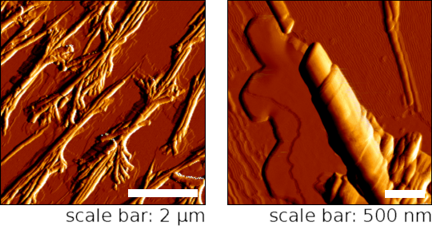
- is unknown. In this study, extracted wax of E. gunnii leaves and pure ß-diketone were recrystallized on two different artificial materials and analyzed by scanning electron microscopy (SEM) and atomic force microscopy (AFM) to study their formation process. Both the wax mixture and pure ß-diketone
- formation of the tubules [26]. Atomic force microscopy (AFM) investigations further showed that the elongation of secondary alcohol tubules is based on a helical growth mechanism [27]. Recrystallization experiments with nonacosan-10-ol on non-biological substrates showed that the chemical and physical
- morphologically different type of wax tubules is unknown. On Eucalyptus gunnii leaves mainly the characteristic ß-diketone tubules are present (Figure 1), but helically wound ribbons and a transitional form between both shapes are also present. Atomic force microscopy investigations of tubule formation on living




The role of convolutional neural networks in scanning probe microscopy: a review
Beilstein J. Nanotechnol. 2021, 12, 878–901, doi:10.3762/bjnano.12.66
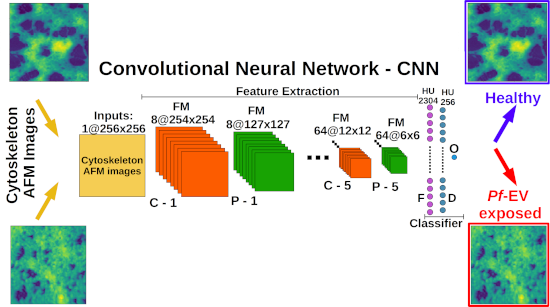
- , convolutional neural networks, and how it is transforming the acquisition and analysis of scanning probe data. Keywords: atomic force microscopy (AFM); deep learning; machine learning; neural networks; scanning probe microscopy (SPM); Review Introduction: traditional machine learning vs deep learning Machine