Search results
Search for "coordination" in Full Text gives 270 result(s) in Beilstein Journal of Nanotechnology. Showing first 200.
Nickel nanoparticles supported on a covalent triazine framework as electrocatalyst for oxygen evolution reaction and oxygen reduction reactions
Beilstein J. Nanotechnol. 2020, 11, 770–781, doi:10.3762/bjnano.11.62
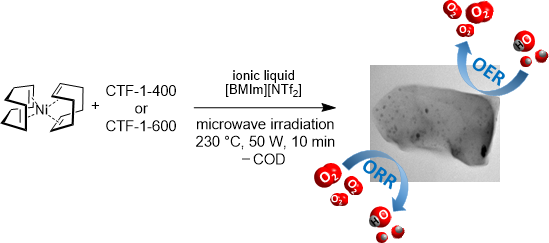
- ]. CTFs can be synthesized through different methods and under different reaction conditions, which enables the control over porosity and surface area [29][30][31][32]. The nitrogen moieties within the CTFs can provide coordination anchors or support for metal species [33][34]. They allow for the
- with lone electron pairs, which enable a coordination of nickel, a high chemical and thermal stability arising from the covalently bonded framework as well as high surface area and large pore volume, which allow for a facile molecular transport of reactants and products. We report a route to Ni


Silver-decorated gel-shell nanobeads: physicochemical characterization and evaluation of antibacterial properties
Beilstein J. Nanotechnol. 2020, 11, 620–630, doi:10.3762/bjnano.11.49
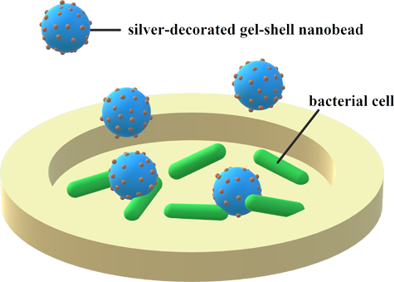
- than that with sulfonic groups. Thus, the coordination of silver nanoparticles is preferred in terms of thiol rather than sulfonic groups. If the above scenario is correct, one can deduce that, due to the conversion of ca. 55% of the sulfonic groups, the charge accumulated on the particles (due to


Interfacial charge transfer processes in 2D and 3D semiconducting hybrid perovskites: azobenzene as photoswitchable ligand
Beilstein J. Nanotechnol. 2020, 11, 466–479, doi:10.3762/bjnano.11.38
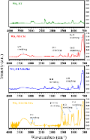
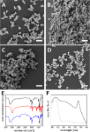
- [45]. It is well known, that vibrations of surface-bound amines are quenched through coordination. Signals at 832, 765, 727 and 685 cm−1 can be assigned to the aromatic vibrations of the phenyl rings of azobenzene. These significant vibrations can as well be found in 3D-AzoC2 (blue), which indicates a
- successful functionalization. The UV–vis absorption spectra, shown in Figure 4F, confirm these findings. 3D-AzoC2 shows absorption maxima at 518 and 324 nm. The absorption at 518 nm is assigned to the excitonic bandgap of the perovskite. The absorption at 324 nm indicates the coordination of the azobenzene
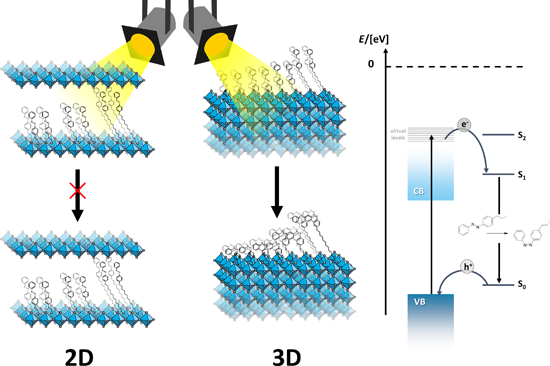
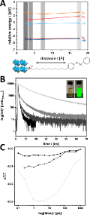
- , Figures S10–S12), the photoswitching reaction is strongly facilitated. The improvement can be observed for all ligands (Table 4). It can be concluded that the photoswitching from trans- to cis-isomer is enhanced through the coordination of the azobenzene to the semiconductor. Photoswitching as a




Nanoparticles based on the zwitterionic pillar[5]arene and Ag+: synthesis, self-assembly and cytotoxicity in the human lung cancer cell line A549
Beilstein J. Nanotechnol. 2020, 11, 421–431, doi:10.3762/bjnano.11.33
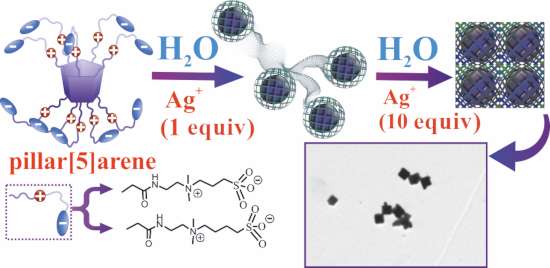
- presence of a preorganized macrocyclic structure makes the process of controlled supramolecular self-assembly possible with certain coordination sites. In this paper, we report the first example of using nontoxic, water-soluble pillar[5]arene derivatives containing sulfobetaine fragments to produce




DFT calculations of the structure and stability of copper clusters on MoS2
Beilstein J. Nanotechnol. 2020, 11, 391–406, doi:10.3762/bjnano.11.30
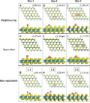
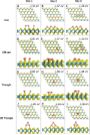
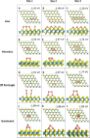
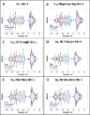
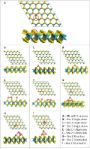
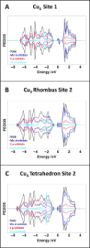
- determined for the Cu atoms on the defective monolayer are shown in Table 8. The computed Bader charge at the Cu atom at site 1 indicates little oxidation of the Cu atom. This arises due to coordination of Cu to three Mo atoms so that oxidation of the Cu is not favourable. The other binding sites have
High-performance asymmetric supercapacitor made of NiMoO4 nanorods@Co3O4 on a cellulose-based carbon aerogel
Beilstein J. Nanotechnol. 2020, 11, 240–251, doi:10.3762/bjnano.11.18
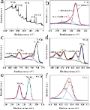
- corresponding to the Mo 3d5/2 and Mo 3d3/2 levels of Mo6+, respectively [39]. Figure 4f shows the core-level spectrum of O 1s. It can be divided into two main peaks at 530.4 and 531.2 eV, which are attributed to typical metal–oxygen bonds and oxygen ions of low coordination numbers at the surface, respectively




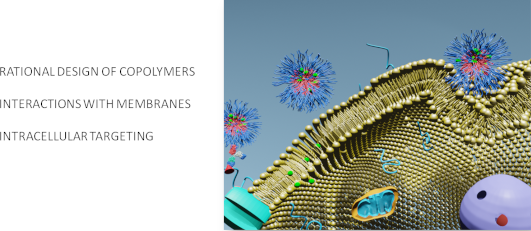
Rational design of block copolymer self-assemblies in photodynamic therapy
Beilstein J. Nanotechnol. 2020, 11, 180–212, doi:10.3762/bjnano.11.15


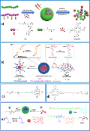


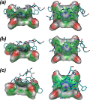


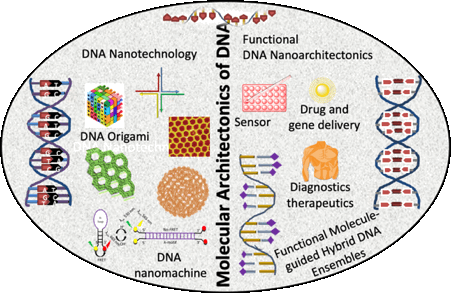
Molecular architectonics of DNA for functional nanoarchitectures
Beilstein J. Nanotechnol. 2020, 11, 124–140, doi:10.3762/bjnano.11.11


Advanced hybrid nanomaterials
Beilstein J. Nanotechnol. 2019, 10, 2563–2567, doi:10.3762/bjnano.10.247

- nanoparticles [34]. The resulting gold–alendronate nanoplatform combines antitumor activity through drug delivery and photothermal therapy, as illustrated in vitro on the inhibition of prostate cancer cells. In the field of hybrid coordination networks, new lanthanide-based networks synthesized by a solvo
- -ionothermal reaction or organic ligands are reported in “Magnetic and luminescent coordination networks based on imidazolium salts and lanthanides for sensitive ratiometric thermometry” [35]. Compounds associating the imidazolium ligand with several rare earth ions behave as a ratiometric thermometer and
Small protein sequences can induce cellular uptake of complex nanohybrids
Beilstein J. Nanotechnol. 2019, 10, 2477–2482, doi:10.3762/bjnano.10.238
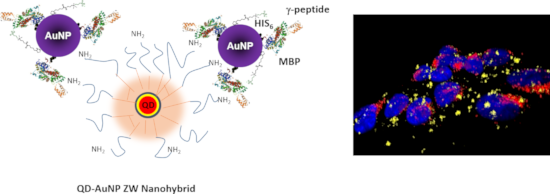
- have also been discussed [12][14][15]. More recently, there have been a few reports discussing the use of luminescent Eu-loaded hydroxyapatite nanocrystals for rapid HeLa cancer cell imaging [9][11][16], or the nanostructure self‐assembly driven by amino acid coordination to increase the biological
- route which relies on direct metal-coordination interactions. Here, amine-to-gold and imidazole-to-gold coordination were applied to couple QDs and AuNPs, or to conjugate His6-MBP-γ onto the AuNPs, respectively [8][23]. AuNPs stabilized with zwitterion-modified lipoic acid (LA-ZW-AuNPs) were selected

Self-assembly of a terbium(III) 1D coordination polymer on mica
Beilstein J. Nanotechnol. 2019, 10, 2440–2448, doi:10.3762/bjnano.10.234
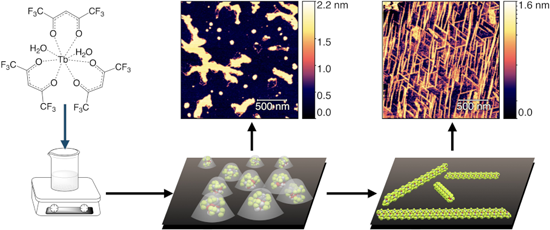
- few molecules maintain their characteristic physical behavior after their conversion from the bulk state into such functional materials. Coordination polymers are very suitable candidates for this purpose as they offer very robust properties as well as high processability [10] and fascinating on
- the observed objects. Results Coordination polymer growth on mica The [Tb(hfac)3·2H2O]n molecular nanochains have been grown via drop casting of a dilute cyclohexane solution on a freshly air-cleaved mica substrate. The mica substrate was chosen because of its low roughness [23] making it particularly
- layering on the mica substrate. This may be a result of i) the geometric distribution of the Tb coordination environment in the deposits similar to what has been observed when SMMs are dissolved in liquid matrixes [27] or ii) a modification of the spin–phonon coupling, as the phonon bath of such deposits


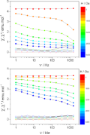


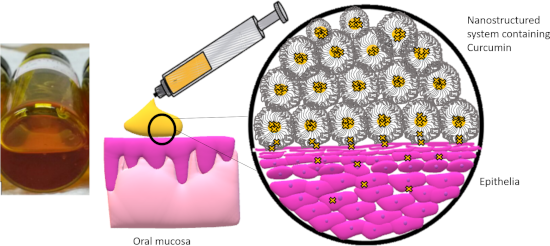
Design of a nanostructured mucoadhesive system containing curcumin for buccal application: from physicochemical to biological aspects
Beilstein J. Nanotechnol. 2019, 10, 2304–2328, doi:10.3762/bjnano.10.222


Targeted therapeutic effect against the breast cancer cell line MCF-7 with a CuFe2O4/silica/cisplatin nanocomposite formulation
Beilstein J. Nanotechnol. 2019, 10, 2217–2228, doi:10.3762/bjnano.10.214
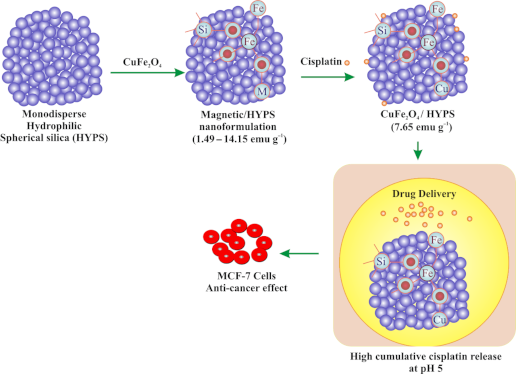
- –vis analysis revealed the functionalization of cisplatin in tetrahedral and octahedral coordination in the CuFe2O4/HYPS composite. Compared to other supports such as mesocellular foam and silicalite, the release of cisplatin using the dialysis membrane technique was found to be superior when CuFe2O4
- multifunctional biomedical applications. The crystalline phase, morphology, magnetization, and coordination environment of various spinel species were characterized using X-ray diffraction (XRD), BET surface area measurements, vibrating sample magnetometry (VSM), diffuse reflectance UV–vis spectroscopy (DR UV–vis
- external magnetic field [18]. In the case of CuFe2O4 with x value between 0.08 and 0.15, a lower saturated magnetization value was observed (≤1.0 emu/g), while increasing the x value to 0.17 showed a high magnetization of 7.65 emu/g. In order to understand the cisplatin coordination environment of CuFe2O4


Mannosylated brush copolymers based on poly(ethylene glycol) and poly(ε-caprolactone) as multivalent lectin-binding nanomaterials
Beilstein J. Nanotechnol. 2019, 10, 2192–2206, doi:10.3762/bjnano.10.212
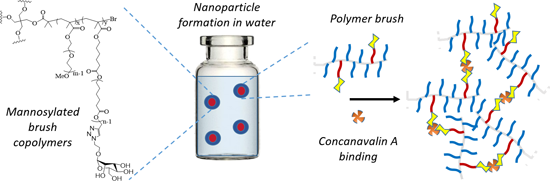
- ability of glycopolymers to bind lectins was assessed using Concanavalin A (Con A), a model lectin able to recognize α-ᴅ-mannosyl and β-ᴅ-glucosyl residues. At physiological pH values, Con A is a tetramer, composed by four 26 kDa monomeric units, each of them possessing one coordination site [36][37



Green and scalable synthesis of nanocrystalline kuramite
Beilstein J. Nanotechnol. 2019, 10, 2073–2083, doi:10.3762/bjnano.10.202
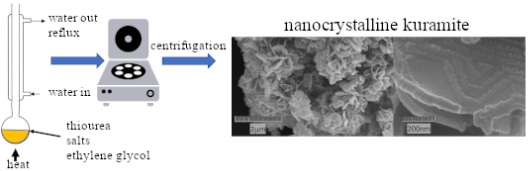
- corresponding multiparameter fits. The fit results for the I coordination shell with S are reported in Table 4. EXAFS analysis at the Cu K-edge leads to Cu–S bond distances extremely close to those of Cu in a CTS structure, in the typical range of a four-fold coordination with S (e.g., the work of Bacewicz et
- with Sn in tetrahedral coordination with S atoms in a CTS structure. Although the EXAFS signal is characterized by an almost single-frequency oscillation, the fitting procedure with the sole Sn–S path leads to a residual signal with a well-defined oscillation period. Most of the residual signal was
- marked dampening of the second shell signal. This revealed significant differences between the Sn and Cu local environments, which is probably due to the small crystallite size and the high concentration of defects (in agreement with the XRD broadening). The presence of a second coordination shell with


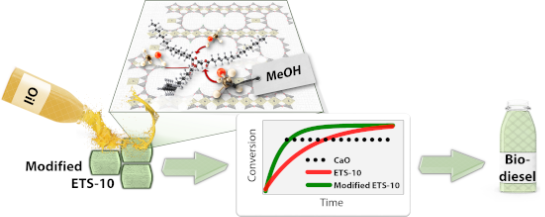
Synthesis of highly active ETS-10-based titanosilicate for heterogeneously catalyzed transesterification of triglycerides
Beilstein J. Nanotechnol. 2019, 10, 2039–2061, doi:10.3762/bjnano.10.200
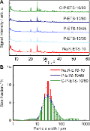
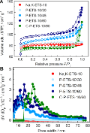
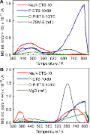
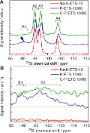
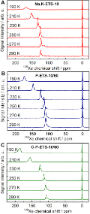
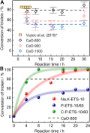
- zero-field splitting (ZFS) parameter (D >> 10 GHz) and a ratio between rhombic and axial ZFS of 1/3. Such Fe(III) centers have been commonly observed in zeolite and silica materials and were assigned to iron sites with a distorted tetrahedral coordination geometry [56][57]. In addition, P-ETS-10/60








Review of advanced sensor devices employing nanoarchitectonics concepts
Beilstein J. Nanotechnol. 2019, 10, 2014–2030, doi:10.3762/bjnano.10.198
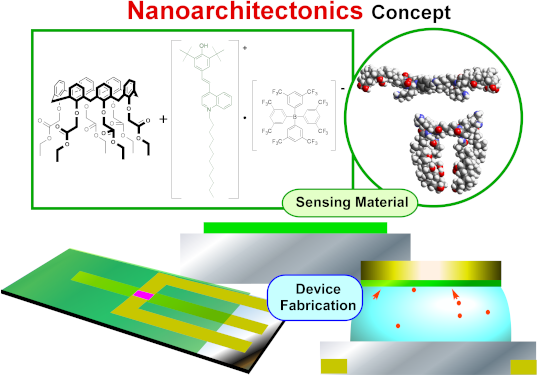
- frameworks and porous coordination polymers have received much attention because of the various functional nanoporous structures that can be engineered through self-assembly from selected components [127][128][129][130]. Pan, Su, and co-workers fabricated metal–organic framework materials with microporous
- (Coordination Asymmetry) and CREST JST Grant Number JPMJCR1665.





The influence of porosity on nanoparticle formation in hierarchical aluminophosphates
Beilstein J. Nanotechnol. 2019, 10, 1952–1957, doi:10.3762/bjnano.10.191
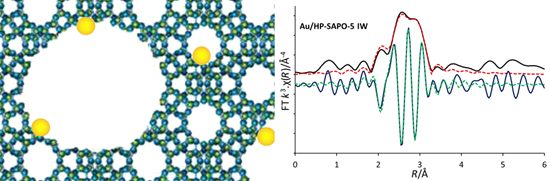
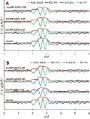
- average oxidation state (Auδ+, Figure S11, Supporting Information File 1) than the Au foil (Au0) [20]. In all cases the data was satisfactorily fit with a single Au–Au path, at a bond distance of 2.85–2.86 Å (Figure 3 and Table 1). The Au coordination number for all Au/SAPO-5 systems was found to be lower
- than the theoretical value of 12 for bulk Au foil, suggesting the formation of non-bulk Au systems. In both systems the coordination number was found to vary as AE < IW < WI, indicating AE produces smaller sized nanoparticles [21], despite WI having significantly lower Au loading. This again emphasises
- loading of the WI systems makes fitting infeasible. These measurements confirm that the different porosity of the two systems has only a subtle influence on the nanoparticle environment and coordination. A potential cause of this being the lack of porosity in the Au/MP-SAPO-5 species, hindering the
Long-term entrapment and temperature-controlled-release of SF6 gas in metal–organic frameworks (MOFs)
Beilstein J. Nanotechnol. 2019, 10, 1851–1859, doi:10.3762/bjnano.10.180
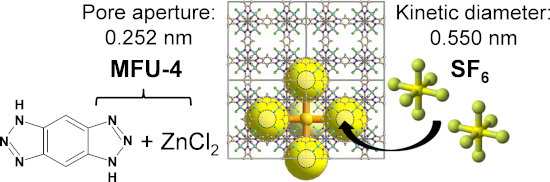
- frameworks (MOFs); sulfur hexafluoride; Introduction Metal–organic frameworks (MOFs) are coordination polymers with organic ligands containing (potential) voids [1]. Their porosity and high surface area make them attractive materials for adsorption-based applications [2][3][4][5]. MOFs have been suggested


Materials nanoarchitectonics at two-dimensional liquid interfaces
Beilstein J. Nanotechnol. 2019, 10, 1559–1587, doi:10.3762/bjnano.10.153
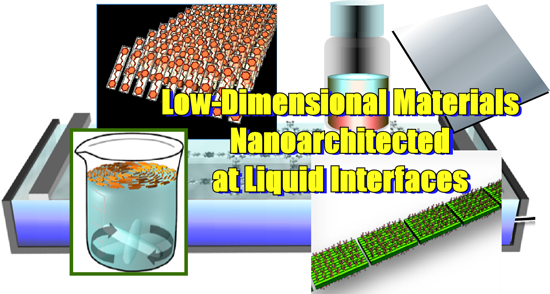
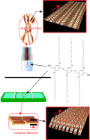
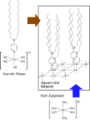
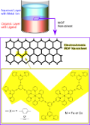
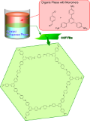
- (Figure 11) [227]. The demonstrated network structures are connected by the coordination of terpyridine moieties to either cobalt or iron ions, and the synthesized films change their colour depending on the oxidation levels of the cobalt and iron ions. The colours of those MOF films can be modulated













Imaging the surface potential at the steps on the rutile TiO2(110) surface by Kelvin probe force microscopy
Beilstein J. Nanotechnol. 2019, 10, 1228–1236, doi:10.3762/bjnano.10.122
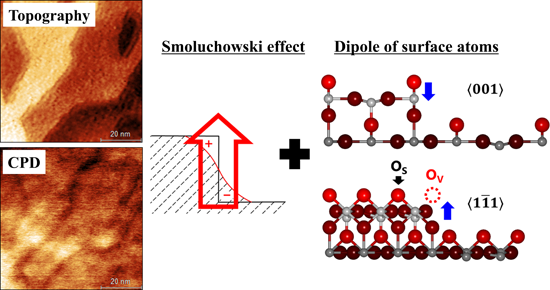
- low coordination and unique charge distribution [16][17][18][19]. In the case of TiO2, steps act as preferential sites for the adsorption of molecules and metal clusters [20][21][22], as active sites for catalytic reactions [23][24][25], and as the central elements of surface reconstructions [26][27
- distributed over a distance greater than 1 nm above the surface (z-direction). Therefore, the drop in CPD at the step reflected the intrinsic surface potential. There might occur an electron distribution by orbit splitting, because the coordination number is smaller on the step edges than on the terrace [18
- electron–hole recombination, increasing the quantum yield for the chemical reaction, and enhancing the catalytic reactivity. These results demonstrate novel properties of steps regarding the charge distribution, except for low coordination. The proposed dipole model should not be unique to TiO2 and should
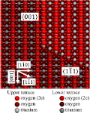
![[Graphic 16]](/bjnano/content/inline/2190-4286-10-122-i16.svg?max-width=637&scale=1.18182) and
and ![[Graphic 17]](/bjnano/content/inline/2190-4286-10-122-i17.svg?max-width=637&scale=1.18182) .
.
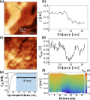

![[Graphic 38]](/bjnano/content/inline/2190-4286-10-122-i38.svg?max-width=637&scale=1.18182) and
and ![[Graphic 39]](/bjnano/content/inline/2190-4286-10-122-i39.svg?max-width=637&scale=1.18182) steps. (a) Topographic image...
steps. (a) Topographic image...


![[Graphic 72]](/bjnano/content/inline/2190-4286-10-122-i72.svg?max-width=637&scale=1.18182) , b)
, b) ![[Graphic 73]](/bjnano/content/inline/2190-4286-10-122-i73.svg?max-width=637&scale=1.18182) , c) reduced
, c) reduced ![[Graphic 74]](/bjnano/content/inline/2190-4286-10-122-i74.svg?max-width=637&scale=1.18182) , and d)
, and d) ![[Graphic 75]](/bjnano/content/inline/2190-4286-10-122-i75.svg?max-width=637&scale=1.18182) steps. B...
steps. B...
Photoactive nanoarchitectures based on clays incorporating TiO2 and ZnO nanoparticles
Beilstein J. Nanotechnol. 2019, 10, 1140–1156, doi:10.3762/bjnano.10.114
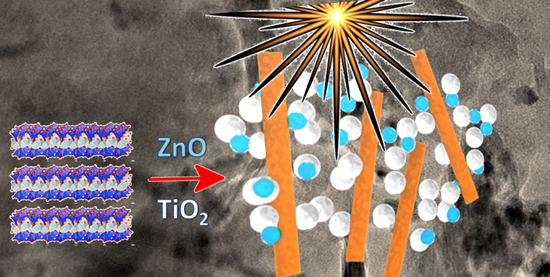
- alkoxides, salts or coordination complexes, remain associated with the delaminated clay sheets, resulting in stable and efficient photoactive catalysts of particular interest for the removal of organic pollutants from wastewater [84][87][89][106][107][118][128]. Akkari and co-workers [118] have recently



Synthesis and characterization of quaternary La(Sr)S–TaS2 misfit-layered nanotubes
Beilstein J. Nanotechnol. 2019, 10, 1112–1124, doi:10.3762/bjnano.10.111
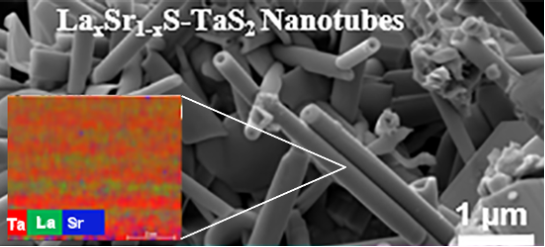
- MX–TX2–TX2, etc. [17][18][19][20]. The (distorted) rock-salt layer consists of two atomic planes. In the hexagonal TX2 lattice, the metal M atom is sandwiched between two chalcogen (X) atoms, in a trigonal bi-prism (2H) or octahedral (1T) coordination. The MX and TX2 layers are stacked together via
- , instead of the stable 2H-TaS2 (2H-NbS2) [35][38] polytype, the Nb-rich LaS–NbxTa1−xS2 slabs were all found to be in the 1T state, i.e., with octahedral coordination of the Ta(Nb) atoms in the NbxTa1−xS2 lattice. The charge transfer from the M (rare earth element) to the Ta atom of TaS2 in MS–TaS2 MLC has
- and the S atoms of TaS2 layer can be also observed (see the red regions between La and S in Figure 10a). Such localized and unidirectional enhancement of the electron density can be ascribed to the coordination (covalent-like) La–S(TaS2) bonding in the MLC. Noticeably, the substituting Sr atoms do not


Co-doped MnFe2O4 nanoparticles: magnetic anisotropy and interparticle interactions
Beilstein J. Nanotechnol. 2019, 10, 856–865, doi:10.3762/bjnano.10.86
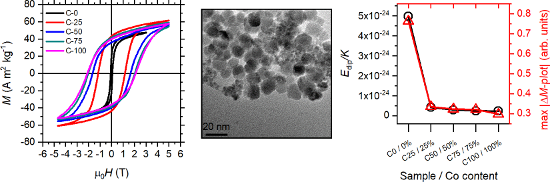
- ]. At the nanoscale, the cation distribution of the spinel structure is deeply affected by the local broken bonds that lead to a coordination variation at the particle surface. Furthermore, the oxidation of Mn2+ to Mn3+ is a common event that accrues in the transition from the bulk state toward


Tungsten disulfide-based nanocomposites for photothermal therapy
Beilstein J. Nanotechnol. 2019, 10, 811–822, doi:10.3762/bjnano.10.81
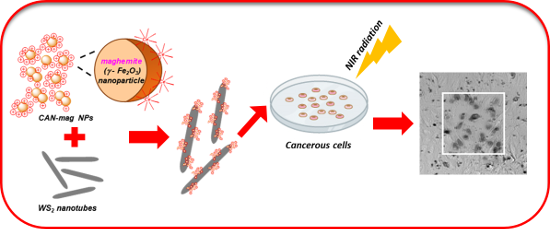
- to the walls of TMDC nanostructures is a challenging task. Coordinative chemistry is one approach used to face this challenge. The Tremel group has been successfully developing coordination-chemistry-based strategies for the functionalization of TMDC nanostructures for more than a decade. In 2006
- chalcophylic metal ions (nickel, iron, ruthenium) and leaving parts of the ion coordination sites free for docking to the chalcogen layer. The molecular structure of both NTA and TerPy enables performing versatile chemistry on the ligand. Cerium is a metal of the lanthanide series with versatile coordinative