


Search results
Search for "defect" in Full Text gives 402 result(s) in Beilstein Journal of Nanotechnology. Showing first 200.
Determining amplitude and tilt of a lateral force microscopy sensor
Beilstein J. Nanotechnol. 2021, 12, 517–524, doi:10.3762/bjnano.12.42
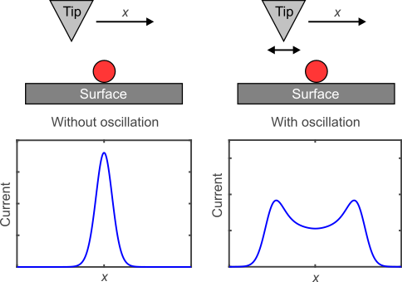
- experimental setup is to study an isolated surface feature, for instance, a defect or an adsorbate, on a flat terrace. In case of “normal” AFM, where the tip oscillates perpendicular to the surface, long-range forces including electrostatic and van der Waals forces contribute to the measured Δf signal, which
- , in principle, to any surface feature such as, for example, a commonly used PTCDA molecule or a surface defect. The fitting of the parameters for the 2D current map method was done by a fitting algorithm written in MATLAB, and details of the algorithm were explained. A MATLAB file is included in


Interface interaction of transition metal phthalocyanines with strontium titanate (100)
Beilstein J. Nanotechnol. 2021, 12, 485–496, doi:10.3762/bjnano.12.39
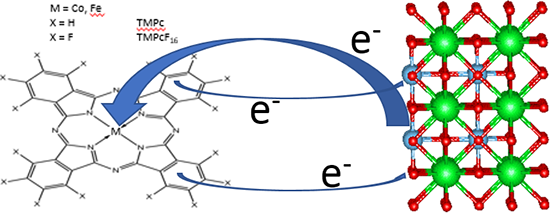
- component in the corresponding C 1s spectra at the interface (cf. Table S9, Supporting Information File 1). From the F 1s peak fit we conclude an average of two to three broken C–F bonds per molecule (Table S10, Supporting Information File 1). We note that on defect-rich, highly reactive TiO2(100) a similar
- components (e.g., in N 1s spectra) for the TMPcs on STO(100) may point to a comparably defect-free surface. The cleavage of some intramolecular C–F bonds of TMPcF16 was observed at both STO(100) and defect-rich rutile surfaces. Since not all C–F bonds are broken, this reaction occurs only at particular sites


Extended iron phthalocyanine islands self-assembled on a Ge(001):H surface
Beilstein J. Nanotechnol. 2021, 12, 232–241, doi:10.3762/bjnano.12.19
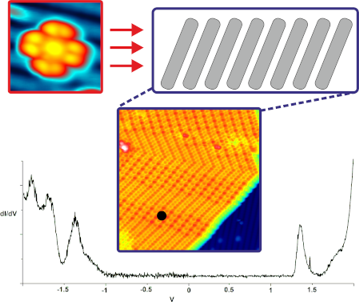
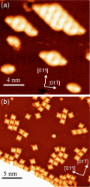
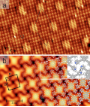
- marked by a white circle is removed from the defect and placed onto a perfectly hydrogenated area. Panel (b) shows the appearance of the molecule during upward scanning. The slow scan direction is marked by a white arrow on the right. (c) High-resolution STM image. The molecule marked by a white circle
Scanning transmission helium ion microscopy on carbon nanomembranes
Beilstein J. Nanotechnol. 2021, 12, 222–231, doi:10.3762/bjnano.12.18
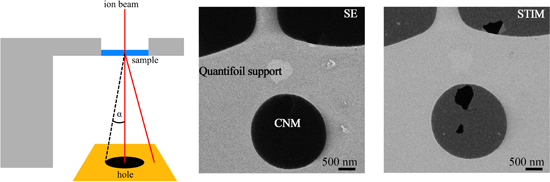
- established as a key nanofabrication tool for milling [7][8][9], defect engineering [10][11], and resist-based lithography [12][13], overcoming the resolution limitations of other FIB techniques [14][15]. Both bulk samples as well as thin membranes have been structured using the HIM. On membranes, the sputter


TiOx/Pt3Ti(111) surface-directed formation of electronically responsive supramolecular assemblies of tungsten oxide clusters
Beilstein J. Nanotechnol. 2021, 12, 203–212, doi:10.3762/bjnano.12.16
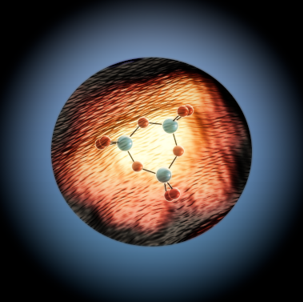
- -coordinated tungsten site possesses a localized 5d electron pair and, thus, can be regarded as an oxygen-deficient defect site [11]. This results in a significantly increased oxygen adsorption energy of −78 kcal·mol−1 for the W3O8 cluster. During the past decades, W3O9 clusters were investigated on different
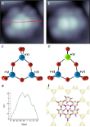
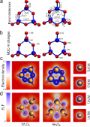
- purpose, an oxide surface with a lower defect concentration should be more promising. W3O9 adsorption on the w’-TiOx phase grown on Pt3Ti(111) Figure 2a and Figure 2b show the less defective w’-TiOx phase with its characteristic wagon-wheel structure caused by a moiré pattern of the Ti–O bilayer and the



ZnO and MXenes as electrode materials for supercapacitor devices
Beilstein J. Nanotechnol. 2021, 12, 49–57, doi:10.3762/bjnano.12.4
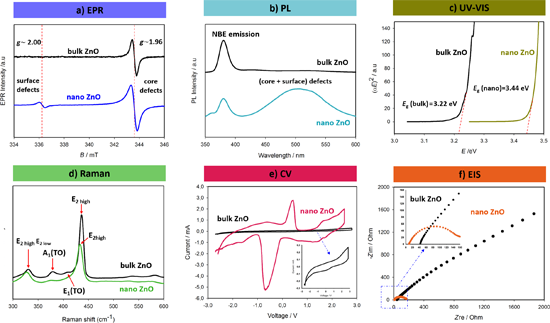
- , recently developed metal oxides, specifically nanostructured ZnO, and MXenes with their defect structures, size effects, as well as optical and electronic properties have been presented as electrode material in supercapacitor devices. The discussion of MXenes along with ZnO, although different in chemistry
- , also highlights the differences in dimensionality when it comes to defect-driven effects, especially in carrier transport. The volume under the influence of the defect centers is expected to be different in bulk and 2D structures, regardless of composition. Hence, analysis and discussion of both
- supercapacitor device are important factors in this scenario. Nowadays, ZnO as metal oxide and MXene as 2D materials are the rising stars of electrode materials in supercapacitors due to their highly controllable properties. Therefore, we review the findings about ZnO and MXene in terms of defect structures and
Atomic layer deposited films of Al2O3 on fluorine-doped tin oxide electrodes: stability and barrier properties
Beilstein J. Nanotechnol. 2021, 12, 24–34, doi:10.3762/bjnano.12.2
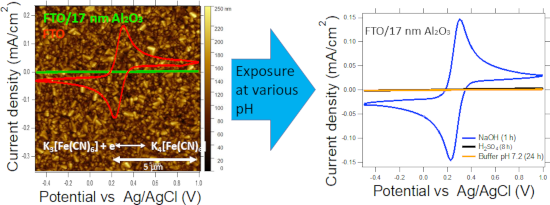
- , or to the perovskite (depending on the device type). This parasitic effect occurs through defects, such as pinholes and cracks in the blocking layer. Their presence is identified by the occurrence of anodic currents assigned to the oxidation of [Fe(CN)6]4− at FTO areas exposed by these defect sites
- covered by a 10 nm ALD Al2O3 film. The Sn pattern was obtained from [24]. Analysis of EPA and of the type of defect for as-deposited Al2O3 films of various thickness values. Data from cyclic voltammetry of [Fe(CN)6]3−/4−, shown in Figure 2 and in Figure S4, Supporting Information File 1. Photographs of


Bio-imaging with the helium-ion microscope: A review
Beilstein J. Nanotechnol. 2021, 12, 1–23, doi:10.3762/bjnano.12.1

- doped with the fluorescent nitrogen-vacancy defect as well as rare earth metal-based nanoparticles regarding bleaching under the ion beam. Although they are believed to be photostable under electron irradiation, the IL of the nanoscale diamonds decreased significantly under the ion beam even at doses
- published transmission electron micrographs of sections, provided pseudo-3D data. The authors pointed out that using conventional SEM it was not possible to determine whether the glomerular basement membrane defect affects the endothelial structure. However, they stated “HIM allows the endothelial surface


Towards 3D self-assembled rolled multiwall carbon nanotube structures by spontaneous peel off
Beilstein J. Nanotechnol. 2020, 11, 1865–1872, doi:10.3762/bjnano.11.168
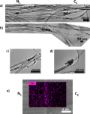
- /N2/C3 structure is shown in Figure 2. The D peak refers to a defect in the MWCNT structure. An intense D peak (relative to the G peak intensity) correlates to higher defects, for instance, induced by nitrogen doping. The G and 2D peaks are related to the graphitization of MWCNTs. An intense G peak



Unravelling the interfacial interaction in mesoporous SiO2@nickel phyllosilicate/TiO2 core–shell nanostructures for photocatalytic activity
Beilstein J. Nanotechnol. 2020, 11, 1834–1846, doi:10.3762/bjnano.11.165
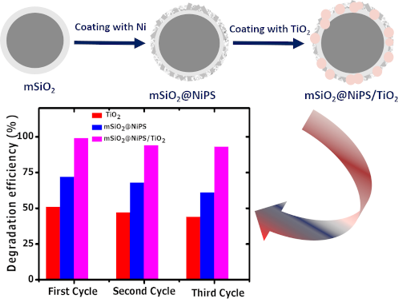
- three peaks with binding energies of 534.1, 533.2, and 532 eV (Figure 4c). The peaks with lower binding energy correspond to the presence of lattice oxygen bonded to Si, Ni, and/or Ti while the higher binding energy is due to defect oxygen associated with the presence of surface hydroxy groups [56
- electronegativity and ionic radius between the metal ions and titania can alter the concentration of oxygen vacancies in the TiO2 lattice. Hence, the higher electronegativity of Ni2+ in NiPS [43] can induce defect sites within the structure and, consequently, alter light absorption and charge-transfer processes [51


Direct observation of the Si(110)-(16×2) surface reconstruction by atomic force microscopy
Beilstein J. Nanotechnol. 2020, 11, 1750–1756, doi:10.3762/bjnano.11.157
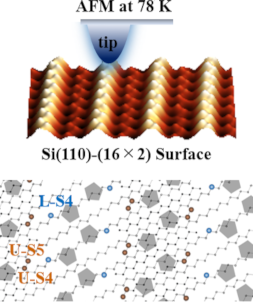
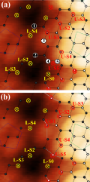
- pentagons actually consisted of five atoms. A non-pentagonal structure in the 16×2 reconstruction and the disorder region were observed with high resolution, and the defect structure of the pentagon due to the lack of a P3 atom in the structure of pentagon was observed. We also observed the atoms of U-S4, U



Out-of-plane surface patterning by subsurface processing of polymer substrates with focused ion beams
Beilstein J. Nanotechnol. 2020, 11, 1693–1703, doi:10.3762/bjnano.11.151
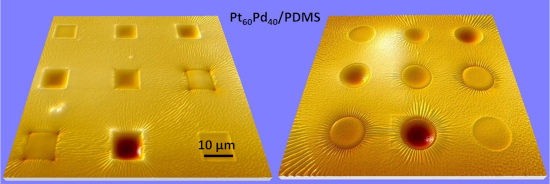
- (Figure S1a and Figure S1b, Supporting Information File 1), meaning that this fraction is wasted with regard to defect generation inside the PMMA layer. In contrast, Ne+ and Ga+ ions lose their energy entirely in the PMMA layer; therefore, the total ion energy is utilized for generating the defects in


The influence of an interfacial hBN layer on the fluorescence of an organic molecule
Beilstein J. Nanotechnol. 2020, 11, 1663–1684, doi:10.3762/bjnano.11.149
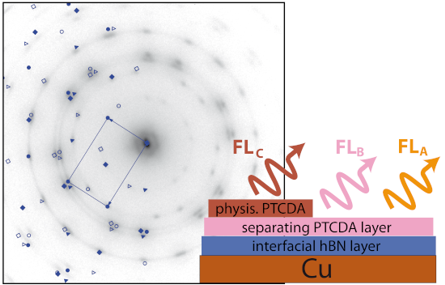
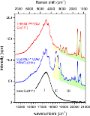
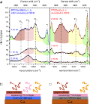
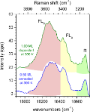
- spectrum). An enhancement of radiative interband transitions has been reported for Cu nanoparticles [40]. We thus speculate that surface defects (protrusions) play a role here. This is in agreement with our observation that the intensity of this “defect luminescence” in region I depends on the exact
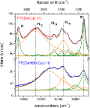
- ). These peaks shift according to the wavelength of the laser (see Appendix B). Notably, some Raman peaks are superposed in the region of the defect luminescence of the Cu(111) surface (region I), too. 2 Raman modes First, we will discuss the Raman lines. The peaks in the spectrum between 21,000 and 18,600
- primarily observed on rough/nanostructured rather than on flat metal surfaces [45], the SERS effect is expected to be larger for molecules located in proximity to surface defects. Thus, at surface positions with a higher defect density, the Raman intensities are expected to be higher. The relevance of the





PTCDA adsorption on CaF2 thin films
Beilstein J. Nanotechnol. 2020, 11, 1615–1622, doi:10.3762/bjnano.11.144
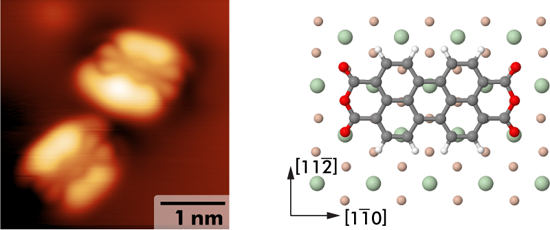
- images. These positions are marked by solid white circles and arrows in Figure 3f, while stationary molecules are marked by white dashed circles in both panels. Defects are imaged in STM as black depressions although they are of atomic size [27]. In contrast, the CaF2 surfaces are mostly defect-free. The
- rationalised by nucleation at defects present within the CaF1 interface layer. In contrast, the CaF2/CaF1 layer is mostly defect-free. A statistical analysis revealed a preferred molecular orientation of the long molecular axis along a CaF2 direction, in full agreement with the DFT-calculated optimum


Adsorption and self-assembly of porphyrins on ultrathin CoO films on Ir(100)
Beilstein J. Nanotechnol. 2020, 11, 1516–1524, doi:10.3762/bjnano.11.134
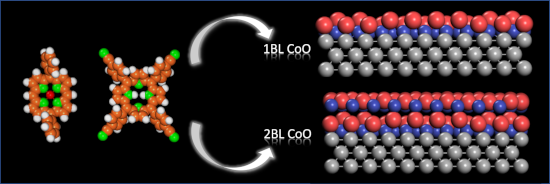
- = 10 GΩ. When molecules remain in place, they are imaged as round doughnut-like objects with four positions along the ring, which are imaged brighter (Figure 5a). By manipulating the molecules with the STM tip, we almost never detected a defect in the oxide layer at which the molecules might have been
- pinned. Only if molecules come close to each other or are trapped by a defect does the former dumbbell shape reappear proving that no change of the molecular structure has taken place (Figure 5b). Hence, the round appearance of the molecules is due to a rotational motion much faster than the imaging
- assembly changed between (b) and (c). (a) 1 on 2BL CoO deposited at 200 K and imaged at 80 K. The molecules appear as round features unless close to a neighboring molecule or substrate defect. This indicates that 1 rotates around its central Co ion at time scales that are fast with respect to the STM




Self-assembly and spectroscopic fingerprints of photoactive pyrenyl tectons on hBN/Cu(111)
Beilstein J. Nanotechnol. 2020, 11, 1470–1483, doi:10.3762/bjnano.11.130
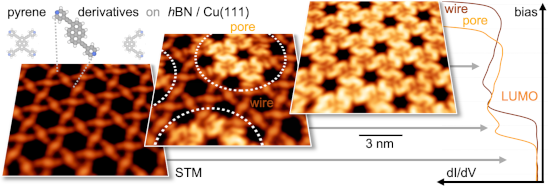
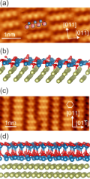
- , being prochiral, becomes chiral upon surface adsorption [61][77][78], and two stereoisomers can equally be formed on the surface. Each enantiomer segregates into homochiral domains (α and α‘, see Figure 3 and Figure S6, Supporting Information File 1). The lateral extension of the regular, defect-free





One-step synthesis of carbon-supported electrocatalysts
Beilstein J. Nanotechnol. 2020, 11, 1419–1431, doi:10.3762/bjnano.11.126

- amorphous layer (Ar/H2 ≈59, Figure 4d, right panel). Raman spectroscopy was performed to determine the quality (defect density, defect type, and hybridization) of the deposited Pt/CNW layers. All samples produced at sufficiently high pressures and low carrier gas flow rates exhibit the typical spectrum
- observed for CNWs, with peaks resulting from their graphitic structure and their sharp, exposed edges [30]. At low pressures and high carrier gas flow rates, the intensity of the defect-induced peak D’ increases, as observed in a previous study [17]. The amorphization stage of all samples is 1, which
- percent) determined by XPS. For this, two GCEs were placed close to each other and coated with Pt/CNW in the same process. Afterward, both GCEs were compared to each other via SEM, Raman spectroscopy, and XPS. If the two GCEs were found to be almost identical (in terms of wall density, defect number/type




Atomic defect classification of the H–Si(100) surface through multi-mode scanning probe microscopy
Beilstein J. Nanotechnol. 2020, 11, 1346–1360, doi:10.3762/bjnano.11.119
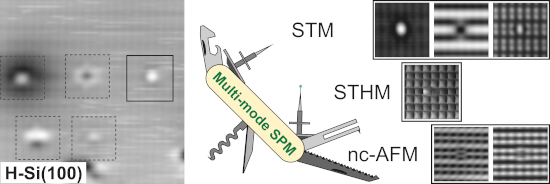
- literature assignments of several commonly found defects, as well as proposed classifications of previously unreported and unassigned defects. By combining insights from multiple imaging modes, better understanding of their successes and shortcomings in identifying defect structures and origins is achieved
- large, defect free areas [20] – has each surface Si atom in a dimer bonded to one hydrogen atom (Figure 1a,b). The 1 × 1 phase is characterized by the absence of dimer bonds, with each surface Si atom instead saturated by 2 hydrogen atoms, forming silicon dihydrides (H2-Si). The 3 × 1 phase is a
- expected structural geometry (see section Methods), we are able to confirm the atomic structure of several commonly reported defects, as well as to classify previously unknown defects. The latter includes a point defect that can be found decorated with a single H-atom, rendering the otherwise neutral



Effect of localized helium ion irradiation on the performance of synthetic monolayer MoS2 field-effect transistors
Beilstein J. Nanotechnol. 2020, 11, 1329–1335, doi:10.3762/bjnano.11.117
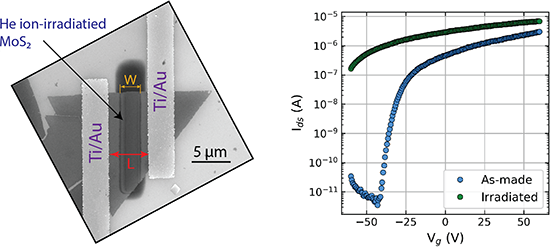
- , we find that irradiating the electrode–channel interface has a deleterious impact on charge transport when contrasted with irradiations confined only to the transistor channel. Keywords: 2D materials; contacts; defect engineering; helium ion microscope; ion beam doping; vacancies; two-dimensional
- defect generation, or full-channel modifications in TMD FETs. A research space exists for exploring the intermediate regime between these two extrema by finely controlling the area over which defects are seeded. For practical devices, it is also important to consider the effect of particle irradiation on
- this paper, we investigate the effect of the defect population on the performance of MoS2 FETs via varying the area of ion irradiation in the FET channel. We also examine the performance of devices upon irradiation of one of the electrical contact interfaces. Experimental Monolayer MoS2 samples were


Structural and electronic properties of SnO2 doped with non-metal elements
Beilstein J. Nanotechnol. 2020, 11, 1321–1328, doi:10.3762/bjnano.11.116
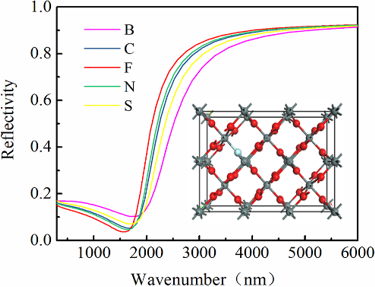
- is that F-doped SnO2 has the lowest defect binding energy. The doping with B and S introduced additional defect energy levels within the forbidden bandgap, which improved the crystal conductivity. The Fermi level shifts up due to the doping with B, F, and S, while the Fermi level of SnO2 doped with C
- that the doping of fluorine and boron elements can provide more surplus electrons to the system. To evaluate the stability of the crystal structure of the doped lattice, it is necessary to calculate the defect binding energy of the lattice. It can be calculated according to Equation 1 [13]: E(AB) is
- the total energy of the doped structure, E(A) and E(B) are the chemical potentials of the atoms, and n is the total number of atoms in the unit cell structure. The total energy and binding energy of the doped structure are shown in Table 3. The defect binding energy values of the doped systems (Table



Revealing the local crystallinity of single silicon core–shell nanowires using tip-enhanced Raman spectroscopy
Beilstein J. Nanotechnol. 2020, 11, 1147–1156, doi:10.3762/bjnano.11.99
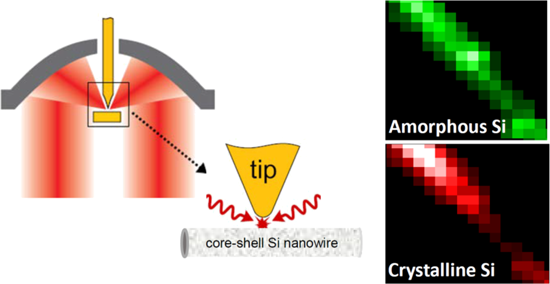
- agrees with the TEM image in Figure 1c, where a homogenous presence of the amorphous component in the shell can be seen. In contrast, the intensity of the c-Si peak (Figure 3e) shows a clear decrease at the lower part of the SiNW. This could originate from a defect, visible as the ring-shaped pattern in


Light–matter interactions in two-dimensional layered WSe2 for gauging evolution of phonon dynamics
Beilstein J. Nanotechnol. 2020, 11, 782–797, doi:10.3762/bjnano.11.63
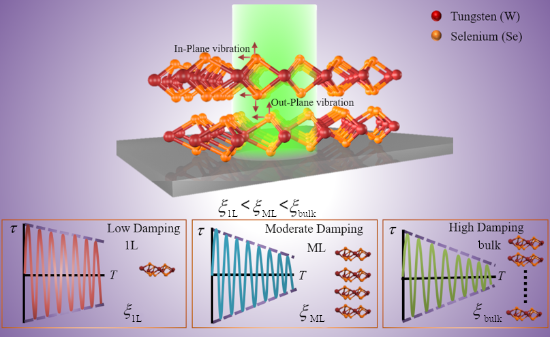
- was detected, which may be attributed to material degradation arising in WSe2 through the possibility of an increased point defect density at higher temperatures, and/or through oxidative effects. From our preliminary checks on the samples, the Raman spectrum does not recover once the temperature is
- decreased interfacial defect density and built-in strain on sapphire that reduces the electron–phonon interaction in the material [30]. The value of τ obtained in our study is also comparable to what has been reported for τ in 1L CVD grown WSe2 (≈0.76 ps) [30], bilayer CVD grown WSe2 (≈2.4 ps) [29], MoS2
- contributions from each of those scattering sources. Hence, the phonon concentration, defect density, doping concentrations, etc. determine the effective strength of a scattering source and disparities between them cause the differences in the measured lifetimes in 1L, ML and bulk WSe2 which we observed in
Hexagonal boron nitride: a review of the emerging material platform for single-photon sources and the spin–photon interface
Beilstein J. Nanotechnol. 2020, 11, 740–769, doi:10.3762/bjnano.11.61
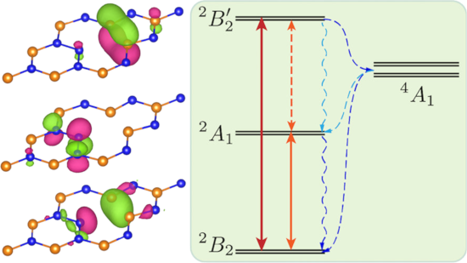
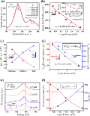
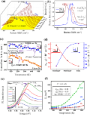
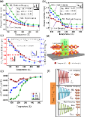
- a quantum point defect material as well as a photonics material [63]. This choice of material is supported on one hand by the existence of room-temperature single-photon (SP) emission, with the highest brightness and on the other hand by the ability of coherent spin control of some point defects at
- commercial h-BN single crystal. It appears that the SPE was found randomly in the material without treatment. Two families of spectra with ZPL energies at 629 nm and 596 nm were identified. Different charge states of the same defect were attributed to the two emissions, while the small variation of the ZPL
- al. [43]. Here commercial material was annealed in Ar to prevent oxidation and to achieve a higher density of emitters. An SPE PL at 623 nm was observed and tentatively assigned to the antisite point defect VNNB. The SPE is fully polarized along one direction for both excitation and emission, a


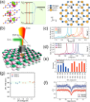


Effect of substitutional defects on resonant tunneling diodes based on armchair graphene and boron nitride nanoribbons lateral heterojunctions
Beilstein J. Nanotechnol. 2020, 11, 688–694, doi:10.3762/bjnano.11.56
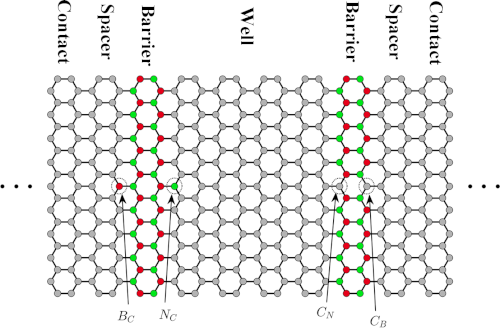
- -equilibrium Green’s functions. The results show that a single substitutional defect at the interface of armchair graphene and boron nitride nanoribbons can dramatically affect the negative differential resistance behavior depending on its type and location in the structure. Keywords: AGNR/ABNNR
- the conduction band edge [40]. Room temperature (300 K) is considered in all simulations. Results and Discussion Substitutional carbon atoms in boron or nitrogen sublattices (CB and CN) as well as boron or nitrogen atoms on carbon sites (BC and NC) are considered (Figure 2). Each defect could occur
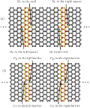
- inside the well or in the contact regions. Since the typical defect concentration for real samples is one defect per ca. 10 Å, one defect of each type is considered at the Gr/hBN heterojunctions [41]. Figure 3 shows the effect of substitutional defects on the energy bandstructure of 19-AGNR and 19-ABNNR



Adsorptive removal of bulky dye molecules from water with mesoporous polyaniline-derived carbon
Beilstein J. Nanotechnol. 2020, 11, 597–605, doi:10.3762/bjnano.11.47
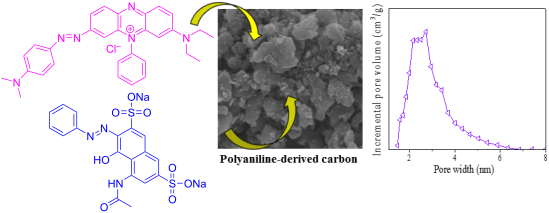
- composed of both graphitic and defect phases. Therefore, KOH-900 might be useful for adsorption because of defects and the graphitic layers (with π-electrons). Dye adsorption over polyaniline-derived carbon (PDC) Firstly, adsorption of AR1 over PDC and AC was carried out for 6 h. As illustrated in Figure





