


Search results
Search for "dynamics" in Full Text gives 562 result(s) in Beilstein Journal of Nanotechnology. Showing first 200.
A bifunctional superconducting cell as flux qubit and neuron
Beilstein J. Nanotechnol. 2023, 14, 1116–1126, doi:10.3762/bjnano.14.92
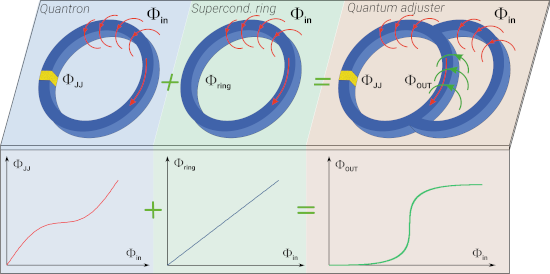
- ? This article is devoted to the search for answers to these questions. Hence, below we explore the quantum dynamics of observables in superconducting interferometers, discuss the implications for quantum computing, and the challenges that remain to be addressed. In addition, we note the potential for
- level convergence for short periods τLZ, the phases of the wave functions change significantly, leading to strong fluctuations of the level populations in the system, and can lead to quasi-random dynamics in the parametron. In addition, Landau–Zener interference has become a tool to access the
- superconducting logic cell when used as an auxiliary qubit. A Bifunctional Superconducting Cell as a Controllable Flux Qubit The state dynamics of the considered system equation (Equation 1) are primarily defined by features of the controlling field equation (Equation 3), as well as by the values of the



Density functional theory study of Au-fcc/Ge and Au-hcp/Ge interfaces
Beilstein J. Nanotechnol. 2023, 14, 1093–1105, doi:10.3762/bjnano.14.90
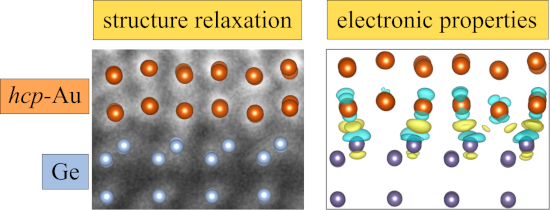
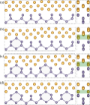
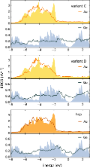
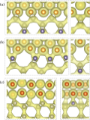
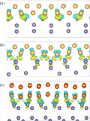
- differences between the polytypes are very small [14][25]. In contrast, molecular dynamics simulations of metallic nanowires show a phase transformation from fcc to hcp below a critical diameter [26]. These findings support the feasibility of obtaining new hexagonal structures under conditions where surface





Dual-heterodyne Kelvin probe force microscopy
Beilstein J. Nanotechnol. 2023, 14, 1068–1084, doi:10.3762/bjnano.14.88
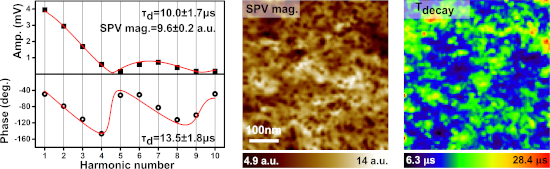
- development of KPFM-based approaches specifically designed to investigate photogeneration mechanisms and charge dynamics at the nanoscale in photovoltaic and optoelectronic materials is an active research area. In photoassisted KPFM, the idea is to probe the surface photovoltage (SPV), which is the
- characterize the surface photovoltage dynamics are acquired on a photovoltaic organic bulk-heterojunction (BHJ) thin film. The time-constant values are shown to be fully consistent with the results of pump-probe KPFM. Last, the ability of DHe-KPFM to detect weak SPV signals is illustrated by investigating
- approach to check the nature of the SPV dynamics. Compared to previous “modulated” SPV imaging techniques, dual-heterodyne KPFM provides an enhanced sensitivity (as demonstrated in the following), thanks to the amplification of the intermodulation products by the second resonance eigenmode. In addition




Fragmentation of metal(II) bis(acetylacetonate) complexes induced by slow electrons
Beilstein J. Nanotechnol. 2023, 14, 980–987, doi:10.3762/bjnano.14.81
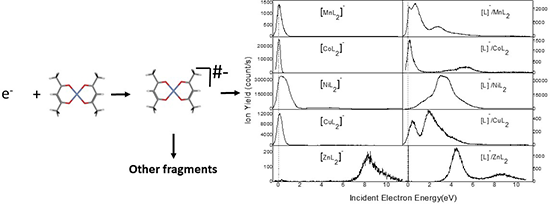
- 7.0% of the TNI decomposition. As the resonance energy provides information on the electron capture process, the branching ratio provides information on the dynamics of the decay channels of the TNI. Conclusion The interaction of low-energy electrons with metal(II) bis(acetylacetonate) complexes
- visit to Siedlce University, Siedlce (Poland) from the European Union via the COST Action CM1301 (CELINA). The research was conducted in the frame of the COST action CA18212 Molecular Dynamics in the GAS phase (MD-GAS) and action CA20129 "MultIChem".


Ultralow-energy amorphization of contaminated silicon samples investigated by molecular dynamics
Beilstein J. Nanotechnol. 2023, 14, 834–849, doi:10.3762/bjnano.14.68
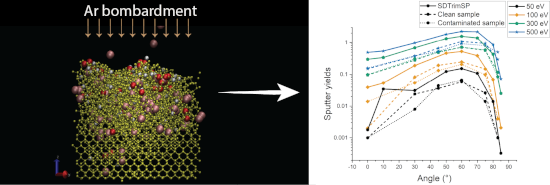
- contaminant, water, sputtered by ultralow-energy ion beams, ranging from 50 to 500 eV and covering the full range of incidence angles, using molecular dynamics simulations with the ReaxFF potential. We show that the expected sputtering yield trends are maintained down to the lowest sputtering yields. A region
- . Keywords: angle dependency; argon; contamination; energy dependency; ion bombardment; low energy; molecular dynamics; silicon; simulations; water; Introduction Low-energy ion beams offer substantial improvements and possibilities to reduce the damage production on the surface of samples [1][2]. In recent
- . Our aim is to determine the optimal conditions to reduce damage formation near the surface while also retaining a high degree of contaminant removal. All bombardments have been simulated using a reactive force field (ReaxFF) [27][28][29] and the molecular dynamics (MD) code LAMMPS [30][31]. While low




Current-induced mechanical torque in chiral molecular rotors
Beilstein J. Nanotechnol. 2023, 14, 711–721, doi:10.3762/bjnano.14.57
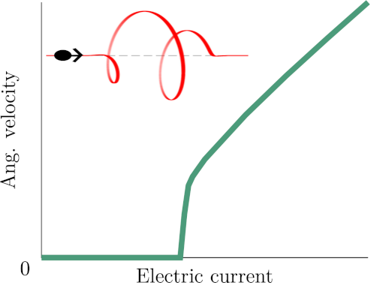
- Hänggi [11] and Astumian [12] and their collaborators in the context of Brownian motors. It describes the dynamics of a classical angular variable ϑ that is subject to a “ratchet”-type potential in the presence of a (phenomenologically treated) driving torque. Ab initio expressions for the current
- ). The motion of the particle along the molecule obeys Lagrangian dynamics. The wire can rotate around a given axis with angle ϑ. The torque driving the rotation is provided by the back action of moving particle. In the absence of a potential V(ϑ), angular momentum is conserved. The main outcome of this
- . The rotation angle of the path is denoted by ϑ. In absence of a rotational degree of freedom of the path, the particle would experience constrained dynamics. With the rotation allowed, the motion of the particle can exert a torque on the path. Conversely, the dynamics of the path around its angle


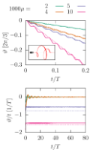


![[Graphic 29]](/bjnano/content/inline/2190-4286-14-57-i54.svg?max-width=637&scale=1.18182)


Suspension feeding in Copepoda (Crustacea) – a numerical model of setae acting in concert
Beilstein J. Nanotechnol. 2023, 14, 603–615, doi:10.3762/bjnano.14.50
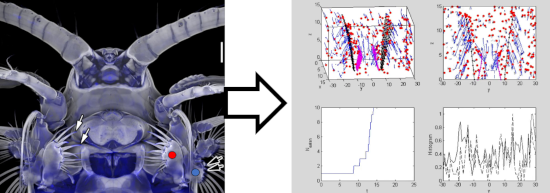
- , Massachusetts, USA). Our discrete numerical model describes the dynamics of two pairs of initially parallel aligned elastic crests, resembling the maxillae 1 and 2. The conceptual structure of the model is depicted in Figure 10. The dynamic behavior of the model can be found in the movie in Supporting
- Information File 1. Each seta is constructed of a number of elastic segments (long setae: Nx = 14, Nz = 15; short setae: Nx2 = 14, Nz2 = 7) each having the same length dR. The model does not reproduce exactly realistic numbers of the setae segments or particles. It only provides more or less natural dynamics


Thermal transport in kinked nanowires through simulation
Beilstein J. Nanotechnol. 2023, 14, 586–602, doi:10.3762/bjnano.14.49
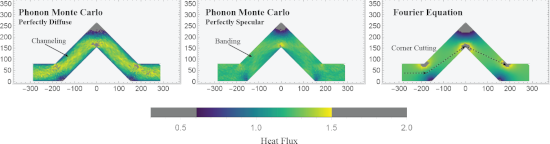
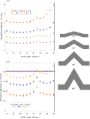
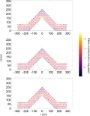
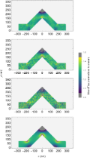
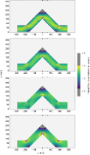
- completely understood. The behaviour of the conductance is examined as kinks of varying angular intensity are included into nanowires. The effects on thermal transport are evaluated through molecular dynamics simulations, phonon Monte Carlo simulations and classical solutions of the Fourier equation. A
- Fourier model. Keywords: ballistic transport; kinked nanowire; molecular dynamics; phonon Monte Carlo; thermal transport; Introduction The thermal conductivity of semiconductor nanostructures is of great interest because of potential applications in a wide variety of fields, such as thermal control
- angling of the wire should result in reduced quantities of unrestricted ballistic transport. Gradually increasing the angle effectively reduces the quantity of unobstructed line of sight (LoS) paths from one end of a nanowire to the other. We use molecular dynamics (MD) [25] to study an atomistic approach





Transferability of interatomic potentials for silicene
Beilstein J. Nanotechnol. 2023, 14, 574–585, doi:10.3762/bjnano.14.48
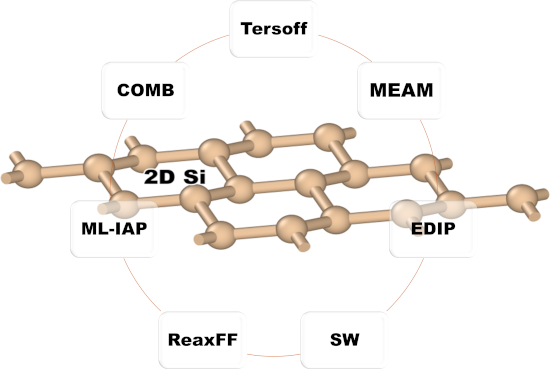
- needed, for example, molecular dynamics/statics. For these methods, the quality of the used interatomic potentials (IAPs) is crucial. Because of the importance of silicon, as well as its complexity, dozens of potentials have been proposed for it. In the very well-known NIST Interatomic Potentials
- potentials, a series of molecular dynamics (MD) simulations (200 atoms and 10000 timesteps, NVE ensemble) and LAMMPS’s built-in function timesteps/s were used. The results were then normalized relative to the longest run time. Interatomic potentials The parameterizations of the potentials listed below were
- , ReaxFF and MEAM2011, give the best quantitative performance measured by the total mean absolute percentage error (MAPE), see Table 6. Regarding the cost of calculations in terms of relative performance measured as normalized timesteps per second in molecular dynamics (MD) simulations, the EDIP and
![[Graphic 3]](/bjnano/content/inline/2190-4286-14-48-i7.svg?max-width=637&scale=1.18182)

Specific absorption rate of randomly oriented magnetic nanoparticles in a static magnetic field
Beilstein J. Nanotechnol. 2023, 14, 485–493, doi:10.3762/bjnano.14.39
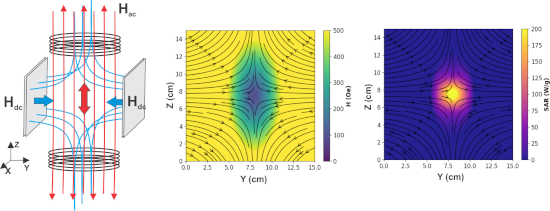
- simulations using the stochastic Landau–Lifshitz equation are performed to study magnetization dynamics of dilute assemblies of iron oxide nanoparticles exposed to an alternating (ac) magnetic field with an amplitude Hac = 200 Oe and a frequency f = 300 kHz and a static (dc) magnetic field in the range Hdc
- magnetic nanoparticles in a liquid, an increase of the dc magnetic field leads to a decrease in the area of the hysteresis loop for both parallel and perpendicular configurations of external magnetic fields. Analytical and numerical calculations of the dynamics of the nanoparticle magnetization in an ac
- biological media can be considered fixed and random. In this case, the dynamics of the assembly magnetization depends on the parameters of the external magnetic field, as well as on the magnetic and geometric parameters of an assembly [20][22][25][26]. To develop the joint MPI-MH technique, it is necessary


Plasmonic nanotechnology for photothermal applications – an evaluation
Beilstein J. Nanotechnol. 2023, 14, 380–419, doi:10.3762/bjnano.14.33
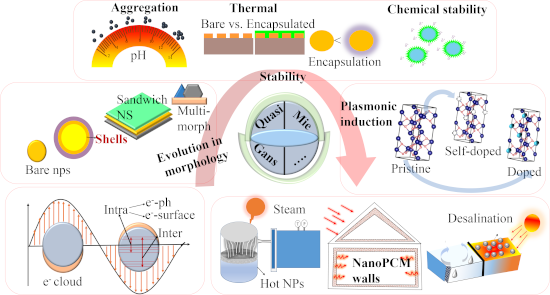
- absorbance due to changes morphology stem predominantly from changes to the directionality of the LSPR (due to changing curvature and dimensionality of the nanoparticle) and changes to the dynamics between the restoring and exciting forces of the plasmons, such as the mean free path, the relative
- with decreasing particle size define the relaxation dynamics of the photoexcited electron gas into heat [52]. Interestingly, for Ag and Au, the transduction of absorbed light into heat due to electron–phonon coupling was found to be independent of the particle size above 10 nm diameter (though surface
- states [81]. Figure 13 illustrates the relaxation process of the phonon vibration for a better understanding of phonon dynamics. The electron–phonon coupling constant, which describes the potential of a material for undergoing lattice heating, is calculated by transient reflectivity studies, for example


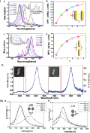


New trends in nanobiotechnology
Beilstein J. Nanotechnol. 2023, 14, 377–379, doi:10.3762/bjnano.14.32

- SARS-CoV-2 receptor binding domain by molecular docking” [6]. This research work showcases peptides that are capable to bind and neutralize the SARS-CoV-2 virus through molecular docking. The latest developments of the molecular docking of peptides by molecular dynamics were investigated to understand
Bismuth-based nanostructured photocatalysts for the remediation of antibiotics and organic dyes
Beilstein J. Nanotechnol. 2023, 14, 291–321, doi:10.3762/bjnano.14.26
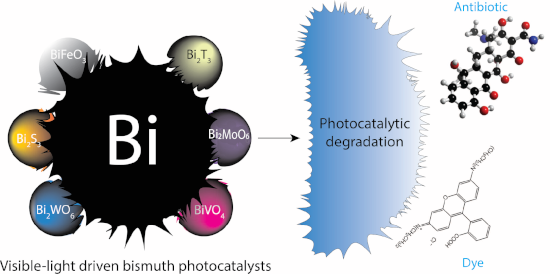
- of the host material, enhancing charge carrier dynamics [20][146]. In contrast to undoped Bi2WO6, visible light-driven 3-D hierarchical Ag-doped Bi2WO6 nanoparticles showed improved photocatalytic performance by destroying 95% of tetracycline in only 70 min, according to Shen and co-workers [147


Spin dynamics in superconductor/ferromagnetic insulator hybrid structures with precessing magnetization
Beilstein J. Nanotechnol. 2023, 14, 233–239, doi:10.3762/bjnano.14.22
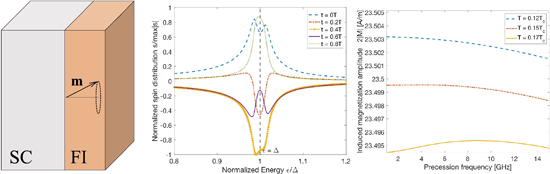
- Yaroslav V. Turkin Nataliya Pugach HSE University, Moscow 101000, Russia Vernadsky Crimean Federal University, Simferopol 295007 10.3762/bjnano.14.22 Abstract The main goal of the present work is the description of the dynamics of spin current and induced magnetization inside a superconducting
- interaction between the superconducting correlations and spin waves influences the dynamics of both superconducting and magnetic films. Interfacial exchange interaction between Cooper pairs and magnons results in a nonstationary induced magnetization and spin currents in the superconducting film and changes
- ][19] frameworks. However, the main subject of these works is the magnetic excitation spectrum in hybrid structures. Most of the works ignore the dynamics of nonuniform distributions of induced magnetization and spin current inside the superconducting film, which can be called the “dynamic inverse


A distributed active patch antenna model of a Josephson oscillator
Beilstein J. Nanotechnol. 2023, 14, 151–164, doi:10.3762/bjnano.14.16
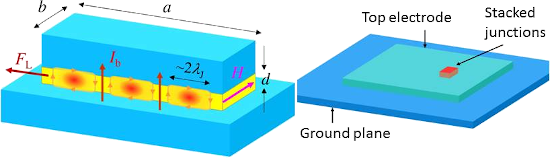
- be almost 1000 times slower than c [32]. Because of that, the wavelength inside the JJ is much smaller than in free space, λ ≪ λ0. Therefore, a JJ corresponds to a patch antenna with an extraordinary large effective permittivity, = (c/c0)2. The dynamics of a JJ is described by a nonlinear perturbed


Frontiers of nanoelectronics: intrinsic Josephson effect and prospects of superconducting spintronics
Beilstein J. Nanotechnol. 2023, 14, 79–82, doi:10.3762/bjnano.14.9
- /ferromagnetic absorber with a temperature reduction of the electrons in the refrigerator junctions down to 25 mK in the idle regime without an optical power load [22]. - Implementation of Josephson junctions for the design of quantum computers by analyzing the dynamics of a single-junction superconducting
- magnetic proximity effect at a ferromagnetic–insulator–superconductor (FIS) interface was investigated through combined experimental and theoretical work [25]. Manifestations of nonlinear features in magnetic dynamics and current–voltage characteristics of the 0 Josephson junction in superconductor
Gap-directed chemical lift-off lithographic nanoarchitectonics for arbitrary sub-micrometer patterning
Beilstein J. Nanotechnol. 2023, 14, 34–44, doi:10.3762/bjnano.14.4
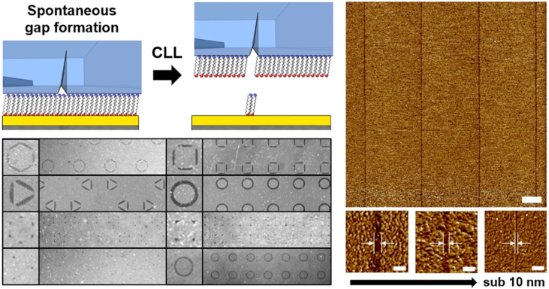
- captured with an epifluorescence microscope (Axio Imager. M2, Carl Zeiss microscopy, Jena, Germany) equipped with an X-Cite 120 LED (Lumen Dynamics Group, Inc., Mississauga, Canada) lamp. Excitation wavelength was set to 480 nm while emission of 535 nm was collected. Fluorescence images were analyzed with


The influence of structure and local structural defects on the magnetic properties of cobalt nanofilms
Beilstein J. Nanotechnol. 2023, 14, 23–33, doi:10.3762/bjnano.14.3
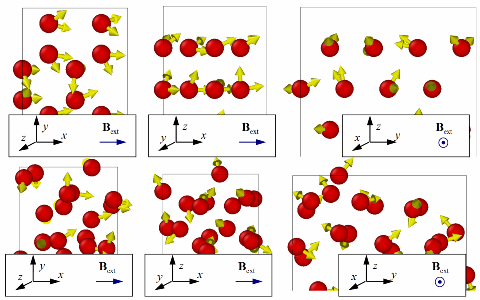
- materials; molecular dynamics; nanocomposites; nanofilms; spintronics; Introduction The analysis of phase transitions and related critical phenomena in condensed media is a complex, time-consuming, and often a high-cost process from a technological point of view [1][2][3]. On the one hand, this is due to
- , simultaneous equations of classical molecular dynamics are used, which are supplemented by considering the spin vectors si for each atom. The motion equation for atoms and spins is written in the following form: where ri is the vector characterizing the position of the particle i; si,and sj are the spin
- magnetic properties based on the combined model of molecular dynamics and magnetization dynamics. The technique used includes simulations of atomic magnetic spins associated with lattice vibrations. The dynamics of these magnetic spins can be used to simulate a wide range of phenomena related to


Atmospheric water harvesting using functionalized carbon nanocones
Beilstein J. Nanotechnol. 2023, 14, 1–10, doi:10.3762/bjnano.14.1
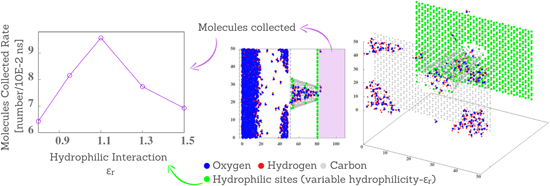
- occurs due to the presence of hydrophilic sites at the nanocone entrance. The functionalization, together with the high mobility of water inside nanostructures, leads to a fast water flow through the nanostructure. We show using molecular dynamics simulations that this device is able to collect water if
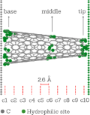
- molecular dynamics simulations the process of capturing and collecting water in a functionalized carbon nanocone. The process is analyzed in a system in which the larger diameter of the cone is in contact with a vapor reservoir and the smaller diameter is in contact with an initially empty reservoir. The
- ). Molecular dynamics simulations were performed using the LAMMPS [48] package using an NVT ensemble with a timestep of 0.1 fs. The TIP4P/2005 [49] water model was used since it provides a satisfactory description of self-diffusion coefficient [50], phase diagram, vapor–liquid equilibria [51][52], vapor




Observation of collective excitation of surface plasmon resonances in large Josephson junction arrays
Beilstein J. Nanotechnol. 2022, 13, 1578–1588, doi:10.3762/bjnano.13.132
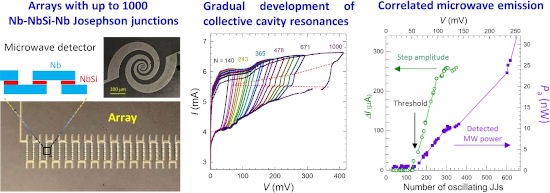
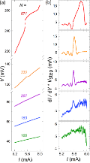
- , comparison with similar arrays without such lines [9][34] does not reveal any significant influence of these lines, implying that even for the linear array the electrodes are playing the dominant role in array dynamics. Results Measurements were performed in a closed-cycle 4He cryostat (sample in gas) with




Coherent amplification of radiation from two phase-locked Josephson junction arrays
Beilstein J. Nanotechnol. 2022, 13, 1445–1457, doi:10.3762/bjnano.13.119
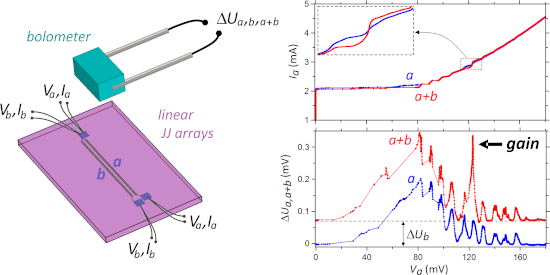
- synchronization inside each array. The latter effect removes the limit of two for the gain factor. Finally, for better understanding, we performed numerical simulations of the inner dynamics for two interacting arrays. Our simulations confirm that two arrays can be phase-locked by a common EM field. They also
- a complex phenomenon, which cannot be reduced to a simple constructive interference of two independent sources. For a better understanding of the phase locking dynamics, we perform numerical modelling. Figure 6a demonstrates the general view of the considered model for on-chip synchronization. It
- of the opposite long side. All lumped elements are connected by ideal conductors located at the edges of mesh. The gap between two arrays is 0.1 mm. The JJs are described by the RSJ model [20]. The corresponding equations of junction dynamics are solved self-consistently with Maxwell equations, which


Straight roads into nowhere – obvious and not-so-obvious biological models for ferrophobic surfaces
Beilstein J. Nanotechnol. 2022, 13, 1345–1360, doi:10.3762/bjnano.13.111
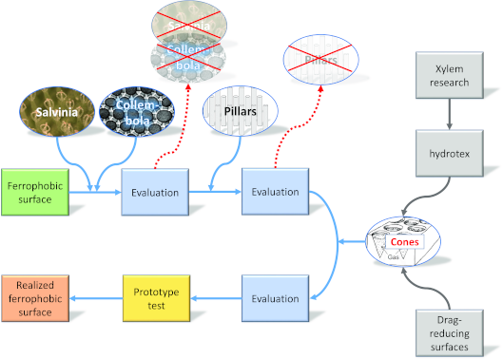
- structure, which can easily be described in terms of analytic functions. When a sheet of liquid iron flows over the tuyère surface, a complex interaction between the gas in the recesses and the liquid evolves. It is, of course, hopeless to try to describe the interaction dynamics in terms of analytic


Bending and punching characteristics of aluminum sheets using the quasi-continuum method
Beilstein J. Nanotechnol. 2022, 13, 1303–1315, doi:10.3762/bjnano.13.108
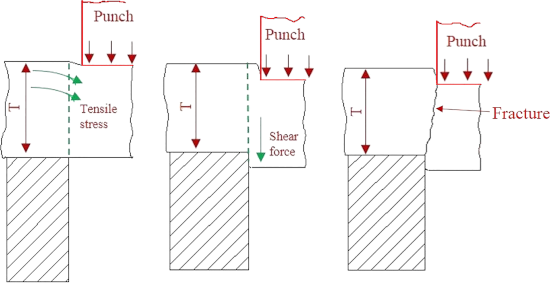
- , since it is very challenging to experimentally control every parameter in the nanoscale, the atomistic computational simulation methods are often used. The most commonly used simulation method is molecular dynamics (MD), which has been conducted to investigate many nanoscale processes [22][23]. Although





Studies of probe tip materials by atomic force microscopy: a review
Beilstein J. Nanotechnol. 2022, 13, 1256–1267, doi:10.3762/bjnano.13.104
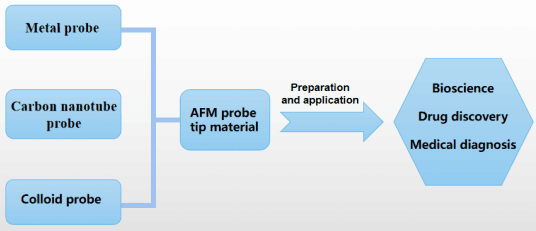
- without compromising the carbon nanotubes' aspect ratio, strength and size. The mechanical response of these composite beams under bending is studied in molecular dynamics simulations and nanomanipulation experiments. The behavior of this system has been studied at both theoretical and experimental levels
- understanding interactions in various domains to study adhesion phenomena, particle-surface interactions, mechanical properties, suspensions, liquid dynamics, and boundary slips. Colloidal gold probe Colloidal gold particles [48][49] have the advantage of stable adsorption of proteins without significant
- adjustments are made to its cantilever dynamics, the calibration accuracy of CPs does not fluctuate when the additional mass of the ball is the same as the cantilever. In the type of large CPs, applying the homogeneity theorem for topless cantilever beams to Equation 1 can achieve accurate calibration. These
Nonlinear features of the superconductor–ferromagnet–superconductor φ0 Josephson junction in the ferromagnetic resonance region
Beilstein J. Nanotechnol. 2022, 13, 1155–1166, doi:10.3762/bjnano.13.97
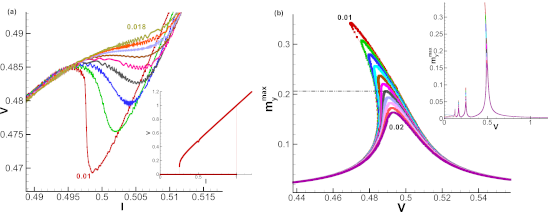
- , 141980, Russia Moscow Institute of Physics and Technology, Dolgoprudny, 141700, Moscow Region, Russia Physics Department, Menofiya University, Faculty of Science, 32511, Shebin Elkom, Egypt 10.3762/bjnano.13.97 Abstract We demonstrate the manifestations of nonlinear features in magnetic dynamics and I–V
- characteristics of a φ0 Josephson junction in the ferromagnetic resonance region. We show that at small values of the system parameters damping, spin–orbit interaction, and Josephson-to-magnetic energy ratio, the magnetic dynamics is reduced to the dynamics of a scalar Duffing oscillator driven by the Josephson
- –voltage (I–V) characteristics by magnetic dynamics in the ferromagnet, in particular, to create a DC component in the superconducting current [6][7][8]. A remarkable manifestation of this coupling is the possibility to stimulate a magnetization reversal in the ferromagnetic layer by applying a current


![[Graphic 14]](/bjnano/content/inline/2190-4286-13-97-i38.svg?max-width=637&scale=1.18182) at differ...
at differ...


![[Graphic 18]](/bjnano/content/inline/2190-4286-13-97-i42.svg?max-width=637&scale=1.18182) (V) on α in the damping parameter interval [0.001–0.12]....
(V) on α in the damping parameter interval [0.001–0.12]....




