Search results
Search for "junction" in Full Text gives 316 result(s) in Beilstein Journal of Nanotechnology. Showing first 200.
Molecular architectonics of DNA for functional nanoarchitectures
Beilstein J. Nanotechnol. 2020, 11, 124–140, doi:10.3762/bjnano.11.11

- enabled the construction of complex architectonics through DNA origami [37]. The self-recognition characteristics of DNA allows the development of a wide array of DNA-based nanoarchitectures by employing an array of designer sequences and motifs. In the earliest designs, the Holliday junction structure of


Nanosecond resistive switching in Ag/AgI/PtIr nanojunctions
Beilstein J. Nanotechnol. 2020, 11, 92–100, doi:10.3762/bjnano.11.9
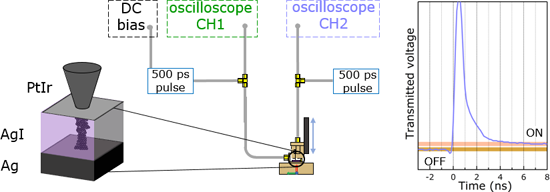
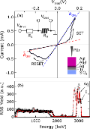
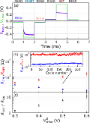
- triangular driving voltage signal, Vdrive, was applied to the memristive junction and a series resistor with corresponding resistances of RM and RS, respectively. Typical values of RS were in the range of 50–1000 Ω. The current was monitored by a current amplifier whereas the Vbias voltage drop on the
- the presence of continuous filaments in both states. At positive voltage the presence of the series resistor is considered as restrictive factor for further resistance change, whereas at negative voltage it is the saturation with Ag+ ions in the junction neighborhood. These two factors allow us to
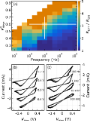
- keep the junction resistance in the targeted metallic resistance range, where the nonlinear tunneling I(V) characteristics, which are unfavorable for neuromorphic operations, are avoided. These characteristics were further investigated as a function of the amplitude and the frequency fdrive of the


Prestress-loading effect on the current–voltage characteristics of a piezoelectric p–n junction together with the corresponding mechanical tuning laws
Beilstein J. Nanotechnol. 2019, 10, 1833–1843, doi:10.3762/bjnano.10.178
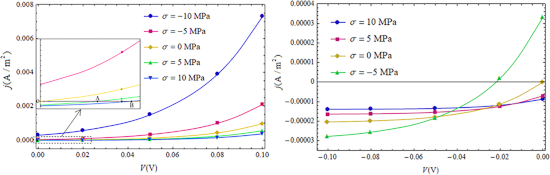
- non-equilibrium minority carriers under the influence of a piezo potential and to calculate the corresponding current–voltage (I–V) characteristics of a piezoelectric p–n junction exposed to mechanical loading. An effective solution to describe this non-equilibrium process has been put forward
- including two concepts: the influence of prestress loading on p–n junctions in a quasi-electrostatic thermal equilibrium and the perturbation of small fields superposed on the obtained quasi-electrostatic solutions. A few useful results are obtained through this loaded p–n junction model. Under a forward
- -bias voltage, a tensile (compressive) loading raises (reduces) the potential barrier of the space charge zone (SCZ), i.e., produces an equivalent reverse- (forward-) electric voltage on the SCZ. When a piezoelectric p–n junction is exposed to a reverse-bias voltage, the current density monotonically




Unipolar magnetic field pulses as an advantageous tool for ultrafast operations in superconducting Josephson “atoms”
Beilstein J. Nanotechnol. 2019, 10, 1548–1558, doi:10.3762/bjnano.10.152
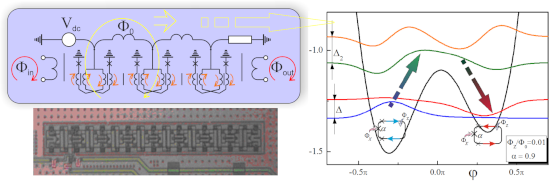
- modern quantum physics is the transfer and storage of quantum information. This is why the development of quantum logic protocols using the fast state control of promising qubits and registers is of great importance. Superconducting artificial atoms based on Josephson junction circuits underlie a number
- elements are EJos, EJos and αEJos, α > 0.5. The third junction can be replaced by a superconducting quantum interferometer, which allows one to adjust α using an external magnetic flux. So, we can apply magnetic fluxes ΦX and ΦZ in order to control the barrier height and potential asymmetry respectively
- ultrafast state initialization for algorithmic quantum computers and quantum neural networks as well as in the fast control of the magnetic properties of media from Josephson meta-atoms. (a) The potential energy and the eigenfunctions (with energies E1 ,E2, E3, E4) of the three-junction qubit (described in


High-temperature resistive gas sensors based on ZnO/SiC nanocomposites
Beilstein J. Nanotechnol. 2019, 10, 1537–1547, doi:10.3762/bjnano.10.151
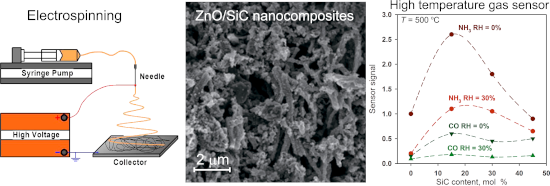
- (Figure 10). The estimated CBM position of wurtzite ZnO is 0.46 eV lower than that of 3C-SiC. The interface of an n–n junction transfers electrons into the lower energy conduction band [35]. The “accumulation layer” formed in this way can be depleted by subsequent oxygen adsorption on an enriched electron



Hierarchically structured 3D carbon nanotube electrodes for electrocatalytic applications
Beilstein J. Nanotechnol. 2019, 10, 1475–1487, doi:10.3762/bjnano.10.146
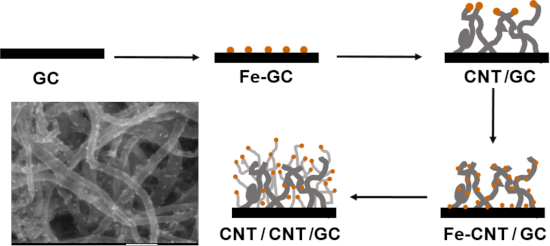
- compared to CNT/GC, as deduced from the double-layer current. The secondary CNTs provide a larger number of anchoring sites (e.g., surface functional groups or junction between primary CNTs and secondary CNTs) to form a larger numbers of Pt nuclei during electrodeposition. As a consequence, the Pt


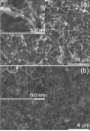

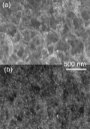


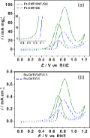
Construction of a 0D/1D composite based on Au nanoparticles/CuBi2O4 microrods for efficient visible-light-driven photocatalytic activity
Beilstein J. Nanotechnol. 2019, 10, 1360–1367, doi:10.3762/bjnano.10.134
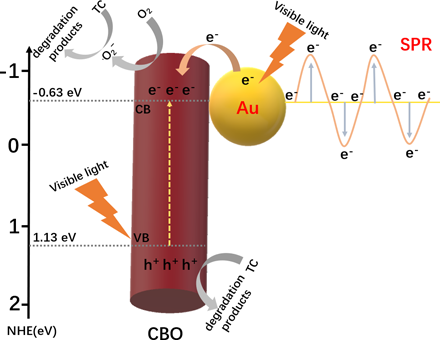
- visible light, the electrons in the VB of CBO are excited and transferred to the CB. The Au NPs contacting the CBO microrods form a Mott–Schottky junction in the composite interface. In order to keep the Fermi level equal, the Fermi energy level of Au will shift closer to the CB of the CBO semiconductor


Molecular attachment to a microscope tip: inelastic tunneling, Kondo screening, and thermopower
Beilstein J. Nanotechnol. 2019, 10, 1243–1250, doi:10.3762/bjnano.10.124
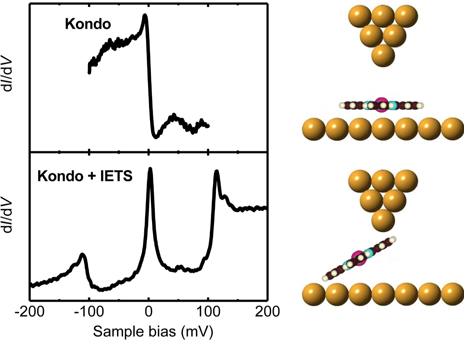
- thermopower measured across the single-molecule junction. Keywords: inelastic electron tunneling; molecular quantum dot; Kondo physics; single molecule; thermopower; tunnel junction; Introduction Scanning tunneling microscopy (STM) has the capability to detect the electron transport through a molecule not
- to study, with atomic resolution, the coupling of the tunneling electrons to other elementary excitations such as vibrations, plasmons and spins [5][6][7][8]. Furthermore, a molecular junction in STM can serve as a reliable and controllable model system for the study of a single molecule in a way
- suspended in a tunneling junction of an STM has not been studied yet. Here we describe an approach that allows for achieving, in a controlled manner, such a configuration and to analyze in detail how the Kondo correlation affects the IETS and yieds the non-linear thermopower accross the leads. Results and


Effects of gold and PCL- or PLLA-coated silica nanoparticles on brain endothelial cells and the blood–brain barrier
Beilstein J. Nanotechnol. 2019, 10, 941–954, doi:10.3762/bjnano.10.95
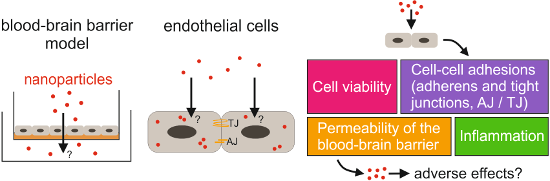
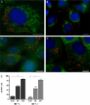
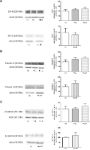
- Figure 4B. Neither Si- nor Au-NPs led to differences in activation or expression of NF-κB. Both forms could be detected for this protein (Figure 4C). Expression of tight-junction proteins in rBCEC4 cells Immunofluorescence staining and TEM were used to demonstrate the expression of important BBB
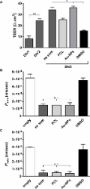
- -characteristics, namely tight junction (TJ) formation, in rBCEC4 cells. Both, the TJ-associated protein zonula occludens-1 (ZO-1) and the TJ protein occludin, resulted in positive staining (Figure 5A,B). TEM pictures corroborated the formation of TJs between single rBCEC4 cells in a cell monolayer (Figure 5C). A



Synthesis of novel C-doped g-C3N4 nanosheets coupled with CdIn2S4 for enhanced photocatalytic hydrogen evolution
Beilstein J. Nanotechnol. 2019, 10, 912–921, doi:10.3762/bjnano.10.92
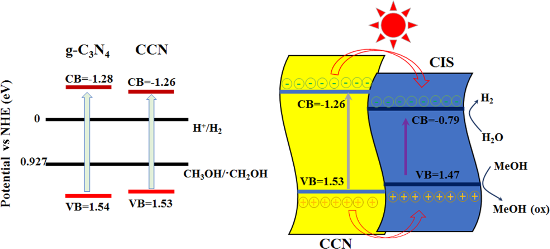
- (Figure 10). Evidently, the as-prepared CCN and CISCCN3 samples display a distinct increase of photocurrent intensity in comparison with single CCN, demonstrating that C-doping as well as the close heterogeneous junction formed between CdIn2S4 and CCN can facilitate the separation of photogenerated


Periodic Co/Nb pseudo spin valve for cryogenic memory
Beilstein J. Nanotechnol. 2019, 10, 833–839, doi:10.3762/bjnano.10.83
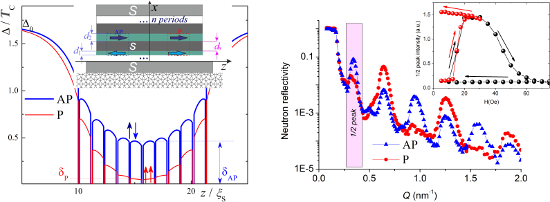
- lead to a significant enhancement of the critical current through the junction. To control the magnetic alignment we propose to use a periodic system whose unit cell is a pseudo spin valve of structure F1/s/F2/s where F1 and F2 are two magnetic layers having different coercive fields. In order to check
- . Finally, the boundary conditions on the surfaces of the outer electrodes are where δ0 is the bulk value of the pair potential at a certain temperature and χL,R are the phases at the left and right ends of the structure, which generate the phase difference φ = χR − χL along the junction. Figure 1a and
- functions, which already corresponds to the state with minimal free energy and automatically determines which of the states, either 0 or π , is energetically favorable on each junction. At the same time, in the systems with multiple junctions connected in series, there are multiple stable solutions


Widening of the electroactivity potential range by composite formation – capacitive properties of TiO2/BiVO4/PEDOT:PSS electrodes in contact with an aqueous electrolyte
Beilstein J. Nanotechnol. 2019, 10, 483–493, doi:10.3762/bjnano.10.49
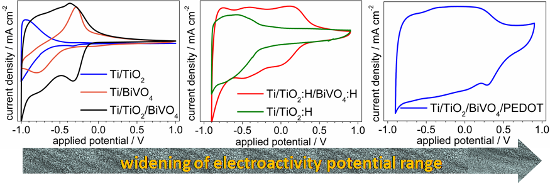
- vanadate using pulsed laser deposition. The formation of the TiO2/BiVO4 junction leads to enhancement of pseudocapacitance in the cathodic potential range. The third component, the conjugated polymer PEDOT:PSS, was electrodeposited from an electrolyte containing the monomer EDOT and NaPSS as a source of
- vanadate obtained by pulsed laser deposition (PLD). It was recently reported that the TiO2/BiVO4 junction exhibits a synergistic effect towards photoelectrochemical water oxidation [26]. Further modification of the electrode material included hydrogenation. There are many ways to perform TiO2 hydrogenation




Intuitive human interface to a scanning tunnelling microscope: observation of parity oscillations for a single atomic chain
Beilstein J. Nanotechnol. 2019, 10, 337–348, doi:10.3762/bjnano.10.33
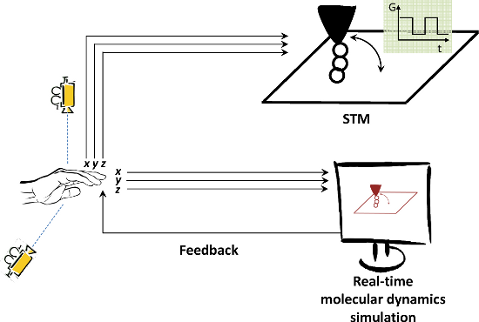
- image the structural changes that happen at the junction using the STM, because the very STM tip used for imaging is also used for manipulation. It is known that the electronic transport of these nanoscale devices depends strongly on their structural conformations and coupling to the leads [3][4
- ]. Therefore, the knowledge about the structure of the junction at the atomic scale is critical to the understanding of these transport measurements. The system that we have developed addresses this problem. We have added a 3D motion control system to our STM that helps in making any required tip trajectory
- and combined it with a molecular dynamics (MD) simulator that simulates in real-time the manipulation process going on in the STM. The MD simulation not only provides information about the atomic scale structure of the junction, but also serves as a visual feedback to the operator in real-time who can




Geometrical optimisation of core–shell nanowire arrays for enhanced absorption in thin crystalline silicon heterojunction solar cells
Beilstein J. Nanotechnol. 2019, 10, 322–331, doi:10.3762/bjnano.10.31
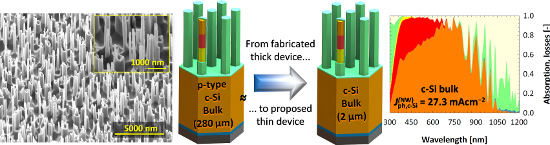
- characteristic radial junction configuration can lead to higher device performance, by increasing light absorption and, at the same time, improving the collection efficiency of photo-generated charge carriers. This work investigates the performance of ultra-thin solar cells characterised by nanowire arrays on a
- [5][6][7][8], cavity modes [5][8][9][10][11], Fabry–Perót and whispering gallery modes [12], their characteristic high aspect ratio promotes anti-reflection, allowing for more light to be coupled into the active layer of the solar cell [13][14][15]. In addition, radial-junction nanowires have the


The effect of flexible joint-like elements on the adhesive performance of nature-inspired bent mushroom-like fibers
Beilstein J. Nanotechnol. 2018, 9, 2893–2905, doi:10.3762/bjnano.9.268
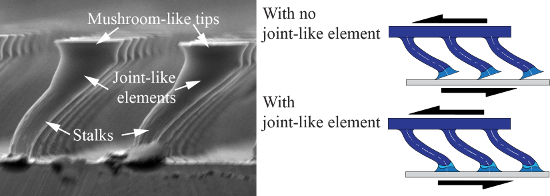
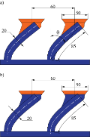
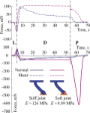
- particular, for male ladybird beetles, research has shown that the adhesive setae feature a material gradient such that the elastic modulus of the material at the junction between the stalk and the divergent distal end is close to minimum. This soft material acts like a flexible joint, improving the bending






Droplet-based synthesis of homogeneous magnetic iron oxide nanoparticles
Beilstein J. Nanotechnol. 2018, 9, 2413–2420, doi:10.3762/bjnano.9.226
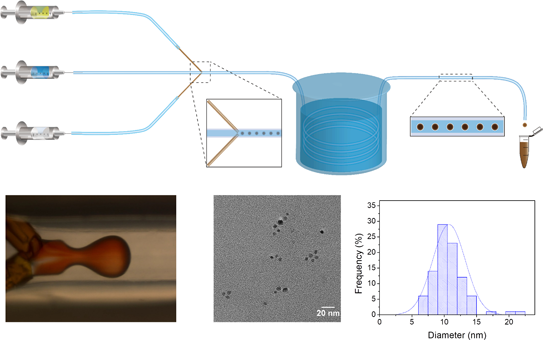
- of hot-melt adhesive. The remaining tubing after the junction was submerged in a water bath and the end was placed into a vial filled with water for sample collection. For droplet experiments the formation of droplets was recorded using a bright-field microscope (IX37, Olympus, Japan). Droplet
- droplet generation, junction with a length of 85 cm of tubing was submerged in a water bath to obtain temperature control over the reaction (Figure 1). The generation of droplets by the device was tested. Through the central tubing, mineral oil was flowed, while an aqueous phase was injected through both
- for the reagent solutions and continuous oil phase, the droplet generation junction, the water bath for heating, and collection of droplets in a vial (A). Photograph of the droplet generation junction (B), and microscope image of the droplet generation junction showing the alignment of the fused


Directional light beams by design from electrically driven elliptical slit antennas
Beilstein J. Nanotechnol. 2018, 9, 2361–2371, doi:10.3762/bjnano.9.221
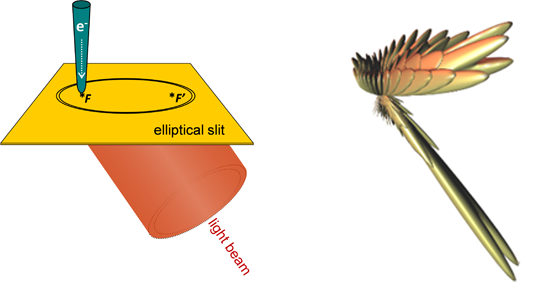
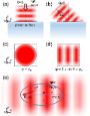
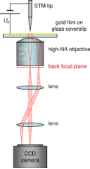
- nanosource can be a nanoscale tunnel junction where the emission process relies on inelastic electron tunneling effects [20]. A central issue for miniaturized electrical light sources is the control of their emission direction, especially given that SPP excitation with electrons results in a broad power
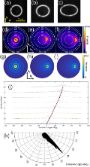
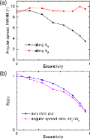
- with a minor linear contribution (along the major axis) that increases with eccentricity. Future improvements of these optical antennas include the integration of the electrical SPP nanosource in the design of the microstructure (e.g., as an integrated metal-oxide–metal tunnel junction) and the





Block copolymers for designing nanostructured porous coatings
Beilstein J. Nanotechnol. 2018, 9, 2332–2344, doi:10.3762/bjnano.9.218
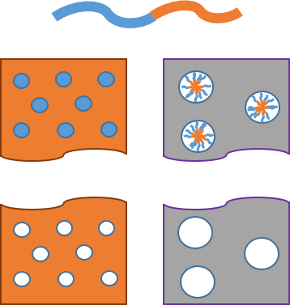
- increasing molecular weight, the interfacial area per block junction increases, inducing parallel folding (the most thermodynamically stable form) [87]. The removal of the sacrificial component (SC) to obtain the final polymeric porous material can be performed using various etching procedures, such as


Performance analysis of rigorous coupled-wave analysis and its integration in a coupled modeling approach for optical simulation of complete heterojunction silicon solar cells
Beilstein J. Nanotechnol. 2018, 9, 2315–2329, doi:10.3762/bjnano.9.216
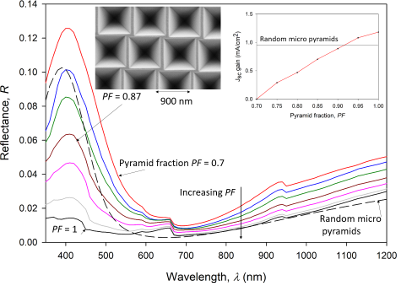
- approach of Rothemund et al. [30], we are also able to perform RCWA calculation of each individual ray at exact angle and polarization if even greater accuracy is desired; however, at the expense of longer simulation times. The CMA enables simulation of single and multi-junction solar cells and


Optimization of the optical coupling in nanowire-based integrated photonic platforms by FDTD simulation
Beilstein J. Nanotechnol. 2018, 9, 2248–2254, doi:10.3762/bjnano.9.209
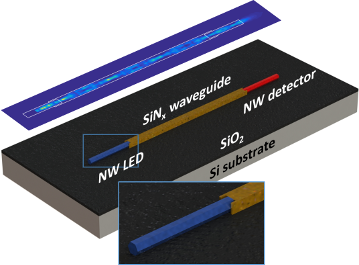
- [19]. Single NW photodetectors based on the photoconductive operation principle [20] or p–n junction photodiodes [21] have demonstrated high sensitivity. For these reasons, single NW components are considered as promising building blocks for integration with SiN photonic platforms. For the wafer-scale


Lead-free hybrid perovskites for photovoltaics
Beilstein J. Nanotechnol. 2018, 9, 2209–2235, doi:10.3762/bjnano.9.207
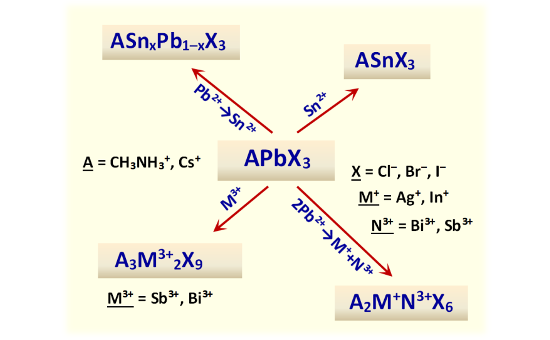
- sensitizers in liquid-junction solar cells [3][4]. These systems have shown remarkable progress, improving from 0.1% a decade ago to over 12% in 2018 [5]. Simultaneously, a new rising star in semiconductor photovoltaics – hybrid organo–inorganic lead-based perovskites (MPbX3, where M = methylammonium (MA


Electrospun one-dimensional nanostructures: a new horizon for gas sensing materials
Beilstein J. Nanotechnol. 2018, 9, 2128–2170, doi:10.3762/bjnano.9.202
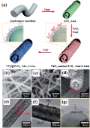
- metal oxides together having a mismatched crystal (lattice) size, resulting in enhanced gas diffusion (penetration) and subsequently fast response/recovery time. Furthermore, a hybrid structure (i.e. p–n junction, n–n junction or p–p junction) facilitates low operating temperature gas sensing with high






Spin-coated planar Sb2S3 hybrid solar cells approaching 5% efficiency
Beilstein J. Nanotechnol. 2018, 9, 2114–2124, doi:10.3762/bjnano.9.200
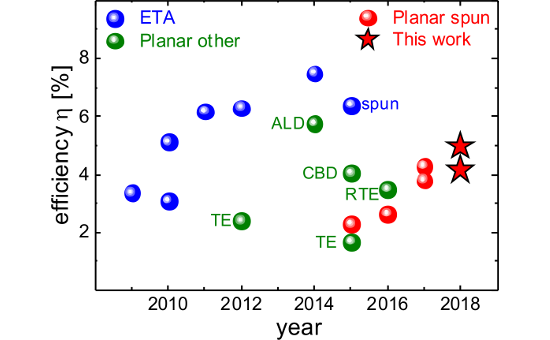
- MoOx forms a tunneling junction with the HTM is typical for organic solar cells in an n-i-p configuration. The cell area was 0.16 cm2. Layer and device characterization: The scanning electron microscope was a Zeiss (Leo) Gemini 1550 with Shottky field-emission cathode and an in-lens detector. The


Phosphorus monolayer doping (MLD) of silicon on insulator (SOI) substrates
Beilstein J. Nanotechnol. 2018, 9, 2106–2113, doi:10.3762/bjnano.9.199
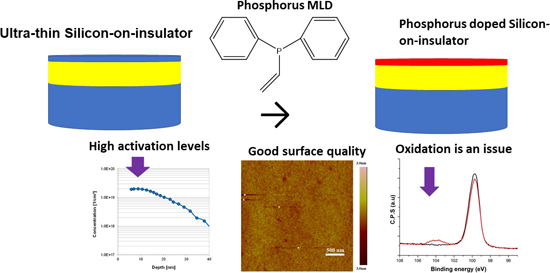
- than 10 s, capable of producing ultra-shallow doping profiles. Capping layers were removed using a standard buffered-oxide etch (BOE). Optimal annealing conditions to provide high dose and active carrier concentrations while limiting the diffusion and junction depth were examined in Figure S1 and




A variable probe pitch micro-Hall effect method
Beilstein J. Nanotechnol. 2018, 9, 2032–2039, doi:10.3762/bjnano.9.192
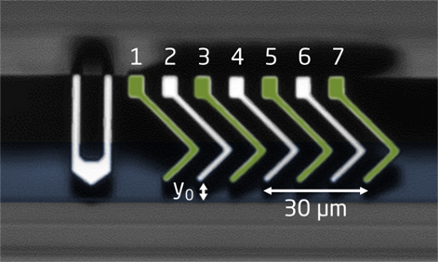
- measured on an ultrashallow junction silicon sample. We find that in presence of significant electrical noise, lower standard deviation is always obtained when the geometrical analysis is based on the sheet resistance signals. The situation is more complicated when electrode position errors are dominant
- four electrodes has been developed [11][12]. Similar strategies using variable probe pitch multi-point probes have been used for other systems, including current-in-plane tunneling measurements [13], junction-leakage measurements [14] and surface-conductivity measurements of bulk materials [15][16]. In
- position errors, as well as to electrical noise. Finally, we will present measurements on a B-doped Si ultrashallow junction, supporting our findings. Micro-Hall Effect Theory The fundamentals of Hall Effect measurements with a collinear M4PP have previously been described in detail [4]. However, we will


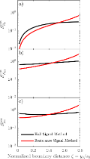
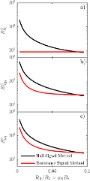
![[Graphic 11]](/bjnano/content/inline/2190-4286-9-192-i25.svg?max-width=637&scale=1.18182) for a) R0, b) NHS and c) μH when in- and off-line errors are present during ...
for a) R0, b) NHS and c) μH when in- and off-line errors are present during ...

![[Graphic 15]](/bjnano/content/inline/2190-4286-9-192-i29.svg?max-width=637&scale=1.18182) for the sheet resistance, Hall mobility and Hall sheet carrier density, due ...
for the sheet resistance, Hall mobility and Hall sheet carrier density, due ...