


Search results
Search for "mechanical properties" in Full Text gives 374 result(s) in Beilstein Journal of Nanotechnology. Showing first 200.
A comprehensive review on electrospun nanohybrid membranes for wastewater treatment
Beilstein J. Nanotechnol. 2022, 13, 137–159, doi:10.3762/bjnano.13.10
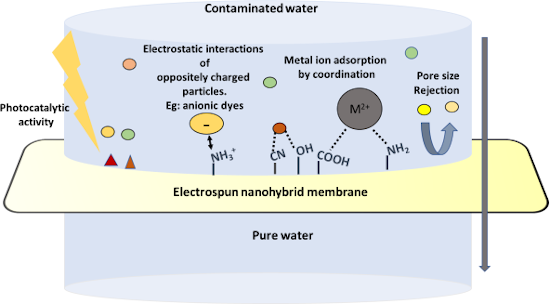
- . 3.3 Ambient parameters 3.3.1 Relative humidity. It has been reported that relative humidity has a direct impact on morphology and diameter of the fibers, which in turn affect the mechanical properties of the fibers. Pelipenko et al. investigated the impact of relative humidity on fiber morphology and
- the mechanical properties of electrospun PVA, PEO, and blends of PVA/hyaluronic acid (HA) and PEO/CS in acetic acid [42]. They have observed that the fiber diameter decreases with increasing relative humidity from 4 to 70%, but with a higher relative standard deviation. Also, at high relative humidity
- used in fabricating membranes for microfiltration (MF) and membrane distillation (MD) can be applied only to the materials that are chemically stable and can resist high temperatures. Membranes produced by sintering have a low porosity of 10–20% and stretched membranes have weak mechanical properties




Nanoscale friction and wear of a polymer coated with graphene
Beilstein J. Nanotechnol. 2022, 13, 63–73, doi:10.3762/bjnano.13.4
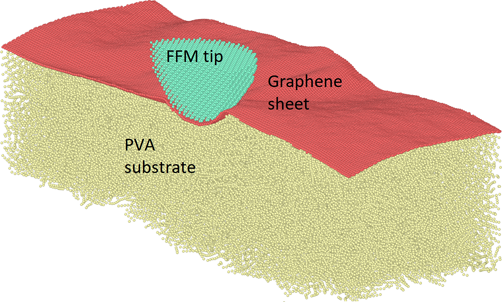
- mechanical properties were already being utilised in engineering applications. Graphite powder, essentially thick flakes of graphene, has been used as a lubricant additive for over a century to reduce wear and friction during sliding [5][6][7]. Nevertheless, we still do not understand the wide variety of
- local frictional heating leading to a change in mechanical properties of the polymer below the tip. In the case of the crumpled graphene sheet (Figure 12), the frictional curve is subject to more fluctuations. The calculation of the average frictional force taken between support displacements of 50 and


Alteration of nanomechanical properties of pancreatic cancer cells through anticancer drug treatment revealed by atomic force microscopy
Beilstein J. Nanotechnol. 2021, 12, 1372–1379, doi:10.3762/bjnano.12.101
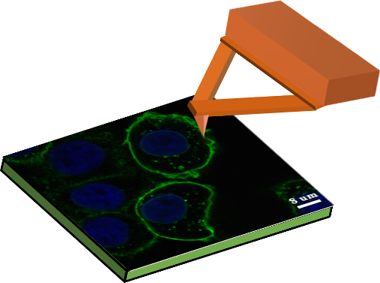
- Chemistry of Ministry of Education, And School of Chemistry and Chemical Engineering, Shandong University, Jinan, 250100, Shandong, China Tianjin Medical University Cancer Institute & Hospital, Tianjin, 300060, China 10.3762/bjnano.12.101 Abstract The mechanical properties of cells are key to the
- regulation of cell activity, and hence to the health level of organisms. Here, the morphology and mechanical properties of normal pancreatic cells (HDPE6-C7) and pancreatic cancer cells (AsPC-1, MIA PaCa-2, BxPC-3) were studied by atomic force microscopy. In addition, the mechanical properties of MIA PaCa-2
- development of early diagnosis methods is of importance. The traditional biological methods to research pancreatic cancer are based on molecular genetics and gene signaling. However, the mechanical properties of cells, which can enable cells to express various biological functions have been ignored [4


Two dynamic modes to streamline challenging atomic force microscopy measurements
Beilstein J. Nanotechnol. 2021, 12, 1226–1236, doi:10.3762/bjnano.12.90
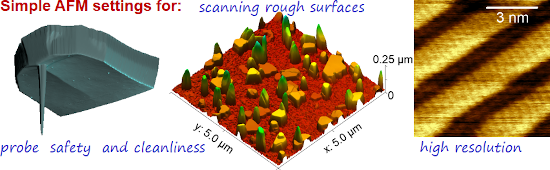
- periodically with a frequency of 1–2 kHz. In addition to the surface profile, contact methods allow one to obtain some information on the mechanical properties of the material, provided that the contact area between the tip and the sample can be modeled with a reasonable degree of accuracy. In the case of the
- classical contact mode, the friction force can be measured; when using off-resonance dynamic modes, stiffness and adhesion in the samples can be determined. Obviously, in determining the mechanical properties, the force of tip–surface interaction should be somewhat greater than that required if the task is
- contrast obtained in this case, as in the case of AM-AFM, allows one to probe the heterogeneity of the mechanical properties of the surface [28], but it is free from artifacts associated with the influence of the surface profile on the feedback error (phase change at the step boundaries). Thus, in


Self-assembly of amino acids toward functional biomaterials
Beilstein J. Nanotechnol. 2021, 12, 1140–1150, doi:10.3762/bjnano.12.85
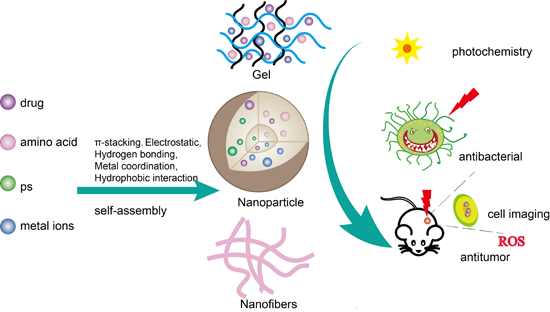
- Fmoc groups, Fmoc-lysine and Fmoc-aspartic acid, by two-step self-assembly, which had an ultra-low critical gelling concentration and good mechanical properties and can be used for 2D/3D cell scaffolds and the production of conductive soft composites. In addition, Fmoc-amino acids can be co-assembled

An overview of microneedle applications, materials, and fabrication methods
Beilstein J. Nanotechnol. 2021, 12, 1034–1046, doi:10.3762/bjnano.12.77
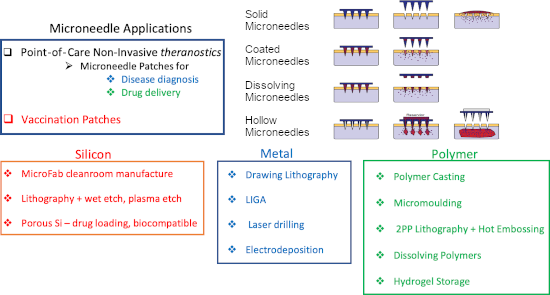
- crystal silicon and provide a degree of biodegradability, but their fabrication methods are relatively complex and involve the use of toxic and corrosive chemicals like HF. In addition, the mechanical properties of materials, including Young’s modulus, significantly degrade with increasing porosity. (Note
- are currently receiving more interest because of biocompatibility, superior mechanical properties, low material cost, and biodegradability. The low-cost of fabrication is an additional advantage of polymer microneedles over silicon. It is increasingly clear that the favoured fabrication methods used
- (COP) material using this method [5]. Fabrication and use of metal microneedles In addition to silicon and polymers, microneedles are also fabricated from metals including nickel, titanium, stainless steel, and palladium. Metals provide good mechanical properties and biocompatibility for microneedle


Effects of temperature and repeat layer spacing on mechanical properties of graphene/polycrystalline copper nanolaminated composites under shear loading
Beilstein J. Nanotechnol. 2021, 12, 863–877, doi:10.3762/bjnano.12.65
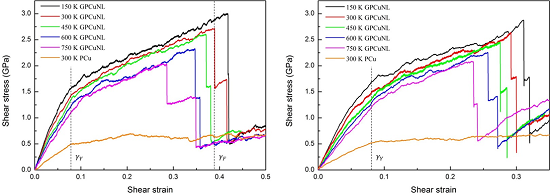
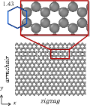
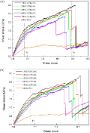
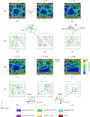
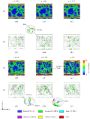
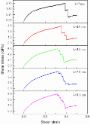
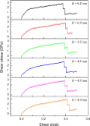
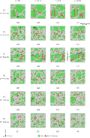
- ) composites under shear loading are investigated by molecular dynamics simulations. The effects of different temperatures, graphene chirality, repeat layer spacing, and grain size on the mechanical properties, such as failure mechanism, dislocation, and shear modulus, are observed. The results indicate that
- properties in various fields, such as supercapacitors, integrated electrodes, catalysis, and sensors [10][11][12][13]. Furthermore, the interaction between graphene and matrix materials directly affects the mechanical properties of composites [14]. The van der Waals force between graphene and metals can
- increase the strength of composites [15][16]. Thus, graphene–metal composites are regarded as important three-dimensional composites. Numerous studies on the enhancement of mechanical properties of graphene–metal composites have been reported. Chu et al. demonstrated that with 10 vol % graphene










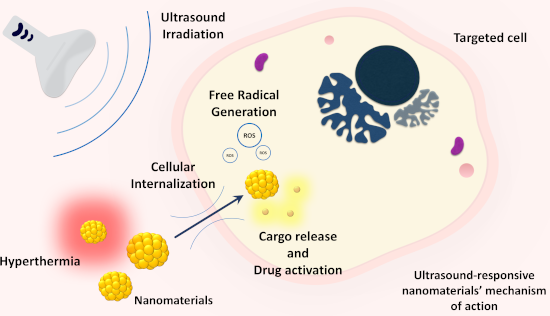
Comprehensive review on ultrasound-responsive theranostic nanomaterials: mechanisms, structures and medical applications
Beilstein J. Nanotechnol. 2021, 12, 808–862, doi:10.3762/bjnano.12.64


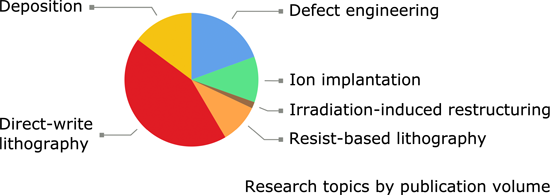
A review of defect engineering, ion implantation, and nanofabrication using the helium ion microscope
Beilstein J. Nanotechnol. 2021, 12, 633–664, doi:10.3762/bjnano.12.52
- focused helium ion beam of the HIM. Wang et al. used the HIM to conduct a systematic study of the effect of such a helium gas bubble superlattice on the mechanical properties of copper, which is representative of a range of fcc alloys that are known to exhibit radiation tolerance [78]. Copper nanopillar


Properties of graphene deposited on GaN nanowires: influence of nanowire roughness, self-induced nanogating and defects
Beilstein J. Nanotechnol. 2021, 12, 566–577, doi:10.3762/bjnano.12.47
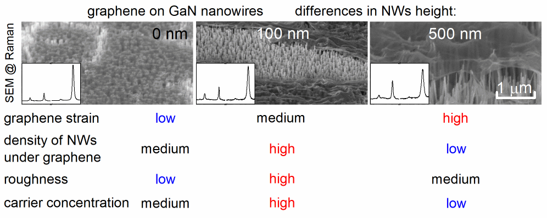
- engineering. Keywords: carrier concentration; gallium nitride; graphene; nanowires; Raman spectroscopy; scattering on defects; strain; Introduction The combination of excellent electrical and mechanical properties with interesting physical phenomena occurring in two-dimensional structures makes graphene an




Local stiffness and work function variations of hexagonal boron nitride on Cu(111)
Beilstein J. Nanotechnol. 2021, 12, 559–565, doi:10.3762/bjnano.12.46
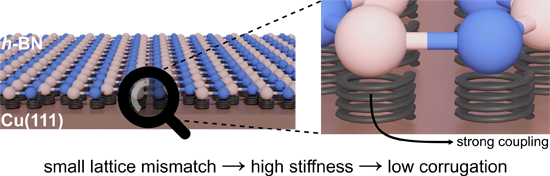
- the contact potential difference measured by Kelvin probe force microscopy. Using 3D force profiles of the same area we determine the relative stiffness of the Moiré region allowing us to analyse both electronic and mechanical properties of the 2D layer simultaneously. We obtain a sheet stiffness of
- modulation [30]. To shed more light on this controversy we use an alternative method to verify the mechanical properties of the monolayer by measuring the stiffness of the h-BN layer at different locations of the superstructure and comparing these results with concomitantly recorded local work function
- that h-BN/Cu(111) undergoes no significant deformation. Also, the histogram of the decay constant κ in Figure 4f reveals only negligible differences between rim (κ = 9.2 ± 1.3 nm−1) and bridge areas (κ = 8.9 ± 1.4 nm−1) indicating almost no difference in the mechanical properties between different


Determining amplitude and tilt of a lateral force microscopy sensor
Beilstein J. Nanotechnol. 2021, 12, 517–524, doi:10.3762/bjnano.12.42
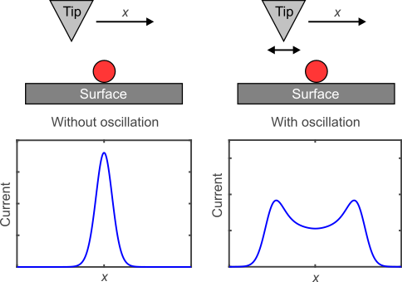
- , the energy input required to maintain the oscillation amplitude constant can be measured to calculate the calibration factor [21]. Besides these experimental methods, the amplitude can be also calibrated by calculating the electro-mechanical properties of the cantilever [22]. This theoretical method


Reconstruction of a 2D layer of KBr on Ir(111) and electromechanical alteration by graphene
Beilstein J. Nanotechnol. 2021, 12, 432–439, doi:10.3762/bjnano.12.35
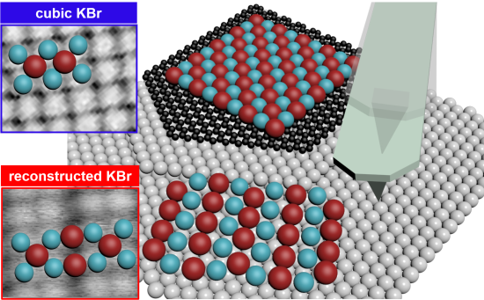
- reduced by the decoupling effect of graphene, thus yielding different electrical and mechanical properties of the top KBr layer. Keywords: DFT; graphene; Ir(111); KBr; KPFM; nc-AFM; surface reconstruction; Introduction Many two-dimensional (2D) materials have excellent optical, mechanical


The patterning toolbox FIB-o-mat: Exploiting the full potential of focused helium ions for nanofabrication
Beilstein J. Nanotechnol. 2021, 12, 304–318, doi:10.3762/bjnano.12.25
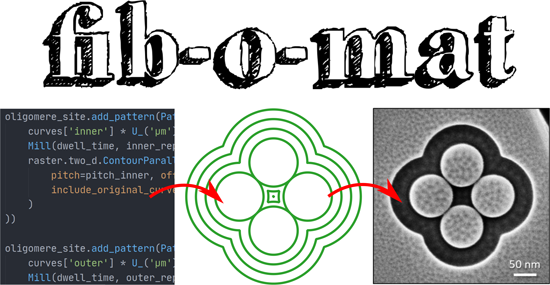
- resonators based on suspended single-layer graphene Used FIB-o-mat features: low-level beam path generation and automation via stage control, patterns optimized for speed to generate a large number of trampolines with varying bridge widths. Atomically thin graphene has extraordinary mechanical properties [3


Determination of elastic moduli of elastic–plastic microspherical materials using nanoindentation simulation without mechanical polishing
Beilstein J. Nanotechnol. 2021, 12, 213–221, doi:10.3762/bjnano.12.17
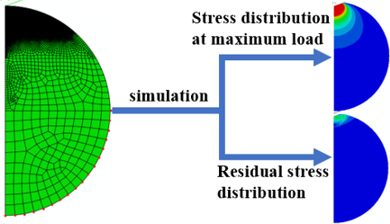
- computational study regarding the instrumented nanoindentation of elastic–plastic microspherical materials. The ratio between elastic modulus of the microsphere and the initial yield stress of the microsphere was systematically varied from 10 to 1000 to cover the mechanical properties of most materials
- characterization of the mechanical behavior of filaments [1], thin films [2], microplastics, coatings, powders, small crystals, and other materials at small scales. One of the great advantages of the technique is that many mechanical properties of materials can be determined from the analysis of indentation load
- area of the indenter at a specified depth. These effects can result in measurement errors of mechanical properties [9]. Without taking into account that the real contact area and the cross-sectional area of the indenter are different, the measured indentation modulus/hardness would be too high in the


A review on the biological effects of nanomaterials on silkworm (Bombyx mori)
Beilstein J. Nanotechnol. 2021, 12, 190–202, doi:10.3762/bjnano.12.15
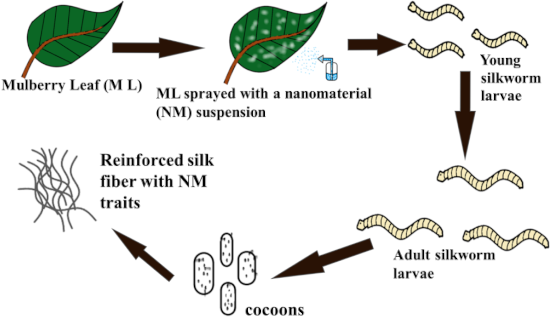
- BmNPVs. This decreased the virus pathogenicity and improved the survival rate of the affected silkworms. The effects of nanomaterials on the silk fibers of silkworms Silkworm silk is gaining popularity in the textile industry because of its shiny appearance and excellent mechanical properties [156][157
- ][158]. Improving the luster and the quality of silkworm silk is imperative and studies are being carried out in this direction. Feeding silkworms with nanomaterials, such as carbon nanotubes (CNTs), titanium dioxide, copper, and graphene has been reported to improve the mechanical properties and
- secondary structures of silkworm silk [159][160]. To study silk quality, the mechanical properties, crystalline structure, and thermal stability of the silk fiber are usually taken into consideration. Scientists have reported that the hindrance of the conformational transition of silk fibroin from a random


Paper-based triboelectric nanogenerators and their applications: a review
Beilstein J. Nanotechnol. 2021, 12, 151–171, doi:10.3762/bjnano.12.12
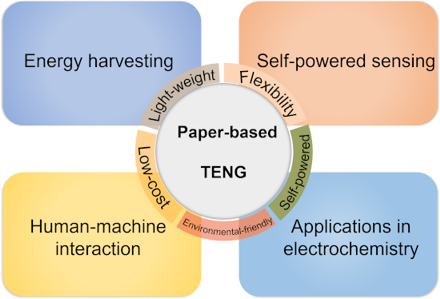
- mechanical properties of the origami structures enable diversified and sophisticated compressions and expansions. Previous research works on paper-based origami mainly focused on the seamless integration of sensing and interactive actuation; however, they lacked to address the concerns regarding paper-based






A review on the green and sustainable synthesis of silver nanoparticles and one-dimensional silver nanostructures
Beilstein J. Nanotechnol. 2021, 12, 102–136, doi:10.3762/bjnano.12.9
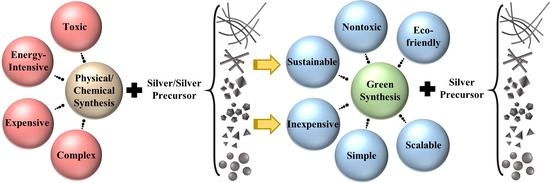
- characteristics including antimicrobial activity, electrical conductivity, thermal conductivity, optical characteristics, and mechanical properties. The antimicrobial characteristic of silver nanoparticles (AgNPs) has made them highly applicable in the biomedical and therapeutic fields [69][70][71]. Currently
- promising applications in electronics. This is a result of the outstanding electrical, optical, and mechanical properties of AgNWs. 1D silver nanostructures, such as AgNWs are more advantageous compared to other silver nanostructures due to several reasons. They can enable free movement of electrons in one


Bulk chemical composition contrast from attractive forces in AFM force spectroscopy
Beilstein J. Nanotechnol. 2021, 12, 58–71, doi:10.3762/bjnano.12.5
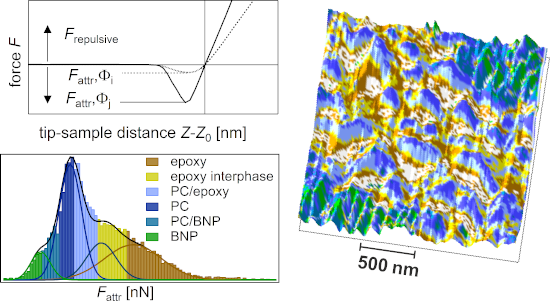
- of atomic force microscopy (AFM) is the measurement of physical properties at sub-micrometer resolution. Methods such as force–distance curves (FDCs) or dynamic variants (such as intermodulation AFM (ImAFM)) are able to measure mechanical properties (such as the local stiffness, kr) of nanoscopic
- material phases based on AFM topography. Additional chemical characterization on the nanoscale is performed by an AFM/infrared-spectroscopy hybrid method. Mechanical properties (kr) and attractive forces (Fattr) are calculated and a structure–property correlation is obtained by a manual principle component
- determined. Keywords: AFM force spectroscopy; composites; principle component analysis; structure–property correlation; van der Waals forces; Introduction The mechanical properties of small volumes of materials can be measured using various atomic force microscopy (AFM) methods. The well-established force


Free and partially encapsulated manganese ferrite nanoparticles in multiwall carbon nanotubes
Beilstein J. Nanotechnol. 2020, 11, 1891–1904, doi:10.3762/bjnano.11.170
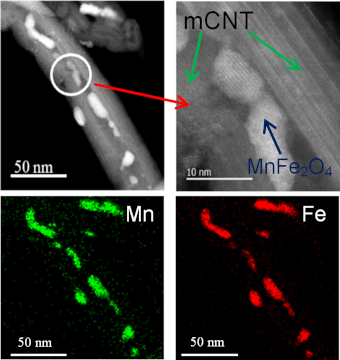
- agents [4]. In addition, encapsulating magnetic nanoparticles inside carbon nanotubes enables the handling of the tubes via magnetic forces, thereby avoiding the alteration of their electronic or mechanical properties when using them in nanoelectronics [5]. Moreover, carbon nanotubes filled with magnetic




Piezotronic effect in AlGaN/AlN/GaN heterojunction nanowires used as a flexible strain sensor
Beilstein J. Nanotechnol. 2020, 11, 1847–1853, doi:10.3762/bjnano.11.166
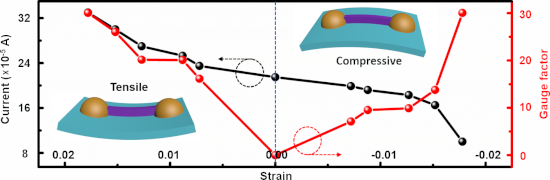
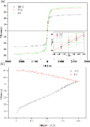
- the study of the piezotronic effect than nanofilms or bulk materials since the smaller physical size and larger surface-to-volume ratio of 1D NWs yields superior mechanical properties [4][10]. In addition, 1D semiconductor NWs can increase the electron mobility and achieve the confinement of light


Nanomechanics of few-layer materials: do individual layers slide upon folding?
Beilstein J. Nanotechnol. 2020, 11, 1801–1808, doi:10.3762/bjnano.11.162
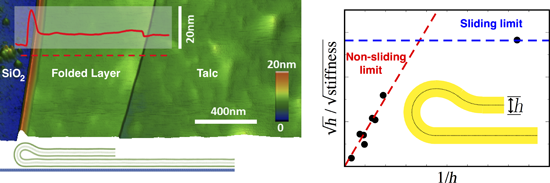
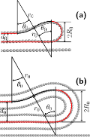
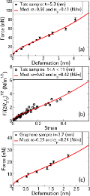
- mechanical properties of folded edges, which allows for the experimental determination of the bending stiffness (κ) of multilayered 2D materials as a function of the number of layers (n). In the case of talc, we obtain κ ∝ n3 for n ≥ 5, indicating no interlayer sliding upon folding, at least in this
- insights about the interlayer interaction in the growing field of heterolayered 2D materials, probing the mechanical properties of typical interfaces such as graphene/hBN, graphene/TMDs, hBN/TMDs, or any other technologically relevant two-dimensional heterostructure. (a) AFM image of a folded edge of a
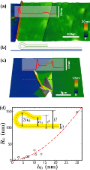

![[Graphic 5]](/bjnano/content/inline/2190-4286-11-162-i8.svg?max-width=637&scale=1.18182) =
= ![[Graphic 6]](/bjnano/content/inline/2190-4286-11-162-i9.svg?max-width=637&scale=1.18182) as a function of 1/h for the nine measured talc samples. h is a directly measured ...
as a function of 1/h for the nine measured talc samples. h is a directly measured ...
Application of contact-resonance AFM methods to polymer samples
Beilstein J. Nanotechnol. 2020, 11, 1714–1727, doi:10.3762/bjnano.11.154
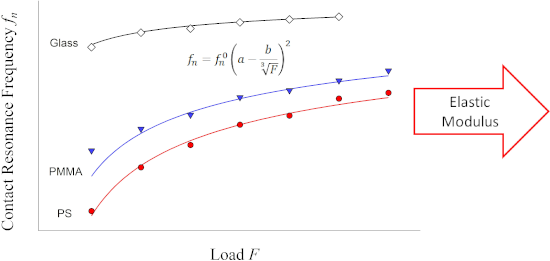
- Sebastian Friedrich Brunero Cappella Federal Institute for Material Research and Testing (BAM), Unter den Eichen 87, 12205 Berlin, Germany 10.3762/bjnano.11.154 Abstract Contact-resonance AFM (CR-AFM) has been used in recent years for the measurement of mechanical properties of rather stiff
- materials, such as ceramics or metals, but also of some polymers. Compared with other techniques providing information on the mechanical properties of a sample, notably force–distance curves, CR-AFM has a much shorter acquisition time. This compensates in part the incomplete theoretical understanding of the
- . Keywords: atomic force microscopy; contact resonance; mechanical properties; polymers; wear; Introduction The development of new materials for applications on the nanoscale, such as thin polymer films, demands a reliable determination of their mechanical properties. Atomic force microscopy (AFM) is a very


Out-of-plane surface patterning by subsurface processing of polymer substrates with focused ion beams
Beilstein J. Nanotechnol. 2020, 11, 1693–1703, doi:10.3762/bjnano.11.151
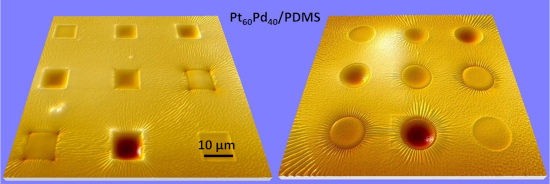
- been directed by their diverse applications in micro- and nanotechnology and by the high susceptibility of their structure to ion irradiation [5]. Another important aspect is that the chosen materials are different in their chemical structure, chemical composition, and mechanical properties. This is


Design of V-shaped cantilevers for enhanced multifrequency AFM measurements
Beilstein J. Nanotechnol. 2020, 11, 1525–1541, doi:10.3762/bjnano.11.135
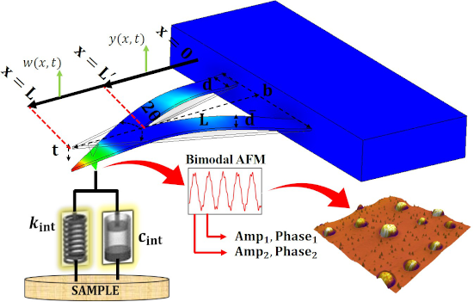
- , multifrequency AFM has gained the attention of different fields, such as, the measurement of nanoscale chemical and mechanical properties of human dentin [2], the mapping of viscoelastic materials [3], or the characterization of thin molecular films [4]. As different fields have implemented multifrequency AFM in


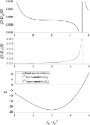
![[Graphic 4]](/bjnano/content/inline/2190-4286-11-135-i26.svg?max-width=637&scale=1.18182) = 15 µm, bref = 8...
= 15 µm, bref = 8...


![[Graphic 17]](/bjnano/content/inline/2190-4286-11-135-i39.svg?max-width=637&scale=1.18182) ) of V-shaped cantilevers for...
) of V-shaped cantilevers for...





