


Search results
Search for "mesoporous" in Full Text gives 209 result(s) in Beilstein Journal of Nanotechnology. Showing first 200.
Uniform Sb2S3 optical coatings by chemical spray method
Beilstein J. Nanotechnol. 2019, 10, 198–210, doi:10.3762/bjnano.10.18
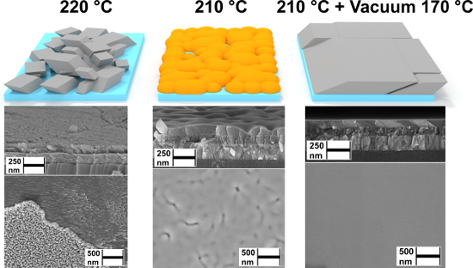
- [8][52] on planar TiO2, by photochemical deposition on mesoporous TiO2 [53], by thermal evaporation on planar CdS [27] and planar TiO2 [54]. Supported by these numerous observations, we consider the Volmer–Weber growth characteristic of Sb2S3, given that the substrate and deposition conditions are




Targeting strategies for improving the efficacy of nanomedicine in oncology
Beilstein J. Nanotechnol. 2019, 10, 168–181, doi:10.3762/bjnano.10.16
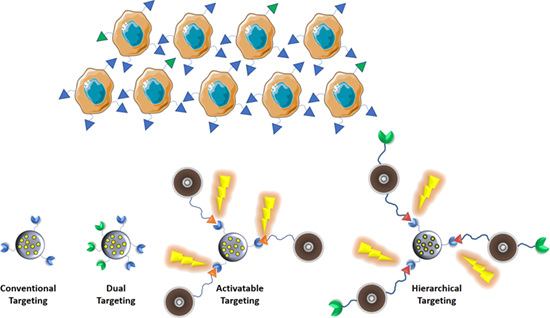
- there [15]. These nanocapsules were anchored on the surface of mesoporous silica nanoparticles (MSN) coated with a lipid bilayer (protocells) enhancing their penetration into 3D tumoral tissue models, which yielded a significant enhancement of the therapeutic efficacy of these nanodevices (Figure 1) [16
- targeting RGD tripeptide is a novel strategy recently described. Both vectorization agents were grafted on mesoporous silicananoparticles in a random manner [72]. RGD act as tissular and cellular targeting ligand, while TAT act as CPP mediating the endosomal escape and driving the payload to the nucleus
- become a great alternative for including double functional targeting agents to a nanocarrier. Villegas et al. [83] recently described mesoporous Janus nanoparticles for dual targeting of tumour cells and mitochondria (Figure 7). There are multiple “mitochondriotoxic” drugs that act on mitochondria


Nanoporous water oxidation electrodes with a low loading of laser-deposited Ru/C exhibit enhanced corrosion stability
Beilstein J. Nanotechnol. 2019, 10, 157–167, doi:10.3762/bjnano.10.15
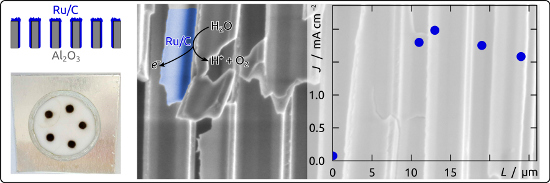
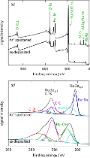
- and Co [22]). Another approach entails increasing the specific surface area, which allows one to generate current at lower overpotential, for example by supporting RuO2 nanoparticles on siliceous mesoporous materials [23][24][25][26], with mesoporous RuO2 [27], or with RuO2 supported on Sb-doped SnO2




pH-mediated control over the mesostructure of ordered mesoporous materials templated by polyion complex micelles
Beilstein J. Nanotechnol. 2019, 10, 144–156, doi:10.3762/bjnano.10.14
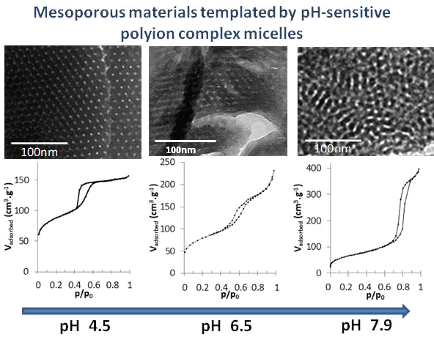
- Coulomb, UMR 5221 CNRS – Université de Montpellier, 34095 Montpellier, France 10.3762/bjnano.10.14 Abstract Ordered mesoporous silica materials were prepared under different pH conditions by using a silicon alkoxide as a silica source and polyion complex (PIC) micelles as the structure-directing agents
- ; hybrid organic–inorganic interface; mesoporous materials; nanostructured materials; polyion complex micelles; polyion electrostatic complexation; Introduction Due to their unique physicochemical properties originating from their uniform pore size and periodically arranged network at the mesoscale
- , silica-based ordered mesoporous materials (OMMs) have attracted considerable attention in various fields such as adsorption, separation and catalysis. The formation of these mesostructures relies on a supramolecular assembly process between silicic species and surfactants or amphiphilic block copolymers


New micro/mesoporous nanocomposite material from low-cost sources for the efficient removal of aromatic and pathogenic pollutants from water
Beilstein J. Nanotechnol. 2019, 10, 119–131, doi:10.3762/bjnano.10.11
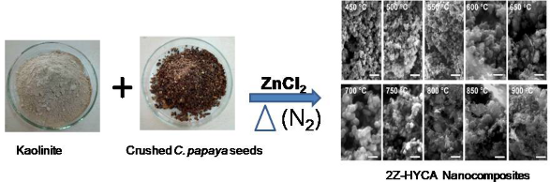
- Science), Theodor-Körner-Allee 16, 02763 Zittau, Germany Department of Earth and Environmental Science, University of Potsdam, 14476 Potsdam, Germany 10.3762/bjnano.10.11 Abstract A new micro/mesoporous hybrid clay nanocomposite prepared from kaolinite clay, Carica papaya seeds, and ZnCl2 via calcination
- ; micro/mesoporous; nanocomposite; water remediation; Introduction Porous carbon-based materials and carbon/inorganic hybrid materials have extensively been used for the adsorption of pollutants, such as heavy metals or aromatic hydrocarbons, from water in developing countries [1][2][3][4]. The removal
- materials synthesis procedure. The current study describes the synthesis of a new porous nanocomposite material. Unlike earlier versions of these materials prepared with alkali activation [1][22], the resulting micro/mesoporous carbon–clay nanocomposite in this study shows a high efficiency for the removal




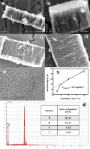
Impact of the anodization time on the photocatalytic activity of TiO2 nanotubes
Beilstein J. Nanotechnol. 2018, 9, 2628–2643, doi:10.3762/bjnano.9.244
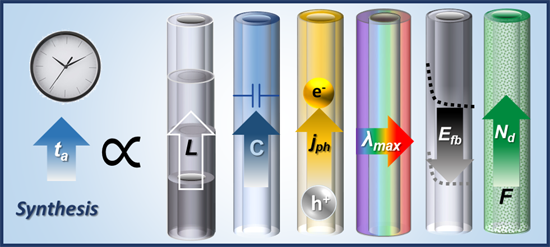
- synthesis methods resulting in a wide range of morphologies, such as mesoporous structures [4], microtubes [5], microdendrites, nanoparticles [6][7][8], nanorods [9][10], nanotubes [11][12][13], nanowires [14], and nanosheets [15][16]. Standing out from the rest of the synthesis techniques, electrochemical


Enhanced antineoplastic/therapeutic efficacy using 5-fluorouracil-loaded calcium phosphate nanoparticles
Beilstein J. Nanotechnol. 2018, 9, 2499–2515, doi:10.3762/bjnano.9.233
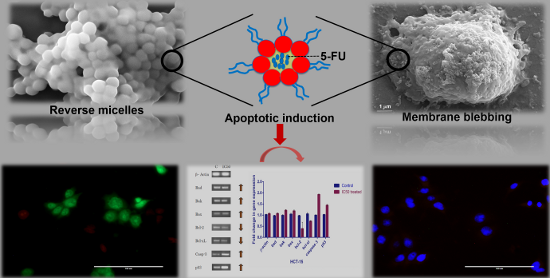
- both in vitro and in vivo studies [5]. Gold nanoparticles conjugated with a trans-activating transcriptional activator (TAT) peptide modification encapsulated with the drug doxorubicin showed enhanced toxicity in brain cancer models [6]. Further, mesoporous silica nanoparticles were successfully used
- the bulk. Thus metal-based NPs applied to biomedical applications could contradict the success of disease prognosis and treatment. Upon synthesis via solvent-extraction or calcination procedures, mesoporous silica nanoparticles (MSNs) were found to inhibit cellular respiration [10] in the in vivo


Thickness-dependent photoelectrochemical properties of a semitransparent Co3O4 photocathode
Beilstein J. Nanotechnol. 2018, 9, 2432–2442, doi:10.3762/bjnano.9.228
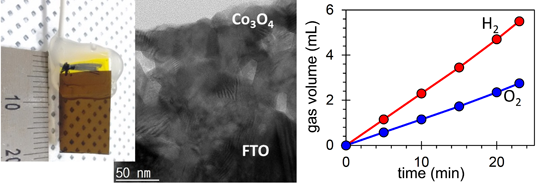
- ]. Existing studies have measured a photocurrent of 33.6 μA·cm−2 in 0.5 M Na2S on a mesoporous Co3O4 nanosheet grown through in situ transformation from hexagonal Co(OH)2 to spinel Co3O4 [18]. Hong et al. demonstrated a photocurrent of 0.4 mA·cm−2 from Co3O4 nanowire photocathodes, which could be enhanced to
- ) morphology of a 230 nm thick Co3O4 film on FTO/glass, cross-sectional images of (g) a thin Co3O4 (70 nm) film on FTO/glass substrate showing the densely packed film covering the FTO surface, and of (h) a thicker Co3O4 layer (230 nm) showing the mesoporous aspect attributed to the Kirkendall diffusion-driven



Block copolymers for designing nanostructured porous coatings
Beilstein J. Nanotechnol. 2018, 9, 2332–2344, doi:10.3762/bjnano.9.218
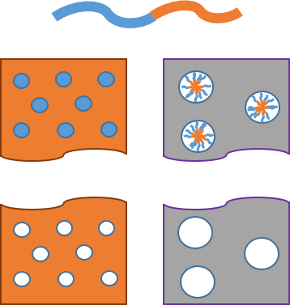
- ) parts linked together by chemical bonds [101]. Analogous to surfactants, even amphiphilic block copolymers (such as the PS-b-PEO ones) can be used as templating agents [4]. As reported by Yu and co-workers [102], PS-b-PEO copolymers were used for the production of mesoporous silica films where a cubic
- close-packed spherical system was obtained by solvent evaporation induced self-assembly (EISA) process. Different pore sizes can be obtained by changing the block length in the soft templates. By coupling the spin-coating deposition technique with the soft-templating approach, mesoporous silica coatings
- nanostructure. AFM images reported in this study show that after thermal treatment, a mesoporous titania coating is obtained where the spherical pore systems correspond to the PS spherical domains in the hybrid film before calcination. Depending on the formulation parameters and following the same procedure


Lead-free hybrid perovskites for photovoltaics
Beilstein J. Nanotechnol. 2018, 9, 2209–2235, doi:10.3762/bjnano.9.207
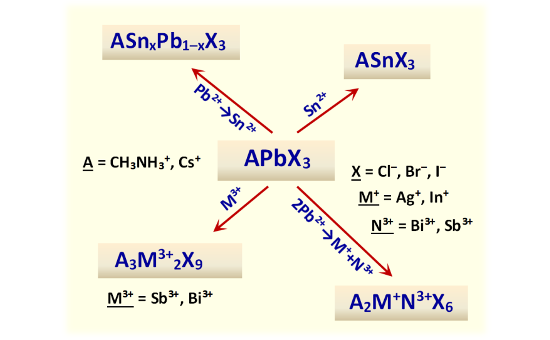
- mesoporous metal oxide (TiO2) scaffold [67]. Later, it was recognized that Pb-based HPs are incomparably more efficient when applied as light harvesters in photovoltaic planar or bulk heterojunction solar cells. Such cells have two designs – a “conventional” n–i–p design with a HP layer deposited onto the
- and MAI on mesoporous titania scaffolds [147]. After covering with a Spiro-MeOTAD HTL, the MAMnI3-based device showed a response to the visible light illumination that was stable for at least 2000 s in an on/off cycling test [147]. A similar response to the UV light was observed for MA2MnCl4
- the morphology of the scaffold, varying from island-like for the compact TiO2 layers to a more homogeneous MABI deposit on the mesoporous TiO2 [157]. The TiO2/MABI composites can be produced by a double-step interdiffusion method including sequential deposition of BiI3 and CH3NH3I layers followed by


Electrospun one-dimensional nanostructures: a new horizon for gas sensing materials
Beilstein J. Nanotechnol. 2018, 9, 2128–2170, doi:10.3762/bjnano.9.202
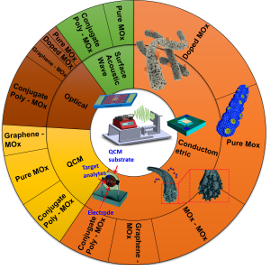
- , and larger surface-to-volume ratio [34]. The large surface-area-to-volume ratio of nanofibers (NFs), hollow nanofibers (HNFs), nanotubes (NTs) and nanowires (NWs) with micro/mesoporous surfaces results in improved adsorption and better reaction kinetics of gas-sensitive materials. Nanofibers can be
- , respectively [225]. Al2O3–In2O3 composites with a heterostructure and mesoporous tubular structure have been applied to room temperature NOx sensing [226]. These composite NTs can detect 291 ppb of NOx at room temperature with a response of 0.74 and a response time of 24 s. The atomic ratios of In and Al were






Spin-coated planar Sb2S3 hybrid solar cells approaching 5% efficiency
Beilstein J. Nanotechnol. 2018, 9, 2114–2124, doi:10.3762/bjnano.9.200
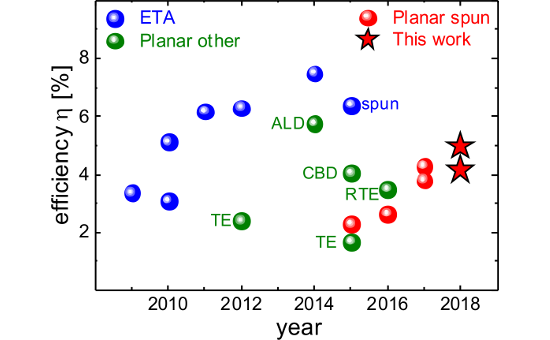
- thin absorber (ETA) architecture, which is similar to that of dye-sensitized solar cells [21]. A thin absorber layer of around 10 nm [22] is deposited on a mesoporous TiO2 scaffold and the pores are subsequently filled with a hole transport material (HTM). Progress in terms of device efficiency can be
- of sulfur in the precursor (SbCl3/TU = 1.8) [29]. In a first step, the film morphology was studied. While the Sb-TU process allows the homogeneous deposition of Sb2S3 in a mesoporous TiO2 scaffold which enables device efficiencies comparable to other deposition methods [29], direct thermal
- crystalline phase of Sb2S3 for a thin layer on a mesoporous TiO2 scaffold [22][57]. For PDS measurements of the Sb-TU process, a TiO2 layer was spray-coated onto the glass before depositing the Sb2S3 layer because non-optimal adhesion prevents direct coating of glass with Sb-TU solution. The deposition


Synthesis of a MnO2/Fe3O4/diatomite nanocomposite as an efficient heterogeneous Fenton-like catalyst for methylene blue degradation
Beilstein J. Nanotechnol. 2018, 9, 1940–1950, doi:10.3762/bjnano.9.185
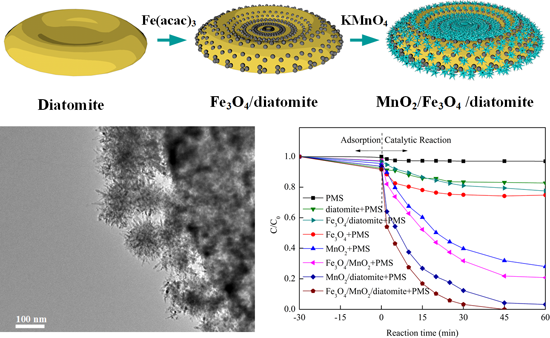
- silica. Hence, diatomite offers a high specific surface area, a mesoporous structure and superior physicochemical stabilities. Due to the above advantages, together with the abundant reserves, low price and eco-friendly nature, diatomite is a promising support material for catalyst nanoparticles in
- distributions of the samples. All three samples show a type-IV isotherm with type-H3 hysteresis loops (at about 0.50–0.99), which demonstrates a mesoporous structure of diatomite and as-prepared composites [35]. The detailed BET values calculated by the Barret–Joyner–Halenda (BJH) method are listed in Table 1
- /Fe3O4/diatomite with high surface area and sufficient mesoporous structure will provide adequate active sites in the consecutive adsorption and heterogeneous Fenton-like reaction for dye removal. Catalytic activity To demonstrate the catalytic activity of the as-synthesized catalysts toward PMS


SO2 gas adsorption on carbon nanomaterials: a comparative study
Beilstein J. Nanotechnol. 2018, 9, 1782–1792, doi:10.3762/bjnano.9.169

- , e.g., for flue gas scrubbing applications. These include, but are not limited to, various zeolites [3][4], metal-organic frameworks [5][6][7][8], mesoporous silica [9][10][11] and carbon nanomaterials [12][13][14][15]. Due to its higher stability against moisture and corrosive gases (typical flue gas


Uniform cobalt nanoparticles embedded in hexagonal mesoporous nanoplates as a magnetically separable, recyclable adsorbent
Beilstein J. Nanotechnol. 2018, 9, 1770–1781, doi:10.3762/bjnano.9.168
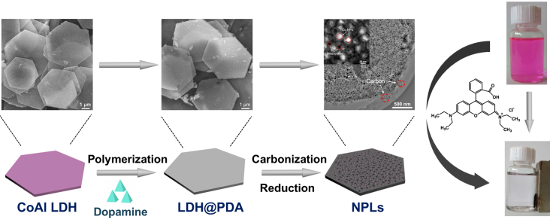
- University of Technology, Tianjin 300384, China 10.3762/bjnano.9.168 Abstract Novel hexagonal nanoplates (NPLs) comprised of mesoporous carbon containing imbedded magnetic Co nanoparticles (CoAl2O4 phase) are prepared through direct carbonization of polydopamine (PDA)-coated CoAl layered double hydroxide
- morphology and specific surface area of the as-prepared NPLs can be tailored by adjusting the initial dopamine concentration and carbonization temperature. The mesoporous NPLs exhibit excellent sorption of rhodamine B (RhB) dye and fast magnetic separation in aqueous solution. Over 95% of RhB can be adsorbed
- number of researches have demonstrated that carbon-based nanocomposites can serve as effective adsorbents for wastewater purification [6][7][8][9]. The introduction of transition metal nanoparticles into a mesoporous carbon matrix to form transition-metal-loaded mesoporous carbon nanocomposites (TM-MCNs


Cryochemical synthesis of ultrasmall, highly crystalline, nanostructured metal oxides and salts
Beilstein J. Nanotechnol. 2018, 9, 1755–1763, doi:10.3762/bjnano.9.166
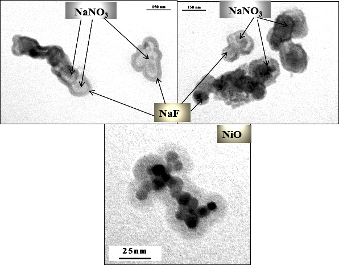
- NiO nanocrystals (4.1–4.7 nm) incorporated into the pore space of mesoporous titanium silicate [13]. We developed a method for the preparation of ultradispersed NiO based on the combination of the microemulsion method and cryochemical technology. NiO crystallites were obtained by cryotreatment of the
- indicated in the formation of a 2D interface layer which included Ni–O–Si bonds on the surface of the mesoporous silicate. It was found that the composite system prepared by cryotreatment of the emulsion showed a higher hydro-desulfurization catalytic activity by several orders of magnitude as compared to


Controllable one-pot synthesis of uniform colloidal TiO2 particles in a mixed solvent solution for photocatalysis
Beilstein J. Nanotechnol. 2018, 9, 1715–1727, doi:10.3762/bjnano.9.163
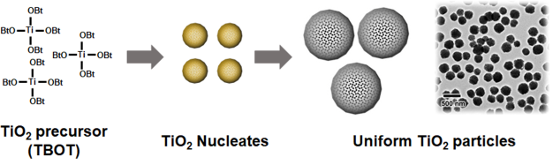
- -developed mesoporous structure, and a mixed crystalline phase of anatase and rutile. The final uniform TiO2 particles displayed significantly improved photocatalytic activity. By controlling the calcination conditions, the crystalline phase and crystallinity of the uniform TiO2 particles can be fine-tuned
- properties (such as pore size and surface area) of the final TiO2 particles. When a relatively large amount of HPC was used during the synthesis, the final TiO2 sample showed a large surface area. The samples TiO2(HPC-1666.67)-500 and TiO2(HPC-416.67)-500 showed the most well-developed mesoporous structure




Free-radical gases on two-dimensional transition-metal disulfides (XS2, X = Mo/W): robust half-metallicity for efficient nitrogen oxide sensors
Beilstein J. Nanotechnol. 2018, 9, 1641–1646, doi:10.3762/bjnano.9.156
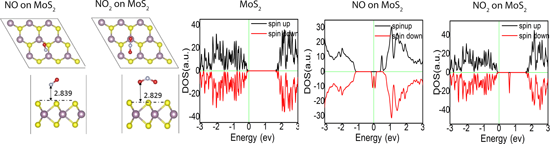
- and can cause serious health issues [1]. For a large-scale monitoring of NOx, it is highly essential to develop the techniques of toxic gas detection. Up to now, a number of three dimensional (3D) materials, such as nickel phthalocyanine (NiPc) [2], tungsten trioxide (WO3) [3], mesoporous silicate [4


Sulfur-, nitrogen- and platinum-doped titania thin films with high catalytic efficiency under visible-light illumination
Beilstein J. Nanotechnol. 2018, 9, 1629–1640, doi:10.3762/bjnano.9.155
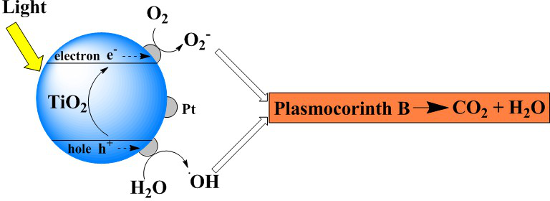
- ways to increase the porosity of the material is the addition of an organic polymer. After polymer decomposition via thermal treatment, mesoporous materials with high surface area and pore volume are obtained [13][14][15]. The increase in surface area depends on the type of polymer added, the type of


Cr(VI) remediation from aqueous environment through modified-TiO2-mediated photocatalytic reduction
Beilstein J. Nanotechnol. 2018, 9, 1448–1470, doi:10.3762/bjnano.9.137
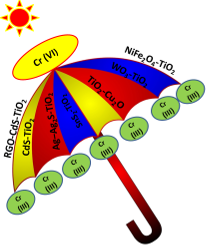
- homogeneous TiO2 dispersion, presence of Cu nanoparticles for facilitating charge separation processes, synergetic effect of the TiO2/Cu2O heterojunction and the small size of the photocatalyst [168]. Velegraki et al. fabricated 3D mesoporous networks of assembled CoO nanoparticles (CoO MNAs) to study its


Semi-automatic spray pyrolysis deposition of thin, transparent, titania films as blocking layers for dye-sensitized and perovskite solar cells
Beilstein J. Nanotechnol. 2018, 9, 1135–1145, doi:10.3762/bjnano.9.105
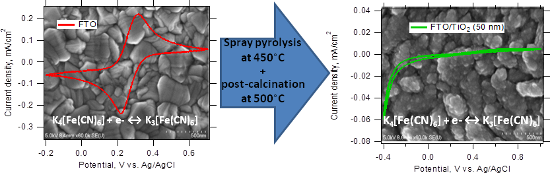
- impaired by calcination at 500 °C (which is mandatory for the subsequent fabrication of mesoporous TiO2 thick films). Even though SPD is a popular technique for the fabrication of BLs and the resulting TiO2 films are less sensitive to calcination, the blocking properties are inferior to those with films


Facile chemical routes to mesoporous silver substrates for SERS analysis
Beilstein J. Nanotechnol. 2018, 9, 880–889, doi:10.3762/bjnano.9.82
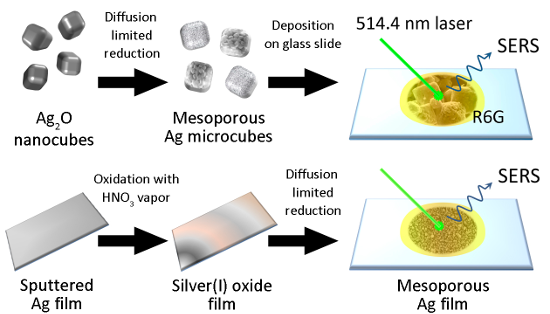
- , Ruhr-University at Bochum, Universitätsstraße 150, Bochum, 44801, Germany 10.3762/bjnano.9.82 Abstract Mesoporous silver nanoparticles were easily synthesized through the bulk reduction of crystalline silver(I) oxide and used for the preparation of highly porous surface-enhanced Raman scattering (SERS
- )-active substrates. An analogous procedure was successfully performed for the production of mesoporous silver films by chemical reduction of oxidized silver films. The sponge-like silver blocks with high surface area and the in-situ-prepared mesoporous silver films are efficient as both analyte adsorbents
- (meldonium; enhancement factor of ≈102) that is known for its ability to increase the endurance performance of athletes. Keywords: meldonium; mesoporous silver substrates; silver oxide; surface-enhanced Raman spectroscopy; Introduction Nowadays one of the largest sectors of the global chemical industry is


Facile synthesis of a ZnO–BiOI p–n nano-heterojunction with excellent visible-light photocatalytic activity
Beilstein J. Nanotechnol. 2018, 9, 789–800, doi:10.3762/bjnano.9.72
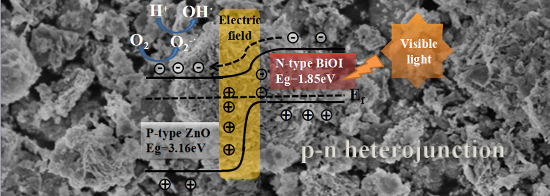
- condensation step, undoubtedly corresponds to a type IV isotherm according to the Brunauer–Deming–Derning–Teller (BDDT) classification, indicating the mesoporous nature of sample B-4 [40]. The isotherm has a loop with the shape of H3, which demonstrates that the pores in the sample are mainly made up of slit


Synthesis and characterization of two new TiO2-containing benzothiazole-based imine composites for organic device applications
Beilstein J. Nanotechnol. 2018, 9, 721–739, doi:10.3762/bjnano.9.67
- characteristic for mesoporous materials. As can be seen in Figure 1a, this isotherm possesses a characteristic feature of a hysteresis loop, which is the consequence of adsorbate condensation in TiO2 pores. The limiting adsorption at the high pressure close to 1.0 p/p0 results in a plateau of the isotherm
- the width range of 2–50 nm) and macropores (above 50 nm). Figure 1b shows the pore size distribution of TiO2. Based on the BJH method the average pore width of 6.2 nm and cumulative volume of pores of 0.117 m3/g were calculated. The obtained results indicate that the mesoporous structure of TiO2






Cyclodextrin-assisted synthesis of tailored mesoporous silica nanoparticles
Beilstein J. Nanotechnol. 2018, 9, 693–703, doi:10.3762/bjnano.9.64
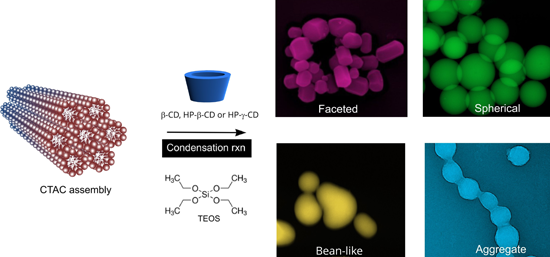
- /bjnano.9.64 Abstract Mesoporous silica nanoparticles (MSNs) have sparked considerable interest in drug/gene delivery, catalysis, adsorption, separation, sensing, antireflection coatings and bioimaging because of their tunable structural properties. The shape, size and pore structure of MSNs are greatly
- additives in a simple, one-pot reaction system for a wide range of applications. Keywords: cyclodextrin; faceted particles; mesoporous silica nanoparticles (MSN); microporous; Introduction With the availability of several types of surfactants and the increased understanding of sol–gel chemistry, numerous
- mesoporous silica nanoparticles (MSNs) with tunable structural properties have been developed [1][2][3][4][5][6][7][8][9][10][11]. Yet, there is still ongoing interest in the synthesis of tailored MSNs to optimize their performance in applications, such as catalysis, sensing, drug delivery and adsorption. So





