Search results
Search for "photocatalytic" in Full Text gives 213 result(s) in Beilstein Journal of Nanotechnology. Showing first 200.
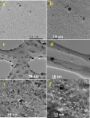
Deposition of metal particles onto semiconductor nanorods using an ionic liquid
Beilstein J. Nanotechnol. 2019, 10, 718–724, doi:10.3762/bjnano.10.71
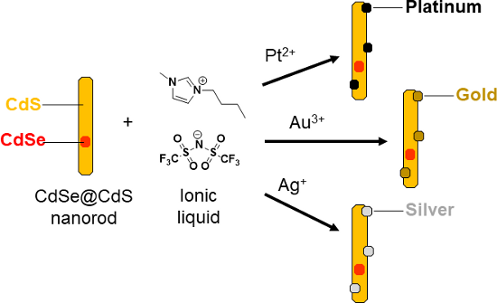
- agents. Photocatalytic dye degradation experiments showed that catalysts with platinum particles deposited using the ionic liquid out-performed similar materials synthesized using organic solvents and ligands. We concluded that metal particles can be deposited onto well-defined semiconductor nanorods
- similar morphologies as determined by analysis of TEM images. Inductively coupled plasma-atomic emission spectroscopy (ICP-AES) analysis of the elemental ratios in the samples confirmed the similarity of these materials, and we compared photocatalytic performance of these two samples for degradation of
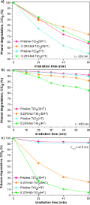
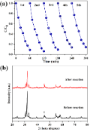
- heterostructured nanoparticles. With two nearly identical samples in hand, we were able to compare the performance of two catalysts where the only notable difference was the synthetic history of the sample (Figure 2). We used photocatalytic degradation of methylene blue to compare catalyst performance since this


Reduced graphene oxide supported C3N4 nanoflakes and quantum dots as metal-free catalysts for visible light assisted CO2 reduction
Beilstein J. Nanotechnol. 2019, 10, 448–458, doi:10.3762/bjnano.10.44
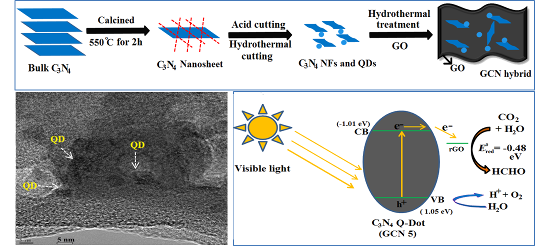
- Md Rakibuddin Haekyoung Kim School of Materials Science and Engineering, Yeungnam University, Gyeongsan, Republic of Korea 10.3762/bjnano.10.44 Abstract The visible light photocatalytic reduction of CO2 to fuel is crucial for the sustainable development of energy resources. In our present work
- promising for CO2 photoreduction because of their excellent activity and environmental sustainability. Keywords: CO2 reduction; metal-free hybrid; nanoflakes; photocatalyst; quantum dots; Introduction The solar-light-assisted photocatalytic reduction of CO2 into useful chemicals, such as HCOOH, HCHO, CH4
- of the photocatalytic product, formaldehyde (HCHO), is monitored spectrophotometrically using the Nash reagent, and also confirmed by gas chromatography. Results and Discussion Material characterization The preparation of g-C3N4 NFs and QDs from nanosheets and the formation of the GCN hybrid material



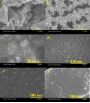


Nanostructure-induced performance degradation of WO3·nH2O for energy conversion and storage devices
Beilstein J. Nanotechnol. 2018, 9, 2845–2854, doi:10.3762/bjnano.9.265
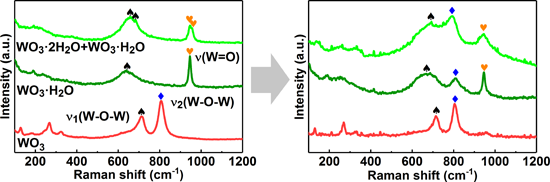
- photocatalytic and antibacterial applications [39]. Unfortunately, despite the great number of 2D WO3 compounds and their hydrates synthesized and utilized for energy conversion and storage applications, their weakness has not yet been investigated thoroughly. In this study, WO3·nH2O (n = 0, 1, 2) was fabricated


Impact of the anodization time on the photocatalytic activity of TiO2 nanotubes
Beilstein J. Nanotechnol. 2018, 9, 2628–2643, doi:10.3762/bjnano.9.244
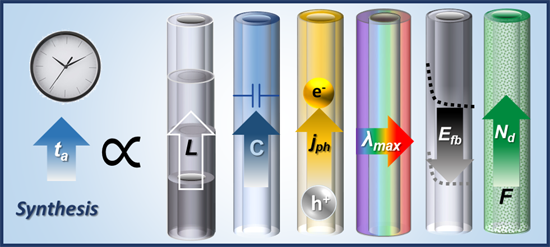
- length, fluorine content, and capacitance of the space charge region increased, affecting the opto-electronic properties (bandgap, bathochromic shift, band-edge position) and surface hydrophilicity of TiO2 NTs. These properties are at the origin of the photocatalytic activity (PCA), as proved with the
- photooxidation of methylene blue. Keywords: fluorine doping; nanotubes; photocatalytic activity; photoelectrochemistry; titanium(IV) oxide (TiO2); Introduction TiO2 started to attract great interest after Fujishima and Honda reported [1] on its photoelectrochemical (PEC) properties in 1972. Numerous features
- anodization produces vertically oriented, well-ordered nanotubular arrays with high aspect ratio. TiO2 nanotubes (TNTs) produced in this way have been preferred by several groups since they are expected to exhibit better photocatalytic properties than nanoparticles, due to the short electron-diffusion path


Nanocellulose: Recent advances and its prospects in environmental remediation
Beilstein J. Nanotechnol. 2018, 9, 2479–2498, doi:10.3762/bjnano.9.232
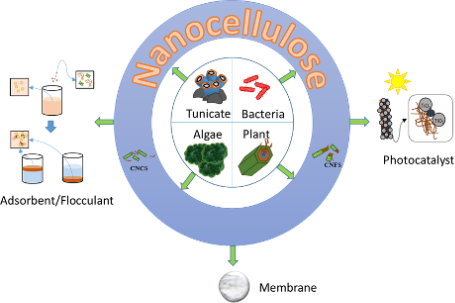
- ]. Although cellulose alone exhibits limited photocatalytic activity under UV or visible light irradiation, many semiconductor materials have been added to enhance the photocatalytic activity. Several research groups have demonstrated photocatalytic wastewater treatment using cellulose-based metal oxide
- materials. Table 2 summarizes the application of cellulose-based photocatalyst nanostructured materials for photocatalytic degradation of various organic pollutants. Cellulose derivatives can easily adsorb on metal oxide surface layers and provide additional –OH groups on the surface of metal alkoxides [116
- can facilitate the adsorption of metal oxide to its surface. Thus, Li et al. [123] proposed the immobilization of TiO2 nanoparticles on a fine fibrous network of bacterial cellulose via hydrogen bonds and electrostatic adsorption effect for the photocatalytic degradation of reactive X-3B. TiO2


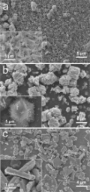
Hierarchical heterostructures of Bi2MoO6 microflowers decorated with Ag2CO3 nanoparticles for efficient visible-light-driven photocatalytic removal of toxic pollutants
Beilstein J. Nanotechnol. 2018, 9, 2297–2305, doi:10.3762/bjnano.9.214
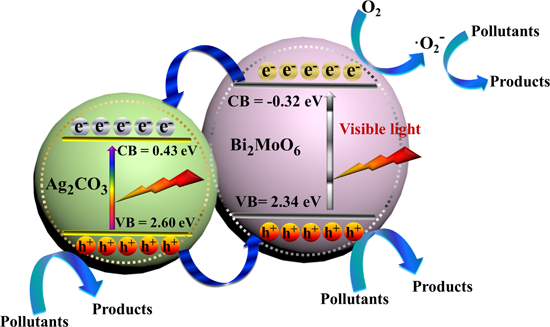
- regarded as a promising visible-light-driven (VLD) photocatalyst because of its good activity, chemical stability and nontoxicity [15][16][17]. However, the low carrier-separation rate and narrow photo-response range of Bi2MoO6 substantially lower its photocatalytic performance [18][19]. To overcome this
- photocatalytic activity [37]. However, it is unstable under illumination. Previous studies found that the good stability of Ag2CO3 could be achieved through the rational construction of heterojunctions, such as Ag2CO3/Bi2WO6 [37], Ag2O/Ag2CO3 [38], Ag2CO3/Bi2O2CO3 [39], Ag2CO3/C3N4 [40], Ag/Ag2CO3/BiVO4 [41
- ] Ag2CO3/AgBr/ZnO [42], and Ag/Ag2CO3/Bi2MoO6 [32]. The band structure of Ag2CO3 matches well with that of Bi2MoO6 [32]. Moreover, morphology modulation is another significant way to enhance photocatalytic activity. Three-dimensional nanostructures endow materials with unique physicochemical properties




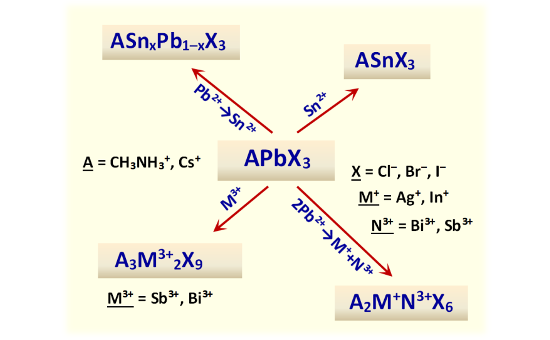
Lead-free hybrid perovskites for photovoltaics
Beilstein J. Nanotechnol. 2018, 9, 2209–2235, doi:10.3762/bjnano.9.207


Localized photodeposition of catalysts using nanophotonic resonances in silicon photocathodes
Beilstein J. Nanotechnol. 2018, 9, 2097–2105, doi:10.3762/bjnano.9.198
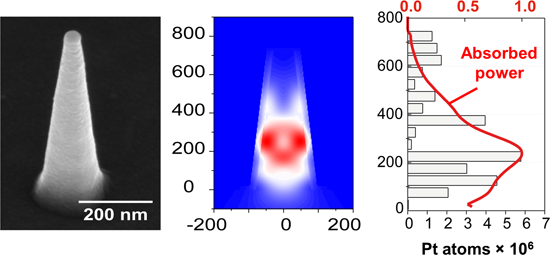
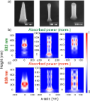
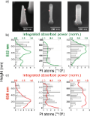
- optimization of the photo-electrodeposition process is necessary for the fabrication of efficient photocatalytic samples. For each Si nanostructure morphology, overlays of secondary-electron and backscattered-electron (collected with an in-lens mirror detector) SEM images were acquired. This overlay method


Recent highlights in nanoscale and mesoscale friction
Beilstein J. Nanotechnol. 2018, 9, 1995–2014, doi:10.3762/bjnano.9.190
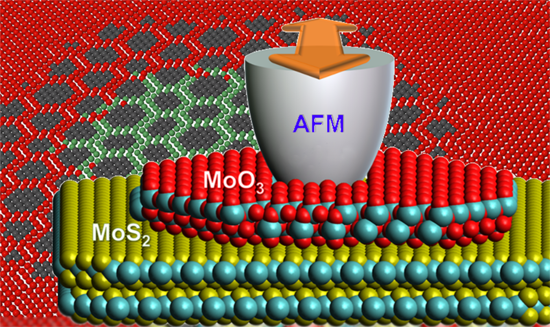
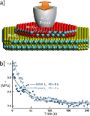
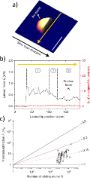
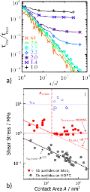
- assemble more complex nanodevices. Prospects in tuning friction with photo-assisted reactions The influence of light exposure on properties such as friction and adhesion is rarely explored. For instance, it is known that certain surfaces, such as titanium oxide, exhibit photocatalytic properties and might


A visible-light-controlled platform for prolonged drug release based on Ag-doped TiO2 nanotubes with a hydrophobic layer
Beilstein J. Nanotechnol. 2018, 9, 1793–1801, doi:10.3762/bjnano.9.170
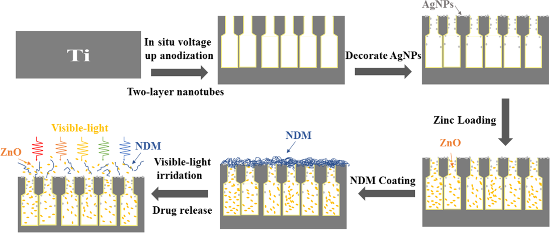
- -layer titania nanotubes (TNTs) fabricated using by an in situ voltage up-anodization process. The visible-light photocatalytic activity is improved by loading Ag onto the TNTs by NaBH4 reduction. Then, the TNTs containing Ag nanoparticles were modified with dodecanethiol (NDM) to create a hydrophobic
- visible-light illumination, drug release from the sample coated with NDM was shown to increase due to the photocatalytic decomposition of NDM. The amount of released Zn2+ for this sample increased up to 71.9% within 12 h, indicating visible-light-controlled drug release. This drug release system may
- from getting into tubes and removing the drugs from the tubes and linkers. Making use of its excellent photocatalytic properties, the organic layer could then be destroyed, allowing the drugs to escape from the linkers and tubes more easily and quickly. Nevertheless, only 2–4% of solar energy is





Controllable one-pot synthesis of uniform colloidal TiO2 particles in a mixed solvent solution for photocatalysis
Beilstein J. Nanotechnol. 2018, 9, 1715–1727, doi:10.3762/bjnano.9.163
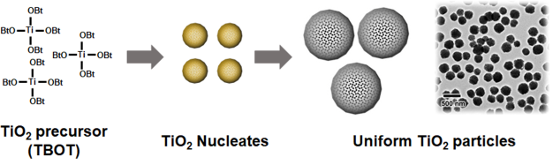
- Abstract This study reports on the controllable synthesis of uniform colloidal titanium dioxide (TiO2) particles and their photocatalytic applications toward rhodamine B (RhB) degradation. The monodispersed TiO2 particles were synthesized under mixed solvent conditions by sol–gel chemistry in a one-pot
- particles. When uniform, amorphous TiO2 particles were calcined at an optimal temperature (500 °C), the final sample exhibited beneficial characteristics such as high anatase crystallinity with a mixed phase of anatase and rutile and relatively high surface area. The photocatalytic efficiency of the uniform
- valance bands, TiO2 can absorb photons in the ultraviolet (UV) portion of the light spectrum. This leads to the sequential generation of electron–hole pairs that can induce a variety of surface redox reactions. Photocatalytic water splitting via a TiO2 electrode under UV irradiation was first reported by




Sulfur-, nitrogen- and platinum-doped titania thin films with high catalytic efficiency under visible-light illumination
Beilstein J. Nanotechnol. 2018, 9, 1629–1640, doi:10.3762/bjnano.9.155
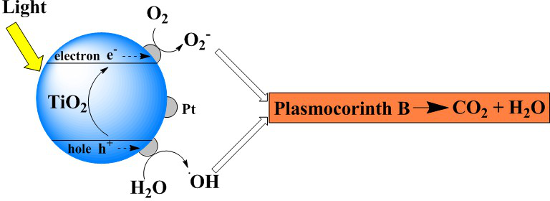
- , band gap measurements). The photocatalytic activity of the prepared thin films was determined by measuring the degradation rate of plasmocorinth B (PB), an organic pigment used in the textile industry, which can pose an environmental risk when expelled into wastewater. A kinetic model for adsorption
- and subsequent degradation was used to fit the experimental data. The results have shown an increase in photocatalytic activity under visible-light illumination of nonmetal and metal doped and co-doped titania thin films compared to an undoped sample. Keywords: doping; photocatalysis; sol–gel
- environmental applications, such as water treatment [9][10][11] and air purification [12]. One of the important factors affecting the photocatalytic activity of TiO2 is its specific surface area. By increasing the specific surface area (porosity) of TiO2, the photocatalytic activity can be increased. One of the


Sheet-on-belt branched TiO2(B)/rGO powders with enhanced photocatalytic activity
Beilstein J. Nanotechnol. 2018, 9, 1550–1557, doi:10.3762/bjnano.9.146
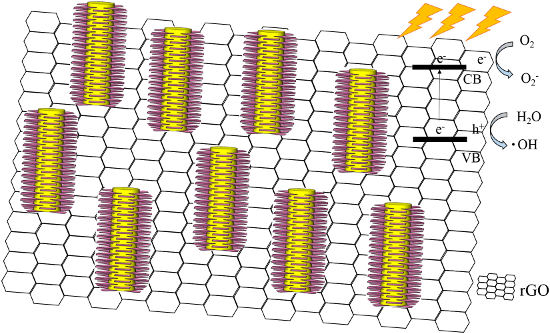
- TiO2(B) is usually adopted to construct phase junctions with anatase TiO2 for applications in photocatalysis to facilitate charge separation; its intrinsic photocatalytic activity, especially when in the form of one- or three-dimensional nanostructures, has been rarely reported. In this study, a sheet
- assist the photodegradation of phenol in water under UV light illumination. The enhanced photocatalytic activity can be attributed to the significantly increased surface area and enhanced charge separation. Keywords: branched nanostructure; photocatalysis; reduced graphene oxide; TiO2(B); Introduction
- safety and rate capability [11][17][18][19][20]. For photocatalytic applications, TiO2(B) is usually combined with anatase TiO2 to construct a multiphase heterostructure to enhance charge separation and in turn the photocatalytic activity [21][22][23][24][25]. For example, Yang et al. synthesized anatase


Cr(VI) remediation from aqueous environment through modified-TiO2-mediated photocatalytic reduction
Beilstein J. Nanotechnol. 2018, 9, 1448–1470, doi:10.3762/bjnano.9.137
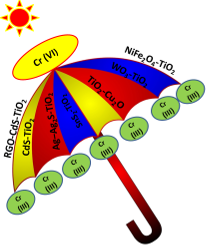
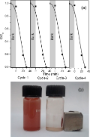
- TiO2 as a photocatalyst and the importance of its modification for photocatalytic reduction of Cr(VI) has also been addressed. In this review, the photocatalytic activity of TiO2 after modification with carbon-based advanced materials, metal oxides, metal sulfides and noble metals towards reduction of
- Cr(VI) was evaluated and compared with that of bare TiO2. The photoactivity of dye-sensitized TiO2 for reduction of Cr(VI) was also discussed. The mechanism for enhanced photocatalytic activity was highlighted and attributed to the resultant properties, namely, effective separation of photoinduced
- photocatalytic reduction of Cr(VI) along with their good recoverability and recyclability. Keywords: charge transfer; Cr(VI) reduction; heterojunction; modified TiO2; photocatalysis; spinel oxides; Review Introduction The increase in the global population demands rapid growth of industrialization and


Ag2WO4 nanorods decorated with AgI nanoparticles: Novel and efficient visible-light-driven photocatalysts for the degradation of water pollutants
Beilstein J. Nanotechnol. 2018, 9, 1308–1316, doi:10.3762/bjnano.9.123
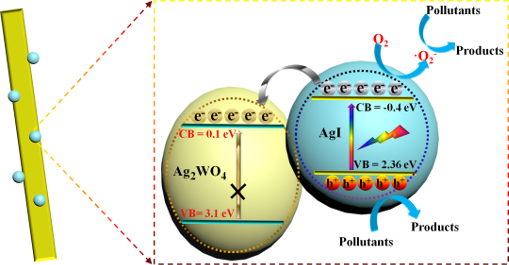
- photocatalytic performance. Keywords: AgI/Ag2WO4; nanocomposites; photocatalysis; visible light; Introduction The development of high-performance novel photocatalysts for the degradation of pollutants has received great interest due to the worsening of environmental pollution [1][2][3][4][5][6][7][8][9][10][11
- ]. However, achieving high efficiency for photocatalytic conversion under natural sunlight irradiation is still a great challenge because many catalysts only respond to ultraviolet (UV) light [5][12]. Exploring photocatalysts that can be driven by visible light, which comprises 43% of solar energy, is
- photocatalytic performance for dye degradation under light irradiation [30][31][36][37]. Unfortunately, due to its wide bandgap of about 3.1 eV, Ag2WO4 has limited photocatalytic activity under sunlight, which severely limits its application and illustrates the urgency for optimization of Ag2WO4 to overcome




Heterostuctures of 4-(chloromethyl)phenyltrichlorosilane and 5,10,15,20-tetra(4-pyridyl)-21H,23H-porphine prepared on Si(111) using particle lithography: Nanoscale characterization of the main steps of nanopatterning
Beilstein J. Nanotechnol. 2018, 9, 1211–1219, doi:10.3762/bjnano.9.112
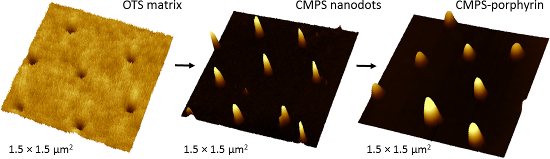
- triple-decker sandwich complex of phthalocyanine compounds prepared on graphite was studied using STM by Lei et al. [17]. A method of photocatalytic lithography was reported for making porphyrin surface structures that were applied for preparing protein arrays [18][19]. The assembly of porphyrins at


Room-temperature single-photon emitters in titanium dioxide optical defects
Beilstein J. Nanotechnol. 2018, 9, 1085–1094, doi:10.3762/bjnano.9.100
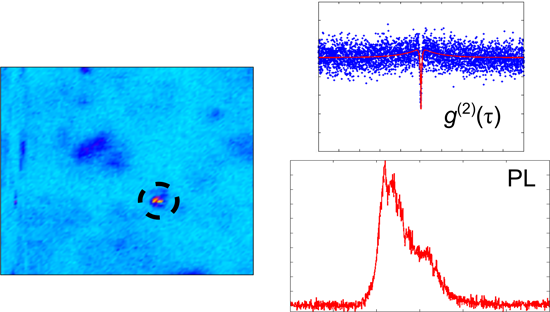
- structures of defects have been previously discussed in the literature, a majority of these studies is concerned with catalytic and photocatalytic applications [34][66]. Therefore, the majority of existing research is focussed on obtaining defects that result in absorption in the visible spectral range. Then


Noble metal-modified titania with visible-light activity for the decomposition of microorganisms
Beilstein J. Nanotechnol. 2018, 9, 829–841, doi:10.3762/bjnano.9.77
- wide band gap of titania of 3.0–3.2 eV and the recombination of charge carriers). There are various ways to improve photocatalytic performance of titania photocatalysts: (1) to inhibit the recombination of charge carriers, and (2) to extend its working abilities to the visible-light region, for example
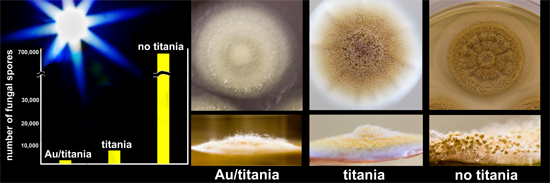
- antimicrobial properties of noble metals with the high photocatalytic activity of modified titania should result in a high purification efficiency of noble metal-modified titania [6][46][47][48][49][50][51][52]. Indeed, in our recent study, noble metal-modified faceted anatase titania (octahedral anatase
- particles; OAP) have shown high activity in both the decomposition of organic compounds and of microorganisms (E. coli and C. albicans) [48]. It has been found that both the intrinsic properties of silver and the photocatalytic activity of silver-modified titania are responsible for the high antibacterial


Facile synthesis of a ZnO–BiOI p–n nano-heterojunction with excellent visible-light photocatalytic activity
Beilstein J. Nanotechnol. 2018, 9, 789–800, doi:10.3762/bjnano.9.72
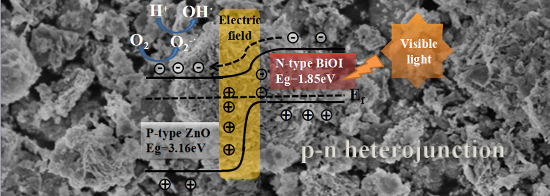
- Zn/Bi, the morphology varies from nanoplates, flowers to nanoparticles. The heterojunction formed between ZnO and BiOI decreases the recombination rate of photogenerated carriers and enhances the photocatalytic activity of ZnO/BiOI composites. The obtained ZnO/BiOI heterostructured nanocomposites
- exhibit a significant improvement in the photodegradation of rhodamine B under visible light (λ ≥ 420 nm) irradiation as compared to single-phase ZnO and BiOI. A sample with a Zn/Bi ratio of 3:1 showed the highest photocatalytic activity (≈99.3% after 100 min irradiation). The photodegradation tests
- indicated that the ZnO/BiOI heterostructured nanocomposites not only exhibit remarkably enhanced and sustainable photocatalytic activity, but also show good recyclability. The excellent photocatalytic activity could be attributed to the high separation efficiency of the photoinduced electron–hole pairs as


Surface-plasmon-enhanced ultraviolet emission of Au-decorated ZnO structures for gas sensing and photocatalytic devices
Beilstein J. Nanotechnol. 2018, 9, 771–779, doi:10.3762/bjnano.9.70
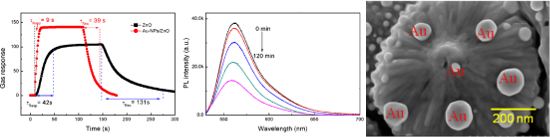
- improved response (τRes = 9 s) and recovery time (τRec = 39 s). The enhanced gas sensing performance and photocatalytic degradation processes are suggested to be attributed to not only the surface plasmon resonance effect, but also due to a Schottky barrier between plasmonic Au and ZnO structures
- target gases [14][15][16]. In another research strategy to obtain high photocatalytic performance materials, ZnO, a wide-band gap semiconductor (Eg > 3 eV), can also be used as a suitable material for photocatalysts based on the particular plasmonic characteristics of the nanostructures. Herein, it was
- investigated for photocatalytic activity as reported previously [8][20]. The photocatalytic activity of the Pt/ZnO hybrid nanocomposite under photodegradation of rhodamine B (RhB) was higher compared to commercial TiO2 [21]. Here, it is quite reasonable to note that the plasmonic metal NP/metal-oxide




Synthesis and characterization of two new TiO2-containing benzothiazole-based imine composites for organic device applications
Beilstein J. Nanotechnol. 2018, 9, 721–739, doi:10.3762/bjnano.9.67
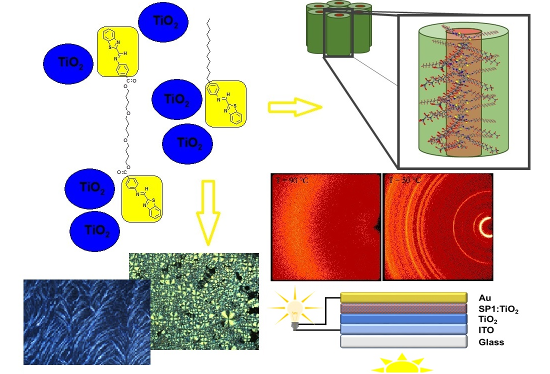
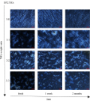
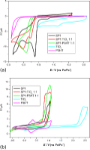
- dioxide, due to its suitable band position, non-toxicity, low cost, and simple synthesis, is an appropriate material for modification of various metals. Its chemical stability and biocompatibility plays an important role in various applications such as gas sensors, photocatalytic hydrogen generation






Perovskite-structured CaTiO3 coupled with g-C3N4 as a heterojunction photocatalyst for organic pollutant degradation
Beilstein J. Nanotechnol. 2018, 9, 671–685, doi:10.3762/bjnano.9.62
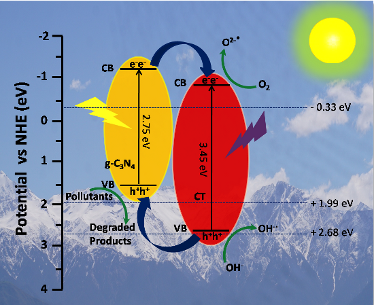
- )–CaTiO3 (CTCN) organic–inorganic heterojunction photocatalyst was synthesized by a facile mixing method, resulting in the deposition of CaTiO3 (CT) nanoflakes onto the surface of g-C3N4 nanosheets. The photocatalytic activity of the as-synthesized heterojunction (along with the controls) was evaluated by
- studying the degradation of an aqueous solution of rhodamine B (RhB) under UV, visible and natural sunlight irradiation. The CTCN heterojunction with 1:1 ratio of g-C3N4/CT showed the highest photocatalytic activity under sunlight irradiation and was also demonstrated to be effective for the degradation of
- a colorless, non-photosensitizing pollutant, bisphenol A (BPA). The superior photocatalytic performance of the CTCN heterojunction could be attributed to the appropriate band positions, close interfacial contact between the constituents and extended light absorption (both UV and visible region), all


Mechanistic insights into plasmonic photocatalysts in utilizing visible light
Beilstein J. Nanotechnol. 2018, 9, 628–648, doi:10.3762/bjnano.9.59
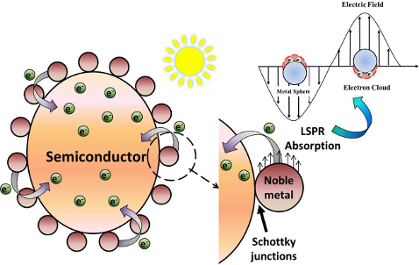
- . This formation is a result of notable contact between noble metal nanoparticles with a semiconductor. Plasmonic effects have been verified to increase the photocatalytic performance due to the intrinsic influences on the semiconductor photocatalyst. Plasmonic effects work to improve harvesting of
- visible and UV range [93][94][95][96]. Additionally, other noble metals such as Pt and Pd also exhibited a similar photocatalytic performance [97][98]. Ag, Au, Pt and Pd nanoparticles Ag and Au are the most preferred noble metals for interaction with various types of semiconductors due to the strong LSPR
- improve photocatalytic efficiency [101]. The LSPR of Ag in a Ag/AgCl composite was found to enhance the local inner electromagnetic field and prolong the lifetime of the charge carriers. Wang et al. observed that Ag@AgBr exhibited enhanced photocatalytic activity as compared to Ag/AgCl by a factor of 1.5





Fabrication and photoactivity of ionic liquid–TiO2 structures for efficient visible-light-induced photocatalytic decomposition of organic pollutants in aqueous phase
Beilstein J. Nanotechnol. 2018, 9, 580–590, doi:10.3762/bjnano.9.54
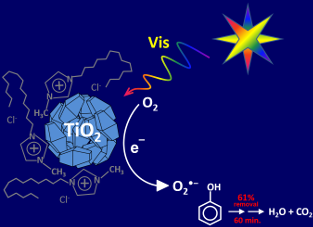
- photoelectron spectroscopy (XPS), diffuse reflectance spectroscopy (DRS), scanning transmission microscopy (STEM) and the Brunauer–Emmett–Teller (BET) surface area method, whereas the photocatalytic activity was evaluated by the degradation of phenol in aqueous solution under visible light irradiation (λ > 420
- , low cost, nontoxicity and availability [5]. Despite many advantages, the commercial application of TiO2 to solve environmental problems is still limited. The main obstacle is the relatively wide band gap of 3.2 eV for anatase that limits the photoexcitation wavelength needed to activate photocatalytic
- the IL–TiO2 composites, for example, for photo-electrochemical water splitting [26][27], photo-oxidation of benzyl alcohol [12], phenol [28], degradation of chlorophenol [17][29], reduction of Cr6+ to Cr3+ [30] and the photocatalytic desulfurization of diesel oil [31]. Nevertheless, in most of these




Influence of the preparation method on the photocatalytic activity of Nd-modified TiO2
Beilstein J. Nanotechnol. 2018, 9, 447–459, doi:10.3762/bjnano.9.43
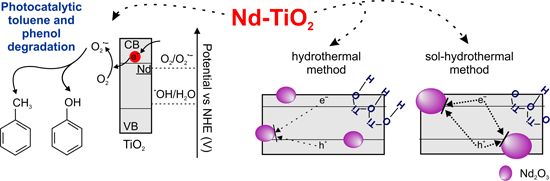
- (SHT) methods. The as-prepared samples were characterized by X-ray diffraction (XRD), BET surface area measurements, scanning electron microscopy (SEM), diffuse reflectance spectroscopy (DRS), luminescence spectroscopy and X-ray photoelectron spectroscopy (XPS). The photocatalytic activity of the
- photocatalytic efficiency of phenol and toluene degradation under vis irradiation in the presence of 0.25% Nd-TiO2(HT) reached 0.62 and 3.36 μmol·dm−1·min−1, respectively. Photocatalytic activity tests in the presence of Nd-TiO2 and scavenger confirm that superoxide radicals were responsible for the visible
- to its possible applications in the treatment of air, water and wastewater [1][2][3][4][5] after the photocatalytic splitting of water on TiO2 electrodes was discovered by Fujishima and Honda in 1972 [6]. However, serious disadvantages of TiO2 are its wide band gap, which requires the use of