


Search results
Search for "polystyrene" in Full Text gives 234 result(s) in Beilstein Journal of Nanotechnology. Showing first 200.
Nanoparticle delivery to metastatic breast cancer cells by nanoengineered mesenchymal stem cells
Beilstein J. Nanotechnol. 2018, 9, 321–332, doi:10.3762/bjnano.9.32
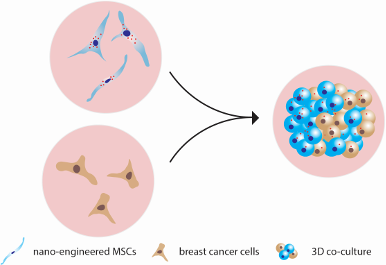
- experiments. Human breast cancer cell lines MDA-MB-231 (ATCC HTB-26™) and MCF7 (ATCC HTB-22™) were propagated in DMEM supplemented with 10% FBS and penicillin/streptomycin (100 U/mL and 100 μg/mL, respectively) (complete cancer cell medium). The cells were cultured in 25 cm2 polystyrene tissue culture flasks
- -hydroxethyl methacrylate) (polyHEMA) coating was prepared as described elsewhere [50]. In brief, the PolyHEMA solution was poured into the wells of a 24-well tissue culture polystyrene plate to cover the surface. The plate was then air dried in a laminar airflow chamber overnight. The MSCs, MDA-MB-231 and
- for uptake experiments, 5 × 10⁴ MSCs were allowed to adhere to 6-well tissue culture polystyrene (TCPS) plates and cultured in the presence of QDs of 2 nM to 32 nM concentration for 6 h in complete or serum-free medium. The cells were then harvested by trypsinisation and resuspended in 200 μL PBS for



Al2O3/TiO2 inverse opals from electrosprayed self-assembled templates
Beilstein J. Nanotechnol. 2018, 9, 216–223, doi:10.3762/bjnano.9.23
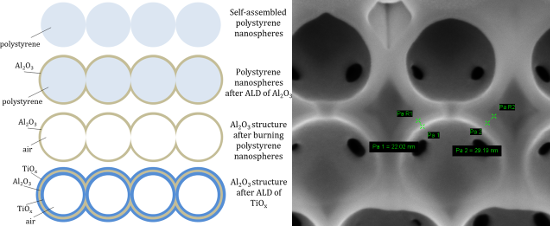
- of recent literature shows that opals made of polystyrene or poly(methyl methacrylate) (PMMA) [15][16][17][18][19][20][21][22][23][24] nanoparticles can be orderly assembled in larger areas and thicknesses, however, such materials do not achieve the same optical performance as inverse opals, due to
- has a lower refractive index than TiO2 deposited at >200 °C. In previous works [37][38][39][40] we have shown how an electrospray process of nanofluids can be used to deposit in a very short time very well ordered and with few defects layers (colloidal crystals) of polystyrene (of good quality and
- deposition capacity and mechanical properties [41][42]. The main purpose of this article is to apply this technique to the fabrication of inverse opals using the 3D polystyrene nanoparticle template which enables the creation of large scale, large thickness, self-assembled structures with minimum fabrication


A robust AFM-based method for locally measuring the elasticity of samples
Beilstein J. Nanotechnol. 2018, 9, 1–10, doi:10.3762/bjnano.9.1
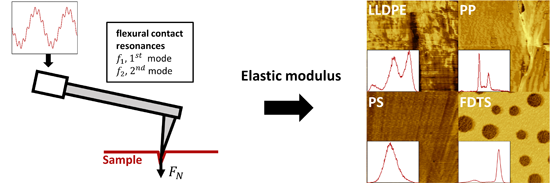
- relation exists when measuring in contact mode with a certain load FN and propose a new method for determining the elastic modulus of samples from this relation. The measurements were performed in non-dry air at ambient temperature on three different polymers (polystyrene, polypropylene and linear low
- first flexural modes of the cantilever in contact were excited with the amplitudes A1 = 22 mV and A2 = 5 mV for all samples. Samples and measurement conditions Three different polymers (polystyrene (PS), polypropylene (PP) and linear low-density polyethylene (LLDPE)) and a self-assembled monolayer (SAM


Electro-optical characteristics of a liquid crystal cell with graphene electrodes
Beilstein J. Nanotechnol. 2017, 8, 2802–2806, doi:10.3762/bjnano.8.279
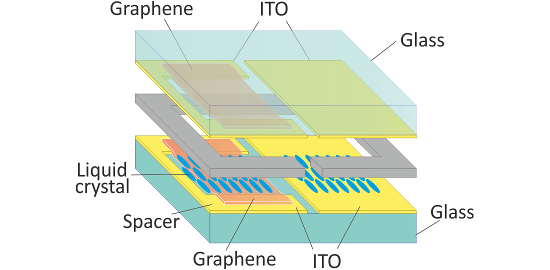
- precleaned glass substrate by using a polymer support layer of polystyrene (PS, Mw 35k, 2% w/w in toluene) and an etchant acid (FeCl3 aq, 0.5 M) to remove the Cu, as described elsewhere [15]. This was followed by a wash in a warm ethyl acetate bath to dissolve the supporting polymer layer. Device fabrication


Material discrimination and mixture ratio estimation in nanocomposites via harmonic atomic force microscopy
Beilstein J. Nanotechnol. 2017, 8, 2771–2780, doi:10.3762/bjnano.8.276
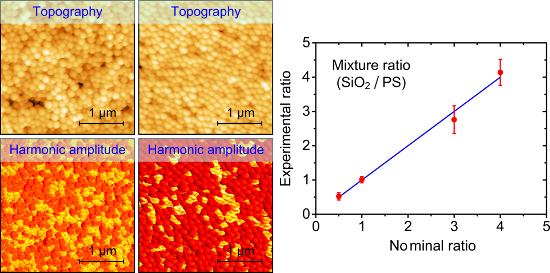
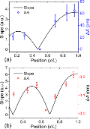
- signals were investigated systematically on a polymer blend composed of polystyrene (PS) and low-density polyehtylene (LDPE). We focused on the influence of feedback amplitude set-point, drive frequency and laser spot position along the cantilever beam. Based on these fundamental studies, harmonic AFM




The role of ligands in coinage-metal nanoparticles for electronics
Beilstein J. Nanotechnol. 2017, 8, 2625–2639, doi:10.3762/bjnano.8.263
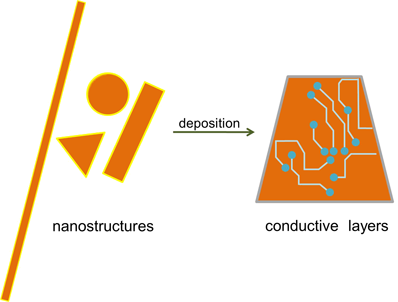
- case of polymethacrylic acid due to its potential to carry negative charge [94]. Que et al. reported that the size of the polystyrene block affected the stability of gold nanoparticles coated with a poly(ethylene glycol)-b-polystyrene diblock copolymer in water. A shorter polystyrene chain length led


Robust nanobubble and nanodroplet segmentation in atomic force microscope images using the spherical Hough transform
Beilstein J. Nanotechnol. 2017, 8, 2572–2582, doi:10.3762/bjnano.8.257
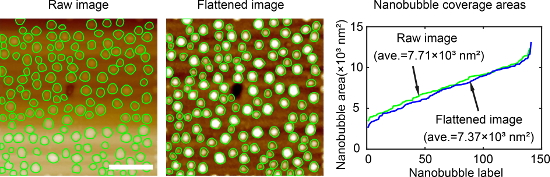
- for smaller objects by assuming sample surfaces are actually flat, which is not always true. Figure 1a is a raw AFM image of NBs on a polystyrene (PS) surface. One can see that the image height of the background increases along the y direction. This is mostly due to thermal drift of the AFM scanner
- bar is 500 nm. AFM height images of nanobubbles and nanodroplets. (a) and (d) are the polystyrene and HOPG surfaces in air. (b) and (e) are the raw AFM height images of nanobubbles and nanodroplets in DI water. (c) and (f) are flattened AFM height images of nanobubbles and nanodroplets in DI water


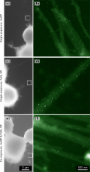
Involvement of two uptake mechanisms of gold and iron oxide nanoparticles in a co-exposure scenario using mouse macrophages
Beilstein J. Nanotechnol. 2017, 8, 2396–2409, doi:10.3762/bjnano.8.239
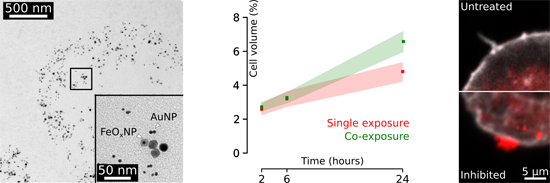
- inhibitor MDC. Inhibition of this pathway was also reported for the Fe-binding protein transferrin, whereas the uptake of non-biological (nano)particles such as polystyrene beads was not blocked [35]. However, the pathway was not exclusively clathrin-mediated because evidence of uptake is observed
- a similar organization was not observed for the FeOxNPs, it must be concluded that an active process directed the uptake of AuNPs. A similar observation was made with 1 µm polystyrene beads, which were observed to be transported extracellularly along the filopodia of the same macrophageal cell line
- , Austria), 1% L-glutamine (Gibco, Luzern, Switzerland) and 1% penicillin/streptomycin (Gibco, Luzern, Switzerland) and were kept at 37 °C and 5% CO2. The cells were seeded at a density of 25 × 104 cells/mL in BD FalconTM four-chamber polystyrene vessels for the experiments, using tissue culture treated



Synthesis and characterization of noble metal–titania core–shell nanostructures with tunable shell thickness
Beilstein J. Nanotechnol. 2017, 8, 2083–2093, doi:10.3762/bjnano.8.208
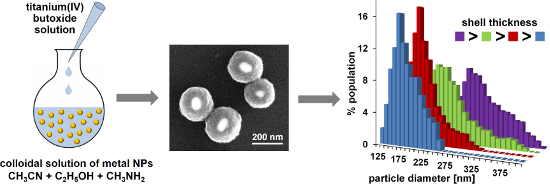
- calibration measurement was carried out after measurement of each sample (with the same conditions) using carboxylated polystyrene nanoparticles (100 nm or 200 nm) supplied by the manufacturer. The statistical data for the particle size distribution, including mean particle diameter, mode particle diameter


A systematic study of the controlled generation of crystalline iron oxide nanoparticles on graphene using a chemical etching process
Beilstein J. Nanotechnol. 2017, 8, 2017–2025, doi:10.3762/bjnano.8.202
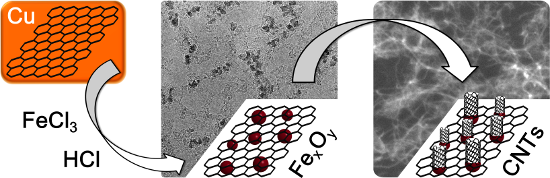
- polystyrene petridishes (Carl Roth, 94 mm und 145 mm in diameter) with the inner compartment perforated (holes of 1.6 mm in diameter) at the base of the separation (Figure S2, Supporting Information File 1). A 1 M aqueous solution of ammonium persulfate was prepared by adding 1 L distilled water to 228.2 g of


Identifying the nature of surface chemical modification for directed self-assembly of block copolymers
Beilstein J. Nanotechnol. 2017, 8, 1972–1981, doi:10.3762/bjnano.8.198
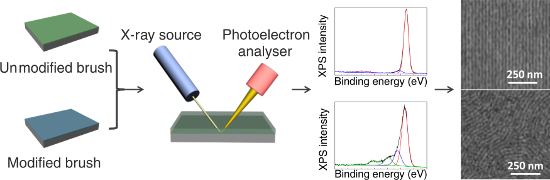
- oxide between the brush layer and the SiO2/Si substrate. Experimental Preparation and chemical modification of brush layers The starting substrates were <100> silicon wafers (p-type silicon of 4–40 Ω·cm resistivity) with a native silicon oxide layer on top. A thin film of hydroxyl-terminated polystyrene


Uptake and intracellular accumulation of diamond nanoparticles – a metabolic and cytotoxic study
Beilstein J. Nanotechnol. 2017, 8, 1649–1657, doi:10.3762/bjnano.8.165
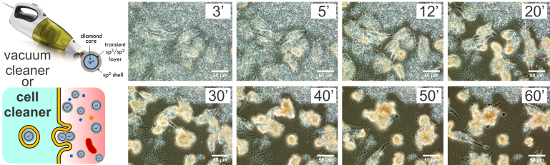
- compared with the ND-free living control (i.e., cells grown in polystyrene wells in a medium without diamond nanoparticles). Similar results were also obtained in a study by Vaijayanthimala et al. [11], in which the proliferation of HeLa cells and 3T3-L1 pre-adipocytes exhibited no significant difference


High-speed dynamic-mode atomic force microscopy imaging of polymers: an adaptive multiloop-mode approach
Beilstein J. Nanotechnol. 2017, 8, 1563–1570, doi:10.3762/bjnano.8.158
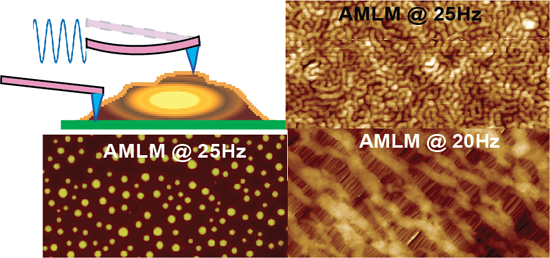
- and evaluation of the AMLM technique by imaging three types of polymer samples different in both topography features and heterogeneous mechanical properties. The three samples, made of polystyrene–low-density polyethylene (PS–LDPE), styrene–butadiene–styrene (SBS) and celgard, respectively, have over




Luminescent supramolecular hydrogels from a tripeptide and nitrogen-doped carbon nanodots
Beilstein J. Nanotechnol. 2017, 8, 1553–1562, doi:10.3762/bjnano.8.157
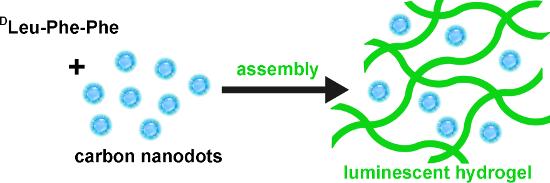
- immediately put on wells of Greiner 96 U Bottom Black Polystyrene. The controls were used in 200 μL total volume. After 1 h, the fluorescence emission spectra were acquired using a Tecan Infinite M1000 pro, with a bandwidth of 10 nm, selecting the following excitation (ex.) and emission (em.) wavelengths: ex
- calculated and plotted. Thioflavin T fluorescence assay Gel precursor solutions were prepared as described above and 100 μL of each buffer were immediately put on wells of Greiner 96 U Bottom Black Polystyrene. The controls were used in 200 μL total volume. After 1 h, 20 μL of a solution of thioflavin T


Parylene C as a versatile dielectric material for organic field-effect transistors
Beilstein J. Nanotechnol. 2017, 8, 1532–1545, doi:10.3762/bjnano.8.155
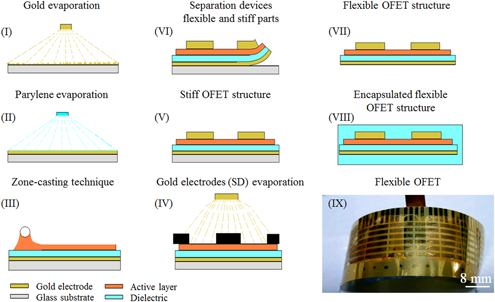
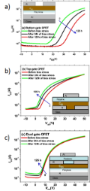
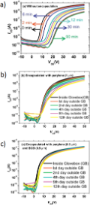
- energy exhibited a mobility of μ = 0.006 cm2/V·s. More detailed studies were carried out for tetracene semiconductor films deposited on various dielectric materials, namely organic polystyrene (PS), Parylene C, and poly(methyl methacrylate) (PMMA) as well as on inorganic SiO2, with and without HMDS




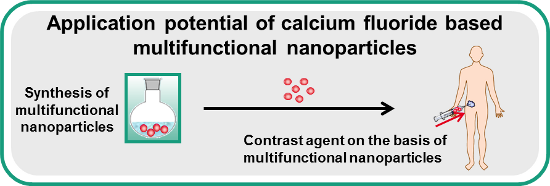
Calcium fluoride based multifunctional nanoparticles for multimodal imaging
Beilstein J. Nanotechnol. 2017, 8, 1484–1493, doi:10.3762/bjnano.8.148
- redispersed in DMEM with 10% FCS. The sedimentation studies over 24 h were carried out by monitoring the absorbance at 700 nm as a function of time (Shimadzu, UV-3100). The sample (5 mg·mL−1 NPs in DMEM with 10% FCS, with or without Melpers®2450) was placed into a polystyrene micro cuvette and the absorbance


Low uptake of silica nanoparticles in Caco-2 intestinal epithelial barriers
Beilstein J. Nanotechnol. 2017, 8, 1396–1406, doi:10.3762/bjnano.8.141
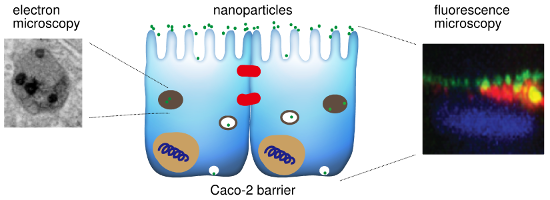
- cells, rather than Caco-2 barriers, interestingly, there are suggestions that the response is different in overnight cultures and cells grown for 10 days [25]. Uptake into Caco-2 cells has been reported for silica [23][24][26][28], polystyrene [29], chitosan [30], poly(lactic-co-glycolic acid) [31][32
- nanoparticles such as microporous silicon [22], silica [23], poly(lactic-co-glycolic acid) [33] and carboxylated and aminated polystyrene [34]. We hypothesize that the low translocation observed in Caco-2 barriers results from a low uptake into the cells, an uptake that depends on cellular differentiation and
- transport across it. The low degree of internalisation is particularly striking in comparison to our previous observations of a substantial uptake of silica nanoparticles into (single) lung cells [37]. Moreover, we have previously found sizable uptake of silica and polystyrene nanoparticles into another



Micro- and nano-surface structures based on vapor-deposited polymers
Beilstein J. Nanotechnol. 2017, 8, 1366–1374, doi:10.3762/bjnano.8.138
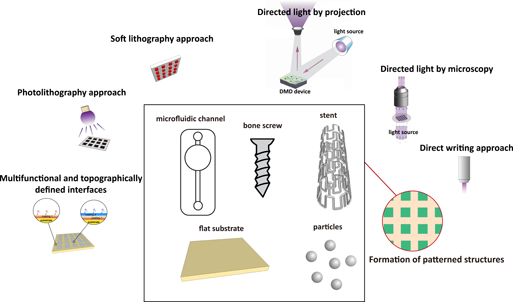
- ) surface and a poly(4-ethynyl-p-xylylene-co-p-xylylene) surface, respectively. Various substrates were successfully verified for the coating and patterning modifications: metal (silver, titanium, stainless steel), polystyrene (PS), poly(methyl methacrylate) (PMMA), silicon, glass, poly(dimethylsiloxane
- range of different substrates, and the nanopatterns were demonstrated on polystyrene, acrylic and PDMS in this work [27]. The aforementioned photolithographical or soft-lithographical methods are simple and straightforward to perform. However, because of the limitation of applying a photomask or an


Miniemulsion copolymerization of (meth)acrylates in the presence of functionalized multiwalled carbon nanotubes for reinforced coating applications
Beilstein J. Nanotechnol. 2017, 8, 1328–1337, doi:10.3762/bjnano.8.134
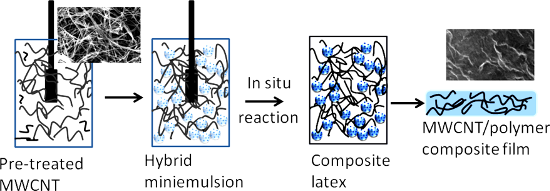
- period and does not require massive diffusion of the components of the formulation through the aqueous phase. Ham et al. [32][33] used a so-called miniemulsion process in an attempt to cover SWCNTs with polystyrene nanoparticles, where n-pentanol was used as a hydrophobe to minimize Ostwald ripening


Synthesis of [Fe(Leq)(Lax)]n coordination polymer nanoparticles using blockcopolymer micelles
Beilstein J. Nanotechnol. 2017, 8, 1318–1327, doi:10.3762/bjnano.8.133
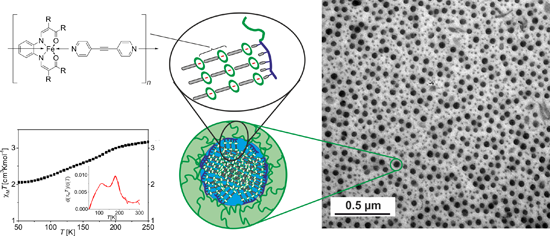
- temperature. Applications demand compounds with defined properties concerning the size and switchability that are maintained when the compound is integrated into composite materials. Here, we report the synthesis of [Fe(Leq)(Lax)]n coordination polymer (CP) nanoparticles using self-assembled polystyrene-block
- used the block copolymer polystyrene-b-poly(4-vinylpyridine) (PS-b-P4VP) to prepare spherical nanoparticles of the 1D spin-crossover coordination polymer [FeLeq(bipy)]n. We were able control the crystallinity of the [FeLeq(bipy)]n core through successive addition of starting material and by variation
- argon 5.0 (purity ≥ 99.999%) and Schlenk technique. The synthesis of all samples was repeated at least twice. Polystyrene-b-poly(4-vinylpyridine) (PS-P4VP, purum, MW ≈ 150.000) was synthesised as described before [15]. 1,2-di(pyridin-4-yl)ethane) (bpea) and trans-1,2-di(pyridin-4-yl)ethene (bpee) were



Nano-engineered skin mesenchymal stem cells: potential vehicles for tumour-targeted quantum-dot delivery
Beilstein J. Nanotechnol. 2017, 8, 1218–1230, doi:10.3762/bjnano.8.123
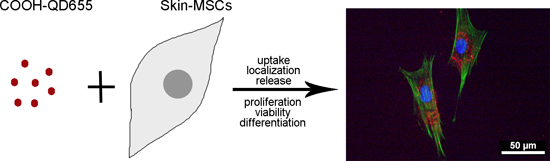
- QD uptake in skin MSCs. The composition of the protein corona could either enhance or decrease the cellular uptake of polystyrene-based NPs, depending on nanoparticle functionalization [47]. We have showed that NP uptake in skin MSCs is an active process and does not occur passively. For the
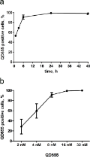
- of 5 × 10⁴ cells per well in a 12-well tissue culture polystyrene plate and labelled with QDs at various concentrations in the range of 0.5 to 64 nM for 6 h in complete or serum-free medium. To determine the accumulation dynamics, 8 nM or 16 nM QDs were applied to MSCs and incubated for 0.5, 1, 3, 6





Preparation of thick silica coatings on carbon fibers with fine-structured silica nanotubes induced by a self-assembly process
Beilstein J. Nanotechnol. 2017, 8, 1145–1155, doi:10.3762/bjnano.8.116
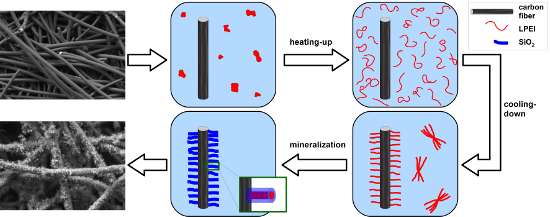
- hydrophobic polystyrene substrate. Treatment of polystyrene with sulfuric acid introduces sulfonate groups, and thus the possibility for hydrogen-bonding between –NH and –SO3H. The modified polystyrene surface is suitable for the nanograss formation demonstrating the importance of sufficient molecular-level


Hierarchically structured nanoporous carbon tubes for high pressure carbon dioxide adsorption
Beilstein J. Nanotechnol. 2017, 8, 1135–1144, doi:10.3762/bjnano.8.115
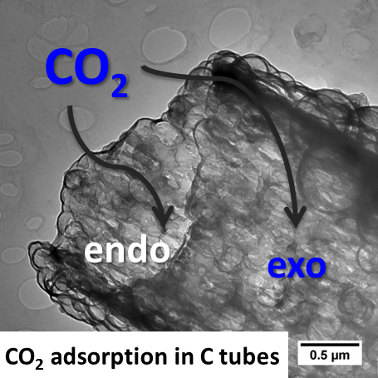
- synthesized by a combination of the Stoeber process and the use of electrospun macrosized polystyrene fibres as structure directing templates. The obtained carbon tubes have a macroporous nature characterized by a thick wall structure and a high specific surface area of approximately 500 m²/g resulting from
- material. Experimental Materials Polystyrene (PS, pro-plast from BASF), tetraethylorthosilicate (TEOS, ABCR), ammonia (NH3, Grüssing), dimethylformamide (DMF, Merck), tetrahydrofuran (THF, Merck), and ethanol (EtOH, Brenntag) were used as received without further purification. Synthesis of polystyrene
- fibres (1) In a similar manner as described in [38], electrospinning was performed in a homebuilt apparatus. Polystyrene (PS) fibres were electrospun from a 16 wt % PS THF/DMF 3:2 solution. After aging the spinning solution overnight, it was loaded into a glass syringe equipped with a stainless-steel


Needs and challenges for assessing the environmental impacts of engineered nanomaterials (ENMs)
Beilstein J. Nanotechnol. 2017, 8, 989–1014, doi:10.3762/bjnano.8.101
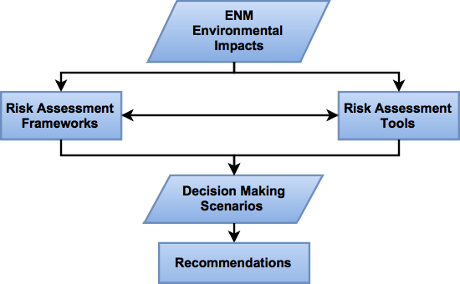

Functional dependence of resonant harmonics on nanomechanical parameters in dynamic mode atomic force microscopy
Beilstein J. Nanotechnol. 2017, 8, 883–891, doi:10.3762/bjnano.8.90
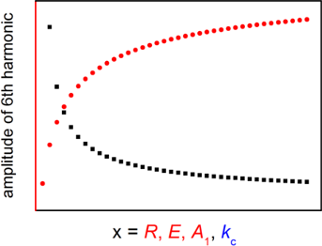
- frequency and polystyrene samples [13]. Such study has provided a practical qualitative method to continuously monitor changes in the shape and radius of a cantilever tip in amplitude modulation AFM mode. Here, we will also focus on the 6th harmonic since it provides the larger amplitude, but the





