


Search results
Search for "surface modification" in Full Text gives 193 result(s) in Beilstein Journal of Nanotechnology.
Preparation of micro/nanopatterned gelatins crosslinked with genipin for biocompatible dental implants
Beilstein J. Nanotechnol. 2018, 9, 1735–1754, doi:10.3762/bjnano.9.165
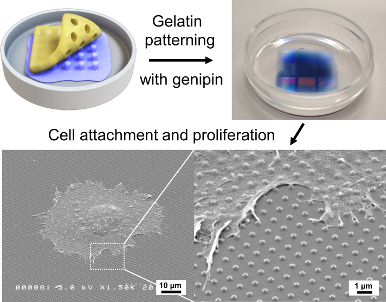
- surfaces using genipin crosslinking, with the aim of understanding the use of patterning in surface modification of dental implants. Results: Grooves, holes, and pillars, with widths or diameters of 2 µm, 1 µm, or 500 nm were fabricated using a combination of molding and genipin crosslinking of gelatin
- . Following this, cell attachment and proliferation on the resulting gelatin surface patterns were assessed using human osteoblastic Saos-2 cells, with the aim of understanding the use of these gelatin patterned surfaces in surface modification of dental implants. Cell attachment increased as a result of








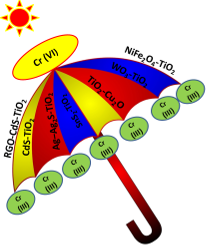
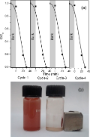
Cr(VI) remediation from aqueous environment through modified-TiO2-mediated photocatalytic reduction
Beilstein J. Nanotechnol. 2018, 9, 1448–1470, doi:10.3762/bjnano.9.137



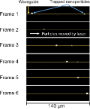
Surface characterization of nanoparticles using near-field light scattering
Beilstein J. Nanotechnol. 2018, 9, 1228–1238, doi:10.3762/bjnano.9.114
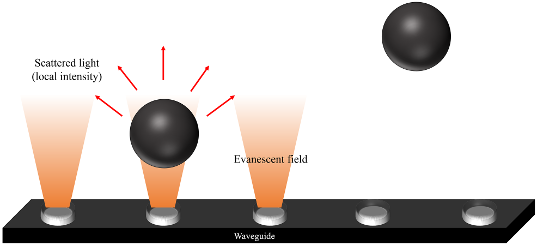
- nanoparticles have a shorter biological half-life and are cleared by the reticuloendothelial system [32]. For biomedical purposes, SPIOs must be biocompatible, colloidally stable, and well-dispersed in physiological buffers, which is often accomplished by surface modification of the magnetic nanoparticles with
- capable of initiating a strong electrostatic repulsion between the nanoparticles and the negatively charged waveguide. However, unlike PEG-SPIOs, uncoated SPIOs likely stuck to the waveguide owning to the absence of surface modification. Without a surface coating, which acts like a lubricant or spring




Noble metal-modified titania with visible-light activity for the decomposition of microorganisms
Beilstein J. Nanotechnol. 2018, 9, 829–841, doi:10.3762/bjnano.9.77
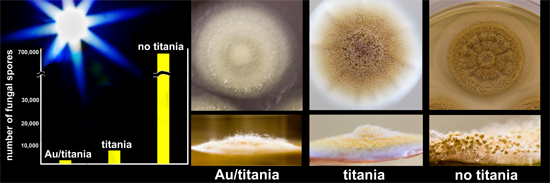
- , by morphology design [22][23][24][25][26], surface modification [27][28][29][30][31][32], doping [33][34][35][36], or the formation of heterojunctions with other semiconductors [37][38][39][40]. Modification with noble metals seems the most promising as it is well known that under UV irradiation


Surface-plasmon-enhanced ultraviolet emission of Au-decorated ZnO structures for gas sensing and photocatalytic devices
Beilstein J. Nanotechnol. 2018, 9, 771–779, doi:10.3762/bjnano.9.70
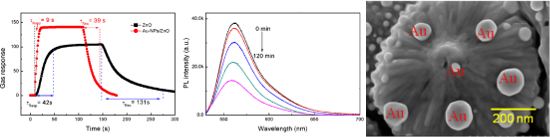
- factors, including absorbed oxygen species (O2−, O−, and O2−), charge carrier concentration, and the defects and vacancies on the ZnO surfaces. The gas response performance can be improved by a charge transfer process through surface modification [3][5][6] and doping of catalytic materials [7][8][9]. The




Heavy-metal detectors based on modified ferrite nanoparticles
Beilstein J. Nanotechnol. 2018, 9, 762–770, doi:10.3762/bjnano.9.69
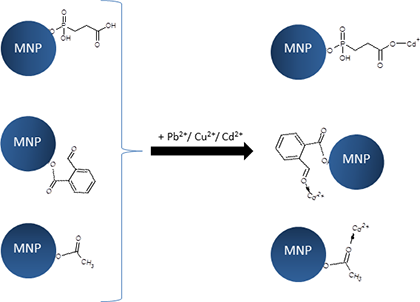
- composition and surface modification. The aim of the study is to examine the efficiency of adsorption of heavy metals in artificial solutions on doped magnetite nanoparticles (Ca, Co, Mn, Ni) surface-modified with PA, SA, AA, 3-PPA or 16-PHDA linkers. Experimental Reagents and solutions Chemicals used in this
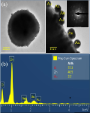
- surface modification. The obtained images for each kind of fabricated ferrites are presented in Figure 2. The TEM images show that regardless of doping (Ca2+, Co2+, Mn2+ or Ni2+), the studied nanoparticles exhibit a similar round shape and average size. In Table 1, diameters of every type of synthesized
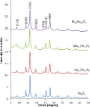
- [15]. Therefore, the origin of these signals is most probable due to heavy ion adsorption. However, due to a lack of reference information, it is the only speculation on the origin of appearing new signals. Raman spectroscopy After every step (synthesis, surface modification, and heavy metal


Single-step process to improve the mechanical properties of carbon nanotube yarn
Beilstein J. Nanotechnol. 2018, 9, 545–554, doi:10.3762/bjnano.9.52
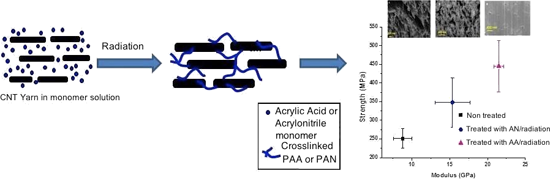
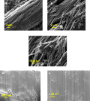
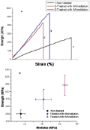
- single-step surface modification of CNTs to improve the mechanical properties of this material. To this end, CNT yarns were simultaneously functionalized and crosslinked using acrylic acid (AA) and acrylonitrile (AN) in an e-beam irradiation process. The chemical modification of CNT yarns was confirmed




Wafer-scale bioactive substrate patterning by chemical lift-off lithography
Beilstein J. Nanotechnol. 2018, 9, 311–320, doi:10.3762/bjnano.9.31
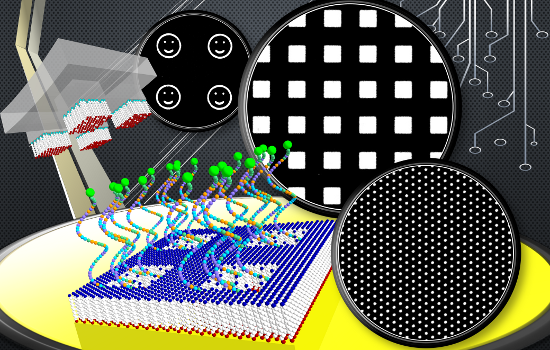
- -arrangement of silane or thiol molecules on silica or Au surfaces, which has been proven as a convenient route for the fabrication of functional surfaces toward versatile targets [12][13][14][15][16]. In addition to direct surface modification, the versatility of anchoring molecule tail groups provides


BN/Ag hybrid nanomaterials with petal-like surfaces as catalysts and antibacterial agents
Beilstein J. Nanotechnol. 2018, 9, 250–261, doi:10.3762/bjnano.9.27
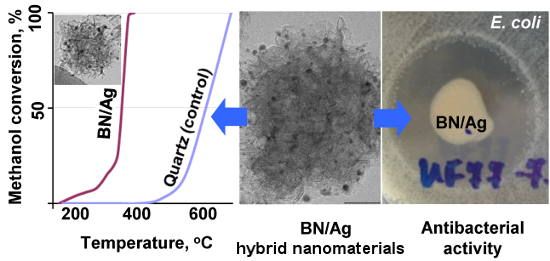
- nanostructures opens up new opportunities to improve the performance of hybrid nanomaterials. Many techniques for surface modification [4] and band-gap engineering [41][42] were described in the past few years. This allows for a control of size and homogeneity of Ag NPs, adhesion and charge distribution on the





Refractive index sensing and surface-enhanced Raman spectroscopy using silver–gold layered bimetallic plasmonic crystals
Beilstein J. Nanotechnol. 2017, 8, 2492–2503, doi:10.3762/bjnano.8.249
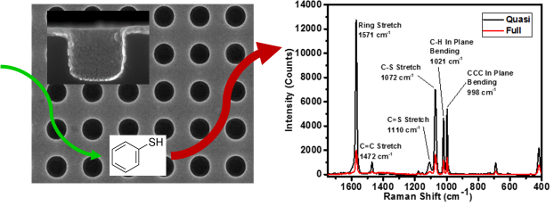
- [40][41][42]. It is Au, however, that is more widely utilized for analytical applications due to its long-term environmental stability, ease of surface modification, and biocompatibility [43]. The present study explores means for realizing synergy in utilizing the complementary attributes of each
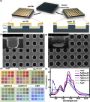


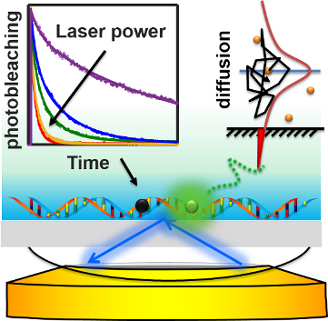
Photobleaching of YOYO-1 in super-resolution single DNA fluorescence imaging
Beilstein J. Nanotechnol. 2017, 8, 2296–2306, doi:10.3762/bjnano.8.229
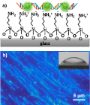
- , immobilize, and image a single DNA using the established protocol and our fluorescence microscope. Glass cover slip substrates modified with amino silane are used to immobilize single DNA molecules (Figure 3). After surface modification, the water contact angle for the cover slips is 48 ± 4° which is
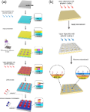
- -localized molecules in each frame. Scheme and image of the optical microscope. (a) Scheme of glass surface modification and DNA immobilization. (b) Fluorescent image of stretched DNA molecules on the substrate that have been labeled with YOYO-1. The inset shows a droplet of water on the substrate before DNA




Evaluating the toxicity of TiO2-based nanoparticles to Chinese hamster ovary cells and Escherichia coli: a complementary experimental and computational approach
Beilstein J. Nanotechnol. 2017, 8, 2171–2180, doi:10.3762/bjnano.8.216

- inhibiting activity [5][6]. Reactivity of TiO2 under visible light (λ > 400 nm) can be achieved in several ways [7], including: (a) metal doping [8], (b) non-metal doping [9][10], (c) self-doping (reductive treatments) [11][12], (d) surface modification by noble-metal nanoparticles of silver (Ag), gold (Au
- ), platinum (Pt), or palladium (Pd) [13][14], (e) the use of dye-modified TiO2 [15][16], or (f) coupling TiO2 with other semiconductors [17][18]. In the current work, we will focus on surface modification methods. Metal-ion doped TiO2 (so-called second generation nanomaterials) may cause adverse effects not


Synthesis and functionalization of NaGdF4:Yb,Er@NaGdF4 core–shell nanoparticles for possible application as multimodal contrast agents
Beilstein J. Nanotechnol. 2017, 8, 1815–1824, doi:10.3762/bjnano.8.183
- amphiphilic polymer coating [18] have been developed in order to transfer nanoparticles with hydrophobic surfaces into aqueous media. Furthermore, the multimodal UCNP surface modification field still lacks reference materials and established protocols for functionalization and targeting. Some studies showed
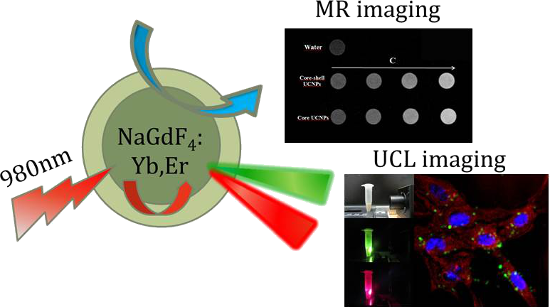
- demonstrate the effective surface modification method that uses a surfactant polysorbate 80 (Tween 80, polyoxyethylene sorbitan laurate). Hexagonal phase β-NaGdF4 was chosen as host lattice for its ability to combine optical and MRI. Tween 80 was used to make the UCNPs colloidally stable and dispersible in
- transferred to aqueous solutions after surface modification with the surfactant Tween 80. The core–shell UCNPs presented enhanced upconversion intensity and MR signal intensity, which indicates that these nanoparticles could be applied as an efficient dual optical, MRI contrast agent. Moreover, an in vitro


Near-infrared-responsive, superparamagnetic Au@Co nanochains
Beilstein J. Nanotechnol. 2017, 8, 1680–1687, doi:10.3762/bjnano.8.168
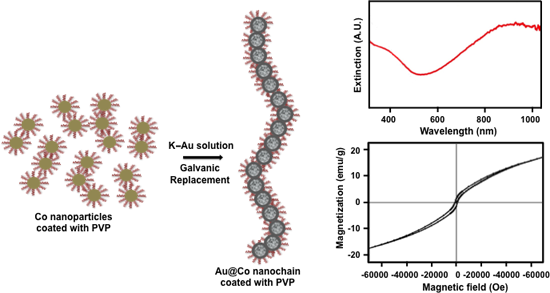
- various applications, such as energy conversion in solar cells [10][11], biosensing [12], photothermal therapy [13], and biomedical imaging [14]. Surface modification with an inorganic coating, such as silica, can lend biocompatibility to the nanoparticles [15][16][17][18]. A gold shell on magnetic


Uptake and intracellular accumulation of diamond nanoparticles – a metabolic and cytotoxic study
Beilstein J. Nanotechnol. 2017, 8, 1649–1657, doi:10.3762/bjnano.8.165
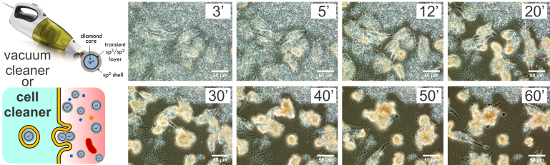
- , HPHT PL, DND) and surface termination and energy showed that the toxicity is mostly dependent on particle surface modification. In our study, oxygen termination emerges as the best surface modification for ND particles from the point-of-view of their biocompatibility. The viability of cells cultivated
- revealed lower cell viability for ND concentrations of 100 µg/mL and 1000 µg/mL (30 µg/cm2and 300 µg/cm2). Nevertheless, O-termination increases the biocompatability of diamond nanoparticles and can be considered an advantageous modification. Experimental Origin and surface modification of diamond


Surface functionalization of 3D-printed plastics via initiated chemical vapor deposition
Beilstein J. Nanotechnol. 2017, 8, 1629–1636, doi:10.3762/bjnano.8.162
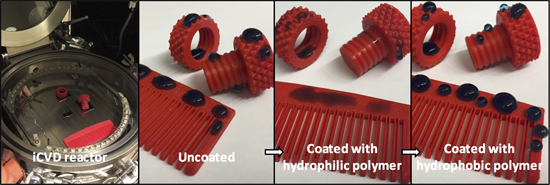
- microfluidics. Keywords: 3D printing; chemical vapor deposition; coatings; functional polymers; surface modification; Introduction Three-dimensional printing (3DP) is a useful fabrication technique that offers rapid and low-cost prototyping, high levels of design complexity, and resolution on the micron scale
- hydrophobic surface properties and do not promote cellular differentiation [3][18]. Surface modification of printed scaffolds can allow for the tuning of surface functionalization to promote vascularization and tissue regeneration while maintaining control over the mechanical robustness of the bulk structure
- . Hong et al. demonstrated that simply dipping polycaprolactone/poly(lactic-co-glycolic acid) 3D scaffolds in mussel adhesive proteins promoted cellular adhesion, proliferation and differentiation, showing that a facile surface modification improved the viability of using 3D-printed scaffolds for tissue



Calcium fluoride based multifunctional nanoparticles for multimodal imaging
Beilstein J. Nanotechnol. 2017, 8, 1484–1493, doi:10.3762/bjnano.8.148
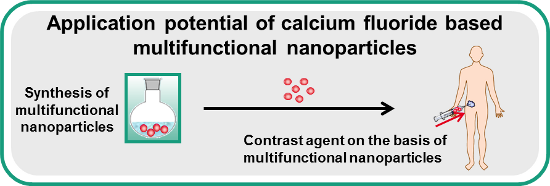
- without appropriate surface modification have a disposition to agglomerate and sediment subsequently under physiological conditions because of their pH value and salt content [39][40][41]. One crucial requirement for the application of NPs in cell-culture experiments or animal testing is the stabilization


Cationic PEGylated polycaprolactone nanoparticles carrying post-operation docetaxel for glioma treatment
Beilstein J. Nanotechnol. 2017, 8, 1446–1456, doi:10.3762/bjnano.8.144
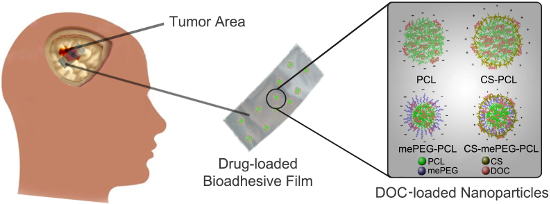
- film formulations as post-surgical local delivery systems for docetaxel (DOC). PCL and its derivative poly(ethylene glycol)-block-poly(ε−caprolactone) methyl ether (mePEG-PCL) were used to prepare these nanoparticles by the nanoprecipitation technique with surface modification by coating with CS. The




Deposition of exchange-coupled dinickel complexes on gold substrates utilizing ambidentate mercapto-carboxylato ligands
Beilstein J. Nanotechnol. 2017, 8, 1375–1387, doi:10.3762/bjnano.8.139
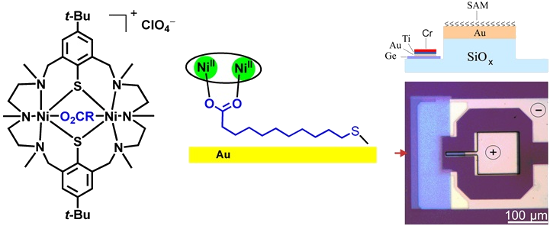
- , Germany, Leibniz-Institute of Surface Modification (IOM), Permoser Str. 15, D-04318 Leipzig, Germany 10.3762/bjnano.8.139 Abstract The chemisorption of magnetically bistable transition metal complexes on planar surfaces has recently attracted increased scientific interest due to its potential application


Micro- and nano-surface structures based on vapor-deposited polymers
Beilstein J. Nanotechnol. 2017, 8, 1366–1374, doi:10.3762/bjnano.8.138
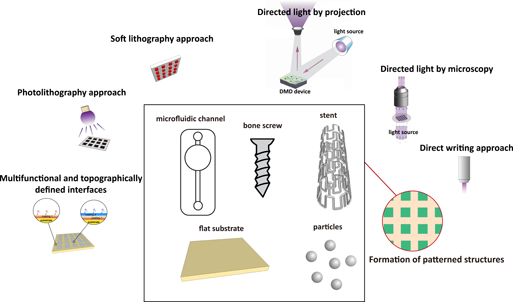
- applied for surface modification regardless of the substrate material and geometry. Here, various ways to structure these vapor-deposited polymer thin films are described. Well-established and available photolithography and soft lithography techniques are widely performed for the creation of surface
- technology is demonstrated. Keywords: multifunctional; polymer coating; surface modification; surface patterning; vapor deposition; Review Introduction Vapor-based processes of polymer coating/deposition combine many unique attributes in a dry, solvent-free process, and the deposition protocols as well as
- engineering and surface modification technologies for surfaces/devices with sensitive and miniaturized patterns or structures [4][5]. Furthermore, vapor-deposited polymers provide defined chemical control and/or precise accessibility to the linkage with functional molecules at the coating interface. The


Characterization of ferrite nanoparticles for preparation of biocomposites
Beilstein J. Nanotechnol. 2017, 8, 1257–1265, doi:10.3762/bjnano.8.127
- [6]. This explains why the stabilization of nanoparticles with active surface compounds is so important [7]. Well-determined or highly engineered surface modification can expand the usability of spontaneous features of nanomaterials (oxidation state, affinity to special compounds, etc
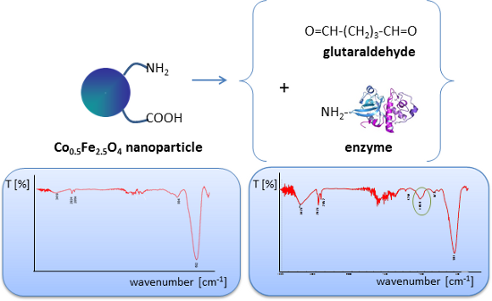
- nanoparticle and enzyme) and then respective enzymes were immobilized. For the second group, enzymes were attached without any previous surface modification. The prepared composites were measured by FTIR spectroscopy after drying. Infrared spectroscopy Selected ferrite nanoparticle samples were tested by IR
- for each ferrite core and surface modification. The IR spectra presented in Figures 5–7 show changes on the nanoparticle surface after every modification step. The spectra of the magnetite nanoparticles (Figure 5) show bands at 592 cm−1 which originate from the Fe–O bond typical for magnetite [28][29



The integration of graphene into microelectronic devices
Beilstein J. Nanotechnol. 2017, 8, 1056–1064, doi:10.3762/bjnano.8.107
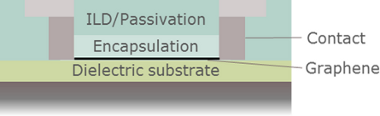
- hand graphene and other 2D materials consist only of surface and every surface modification changes the materials properties. This property allows the use of graphene as an environmental sensor, but is detrimental to fabricating stable devices. In the following review we highlighted the most crucial


Synthesis of graphene–transition metal oxide hybrid nanoparticles and their application in various fields
Beilstein J. Nanotechnol. 2017, 8, 688–714, doi:10.3762/bjnano.8.74
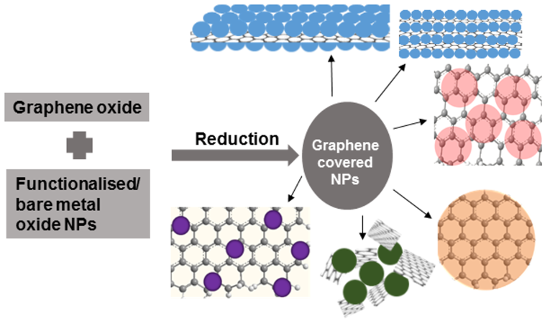
- prepared by a one-step chemical method [225]. For the formation of graphene-wrapped ZnO NPs, some other routes have been used, like chemical functionalisation of the ZnO surface. In this process there are three steps: surface modification of NPs mainly by amine groups, coating the NPs with a GO shell, and


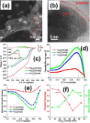


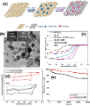


Thin SnOx films for surface plasmon resonance enhanced ellipsometric gas sensing (SPREE)
Beilstein J. Nanotechnol. 2017, 8, 522–529, doi:10.3762/bjnano.8.56
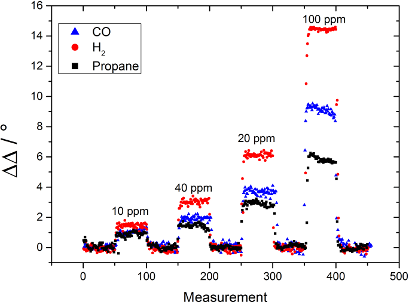
- Daniel Fischer Andreas Hertwig Uwe Beck Volkmar Lohse Detlef Negendank Martin Kormunda Norbert Esser BAM, Division 6.7, Surface Modification and Measurement Technique, Unter den Eichen 44–46, 12203 Berlin, Germany BAM, Division 2.1, Gases, Gasplants, Unter den Eichen 44–46, 12203 Berlin, Germany


Comparison of four methods for the biofunctionalization of gold nanorods by the introduction of sulfhydryl groups to antibodies
Beilstein J. Nanotechnol. 2017, 8, 372–380, doi:10.3762/bjnano.8.39
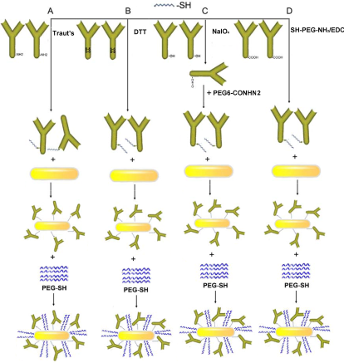
- , GNR applications should be functionalized to link biomolecules. The common GNR functionalization strategies are surface coverage and ligand replacement. The conventional surface modification of GNRs is coating anionic polyelectrolytes through electrostatic absorption, such as poly(acrylic acid) and





