Search results
Search for "thermal stability" in Full Text gives 237 result(s) in Beilstein Journal of Nanotechnology. Showing first 200.
Mechanical and thermodynamic properties of Aβ42, Aβ40, and α-synuclein fibrils: a coarse-grained method to complement experimental studies
Beilstein J. Nanotechnol. 2019, 10, 500–513, doi:10.3762/bjnano.10.51
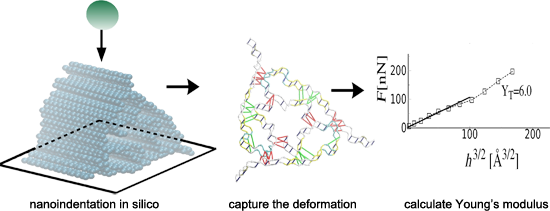
- the xy-plane. From Hertz’s equation, we derive the transverse Young modulus, YT, in the linear regime of the F–h curve. Thermodynamic characterization The study of the thermal stability in the case of Aβ fibrils faces serious difficulties, stemming from the requirement for controlled in vitro
- preparation of samples with well-ordered Aβ40 or Aβ42 fibrils. In this regard, our CG simulation is an ideal protocol as it enables the calculation of the melting temperatures for well-ordered Aβ fibrils. To assess the thermal stability of the fibril, we compute the probability of finding the protein in the


Nanocomposite–parylene C thin films with high dielectric constant and low losses for future organic electronic devices
Beilstein J. Nanotechnol. 2019, 10, 428–441, doi:10.3762/bjnano.10.42
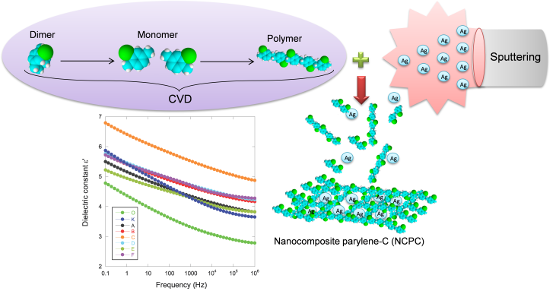
- greatly improved mechanical properties and thermal stability in comparison to pure PPXC films [48]. In a recent study, these properties, and especially thermal and UV stability, were further improved by combining nanosilica/titania particles with parylene C [49]. As shown in other works [50][51], parylene




Removal of toxic heavy metals from river water samples using a porous silica surface modified with a new β-ketoenolic host
Beilstein J. Nanotechnol. 2019, 10, 262–273, doi:10.3762/bjnano.10.25
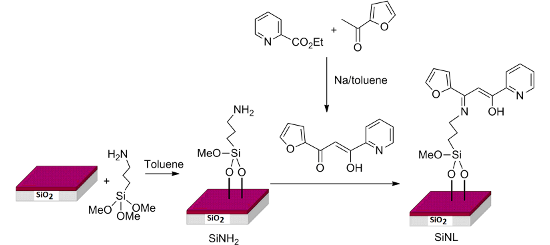
- , respectively, demonstrate the modification of SiNH2 with L1. Compared to the blank silica, the surface of the new material (SiNL) shown by SEM (Figure 2) became rough, which confirms the success of organic moieties filling the surface. The thermal stability of SiG, SiNH2 and SiNL was evaluated by TGA (Figure 3


A novel polyhedral oligomeric silsesquioxane-modified layered double hydroxide: preparation, characterization and properties
Beilstein J. Nanotechnol. 2018, 9, 3053–3068, doi:10.3762/bjnano.9.284
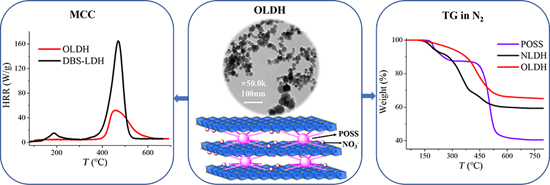
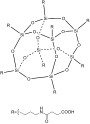
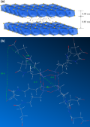
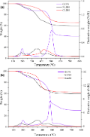
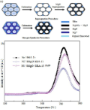
- showed that the silsesquioxane modified-LDH (OLDH) revealed an increase in the interlayer distance, nanoscale plate-like morphology of primary particles, and improved thermal stability. A synergistic effect between the siloxane moiety and Mg–Al hydroxide was found during thermal degradation, and
- rate and total heat release, indicating the low flammability of OLDH. Keywords: flammability; layered double hydroxide; polyhedral oligomeric silsesquioxane; thermal stability; Introduction Layered double hydroxides (LDHs) are typical host–guest materials, with unique lamellar structures composed of
- ][19], amino acids [20], anionic dyes [11], and compounds of biological origin, such as β-cyclodextrin and eugenol derivatives [9][10][13][21]. However, most of these current modifiers do not have satisfactory thermal stability and are flammable, reducing the thermal and fire stability of the LDHs







Femtosecond laser-assisted fabrication of chalcopyrite micro-concentrator photovoltaics
Beilstein J. Nanotechnol. 2018, 9, 3025–3038, doi:10.3762/bjnano.9.281
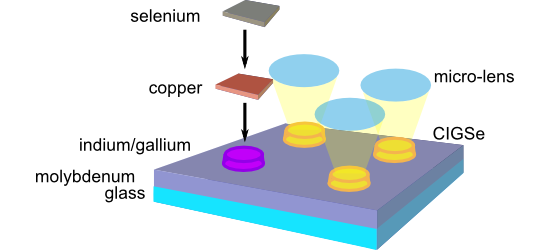
- . A process to realize such a system is illustrated in Figure 12. Before buffer layers (CdS, ZnO) and front contact (Al:ZnO) can be deposited, the electric insulation between back and front contact in-between the microabsorbers must be ensured. Due to its high (thermal) stability, ease of use and low


Co-intercalated layered double hydroxides as thermal and photo-oxidation stabilizers for polypropylene
Beilstein J. Nanotechnol. 2018, 9, 2980–2988, doi:10.3762/bjnano.9.277
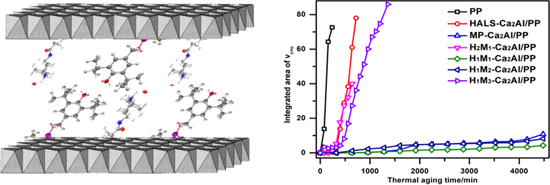
- various techniques. The results show that the powdered HnMn′-Ca2Al-LDHs hybrid materials have a much higher thermal stability than MP-Ca and HALS before intercalation. In addition, the HnMn′-Ca2Al/PP composites exhibit a higher overall resistance against thermal degradation and photo-oxidation compared to
- -oxidation stability; polypropylene; thermal stability; Introduction Hindered phenols and hindered amines, containing the functional groups 2,6-di-tert-butylphenol and 2,2,6,6-tetramethylpiperidine, respectively, are widely used as functional additives in polymers to prolong the service life [1][2][3
- . Polypropylene (PP) protected with the prepared MP-Ca2Al-LDH exhibited enhanced thermal stability and anti-migration behavior in comparison with MP-Ca/PP composites. Lately, some studies have demonstrated much better performance of multi-component intercalation compounds compared to the corresponding single


Ternary nanocomposites of reduced graphene oxide, polyaniline and hexaniobate: hierarchical architecture and high polaron formation
Beilstein J. Nanotechnol. 2018, 9, 2936–2946, doi:10.3762/bjnano.9.272
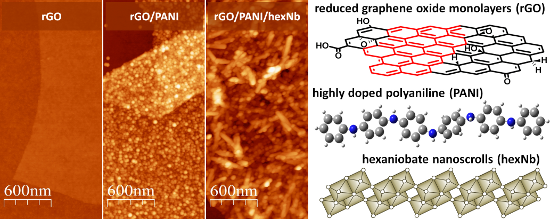
- bipolaronic to polaronic segments compared to the neat polymer and a superior thermal stability (the doped form of PANI is observed even after heating at 150 °C for 90 min). The literature has shown that PANI and reduced graphene oxide (rGO) show enhanced properties when combined at the nanoscale domain and
- applied, for instance, as supercapacitors, sensing materials, solar cells, electrochromic devices, anticorrosion coatings or as materials for carbon dioxide capture [8]. The layered inorganic phase offers a high surface area for PANI deposition and increases its thermal stability with regard to


Magnetic and luminescent coordination networks based on imidazolium salts and lanthanides for sensitive ratiometric thermometry
Beilstein J. Nanotechnol. 2018, 9, 2775–2787, doi:10.3762/bjnano.9.259
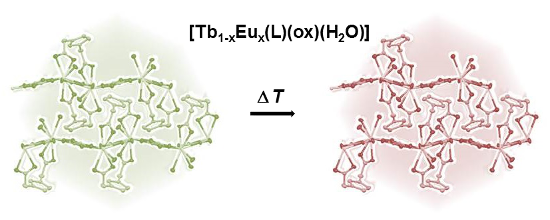
- Figure S2 (Supporting Information File 1), the experimental powder patterns fit well with the patterns calculated from the single crystal structure and show no additional phases. In order to investigate the thermal stability, thermogravimetric analysis (TGA) was realized under air stream from 25 to 900



Oriented zinc oxide nanorods: A novel saturable absorber for lasers in the near-infrared
Beilstein J. Nanotechnol. 2018, 9, 2730–2740, doi:10.3762/bjnano.9.255
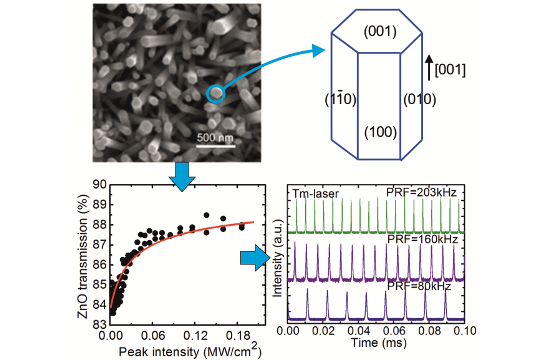
- exciton binding energy (60 meV) [3], allowing for efficient excitonic photoluminescence at room temperature, and due to their good mechanical and thermal stability. Arrays of ZnO NRs can be grown on various substrates (e.g., Si, Al2O3, glass) either by gas phase processes (e.g., by vapor–liquid–solid



Impact of the anodization time on the photocatalytic activity of TiO2 nanotubes
Beilstein J. Nanotechnol. 2018, 9, 2628–2643, doi:10.3762/bjnano.9.244
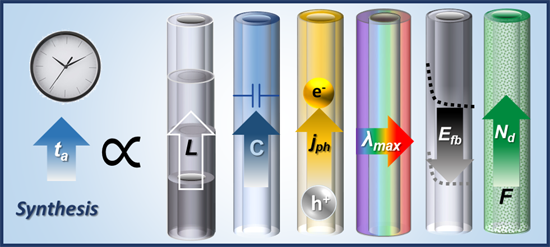
- peak exhibits an increasing relative intensity with higher ta, surpassing that of the (101) plane, and the ratios of the peak intensities for those planes are reported in Table 2. Acevedo-Peña et al. observed an enhancement of the thermal stability in anatase nanotubes with a preferred orientation


Improved catalytic combustion of methane using CuO nanobelts with predominantly (001) surfaces
Beilstein J. Nanotechnol. 2018, 9, 2526–2532, doi:10.3762/bjnano.9.235
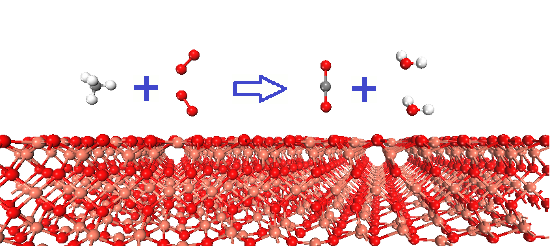
- been reported as effective catalysts for the complete oxidation of methane [2][5][9][10][11][12][13][14][15][16][17], particularly supported Pd nanoparticles [15][16][17], while the high price and poor thermal stability limit their large scale application. To address this issue, low-cost alternatives
- volume and weight when assembled on the reactor. The aggregation of catalyst nanoparticles upon high-temperature calcination is a typical issue for CH4 oxidation, which was also observed in our experiments. All three CuO catalysts demonstrated poor thermal stability leading to significantly deteriorated
- treatment is employed (650 °C) as shown in Figure 2e. Moreover, the surface layers show higher crystallization after catalysis tests, as shown in Figure 2f, indicating that additional efforts to improve the thermal stability of these nanostructures is needed. Although the calculated AE and DE can provide an


Nanocellulose: Recent advances and its prospects in environmental remediation
Beilstein J. Nanotechnol. 2018, 9, 2479–2498, doi:10.3762/bjnano.9.232
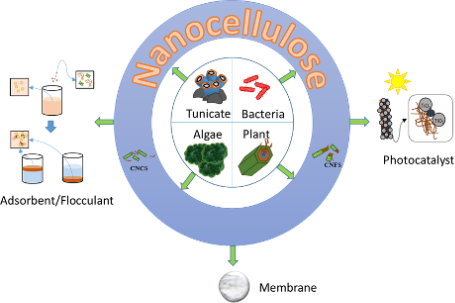
- in the absence of lignin and hemicellulose in cellulose. The transition from micro- to nanoscale during mechanical disintegration of fibres is usually evident in a reduction of viscosity, thermal stability, and crystallinity. In most cases, the principal mechanical treatments used are either aqueous


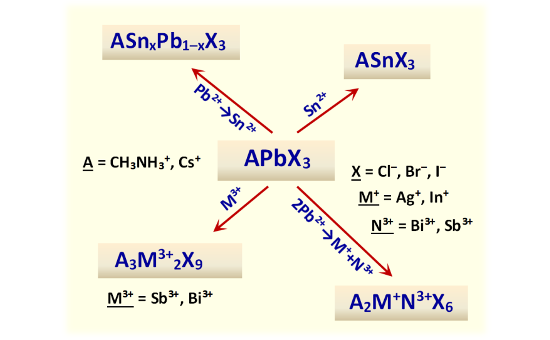
Lead-free hybrid perovskites for photovoltaics
Beilstein J. Nanotechnol. 2018, 9, 2209–2235, doi:10.3762/bjnano.9.207


Synthesis of rare-earth metal and rare-earth metal-fluoride nanoparticles in ionic liquids and propylene carbonate
Beilstein J. Nanotechnol. 2018, 9, 1881–1894, doi:10.3762/bjnano.9.180
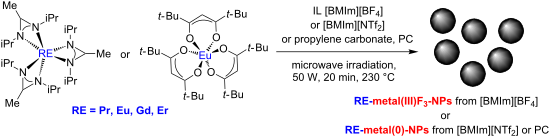
- particles via electrostatic and steric interactions without altering the surface properties [32][33][34][35][36][37]. In addition, they have a high thermal stability, negligible vapor pressure and are not flammable [38]. PC is an aprotic, highly dipolar solvent with low viscosity [39][40], low flammability


Free-radical gases on two-dimensional transition-metal disulfides (XS2, X = Mo/W): robust half-metallicity for efficient nitrogen oxide sensors
Beilstein J. Nanotechnol. 2018, 9, 1641–1646, doi:10.3762/bjnano.9.156
- the gas molecules remains unclear. In addition to MoS2, 2D WS2 is expected to be a more promising material as gas sensor because of its higher thermal stability and wider temperature range of operation [18]. Synthesized FETs layered with WS2 are also reported as attractive electronic devices [27
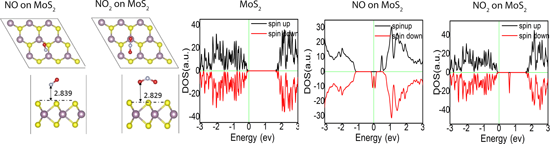
- room temperature (300 K) for a 3 × 3 supercell model were performed to further evaluate the thermal stability of MoS2 with and without the adsorption of NOx (x = 1, 2) as shown in Figure S5 (Supporting Information File 1). There is no significant structural distortion within 7 ps for the adsorption of
- NOx onto MoS2, indicating highly thermal stability.” Conclusion We have presented monolayer XS2 (X = Mo, W) as NO sensor based on first principles studies. The adsorption sites and energy for NO and NO2 molecules on MoS2 or WS2 layers have been studied. The calculations were carried out with different


Understanding the performance and mechanism of Mg-containing oxides as support catalysts in the thermal dry reforming of methane
Beilstein J. Nanotechnol. 2018, 9, 1162–1183, doi:10.3762/bjnano.9.108
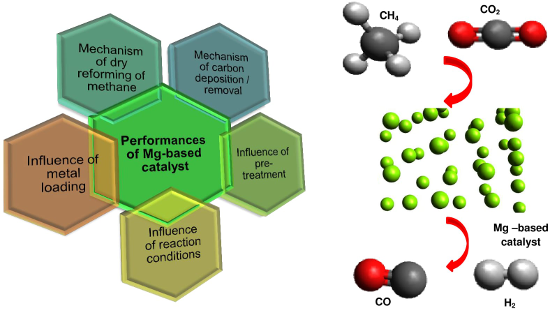
- developments on the use of Mg as a support or promoter for DRM catalysts. Its high basicity and high thermal stability make Mg suitable for introduction into the highly endothermic reaction of DRM. The introduction of Mg as a support or promoter for Ni-based catalysts allows for good metal dispersion on the
- ]. Furthermore, its characteristics such as high thermal stability, high melting point, and low cost make MgO a promising component in endothermic reactions, especially in the DRM process [18][34][49]. Therefore, this review discusses the research regarding the DRM reaction over Mg-containing oxide catalysts as
- alkaline properties and thermal stability of MgO, which is more suitable for CO2 and CH4 adsorption. In fact, MgO offers low surface area, which could further be improved, and yields optimum texture properties with a combination of alumina [45][114][115][116][117]. Based on the investigation of the






P3HT:PCBM blend films phase diagram on the base of variable-temperature spectroscopic ellipsometry
Beilstein J. Nanotechnol. 2018, 9, 1108–1115, doi:10.3762/bjnano.9.102
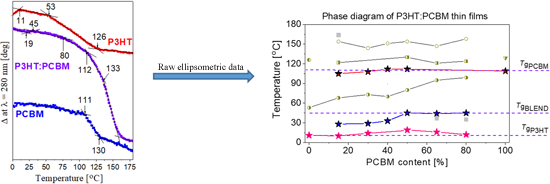
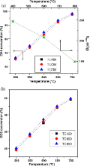
- and quickly cooled down to −10 °C over a period of 3 min. It is important to note that thermal stability of P3HT and PCBM is high and their thermal degradation occurs only above 380 °C [45]. Then, ellipsometric measurements have been performed, during a heating cycle with a heating rate of 2 °C/min


Facile chemical routes to mesoporous silver substrates for SERS analysis
Beilstein J. Nanotechnol. 2018, 9, 880–889, doi:10.3762/bjnano.9.82
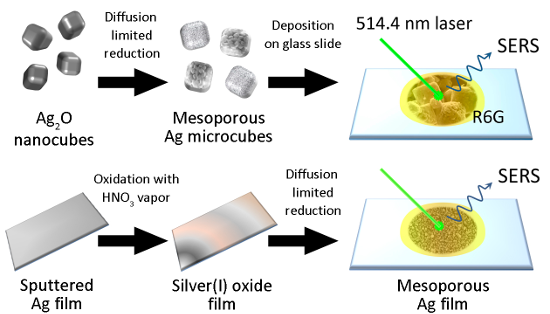
- stretching band for the calculations. The EF value for the 10−3 M probe was 1.5 × 10² for the 747 cm−1 mode and 0.9 × 10² for the 2970 cm−1 mode. The microstructure of the nanostructured films applied as SERS chips in SERS experiments above showed advanced thermal stability up to 110 °C. The films were
- disperse silver and other noble metals. Thermal stability is an important criterion for porous compounds in gas phase processes because of their enhanced adsorption behaviour and chromatography function. Analysis of the thermal stability showed low microstructural changes upon sintering at 110 °C while
- sintering at 120 °C degraded the material. We therefore recommend 100 °C as the maximal temperature for thermal stability of such a fine microstructure. The analysis of the SERS activity of sintered mp-Ag/Ag films was performed for meldoninum which was deposited before the calcination processing. It was


A review of carbon-based and non-carbon-based catalyst supports for the selective catalytic reduction of nitric oxide
Beilstein J. Nanotechnol. 2018, 9, 740–761, doi:10.3762/bjnano.9.68
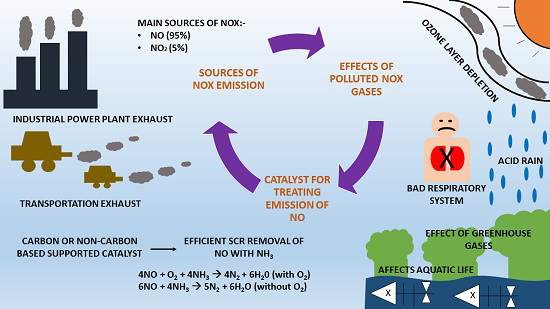
- can cause the deactivation of the catalyst. In addition, the catalyst also has a limited temperature window (300–400 °C) and poor thermal stability [7][8]. Hence, there is an urgent need to find other catalysts that can overcome these drawbacks and also have high resistance to water (H2O) and
- oxidation of SO2 to SO3, so that high activity and selectivity, high thermal stability, and a temperature lower than 300 °C can be achieved, thus increasing the lifetime of the catalyst. Lower-temperature SCR is foremost in importance to ensure the complete removal of NO. This is because of the wide
Perovskite-structured CaTiO3 coupled with g-C3N4 as a heterojunction photocatalyst for organic pollutant degradation
Beilstein J. Nanotechnol. 2018, 9, 671–685, doi:10.3762/bjnano.9.62
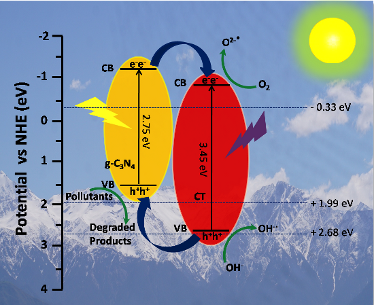
- organic semiconductor with tri-s-triazine units, has drawn huge attention from researchers due to its excellent photocatalytic performance and unique properties such as appropriate band structure, visible light absorption and high chemical and thermal stability [2][4]. In addition, g-C3N4 consists of
- comprises of all the peaks of g-C3N4 and CT, indicating that the addition of g-C3N4 has not altered the structural properties of CT, which is in agreement with the XRD results. Thermogravimetric studies To investigate the thermal stability of g-C3N4, CT and CTCN heterojunction, thermogravimetric (TGA
- indicates its intrinsic thermal instability in this temperature range [44]. CT nanoflakes show very high thermal stability in comparison to g-C3N4 and no significant weight loss is observed in the TGA curve of pure CT, even at 800 °C [36]. The relative content of the g-C3N4 in the CTCN heterojunction could


Electron interactions with the heteronuclear carbonyl precursor H2FeRu3(CO)13 and comparison with HFeCo3(CO)12: from fundamental gas phase and surface science studies to focused electron beam induced deposition
Beilstein J. Nanotechnol. 2018, 9, 555–579, doi:10.3762/bjnano.9.53
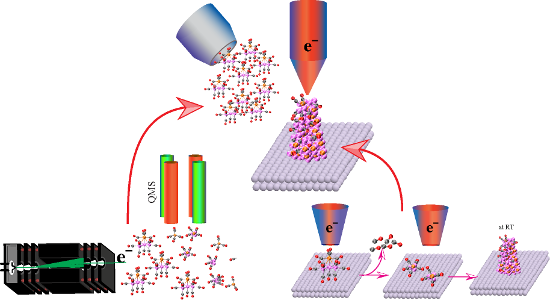


Ultralight super-hydrophobic carbon aerogels based on cellulose nanofibers/poly(vinyl alcohol)/graphene oxide (CNFs/PVA/GO) for highly effective oil–water separation
Beilstein J. Nanotechnol. 2018, 9, 508–519, doi:10.3762/bjnano.9.49
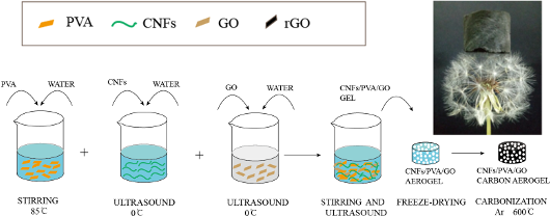
- was successfully prepared, accompanied by a drastic decrease in the number of polar groups and a certain degree of reduction [38]. As shown in Figure 6, the thermal stability of the CNF/PVA/GO aerogels before and after the carbon treatment, pure CNFs, pure PVA and GO were measured by thermogravimetric
- analysis (TGA) in nitrogen from 30 to 600 °C. In addition to the CNF/PVA/GO carbon aerogels, the other three samples showed three different stages of weight loss: the water decomposition stage, polymer decomposition stage, and residual substance decomposition stage. The thermal stability of the aerogel was
- slightly improved after the introduction of GO. The maximum decomposition temperature of the CNFs after GO introduction increased from 237 to 465 °C, showing that the addition of GO improves the thermal stability of the composite film to some extent. This may have occurred because the GO retarded the


Electron interaction with copper(II) carboxylate compounds
Beilstein J. Nanotechnol. 2018, 9, 384–398, doi:10.3762/bjnano.9.38
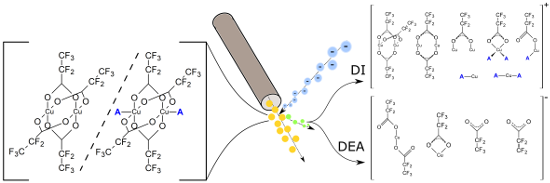
- there is still demand for new precursors with other satisfactory parameters like vapor pressure, toxicity, thermal stability, and stability over time. Electrons present on the surface are combination of high energy electrons from the primary electron beam and secondary electrons emitted from the surface


Photocatalytic and adsorption properties of TiO2-pillared montmorillonite obtained by hydrothermally activated intercalation of titanium polyhydroxo complexes
Beilstein J. Nanotechnol. 2018, 9, 364–378, doi:10.3762/bjnano.9.36
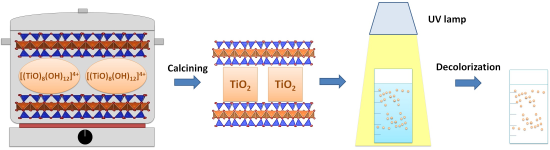
- treatment and those without it even after annealing at 700–800 °C, indicating thermal stability of the structure of the obtained pillared materials. Figure 2 shows the results of an X-ray analysis. One observes a single montmorillonite phase for the initial MM sample (100% intensity reflex with a basal






BN/Ag hybrid nanomaterials with petal-like surfaces as catalysts and antibacterial agents
Beilstein J. Nanotechnol. 2018, 9, 250–261, doi:10.3762/bjnano.9.27
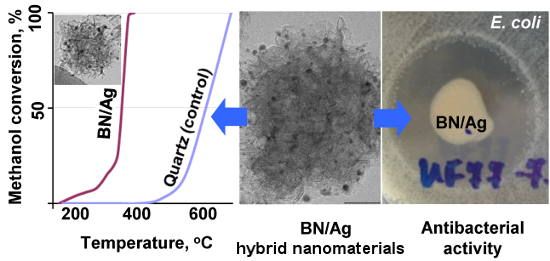
- spectroscopy (XPS), and infrared spectroscopy (FTIR). They were also characterized in terms of thermal stability, Ag+ ion release, catalytic and antibacterial activities. The materials synthesized via UV decomposition of AgNO3 demonstrated a much better catalytic activity in comparison to those prepared using
- ) decomposition of AgNO3 in a suspension of BN NPs. Both methods resulted in partial oxidation of Ag during processing. Then, the obtained materials have been characterized in terms of their microstructures, thermal stability, Ag+ ion release, and catalytic and antibacterial activities. Results and Discussion
- also apparent within the BN/Ag HNMs (Figure 3e). Thermal stability of BN/Ag hybrid nanomaterials The majority of NH applications, including catalysts, are closely related to their high-temperature performance. Thus, HNMs with high thermal stability, i.e., capable of maintaining their structure at