


Search results
Search for "zinc" in Full Text gives 265 result(s) in Beilstein Journal of Nanotechnology. Showing first 200.
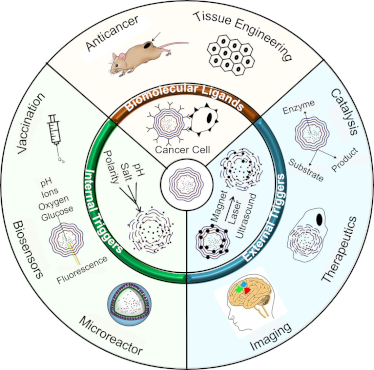
Multilayer capsules made of weak polyelectrolytes: a review on the preparation, functionalization and applications in drug delivery
Beilstein J. Nanotechnol. 2020, 11, 508–532, doi:10.3762/bjnano.11.41



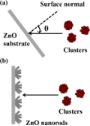
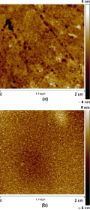
Formation of nanoripples on ZnO flat substrates and nanorods by gas cluster ion bombardment
Beilstein J. Nanotechnol. 2020, 11, 383–390, doi:10.3762/bjnano.11.29
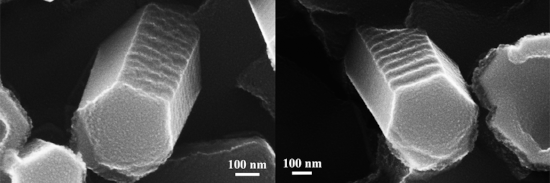
- ., Ltd.) by means of a two-step hydrothermal (HT) growth process. The first step is the synthesis of a seed layer and the second step is the ZnO nanorod growth. To prepare the seed layer solution we stirred 5 mM Zn(CH3COO)2·2H2O (zinc acetate dehydrate, 99.9%, Sinopharm Chemical Reagent Co., Ltd) in 10



Poly(1-vinylimidazole) polyplexes as novel therapeutic gene carriers for lung cancer therapy
Beilstein J. Nanotechnol. 2020, 11, 354–369, doi:10.3762/bjnano.11.26
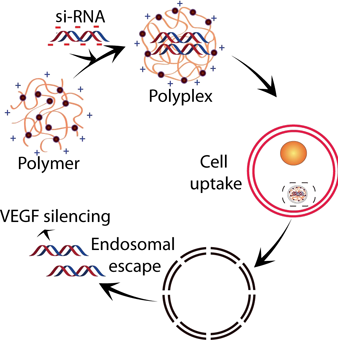
- the hepatocyte surface through the lactosylated poly(ʟ-lysine). The endosomal escape was mediated through a pH-responsive protonation of the imidazole and amino moieties that disrupted the endosomal membrane [17]. Zinc–PVI systems have also been investigated for complexing DNA for gene delivery


Facile biogenic fabrication of hydroxyapatite nanorods using cuttlefish bone and their bactericidal and biocompatibility study
Beilstein J. Nanotechnol. 2020, 11, 285–295, doi:10.3762/bjnano.11.21
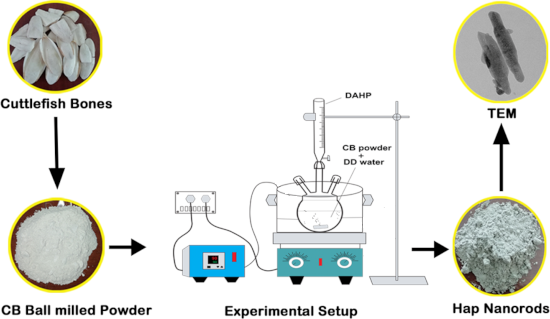
- structure, diffusion rate, metabolism and interaction of the nanoparticles with the microorganisms [57]. A similar study was conducted by Tank et al. (2014) to compare the antibacterial activity of pure and zinc-doped nanometer-sized Hap that are synthesized via a chemical precipitation mediated surfactant
- approach against gram positive S. aureus, Bacillus cereus, Micrococcus luteus, gram-negative Pseudomonas aeruginosa and Shigella flexnari. The study revealed that both pure and zinc-doped Hap have a needle-like morphology [58] and exhibited significant antibacterial activity against M. luteus and S. aureus


Rational design of block copolymer self-assemblies in photodynamic therapy
Beilstein J. Nanotechnol. 2020, 11, 180–212, doi:10.3762/bjnano.11.15
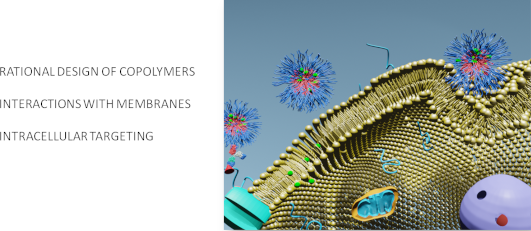
- inspiration from red blood cells, which transport oxygen via haemoglobin, the poly(acrylic acid) block in poly(ethylene glycol)-block-poly(acrylic acid)-block-polystyrene self-assemblies was conjugated to haemoglobin via carbodiimide chemistry [61]. The resultant carrier loaded with zinc phthalocyanine (ZnPc
- . Therefore, the optimal loading has to be determined for each system. Ping et al. described a simple UV–visible spectroscopy method to assess the degree of aggregation inside the vector, thanks to the evolution of the PS spectrum (zinc phthalocyanine in their case) [148]. Shi et al. described the







Molecular architectonics of DNA for functional nanoarchitectures
Beilstein J. Nanotechnol. 2020, 11, 124–140, doi:10.3762/bjnano.11.11
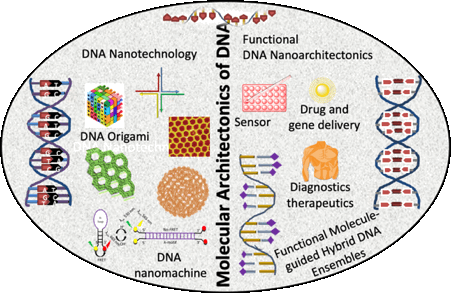
- the dTn chain length and temperature [85]. The multichromophoric array of NDI and oligo-dTn assembled over a gold substrate showed photocurrent generation due to electron conduction because of the π‐stacked array of the NDI assembly. In their next design approach, two separate zinc binding systems, Zn


Advanced hybrid nanomaterials
Beilstein J. Nanotechnol. 2019, 10, 2563–2567, doi:10.3762/bjnano.10.247

- devices based on the combination of dicyanomethylene and pyranine as organic dyes supported on zinc single-layered hydroxide” [31]. In this article, two fluorescent organic dyes, dicyanomethylene and pyranine, emit visible light upon blue LED excitation and are tethered to single layer hydroxide platelets
Synthesis and acetone sensing properties of ZnFe2O4/rGO gas sensors
Beilstein J. Nanotechnol. 2019, 10, 2516–2526, doi:10.3762/bjnano.10.242
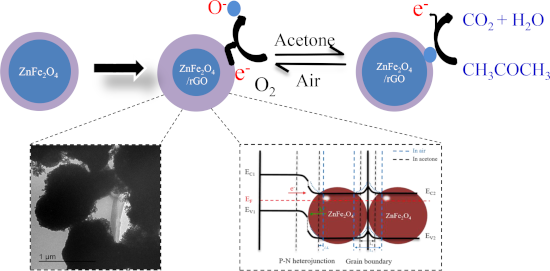
- amounts of acetone still need to be enhanced. As a dual metal oxide, AB2O4 spinel materials received much attention in the field of gas sensing [13][14]. With a unique spinel structure and a narrow bandgap width (≈1.94 eV), zinc ferrite (ZnFe2O4) has remarkable properties and shows good potential in the




Long-term entrapment and temperature-controlled-release of SF6 gas in metal–organic frameworks (MOFs)
Beilstein J. Nanotechnol. 2019, 10, 1851–1859, doi:10.3762/bjnano.10.180
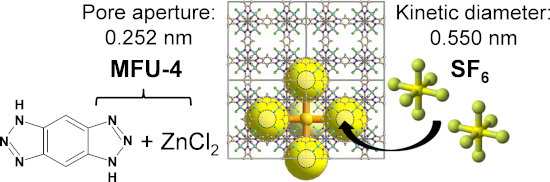
- -86159 Augsburg, Germany Chair of Chemical Physics and Materials Science, Institute of Physics, University of Augsburg, Universitätsstraße 1, D-86159 Augsburg, Germany 10.3762/bjnano.10.180 Abstract In this work, a metal–organic framework (MOF), namely MFU-4, which is comprised of zinc cations and
- connected via ultranarrow pore apertures. As a proof-of-principle study, we used a MOF called MFU-4 (where MFU-4 stands for Metal−Organic Framework Ulm University-4) to trap xenon gas inside the pores [12]. MFU-4 is comprised of zinc cations and benzotriazolate ions (Scheme 1) [13]. It crystallizes in the


Novel hollow titanium dioxide nanospheres with antimicrobial activity against resistant bacteria
Beilstein J. Nanotechnol. 2019, 10, 1716–1725, doi:10.3762/bjnano.10.167
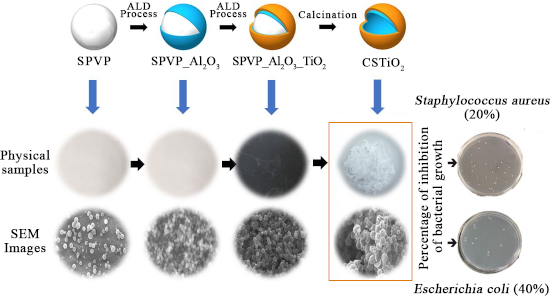
- -positive and Gram-negative bacteria [2]. In recent years, metal and metal oxide NPs, such as silver, gold, titanium and zinc oxide NPs, have been extensively studied due to their interesting antimicrobial character [3][4][5]. Titanium dioxide (TiO2) NPs have also attracted significant attention due to


Tuning the performance of vanadium redox flow batteries by modifying the structural defects of the carbon felt electrode
Beilstein J. Nanotechnol. 2019, 10, 1698–1706, doi:10.3762/bjnano.10.165
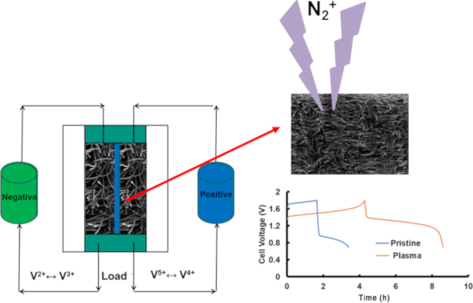
- flow batteries like zinc/bromine, the electrical energy in VRFBs is completely stored by the electrolyte in an external tank. Thus, in VRFB systems, the power and energy can be decoupled, that is, to store more energy, only the tank size needs to be increased. Moreover, since the system uses only a


High-temperature resistive gas sensors based on ZnO/SiC nanocomposites
Beilstein J. Nanotechnol. 2019, 10, 1537–1547, doi:10.3762/bjnano.10.151
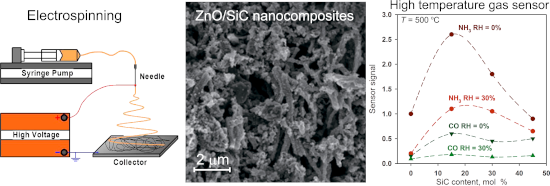
- pore diameter of 30 nm (Figure 2f). The polymeric fibers containing zinc acetate (Figure 2b) are cylindrical wires about 500 nm in diameter. The ZnO nanofibers obtained after annealing (Figure 2d) consist of polycrystalline wires with an average diameter of 150 nm formed by nanocrystals about 20–30 nm
- of zinc oxide contains an intense broad signal, corresponding to the stretching vibrations of Zn–O bonds (635–400 cm−1). The above spectrum also shows the signals from the multi-phonon vibrational modes of the ZnO lattice (990 and 870 cm−1). In accordance with the literature data, such oscillations
- do not appear at 78 K, but are noticeable at room temperature [20]. Nitro and nitrite groups [21][22] formed during the decomposition of PVP are also present on the surface of zinc oxide, as evidenced by the appearance of IR signals in the 1430–1260 cm−1 region, corresponding to the symmetric and



Playing with covalent triazine framework tiles for improved CO2 adsorption properties and catalytic performance
Beilstein J. Nanotechnol. 2019, 10, 1217–1227, doi:10.3762/bjnano.10.121

- conditions, in molten zinc chloride, the rational combination of dicyano-substituted organic moieties can be used to provide stable carbon nanomaterials with diverse morphologies (i.e., porosity and specific surface area) along with variable chemical composition (i.e., content and type of light elements such


A highly efficient porous rod-like Ce-doped ZnO photocatalyst for the degradation of dye contaminants in water
Beilstein J. Nanotechnol. 2019, 10, 1157–1165, doi:10.3762/bjnano.10.115
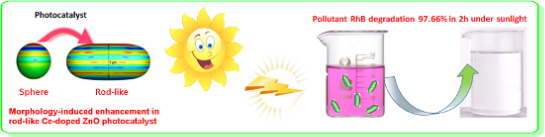
- decarboxylation. Generally, zinc oxide materials can be synthesized via a hydrothermal process [18], sol–gel method [19], microemulsion method [20], among others. Due to its narrow band, the application of zinc oxide is limited, thus it is common to modify ZnO using rare-earth ions [9]. Koao et al. [21
- knowledge, the synthesis of rod-like Ce-doped ZnO (abbreviated as CZO [9]) by pyrolysis derived from ZIF-8 (a zeolitic imidazolate framework, ZIF) has not been reported. As one of the most frequently used MOFs, ZIF-8 (2-methylimidazole zinc salt) has potential applications in gas storage, catalysis, etc
- , XPS, SEM and ICP, respectively. Furthermore, to supply a helpful reference for large-scale dye degradation, the optimum photocatalytic conditions of undoped and doped catalysts were also screened. Sample preparation Materials and instruments In this study, zinc acetate dihydrate was purchased from


Photoactive nanoarchitectures based on clays incorporating TiO2 and ZnO nanoparticles
Beilstein J. Nanotechnol. 2019, 10, 1140–1156, doi:10.3762/bjnano.10.114
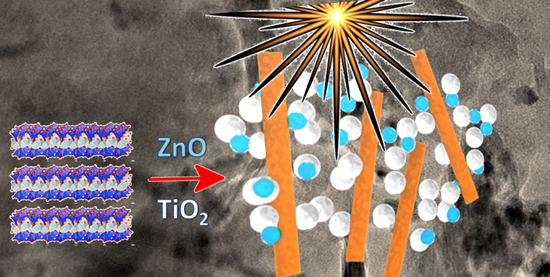
- dioxide and zinc oxide nanoparticles with clay minerals to give diverse clay–semiconductor nanoarchitectures are summarized and critically discussed in this review article. The possibility to use clay minerals as starting components showing different morphologies, such as layered, fibrous, or tubular
- ; nanoarchitectures; photocatalysts; titanium dioxide; zinc dioxide; Review Introduction: immobilization of nanoscale TiO2 and ZnO on clay minerals Nanoarchitectonics is a term coined by Japan's National Institute for Materials Science (NIMS), which refers to the nanoscale design of complex materials through a deep
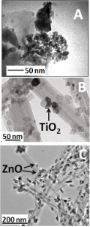
- NPs grew from 6 to 18 nm during calcination at 500–700 °C with a phase transition from anatase to rutile taking place at ca. 650 °C [96]. Layered silicates, such as kaolinite and montmorillonite, also stabilize the formation of ZnO NPs (Figure 2A) from zinc cyclohexanebutyrate hydrolyzed in dimethyl



Porous N- and S-doped carbon–carbon composite electrodes by soft-templating for redox flow batteries
Beilstein J. Nanotechnol. 2019, 10, 1131–1139, doi:10.3762/bjnano.10.113
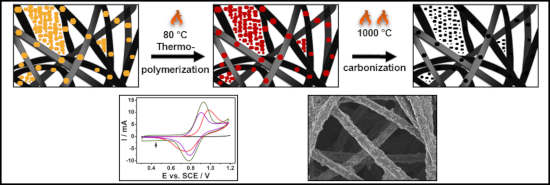
- possible to scale-up the method to industrial standards [21]. In earlier studies we reported on a salt-templating method, where we embedded a PAN-based carbon felt into a eutectic mixture containing zinc chloride and sodium chloride mixed with an ionic liquid as the carbon source [22]. Herein, we present
- nitrogen source. Also it is much more environmentally friendly, since zinc chloride is no longer needed and replaced by the structure-directing agent Pluronic® F-127. Pluronic is a self-assembly block copolymer, which has already been widely used as template in the synthesis of porous carbons [24]. Strong
- with the electrolyte. This method does not rely on expensive precursors and thus enables an environmentally friendly way to achieve porous carbon electrode materials without the utilization of zinc chloride or other hazardous substances. Experimental Materials 2-Thiophenecarboxaldehyde (98%), pyrrole-2



Quantitative analysis of annealing-induced instabilities of photo-leakage current and negative-bias-illumination-stress in a-InGaZnO thin-film transistors
Beilstein J. Nanotechnol. 2019, 10, 1125–1130, doi:10.3762/bjnano.10.112
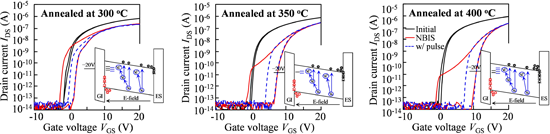
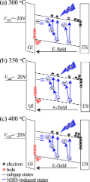
- temperature on the initial electrical characteristics and photo-induced instabilities of amorphous indium gallium zinc oxide (a-IGZO) thin-film transistors (TFTs). The extracted electrical parameters from transfer curves suggest that a low-temperature treatment maintains a high density of defects in the IGZO


Scavenging of reactive oxygen species by phenolic compound-modified maghemite nanoparticles
Beilstein J. Nanotechnol. 2019, 10, 1073–1088, doi:10.3762/bjnano.10.108
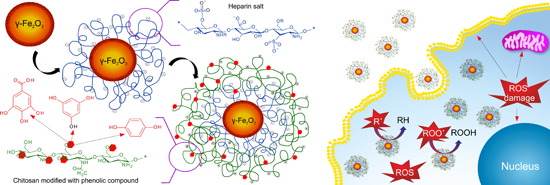
- catalyzed by metal-ion cofactors, such as iron, copper, zinc, and manganese [3]. The non-enzymatic antioxidant defense uses glutathione, vitamins C and E, melatonin, catecholamines, and substances of plant origin, such as phenols and carotenoids, to interrupt undesirable ROS action. Phenolic compounds are
- , phenolic compounds with a higher number of hydroxy groups have enhanced ROS scavenging capability. In addition to low-molecular-weight phenolic compounds of natural origin, some inorganic nanoparticles also have antioxidant properties, e.g., zinc, cerium, magnesium oxide, magnetite, and silver [6][7][8][9






Novel reversibly switchable wettability of superhydrophobic–superhydrophilic surfaces induced by charge injection and heating
Beilstein J. Nanotechnol. 2019, 10, 840–847, doi:10.3762/bjnano.10.84
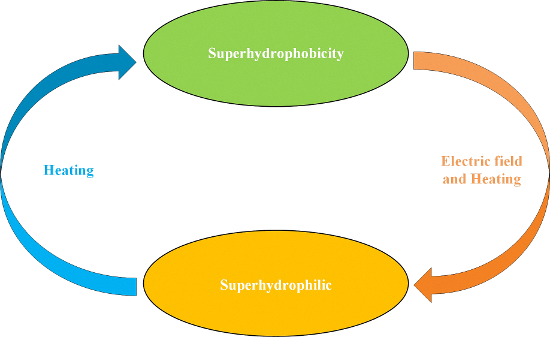
- contact angle of 0°. Li et al. [8] prepared a superhydrophobic and superhydrophilic zinc oxide film on a bamboo surface. The surface was irradiated by ultraviolet radiation/darkroom for 12 h. A storage period of ten days induced the reversible switching between superhydrophilicity and superhydrophobicity


Towards rare-earth-free white light-emitting diode devices based on the combination of dicyanomethylene and pyranine as organic dyes supported on zinc single-layered hydroxide
Beilstein J. Nanotechnol. 2019, 10, 760–770, doi:10.3762/bjnano.10.75
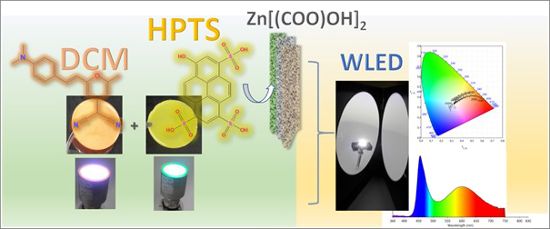
- -emitting diode (LED); pyranine; zinc hydroxyacetate; Introduction Light-emitting diode (LED) devices are the most developed lighting systems today. 95% of LEDs found on the market generate white light by combining the blue light of a semiconductor diode (GaN or InGaN) with the broad yellow emission of the
- +, Ni2+, Co2+ and Cu2+ and X represents an interfoliary anion such as acetate or nitrate. Similar to zinc basic salts, zinc hydroxyacetate Zn5(OH)8(CH3COO)2·2H2O (Zn-SLH) is a white solid that is suitable for our study. Thanks to its positive lamellar charge, Zn-SLH can serve as a diluting solid allowing
- based on Zinc cations [18]. The XRD data evidenced the presence of a single phase with the following lattice parameters: a = 0.312 nm, c = 3.98 nm and d = 1.33 nm. Structures of SLHs have been described by authors such as Rogez and co-workers [18]. The structure derived from botallackite or brucite


On the transformation of “zincone”-like into porous ZnO thin films from sub-saturated plasma enhanced atomic layer deposition
Beilstein J. Nanotechnol. 2019, 10, 746–759, doi:10.3762/bjnano.10.74
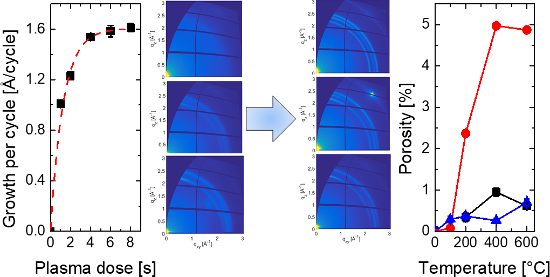
- /bjnano.10.74 Abstract The synthesis of nanoporous ZnO thin films is achieved through annealing of zinc-alkoxide (“zincone”-like) layers obtained by plasma-enhanced atomic layer deposition (PE-ALD). The zincone-like layers are deposited through sub-saturated PE-ALD adopting diethylzinc and O2 plasma with
- the formation of porosity was investigated with ellipsometric porosimetry (EP), already shown suitable for the determination of porosity in hybrid and polymer-derived oxides [12][18][29][42][43]. In the literature, few contributions investigate the transformation of zinc-based alkoxides into porous
- –OH absorption has to be attributed to increased formation of Zn–OH groups as a function of the plasma time. In Figure 2, the high-resolution XPS spectra of C 1s and O 1s are reported as a function of the plasma exposure time. In Table 1, the atomic content (atom %) of carbon, oxygen, and zinc are


Ultrathin hydrophobic films based on the metal organic framework UiO-66-COOH(Zr)
Beilstein J. Nanotechnol. 2019, 10, 654–665, doi:10.3762/bjnano.10.65
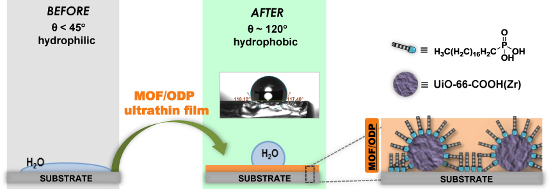
- in previous studies with other MOF [26] and zinc imidazolate frameworks [44] and can be explained by the limitation of the MOF activation conditions in our experimental setup (80 °C and atmospheric pressure). It can also be observed that the CO2 adsorption capacity of the pure UiO-66-COOH(Zr) film is


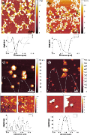
Biocompatible organic–inorganic hybrid materials based on nucleobases and titanium developed by molecular layer deposition
Beilstein J. Nanotechnol. 2019, 10, 399–411, doi:10.3762/bjnano.10.39
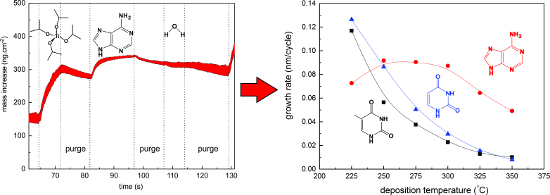
- gas phase. ALD was initially developed for production of thin films of zinc sulphide [10], and since its introduction in the 1970s, it has expanded to include a wide range of materials, including organic–inorganic hybrid compounds. In both ALD and MLD, the precursors are introduced onto the surface of




Geometrical optimisation of core–shell nanowire arrays for enhanced absorption in thin crystalline silicon heterojunction solar cells
Beilstein J. Nanotechnol. 2019, 10, 322–331, doi:10.3762/bjnano.10.31
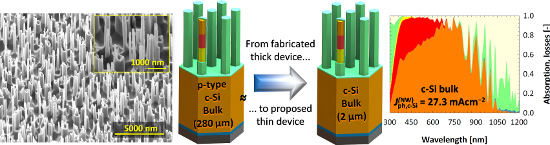
- . Multiple studies of nanowire solar cells can be found in literature, using different materials: indium phosphide [18][19], gallium arsenide [20][21], zinc oxide [15][22], crystalline silicon [6][8][11][12][13][16][17][23][24][25][26][27][28][29][30][31][32][33][34], amorphous silicon alloys [35][36][37


Site-specific growth of oriented ZnO nanocrystal arrays
Beilstein J. Nanotechnol. 2019, 10, 274–280, doi:10.3762/bjnano.10.26
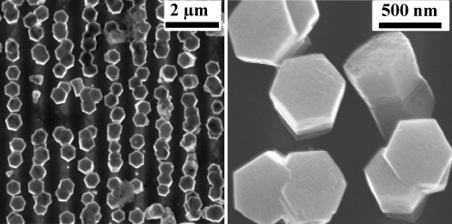
- ; growth kinetics; nanocrystals; nucleation; twinning; zinc oxide; Introduction Metal oxide semiconductor nanostructures are quite interesting not only in terms of the basic growth mechanism involved in their fabrication, but also due to the large number of applications based on them in the field of
- crystals forming the twin are almost of same dimensions, L and D. The obvious question is what gives rise to twin formation. The twin growth can be understood as follows. ZnO crystal structure consists of hexagonally close packed oxygen and zinc atoms. ZnO crystals consists of a top tetrahedron corner
- -exposed polar zinc (0001) face, six symmetric non-polar {} planes parallel to the [0001] direction, and a basal polar oxygen () face [17]. It is well known that the hexagonal wurtzite ZnO has two polar planes (0001) and (), which have high surface energy that can absorb new small particles to reduce its





