


Search results
Search for "FTIR" in Full Text gives 342 result(s) in Beilstein Journal of Nanotechnology. Showing first 200.
Internalization mechanisms of cell-penetrating peptides
Beilstein J. Nanotechnol. 2020, 11, 101–123, doi:10.3762/bjnano.11.10
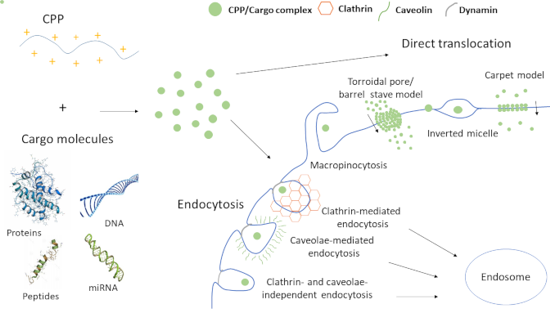
- the cell membrane has been crossed. It was demonstrated that the free form of Pep-1 interacts strongly with the lipid components in the membrane, leading to a conformational change – the peptide tends to form α-helices. The conformational transitions have been confirmed by CD, NMR and FTIR data. The


Fully amino acid-based hydrogel as potential scaffold for cell culturing and drug delivery
Beilstein J. Nanotechnol. 2019, 10, 2579–2593, doi:10.3762/bjnano.10.249
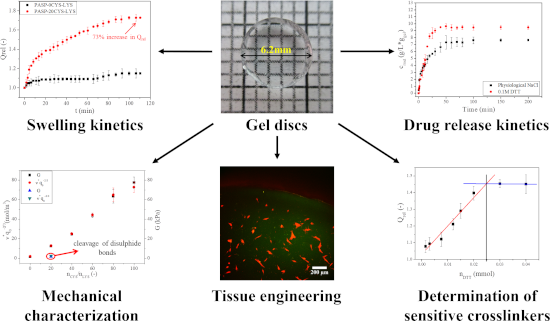
- shrink. Between pH 6 and 8, the swelling degrees abruptly rise as the polymer networks are hydrolyzed. The successful hydrolysis was proved by FTIR spectroscopy (Supporting Information File 1, Figure S2). This kind of abrupt change was described in previous articles, where other molecules or only LYS


pH-Controlled fluorescence switching in water-dispersed polymer brushes grafted to modified boron nitride nanotubes for cellular imaging
Beilstein J. Nanotechnol. 2019, 10, 2428–2439, doi:10.3762/bjnano.10.233
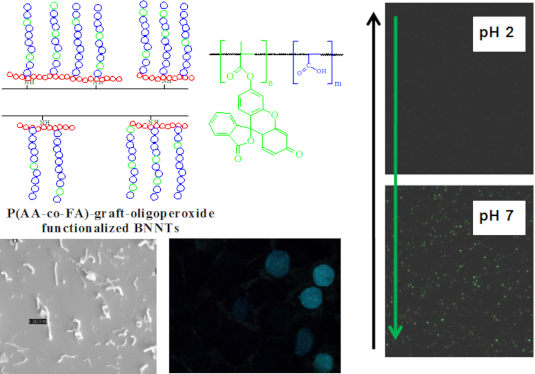
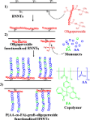
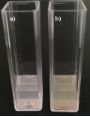
- thermogravimetric analysis (TGA), Fourier transform infrared spectroscopy (FTIR), dynamic light scattering (DLS), ultraviolet–visible spectrophotometry (UV–vis), laser scanning confocal microscopy (LSCM) and scanning electron microscopy (SEM). The DLS results demonstrated that P(AA-co-FA)-functionalized BNNTs
- heated from 30.00 to 600.00 °C at 10 °C/min. Fourier transform infrared spectroscopy (FTIR) FTIR spectra were recorded on a NICOLET iS50 FTIR spectrometer (Thermo Scientific, USA), equipped with a iS50 ATR multirange, diamond sampling station. The sample powders were either placed on diamond crystal or
- spectroscopic, gravimetric and imaging techniques including FTIR, UV–vis, DLS, TGA, LSCM and SEM. The fabrication of the oligoperoxide-functionalized BNNTs was described in detail in our previous publication [12] and here we focus on the synthesis and properties of the P(AA-co-FA)-functionalized BNNTs. The


Multiwalled carbon nanotube based aromatic volatile organic compound sensor: sensitivity enhancement through 1-hexadecanethiol functionalisation
Beilstein J. Nanotechnol. 2019, 10, 2364–2373, doi:10.3762/bjnano.10.227
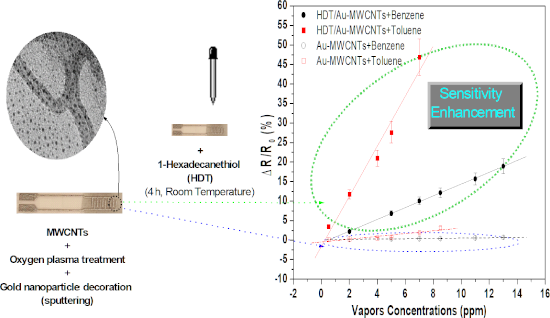
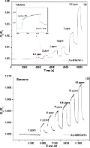
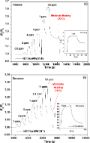
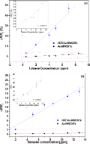
- spectroscopy (FTIR) were performed to characterize the gold nanoparticle decoration and to examine the thiol monolayer bonding to the MWCNTs. The detection of aromatic vapours using Au-MWCNT and HDT/Au-MWCNT sensors down to the ppm range shows that the presence of the self-assembled layer increases the
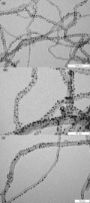
- [20]. Figure 1 shows the synoptic structure of the sensor before and after the HDT deposition. HRTEM and FTIR characterisation The analysis of the quantity and distribution of the gold nanoparticles attached to the MWCNTs was undertaken with a high-resolution transmission electron microscope (JEOL
- 1011), operating at 100 kV. An Alpha FTIR spectrometer (Bruker, France) equipped with an ATR platinum crystal diamond module was used, in absorbance mode, to obtain the infrared spectra of the gold-decorated MWCNTs before and after the deposition of the SAM monolayer. This technique provides useful




Nontoxic pyrite iron sulfide nanocrystals as second electron acceptor in PTB7:PC71BM-based organic photovoltaic cells
Beilstein J. Nanotechnol. 2019, 10, 2238–2250, doi:10.3762/bjnano.10.216
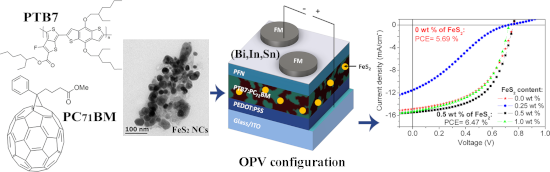
- transform infrared (FTIR) spectra of the PTB7:PC71BM blend at different concentrations of FeS2. The band at 1727 cm−1, corresponding to the C=O stretching mode in PTB7:PC71BM [52], becomes ≈15 cm−1 wider upon the incorporation of FeS2. Specifically at 1 wt % of FeS2, the band at 1736 cm−1 becomes larger
- concentrations (0, 0.25, 0.5 and 0.1 wt %) spin-coated onto a corning glass at 1900 rpm for 60 s in order to obtain similar thickness (≈100 nm). We used a commercial UV–vis spectrometer (Lambda 900, Perkin Elmer Instruments). FTIR spectra were recorded with a Frontier MIR spectrophotometer (Perkin Elmer). The
- ITO (reference, black) and FeS2 NCs in TBAPF6 0.1 M at 100 mV s−1 (blue: anodic zone, red: cathodic zone). b) Flat energy diagram of the organic materials and FeS2 used for OPV fabrication [21]. a) UV–vis absorption and b) FTIR spectra of the blend PTB7:PC71BM at different FeS2 concentrations: 0.0


Targeted therapeutic effect against the breast cancer cell line MCF-7 with a CuFe2O4/silica/cisplatin nanocomposite formulation
Beilstein J. Nanotechnol. 2019, 10, 2217–2228, doi:10.3762/bjnano.10.214
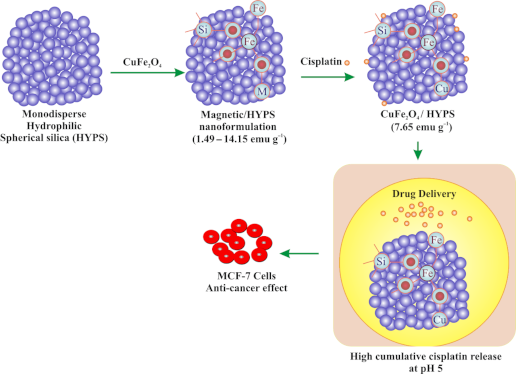
- saline solution. The presence of cubic spinel CuFe2O4 on HYPS was confirmed through powder X-ray diffraction (PXRD), Fourier transform infrared spectroscopy (FTIR) and diffuse reflectance UV–vis spectroscopy (DR UV–vis) analysis. The HYPS particles showed a surface area of 170 m2/g, pore size of 8.3 nm
- . Copper ferrite and cisplatin functional groups were identified using FTIR using ATR technology (Perkin Elmer, USA). The morphological features of the nanoformulations were identified by SEM and TEM. The elemental distribution in the samples was investigated using SEM-EDS. SEM was performed using a JSM
- nanoparticles at the pores of HYPS. The FTIR technique was used to confirm the bonding and vibrational modes of copper ferrite with silica (Figure 3). The FTIR spectra of HYPS showed several peaks corresponding to Si–O–Si stretching and vibration, hydroxyl and Si–O bonding around 432 cm−1, 800 cm−1 and between


Use of data processing for rapid detection of the prostate-specific antigen biomarker using immunomagnetic sandwich-type sensors
Beilstein J. Nanotechnol. 2019, 10, 2171–2181, doi:10.3762/bjnano.10.210

- spectroscopy (FTIR), field-emission scanning electron microscopy (FE-SEM), energy-dispersive X-ray spectroscopy (EDX), and polarization-modulated infrared reflection absorption spectroscopy (PM-IRRAS, Figure S1) is described. The Silhouette coefficients calculated for IDMAP, Sammon’s mapping (SM), principal


Improved adsorption and degradation performance by S-doping of (001)-TiO2
Beilstein J. Nanotechnol. 2019, 10, 2116–2127, doi:10.3762/bjnano.10.206
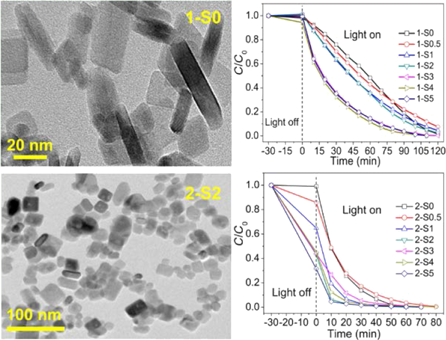
- probed by Fourier-transform infrared (FTIR) spectroscopy (Vertex 80/Hyperion2000, Bruker, Germany). The Brunauer–Emmett–Teller (BET) specific surface areas were calculated based on the N2 adsorption–desorption isotherms measured at 77 K using a gas adsorption apparatus (Autosorb-iQ, Quantachrome
- with the (004) crystal face. FTIR spectra were measured for all the samples. Figure 3 shows the results of the samples with RS/Ti = 0, 2 and 5. The positions of the absorption peaks and the corresponding assignments to vibrational modes are listed in Table 2. In contrast to the undoped 1-S0 and 2-S0
- . Conclusion S-doped (001)-TiO2 with different RS/Ti were synthesized by thermal chemical vapor deposition at 180 and 250 °C and systematically characterized by XRD, TEM, FTIR, XPS, UV–vis DRS, PL, BET and ESR. The S-doped sample produced at 180 °C shows little changes in the structure, morphology, chemical




Optimization and performance of nitrogen-doped carbon dots as a color conversion layer for white-LED applications
Beilstein J. Nanotechnol. 2019, 10, 2004–2013, doi:10.3762/bjnano.10.197
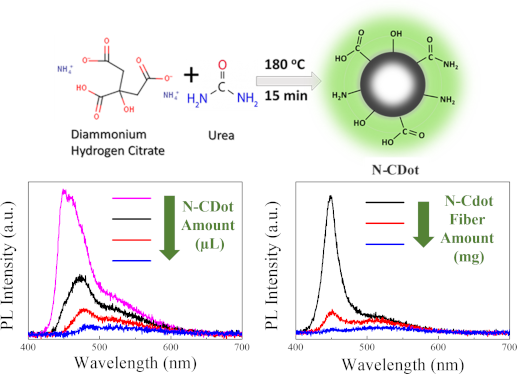
- -Alpha XPS spectrometer. Fourier-transform infrared spectroscopy (FTIR; Spectrum 100, PerkinElmer, Shelton, CT, USA) was used to characterize the kinetic behavior of the chemical bonds. Photoluminescence (PL) and absorbance were measured using an integrating sphere (ISP-50-80-R, Ocean Optics Inc
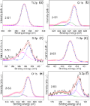
- (002) plane. Further information on the characterization of the CDots together with an extended discussion of the XPS results (Figure S1), the results of the FTIR study (Figure S2a) and absorption and PL spectra (Figure S2b) can be found in Supporting Information File 1 (Section I). White-light
- varying amounts of the PVP/N-CDot fibers. Supporting Information Section I – XPS full scan spectrum of nitrogen-doped CDots; high-resolution C 1s, N 1s, and O 1s XPS spectra of nitrogen-doped CDots; FTIR, absorption and PL spectra of N-CDots in solution; Section II – Response of the varying amount of N


Porous silver-coated pNIPAM-co-AAc hydrogel nanocapsules
Beilstein J. Nanotechnol. 2019, 10, 1973–1982, doi:10.3762/bjnano.10.194
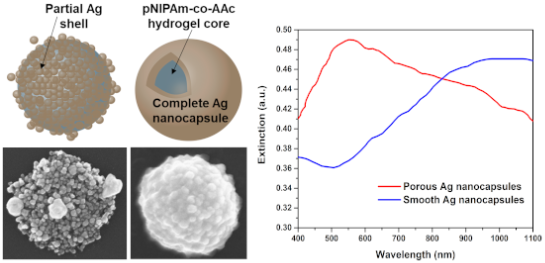
- . The morphology and composition of the composite nanoparticles were characterized by SEM, TEM, and FTIR, respectively. UV–vis spectroscopy was used to characterize the optical properties. Keywords: hydrogels; nanocapsules; photothermal delivery; poly(NIPAM); porous silver shells; Introduction
- of pDADMAC on the hydrogel particle surface, we analyzed the particles with Fourier transform infrared (FTIR) spectroscopy. Figure 1f shows the absorption spectra of pure pDADMAC and the modified hydrogel particles. The existence of stretching associated with the CH3 components at ≈1465 cm−1 and
- consistently uniform shape due to the soft hydrogel core, as discussed previously. As expected, without the addition of pDADMAC onto the surface of the hydrogel particles, insufficient seeding of the hydrogel cores was observed (data not shown). Thus, the FTIR spectra demonstrate the pDADMAC modification of


High-tolerance crystalline hydrogels formed from self-assembling cyclic dipeptide
Beilstein J. Nanotechnol. 2019, 10, 1894–1901, doi:10.3762/bjnano.10.184
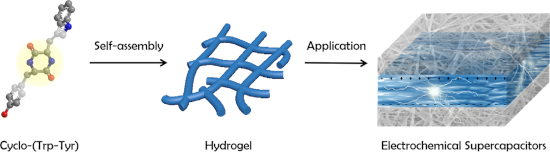
- ) (Figure 1A). The hydrogen bonding interactions between the C-WY molecules were investigated by Fourier-transform infrared spectroscopy (FTIR). Compared with the peak of amide N–H stretching located at 3344 cm−1 of the unimolecular C-WY, the hydrogel has a red-shifted amide N–H stretching band located at
- of CDPs can be valuable candidates for applications in harsh environments. CDP-based supramolecular hydrogels. (A) The structure of C-WY and a photo of the C-WY hydrogel. (B) FTIR spectra of C-WY powder and the C-WY hydrogel. (C) SEM and (D) TEM images of the C-WY hydrogel. Interior structure and


Long-term entrapment and temperature-controlled-release of SF6 gas in metal–organic frameworks (MOFs)
Beilstein J. Nanotechnol. 2019, 10, 1851–1859, doi:10.3762/bjnano.10.180
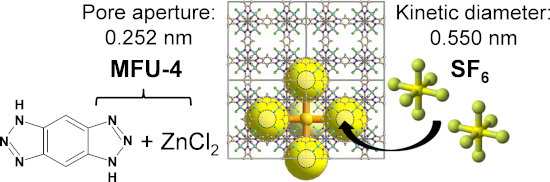
- infrared (FTIR) and 19F nuclear magnetic resonance (NMR) spectroscopy. SF6 is an inert, nonflammable and nontoxic gas, which is known to be an excellent dielectric gas for high-voltage applications [15][16]. At the same time, it is also known as one of the most severe greenhouse gases [17][18]. Therefore
- molecules left in the pores, thus ensuring that the whole pore volume was available for trapping the SF6 guest. The bulk sample was analyzed before and after the gas loading by conventional analytical methods, including FTIR, powder X-ray diffraction (XRD) and thermogravimetric analysis (TGA). SF6-loading
- of a guest released from a porous material. The determined value of the activation energy was further compared to the results obtained from computational simulations (see the dedicated section later in the text). To qualify the guest, we used FTIR spectroscopy (Figure 2 and Figure S5 in Supporting


Processing nanoporous organic polymers in liquid amines
Beilstein J. Nanotechnol. 2019, 10, 1844–1850, doi:10.3762/bjnano.10.179
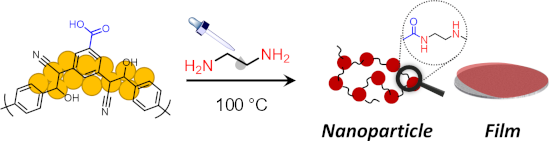
- challenging. Herein, we report that nanoporous polymers made via a Knoevenagel-like condensation can be easily processed into nanoparticles (115.7 ± 40.8 nm) or a flawless film by using liquid amines as a solvent at elevated temperatures. FTIR spectra revealed that the carboxyl groups in the nanoporous
- amines in a few seconds, and the resulting polymer solution was able to be transformed into either nanoparticles or flawless films. This new feature of processibility was underpinned by FTIR, in which the formation of amide groups between the carbonyl units on nanoporous polymers and the alkylamines was
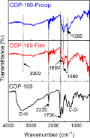
- of EDA on the nitrile groups by a nucleophilic attack [23], so that the alkylamine chain connected to the nitrile functionality can increase the polarity of the polymeric chains, making COP-100 soluble. However, as shown in Figure 4, FTIR spectra of COP-100, COP-100-Film, and COP-100-Precip. showed



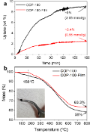
Biocatalytic oligomerization-induced self-assembly of crystalline cellulose oligomers into nanoribbon networks assisted by organic solvents
Beilstein J. Nanotechnol. 2019, 10, 1778–1788, doi:10.3762/bjnano.10.173

- discussed further below. The crystal structure of the representative products was analyzed by X-ray diffraction (XRD) measurements and attenuated total reflection Fourier-transform infrared (ATR-FTIR) absorption spectroscopy. The XRD profiles showed three peaks at 2θ (θ is the Bragg angle) of 12.2, 19.9
- , and 22.1° (Figure 7), which corresponded to 110, and 020 of the cellulose II allomorph, respectively [30]. In addition, the ATR-FTIR absorption spectra showed two characteristic peaks for the intrachain hydrogen-bonded hydroxyl groups in the cellulose II allomorph [51] at approximately 3441 and 3490
- dispersions was dried at 105 °C for 24 h, followed by weighing. For 1H NMR spectroscopy, ATR-FTIR absorption spectroscopy, and XRD measurements, as much as possible of the supernatant after the final centrifugation was removed by pipette, followed by adding water to the products. The resultant product aqueous


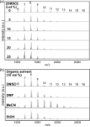


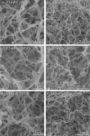

TiO2/GO-coated functional separator to suppress polysulfide migration in lithium–sulfur batteries
Beilstein J. Nanotechnol. 2019, 10, 1726–1736, doi:10.3762/bjnano.10.168
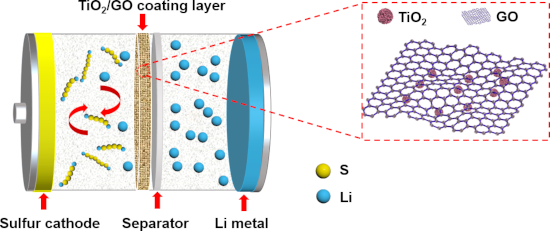
- after 12 hours. Hence, the TiO2/GO-coated separator effectively adsorbed and blocked the transportation of Li2S6. Raman and Fourier-transform infrared spectroscopy (FTIR) analysis was carried out to understand the interaction between TiO2/GO and polysulfides (Figure 10). The TiO2/GO composite was
- treated with a Li2S6 electrolyte (1.0 M/0.1 M LiTFSI/LiNO3 in DOL and DME (1:1 v/v)) via immersion for 12 h; the Li2S6-treated TiO2/GO material was then obtained after centrifugal separation and vacuum drying. Raman and FTIR studies of the Li2S6-treated TiO2/GO material clearly show the existence of an S
- –S stretching band at 470 cm−1, indicating that Li2S6 was absorbed on the surfaces of the TiO2/GO composite [46]. The Raman band at 745 cm−1 relates to a typical characteristic feature of LiTFSI in electrolyte [47]. A band that appeared at 801 cm−1 in the FTIR spectrum can be attributed to the S–O–C


Novel hollow titanium dioxide nanospheres with antimicrobial activity against resistant bacteria
Beilstein J. Nanotechnol. 2019, 10, 1716–1725, doi:10.3762/bjnano.10.167
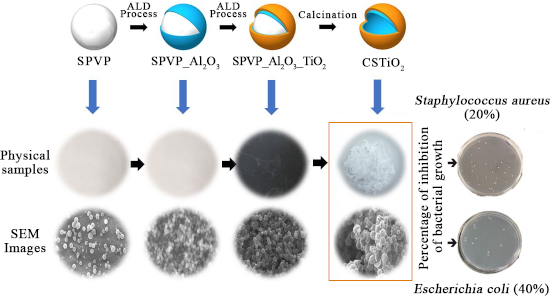
- chemical composition was also performed by Fourier-transform infrared spectroscopy (FTIR) in order to study the main functional groups of the sample (data found in Supporting Information File 1). Thermogravimetric analysis (TGA) curves representing the mass loss with respect to temperature of SPVP, coated


Layered double hydroxide/sepiolite hybrid nanoarchitectures for the controlled release of herbicides
Beilstein J. Nanotechnol. 2019, 10, 1679–1690, doi:10.3762/bjnano.10.163
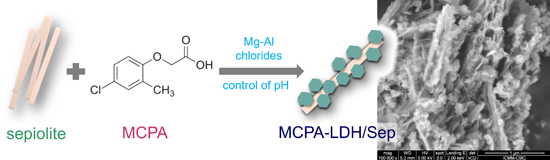
- techniques (XRD, FTIR and 29Si NMR spectroscopies, CHN analysis and SEM) that revealed interactions of LDH with the sepiolite fibers through the silanol groups present on the outer surface of sepiolite, together with the intercalation of MCPA in the LDH confirmed by the increase in the basal spacing from
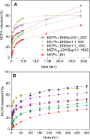
- is intercalated in the LDH [37][38]. FTIR spectra (Figure 2B) shows bands ascribed to the organic component in all of the hybrid nanoarchitectures, although, as occurs in the MCPAie-LDH intercalation compound, interactions with the inorganic substrate modified the position of the bands. This affects
- nanoarchitectures [31]. The small differences observed in the FTIR and NMR spectra of hybrid nanoarchitectures prepared by consolidation at 60 and 150 °C indicate the high stability of the prepared materials after both thermal treatments. This confirms the possibility of consolidating the hybrid nanoarchitectures


Chiral nanostructures self-assembled from nitrocinnamic amide amphiphiles: substituent and solvent effects
Beilstein J. Nanotechnol. 2019, 10, 1608–1617, doi:10.3762/bjnano.10.156
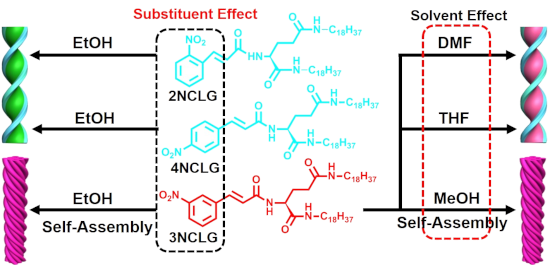
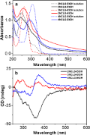
- result indicates that the NCLG assemblies might form a bilayer structure with high interdigitation of the alkyl chains, where the bilayer structure experiences a large tilt. Fourier-transform infrared (FTIR) spectra In order to elucidate the formation mechanism of the helicity and nanostructures of the
- self-assembled molecules, FTIR spectroscopy was employed to evaluate the formation mechanism of self-assembly. As shown in Figure 5, for the 2NCLG and 4NCLG assemblies, two absorption bands at ≈3330 cm−1 and ≈3284 cm−1 were observed, which can be ascribed to the N–H stretching vibration. While for
- vibration of the nitro group, respectively. The absorption bands at ≈970–980 cm−1 were assigned to trans-vinylene C–H out-of-plane deformations and the ≈779–785 cm−1 absorption bands were attributed to cis-vinylenene C–H out-of-plane deformations. The detailed information of the FTIR spectra is given in




Materials nanoarchitectonics at two-dimensional liquid interfaces
Beilstein J. Nanotechnol. 2019, 10, 1559–1587, doi:10.3762/bjnano.10.153
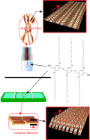
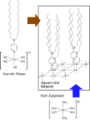
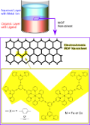
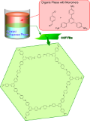
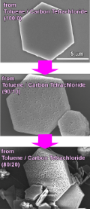
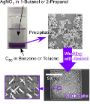
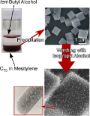
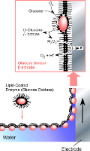
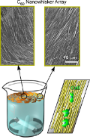
- water phase, yielding a monolayer sheet of the two-dimensional nickel–iron cyanide grid network. Characterizations of the extended network by X-ray photoelectron spectroscopy (XPS), FTIR spectroscopy, SQUID magnetometry, X-ray absorption fine structure (XAFS), and grazing incidence synchrotron X-ray













High-temperature resistive gas sensors based on ZnO/SiC nanocomposites
Beilstein J. Nanotechnol. 2019, 10, 1537–1547, doi:10.3762/bjnano.10.151
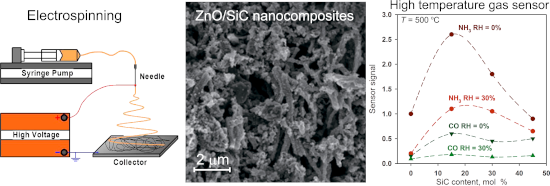
- the components in a single homogeneous paste with subsequent thermal annealing. The composition and microstructure of the materials were characterized by X-ray diffraction (XRD), scanning electron microscopy (SEM), Fourier-transform infrared spectroscopy (FTIR) and X-ray photoelectron spectroscopy
- the SiC peaks naturally increases with increasing silicon carbide content in the nanocomposites. The study of the surface composition of the synthesized materials was carried out using FTIR and XPS methods. Figure 4 shows the IR absorption spectra of ZnO, SiC, and ZnO/SiC nanocomposites. The spectrum
- vibrations of the C–O bond in CO2 molecules adsorbed on the ZnO surface (2430–2320 cm−1) and C–H bonds (2920–2840 cm−1) in the residues of the organic components used in the synthesis of ZnO nanofibers. The FTIR absorption spectrum of the SiC sample contains two intense peaks with absorption maxima at 900 cm



The effect of magneto-crystalline anisotropy on the properties of hard and soft magnetic ferrite nanoparticles
Beilstein J. Nanotechnol. 2019, 10, 1348–1359, doi:10.3762/bjnano.10.133
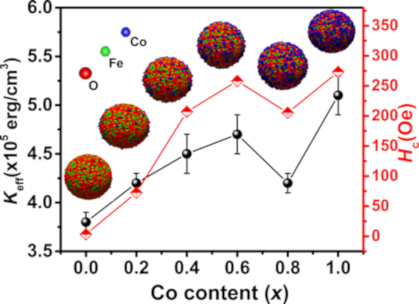
- presence of Fe, Co and O in the samples. The atomic ratio Co/Fe obtained from EDX is in a good agreement with the theoretical stoichiometry for all samples (Figure 4d). Infrared spectra The formation of the spinel phase and its crystal structure were verified by Fourier-transform infrared (FTIR) spectra
- measured at 300 K in the wave number range of 400–4000 cm−1. Figure 5 shows the FTIR spectra of the samples. The absorption band observed at around 3385 cm−1 is attributed to the vibration mode of the O–H groups in the H2O molecules. The peak observed at around 1556 cm−1 is ascribed to amide II (NH2
- used for FTIR analysis. Two main absorption bands are observed at frequencies below 1000 cm−1. The band around 569 cm−1 and the band around 444 cm−1 are related to the vibration of metal–oxygen (Me–O) bonds at tetrahedral and octahedral sites, respectively [28][29]. The presence of these two bands


Janus-micromotor-based on–off luminescence sensor for active TNT detection
Beilstein J. Nanotechnol. 2019, 10, 1324–1331, doi:10.3762/bjnano.10.131
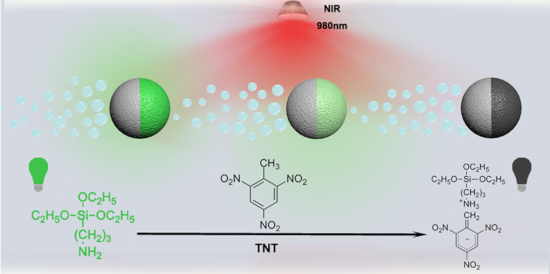
- groups on the surface of the UCNPs were illustrated by Fourier-transform infrared (FTIR) spectroscopy. Figure 1c shows the FTIR spectra of the UCNPs and APTES-UCNPs. Compared with the FTIR spectrum of unmodified UCNPs, a notable transmission band peak at 1128 cm−1 (blue circle), attributable to the Si–O
- stretching vibration, can be seen in the FTIR spectra of APTES-UCNPs. These results indicate that the UCNPs were successfully modified with APTES. It has been demonstrated that the amine group is important to allow UCNPs to detect TNT. To verify the functionalization of the APTES-UCNPs with amine groups, the
- observed using a Hitachi H-7650 microscope. UV−vis absorption spectra were recorded using a Hitachi U-4100 spectrophotometer. FTIR spectra were collected in the wavelength range from 4000 to 500 cm−1 by a Thermo Fisher 4700 Fourier transform infrared spectrophotometer with the KBr method. Upconversion


A biomimetic nanofluidic diode based on surface-modified polymeric carbon nitride nanotubes
Beilstein J. Nanotechnol. 2019, 10, 1316–1323, doi:10.3762/bjnano.10.130
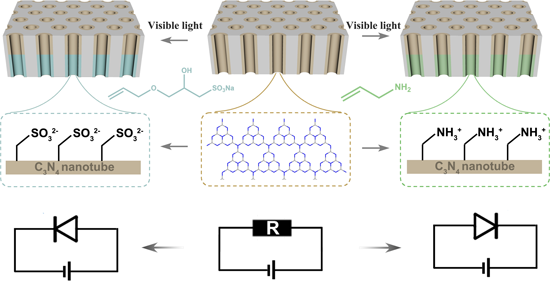
- diameter of about 100 nm, and an inner diameter of about 60 nm. The chemical structure of carbon nitride nanotubes was further analyzed using FTIR (Figure 2b). The bare AAO substrate showed no obvious absorption peaks, while CNNM@AAO showed broad peaks between 3500 and 3000 cm−1, which originate from the
- shows the existence of sulfur atoms on the surface while unmodified side only contains carbon and nitrogen (Figure S6, Supporting Information File 1). The AHPA modification was also confirmed by FTIR spectra recorded before and after modification (Figure 4c). After modification, there is an obvious peak
- near 2950 cm−1, which corresponds to the C–H bond stretching, originating from grafted AHPA molecules. In the case of the AA-modified membrane, FTIR spectra showed similar phenomena before and after modification (Figure 4c). The obtained results showed that AHPA and AA molecules are grafted


Multicomponent bionanocomposites based on clay nanoarchitectures for electrochemical devices
Beilstein J. Nanotechnol. 2019, 10, 1303–1315, doi:10.3762/bjnano.10.129
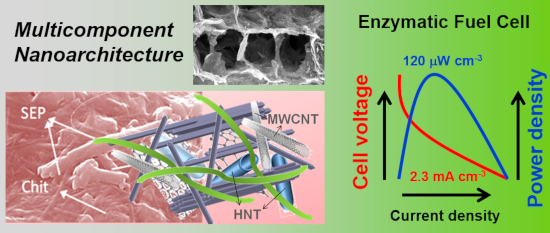
- . The enzyme immobilization was also confirmed by FTIR spectroscopy (Figure S6 and Table S1, Supporting Information File 1). The HNT–GOx spectrum clearly shows the presence of bands assigned to the symmetric stretching of C–H aliphatic groups and the amide groups of GOx [60]. In particular, there is no
- Philips XL 30 S-FEG microscope. Before examination, the samples were fractured in liquid nitrogen. The FTIR spectra of HNT-GOx samples were acquired with a BRUKER iFS spectrophotometer 66Vs. X-ray diffractograms were obtained with a D8-ADVANCE diffractometer (Bruker), using Cu Kα radiation. The voltage



CuInSe2 quantum dots grown by molecular beam epitaxy on amorphous SiO2 surfaces
Beilstein J. Nanotechnol. 2019, 10, 1103–1111, doi:10.3762/bjnano.10.110
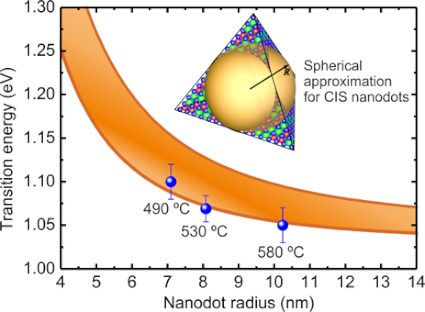
- ]/[In] ratio of the samples, and to validate the oxidized nature of the substrate surface. Photoluminescence (PL) experiments were carried out with Bruker IFS 66v Fourier-transform infrared (FTIR) spectrometer, equipped with a liquid nitrogen cooled Ge diode detector for which the spectral range of





