Search results
Search for "Si substrate" in Full Text gives 213 result(s) in Beilstein Journal of Nanotechnology. Showing first 200.
Relationships between chemical structure, mechanical properties and materials processing in nanopatterned organosilicate fins
Beilstein J. Nanotechnol. 2017, 8, 863–871, doi:10.3762/bjnano.8.88

- before patterning using a Thermo Scientific Nicolet 6700 FTIR spectrometer and deuterated L-alanine doped triglycine sulfate (DLaTGS) detector. The spectra were acquired from 400–7000 cm−1 with 4 cm−1 resolution and the signal was averaged over 128 scans. The absorption spectrum of the Si substrate and



Investigation of growth dynamics of carbon nanotubes
Beilstein J. Nanotechnol. 2017, 8, 826–856, doi:10.3762/bjnano.8.85
- SiCl4. As soon as the liquid alloy particle was supersaturated, the growth of the whisker started. It occurred by the precipitation of Si atoms from the droplet at the interface between solid Si and liquid alloy. As a result, the alloy droplet was displaced from the Si substrate crystal to the tip of


3D Nanoprinting via laser-assisted electron beam induced deposition: growth kinetics, enhanced purity, and electrical resistivity
Beilstein J. Nanotechnol. 2017, 8, 801–812, doi:10.3762/bjnano.8.83
- using an FEI NOVA 600 dual-beam system equipped with multiple gas injection systems (GIS). Before loading the Si substrate, it was cleaned via sonication in acetone for 5 minutes and rinsed in isopropanol before drying. The precursor gas was injected using a FEI GIS and the temperature was held at 45 °C


Self-assembly of silicon nanowires studied by advanced transmission electron microscopy
Beilstein J. Nanotechnol. 2017, 8, 440–445, doi:10.3762/bjnano.8.47
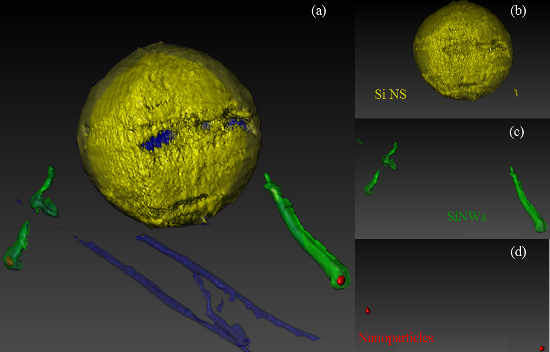
- SiNS (indicated by the arrow). This indicates the Si substrate on which the NWs grow before further oxidation occurs, which is induced by the oxygen present in the ICP chamber. Indeed, the oxygen derives from the native oxide of the Si powder feedstock, which is released during the spheroidization
- crystalline Si substrate. Hence, we conclude that the VLS mechanism is responsible for the growth of short SiNWs in the above-described ICP process, provided that a small amount of Fe is present during the spheroidization process. In this way, the ICP technique can be seen as a prospect for the synthesis of


Fabrication of black-gold coatings by glancing angle deposition with sputtering
Beilstein J. Nanotechnol. 2017, 8, 434–439, doi:10.3762/bjnano.8.46
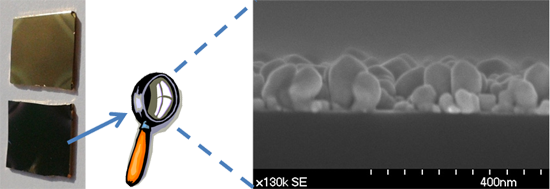
- the samples are responsible for their different appearance shown in Figure 2 and their distinctive spectral behavior presented in Figure 4, where the reflectance of the samples with black and golden color is plotted. For the sake of comparison, the calculated reflectance of a bare Si substrate and
- black color (a) and golden color (b). For the sake of comparison, the calculated spectra of a bare Si substrate (cyan) and a continuous Au thin film (red) have been also included. (a) Photograph of two samples prepared onto MgO substrates: a continuous Au thin film prepared with σ = 0° (left) and a


In-situ monitoring by Raman spectroscopy of the thermal doping of graphene and MoS2 in O2-controlled atmosphere
Beilstein J. Nanotechnol. 2017, 8, 418–424, doi:10.3762/bjnano.8.44
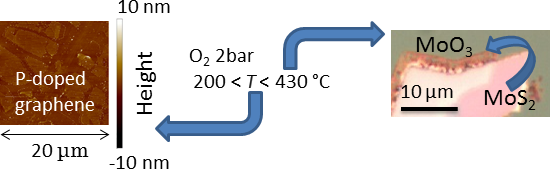
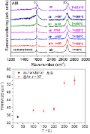
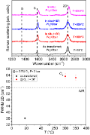
- ) layer on Si substrate of the same kind used for Gr [11]. Flakes of lateral size larger than 10 μm, and thickness ranging from 10 to 100 nm were typically obtained by this procedure. In situ Raman measurements and thermal treatment up to 430 °C were carried out with the same equipment used for Gr


Impact of contact resistance on the electrical properties of MoS2 transistors at practical operating temperatures
Beilstein J. Nanotechnol. 2017, 8, 254–263, doi:10.3762/bjnano.8.28
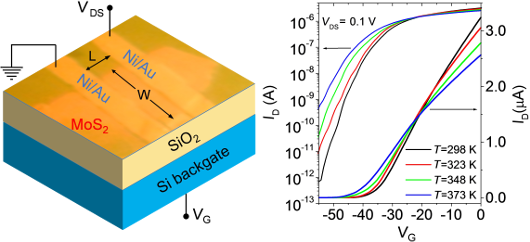
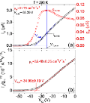
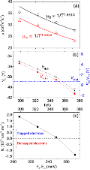
- Back-gated transistors were fabricated using MoS2 flakes exfoliated from molybdenite bulk crystals (supplier SPI [19]) with thicknesses ranging from ≈40 to ≈50 nm and transferred onto a highly doped n-type Si substrate covered with 380 nm of thermally grown SiO2. An accurate sample preparation protocol
- from 298 to 373 K was determined and the physical mechanisms of these dependences were discussed. Results and Discussion Back-gated transistors have been fabricated using multilayer MoS2 flakes (with thickness ranging from ≈40 to ≈50 nm) exfoliated from bulk molybdenite crystals onto a highly doped Si
- substrate covered with 380 nm thick, thermally grown SiO2. Such relatively thick MoS2 samples have been chosen since it has been reported that the electrical properties (μ, Vth) of simple back-gated transistors fabricated with multilayer MoS2 are much less affected by the effect of the external environment




Colorimetric gas detection by the varying thickness of a thin film of ultrasmall PTSA-coated TiO2 nanoparticles on a Si substrate
Beilstein J. Nanotechnol. 2017, 8, 229–236, doi:10.3762/bjnano.8.25
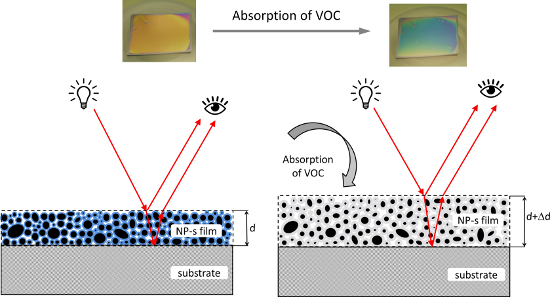
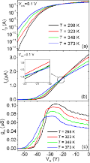
- ultrasmall TiO2 nanoparticles (NPs) for a colorimetric gas sensor. The functional thin film is extremely simple, consisting of TiO2 NPs and the elastic binding agent p-toluenesulfonic acid (PTSA) on a Si substrate. It is not necessary to use particles with narrow size distributions of diameters in well
- from the film/substrate interface, as schematically demonstrated in Figure 2. The functional thin film is extremely simple, consisting of TiO2 NPs (the mean size of 3 nm was measured by TEM and DLS, Figure 3a and Figure 3e) and the binding agent PTSA on a Si substrate. It is a colorimetric gas sensor


Influence of hydrofluoric acid treatment on electroless deposition of Au clusters
Beilstein J. Nanotechnol. 2017, 8, 183–189, doi:10.3762/bjnano.8.19
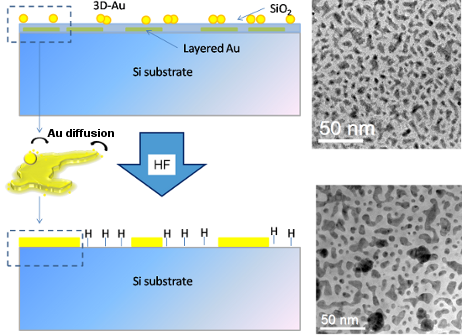
- uniformly assemble on the Si substrate with elongated and wide structures of a few tens of nanometers long. After 4 min in DHF (Figure 2b), they arrange as small particles of spherical shape with a radius of less than 10 nm. Although the images were taken in bright field mode, a huge mass contrast between
- , showed the presence of randomly oriented Au clusters coexisting with the heteroepitaxial regions on the Si substrate. Moreover, the shape of the (200) diffraction peak indicates that two families of grains, both exhibiting texturing in the [001] crystallographic direction, are present. The deconvolution
- TEM micrographs of AuNPs electroless deposited on a Si substrate by immersion for 3 s in the solution after a DHF pretreatment of 240 s; sample preparation (a) standard high energy and (b) gentle milling procedure. Gold electroless deposition on Si(100) after an DHF pretreatment of 10 s (a) and 240 s


Nitrogen-doped twisted graphene grown on copper by atmospheric pressure CVD from a decane precursor
Beilstein J. Nanotechnol. 2017, 8, 145–158, doi:10.3762/bjnano.8.15
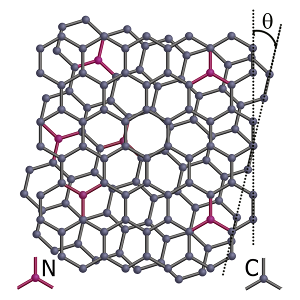
- the insets to Figures Figure 2a and Figure 2b the 2D peaks are shown revealing the symmetry of the 2D band. The latter indicates the weak interlayer interaction, which will be discussed later. In Figure 3a we demonstrate the Rayleigh image of sample A transferred to a SiO2/Si substrate. Raman mapping
- 1588 cm−1 against 1580 cm−1 for SLG [25]. Figure 5a–d shows Raman maps (400 points) of sample B transferred onto a SiO2/Si substrate. The corresponding histograms are presented in Figure 6a–d. A single Raman spectrum was accumulated for 10 s with a laser wavelength of 473 nm and a beam diameter of
- partitioning procedure following different parameters (this result is not shown here). The obtained results are in reasonable agreement with each other. Therefore, in order to demonstrate the universality of the elaborated method, for sample B on a SiO2/Si substrate, the Raman data set splitting was based on


Ordering of Zn-centered porphyrin and phthalocyanine on TiO2(011): STM studies
Beilstein J. Nanotechnol. 2017, 8, 99–107, doi:10.3762/bjnano.8.11
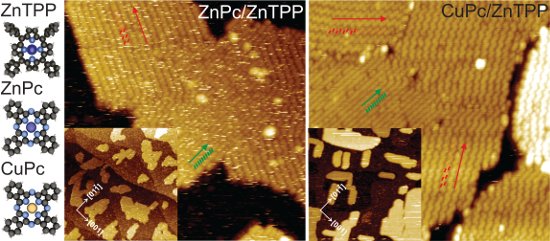
- role, the mechanism involved in such an interaction was concerned with the specific p–d orbital coupling between the localized Si substrate pz states on the B-passivated Si(111) surface and the metal atom at the center of the flat laying phthalocyanine molecule. This type of mechanism is not applicable


Sub-nanosecond light-pulse generation with waveguide-coupled carbon nanotube transducers
Beilstein J. Nanotechnol. 2017, 8, 38–44, doi:10.3762/bjnano.8.5
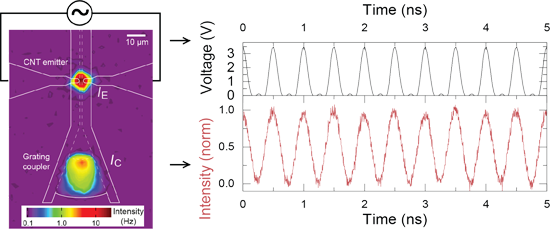
- electron beam lithography on top of Si3N4/SiO2/Si substrate. Au/Cr contacts were produced by physical vapor deposition, and 600 nm wide, half-etched Si3N4-waveguides were formed with reactive ion etching. A typical sample contains tens of contact pairs and CNTs that were placed in between using


Annealing-induced recovery of indents in thin Au(Fe) bilayer films
Beilstein J. Nanotechnol. 2016, 7, 2088–2099, doi:10.3762/bjnano.7.199
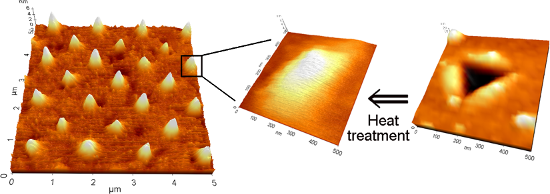
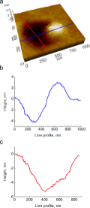
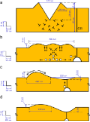
- temperature range of 250–450 °C [3]. It should be noted that in all three works [1][2][3] the maximum indentation depth was larger than the metal film thickness, which resulted in significant modification of the Si substrate. Still, the microscopic mechanisms responsible for redistribution of matter in the





Cubic chemically ordered FeRh and FeCo nanomagnets prepared by mass-selected low-energy cluster-beam deposition: a comparative study
Beilstein J. Nanotechnol. 2016, 7, 1850–1860, doi:10.3762/bjnano.7.177
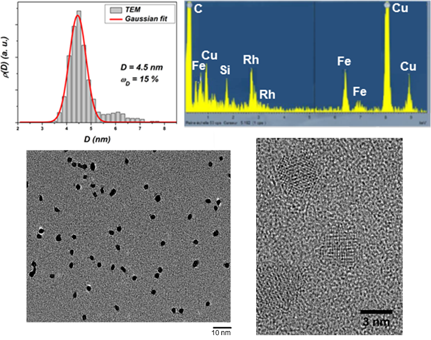
- between low signal from the Si substrate and maximum intensity of the Bragg (110) peak. The Figure 7 shows the measured X-ray scattering where we can see three peaks which correspond to the main Bragg peaks common to the B2 and bcc structures. These three peaks, showing the very good crystallinity of the


Localized surface plasmons in structures with linear Au nanoantennas on a SiO2/Si surface
Beilstein J. Nanotechnol. 2016, 7, 1519–1526, doi:10.3762/bjnano.7.145
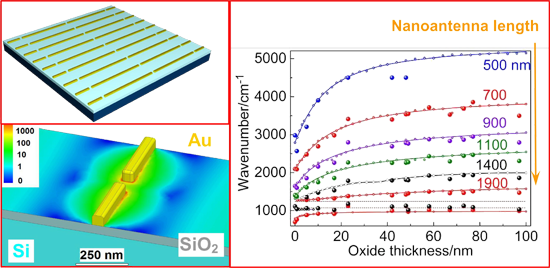
- coupling also depends on the dielectric function of a surrounding medium that makes the LSPR energy different for nanoantennas backed by a bare Si substrate and when a SiO2 sublayer is introduced beneath the nanoantennas. Figure 4 illustrates the relation between the LSPR frequency and the SiO2 layer
- thickness derived from the IR spectra of nanoantennas with the underlying SiO2 layer created on top of the Si substrate. It can be seen from Figure 4 that the LSPR frequency of the nanoantennas fabricated on a thick SiO2 layer is blue-shifted by about 1000 cm−1 with respect to the structures on bare Si due
- 1900 nm (a,b) and 1400 nm (c,d) fabricated on SiO2 layers of different thicknesses measured at normal incidence. The IR transmission spectrum of a 49 nm thick SiO2 layer on a Si substrate measured at off-normal (70°) incidence is shown for comparison. The vertical dashed lines indicate the frequency


Nanostructured germanium deposited on heated substrates with enhanced photoelectric properties
Beilstein J. Nanotechnol. 2016, 7, 1492–1500, doi:10.3762/bjnano.7.142
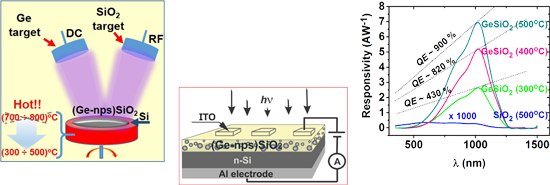
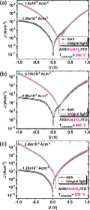
- the n-Si substrate was grounded. In this configuration, the bias voltage is applied across the series combination of junctions, namely at the ITO/Ge:SiO2 interface, the Ge:SiO2 film region, and the junction situated at Ge:SiO2/Si interface [34]. The rectifying behavior (102 rectification ratio at 1 V
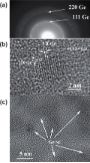
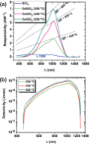
- as a result of the separation of electron–hole pairs generated in the Ge-nps and the Si substrate. The obtained photoresponse gain factor increases from about 102 (at 300 °C) to about 103 (at 500 °C) with the temperature increase during deposition. Under illumination, electrons and holes are
- generated in the Ge-nps and in the Si substrate and they move by tunneling between neighboring Ge-nps. During transport, the positively charged holes are dynamically trapped within the Ge-nps incorporated into SiO2 matrix improving the electron injection, leading to an increase of negative photoconductivity




NO gas sensing at room temperature using single titanium oxide nanodot sensors created by atomic force microscopy nanolithography
Beilstein J. Nanotechnol. 2016, 7, 1044–1051, doi:10.3762/bjnano.7.97
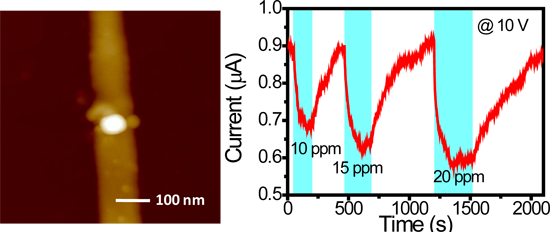
- nanolithography [30][32] procedure is shown in Figure 1. A 40 nm thick poly(methylmethacrylate) (PMMA) film was spin-coated on a Si substrate that had a thick oxide layer. By using an AFM (Smena, NT-MDT, Russia), a straight nanogroove was generated in the PMMA film. A Ti film was deposited by electron-beam


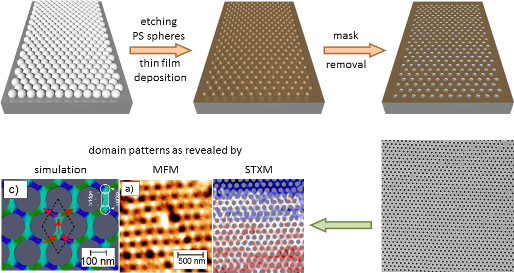
Magnetic switching of nanoscale antidot lattices
Beilstein J. Nanotechnol. 2016, 7, 733–750, doi:10.3762/bjnano.7.65



Correlative infrared nanospectroscopic and nanomechanical imaging of block copolymer microdomains
Beilstein J. Nanotechnol. 2016, 7, 605–612, doi:10.3762/bjnano.7.53
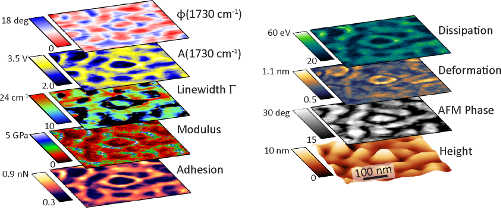
- interface, as PMMA is more polar than PS and tends toward the polar SiO2 native oxide layer of the Si substrate [17]. Models suggest that this PS surface layer is roughly half the microdomain size when in equilibrium [18], though we can expect nonuniformity and local variations of the surface layer in this
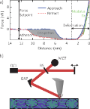
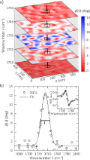
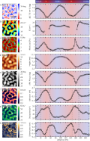


![[Graphic 9]](/bjnano/content/inline/2190-4286-7-53-i10.png?max-width=637&scale=1.18182) (1730 ...
(1730 ...
Orientation of FePt nanoparticles on top of a-SiO2/Si(001), MgO(001) and sapphire(0001): effect of thermal treatments and influence of substrate and particle size
Beilstein J. Nanotechnol. 2016, 7, 591–604, doi:10.3762/bjnano.7.52
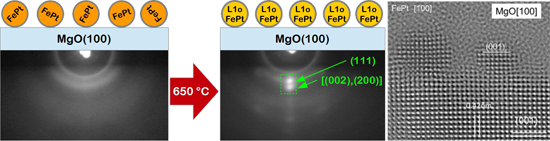
- Figure 2a the RHEED pattern for a 3 nm Fe48Pt52 film on a SiO2/Si substrate is presented after post annealing at 650 °C for 30 min. A diffuse intensity distribution is observed without any superposed streaks or spots. The bright ring around the direct beam is a halo feature due to the RHEED arrangement


Characterisation of thin films of graphene–surfactant composites produced through a novel semi-automated method
Beilstein J. Nanotechnol. 2016, 7, 209–219, doi:10.3762/bjnano.7.19
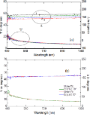
- index (n) and extinction coefficient (k) of graphene films can be found by fitting the above spectra to the model using the dedicated software by J. A. Woollam. In this particular case, the model of the reflecting system consists of the following three layers: (1) Si substrate; (2) the layer of native
- of data in Figure 9a, the fitting for the thickness of the native SiO2 layer was performed first using the data for the bare Si substrate. The thickness of SiO2 layer obtained (d = 3.2 nm) was then fixed for consecutive fittings. The PAH/graphene(−)SDS film was considered as one layer in the




Synthesis and applications of carbon nanomaterials for energy generation and storage
Beilstein J. Nanotechnol. 2016, 7, 149–196, doi:10.3762/bjnano.7.17















Chemical bath deposition of textured and compact zinc oxide thin films on vinyl-terminated polystyrene brushes
Beilstein J. Nanotechnol. 2016, 7, 102–110, doi:10.3762/bjnano.7.12
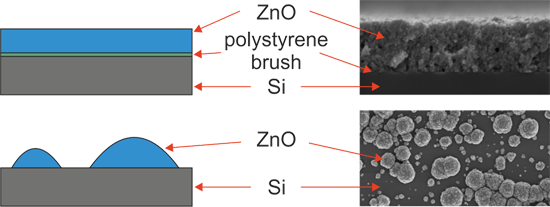
- ), (002), (101), (102) and (110) reflections of hexagonal ZnO are visible in the XRD patterns (cf. JCPDS no. 01-079-0206). For the PS brush sample (Figure 4b), a pronounced preferred orientation of the ZnO crystallites with the hexagonal c-axis perpendicular to the plane of the Si substrate is indicated


Surface-enhanced Raman scattering by colloidal CdSe nanocrystal submonolayers fabricated by the Langmuir–Blodgett technique
Beilstein J. Nanotechnol. 2015, 6, 2388–2395, doi:10.3762/bjnano.6.245
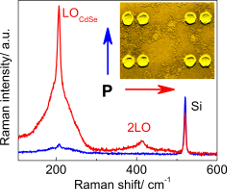
- ]. The fabrication details of regular arrays of Au nanoclusters and dimers on a Si substrate are presented in [29]. In addition to regular arrays of Au nanoclusters, arrays of paired Au nanoclusters or dimers were fabricated by electron beam lithography on a Si substrate covered with 75 nm of SiO2. The
- regular arrays of Au nanoclusters Typical SEM and HR-TEM images of a single monolayer of CdSe NCs deposited by the LB technique on the plasmonic substrate and on a carbon-coated Cu grid are shown in Figure 2. This demonstrates a dense, homogeneous coverage of the NCs for both the Si substrate with a Au
- nanocluster array and the Cu grid. The Raman spectrum acquired from the area where CdSe NCs are deposited on the Si substrate reveals only features inherent to crystalline Si. However, the Raman spectra of CdSe NCs deposited on the nanocluster arrays (Figure 3a) reveal a pronounced peak at about 207.5 cm−1


Formation of pure Cu nanocrystals upon post-growth annealing of Cu–C material obtained from focused electron beam induced deposition: comparison of different methods
Beilstein J. Nanotechnol. 2015, 6, 1508–1517, doi:10.3762/bjnano.6.156
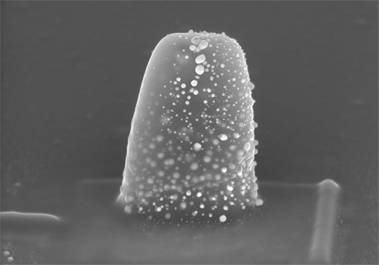
- conventionally or with a laser the flat morphology of square, line, or tip deposits on the pre-patterned SiO2/Si substrate changes (Figure 3 and Figure 4). While the laser allows for local heating, the conventional hotplate approach allows for more accurate temperature measurements. The visible onset of Cu
- nanocrystal precipitation on the deposit surface starts at around 150 °C for the Cu(hfac)2 deposits on the pre-patterned SiO2/Si substrate. Further heating to about 200 °C for 30 min did not visibly change the appearance of the Cu nanocrystal precipitation. EDX analysis after conventional heating to 200 °C