


Search results
Search for "argon" in Full Text gives 378 result(s) in Beilstein Journal of Nanotechnology. Showing first 200.
Upcycling of polyurethane waste by mechanochemistry: synthesis of N-doped porous carbon materials for supercapacitor applications
Beilstein J. Nanotechnol. 2019, 10, 1618–1627, doi:10.3762/bjnano.10.157
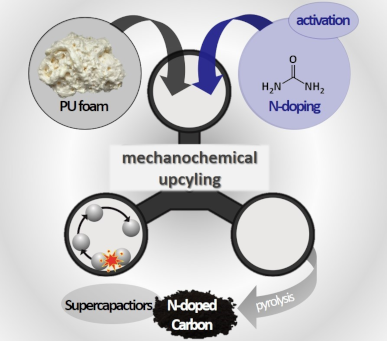
- the activation and doping reagents, the mixture was then milled in the same ball mill and vessel for 30 min and at a rotation speed of 800 rpm. The resulting polymer was pyrolyzed for one hour in argon at 800 °C with a heating rate of 150 °C·h−1 and afterwards purified with diluted HCl and water


High-temperature resistive gas sensors based on ZnO/SiC nanocomposites
Beilstein J. Nanotechnol. 2019, 10, 1537–1547, doi:10.3762/bjnano.10.151
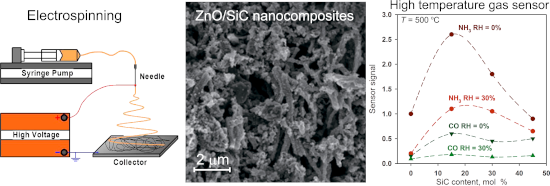
- annealed stepwise in an argon atmosphere at 220 °C (2 h, heating rate 1 K/min), 600 °C (2 h, heating rate 1 K/min), and finally at 1150 °C (6 h, heating rate 2 K/min). The obtained amorphous SiC was additionally annealed using the spark plasma sintering (SPS) method on a Spark plasma sintering system



Rapid thermal annealing for high-quality ITO thin films deposited by radio-frequency magnetron sputtering
Beilstein J. Nanotechnol. 2019, 10, 1511–1522, doi:10.3762/bjnano.10.149
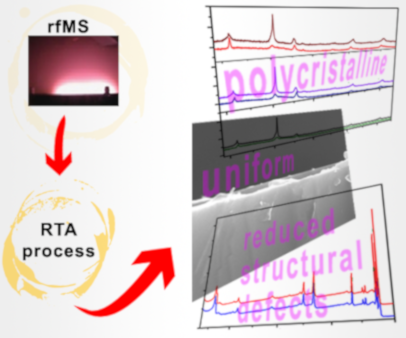
- Pa. Subsequently, the working gases (i.e., high purity argon and oxygen) were introduced into the deposition chamber, and a power of 70 W was applied to the magnetron. The ITO thin films were obtained at room temperature at a pressure of 6.67 × 10⁻¹ Pa and a deposition rate of 9.6 nm/min. The
- deposition pressure, argon and oxygen flow rates and the applied electrical current were kept constant during each deposition. More specifically, the deposition parameters and the studied sample characteristics are summarized in Table 1. The predefined thickness values (230 nm, 300 nm, 370 nm) for the ITO


Flexible freestanding MoS2-based composite paper for energy conversion and storage
Beilstein J. Nanotechnol. 2019, 10, 1488–1496, doi:10.3762/bjnano.10.147
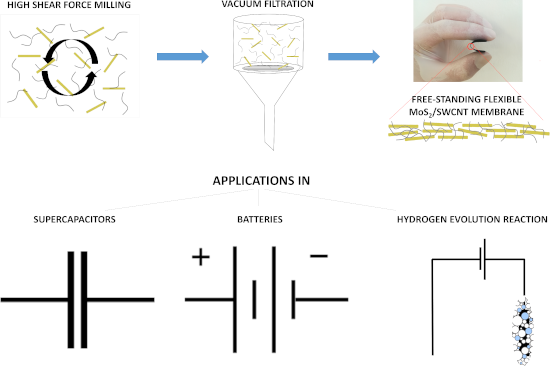
- cut into round disks with a diameter of 18 mm (254.5 mm2). They were directly used as an anode in ECC-PAT-Core (EL-Cell) battery test cells assembled in an argon-filled glove box using lithium metal both as the counter and reference electrode and an EL-CELL ECC1-01-0011-A/L glass fiber membrane as a


Growth of lithium hydride thin films from solutions: Towards solution atomic layer deposition of lithiated films
Beilstein J. Nanotechnol. 2019, 10, 1443–1451, doi:10.3762/bjnano.10.142
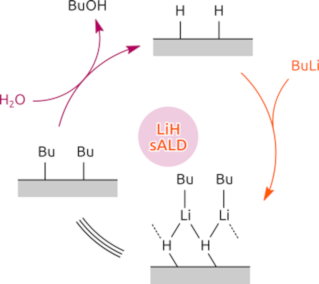
- deposition can be seen below in Figure 3. Materials and methods Precursors for the deposition were prepared in an argon-filled moisture-free glovebox, and then handled within a nitrogen-filled Schlenk line. Dry ether (ROTIPURAN 99.5%, p.a., lump), used as the primary solvent, was further dried with pure
- , contamination was avoided as much as reasonably possible. Measures for safe handling of n-butyllithium Due to the pyrophoric nature of n-butyllithium these safety procedures were followed. (i) The n-butyllithium solution was handled in an argon-filled glovebox, set up specifically for precursor handling. (ii
- calibration routine and the internal Au, Ag and Cu standards supplied with the K-Alpha system. Argon etching was done with ion gun (1.4 µA of 2 keV Ar+ ions over 8 mm2). The samples indented to be used in XPS and Auger were coated with an additional layer of SiO2 inside of the deposition chamber. This


Kelvin probe force microscopy of the nanoscale electrical surface potential barrier of metal/semiconductor interfaces in ambient atmosphere
Beilstein J. Nanotechnol. 2019, 10, 1401–1411, doi:10.3762/bjnano.10.138
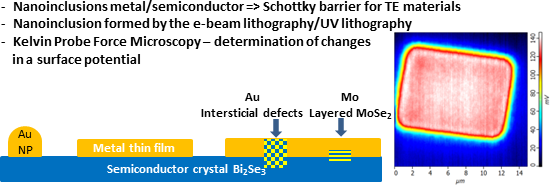
- generated in the analyzer. The work function of the sample was calculated as WF = hν Ecut-off, where Ecut-off was determined from the intersection of the linear extrapolation of the secondary-electron cut-off (SECO) with the background. All samples were sputtered with argon ions using a scanning focused ion
- beam source in order to remove surface contaminants. A monoatomic argon ion source was utilized with energy of 2 keV, ion current 10 µA, raster area 1 × 1 mm2 and sputtering time 30 s. Results and Discussion Separated metal nanoparticles on the substrate In TE materials the NIs applicable for an


Gas sensing properties of individual SnO2 nanowires and SnO2 sol–gel nanocomposites
Beilstein J. Nanotechnol. 2019, 10, 1380–1390, doi:10.3762/bjnano.10.136
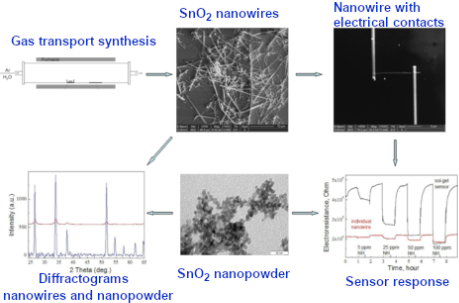
- characterization SnO2 nanowire synthesis The gas transport method based on the vapor–liquid–solid (VLS) mechanism was used for the synthesis of SnO2 nanowires. Argon saturated with water vapor served as the transport medium. Water was used as a mild oxidant of metallic tin in the following reaction: The formation
- reaction as Metallic tin forms on the surface nanodrops, dissolving tin dioxide and the products of the incomplete oxidation of tin (SnO, Sn2O3, Sn3O4) from the argon flow. This dissolution leads finally to the saturation of tin with tin dioxide that is stable at high temperature. After this saturation


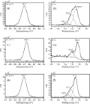


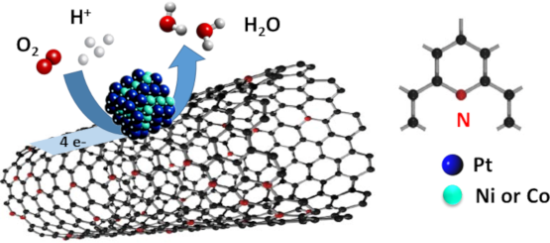
Alloyed Pt3M (M = Co, Ni) nanoparticles supported on S- and N-doped carbon nanotubes for the oxygen reduction reaction
Beilstein J. Nanotechnol. 2019, 10, 1251–1269, doi:10.3762/bjnano.10.125
- ionic liquid was purchased from Solvionic, and the other chemicals were purchased from Sigma-Aldrich. All operations were carried out under argon atmosphere using standard Schlenk techniques or in an MBraun glovebox. For comparison purpose, the commercial catalyst Pt3Co/CB consists of 6 wt % Co, 46.7 wt
- at 650 °C on a Fe/Al2O3 catalyst in a vertical oven to produce CNTs and N-CNTs. First, the catalyst was reduced under argon/hydrogen (Ar/H2 (1.5/1): 375 mL·min−1) during 30 min at 650 °C. Undoped structures (called CNTs) were prepared from ethylene/H2 (375 mL·min−1 (1.5/1)) mixtures, N-doped









Serum type and concentration both affect the protein-corona composition of PLGA nanoparticles
Beilstein J. Nanotechnol. 2019, 10, 1002–1015, doi:10.3762/bjnano.10.101
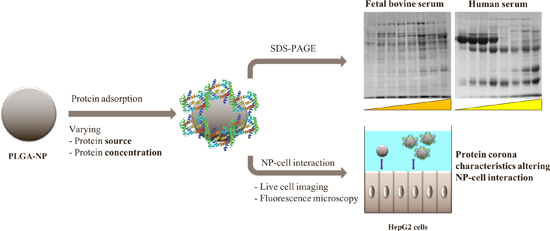
- of 3 µL diluted PLGA NP suspension (0.2 mg/mL) was applied on a 0.1 µm membrane filter (IsoporeTM membrane filter, Merck Millipore, Darmstadt, Germany) and dried overnight in a desiccator. Afterwards, the membrane filter was sputtered with gold (Sputter SCD 040, BALTEC, Liechtenstein) under argon




Fabrication of silver nanoisland films by pulsed laser deposition for surface-enhanced Raman spectroscopy
Beilstein J. Nanotechnol. 2019, 10, 882–893, doi:10.3762/bjnano.10.89
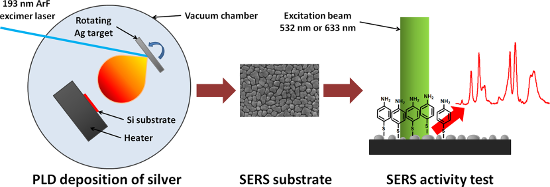
- target located opposite to the substrate. Deposition is typically performed in vacuum [20] or argon atmosphere [19] and by the change of parameters such as laser wavelength, pulse duration or laser fluence it is possible to modify the structure of the fabricated nanoislands. Until now, gold and silver




Periodic Co/Nb pseudo spin valve for cryogenic memory
Beilstein J. Nanotechnol. 2019, 10, 833–839, doi:10.3762/bjnano.10.83
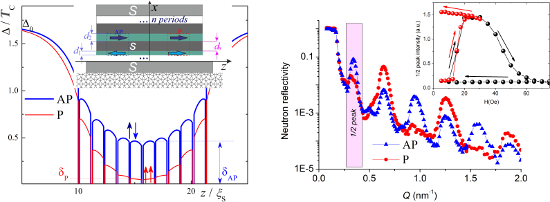
- sapphire (Al2O3) substrate. Before the deposition the substrates were etched by an argon ion beam inside the chamber. The targets Nb(99.99%) and Co(99.99%) were presputtered to remove metallic oxides and contamination absorbed on the surfaces. Additionally, immediately before deposition of the next layer
- we presputtered the corresponding target for 40–50 seconds for stabilization of the film growth rate. The deposition was performed in a pure argon atmosphere (99.999% purity) at a working pressure of 8 × 10⁻³ mbar. The thickness of the films was controlled by the time of deposition of the material on


Hydrophilicity and carbon chain length effects on the gas sensing properties of chemoresistive, self-assembled monolayer carbon nanotube sensors
Beilstein J. Nanotechnol. 2019, 10, 565–577, doi:10.3762/bjnano.10.58
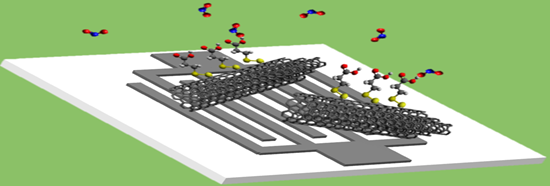
- ATC Orion 8-HV sputtering machine (AJA International, Inc., USA) was used for this purpose. In this process, an RF inductively coupled plasma was used at a frequency of 13.56 MHz. The sputtering parameters were adjusted to 30 W under argon plasma during 10 s at a pressure of 0.1 Torr [50]. Au


Ceria/polymer nanocontainers for high-performance encapsulation of fluorophores
Beilstein J. Nanotechnol. 2019, 10, 522–530, doi:10.3762/bjnano.10.53
- nitrogen or argon bubbling and/or freeze–pump–thaw cycles, the oxygen content can be lowered. These techniques are efficient enough to suppress the oxygen quenching of fluorescence [13]. The case of fluorescent samples containing dyes encapsulated in nanoconfined materials is more complicated. In general
- under argon atmosphere [sample NC(Ar)] by free-radical miniemulsion polymerization [46]. The continuous phase contains SDS (30 mg) and demineralized water (30 g). The disperse phase contains styrene (1.8 g) and acrylic acid (0.2 g) as monomers, hexadecane (4 g) with the fluorescent dye TDI and the
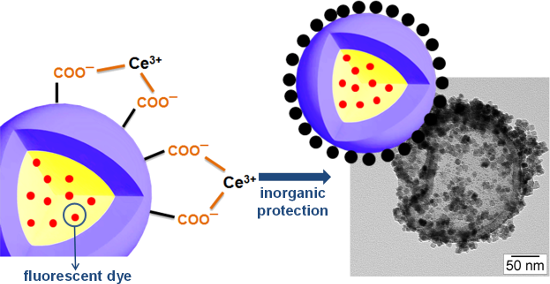
- analogous one in argon atmosphere. Results and Discussion The objective of this work was to design colloidally stable polystyrene-based hybrid nanocapsules containing the fluorescent dye terrylene diimide (TDI) and being armored with metal-oxide nanoparticles on the polymer shell surface. Polymeric


Widening of the electroactivity potential range by composite formation – capacitive properties of TiO2/BiVO4/PEDOT:PSS electrodes in contact with an aqueous electrolyte
Beilstein J. Nanotechnol. 2019, 10, 483–493, doi:10.3762/bjnano.10.49
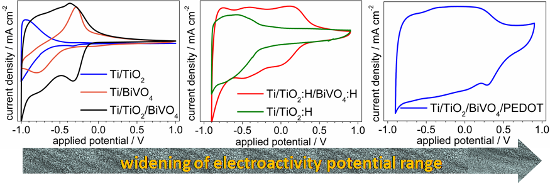
- supplied by Sigma-Aldrich. K2SO4, H2SO4, ethylene glycol and H3PO4 were supplied by POCH. Triple distilled water was used for all electrochemical experiments. Electrochemical measurements All electrochemical measurements were performed in 0.5 M K2SO4 aqueous electrolyte purged with argon. A three-electrode




Temperature-dependent Raman spectroscopy and sensor applications of PtSe2 nanosheets synthesized by wet chemistry
Beilstein J. Nanotechnol. 2019, 10, 467–474, doi:10.3762/bjnano.10.46
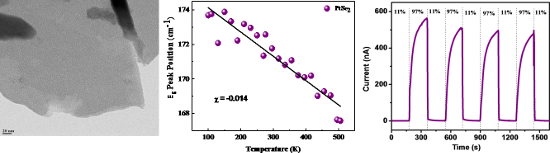
- onto a Si substrate and heated at 100 °C on a hot plate. After complete evaporation, the substrate was annealed in a chemical vapour deposition system at 500 °C in argon gas atmosphere for 5 h. Supporting Information File 1, Figure S1 shows the schematic of the PtSe2 nanosheet synthesis steps. Sensor



Advanced scanning probe lithography using anatase-to-rutile transition to create localized TiO2 nanorods
Beilstein J. Nanotechnol. 2019, 10, 412–418, doi:10.3762/bjnano.10.40
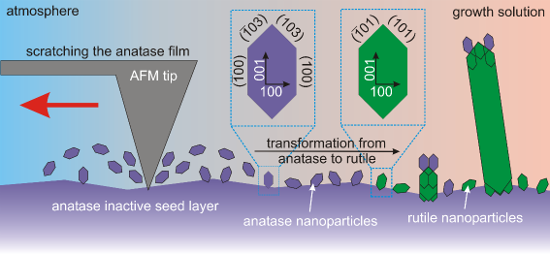
- done in argon (20 sccm) at a pressure of 6.7 × 10⁻³ mbar. Subsequently, the sample was annealed at 850 °C in oxygen (500 sccm) for 2 h resulting in a polycrystalline anatase TiO2 film. Optionally, an additional 3 nm thin SiO2 layer was placed on the anatase film with RC sputter deposition. Scanning


Biocompatible organic–inorganic hybrid materials based on nucleobases and titanium developed by molecular layer deposition
Beilstein J. Nanotechnol. 2019, 10, 399–411, doi:10.3762/bjnano.10.39
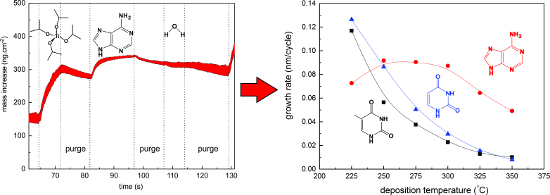
- FTIR was used to analyze the final product. This experiment was designed to investigate if a stable complex can be formed in the reaction between TTIP and adenine. In this experiment, 0.025 mol adenine was mixed with an excess amount of TTIP (0.1 mol) and stirred under argon atmosphere for 1 hour at 50




One-step nonhydrolytic sol–gel synthesis of mesoporous TiO2 phosphonate hybrid materials
Beilstein J. Nanotechnol. 2019, 10, 356–362, doi:10.3762/bjnano.10.35
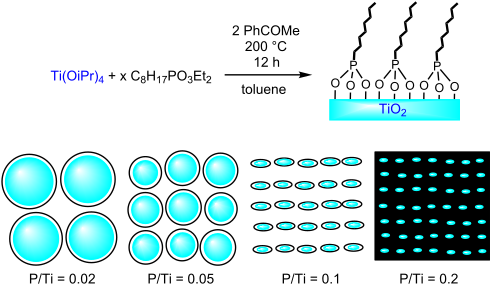
- ppm, controlled with a Karl Fischer coulometer). All other chemicals were used without further purification. All manipulations were carried out in a glove box under argon atmosphere (<5 ppm of water and O2). Synthesis of TiO2–octylphosphonate hybrids In a typical preparation, Ti(OiPr)4 (1.72 g, 6.00


Intuitive human interface to a scanning tunnelling microscope: observation of parity oscillations for a single atomic chain
Beilstein J. Nanotechnol. 2019, 10, 337–348, doi:10.3762/bjnano.10.33
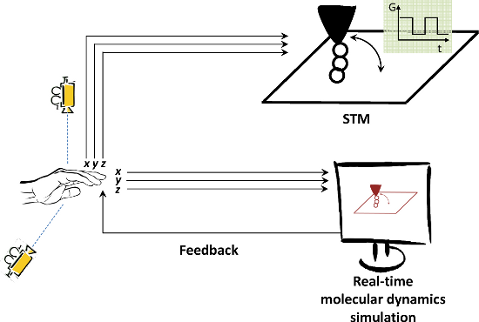
- the simulation. The scaling factor converts approximately 10 cm of hand movement to 2 Å displacement of the STM tip. The usual imaging in STM is done using a commercial RHK SPM100 ver.8E controller. A mono-crystalline gold sample cut along the (111) surface is prepared by repeated argon sputtering and




Nanoporous water oxidation electrodes with a low loading of laser-deposited Ru/C exhibit enhanced corrosion stability
Beilstein J. Nanotechnol. 2019, 10, 157–167, doi:10.3762/bjnano.10.15
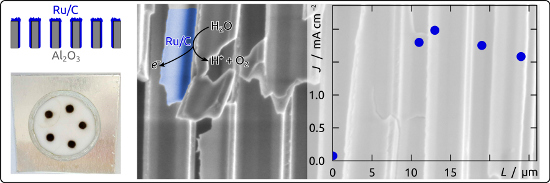
- ), which are due to the Ru/C layer and adventitious carbon. Argon ion sputtering results in a reduced carbon content (observable in both the C 1s and O 1s regions), as well as in a shift of the Ru 3d doublet of peaks to lower binding energies (Figure 8b and Figure S4, Supporting Information File 1). Thus




Sputtering of silicon nanopowders by an argon cluster ion beam
Beilstein J. Nanotechnol. 2019, 10, 135–143, doi:10.3762/bjnano.10.13
- surface morphology, with preferable erosion of hills as compared with valleys [6], which also results in the smoothing of the surface [7]. Sputtering by an argon cluster beam has been studied for many pure metals (Cu, Ag, Au, W, Pt, Ni) and their alloys, semiconductors (Si and SiC), and insulators (SiO2
- bombardment of gold nanoparticles with radius R = 4 nm by 100 keV gold atoms. The sputter yields ranged from only a few sputtered atoms to complete particle disintegration. Järvi et al. [17][18] have shown that the highest sputtering yield of gold nanoparticles by 25 keV gallium or 200 keV argon beams is
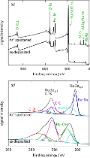
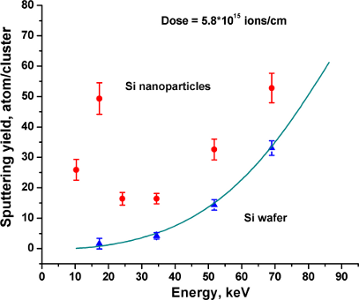
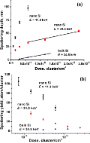
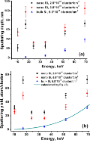
- sputtering yield has already been discussed by Belykh et al. [27]. In the present work, we use massive argon clusters, as projectiles, and pressed Si nanopowder consisting of nanoparticles with a mean particle diameter of 60 nm, as the sputtered material. The sputtering yield dependence versus average target





Zn/F-doped tin oxide nanoparticles synthesized by laser pyrolysis: structural and optical properties
Beilstein J. Nanotechnol. 2019, 10, 9–21, doi:10.3762/bjnano.10.2
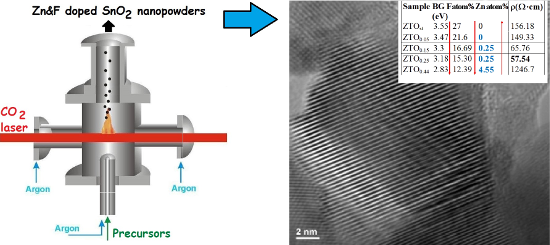
- , 95% purity) liquids from Sigma and sulfur hexafluoride (SF6), oxygen (O2), argon (Ar) (99.99999 vol %) and ethylene (C2H4) (99.999 vol %) bottled gases from Linde. The reactive precursors used to obtain zinc-doped tin nanopowders, SnMe4 and ZnEt2, have no infrared absorption bands around the CO2




Characterization and influence of hydroxyapatite nanopowders on living cells
Beilstein J. Nanotechnol. 2018, 9, 3079–3094, doi:10.3762/bjnano.9.286
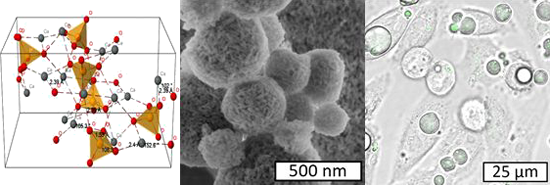
- confocal laser scanning microscope (CLSM, Leica Confocal Microscope, SP5 Microscope model: DMI6000, Laser: Argon 10%, line length 511–520 nm) equipped with cell life support unit was used to observe interactions between cells and particles. Cells were incubated overnight in glass-bottom Petri dishes

![[Graphic 1]](/bjnano/content/inline/2190-4286-9-286-i2.svg?max-width=637&scale=1.18182) .
.




Electrostatic force microscopy for the accurate characterization of interphases in nanocomposites
Beilstein J. Nanotechnol. 2018, 9, 2999–3012, doi:10.3762/bjnano.9.279
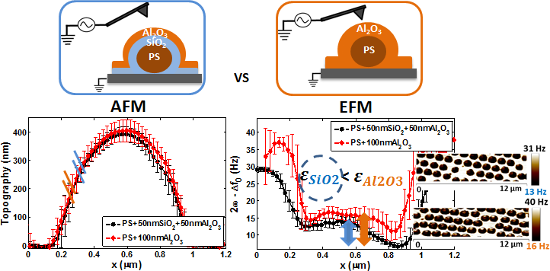
- . ALD is a smooth chemical vapor deposition technique, expected to leave hydroxide OH groups on the surface. Conversely, PSD might induce a more homogeneous ionic surface state; O− and O2− could be typically introduced due to the small amount of reactive oxygen gas that is added to the neutral argon gas
- ). Silicon dioxide layers were deposited by plasma sputtering in a Plassys 450S reactor using a high purity SiO2 target source. The deposition regime included a preliminary exposure to 100 sccm argon plasma at 50 W for 20 s, while substrates and SiO2 target samples were screened. Then, the target shutter was




Size limits of magnetic-domain engineering in continuous in-plane exchange-bias prototype films
Beilstein J. Nanotechnol. 2018, 9, 2968–2979, doi:10.3762/bjnano.9.276
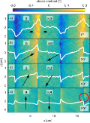
- prototypical in-plane EB layer system Ir17Mn83 (30 nm)/Co70Fe30 (10 nm) was grown by RF sputtering at a power of 160 W and an argon gas flux of 155 sccm on a naturally oxidized 5 nm × 5 nm Si(100) wafer, with Cu (5 nm) buffer and Ta (10 nm) capping. EB at the interface between the antiferromagnetic (AF) and
- performed at beamline UE56/1-SGM of the synchrotron radiation facility BESSY II after excitation with right and left circularly polarized X-rays with an energy of 709 eV (Fe L3 edge). Prior to measurements, the capping layer was thinned by argon ion sputtering allowing the Fe photoelectrons to escape from





![[Graphic 63]](/bjnano/content/inline/2190-4286-9-276-i63.svg?max-width=637&scale=1.18182) .
. ![[Graphic 64]](/bjnano/content/inline/2190-4286-9-276-i64.svg?max-width=637&scale=1.18182) is the angle between the domain wall (DW) normal vector
is the angle between the domain wall (DW) normal vector ![[Graphic 65]](/bjnano/content/inline/2190-4286-9-276-i65.svg?max-width=637&scale=1.18182) and the local unidirectio...
and the local unidirectio...



