


Search results
Search for "calibration" in Full Text gives 358 result(s) in Beilstein Journal of Nanotechnology. Showing first 200.
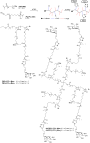
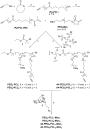
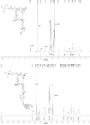
Mannosylated brush copolymers based on poly(ethylene glycol) and poly(ε-caprolactone) as multivalent lectin-binding nanomaterials
Beilstein J. Nanotechnol. 2019, 10, 2192–2206, doi:10.3762/bjnano.10.212
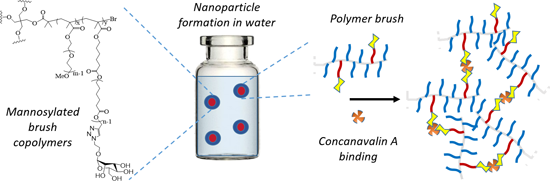
- molecular weight calculated by 1H NMR from the value obtained by GPC (which was substantial for the four-arm polymers) was likely to be caused by the polystyrene calibration and by the intrinsic limitation of the GPC to determine the exact molecular weight of comb-like and hyperbranched polymers, as
- , 500 A) and a PLgel 50 mm∙7.5 mm (5 μm particle size) guard, using THF as eluent at 35 °C. The system was controlled using polystyrene calibration kits (by RESTEK and Sigma-Fluka); samples were dissolved in THF at a concentration of 4 mg/mL and filtered (PTFE filters, 0.45 µm). Synthesis of propargyl



Nonlinear absorption and scattering of a single plasmonic nanostructure characterized by x-scan technique
Beilstein J. Nanotechnol. 2019, 10, 2182–2191, doi:10.3762/bjnano.10.211
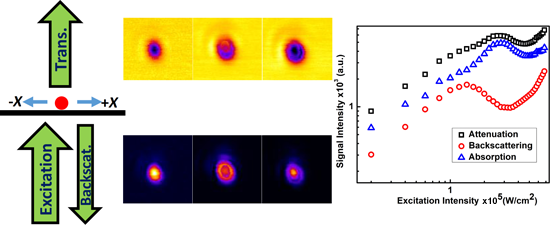
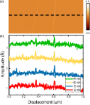
- obvious from the numbers on each peak in Figure 3c and Figure 3d, the backscattering signal decreases quickly while the attenuation signal increases slowly. As mentioned earlier, the attenuation intensity contains portions of absorption and backscattering signals, and with a proper calibration, we are
- absorption (14%, green dots). This ratio is consistent with Mie theory, confirming the correctness of our signal calibration. According to Mie theory, the forward scattering ratio should be equal to the backward scattering ratio for this nanostructure. In our measurement, the transmission TNP is 79% in the
- signal were calibrated accurately (Figure 6c). The same calibration scheme was applied to yield Figures 2–5 in the main text, and to derive the ratio of scattering, absorption and transmission. Since the results agree well with the prediction of Mie theory, the reflectivity estimation should be


Use of data processing for rapid detection of the prostate-specific antigen biomarker using immunomagnetic sandwich-type sensors
Beilstein J. Nanotechnol. 2019, 10, 2171–2181, doi:10.3762/bjnano.10.210
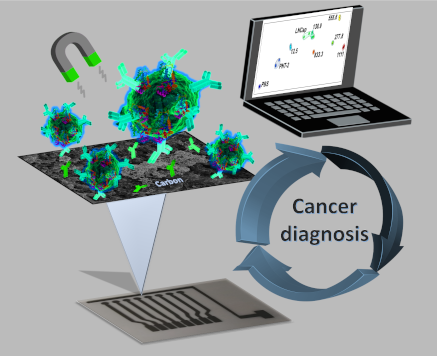
- ] in Equation 1 is 0.062 fg·mL−1 : where SD and slope are the standard deviation and slope of the calibration curve, respectively. To our knowledge, this limit of detection is the lowest found in the literature for immunosensors to detect PSA. The high sensitivity could be attributed to the use of MNPs
- resuspended with 250 μL of 0.05% PBS-Tween/20 buffer of pH 7.4 and 2% BSA giving a final particle concentration of 5 mg·mL−1. These steps are summarized in Figure 8. In the third step, shown in Figure 9, 20 μL of Ab2-MNP-HRP were added to 320 μL PBS buffer at pH 7.4. For the standard calibration, 20 μL of the


Improved adsorption and degradation performance by S-doping of (001)-TiO2
Beilstein J. Nanotechnol. 2019, 10, 2116–2127, doi:10.3762/bjnano.10.206
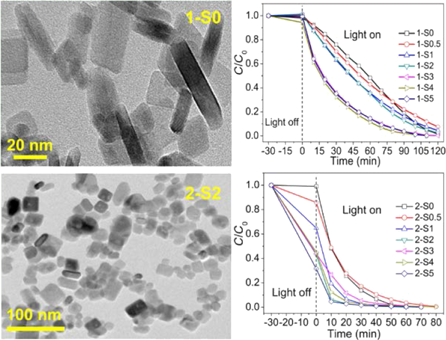
- a calibration curve. Results and Discussion The crystal structures of all samples were characterized by XRD. Figure 1 shows the experimental data and the results calculated by Rietveld refinement of 1-S0 (a) and 2-S2 (b). The calculated results match well with the experimental data indicating that




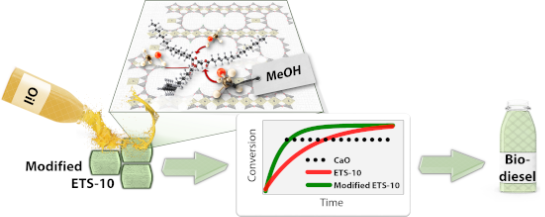
Synthesis of highly active ETS-10-based titanosilicate for heterogeneously catalyzed transesterification of triglycerides
Beilstein J. Nanotechnol. 2019, 10, 2039–2061, doi:10.3762/bjnano.10.200
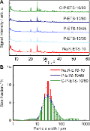
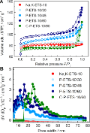
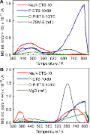
- ) were used for calibration of analytes. All mentioned materials and chemicals were used without further purification. Preparation of the CaO-based catalysts The CaO precursors were activated at temperatures of 1073 K, 1173 K, and 1273 K for 3 h under static air conditions in the Elektron Co. furnace








Magnetic properties of biofunctionalized iron oxide nanoparticles as magnetic resonance imaging contrast agents
Beilstein J. Nanotechnol. 2019, 10, 1964–1972, doi:10.3762/bjnano.10.193
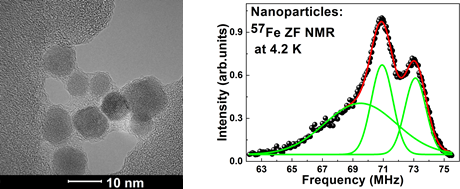
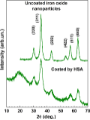
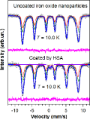
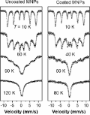
- temperature range of 10–300 K with a standard MS-1104Em spectrometer operated in the constant acceleration regime [30][31]. The gamma ray source 57Co(Rh) was maintained at room temperature. The calibration was performed with a metal α-Fe standard absorber. The XRD patterns were collected using the Rigaku




Microfluidic manufacturing of different niosomes nanoparticles for curcumin encapsulation: Physical characteristics, encapsulation efficacy, and drug release
Beilstein J. Nanotechnol. 2019, 10, 1826–1832, doi:10.3762/bjnano.10.177
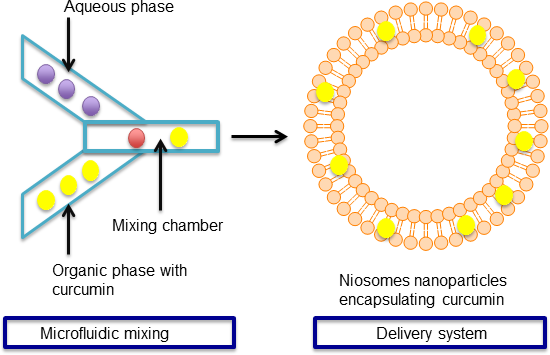
- mL was taken from the dialysis media and the amount of curcumin was measured using UV absorption spectroscopy at 421 nm using a HELIOS ALPHA ThermoSpectronic spectrophotometer (Thermo Fisher Scientific, UK). The curcumin concentration was determined using a calibration curve of the pure drug in
- preheated at 37 °C. At each time point, the absorbance was measured at 421 nm and the concentration of the released curcumin was determined against a calibration curve. The experiments were performed in triplicate and the mean ± SD is reported. Statistical analysis Statistical significance was assessed by


Synthesis of nickel/gallium nanoalloys using a dual-source approach in 1-alkyl-3-methylimidazole ionic liquids
Beilstein J. Nanotechnol. 2019, 10, 1754–1767, doi:10.3762/bjnano.10.171
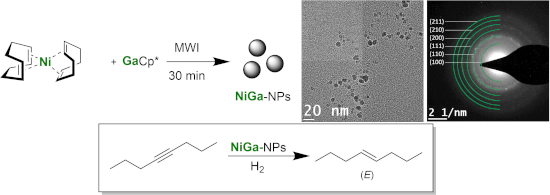
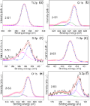
- ESCALAB 200X XP-spectrometer, operating at 70–80 °C, a pressure of 7.0 × 10⁻⁹ bar and a sample angle of 33°. Spectra were recorded using polychromatic Al Kα excitation (11 kV, 20 mA) and an emission angle of 0°. Calibration of the XPS was carried out by recording spectra with Al Kα X-rays from clean




Nanoporous smartPearls for dermal application – Identification of optimal silica types and a scalable production process as prerequisites for marketed products
Beilstein J. Nanotechnol. 2019, 10, 1666–1678, doi:10.3762/bjnano.10.162
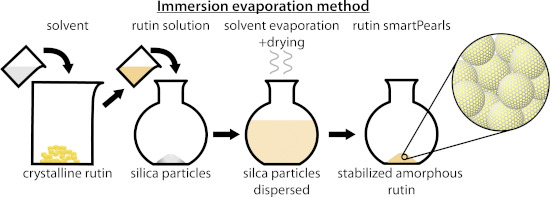
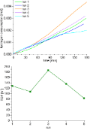
- 100–1000) by UV spectrophotometry (UV-1700 PharmaSpec, Shimadzu, China) at 360 nm. The evaluation was conducted by the provided “UVprobe” software (version 2.21). The concentration was calculated based on the calibration curves determined in ethanol. Particle loading Prior to loading, the silica
- tempered to 25 °C. After calibration of the pH electrode and the UV–vis fiber optic, the sample was manually added immediately after and the UV–vis measurement with the fiber optic was started. The spectra were corrected using the Tyndall Rayleigh correction function. The different concentrations of raw




Kelvin probe force microscopy work function characterization of transition metal oxide crystals under ongoing reduction and oxidation
Beilstein J. Nanotechnol. 2019, 10, 1596–1607, doi:10.3762/bjnano.10.155
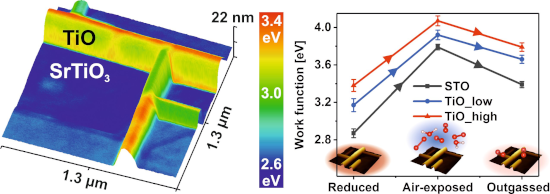
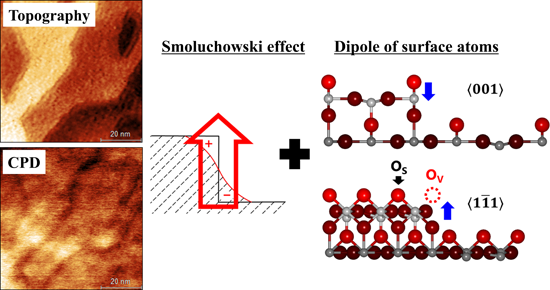
- STO materials enabled a low sample bias of +1 mV for the LC-AFM measurements to be used. Real work function values were calculated from recorded CPD maps after calibration against a material of known work function, here highly oriented pyrolytic graphite (HOPG), which was annealed in situ up to 300 °C


Development of a new hybrid approach combining AFM and SEM for the nanoparticle dimensional metrology
Beilstein J. Nanotechnol. 2019, 10, 1523–1536, doi:10.3762/bjnano.10.150
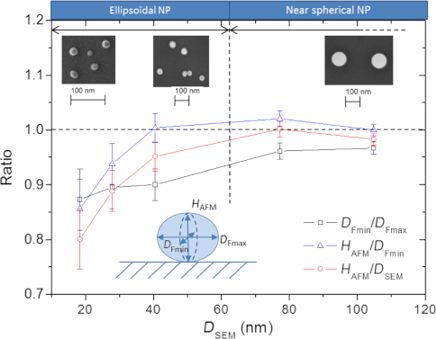
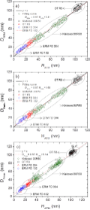
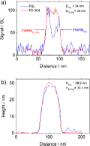
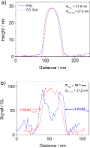
- populations. Moreover, additional tools such as calibration standard and repositioning system have been developed in this study to easily find the area of interest. However, the proof of concept of this method requires three steps. Firstly, the development of a specific reference structure (standard) suitable
- for investigating NPs is required. Actually, the calibration certificates associated with reference structures commercially available do not give values within 1 nm along the XYZ-axes. Our new standard will make it possible to establish a “traceability route” between both instruments. The calibration
- grating is used for the comparison of the measurements performed by AFM and SEM and these measurements are traceable to SI units with the calibration of this standard through the implementation of the metrological AFM (mAFM) of LNE [12]. Secondly, we have to be capable of measuring exactly the same set of




Growth of lithium hydride thin films from solutions: Towards solution atomic layer deposition of lithiated films
Beilstein J. Nanotechnol. 2019, 10, 1443–1451, doi:10.3762/bjnano.10.142
- collected using the pass energy of 50 eV. Charge compensation was achieved with the system dual beam flood gun. The Thermo Scientific Avantage software, version 5.9904 (Thermo Fisher Scientific), was used for digital acquisition and data processing. Spectral calibration was determined by using the automated
- calibration routine and the internal Au, Ag and Cu standards supplied with the K-Alpha system. Argon etching was done with ion gun (1.4 µA of 2 keV Ar+ ions over 8 mm2). The samples indented to be used in XPS and Auger were coated with an additional layer of SiO2 inside of the deposition chamber. This


Gas sensing properties of individual SnO2 nanowires and SnO2 sol–gel nanocomposites
Beilstein J. Nanotechnol. 2019, 10, 1380–1390, doi:10.3762/bjnano.10.136
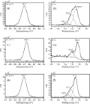
- case of XANES measurements, the analysis layer depth was ≈10 nm [49]. Calibration and normalization of the measured spectra was carried out using the signals from a pure gold film. Additionally, the positions of the core levels were controlled by the position of the C 1s level of the hydrocarbon
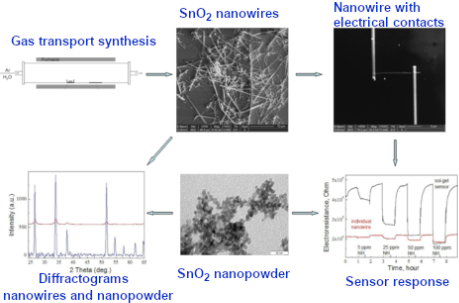
- of nanowire and nanopowder sensors towards different concentrations of ammonia. Calibration curves of the nanowire (NW) and sol–gel (nanopowder) sensors. Response of two sensors based on sol–gel technology and on an individual nanowire (NW) as a function of sensor temperature. parameters of power
- function approximation of calibration curves. Acknowledgements The reported study was funded by RFBR according to the research project No. 18-29-24128. S.R., O.C. and S.T. (synchrotron studies and results discussion) acknowledge the Ministry of Education and Science of Russia, State Task for Higher




Nanoscale spatial mapping of mechanical properties through dynamic atomic force microscopy
Beilstein J. Nanotechnol. 2019, 10, 1332–1347, doi:10.3762/bjnano.10.132
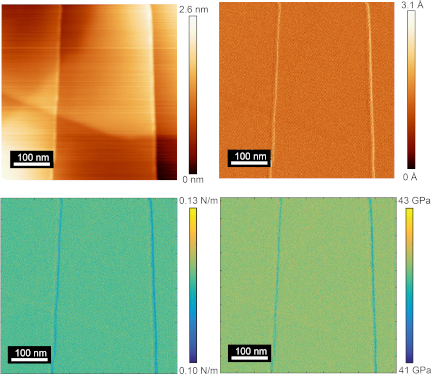
- response of the cantilever were simultaneously recorded with the topography and the lateral force signals using a digital lock-in amplifier supplied with the RHK R9 controller. The calibration of the detected variations in amplitude and phase into elastic and loss modulus with high accuracy requires a good
- against a material with known mechanical properties. The mechanical properties of the calibration sample are considered to be known, either through independent measurements with another technique or from literature values. To obtain the effective elastic modulus, we adopted the mechanical properties from
- literature. By employing the normalization equation as below, the mechanical properties of the sample were determined. In this equation, the exponent m = 3/2 denotes a Hertzian contact, α is the normalized contact stiffness of either the test surface or calibration sample, is the effective elastic modulus




Janus-micromotor-based on–off luminescence sensor for active TNT detection
Beilstein J. Nanotechnol. 2019, 10, 1324–1331, doi:10.3762/bjnano.10.131
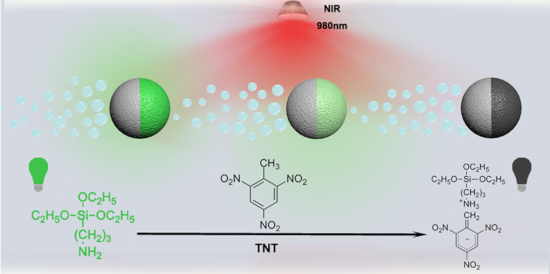
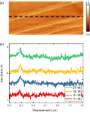
- = (3SD)/k, where the SD is the standard deviation of the luminescence intensity of the Janus UCNP capsule motors and the k is the slope of the calibration curve (k = 18.95). Compared with the LOD of passive UCNPs (8.4 ng mL−1), the TNT detection efficiency is enhanced by 3.5 times. Conclusion We have


Fabrication of phase masks from amorphous carbon thin films for electron-beam shaping
Beilstein J. Nanotechnol. 2019, 10, 1290–1302, doi:10.3762/bjnano.10.128
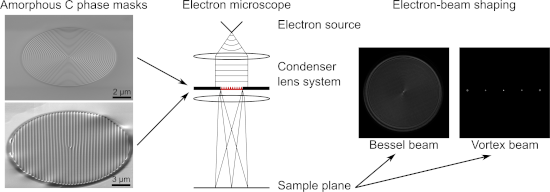
- distance due to faulty calibration. A larger number of concentric rings was observed for larger kρ values as expected from theory. Another aspect is, that the overall intensity decreases more rapidly than expected for larger kρ. This effect could result from an insufficient amplitude thickness of the



Imaging the surface potential at the steps on the rutile TiO2(110) surface by Kelvin probe force microscopy
Beilstein J. Nanotechnol. 2019, 10, 1228–1236, doi:10.3762/bjnano.10.122
- Waals force is dominant and the contribution of the force from the tip apex becomes weak and the force from the rest of the cantilever becomes significant. Therefore, the observed height of step was smaller than that of the real one. Before the experiments, we verified that the distance calibration of
![[Graphic 16]](/bjnano/content/inline/2190-4286-10-122-i16.svg?max-width=637&scale=1.18182) and
and ![[Graphic 17]](/bjnano/content/inline/2190-4286-10-122-i17.svg?max-width=637&scale=1.18182) .
.

![[Graphic 38]](/bjnano/content/inline/2190-4286-10-122-i38.svg?max-width=637&scale=1.18182) and
and ![[Graphic 39]](/bjnano/content/inline/2190-4286-10-122-i39.svg?max-width=637&scale=1.18182) steps. (a) Topographic image...
steps. (a) Topographic image...


![[Graphic 72]](/bjnano/content/inline/2190-4286-10-122-i72.svg?max-width=637&scale=1.18182) , b)
, b) ![[Graphic 73]](/bjnano/content/inline/2190-4286-10-122-i73.svg?max-width=637&scale=1.18182) , c) reduced
, c) reduced ![[Graphic 74]](/bjnano/content/inline/2190-4286-10-122-i74.svg?max-width=637&scale=1.18182) , and d)
, and d) ![[Graphic 75]](/bjnano/content/inline/2190-4286-10-122-i75.svg?max-width=637&scale=1.18182) steps. B...
steps. B...
Tailoring the magnetic properties of cobalt ferrite nanoparticles using the polyol process
Beilstein J. Nanotechnol. 2019, 10, 1166–1176, doi:10.3762/bjnano.10.116
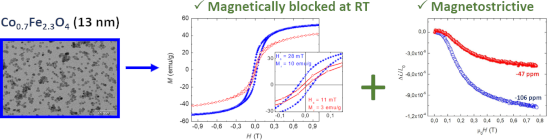
- chemical analysis of the particles was checked by XRF, using a Panalytical MINIPAL4 X-ray fluorescence spectrometer, equipped with a rhodium X-ray tube operating at 30 kV and 87 μA current emission. Quantification was determined from pre-plotted calibration curves using standard Co and Fe solutions




CuInSe2 quantum dots grown by molecular beam epitaxy on amorphous SiO2 surfaces
Beilstein J. Nanotechnol. 2019, 10, 1103–1111, doi:10.3762/bjnano.10.110
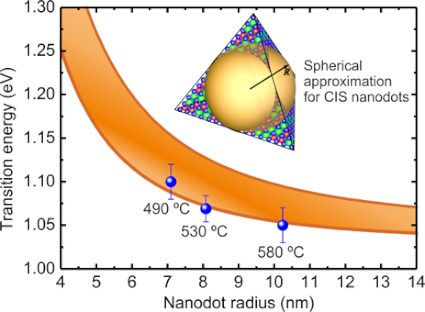
- /min was determined by measuring the thickness of thick CIS calibration samples. To avoid Se loss, the samples were cooled down from the maximum growth temperature to 300 °C at 10 °C/min under Se flux. Below 300 °C, the cooling rate was reduced to approximately 5 °C/min and the Se flux was ceased. In


Glucose-derived carbon materials with tailored properties as electrocatalysts for the oxygen reduction reaction
Beilstein J. Nanotechnol. 2019, 10, 1089–1102, doi:10.3762/bjnano.10.109
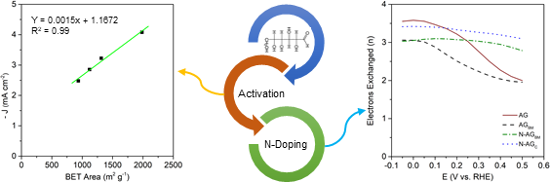
- analysis, a calibration of the CO and CO2 content was carried out, allowing the quantification of the TPD profiles. Electrochemical characterization The electrochemical measurements were performed on a PGSTAT 302N potentiostat/galvanostat by using a three-electrode cell configuration. Ag/AgCl (KCl 3 M) and


Scavenging of reactive oxygen species by phenolic compound-modified maghemite nanoparticles
Beilstein J. Nanotechnol. 2019, 10, 1073–1088, doi:10.3762/bjnano.10.108
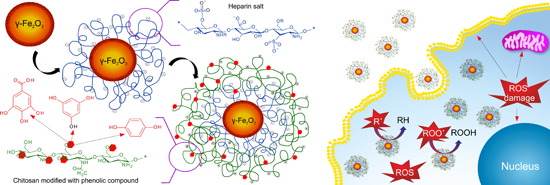
- spectrometer (Analytik Jena AG; Jena, Germany) at a wavelength of 765 nm against a control solution (without chitosan). A series of gallic acid solutions of different concentrations (0.0–0.5 mg/mL) was used to obtain the calibration curve. The results were expressed as the gallic acid equivalent (GAE). Each
- calibration curve was prepared under identical conditions. Cytotoxicity was determined by a CCK-8 assay (Sigma-Aldrich) according to the manufacturer’s instructions. Briefly, cells were cultured in a 24-well plate to 80–90% confluence and incubated with nanoparticles (100 μg/mL) for 3 h in the absence or


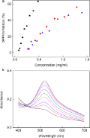

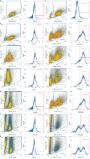


Tailoring the stability/aggregation of one-dimensional TiO2(B)/titanate nanowires using surfactants
Beilstein J. Nanotechnol. 2019, 10, 1024–1037, doi:10.3762/bjnano.10.103
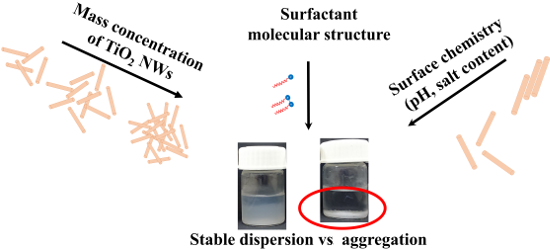
- Riedel-de Haën and used for pH-electrode calibration. All other chemicals used in this investigation were purchased from Fluka and dissolved in Milli-Q water. Sample preparation Preparation of neat surfactant solutions Stock solutions of DTAB, c(DTAB) = 1 × 10⁻¹ mol dm−3 and 12-2-12, c(12-2-12) = 1 × 10


Serum type and concentration both affect the protein-corona composition of PLGA nanoparticles
Beilstein J. Nanotechnol. 2019, 10, 1002–1015, doi:10.3762/bjnano.10.101
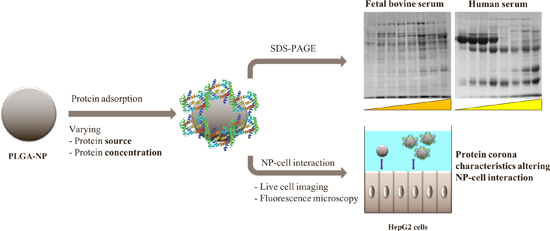
- calibration curve ranging from 0.1–10 µg/mL. Serum protein adsorption on nanoparticles Serum protein adsorption on NPs was carried out according to a modified method described by Gossmann and co-workers [18]. Therefore, increasing amounts of either FBS (50–1600 µL) or human serum (1–1000 µL) were added to an
- to a stable protein–dye complex that was read at 595 nm. The amount of proteins bound to the NPs was quantified using a BSA calibration curve (0.05–0.5 mg/mL) with addition of 1 M NaOH. In addition, the total protein amount in serum (FBS and human serum) was determined. Consequently, the free



Nanoscale optical and structural characterisation of silk
Beilstein J. Nanotechnol. 2019, 10, 922–929, doi:10.3762/bjnano.10.93
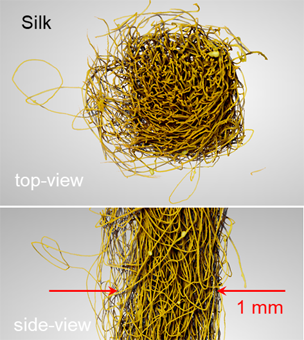
- estimate of the order of magnitude since the calibration of the LC retarder is carried out at a single wavelength, while the imaging is done under white-light illumination. The birefringence originates from the alignment of the structures, which is determined by the fiber orientation down to molecular
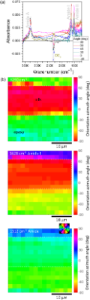
- = 0.25. (a) A series of optical images taken at different voltages of a liquid crystal (LC) retarder (schematically shown in the inset of (b)) and a Nikon Optiphot-pol microscope with LMPlanFL 20× objective lens, NA = 0.4. (b) Calibration curve of retardance as a function of voltage collected at 635 nm


The systemic effect of PEG-nGO-induced oxidative stress in vivo in a rodent model
Beilstein J. Nanotechnol. 2019, 10, 901–911, doi:10.3762/bjnano.10.91
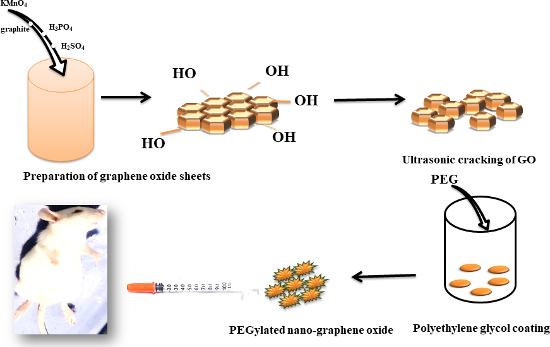
- mixed with a 0.04% DNTB buffer in a ratio of 1:9. Then, the absorbance was measured at 412 nm using a UV–vis spectrometer. The GSH level was determined using a calibration curve and was expressed in μM/mg. Glutathione S-transferase Glutathione S-transferase (GST) activity was calculated by a method





