


Search results
Search for "catalysis" in Full Text gives 326 result(s) in Beilstein Journal of Nanotechnology. Showing first 200.
Upcycling of polyurethane waste by mechanochemistry: synthesis of N-doped porous carbon materials for supercapacitor applications
Beilstein J. Nanotechnol. 2019, 10, 1618–1627, doi:10.3762/bjnano.10.157
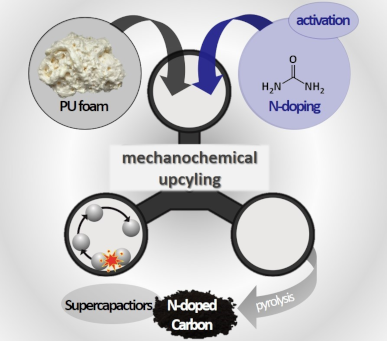
- applications in catalysis [24][25][26], gas sorption/separation [27][28][29] and electrochemical energy storage/conversion. For the latter, porous carbon materials are established as electrode materials in fuel cells [30][31][32][33], Li–S cells [34][35][36][37], and supercapacitors [38]. In addition, these


Kelvin probe force microscopy work function characterization of transition metal oxide crystals under ongoing reduction and oxidation
Beilstein J. Nanotechnol. 2019, 10, 1596–1607, doi:10.3762/bjnano.10.155
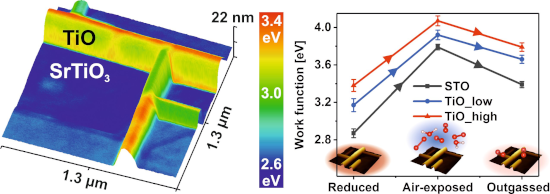
- . Keywords: Kelvin probe force microscopy (KPFM); reduction and oxidation; SrTiO3; TiO nanowires; TiO/SrTiO3 heterostructure; transition metal oxides; work function; Introduction Transition metal oxides are viewed today as some of the most promising materials in various fields, ranging from (photo)catalysis
- superconductor with a superconductivity transition temperature (Tc) of 5.5 K, which is higher than previously reported results [22]. As a result of its electronic structure, titanium monoxide nanoparticles find further application in heterogeneous catalysis, e.g., for the hydrogenation of styrene [1]. Here we


Materials nanoarchitectonics at two-dimensional liquid interfaces
Beilstein J. Nanotechnol. 2019, 10, 1559–1587, doi:10.3762/bjnano.10.153
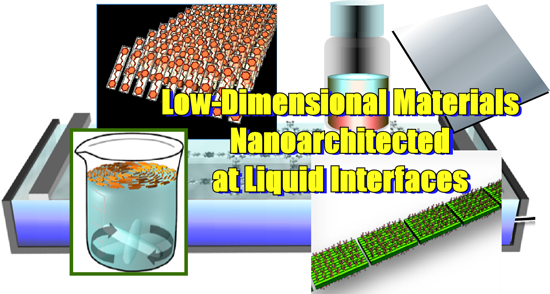
- their potential for wide-ranging applications, such as electronics, sensing, catalysis, separation, and energy storage and conversion. However, most reported two-dimensional MOFs and COFs have been synthesised as powders, which are not easily processed into more useful forms due to their nature as cross



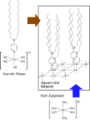

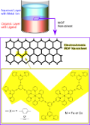

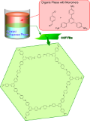


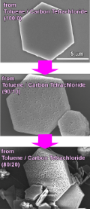






Development of a new hybrid approach combining AFM and SEM for the nanoparticle dimensional metrology
Beilstein J. Nanotechnol. 2019, 10, 1523–1536, doi:10.3762/bjnano.10.150
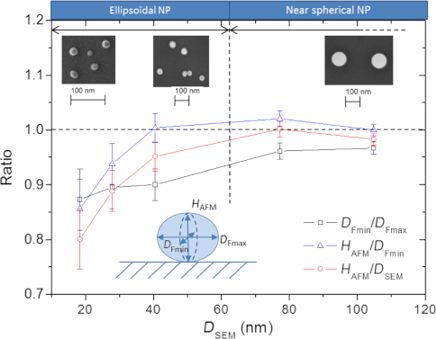
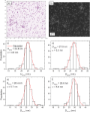
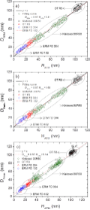
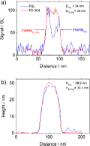
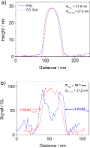
- and TEM) of 27.8 nm with 1.5 nm uncertainty (k = 2) [16]. The third sample, Klebosol® 30R50, is a commercially available bimodal silica NP suspension. It is used for applications concerning catalysis, leather treatment, paints and coatings, and textiles. A complete dimensional characterization of this




Flexible freestanding MoS2-based composite paper for energy conversion and storage
Beilstein J. Nanotechnol. 2019, 10, 1488–1496, doi:10.3762/bjnano.10.147
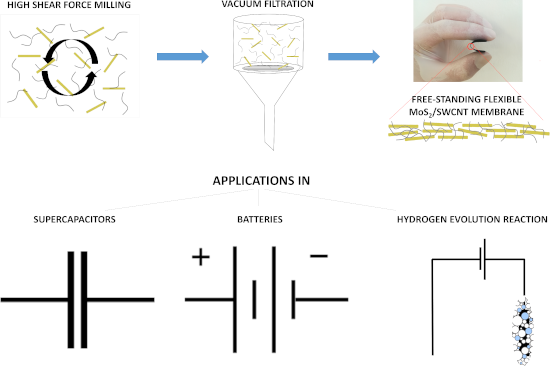
- top of a filter during vacuum filtration. The reported material exhibits high structural integrity and flexibility. The composite was tested in various electrochemical applications covering supercapacitors, anodes in lithium ion batteries and hydrogen evolution catalysis. In terms of supercapacitors


Hierarchically structured 3D carbon nanotube electrodes for electrocatalytic applications
Beilstein J. Nanotechnol. 2019, 10, 1475–1487, doi:10.3762/bjnano.10.146
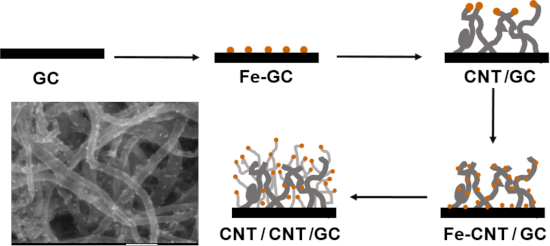
- ., colloidal synthesis [29][30][31], a galvanic replacement process [32][33][34][35] or microwave-assisted preparation [20][21][36], have been proposed to gain control over the structural features of the active nanoparticles. However, from heterogeneous catalysis it is generally known that a suitable catalyst





Highly ordered mesoporous silica film nanocomposites containing gold nanoparticles for the catalytic reduction of 4-nitrophenol
Beilstein J. Nanotechnol. 2019, 10, 1368–1379, doi:10.3762/bjnano.10.135
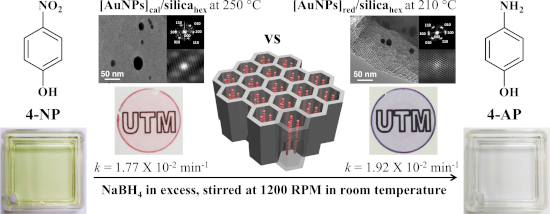
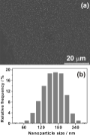
- different sizes of AuNPs were possibly formed in their thin film composites. Catalytic activity For the catalysis reaction, only the thin film composites [AuNPs]cal/silicahex treated at 250 °C for 3 hours and [AuNPs]red/silicahex materials treated at 210 °C for 2 hours were selected because these thin films


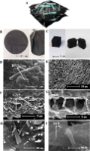
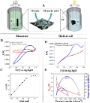
Multicomponent bionanocomposites based on clay nanoarchitectures for electrochemical devices
Beilstein J. Nanotechnol. 2019, 10, 1303–1315, doi:10.3762/bjnano.10.129
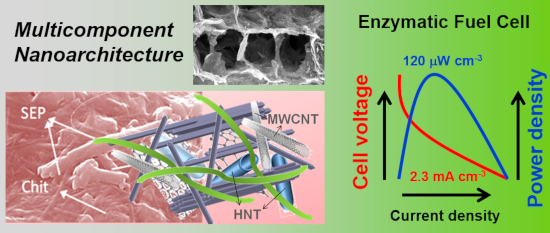
- attracting increasing attention in the development of nanoarchitectured materials in applications such as catalysis or biomedicine [8]. The presence of silanol groups at the external surface of the clay fibers allows for the easy assembly with different species facilitating the design and the build up of



Playing with covalent triazine framework tiles for improved CO2 adsorption properties and catalytic performance
Beilstein J. Nanotechnol. 2019, 10, 1217–1227, doi:10.3762/bjnano.10.121
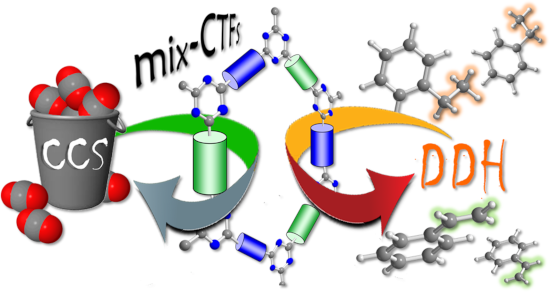
- ). Moreover, following our recent achievements in the field of steam- and oxygen-free dehydrogenation catalysis using CTFs as metal-free catalysts, the new samples with highest N contents have been scrutinized in the process to provide additional insights to their complex structure–activity relationship
- . Keywords: covalent triazine frameworks; CO2 adsorption; CO2/N2 selectivity; dehydrogenation catalysis; ionothermal conditions; Introduction Recent years have witnessed an increasing interest in carbon-based nanomaterials as functional devices for energy-related applications [1]. Their unique properties
- therefore covers a wide range of applications in (photo-/electro-)catalysis, gas storage and separation technologies as well as energy storage devices. Among nanocarbons, (nano)porous organic polymers (POPs) have gained a significant popularity because of their unique features [4][5][6][7][8]. Indeed, the


A highly efficient porous rod-like Ce-doped ZnO photocatalyst for the degradation of dye contaminants in water
Beilstein J. Nanotechnol. 2019, 10, 1157–1165, doi:10.3762/bjnano.10.115
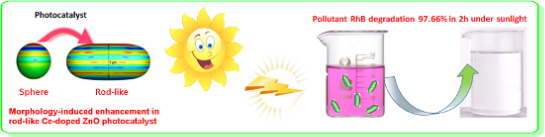
- ]. In recent years, metal organic frameworks (MOFs) have been intensively investigated and widely utilized in various fields, such as electrocatalysis [14], heterogeneous catalysis [15] and photocatalysis [16]. Yang et al. [17] reported that Ga-MOF displayed moderate to high catalytic activity of
- knowledge, the synthesis of rod-like Ce-doped ZnO (abbreviated as CZO [9]) by pyrolysis derived from ZIF-8 (a zeolitic imidazolate framework, ZIF) has not been reported. As one of the most frequently used MOFs, ZIF-8 (2-methylimidazole zinc salt) has potential applications in gas storage, catalysis, etc


Photoactive nanoarchitectures based on clays incorporating TiO2 and ZnO nanoparticles
Beilstein J. Nanotechnol. 2019, 10, 1140–1156, doi:10.3762/bjnano.10.114
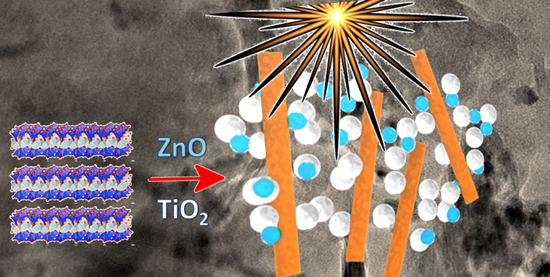
- ), layered silicates such as smectites are of particular interest as they have been largely used in adsorption and catalysis applications due to their valuable properties as expandable interlayer space, low cost and environmentally friendly nature [71]. Similarly, fibrous silicates, i.e., palygorskite and
- important advantage for the flow system. A simpler continuous-flow reactor was designed by Meshram and co-workers [169]. Conclusions and Future Perspectives Clay minerals are abundant, low-cost and benign materials that can be advantageous over other kinds of inorganic solids used in heterogeneous catalysis



Synthesis and characterization of quaternary La(Sr)S–TaS2 misfit-layered nanotubes
Beilstein J. Nanotechnol. 2019, 10, 1112–1124, doi:10.3762/bjnano.10.111
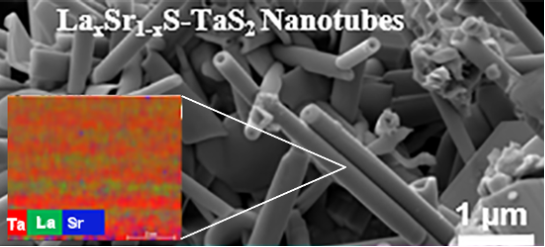
- different functionalities to be combined and is characterized by the presence of different regions corresponding to the inner and outer surfaces (e.g., for adsorption and catalysis), the interstitial galleries (for intercalation), and the tube termination, which could be either opened or capped [3


Synthesis of novel C-doped g-C3N4 nanosheets coupled with CdIn2S4 for enhanced photocatalytic hydrogen evolution
Beilstein J. Nanotechnol. 2019, 10, 912–921, doi:10.3762/bjnano.10.92
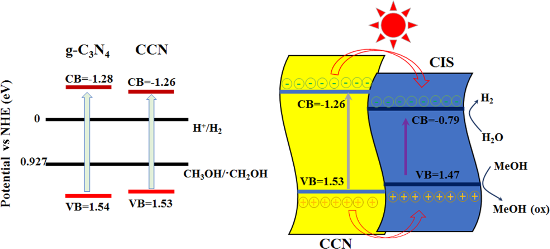
- attention because of the suitable band edge and band gap, as well as tunable optical properties [23][24][25][26][27][28]. For example, CdIn2S4 has been reported in various photoredox catalysis, such as organic photosynthesis, CO2 photoreduction and H2 evolution [29][30][31]. Despite these advances, the


Co-doped MnFe2O4 nanoparticles: magnetic anisotropy and interparticle interactions
Beilstein J. Nanotechnol. 2019, 10, 856–865, doi:10.3762/bjnano.10.86
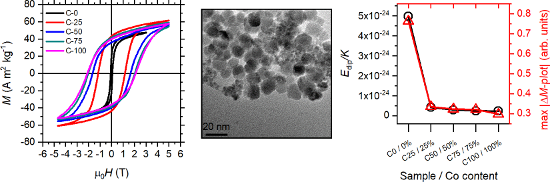
- of potential applications, e.g., from catalysis [5] and microwaves applications [6] to biomedicine, such as MRI [7], hyperthermia [8], and drug delivery [7][9] applications. Nanometer-sized magnetic materials exhibit different properties compared their bulk counterparts [10][11]. Below a critical


Synthesis of MnO2–CuO–Fe2O3/CNTs catalysts: low-temperature SCR activity and formation mechanism
Beilstein J. Nanotechnol. 2019, 10, 848–855, doi:10.3762/bjnano.10.85
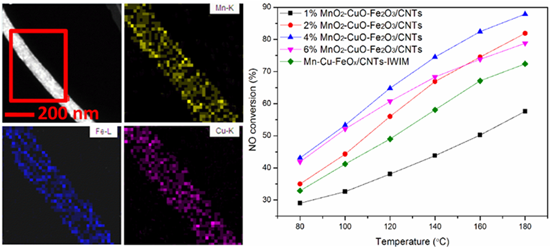
- conversions of 4% MnO2–CuO–Fe2O3/CNTs catalyst of 43.1–87.9% at 80–180 °C were achieved, which was ascribed to the generation of amorphous MnO2, CuO and Fe2O3, and a high surface-oxygen (Os) content. Keywords: amorphous materials; carbon nanotubes; low-dimensional materials; low-temperature catalysis; SCR




Ultrathin hydrophobic films based on the metal organic framework UiO-66-COOH(Zr)
Beilstein J. Nanotechnol. 2019, 10, 654–665, doi:10.3762/bjnano.10.65
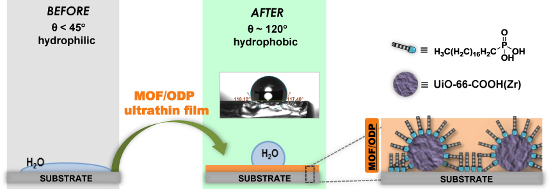
- applications [5], including gas storage [6], membranes for separation processes [7], heterogeneous catalysis [8], sensing [9] or drug delivery [10], among others. Many of these applications require the formation of MOF films onto different kinds of surfaces with precise control of film thickness and


Ceria/polymer nanocontainers for high-performance encapsulation of fluorophores
Beilstein J. Nanotechnol. 2019, 10, 522–530, doi:10.3762/bjnano.10.53
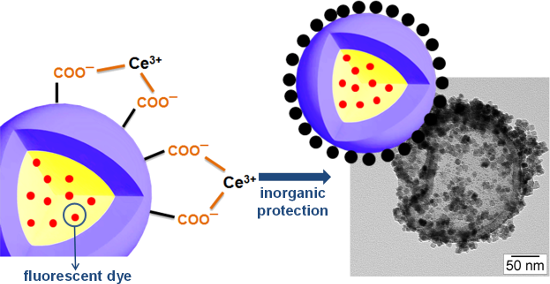
- excellent antioxidant properties, ideal for applications such as water-gas shift catalysis [40], combustion catalysis [41], oxygen ion conductors, and solid-oxide fuel cells [42]. Due to the valence and oxygen defect properties of cerium(IV) oxide, nanoparticles of this material are also used as efficient


Improving control of carbide-derived carbon microstructure by immobilization of a transition-metal catalyst within the shell of carbide/carbon core–shell structures
Beilstein J. Nanotechnol. 2019, 10, 419–427, doi:10.3762/bjnano.10.41
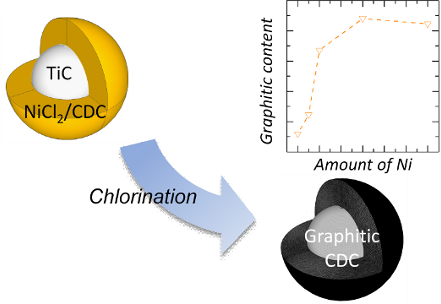
- graphitization; graphitic carbon; pore structure; transition metal; Introduction Carbon is a versatile material that has been widely utilized in many applications such as adsorption [1][2][3], catalysis [4][5], catalyst support [6][7][8], molecular sieves [9][10] and energy storage [11][12][13], owing to its


One-step nonhydrolytic sol–gel synthesis of mesoporous TiO2 phosphonate hybrid materials
Beilstein J. Nanotechnol. 2019, 10, 356–362, doi:10.3762/bjnano.10.35
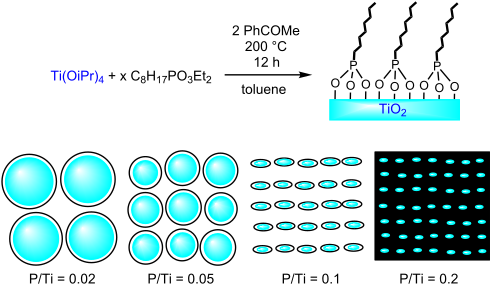
- of heterogeneous catalysis or selective adsorption. Their high hydrolytic stability over a wide range of pH [15] and the possibility to functionalize them with a variety of functional groups makes them particularly promising for applications in aqueous phase catalysis (e.g., for biomass conversion


Thermal control of the defunctionalization of supported Au25(glutathione)18 catalysts for benzyl alcohol oxidation
Beilstein J. Nanotechnol. 2019, 10, 228–237, doi:10.3762/bjnano.10.21
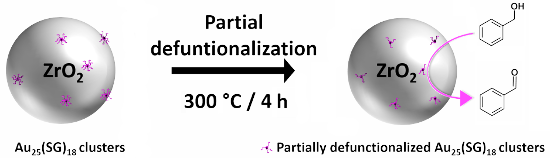
- chemical sensing, bioimaging, biotherapy and catalysis. As a catalyst, GNCs, and mostly Au25(SR)18 gold thiolate clusters, have shown high activity for different reactions such as liquid or gas phase oxidation, hydrogenation, C–C coupling and electro/photocatalysis [13]. Based on different studies, it is




pH-mediated control over the mesostructure of ordered mesoporous materials templated by polyion complex micelles
Beilstein J. Nanotechnol. 2019, 10, 144–156, doi:10.3762/bjnano.10.14
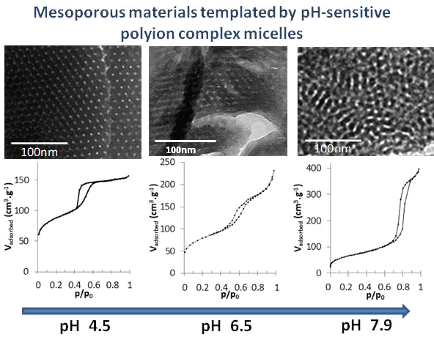
- , silica-based ordered mesoporous materials (OMMs) have attracted considerable attention in various fields such as adsorption, separation and catalysis. The formation of these mesostructures relies on a supramolecular assembly process between silicic species and surfactants or amphiphilic block copolymers


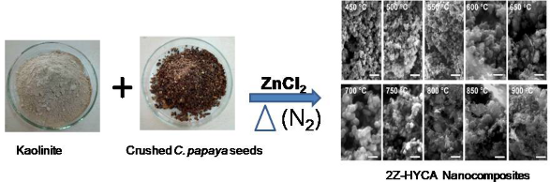
New micro/mesoporous nanocomposite material from low-cost sources for the efficient removal of aromatic and pathogenic pollutants from water
Beilstein J. Nanotechnol. 2019, 10, 119–131, doi:10.3762/bjnano.10.11
- , PMB 230, Ede, Osun State, Nigeria Institute of Chemistry, University of Potsdam, 14476 Potsdam, Germany State Key Laboratory of Catalysis, Dalian Institute of Chemical Physics, Chinese Academy of Sciences, Dalian, 116023, China Department of Chemistry, Hochschule Zittau/Görlitz (University of Applied
- elemental and specific surface area analyses. Supporting Information File 14: Additional experimental results. Acknowledgements We acknowledge Ms. Y. Mai-Linde (University of Potsdam) for help with the elemental analysis and Prof. C. Li and Prof. Q. Yang (State Key Laboratory for Catalysis, Dalian




Ternary nanocomposites of reduced graphene oxide, polyaniline and hexaniobate: hierarchical architecture and high polaron formation
Beilstein J. Nanotechnol. 2018, 9, 2936–2946, doi:10.3762/bjnano.9.272
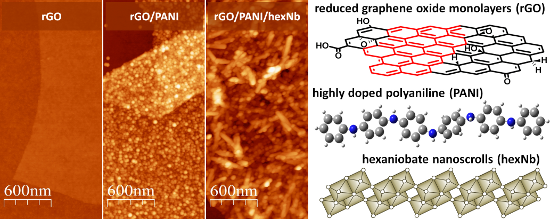
- decomposition, which is assigned to strong interactions between the two components [8]. Besides, rGO presents defects and functional groups on its surfaces that are sites for catalysis or sorption of substrates [9]. Considering the confirmed synergistic effects of PANI/hexNb and PANI/rGO binary nanocomposites


Nanostructure-induced performance degradation of WO3·nH2O for energy conversion and storage devices
Beilstein J. Nanotechnol. 2018, 9, 2845–2854, doi:10.3762/bjnano.9.265
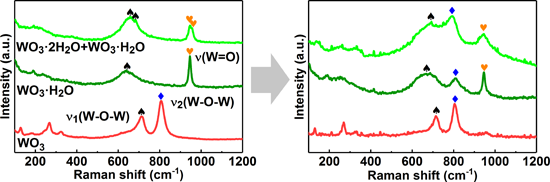
- , Shanxi 030051, P.R. China National Research Tomsk Polytechnic University, Lenin Avenue 30, Tomsk 634050, Russian Federation Laboratory of Organometallics, Catalysis and Ordered Materials, State Key Laboratory of Advanced Technology for Materials Synthesis and Processing, Center for Chemical and Material


Comparative biological effects of spherical noble metal nanoparticles (Rh, Pd, Ag, Pt, Au) with 4–8 nm diameter
Beilstein J. Nanotechnol. 2018, 9, 2763–2774, doi:10.3762/bjnano.9.258
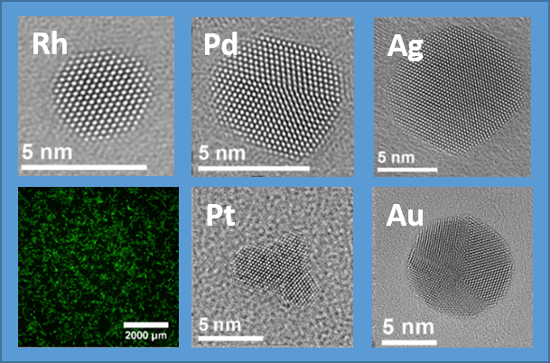
- , palladium, platinum, gold) that do not release ions are not cytotoxic under these conditions. Keywords: cytotoxicity; electron microscopy; metals; nanoparticles; nanotoxicity; Introduction Inorganic and metallic nanoparticles represent a well-established part of materials science, heterogeneous catalysis





