


Search results
Search for "catalysts" in Full Text gives 315 result(s) in Beilstein Journal of Nanotechnology. Showing first 200.
Renewable energy conversion using nano- and microstructured materials
Beilstein J. Nanotechnol. 2019, 10, 771–773, doi:10.3762/bjnano.10.76

- : materials and devices” covers the photo-electrochemical growth of platinum catalysts at plasmonic hot spots [6], the laser-assisted local growth of chalcopyrite absorbers [4], the preferential reactive ion etching of silicon by morphological anisotropies [5], the oxidation of copper nanoparticles resulting
Deposition of metal particles onto semiconductor nanorods using an ionic liquid
Beilstein J. Nanotechnol. 2019, 10, 718–724, doi:10.3762/bjnano.10.71
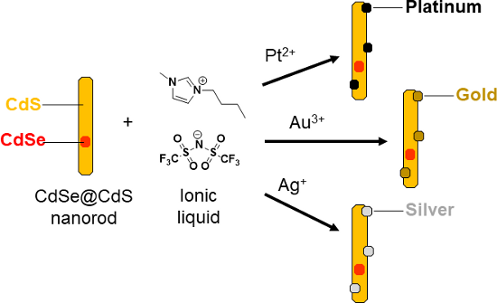
- agents. Photocatalytic dye degradation experiments showed that catalysts with platinum particles deposited using the ionic liquid out-performed similar materials synthesized using organic solvents and ligands. We concluded that metal particles can be deposited onto well-defined semiconductor nanorods
- associated with strongly-bound organic ligands. In principle, it should be possible to prepare metal/semiconductor nanoparticle catalysts on sub-10 nm length scales using ionic liquids and benefit from increased performance due to the absence of strongly bound surface ligands. A literature search for using
- (trifluoromethylsulfonyl)imide ([bmim][Tf2N]) without needing to add any additional reagents. We also deposited platinum nanoparticle cocatalysts onto CdSe@CdS nanorods using a traditional organic system (toluene/triethylamine) as shown in Scheme 1, and the two catalysts prepared in different solvents had remarkably


Ultrathin hydrophobic films based on the metal organic framework UiO-66-COOH(Zr)
Beilstein J. Nanotechnol. 2019, 10, 654–665, doi:10.3762/bjnano.10.65
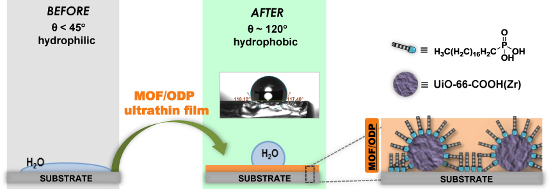
- ][35]. Superhydrophobic MOFs could be of interest for a great variety of technological applications, including coatings, paints and fabrics [36]. Moreover, it has been shown [37] that these materials could be used as catalysts and in gas separation under humid conditions. In this contribution, mixed


Mo-doped boron nitride monolayer as a promising single-atom electrocatalyst for CO2 conversion
Beilstein J. Nanotechnol. 2019, 10, 540–548, doi:10.3762/bjnano.10.55
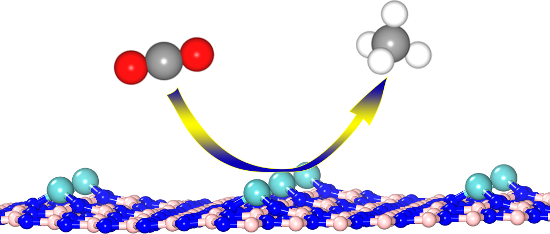
- , Brisbane, QLD 4001, Australia 10.3762/bjnano.10.55 Abstract The design of new, efficient catalysts for the conversion of CO2 to useful fuels under mild conditions is urgent in order to reduce greenhouse gas emissions and alleviate the energy crisis. In this work, a series of transition metals (TMs
- nitride (Mo-doped BN) monolayer possesses excellent performance for converting CO2 to CH4 with a relatively low limiting potential of −0.45 V, which is lower than most catalysts for the selective production of CH4 as found in both theoretical and experimental studies. In addition, the formation of OCHO on
- the Mo-doped BN monolayer in the early hydrogenation steps is found to be spontaneous, which is distinct from the conventional catalysts. Mo, as a non-noble element, presents excellent catalytic performance with coordination to the BN monolayer, and is thus a promising transition metal for catalyzing


Reduced graphene oxide supported C3N4 nanoflakes and quantum dots as metal-free catalysts for visible light assisted CO2 reduction
Beilstein J. Nanotechnol. 2019, 10, 448–458, doi:10.3762/bjnano.10.44
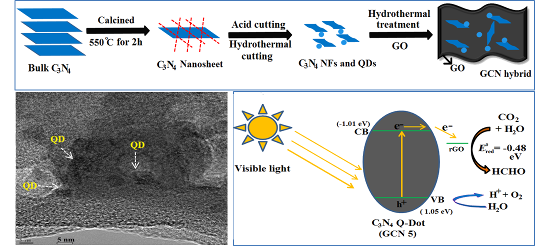
- conduction band (CB) and valence band (VB) edge positions, exhibit efficient charge separation, have a large surface area, and it must be cost effective. Considering the above factors, nontoxic metal-free catalysts, such as graphitic carbon nitride (g-C3N4) and reduced graphene oxide (rGO) have received wide
- significant findings, there have been few studies focused on the improvement of the visible light absorption of g-C3N4/rGO hybrid materials [28][29][30][31] and g-C3N4 QDs, and their CO2 photoreduction ability has not yet been reported. Hence, in our present study, metal-free hybrid catalysts consisting of
- GCN-5 towards the reduction of CO2 is found to be better than many other catalysts reported previously in the literature [41][42][43]. The CO2 photoreduction efficiency of the GCN-5 sample was also measured by apparent quantum yield (AQY) measurements, and was found to be 22.3%. The AQY value of GCN-5





Gold nanoparticles embedded in a polymer as a 3D-printable dichroic nanocomposite material
Beilstein J. Nanotechnol. 2019, 10, 442–447, doi:10.3762/bjnano.10.43
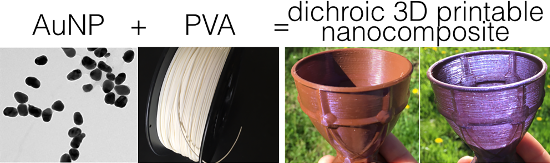
- modifying 3D-printable plastics with, for example, catalysts [11] or TiO2 nanoparticles [12] to obtain new improved materials with special characteristics. In this paper, we show how to fabricate a 3D-printable dichroic material using gold nanoparticles, jumping from the 4th century Roman glassmiths



Improving control of carbide-derived carbon microstructure by immobilization of a transition-metal catalyst within the shell of carbide/carbon core–shell structures
Beilstein J. Nanotechnol. 2019, 10, 419–427, doi:10.3762/bjnano.10.41
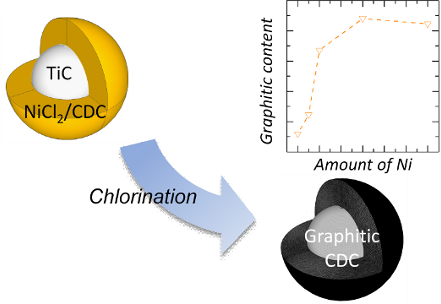
- catalysts, require the combination of the contradicting properties of graphitic microstructure and porosity. The usage of graphitization catalysts during the synthesis of carbide-derived carbon materials results in materials that combine the required properties, but controlling the microstructure during
- large specific surface area and distinct pore character. For applications in which electrical conductivity plays an important role, e.g., battery electrodes, fuel-cell catalysts or supercapacitors [14][15][16], it is necessary for carbon to not only show porosity but also to feature a graphitic
- types of carbides [19]). Commonly used graphitization catalysts are transitions metals such as Fe, Ni, and Co [18][21][22]. The conventional method for catalytic graphitization is to mix the non-porous carbide and metal catalyst precursor prior to the selective etching at high temperature. Indeed, the


Sub-wavelength waveguide properties of 1D and surface-functionalized SnO2 nanostructures of various morphologies
Beilstein J. Nanotechnol. 2019, 10, 379–388, doi:10.3762/bjnano.10.37
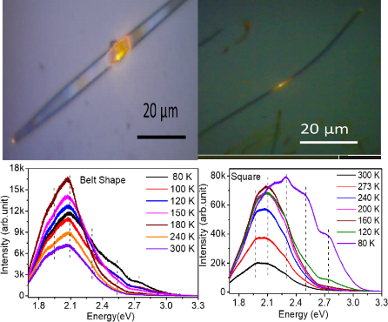
- chemical vapor deposition (CVD) technique has been widely used for the controlled preparation of nanostructures [23]. Especially the vapor–solid (VS) process, without the involvement of catalysts, and the vapor–liquid–solid (VLS) process, with the assistance of catalysts, are utilized for the growth of


Thermal control of the defunctionalization of supported Au25(glutathione)18 catalysts for benzyl alcohol oxidation
Beilstein J. Nanotechnol. 2019, 10, 228–237, doi:10.3762/bjnano.10.21
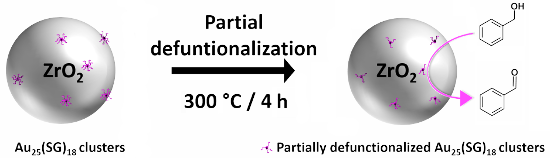
- presence of an excess of base (Cs2CO3, 3 eq.) at 80 °C and under atmospheric conditions (Scheme 1). Before observing the influence of calcination of thiolates on the activity of the gold catalysts, a blank and the support alone were run to confirm the catalytic activity of the gold catalyst. Since there
- of benzyl alcohol is performed under harsh conditions of temperature and pressure without a catalyst [39]. Gold-based catalysts perform this oxidation under milder conditions [31]. The reaction using (A300) as a catalyst, was performed at two different temperatures, 60 °C and 80 °C, with all other
- (SG)18@ZrO2 based catalysts (2 µmol Au) in the oxidative dehydrogenation of benzyl alcohol in toluene at 80 °C (1 atm of air): 25%, 50% and 90% conversion times (t), benzaldehyde selectivity at half conversion (Sel 50%), turn over frequency (TOF) and gold particle size measured by TEM before the


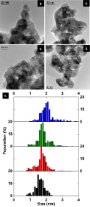


Nanoporous water oxidation electrodes with a low loading of laser-deposited Ru/C exhibit enhanced corrosion stability
Beilstein J. Nanotechnol. 2019, 10, 157–167, doi:10.3762/bjnano.10.15
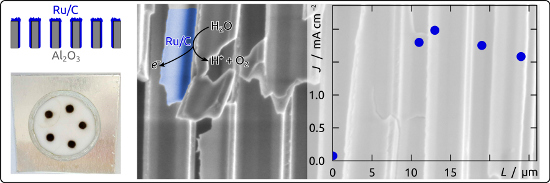
- artificial water splitting, catalysts are required for the rate-limiting half reaction, the dioxygen evolution, which must be driven at low overpotential (for maximizing conversion efficiency) [2]. The most active catalyst materials for this transformation are metallic iridium and ruthenium particles, the


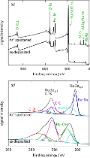


Amorphous NixCoyP-supported TiO2 nanotube arrays as an efficient hydrogen evolution reaction electrocatalyst in acidic solution
Beilstein J. Nanotechnol. 2019, 10, 62–70, doi:10.3762/bjnano.10.6
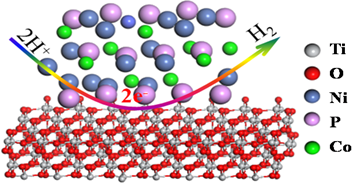
- bottleneck for HER is the high overpotential associated with the process that takes place at a significant rate due to the high activation barrier and the sluggish multiple-proton-coupled electron transfer [4][5][6]. Noble metal Pt-based catalysts are widely used for HER to circumvent the overpotential
- .) demonstrate a superior electrochemical performance. Because the ternary phases provide a synergistic effect, these bi-metal phosphides provide good electrical conductivity and electronic structure [15][16][17]. Among the bi-metal phosphides, Ni–Co–P catalysts have been intensively investigated. The similar
- to large-scale industrial application. Amorphous catalysts intrinsically contain more defect sites which probably work as active centers compared to the crystalline counterparts. A representative work is that by Zhang et al. where they synthesized Ni–Co–P/nickel foam electrodes via a facile


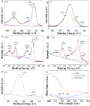


Co-intercalated layered double hydroxides as thermal and photo-oxidation stabilizers for polypropylene
Beilstein J. Nanotechnol. 2018, 9, 2980–2988, doi:10.3762/bjnano.9.277
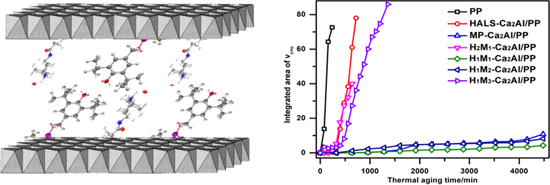
- Qian Zhang Qiyu Gu Fabrice Leroux Pinggui Tang Dianqing Li Yongjun Feng State Key Laboratory of Chemical Resource Engineering, Beijing Engineering Center for Hierarchical Catalysts, Beijing University of Chemical Technology, No. 15 Beisanhuan East Road, Beijing 100029, China Université Clermont


Ternary nanocomposites of reduced graphene oxide, polyaniline and hexaniobate: hierarchical architecture and high polaron formation
Beilstein J. Nanotechnol. 2018, 9, 2936–2946, doi:10.3762/bjnano.9.272
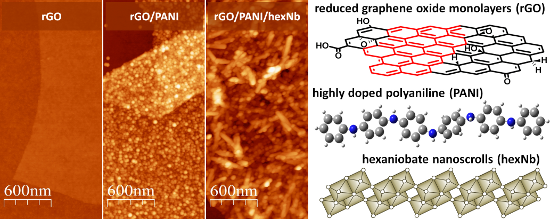
- K4Nb6O17) and protons (acidic form H2K2Nb6O17) [28][29]. Due to their high acidic surfaces, protonic niobates and titanoniobates have been reported as promising solid acid catalysts for various chemical reactions [30][31]. Moreover, hexaniobate can be exfoliated by treatment with a number of species such


Graphene-enhanced metal oxide gas sensors at room temperature: a review
Beilstein J. Nanotechnol. 2018, 9, 2832–2844, doi:10.3762/bjnano.9.264
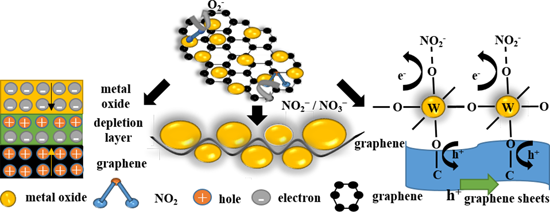
- structure with a high surface area to volume ratio. The porous structure promoted the diffusion of gases, improving the reaction of gases with oxygen species on the surface of the hybrid material. The Cu2O–rGO composites exhibited exceptional catalytic activity and acted as high-efficiency catalysts for the



Comparative biological effects of spherical noble metal nanoparticles (Rh, Pd, Ag, Pt, Au) with 4–8 nm diameter
Beilstein J. Nanotechnol. 2018, 9, 2763–2774, doi:10.3762/bjnano.9.258
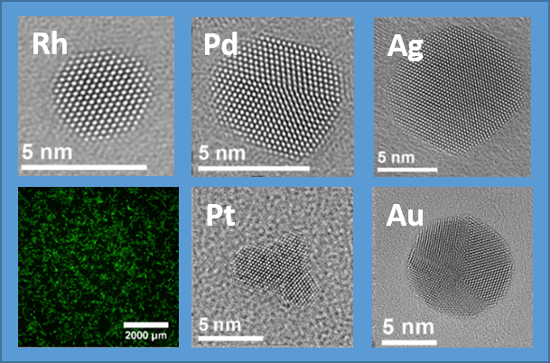
- ]. Platinum nanoparticles can be obtained by metal carbonyl-mediated synthesis in organic solvents [81]. Nanoscale platinum catalysts were synthesized using NaBH4 in octylamine [82]. Small gold nanoparticles (<10 nm) can be produced by wet-chemical approaches using strong reductants (e.g., NaBH4) in the


Improved catalytic combustion of methane using CuO nanobelts with predominantly (001) surfaces
Beilstein J. Nanotechnol. 2018, 9, 2526–2532, doi:10.3762/bjnano.9.235
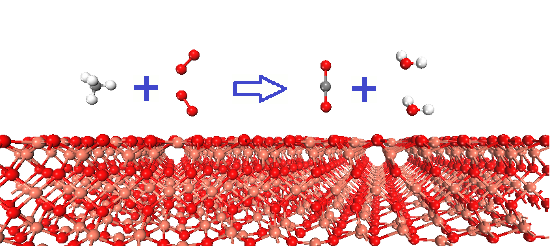
- underlines the need to develop high-performance catalysts for CH4 oxidation at low temperature. Except as fuel in natural gas, much of the CH4 that is released is from industrial applications, such as ventilation air methane (VAM) from underground coal mining. This is a serious issue because CH4 has severe
- been reported as effective catalysts for the complete oxidation of methane [2][5][9][10][11][12][13][14][15][16][17], particularly supported Pd nanoparticles [15][16][17], while the high price and poor thermal stability limit their large scale application. To address this issue, low-cost alternatives
- , such as transition metal (TM) oxides and various complex structures (e.g., perovskite, spinel and hexaaluminate) have been tested as catalysts for CH4 oxidation. But so far their performance is still much lower than noble metals. An ideal catalyst for CH4 oxidation should have a high capacity to adsorb


Nanocellulose: Recent advances and its prospects in environmental remediation
Beilstein J. Nanotechnol. 2018, 9, 2479–2498, doi:10.3762/bjnano.9.232
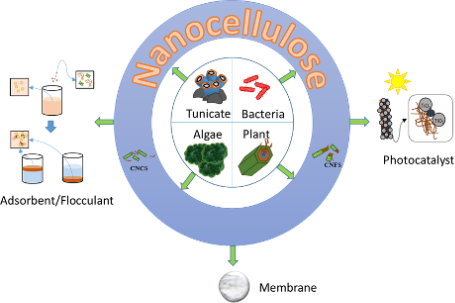
- morphologies and have various functions (e.g., adsorbents, catalysts, or membranes). The high reactivity and high surface area of nanomaterials are some of the notable features which provide an advantage in environmental remediation over other conventional alternatives [1]. Promising materials such as
- been used to fabricate catalysts for the reduction of 4-nitrophenol [52] and microfiltration membranes for bacteria, virus, and heavy metal ion removal [53]. In addition, bleached birch fibres from Betula verrucosa and B. pendula were also investigated in a study led by Suopajärvi et al. [54] to


Hierarchical heterostructures of Bi2MoO6 microflowers decorated with Ag2CO3 nanoparticles for efficient visible-light-driven photocatalytic removal of toxic pollutants
Beilstein J. Nanotechnol. 2018, 9, 2297–2305, doi:10.3762/bjnano.9.214
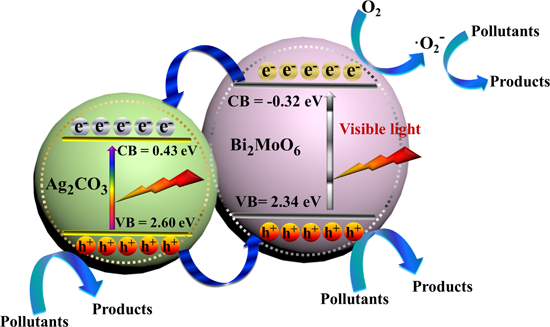
- . Also, the photocatalytic mechanism of pollutant degradation over Ag2CO3/Bi2MoO6 was discussed. Results and Discussion Characterization of catalysts A series of flowerlike Ag2CO3/Bi2MoO6 heterostructures with different weight ratios (0.1/1, 0.2/1, 0.3/1, and 0.5/1) were constructed and labeled ACO/BMO
- [32]. To visually study the microstructure and morphology of Ag2CO3/Bi2MoO6, SEM images of the as-prepared catalysts were taken. Bare Bi2MoO6 presents a hierarchical microsphere structure (diameter: 1.6–3.5 μm, Figure 2a,b). After Ag2CO3 was loaded onto Bi2MoO6, the resulting Ag2CO3/Bi2MoO6 retained
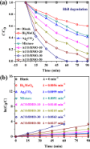
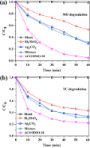
- under visible light was measured. Figure 6a displays the degradation of RhB as a function of the time. The RhB concentration remains unchanged in the absence of catalysts. In the presence of bare Bi2MoO6 and Ag2CO3 only 39.8% and 58.7% of RhB were degraded after 90 min of reaction time. The degradation




Electrospun one-dimensional nanostructures: a new horizon for gas sensing materials
Beilstein J. Nanotechnol. 2018, 9, 2128–2170, doi:10.3762/bjnano.9.202
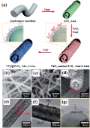
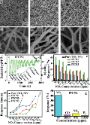
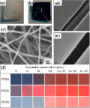
- oxide catalysts and have been evaluated for toluene sensing [1]. WO3 NFs are functionalized by Pd-loaded ZnO nanocubes that result in multi-heterojunction Pd–ZnO and ZnO–WO3 interfaces. The as-spun Pd@ZnO-WO3 NFs have average diameter in the range 500–950 nm that reduces to 400–850 nm after calcination






Localized photodeposition of catalysts using nanophotonic resonances in silicon photocathodes
Beilstein J. Nanotechnol. 2018, 9, 2097–2105, doi:10.3762/bjnano.9.198
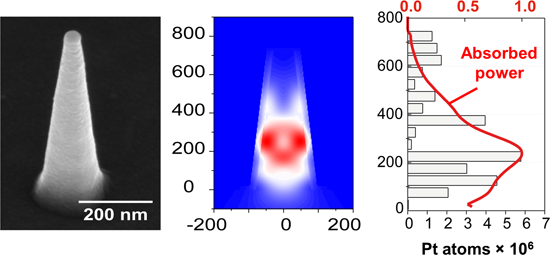
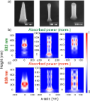
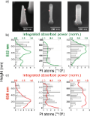
- promising for the design of lithography-free and efficient hierarchical nanostructures for the generation of solar fuels. Keywords: catalysts; nanomaterials; nanophotonics; photodeposition; solar fuels; Introduction The relentless rise of CO2 levels in the atmosphere as well as the growth of the world
- semiconductor–solution interface, directly at the location of the hot spots. Placing the catalyst exclusively at the hot spots would reduce both the catalyst loading (lowering the cost) and the average time between charge generation and chemical reaction (increasing the efficiency). However, current catalysts


Metal-free catalysis based on nitrogen-doped carbon nanomaterials: a photoelectron spectroscopy point of view
Beilstein J. Nanotechnol. 2018, 9, 2015–2031, doi:10.3762/bjnano.9.191
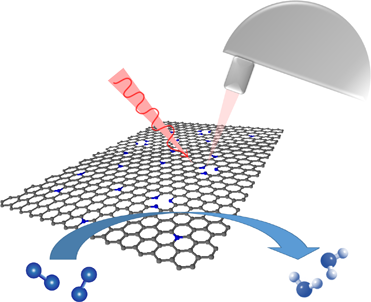
- splitting of water to molecular hydrogen via hydrogen and oxygen evolution reaction (HER and OER, respectively) are fundamental working mechanisms at the cathode of fuel cells, metal–air batteries and dye-sensitized solar cells [2]. However, the current working catalysts are based on expensive metals, such
- as platinum or its alloys, or metal oxides, which affect the engineering cost of fuel cells being also energy consuming and not highly selective [3]. Therefore, research efforts have been devoted towards alternative highly active catalysts from non-precious metals [4]. Repeatedly reported potential
- absorption of H2 on the catalyst lowering the cell performance [6]. In parallel, the research on the catalytic activity of low-cost and metal-free catalysts has proceeded for decades. The discovery of catalytic properties of carbon alloys with nitrogen dates back to 1926 when Rideal and Wright reported their




Synthesis of a MnO2/Fe3O4/diatomite nanocomposite as an efficient heterogeneous Fenton-like catalyst for methylene blue degradation
Beilstein J. Nanotechnol. 2018, 9, 1940–1950, doi:10.3762/bjnano.9.185
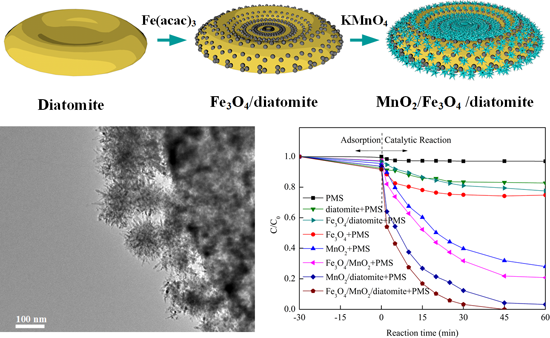
- .9.185 Abstract Heterogeneous Fenton-like catalysts with the activation of peroxymonosulfate (PMS), which offer the advantages of fast reaction rate, wide functional pH range and cost efficiency, have attracted great interest in wastewater treatment. In this study, a novel magnetic MnO2/Fe3O4/diatomite
- diatomite, which can be readily magnetically separated from the solution. The as-prepared catalyst, compared with other Fenton-like catalysts, shows a superb MB degradation rate of nearly 100% in 45 min in the pH range of 4 to 8 and temperature range of 25 to 55 °C. Moreover, the nanocomposite shows a good
- considered as the most promising method because of the high removal efficiency and wide application scopes [6][7]. Iron-based homogeneous and heterogeneous Fenton or Fenton-like catalysts with the activation of H2O2 can effectively generate hydroxyl radicals (•OH, the main reactive species for the


Synthesis of rare-earth metal and rare-earth metal-fluoride nanoparticles in ionic liquids and propylene carbonate
Beilstein J. Nanotechnol. 2018, 9, 1881–1894, doi:10.3762/bjnano.9.180
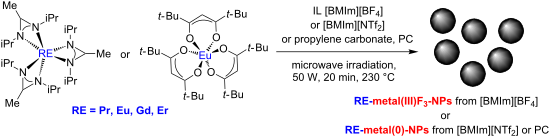
- obtained rare-earth fluoride particles were not phase-pure [8]. An alternative method for synthesizing rare-earth metal-fluoride nanoparticles is the use of rare-earth metal amidinates as precursors [9][10][11][12]. Metal amidinates are coordination compounds [13][14] and used, for example, as catalysts in


Improving the catalytic activity for hydrogen evolution of monolayered SnSe2(1−x)S2x by mechanical strain
Beilstein J. Nanotechnol. 2018, 9, 1820–1827, doi:10.3762/bjnano.9.173
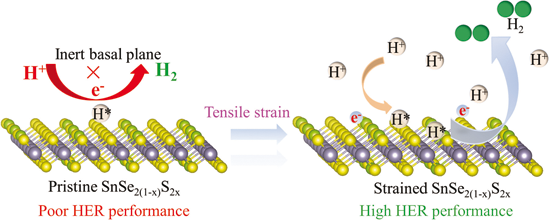
- ; however, the high cost and limited resources of these types of catalyst restrict their usage in the mass production of hydrogen [8][9][10]. Therefore, exploring non-noble and earth-abundant elements as catalysts for hydrogen production is one of the most promising pathways for the mass production of
- in recent decades to the development of inexpensive catalysts for the electrochemical HER. Some of the recent studies have focused on monolayer SnX2 (X = S, Se). Liu et al. [43] investigated SnS2 nanosheets regarding their electrochemical behaviour and electrocatalytic properties for HER by examining
- the electronic properties of the catalyst, they will affect the catalytic behaviour. Several TMD alloy systems have been investigated as catalysts for HER, including Mo1−xWxSe2 nanoflowers [44], WS2(1−x)Se2x nanotubes [45] and MoS2(1−x)Se2x nanobelts [46]. It was reported that alloying provides an


Direct AFM-based nanoscale mapping and tomography of open-circuit voltages for photovoltaics
Beilstein J. Nanotechnol. 2018, 9, 1802–1808, doi:10.3762/bjnano.9.171
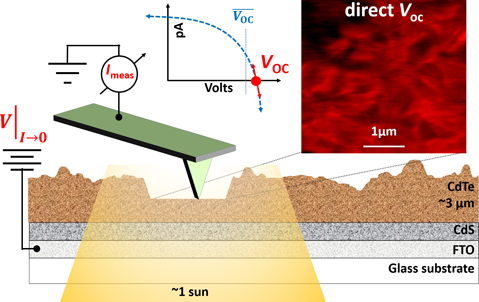
- micro-scale. Such novel SPM-based measurements can be crucial to advancing the fundamental understanding, and ultimately performance and reliability, of a wide range of photosensors, photoactivated catalysts, and photovoltaics. pcAFM measurement of a CdTe/CdS solar cell, during specimen illumination





