


Search results
Search for "core shell" in Full Text gives 259 result(s) in Beilstein Journal of Nanotechnology. Showing first 200.
Sheet-on-belt branched TiO2(B)/rGO powders with enhanced photocatalytic activity
Beilstein J. Nanotechnol. 2018, 9, 1550–1557, doi:10.3762/bjnano.9.146
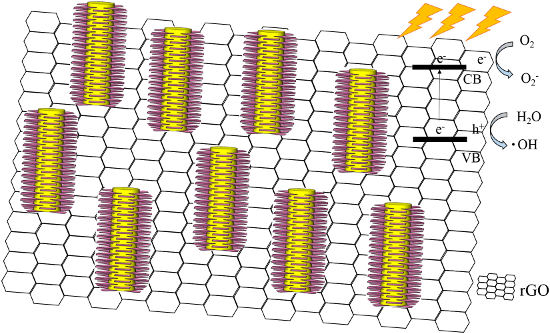
- nanocrystals on TiO2(B) single-crystal fibrils by a two-step process [23]. Li et al. prepared a biphase TiO2 core/shell nanofiber with anatase core and TiO2(B) shell [24]. Kandiel et al. used a hydrothermal technique to synthesize TiO2(B) nanofibers simultaneously decorated with anatase nanoparticles [25]. The


Robust topological phase in proximitized core–shell nanowires coupled to multiple superconductors
Beilstein J. Nanotechnol. 2018, 9, 1512–1526, doi:10.3762/bjnano.9.142

- Science and Engineering, Reykjavik University, Menntavegur 1, IS-101 Reykjavik, Iceland 10.3762/bjnano.9.142 Abstract We consider core–shell nanowires with prismatic geometry contacted with two or more superconductors in the presence of a magnetic field applied parallel to the wire. In this geometry, the
- the value of the critical field associated with the topological quantum phase transition. Keywords: core–shell nanowires; Majorana states; multiple 1D chains; prismatic geometry; topological superconducting phase; Introduction The intense ongoing search for Majorana zero modes (MZMs) in solid states
- stability of the Majorana modes [28]. Proximitized core–shell nanowires are slightly more complex systems recently shown [29] to have interesting Majorana physics that is practically immune to orbital effects. With a conductive shell and an insulating core, such heterostructures become tubular conductors


![[Graphic 30]](/bjnano/content/inline/2190-4286-9-142-i36.svg?max-width=637&scale=1.18182) ) = 0 and
) = 0 and ![[Graphic 31]](/bjnano/content/inline/2190-4286-9-142-i37.svg?max-width=637&scale=1.18182) = 0. The white areas are t...
= 0. The white areas are t...


![[Graphic 40]](/bjnano/content/inline/2190-4286-9-142-i46.svg?max-width=637&scale=1.18182) ) ≠ 0 and
) ≠ 0 and ![[Graphic 41]](/bjnano/content/inline/2190-4286-9-142-i47.svg?max-width=637&scale=1.18182) = 0. The white areas are topol...
= 0. The white areas are topol...

![[Graphic 50]](/bjnano/content/inline/2190-4286-9-142-i56.svg?max-width=637&scale=1.18182) ) ≠ 0 and
) ≠ 0 and ![[Graphic 51]](/bjnano/content/inline/2190-4286-9-142-i57.svg?max-width=637&scale=1.18182) 1 = 0,
1 = 0, ![[Graphic 52]](/bjnano/content/inline/2190-4286-9-142-i58.svg?max-width=637&scale=1.18182) 3 = π/2,
3 = π/2, ![[Graphic 53]](/bjnano/content/inline/2190-4286-9-142-i59.svg?max-width=637&scale=1.18182) 5 = −π/2. T...
5 = −π/2. T...

![[Graphic 65]](/bjnano/content/inline/2190-4286-9-142-i71.svg?max-width=637&scale=1.18182) ) ≠ 0 and
) ≠ 0 and ![[Graphic 66]](/bjnano/content/inline/2190-4286-9-142-i72.svg?max-width=637&scale=1.18182) 1 = π/2,
1 = π/2, ![[Graphic 67]](/bjnano/content/inline/2190-4286-9-142-i73.svg?max-width=637&scale=1.18182) 3 = −π/2,
3 = −π/2, ![[Graphic 68]](/bjnano/content/inline/2190-4286-9-142-i74.svg?max-width=637&scale=1.18182) 5 = π/2, and ...
5 = π/2, and ...


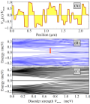
![[Graphic 79]](/bjnano/content/inline/2190-4286-9-142-i85.svg?max-width=637&scale=1.18182) = 3 of a triangular wi...
= 3 of a triangular wi...


Cathodoluminescence as a probe of the optical properties of resonant apertures in a metallic film
Beilstein J. Nanotechnol. 2018, 9, 1491–1500, doi:10.3762/bjnano.9.140
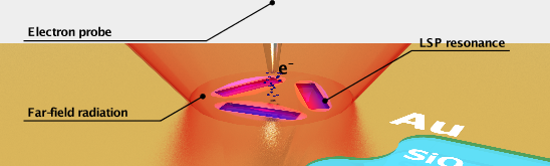
- demonstrated [50]. The spectral properties of core–shell CdSe/CdS quantum dots have also been studied using CL in a transmission electron microscope [51]. The same technique has been used to generate single photons and to characterize quantum states and the nature of the emitted beam with subwavelength


Cr(VI) remediation from aqueous environment through modified-TiO2-mediated photocatalytic reduction
Beilstein J. Nanotechnol. 2018, 9, 1448–1470, doi:10.3762/bjnano.9.137
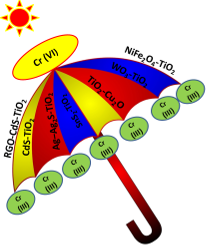
- core–shell nanotubes exhibited higher Cr(VI) oxyanion reduction and adsorption. The activity could be varied with concentration, pH and dopant acid [133]. Graphene-wrapped differently faceted (001 and 101) TiO2 hollow-core–shell microspheres (TGHMs) have been fabricated by Liu et al. and were applied
- combined with TiO2 for enhanced photocatalytic reduction of Cr(VI). A one-dimensional CdS–TiO2 core–shell (CdS@TiO2) nano-photocatalyst possessed higher reduction and selectivity of Cr(VI) due to the core–shell structure where hVB+ are trapped by the TiO2 shell [198]. Ultrathin TiO2-coated CdS core–shell
- spheres have also been prepared by Chen et al. A coating of an ultrathin TiO2 layer on CdS nanoparticles imparts good light harvesting properties, enhanced adsorption capacity, effective charge transport and longer lifetime of excitons, for which the core–shell spheres exhibited higher efficiency for


Atomic-level characterization and cilostazol affinity of poly(lactic acid) nanoparticles conjugated with differentially charged hydrophilic molecules
Beilstein J. Nanotechnol. 2018, 9, 1328–1338, doi:10.3762/bjnano.9.126
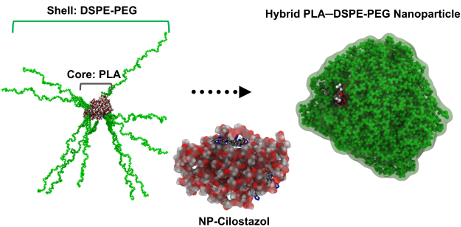
- -assembling process in which a core–shell structure is observed with PLA in the core and DSPE–PEG in the shell; this model is consistent with the nanoprecipitation synthesis method previously used [34]. Methoxy-terminated NPs showed a slightly larger size compared to charged particles just as it was observed


Ag2WO4 nanorods decorated with AgI nanoparticles: Novel and efficient visible-light-driven photocatalysts for the degradation of water pollutants
Beilstein J. Nanotechnol. 2018, 9, 1308–1316, doi:10.3762/bjnano.9.123
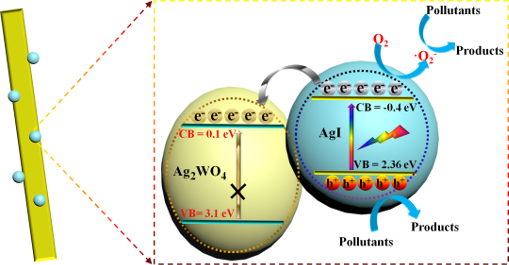
- −, small AgI nanoparticles (diameter: 20–40 nm) are uniformly coated on the surface of Ag2WO4 nanorods, signifying the formation of the AgI/Ag2WO4 core–shell heterostructure. To more clearly observe the microstructure of the AgI/Ag2WO4 composite, the TEM and high-resolution TEM (HRTEM) images are shown in




Understanding the performance and mechanism of Mg-containing oxides as support catalysts in the thermal dry reforming of methane
Beilstein J. Nanotechnol. 2018, 9, 1162–1183, doi:10.3762/bjnano.9.108
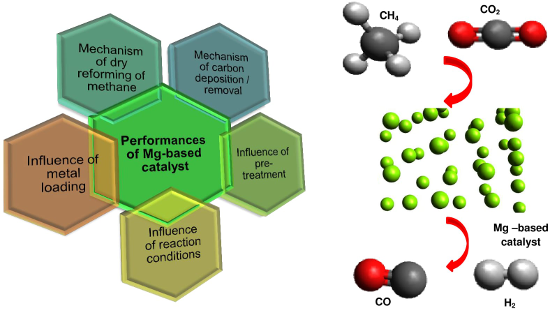
- stability in stabilizing the zirconia tetragonal phase, improved basicity sites for the support, and decreased reducibility of Ni2+. Li et al. [118] designed a Ni@Ni–Mg phyllosilicate core–shell catalyst using the hydrothermal treatment of Ni@SiO2 with Mg(NO3)2. The alkalinity and porosity of the catalyst
- in hydrothermal treatment time enhanced the basicity of the catalyst from the high exposure to the Mg phase. The strong basicity properties of Mg enhanced CO2 adsorption and suppressed carbon deposition via the reverse Boudouard reaction (C + CO2 ↔ 2CO). However, the core–shell structure became






Optimisation of purification techniques for the preparation of large-volume aqueous solar nanoparticle inks for organic photovoltaics
Beilstein J. Nanotechnol. 2018, 9, 649–659, doi:10.3762/bjnano.9.60
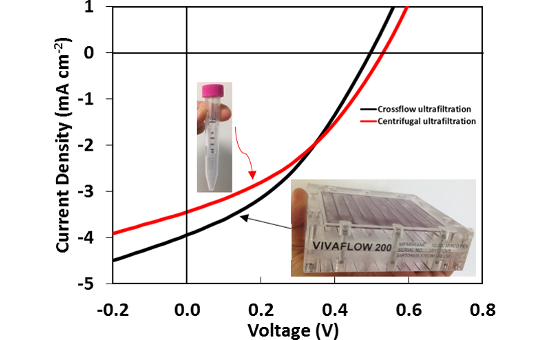
- allow for a more densely packed film, assuming an optimal hexagonal packing of particles [23], which in turn lowers the risk of short circuiting through the active layer. The particle size also influences the overall domain size of donor and acceptor assuming a core–shell structure [15] and therefore


Anchoring Fe3O4 nanoparticles in a reduced graphene oxide aerogel matrix via polydopamine coating
Beilstein J. Nanotechnol. 2018, 9, 591–601, doi:10.3762/bjnano.9.55
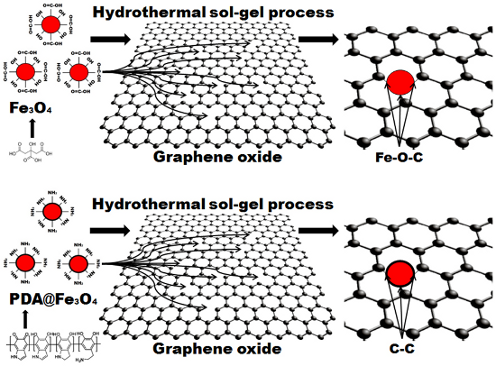
- nanoparticles at the GO defect sites. In addition, PDA coating does not affect the magnetic properties of the iron oxide-modified rGO aerogel. It is believed that introduction of amorphous carbon-coated functional additives (core-shell structures) improves a reduced graphene oxide aerogel lattice, anchor


Review: Electrostatically actuated nanobeam-based nanoelectromechanical switches – materials solutions and operational conditions
Beilstein J. Nanotechnol. 2018, 9, 271–300, doi:10.3762/bjnano.9.29


Bombyx mori silk/titania/gold hybrid materials for photocatalytic water splitting: combining renewable raw materials with clean fuels
Beilstein J. Nanotechnol. 2018, 9, 187–204, doi:10.3762/bjnano.9.21
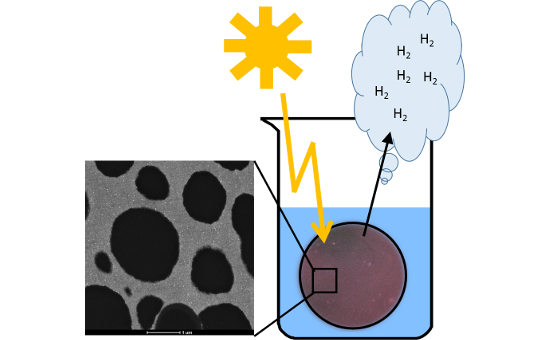
- entire UV–visible range when the TiO2 is composed of 75% of anatase and 25% of rutile with identical AuNPs [26]. In an interesting new approach, Zhang et al. found that Janus particles (rather than the core–shell or randomly organized materials described so far) based on large TiO2 particles with
- diameters of ca. 440 nm and AuNPs with diameters of ca. 60 nm could split water in the visible range, even at low Au fractions of only 1.8% [27]. Finally, Seh et al. showed that TiO2/Au Janus nanoparticles have a higher photocatalytic activity than the corresponding core–shell particles [28]. All materials




Comparative study of post-growth annealing of Cu(hfac)2, Co2(CO)8 and Me2Au(acac) metal precursors deposited by FEBID
Beilstein J. Nanotechnol. 2018, 9, 91–101, doi:10.3762/bjnano.9.11
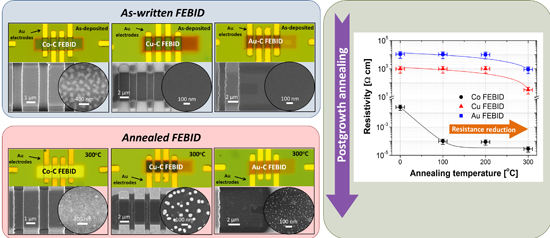
- ], ferromagnetic nanostructures for magnetic logic and memory [23][24][25], as well as functional core–shell ferromagnetic nanowires with improved magnetic properties [26] have already been realised through this technique. It is worth mentioning that the superior conductivity of Cu, compared to other non-noble


Gas-sensing behaviour of ZnO/diamond nanostructures
Beilstein J. Nanotechnol. 2018, 9, 22–29, doi:10.3762/bjnano.9.4
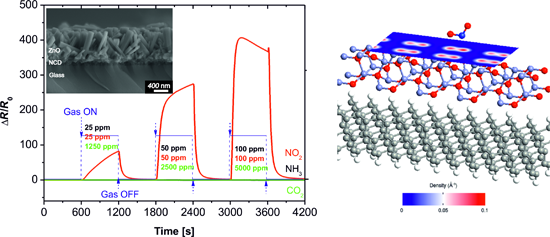
- core–shell nanowires) were investigated by Hwang and co-workers. The gas response of ZnO–SnO2 core–shell nanowires to 10 ppm NO2 at 200 °C and 300 °C were 66.3 and 12.4, respectively, which is ca. 33- and ca. 8.9-times higher than the respective values of 2.0 and 1.4 for ZnO nanowires [26]. Presently


CdSe nanorod/TiO2 nanoparticle heterojunctions with enhanced solar- and visible-light photocatalytic activity
Beilstein J. Nanotechnol. 2017, 8, 2741–2752, doi:10.3762/bjnano.8.273
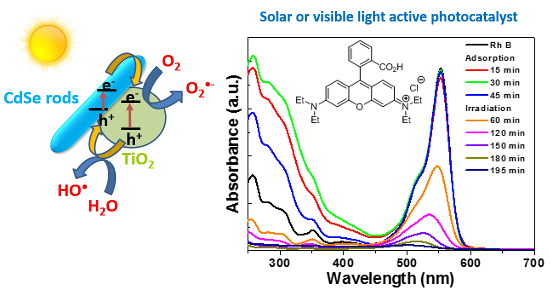
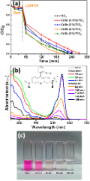
- to develop TiO2-based solar cells. Core/shell TiO2/CdSe NRs were also prepared by growing CdSe quantum dots onto TiO2 NRs at high temperature [42]. In this paper, we report an investigation on the synthesis of CdSe-NR-sensitized TiO2 nanoparticles and on the use of these materials for the degradation






Fabrication of CeO2–MOx (M = Cu, Co, Ni) composite yolk–shell nanospheres with enhanced catalytic properties for CO oxidation
Beilstein J. Nanotechnol. 2017, 8, 2425–2437, doi:10.3762/bjnano.8.241
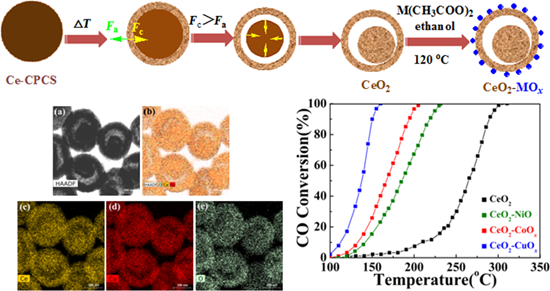
- heat treatment, and the resultant sample exhibited enhanced catalytic activity in the oxidation of CO [25]. Otherwise, as a special composite structure, heterogeneous core@shell structures are believed to integrate the function of individual nanocrystals and induce the unique synergetic catalytic
- activities. For instance, ZnCo2O4@CeO2 core@shell spheres [14] and Co3O4@CeO2 core@shell cubes [26] with tunable CeO2 shell thickness were prepared by a facile self-assembly method and exhibited promising performance in the catalytic oxidation of CO. Consequently, a suitable choice of templates or cerium





Evaluating the toxicity of TiO2-based nanoparticles to Chinese hamster ovary cells and Escherichia coli: a complementary experimental and computational approach
Beilstein J. Nanotechnol. 2017, 8, 2171–2180, doi:10.3762/bjnano.8.216
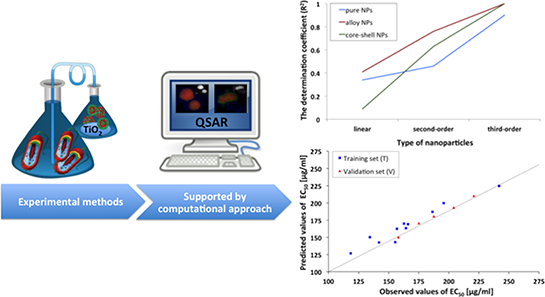
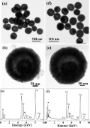
- Toxicity evaluation Three types of TiO2-based NPs were synthetized: (1) monometallic (Au, Pd) clusters, (2) core–shell particles and (3) alloy bimetallic clusters (Au/Pd). The cytotoxicity and antimicrobial activity of TiO2 modified with palladium and/or gold NPs is presented in Table 1. Inhibition of
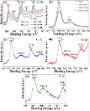
- NPs (Table 1). The correlation between the amount of metal precursor and the structure of nanoparticles is presented in Figure 1. For lower concentrations of Au precursor (Pd > Au), core–shell types of nanoparticles (Aucore/Pdshell) were formed more likely, whereas the increasing concentration of Au
- for all types of NPs, while third-order polynomials were overfitted (R2 > 0.9 for five data points) for alloys and core–shell NPs. With regard to the results obtained, we assumed that the best equations included in the final nano-QSAR model should be the third-order correlation for cytotoxicity and


Synthesis and characterization of noble metal–titania core–shell nanostructures with tunable shell thickness
Beilstein J. Nanotechnol. 2017, 8, 2083–2093, doi:10.3762/bjnano.8.208
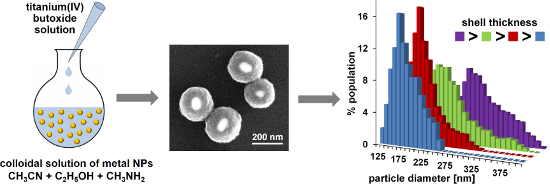
- , Kaliskiego 2 Str. 00-908 Warsaw, Poland 10.3762/bjnano.8.208 Abstract Core–shell nanostructures have found applications in many fields, including surface enhanced spectroscopy, catalysis and solar cells. Titania-coated noble metal nanoparticles, which combine the surface plasmon resonance properties of the
- characterization of metal–metal oxide core–shell nanostructures. Keywords: Ag@TiO2; Au@TiO2; core–shell nanostructures; titania coating; titanium dioxide; tunable resistive pulse sensing; Introduction In recent years, core–shell nanostructures (CSNs) have become one of the most widely studied hybrid structures
- observed formation of the multi-core@shell particles, which are also very interesting due to the combined plasmonic effect of metallic cores. In the case of AgNPs, the synthesized metal NPs were stabilized with citrate ions either during the synthesis or after, in order to prevent aggregation in the


High-stress study of bioinspired multifunctional PEDOT:PSS/nanoclay nanocomposites using AFM, SEM and numerical simulation
Beilstein J. Nanotechnol. 2017, 8, 2069–2082, doi:10.3762/bjnano.8.207
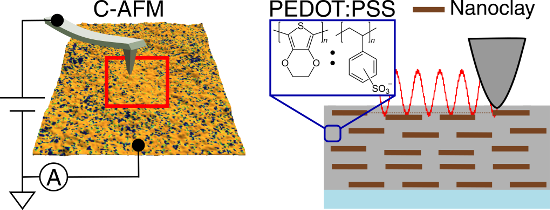
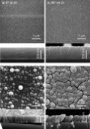
- approach is to dilute the “as prepared” core/shell dispersion. The amount of solids available per unit volume decreases, resulting in thinner films when the solution is casted. Four different dilutions (1:2, 1:4, 1:8 and 1:16) were used for casting samples in the present study, and the coating was
- 768642, abbreviated as PPSS), a high-conductivity grade polymer, in 1.0 wt % solution in water was used as received. The core/shell nanoplatelets were prepared by slowly adding the nanoclay dispersion to a stirred polymer solution with a 33:67 (clay/polymer) weight ratio, which was further stirred for
- . The core/shell nanoplatelet dispersions were mixed with DI-H2O in 1:2, 1:4, 1:8 and 1:16 dilutions and casted. This reduces the amount of core/shell nanoplatelets per casting and results in thinner films. Three different substrates were used: silicon wafers (thickness measurements), indium tin oxide


Advances and challenges in the field of plasma polymer nanoparticles
Beilstein J. Nanotechnol. 2017, 8, 2002–2014, doi:10.3762/bjnano.8.200
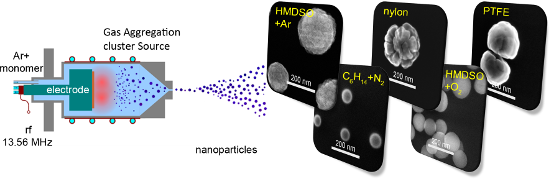
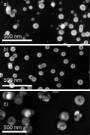
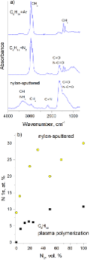
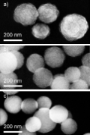
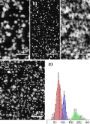
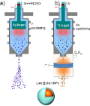
- plasma polymerization of volatile monomers or via radio frequency (RF) magnetron sputtering of conventional polymers. The formation of hydrocarbon, fluorocarbon, silicon- and nitrogen-containing plasma polymer nanoparticles as well as core@shell nanoparticles based on plasma polymers is discussed with a
- , interaction with cells, and in other applications. Core@shell nanoparticles The versatility of GAS may be further extended if two different processes are combined in one experimental run. One can take advantage of magnetron sputtering of metals and plasma polymerization of organic precursors to create
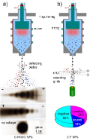
- heterogeneous NPs in which metallic inclusions are enveloped by layers of plasma polymer (core@shell NPs). For example, the process can be performed in the GAS by RF magnetron sputtering of metal in argon with the addition of an organic precursor (Figure 12a) or metal NPs can be pre-formed in the GAS by DC






Fabrication of carbon nanospheres by the pyrolysis of polyacrylonitrile–poly(methyl methacrylate) core–shell composite nanoparticles
Beilstein J. Nanotechnol. 2017, 8, 1897–1908, doi:10.3762/bjnano.8.190

- , College of Materials Science and Engineering, Donghua University, Shanghai 201620, China 10.3762/bjnano.8.190 Abstract Carbon nanospheres with a high Brunauer–Emmett–Teller (BET) specific surface area were fabricated via the pyrolysis of polyacrylonitrile–poly(methyl methacrylate) (PAN–PMMA) core–shell
- . In this study, PAN-based carbon nanopsheres were fabricated from the PAN–PMMA core–shell nanoparticles precursor. Specifically, PAN–PMMA core–shell latexes at high concentration and low surfactant content were first synthesized via a two-stage AIBN-initiated semicontinuous emulsion polymerization
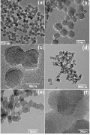
- 0.8 are displayed as a core–shell structure composed of dark inner cores with irregular contours and light outer layers with smooth contours (Figure 4b). The presence of smooth outer contours indicates the successful growth of the outer PMMA layer on the surface of PAN seed particles. The distinct



Synthesis and functionalization of NaGdF4:Yb,Er@NaGdF4 core–shell nanoparticles for possible application as multimodal contrast agents
Beilstein J. Nanotechnol. 2017, 8, 1815–1824, doi:10.3762/bjnano.8.183
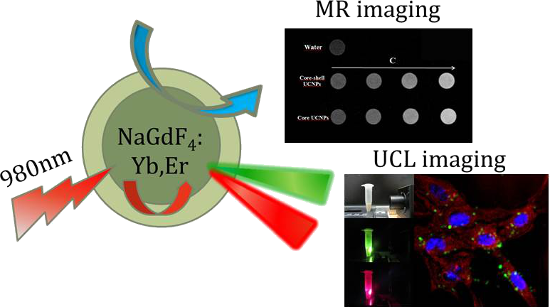
- ultrasmall core and core–shell UCNPs were synthesized via a thermal decomposition method. Furthermore, it was shown that the epitaxial growth of a NaGdF4 optical inert layer covering the NaGdF4:Yb,Er core effectively minimizes surface quenching due to the spatial isolation of the core from the surroundings
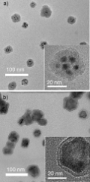
- . The mean diameter of the synthesized core and core–shell nanoparticles was ≈8 and ≈16 nm, respectively. Hydrophobic UCNPs were converted into hydrophilic ones using a nonionic surfactant Tween 80. The successful coating of the UCNPs by Tween 80 has been confirmed by Fourier transform infrared (FTIR
- ) spectroscopy. Scanning electron microscopy (SEM), powder X-ray diffraction (XRD), photoluminescence (PL) spectra and magnetic resonance (MR) T1 relaxation measurements were used to characterize the size, crystal structure, optical and magnetic properties of the core and core–shell nanoparticles. Moreover


Near-infrared-responsive, superparamagnetic Au@Co nanochains
Beilstein J. Nanotechnol. 2017, 8, 1680–1687, doi:10.3762/bjnano.8.168
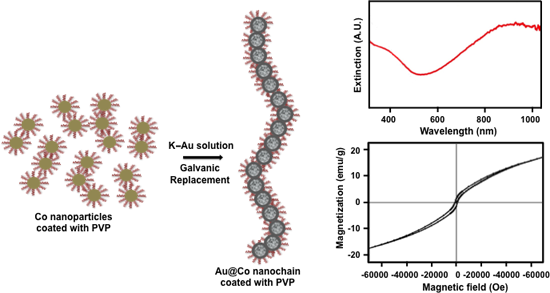
- magnetic properties and their greater stability toward oxidation compared to Ni- and Fe-based magnetic nanoparticles [23]. Notably, there have been a handful of studies on magneto-optical nanostructures consisting of cobalt coated with gold. Bao and co-workers synthesized magnetic Co–Au core–shell


Two-dimensional carbon-based nanocomposites for photocatalytic energy generation and environmental remediation applications
Beilstein J. Nanotechnol. 2017, 8, 1571–1600, doi:10.3762/bjnano.8.159


Calcium fluoride based multifunctional nanoparticles for multimodal imaging
Beilstein J. Nanotechnol. 2017, 8, 1484–1493, doi:10.3762/bjnano.8.148
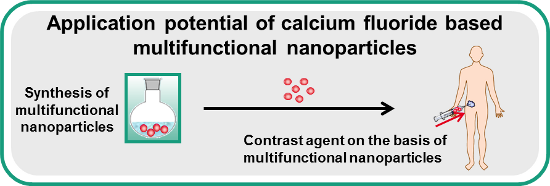
- imaging and diagnosis [2]. One possibility is the synthesis of core/shell-structured NPs. Core and shell materials can be matched individually to specific detection methods. For example, the coating of a magnetic core with silicates or polymer shells doped with organic fluorophores or quantum dots (QDs
- ) allows for the detection of NPs by MRI and PL [4]. Several successive shells can be designed of different inorganic materials. In this context, the following particle systems may be mentioned Gd2O(CO3)2·H2O/SiO2/Au, Fe3O4/C/Ag and Fe3O4/SiO2/Y2O3:(Yb3+,Er3+) core/shell NPs [5][6][7]. Another possibility


Development of polycationic amphiphilic cyclodextrin nanoparticles for anticancer drug delivery
Beilstein J. Nanotechnol. 2017, 8, 1457–1468, doi:10.3762/bjnano.8.145
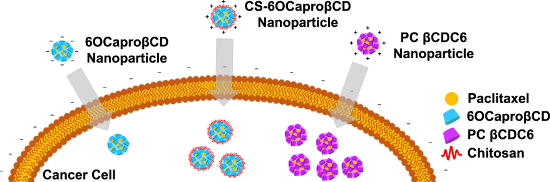
- agents for gene delivery in the form of nanoplexes. In this study, the potential of polycationic, amphiphilic cyclodextrin nanoparticles were evaluated in comparison to non-ionic amphiphilic cyclodextrins and core–shell type cyclodextrin nanoparticles for paclitaxel delivery to breast tumors. Pre
- compare the potential of polycationic amphiphilic CD nanoparticles as delivery systems for effective and safe delivery of PCX in comparison to its non-ionic or core–shell analogues. For this reason, two different cyclodextrin derivatives were used in this context, namely the non-ionic 6OCaproβCD (MW: 1813
- nanoparticles, and acetone > methanol > ethanol for PC βCDC6 nanoparticles. It is worth noting that ethanol also gave the most monodisperse particles with an acceptable polydispersity index (<0.2) (Table 1). As expected, the core–shell nanoparticles CS-6OCaproβCD had the largest size due to the chitosan coating





