Search results
Search for "cytotoxicity" in Full Text gives 227 result(s) in Beilstein Journal of Nanotechnology. Showing first 200.
Design of a nanostructured mucoadhesive system containing curcumin for buccal application: from physicochemical to biological aspects
Beilstein J. Nanotechnol. 2019, 10, 2304–2328, doi:10.3762/bjnano.10.222
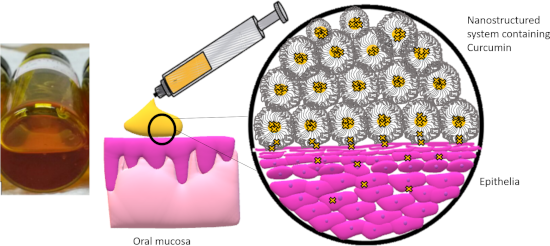
- 8 h and could permeate through the porcine oral mucosa. Cytotoxicity testing revealed that the formulations were selective to cancer cells over healthy cells. Therefore, these systems could improve the physicochemical characteristics of curcumin by providing improved release and permeation, while
- drug could permeate and the former is able to quantify the concentration of drug that went through the receptor vessel and was retained in the mucosa. Drug and formulation cytotoxicity The cytotoxicity potential of the drug and formulations with and without CUR were investigated on squamous carcinoma
- indicated that CUR could be released and permeate before it could kill the cells. Moreover, the presence of CUR significantly decreased the IC50 due to its cytotoxicity properties [87]. The formulations were diluted in order to maintain the viability of the cells. Therefore, CUR is released into the medium


Synthesis and potent cytotoxic activity of a novel diosgenin derivative and its phytosomes against lung cancer cells
Beilstein J. Nanotechnol. 2019, 10, 1933–1942, doi:10.3762/bjnano.10.189
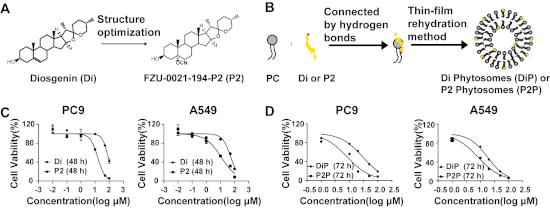
- steroid structure of Di, there are abundant electrons at double-bond sites for electrophilic addition. Based on this feature, we designed and synthesized a series of Di derivatives. We investigated the cytotoxicity of these Di derivatives in different cancer cell lines and their IC50 values were
- charged cell membranes, anionic nanoparticles could have less cytotoxicity than cationic ones [35]. In addition, it was reported that anionic nanoparticles could be inclined to interact with the lung surfactant yielding a better access into lung cells [36]. Therefore, the phytosomes we prepared with sizes
- preparation technology are needed to improve the physicochemical properties of the phytosomes. Antiproliferative activity of P2P To determine the cytotoxicity of DiP and P2P in lung cancer cells, cells were treated with different concentrations of P, DiP and P2P for different incubation times. The toxicity of



Engineered superparamagnetic iron oxide nanoparticles (SPIONs) for dual-modality imaging of intracranial glioblastoma via EGFRvIII targeting
Beilstein J. Nanotechnol. 2019, 10, 1860–1872, doi:10.3762/bjnano.10.181
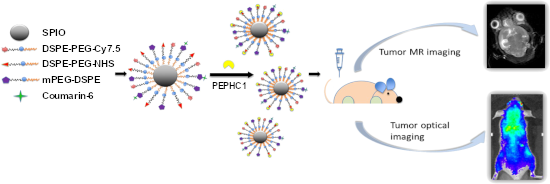
- cytotoxicity assay kit was obtained from Sigma (USA). Puromycin was purchased from Aladdin (Shanghai, China). All other reagents were of analytical grade and used without further purification. Cells and animals The human glioblastoma cell line, U87MG, was purchased from The Institute of Biochemistry and Cell
- . Subsequently, the brains of the tumor-bearing mice were separated and the tumor tissue were removed and immersed in 2.5% glutaraldehyde for 2 h at 4 °C, followed by washing with PBS and the remaining steps as previously reported [27]. Primary safety evaluation of PNPs The cytotoxicity of PNPs against U87MG and
- enhanced accumulation of PNPs in EGFRvIII-positive tumors. Further TEM imaging demonstrated that plenty of the PNP nanoprobes accumulated in U87-EGFRvIII cells, suggesting the increased endocytosis of PNPs in U87-EGFRvIII cells (Figure 8b). Primary safety evaluation of PNPs The cytotoxicity of nanoprobes




Toxicity and safety study of silver and gold nanoparticles functionalized with cysteine and glutathione
Beilstein J. Nanotechnol. 2019, 10, 1802–1817, doi:10.3762/bjnano.10.175
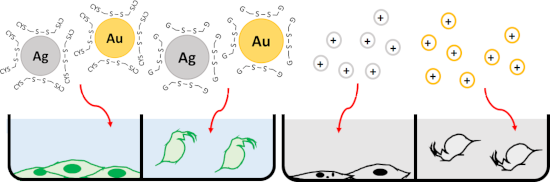
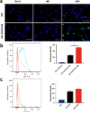
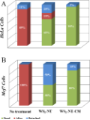
- + and Au3+ ions during 24 h and determined by the MTT cytotoxicity assay. (b) The effect of AgNPs, AuNPs, Ag+, and Au3+ on the number of live (white columns), early apoptotic (dotted columns) and late apoptotic (blue columns) L929 cells after 24 h exposure, determined by flow cytometry after Annexin V


Lipid nanostructures for antioxidant delivery: a comparative preformulation study
Beilstein J. Nanotechnol. 2019, 10, 1789–1801, doi:10.3762/bjnano.10.174
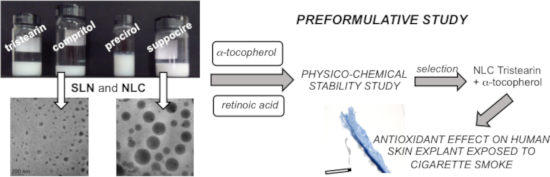
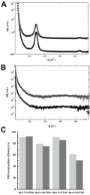
- transmission electron microscopy, small-angle X-ray diffraction, encapsulation efficiency, preliminary stability, in vitro cytotoxicity and protection against cigarette smoke. Nanostructured lipid carriers were found to reduce agglomerate formation and provided better dimensional stability, as compared to
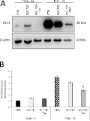
- the physical and chemical stability, particle size analysis and TOC encapsulation efficiency were periodically evaluated by PCS and HPLC, respectively, as above reported. Western blot analysis for HO-1 and HO-2 protein Cytotoxicity determination Experiments were carried out to assess the range of NLC
- T10-TOC, NLC C10-TOC, NLC P10-TOC and NLC S10-TOC concentrations that are nontoxic for cells. Briefly, human immortalized keratinocytes (HaCaT) were treated for 24 h with the different NLC formulations at various TOC concentrations, ranging from 25 to 200 µM. Cytotoxicity was evaluated by

Scavenging of reactive oxygen species by phenolic compound-modified maghemite nanoparticles
Beilstein J. Nanotechnol. 2019, 10, 1073–1088, doi:10.3762/bjnano.10.108
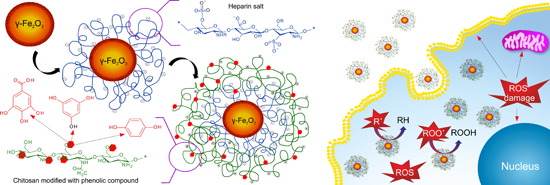
- results were consistent with previous findings indicating that the application of a magnetic field did not facilitate cellular uptake of the magnetic nanoparticles [35][36]. The cytotoxicity of the nanoparticles (100 μg/mL) after 3 h of incubation with L-929 and LN-229 cells was not significant or very
- calibration curve was prepared under identical conditions. Cytotoxicity was determined by a CCK-8 assay (Sigma-Aldrich) according to the manufacturer’s instructions. Briefly, cells were cultured in a 24-well plate to 80–90% confluence and incubated with nanoparticles (100 μg/mL) for 3 h in the absence or





Effects of gold and PCL- or PLLA-coated silica nanoparticles on brain endothelial cells and the blood–brain barrier
Beilstein J. Nanotechnol. 2019, 10, 941–954, doi:10.3762/bjnano.10.95
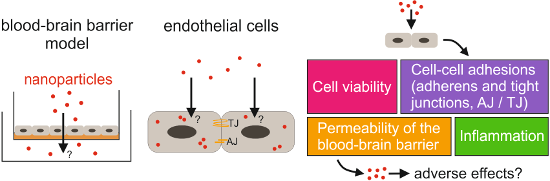
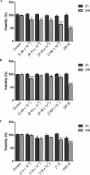
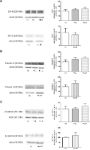
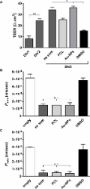
- and lysosomes in microglia [10]. None of the NPs investigated resulted in cytotoxicity, decreased cell viability, apoptosis, autophagy or inflammation. However, exposure to NPs led to oxidative stress via depletion of cellular glutathione and to a downregulation of neuronal differentiation markers in
- enter the brain and cause or worsen diseases of the central nervous system [16] that NPs might contribute to [17]. Coated or uncoated mesoporous Si-NPs of different size and zeta potential did not elicit considerable cytotoxicity in MDCK II kidney epithelial cells or RBE4 rat brain ECs but were taken up
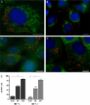
- cytotoxicity in HUVECs. Furthermore, Si-NPs were shown to induce oxidative stress and inflammation mediated by mitogen-activated protein kinase (MAPK) and nuclear factor kappa-light-chain-enhancer of activated B cells (NF-κB) [21] pathways that are related to cell proliferation and differentiation but also to



The systemic effect of PEG-nGO-induced oxidative stress in vivo in a rodent model
Beilstein J. Nanotechnol. 2019, 10, 901–911, doi:10.3762/bjnano.10.91
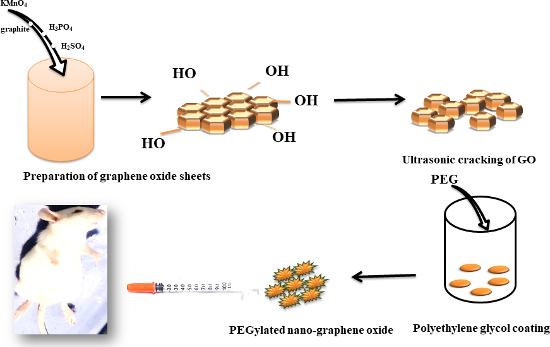
- accompanied by reduced activity levels of antioxidant enzymes directly indicated that all organs were in oxidative stress after the intraperitoneal administration of PEG-nGO. These studies further reiterated the cytotoxicity of graphite oxide in vivo. Further safety evaluation and research must be undertaken


Tungsten disulfide-based nanocomposites for photothermal therapy
Beilstein J. Nanotechnol. 2019, 10, 811–822, doi:10.3762/bjnano.10.81
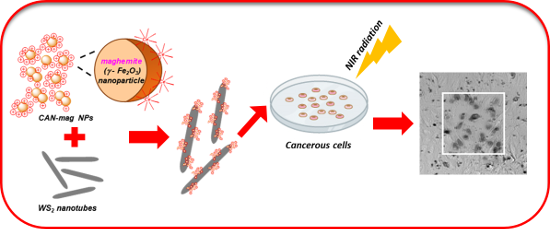
- [19], or dermal application [20]. More recent studies conducted on rhenium-doped MoS2 nanoparticles showed no acute toxic risk, neither by oral administration nor by dermal application [21][22]. A few years ago, Teo et al. compared the cytotoxicity of exfoliated MoS2, WS2, and WSe2 to that of their






Polydopamine-coated Au nanorods for targeted fluorescent cell imaging and photothermal therapy
Beilstein J. Nanotechnol. 2019, 10, 794–803, doi:10.3762/bjnano.10.79
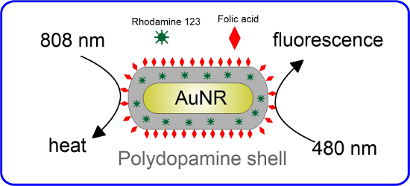
- used a Cary Eclipse spectrofluorometer. Cytotoxicity assay The in vitro cytotoxicity was measured using a standard resazurin (Alamar blue) assay following the manufacturer instructions. HeLa cells (1 × 10⁵ cells/well) were seeded into 96-well cell-culture plate and then incubated for 24 h at 37 °C


Characterization and influence of hydroxyapatite nanopowders on living cells
Beilstein J. Nanotechnol. 2018, 9, 3079–3094, doi:10.3762/bjnano.9.286
- and J774.1 to assess the influence of the nanoparticles on immune, reproductive and respiratory systems. Keywords: nanomaterials safety; biomaterials; tissue engineering; microscopic characterization; cytotoxicity; hydroxyapatite; Introduction Engineered nanomaterials have found applications in many
- significantly limits the insight of underlying mechanisms that affect living cells. There is a wide range of available cell lines to study possible organism reactions and cytotoxicity mechanisms, such as endothelial, neural, hepatic, phagocytic or cancer cells [26][27]. Still, systematic studies describing
- nanoparticle cytotoxicity: chinese hamster ovary cell line (CHO) showing the effect on cells of the reproductive system, mouse monocyte macrophage cell line (J774.1) showing the effect on cells of the immune system, human bronchial epithelial cell line (BEAS-2B) and human lung adenocarcinoma epithelial cell

![[Graphic 1]](/bjnano/content/inline/2190-4286-9-286-i2.svg?max-width=637&scale=1.18182) .
.



Hybrid Au@alendronate nanoparticles as dual chemo-photothermal agent for combined cancer treatment
Beilstein J. Nanotechnol. 2018, 9, 2947–2952, doi:10.3762/bjnano.9.273
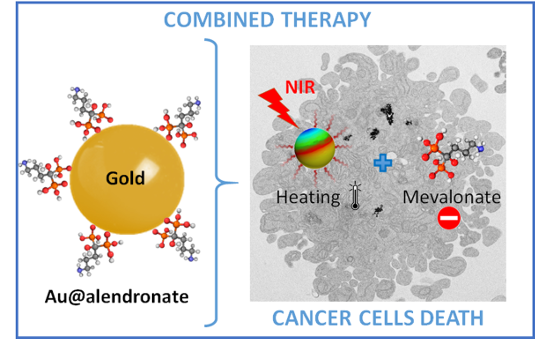
- (Figure 3a) with an IC50 equal to 100 µM for both systems whereas Au@HMBP-PEG NPs [39] do not exhibit any cytotoxicity (Supporting Information File 1, Figure S3). Under similar cell-treatment conditions, this IC50 value is consistent with values obtained for free alendronate with other cancer cell lines


Comparative biological effects of spherical noble metal nanoparticles (Rh, Pd, Ag, Pt, Au) with 4–8 nm diameter
Beilstein J. Nanotechnol. 2018, 9, 2763–2774, doi:10.3762/bjnano.9.258
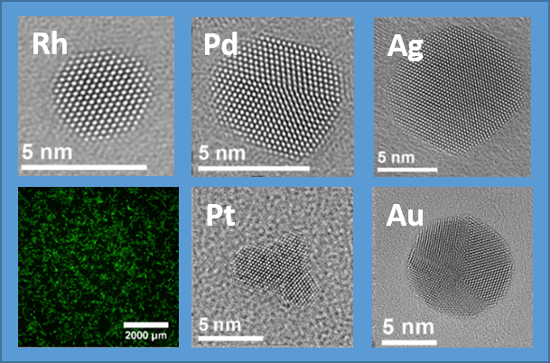
- /bjnano.9.258 Abstract For a comparative cytotoxicity study, nanoparticles of the noble metals Rh, Pd, Ag, Pt, and Au (spherical, average diameter 4 to 8 nm) were prepared by reduction in water and colloidally stabilized with poly(N-vinyl pyrrolidone) (PVP). Thus, their shape, size, and surface
- , palladium, platinum, gold) that do not release ions are not cytotoxic under these conditions. Keywords: cytotoxicity; electron microscopy; metals; nanoparticles; nanotoxicity; Introduction Inorganic and metallic nanoparticles represent a well-established part of materials science, heterogeneous catalysis
- human cells [24][26][27], whereas in other studies, these effects were not observed [28][29][30]. With ultrasmall gold nanoparticles and gold clusters, different biological events are triggered that can lead to a higher cytotoxicity of very small particles (<3 nm) [31]. Very little is known about the


Size-selected Fe3O4–Au hybrid nanoparticles for improved magnetism-based theranostics
Beilstein J. Nanotechnol. 2018, 9, 2684–2699, doi:10.3762/bjnano.9.251
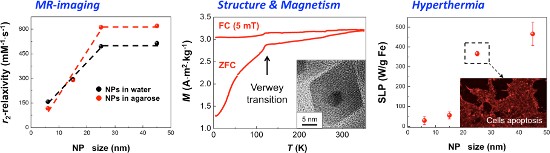
- tested by several methods. Standard MTS assay (Figure 7, Table S2, Supporting Information File 1) was conducted to investigate the NP cytotoxicity. These results are supplemented with apoptosis/necrosis activation (Figures S4 and S6, Supporting Information File 1) and production of reactive oxygen


Cytotoxicity of doxorubicin-conjugated poly[N-(2-hydroxypropyl)methacrylamide]-modified γ-Fe2O3 nanoparticles towards human tumor cells
Beilstein J. Nanotechnol. 2018, 9, 2533–2545, doi:10.3762/bjnano.9.236
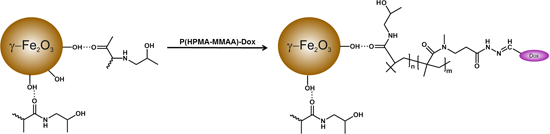
- stability in aqueous media and limited internalization by the cells, however, enabled adhesion to the cell surface. While the neat PHPMA-coated particles proved to be non-toxic, doxorubicin-conjugated particles exhibited enhanced cytotoxicity in both drug-sensitive and drug-resistant tumor cells compared to
- free doxorubicin. The newly developed doxorubicin-conjugated PHPMA-coated magnetic particles seem to be a promising magnetically targeted vehicle for anticancer drug delivery. Keywords: cytotoxicity; doxorubicin; magnetic; nanoparticles; poly[N-(2-hydroxypropyl)methacrylamide]; Introduction Severe
- chemical attachment of target biomolecules, reduces cytotoxicity, and controls particle uptake by the cells [10]. Coatings can be either of low molecular weight, such are carbohydrates and organic acids (ethylenediaminetetraacetic acid, tartaric acid, citric acid, succinic acid, bisphosphonic acid), or of


Enhanced antineoplastic/therapeutic efficacy using 5-fluorouracil-loaded calcium phosphate nanoparticles
Beilstein J. Nanotechnol. 2018, 9, 2499–2515, doi:10.3762/bjnano.9.233
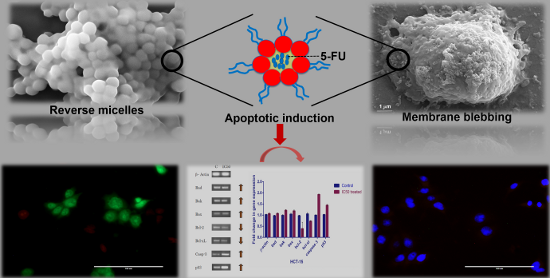
- problems in medical prognoses such as nonspecific cytotoxicity, insignificant survival rate, re-initialization of cancer, in vitro evolution of multidrug resistance, and unwanted side effects [2]. The failure of conventional therapeutic strategies indicates that additional efforts should be focused
- prior to arriving at the targeted site resulted in serious nonspecific cytotoxicity [4]. Alternative drug delivery strategies using inorganic nanoparticles have also been applied. A magneto-electric nanoparticle (MEN) system was reported as a controlled drug delivery platform for the drug paclitaxel in
- CaP NPs in HCT-15 cell lines (Figure 4C). The same was found in 22.3% and 18.68% of inhibition in A549 and NIH 3T3 cell lines as demonstrated in Figure 4B and Figure 4A, respectively. The comparative low cytotoxicity of CaP NPs as a carrier (even at a higher concentration of 100 µg/mL) reveals the


Fabrication of photothermally active poly(vinyl alcohol) films with gold nanostars for antibacterial applications
Beilstein J. Nanotechnol. 2018, 9, 2040–2048, doi:10.3762/bjnano.9.193
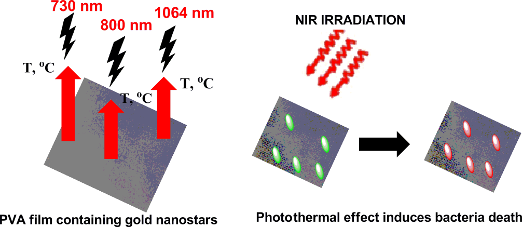
- photothermal effect [6][24]. Moreover, the LSPR peak located in the second biotransparent window (1000–1400 nm) is more attractive for in vivo applications due to the deeper penetration of NIR light [26]. Since GNSs are weakly stable if coated only with surfactant, and also considering the cytotoxicity of


Biomimetic and biodegradable cellulose acetate scaffolds loaded with dexamethasone for bone implants
Beilstein J. Nanotechnol. 2018, 9, 1986–1994, doi:10.3762/bjnano.9.189
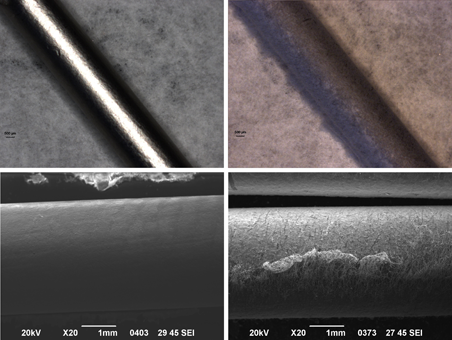
- . Cytotoxicity studies were performed by using MTT assay, methylene-blue staining and SEM fixation and showed very good cell adhesion and proliferation, indicating the cytocompatibility of these fibrous scaffolds. Drug-release kinetics was measured for the evaluation of a controllable and sustained release of
- was measured at the absorption wavelength of the drug, using a 96-well plate reader (Luminometer Promega Glomax multi detection system). After that, the remaining samples were placed back in the incubator until the next measurement. In vitro cytotoxicity assays MTT assay direct test and methylene blue
- staining: L929 mouse fibroblasts were used to examine the cytotoxicity levels due to their properties and biological characteristics (biological responses and reproducible growth rates). The samples were placed inside a well-plate and 1 mL of medium was added and the whole system was left in the incubator


Preparation of micro/nanopatterned gelatins crosslinked with genipin for biocompatible dental implants
Beilstein J. Nanotechnol. 2018, 9, 1735–1754, doi:10.3762/bjnano.9.165
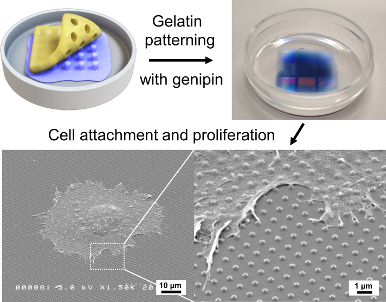
- surface patterning material or crosslinking agent used can also subsequently influence cytotoxicity and cell behavior [32][33]. Rizwan et al. have reported that micro/nanopillars comprised of gelatin could be fabricated through a combination of molding and polymerization of the gelatin with methacrylate
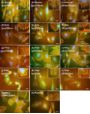
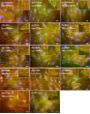
- attachment. Moreover, the live/dead cell viability assay demonstrated that gelatin crosslinked with genipin showed low cytotoxicity (Figure 4). The low cytotoxicity for Saos-2 cells on our gelatin patterns was in agreement with the low cytotoxicity for fibroblasts on genipin-crosslinked gelatin [66






Atomic-level characterization and cilostazol affinity of poly(lactic acid) nanoparticles conjugated with differentially charged hydrophilic molecules
Beilstein J. Nanotechnol. 2018, 9, 1328–1338, doi:10.3762/bjnano.9.126
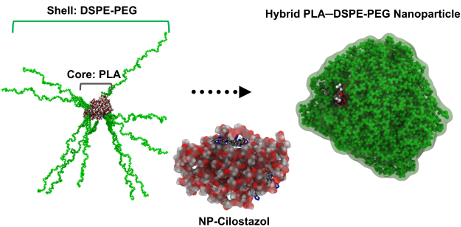
- have shown that PEGylation of NPs allows improved blood circulation, clearance, biocompatibility and less cytotoxicity [15][16][17][18][19]. Hydrophilic polymer chains at the surface of NPs act as a steric barrier, reducing the opsonization and the subsequent phagocytosis [20][21][22]. This amphiphilic


Review on nanoparticles and nanostructured materials: history, sources, toxicity and regulations
Beilstein J. Nanotechnol. 2018, 9, 1050–1074, doi:10.3762/bjnano.9.98

- extensive studies reported that Ag NPs demonstrated a size, morphology, and dosage-dependent higher cytotoxicity to humans and animals cells than asbestos [91][116][117][118][119][120]. The hazardous effects of other NPs present in consumer products are unknown and are still under research. Naturally


Green synthesis of fluorescent carbon dots from spices for in vitro imaging and tumour cell growth inhibition
Beilstein J. Nanotechnol. 2018, 9, 530–544, doi:10.3762/bjnano.9.51
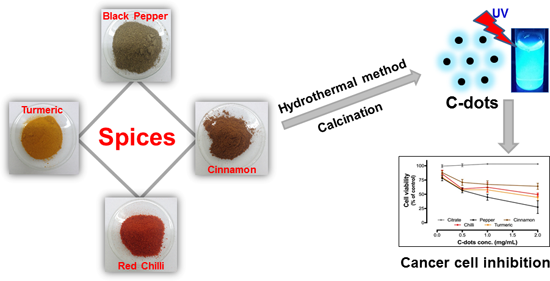
- characterized by means of UV–vis, fluorescence, Fourier transform infrared and Raman spectroscopy, dynamic light scattering and transmission electron microscopy. The optical performance showed an outstanding ability for imaging purposes, with quantum yields up to 43.6%. Thus, the cytotoxicity of the above
- surface of the C-dots might be responsible for the selective cytotoxicity, as suggested by the presence of piperine in the surface of black pepper C-dots analysed by ESI-QTOF-MS. Keywords: bioimaging; carbon quantum dots; fluorescence; spices; Introduction Recent developments in nanotechnology have led
- pepper C-dots) were tested in vitro for cytotoxicity in epithelial human kidney cells (HK-2) and in glioblastoma LN-229 cells (results obtained for each type of C-dots are displayed in detail in Figures S5–S9, Supporting Information File 1). Please, notice that the range of carbon dot concentrations used


Nanoparticle delivery to metastatic breast cancer cells by nanoengineered mesenchymal stem cells
Beilstein J. Nanotechnol. 2018, 9, 321–332, doi:10.3762/bjnano.9.32
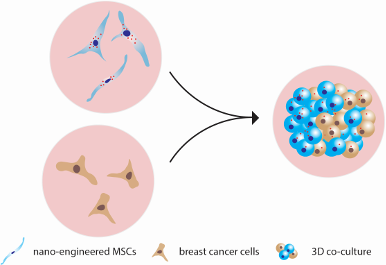
- drug efflux transporter P-glycoprotein, which ensures rapid excretion of toxic substances from MSCs. Thus, MSCs are an excellent vector for low cytotoxicity anticancer drugs [4]. Sadhukha et al. demonstrated that nanoengineered MSCs home to A549 lung cancer in vivo and remain there for at least 3 h
- , which could be sufficient time to release drugs into the tumour. The encapsulation of NP-linked anticancer drugs could ensure metered drug release in tumours [2]. QD linkage to photosensitisers, such as chlorin e6, causes damage to MiaPaCa2 cancer cells via light-induced cytotoxicity, demonstrating a



Co-reductive fabrication of carbon nanodots with high quantum yield for bioimaging of bacteria
Beilstein J. Nanotechnol. 2018, 9, 137–145, doi:10.3762/bjnano.9.16
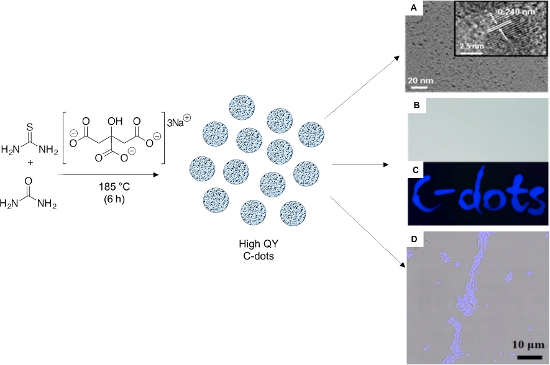
- in bioimaging thanks to their low cytotoxicity. Keywords: bioimaging; carbon nanodots; collaborative reduction; hydrothermal; Introduction Over recent years, carbon nanomaterials have remarkably influenced the growth of a wide range of fields, including electronics, photonics, energy, catalysis and
- water, low photobleaching and low cytotoxicity. They show great potential for bioimaging, photocatalysis, energy conversion, fluorescent ink and sensing applications [1][2][3]. In a bioimaging application perspective, the detection of bacteria by microscopic visualization is an essential benchmark
- (Figure 5B). After confirming the bright feature behavior, Sb was further used to evaluate its bioimaging properties and bacteria viability range. First of all, a cytotoxicity quantification related to the applicable C-dot concentration range was assessed. Xag viability was evaluated following incubation


Hyperthermic intracavitary nanoaerosol therapy (HINAT) as an improved approach for pressurised intraperitoneal aerosol chemotherapy (PIPAC): Technical description, experimental validation and first proof of concept
Beilstein J. Nanotechnol. 2017, 8, 2729–2740, doi:10.3762/bjnano.8.272
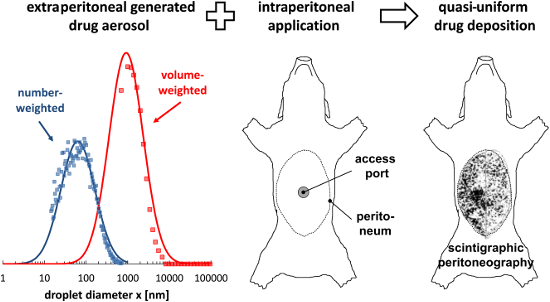
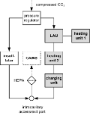
- benefits of hyperthermia (e.g., thermal cytotoxicity, increased drug penetration due to reduced intratumoral pressure, increased drug deposition due to improved thermophoretic conditions), both the liquid reservoir of the LAU as well as the aerosol that exits the LAU can be heated in a controlled manner to