


Search results
Search for "field emission" in Full Text gives 303 result(s) in Beilstein Journal of Nanotechnology. Showing first 200.
Ceria/polymer nanocontainers for high-performance encapsulation of fluorophores
Beilstein J. Nanotechnol. 2019, 10, 522–530, doi:10.3762/bjnano.10.53
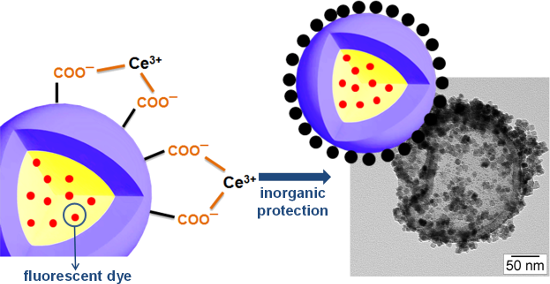
- electron microscopy (SEM) with a LEO Gemini 1530 field-emission microscope operated with an extractor voltage of 0.7 kV. Samples for SEM observation were prepared by dropping the diluted dispersions on small silicon wafers that were subsequently dried. EDX analysis combined with elemental mapping was


Widening of the electroactivity potential range by composite formation – capacitive properties of TiO2/BiVO4/PEDOT:PSS electrodes in contact with an aqueous electrolyte
Beilstein J. Nanotechnol. 2019, 10, 483–493, doi:10.3762/bjnano.10.49
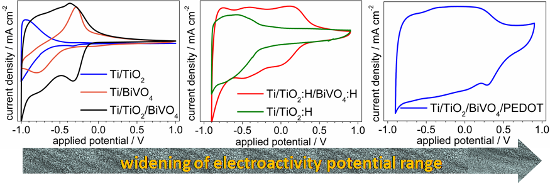
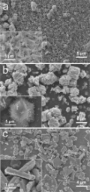
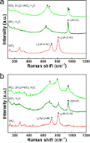
- and to determine its electrochemical capacitance. Experimental Apparatus Raman spectra were obtained using a Renishaw InVia spectrometer with green laser excitation (514 nm) using a 50× LWD objective. The morphology of the samples was investigated by Schottky field-emission scanning electron




Wearable, stable, highly sensitive hydrogel–graphene strain sensors
Beilstein J. Nanotechnol. 2019, 10, 475–480, doi:10.3762/bjnano.10.47
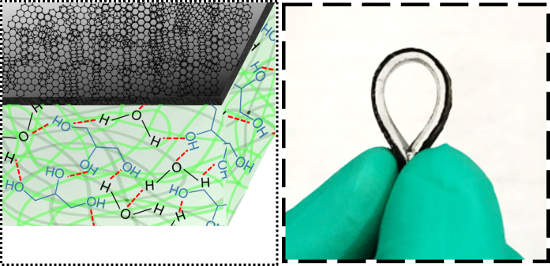
- foil using the silver epoxy. The size of the graphene/hydrogel sensor is 5 × 30 mm. Characterization of the hydrogel and graphene/hydrogel: The mechanical properties of the hydrogel were characterized in an electronic universal testing machine (CMT6503, Sans, Shenzhen, China). A field-emission scanning


Reduced graphene oxide supported C3N4 nanoflakes and quantum dots as metal-free catalysts for visible light assisted CO2 reduction
Beilstein J. Nanotechnol. 2019, 10, 448–458, doi:10.3762/bjnano.10.44
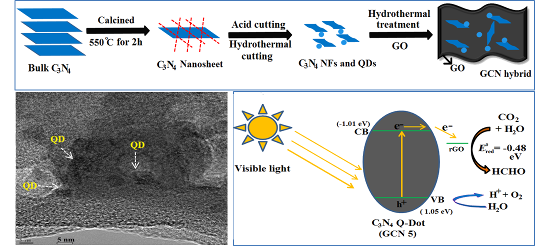
- , X-ray photoelectron spectroscopy, Fourier transform infrared spectroscopy, field emission scanning electron microscopy, transmission electron microscopy (TEM), and UV–vis spectroscopy. High-resolution TEM images clearly show that C3N4 QDs (average diameter of 2–3 nm) and NFs (≈20–45 nm) are
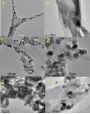
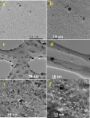
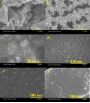
- dots. Particle size distribution of the synthesized CN nanoflakes and quantum dots. TEM image of CN nanoflake and quantum dot samples under heating at 190 °C for 5 h (a,b), 170 °C for 5 h (c,d), and 150 °C for 5 h (e,f). Field emission scanning electron microscopy images of the a) g-C3N4 nanosheet, b





Advanced scanning probe lithography using anatase-to-rutile transition to create localized TiO2 nanorods
Beilstein J. Nanotechnol. 2019, 10, 412–418, doi:10.3762/bjnano.10.40
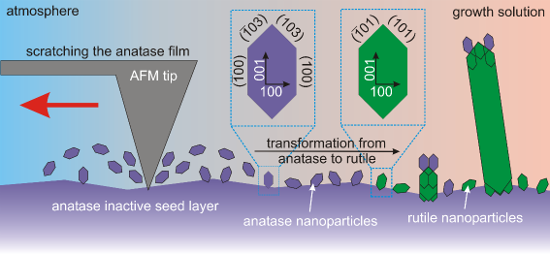
- ], fuel cells [20], lithium batteries [21][22][23][24][25][26], field-emission devices [27], data storage devices [28], gaso- and electrochromic displays [29][30], and nonlinear optical devices [31]. Even in the field of medical engineering, such structures are promising candidates for improving the


Sub-wavelength waveguide properties of 1D and surface-functionalized SnO2 nanostructures of various morphologies
Beilstein J. Nanotechnol. 2019, 10, 379–388, doi:10.3762/bjnano.10.37
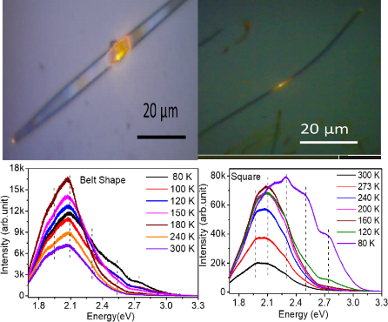
- crucible without any metal catalyst under atmospheric pressure at a temperature of 1000 °C in continuous Ar flow. The temperature profile is shown in Supporting Information File 1, Figure S1b. The growth time was kept for 2 h for all the NWs. Morphological studies of the NWs were revealed by field emission


Site-specific growth of oriented ZnO nanocrystal arrays
Beilstein J. Nanotechnol. 2019, 10, 274–280, doi:10.3762/bjnano.10.26
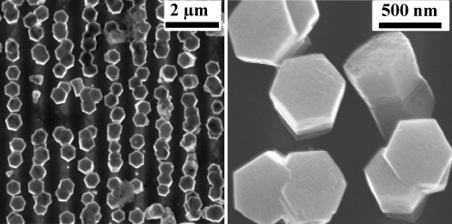
- detector in scanning line mode. The surface morphology of the prepared samples was investigated by using a field emission scanning electron microscopy (FESEM) using a Zeiss Supra 40 device. A JEOL 2200FS transmission electron microscope (TEM) was used to investigate the crystallinity of the NCs. Results
- aligned twinned NC array is formed. Such a simple, cost effective and large area, scalable fabrication of ZnO NC array potentially opens a path for new device possibilities with novel functionalities. Field emission scanning electron microscopy images of (a) polymer-coated ITO patterned with a pore size


Nanoporous water oxidation electrodes with a low loading of laser-deposited Ru/C exhibit enhanced corrosion stability
Beilstein J. Nanotechnol. 2019, 10, 157–167, doi:10.3762/bjnano.10.15
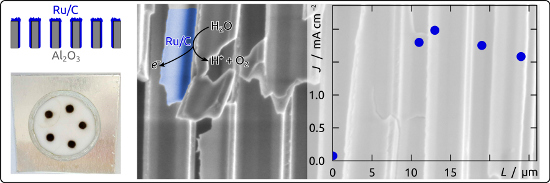
- RF mode on the sample side of laser deposition (step (d) in Figure 5). Instrumental methods Scanning electron micrographs were obtained on a Zeiss Merlin field-emission SEM with a field-emission cathode and standard In-lens SE and SE2 detectors. All measurements were performed in the chamber with a




Apparent tunneling barrier height and local work function of atomic arrays
Beilstein J. Nanotechnol. 2018, 9, 3048–3052, doi:10.3762/bjnano.9.283
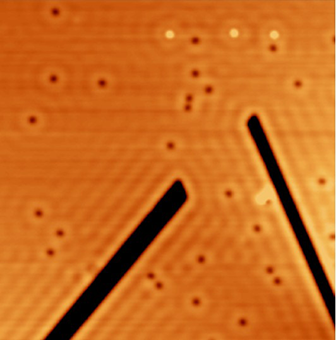
- . This is reflected by the notion of a local work function Φ [7][8][9]. Adsorbates modify Φ in an intriguing manner [10][11][12][13]. In turn, variations of Φ produce, e.g., atomic-scale contrast in field-emission microscopy, photo-emission electron microscopy, and low-energy electron microscopy [14][15


Charged particle single nanometre manufacturing
Beilstein J. Nanotechnol. 2018, 9, 2855–2882, doi:10.3762/bjnano.9.266
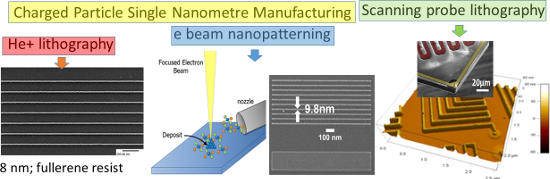
- to 196 beams is under development based on a commercial SEM platform. Among its potential applications is the manufacture of templates for nanoimprint lithography, NIL. This is also a target application for the third and final charged particle technology, viz. field emission electron scanning probe
- ; electron; field emission; ion; nanolithography; Review 1 Introduction Methods for nanostructuring – the fabrication of structures with sizes on the nanoscale – are required for the fabrication of next-generation nanoelectronics, such as quantum-based devices, for nanophotonics, nanobiotechnology
- beams can be divided into two approaches: either the particle beam is generated far from the sample and scanned over it using electric or magnetic focusing and deflection optics or the beam is generated at a field-emission tip located in close proximity to the sample and the tip itself is scanned to


Nanostructure-induced performance degradation of WO3·nH2O for energy conversion and storage devices
Beilstein J. Nanotechnol. 2018, 9, 2845–2854, doi:10.3762/bjnano.9.265
- samples were identified with a high-resolution X-ray diffractometer (HR-XRD, SmartLab, Rigaku). The morphology of samples was investigated by field-emission scanning electron microscopy (FE-SEM, JSM-7100F, Jeol) together with energy-dispersive spectroscopy (EDS). Information about chemical composition and


Biomimetic surface structures in steel fabricated with femtosecond laser pulses: influence of laser rescanning on morphology and wettability
Beilstein J. Nanotechnol. 2018, 9, 2802–2812, doi:10.3762/bjnano.9.262
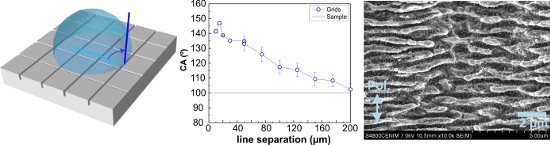
- , the depth was positive (the laser ablated material producing a hole in the sample) whereas in some cases, negative depths where also measured (the irradiated sample protrudes out). In addition, the morphology of the surfaces was characterized with a field emission electron microscope (Hitachi S-4800



Near-infrared light harvesting of upconverting NaYF4:Yb3+/Er3+-based amorphous silicon solar cells investigated by an optical filter
Beilstein J. Nanotechnol. 2018, 9, 2788–2793, doi:10.3762/bjnano.9.260
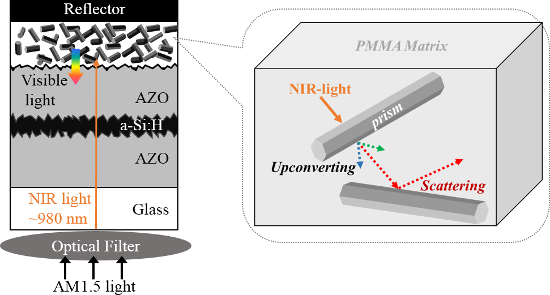
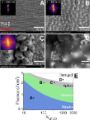
- optical filter. Photoelectric performances of a-Si:H solar cells with and without UC were compared under AM1.5 solar irradiation. Results and Discussion Field-emission scanning electron microscopy (FE-SEM) was used to investigate the sample morphologies over the course of the reaction. In Figure 1a, the


Magnetic and luminescent coordination networks based on imidazolium salts and lanthanides for sensitive ratiometric thermometry
Beilstein J. Nanotechnol. 2018, 9, 2775–2787, doi:10.3762/bjnano.9.259
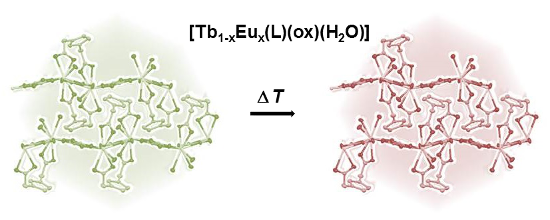
- a JEOL 6700F (scanning electron microscope (SEM) equipped with a field-emission gun (FEG), operating at 3 kV in the SEI mode instrument. FTIR spectra were collected on a Perkin Elmer Spectrum Two UATR-FTIR spectrometer. TGA-TDA experiments were performed using a TA instrument SDT Q600 (heating rates



Accurate control of the covalent functionalization of single-walled carbon nanotubes for the electro-enzymatically controlled oxidation of biomolecules
Beilstein J. Nanotechnol. 2018, 9, 2750–2762, doi:10.3762/bjnano.9.257
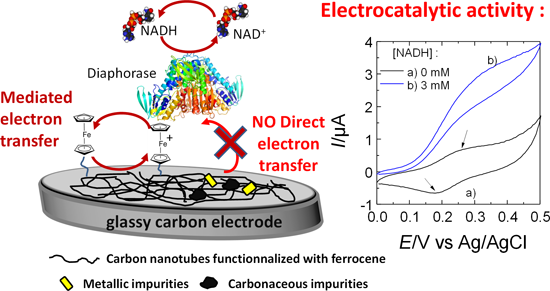
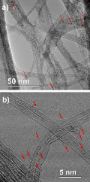
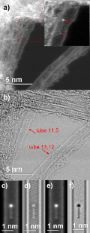
- microscopy (HRSTEM) were performed using a probe aberration-corrected JEOL ARM200 microscope equipped with a cold field emission gun, a JEOL JED2300T energy dispersive X-ray spectrometer (EDS) and a Gatan GIF Quantum energy filter for electron energy loss spectroscopy (EELS). The microscope was operated at






Oriented zinc oxide nanorods: A novel saturable absorber for lasers in the near-infrared
Beilstein J. Nanotechnol. 2018, 9, 2730–2740, doi:10.3762/bjnano.9.255
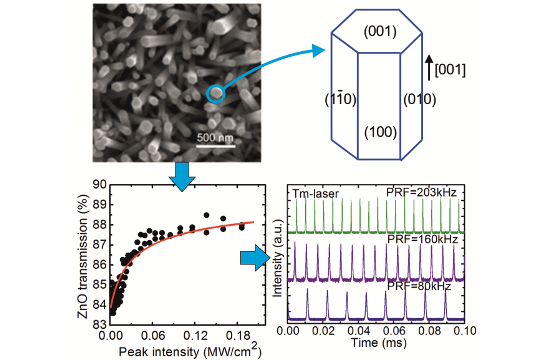
- studied by field emission scanning electron microscopy (FESEM) using a JEOL JSM-7600F microscope. The structure of the grown ZnO NRs was studied by X-ray diffraction (XRD) using a Rigaku MiniFlex600 diffractometer. The XRD patterns of the samples were obtained using Cu Kα radiation (1.5406 Å) with
- found elsewhere [31]. Field emission scanning electron microscope (FESEM) images of ZnO nanorods grown hydrothermally on glass substrates for (a,d) 5 h, (b,e) 10 h and (c,f) 15 h; (a,b,c) top- and (d,e,f) side-view. Images (b) and (e) are reproduced with permission from [28], copyright 2017, IEEE. (a) X
- demonstrate the suitability of hydrothermally grown, oriented ZnO NRs as SAs for lasers emitting at 1 and 2 µm, for the first time, to the best of our knowledge. The preliminary results of this work were presented in a conference paper [28]. Results and Discussion Structural study Figure 1 shows the field



Low cost tips for tip-enhanced Raman spectroscopy fabricated by two-step electrochemical etching of 125 µm diameter gold wires
Beilstein J. Nanotechnol. 2018, 9, 2718–2729, doi:10.3762/bjnano.9.254
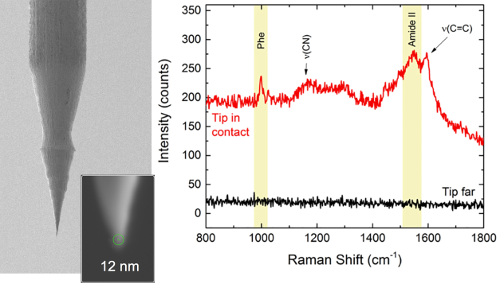
- drops of HCl and rinsing in ethanol and water. This eliminates residual impurities from the surface. Scanning electron microscopy (SEM) inspection of the produced tips is carried out to characterize the tip apex using a Zeiss Merlin field emission electron microscope, equipped with a Gemini II column


Silencing the second harmonic generation from plasmonic nanodimers: A comprehensive discussion
Beilstein J. Nanotechnol. 2018, 9, 2674–2683, doi:10.3762/bjnano.9.250
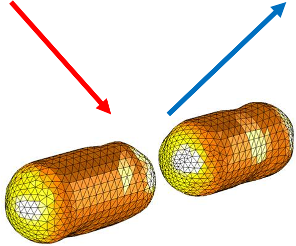
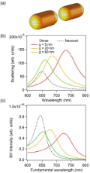
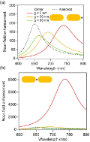
- emission, meaning that these SH sources do not really contribute to the far-field emission and can even interfere destructively with other sources. Considering the SH sources in the nanogap only (coverage of 25%), the far-field SH intensity drops by a factor 7 for a gap g = 5 nm and by a factor 10 for a


Enhanced antineoplastic/therapeutic efficacy using 5-fluorouracil-loaded calcium phosphate nanoparticles
Beilstein J. Nanotechnol. 2018, 9, 2499–2515, doi:10.3762/bjnano.9.233
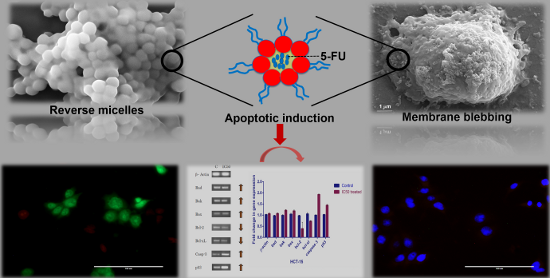
- with an approximate diameter of 160–180 nm was confirmed by different methods. The physicochemical characterization of the synthesized CaP@5-FU NPs was done with transmission electron microscopy (TEM), dynamic light scattering (DLS), field emission scanning electron microscopy (FE-SEM), Fourier


Thickness-dependent photoelectrochemical properties of a semitransparent Co3O4 photocathode
Beilstein J. Nanotechnol. 2018, 9, 2432–2442, doi:10.3762/bjnano.9.228
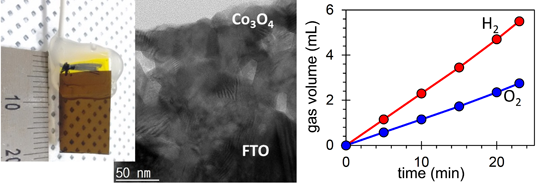
- microscope (XRD, Rigaku, SmartLab) (Cu Kα radiation, λ = 1.540598 Å, in grazing mode with a glancing angle of 0.5°, step size of 0.05°, and a 2θ range of 10–80°) as well as a field-emission transmission electron microscope (FETEM, JEOL, JEM-2100F) were used. Cross-sectional TEM samples were prepared using a
- films were characterized using a surface profiler (Vecco, Dektak XT-E). The planar and cross-sectional morphologies were analysed using a field-emission scanning electron microscope (FESEM, JEOL, JSM_7800F) with 5 kV of field voltage, using an SE2 secondary detector. Optical characterization was carried



Hydrothermal-derived carbon as a stabilizing matrix for improved cycling performance of silicon-based anodes for lithium-ion full cells
Beilstein J. Nanotechnol. 2018, 9, 2381–2395, doi:10.3762/bjnano.9.223
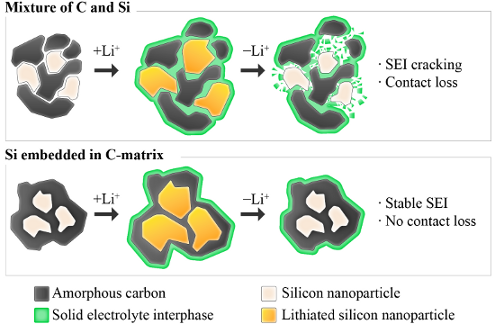
- range between 25 °C and 800 °C on a TGA Q500 (TA Instruments) in an oxygen/nitrogen atmosphere (nitrogen flow: 10 mL min−1, oxygen flow: 25 mL min−1) in order to determine the Si content. A heating ramp of 20 °C min−1 was applied. Scanning electron microscopy (SEM) with a field emission gun (Schottky


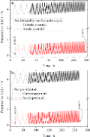
Directional light beams by design from electrically driven elliptical slit antennas
Beilstein J. Nanotechnol. 2018, 9, 2361–2371, doi:10.3762/bjnano.9.221
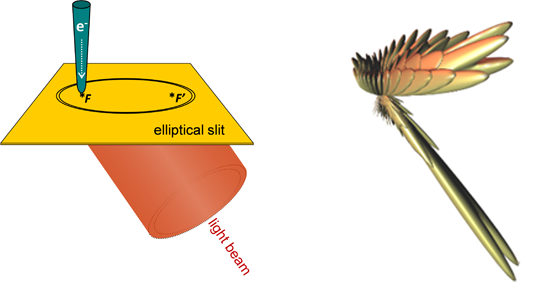
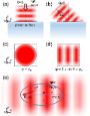
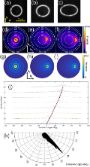
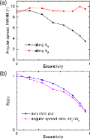
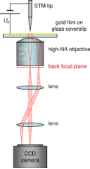
- excitation of structure 8 (see Table 1) at the focus F(−c,0). Figure 5 shows the effect of the SPP source location on the far-field emission pattern. The emission of light from an elliptical slit (structure 8 in Table 1) is obtained using the STM nanosource at different positions along the major axis of the





Magnetism and magnetoresistance of single Ni–Cu alloy nanowires
Beilstein J. Nanotechnol. 2018, 9, 2345–2355, doi:10.3762/bjnano.9.219
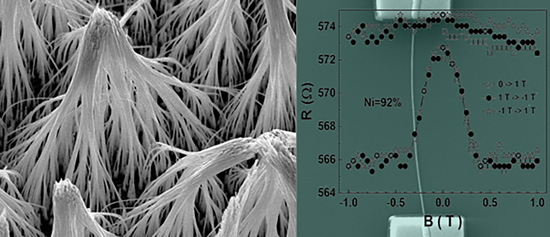
- 620 equipment situated into a cleanroom class 100 (ISO EN 14644) with RF magnetron sputtering and thermal vacuum evaporation (using TECTRA equipment). Thus, to contact single Ni–Cu alloy nanowires using a typical EBL process (Zeiss Merlin Compact field-emission scanning electron microscope combined


The role of adatoms in chloride-activated colloidal silver nanoparticles for surface-enhanced Raman scattering enhancement
Beilstein J. Nanotechnol. 2018, 9, 2236–2247, doi:10.3762/bjnano.9.208
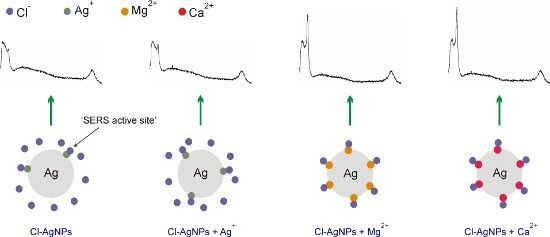
- transmission electron microscope (STEM), equipped with a cold field emission gun, working at an acceleration voltage of 200 kV. The absorption spectra were recorded with a Jasco V-630 UV–vis spectrometer at 1 nm spectral resolution. Raman and SERS spectra were obtained with a Renishaw InVia Raman microscope



Spin-coated planar Sb2S3 hybrid solar cells approaching 5% efficiency
Beilstein J. Nanotechnol. 2018, 9, 2114–2124, doi:10.3762/bjnano.9.200
- MoOx forms a tunneling junction with the HTM is typical for organic solar cells in an n-i-p configuration. The cell area was 0.16 cm2. Layer and device characterization: The scanning electron microscope was a Zeiss (Leo) Gemini 1550 with Shottky field-emission cathode and an in-lens detector. The





