


Search results
Search for "low temperature" in Full Text gives 389 result(s) in Beilstein Journal of Nanotechnology. Showing first 200.
Review of advanced sensor devices employing nanoarchitectonics concepts
Beilstein J. Nanotechnol. 2019, 10, 2014–2030, doi:10.3762/bjnano.10.198

- -loaded CeO2–ZrO2–ZnO catalyst has a small heat capacity and dramatically increases the temperature of the Pt coil, resulting in a highly sensitive sensor signal. On the other hand, the n-type Sm2CuO4-loaded CeO2–ZrO2–ZnO catalyst is advantageous when rapid response and low temperature operation are





Magnetic properties of biofunctionalized iron oxide nanoparticles as magnetic resonance imaging contrast agents
Beilstein J. Nanotechnol. 2019, 10, 1964–1972, doi:10.3762/bjnano.10.193
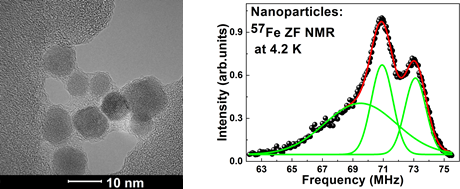
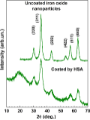
- identified in the Mössbauer spectrum of magnetite. Mössbauer spectroscopy is a highly sensitive method with respect to the valence of iron ions in these bulk oxides, since the hyperfine parameters corresponding to Fe3+ and Fe2+ ions are well distinguishable in the spectra. For the processing of the low
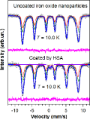
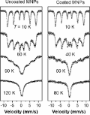
- -temperature Mössbauer spectra of uncoated MNPs, a model consisting of two magnetic components (sextets) was used (Figure 6). Each sextet corresponds to nonequivalent states of iron ions in the A- and B-sites. The values of the magnetic hyperfine field, Hhf, in the sextets were described by certain




Novel hollow titanium dioxide nanospheres with antimicrobial activity against resistant bacteria
Beilstein J. Nanotechnol. 2019, 10, 1716–1725, doi:10.3762/bjnano.10.167
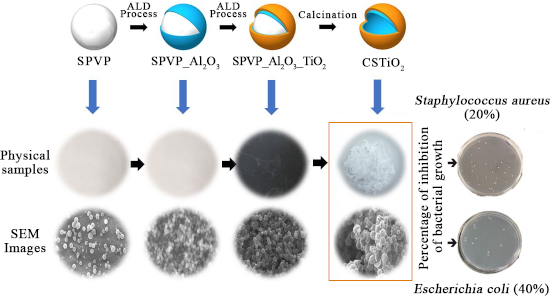
- solution and the type of polymer. On the other hand, ALD is a novel metal oxide deposition process with excellent thickness control due to its low temperature processing and separated superficial reactions between precursor materials. Precursors are pulsed one by one over a substrate in the chamber and


Kelvin probe force microscopy work function characterization of transition metal oxide crystals under ongoing reduction and oxidation
Beilstein J. Nanotechnol. 2019, 10, 1596–1607, doi:10.3762/bjnano.10.155
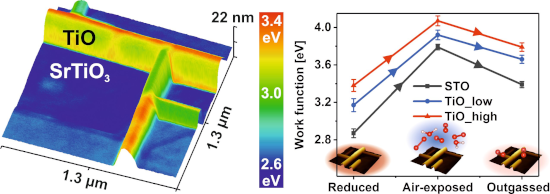
- ambient air exposure. Additionally, the impact of low temperature annealing (230 °C) in UHV is presented. After the venting of the vacuum chamber, the TiO nanowires still had a much higher work function than the SrTiO3(100) surface; however, the absolute values for both materials increased. It is widely


High-temperature resistive gas sensors based on ZnO/SiC nanocomposites
Beilstein J. Nanotechnol. 2019, 10, 1537–1547, doi:10.3762/bjnano.10.151
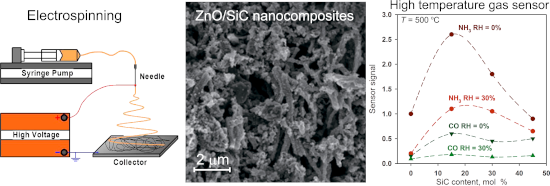
- in size. The average pore diameter, estimated from the data of low-temperature nitrogen adsorption, was 50 nm (Figure 2f). In the ZnO/SiC nanocomposites (Figure 2e), formed from ZnO nanofibers and SiC powder by mixing components in a single homogeneous paste with subsequent annealing at 550 °C, the
- nanofibers was estimated from the broadening of the (100) ZnO and (111) 3C-SiC XRD peaks using the Scherrer formula. The measurements of the specific surface area (SBET) and analysis of the porosity of the samples were carried out by the method of low-temperature nitrogen adsorption on an ASAP 2010



On the relaxation time of interacting superparamagnetic nanoparticles and implications for magnetic fluid hyperthermia
Beilstein J. Nanotechnol. 2019, 10, 1280–1289, doi:10.3762/bjnano.10.127
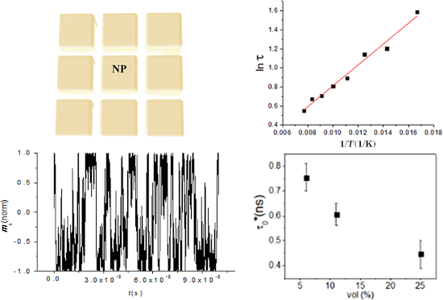
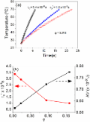
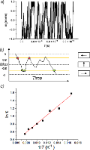
- concentrated ferrofluid (φ = 0.094) consisting of quasi-ellipsoidal magnetite nanoparticles of average magnetic volume of 4.3 × 10⁻²⁵ m3 dispersed in transformer oil, with a spontaneous magnetization Ms = 4.5 × 10⁵ A m−2, as determined by DC low temperature magnetometry and an effective anisotropy energy



Molecular attachment to a microscope tip: inelastic tunneling, Kondo screening, and thermopower
Beilstein J. Nanotechnol. 2019, 10, 1243–1250, doi:10.3762/bjnano.10.124
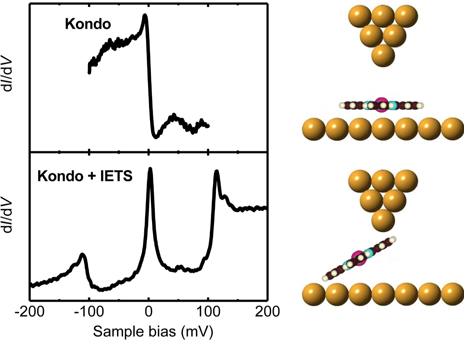
- surfaces [13][14][15][16][17][18][19][20][21]. Low-temperature STM/STS is an ideal tool to study the Kondo effect, which manifests itself by a sharp zero-bias resonance in the conductance spectrum of a localized moment on a conducting substrate, due to the coherent spin-flip scattering between the
- interesting in connection with thermopower applications. Ultimately, a better understanding of the interactions of the molecules with their environment has been achieved. Experimental Experiments were performed in a UHV system with a base pressure p < 10−10 mbar, equipped with a low-temperature scanning


Playing with covalent triazine framework tiles for improved CO2 adsorption properties and catalytic performance
Beilstein J. Nanotechnol. 2019, 10, 1217–1227, doi:10.3762/bjnano.10.121

- and Figure S8B, Supporting Information File 1) are largely superimposable with a slight increase of the low-temperature component only. On the other hand, the TPO profile of the spent CTF4 presents (see Figure 2A, after 40 h on stream and Figure S8A, Supporting Information File 1) an evident peak
- enlargement due to a non-negligible formation of low-temperature carbon deposits (coke). These results mirror the different catalytic behaviour of the two CTF systems at work in DDH and highlight the higher stability of the highly basic and open-cell-structured CTF5 sample under operative conditions


Tailoring the magnetic properties of cobalt ferrite nanoparticles using the polyol process
Beilstein J. Nanotechnol. 2019, 10, 1166–1176, doi:10.3762/bjnano.10.116
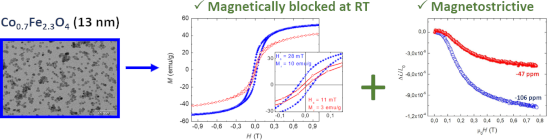
- confirm the high crystalline quality of the produced NPs. We pursued our investigations by plotting the variation of the magnetization of these particles as a function of the magnetic field at RT, typically T = 300 K (Figure 6). Low-temperature (T = 10 K) hysteresis behavior is not reported, as it is
- temperature range of 10–400 K under a magnetic field of 400 Oe. The magnetization as a function of the magnetic field M(H) was also recorded at low temperature (10 K) and room temperature (300 K) cycling the magnetic field between −70 kOe and +70 kOe. A sampling tube made from a specific pod from Quantum




Quantitative analysis of annealing-induced instabilities of photo-leakage current and negative-bias-illumination-stress in a-InGaZnO thin-film transistors
Beilstein J. Nanotechnol. 2019, 10, 1125–1130, doi:10.3762/bjnano.10.112
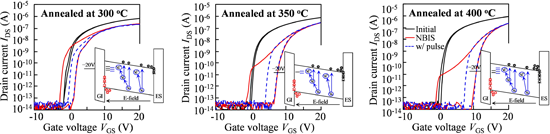
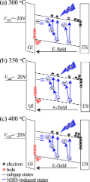
- temperature on the initial electrical characteristics and photo-induced instabilities of amorphous indium gallium zinc oxide (a-IGZO) thin-film transistors (TFTs). The extracted electrical parameters from transfer curves suggest that a low-temperature treatment maintains a high density of defects in the IGZO
- bulk, whereas high-temperature annealing causes a quality degradation of the adjacent interfaces. Light of short wavelengths below 460 nm induces defect generation in the forward measurement and the leakage current increases in the reverse measurement, especially for the low-temperature-annealed device
- . The hysteresis after negative-bias-illumination-stress (NBIS) is quantitatively investigated by using the double-scan mode and a positive gate pulse. Despite the abnormal transfer properties in the low-temperature-treated device, the excited holes are identically trapped at the front interface


CuInSe2 quantum dots grown by molecular beam epitaxy on amorphous SiO2 surfaces
Beilstein J. Nanotechnol. 2019, 10, 1103–1111, doi:10.3762/bjnano.10.110
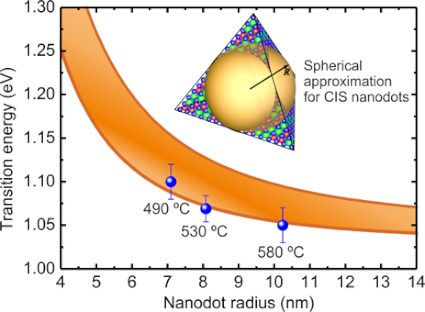
- energy for the QD [48] and QW [49] can be calculated as: where Eg is the CIS low-temperature bandgap energy, h is the Planck constant, me is the effective conduction-band mass, mh is the effective valence-band mass, e is the rest electron charge, ε is the CIS dielectric constant and Ex is the exciton
- PL spectrum of a CdS layer deposited on top of a glass covered with a Mo layer is shown for comparison. (c), (d), and (e) show, for each sample, the broad band CIS-related emission superimposed on the Si-related peaks. The dashed line indicates the bulk bandgap of CIS at low temperature. Simulated


Direct growth of few-layer graphene on AlN-based resonators for high-sensitivity gravimetric biosensors
Beilstein J. Nanotechnol. 2019, 10, 975–984, doi:10.3762/bjnano.10.98
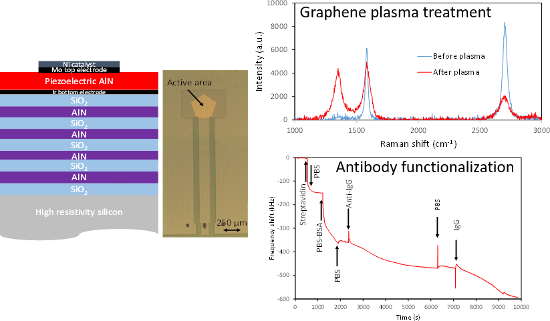
- -based solidly mounted resonators (SMR) using a low-temperature chemical vapour deposition (CVD) process assisted by Ni catalysts, and its effective bio-functionalization with antibodies. The SMRs are manufactured on top of fully insulating AlN/SiO2 acoustic mirrors able to withstand the temperatures
- of their characteristics and then functionalized to manufacture gravimetric biosensors, which eliminates the need to use complex transfer methods. Defect-free few-layer graphene was selectively grown through a low-temperature (650 °C) CVD process on Ni [16] thin-film catalysts previously evaporated
- graphene layers were directly deposited on the resonators through a relatively low-temperature LPCVD process that allowed for the preservation of the integrity of the whole multi-layered structure as well as its electrical response. The graphene-covered resonators were tested as biosensors for the


Co-doped MnFe2O4 nanoparticles: magnetic anisotropy and interparticle interactions
Beilstein J. Nanotechnol. 2019, 10, 856–865, doi:10.3762/bjnano.10.86
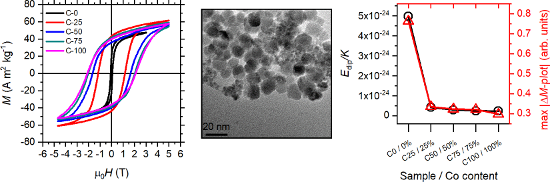
- low temperature, not higher than 350 °C) allows nanoparticles to be produced with good control of size and crystallinity in large scale (i.e., tens of grams), much more than can be provided by conventional chemical approaches (usually limited to 100–300 mg). Therefore this method can be easily
- constant (its value, β = 1–2, depends on the TB distribution) [29][30]. Finally, the FC curves show an almost temperature-independent low-temperature trend, with even a low temperature negative slope for sample C0 below Tmax: this behaviour indicates the presence of interparticle interactions bringing the
- system in a collective state with higher anisotropy at low temperature [31][32][33]. For sample C0, where a strong interacting regime is expected, magnetization dynamics of superspin has been investigated. The in phase component (χ’) shows a peak at a temperature Tp that confirms the DC magnetization


Synthesis of MnO2–CuO–Fe2O3/CNTs catalysts: low-temperature SCR activity and formation mechanism
Beilstein J. Nanotechnol. 2019, 10, 848–855, doi:10.3762/bjnano.10.85
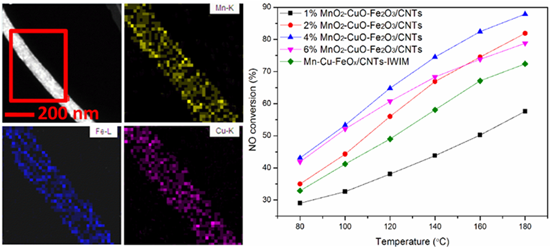
- conversions of 4% MnO2–CuO–Fe2O3/CNTs catalyst of 43.1–87.9% at 80–180 °C were achieved, which was ascribed to the generation of amorphous MnO2, CuO and Fe2O3, and a high surface-oxygen (Os) content. Keywords: amorphous materials; carbon nanotubes; low-dimensional materials; low-temperature catalysis; SCR
- ) of the Mn–Cu–FeOx/CNTs-IWIM catalyst appear at lower energies than those of 4% MnO2–CuO–Fe2O3/CNTs catalyst, revealing the formation of Fe3O4 [35]. Moreover, the absence of any satellites further proved the presence of Fe3O4. It is noteworthy that Fe2O3 exhibits a better low-temperature SCR activity
- % at 180 °C during a test of 6 h, revealing the outstanding long-term stability. In view of the above favorable properties, the 4% MnO2–CuO–Fe2O3/CNTs catalyst will be potentially applicable in the low-temperature NO reduction with NH3. Comparison of the catalytic performance of three catalysts Table 1


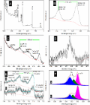


Novel reversibly switchable wettability of superhydrophobic–superhydrophilic surfaces induced by charge injection and heating
Beilstein J. Nanotechnol. 2019, 10, 840–847, doi:10.3762/bjnano.10.84
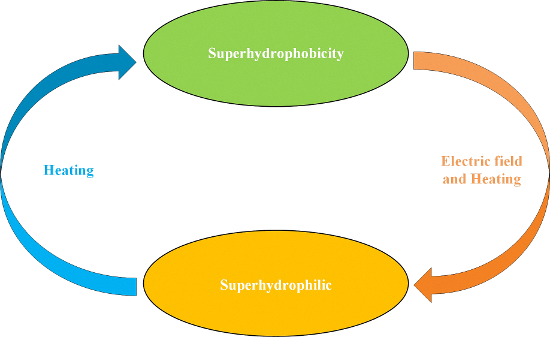
- ] deposited thin films of titanium dioxide nanorods on glass substrates by a low-temperature hydrothermal method. The films were stored in the dark for two weeks to yield films with a contact angle of 154 ± 1.3°. Film irradiation with ultraviolet light for 2 h rendered the films superhydrophilic with a


Tungsten disulfide-based nanocomposites for photothermal therapy
Beilstein J. Nanotechnol. 2019, 10, 811–822, doi:10.3762/bjnano.10.81
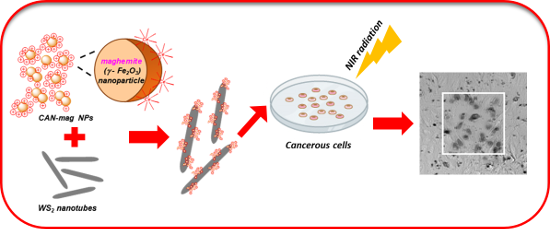
- these conditions. The nanotubes with CAN-mag functionalization (red line) show a small and gradual weight loss, at a relatively low temperature range, assigned to the organic ammonium and nitrate components of CAN (cerium and iron oxide are not expected to be affected under nitrogen). WS2-NT-CM-PAA






On the transformation of “zincone”-like into porous ZnO thin films from sub-saturated plasma enhanced atomic layer deposition
Beilstein J. Nanotechnol. 2019, 10, 746–759, doi:10.3762/bjnano.10.74
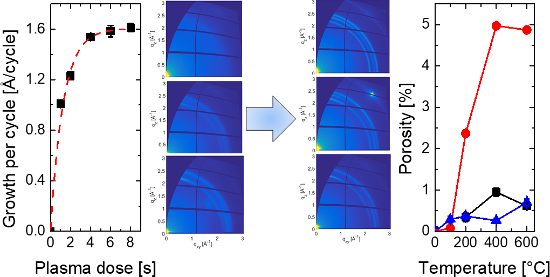
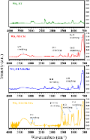
- absorptions have been previously reported for both low-temperature and high-temperature PE-ALD processes [51][57] and as intermediates in in situ FTIR studies [58]. The absence of IR absorption in the region of 3000–2800 cm−1 points out the complete oxidation or partial removal of the ethyl groups present in


Outstanding chain-extension effect and high UV resistance of polybutylene succinate containing amino-acid-modified layered double hydroxides
Beilstein J. Nanotechnol. 2019, 10, 684–695, doi:10.3762/bjnano.10.68
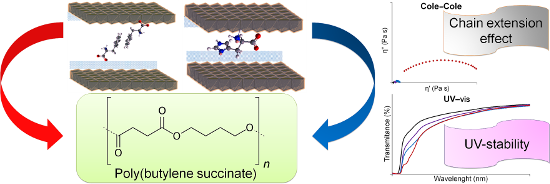
- low temperature (−130 °C) up to RT, respectively. More detailed, at room temperature, the increase in E’ is 26% for PBS–LDH/PHE, 20% for PBS–LDH/HIS and 17% for PBS–LDH/nitrate. The larger storage modulus with respect to PBS for such composites indicates a mechanical reinforcement of the matrix due to


Hydrophilicity and carbon chain length effects on the gas sensing properties of chemoresistive, self-assembled monolayer carbon nanotube sensors
Beilstein J. Nanotechnol. 2019, 10, 565–577, doi:10.3762/bjnano.10.58
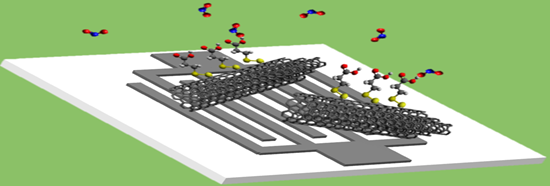
- employing an instrument from Renishaw, Inc., (U.K.), which was coupled to a confocal Leica DM2500 microscope. The laser wavelength applied to the samples was 785 nm. The samples under inspection were held on a Peltier cell and kept at low temperature (4 °C) in order to ensure the stability of SAMs under


Wearable, stable, highly sensitive hydrogel–graphene strain sensors
Beilstein J. Nanotechnol. 2019, 10, 475–480, doi:10.3762/bjnano.10.47
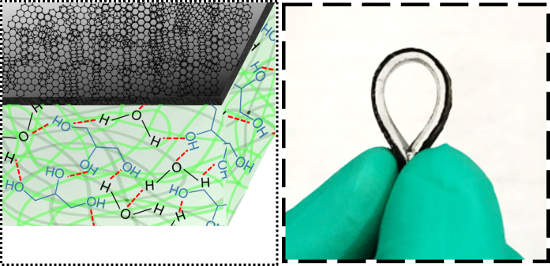
- lack of long term stability, due to the tendency of the material to lose water at high temperature and freeze at low temperature [14]. Glycerol is a commonly used, nontoxic antifreeze additive. Here, hydrogen bonding between glycerol and water competes with hydrogen bonding between the water molecules
- , and the formation of ice at low temperature is restricted and the evaporation of water at high temperature is prohibited [11]. The graphene layer was formed on the hydrogel by directly drop casting the graphene solution onto the hydrogel and drying in an oven at 35 °C. The drying process removes the


Reduced graphene oxide supported C3N4 nanoflakes and quantum dots as metal-free catalysts for visible light assisted CO2 reduction
Beilstein J. Nanotechnol. 2019, 10, 448–458, doi:10.3762/bjnano.10.44
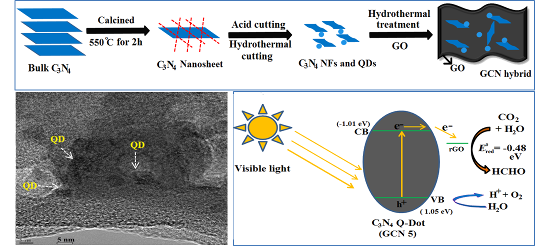
- heating at 130–190 °C for 5−20 h. It is observed that hydrothermal exposure of acid-treated graphitic carbon nitride (g-C3N4) nanosheets at low temperature generated larger NFs, whereas QDs are formed at higher temperatures. The formation of GCN hybrid materials was confirmed by powder X-ray diffraction
- ) hydrothermal heating at low temperature (130 °C), the g-C3N4 sheet breaks into pieces in different orientations and generates flake-like shapes of the material. Upon further increase of the heating temperature, the process proceeds very fast and cuts the flakes into dot-like structures (i.e., QDs) even within
- that there might be an incomplete transformation of the nanosheet to NFs. This is probably due to the reduced heating time at this low temperature; however, this did not affect the photoreduction capacity of these CN-NFs (130 °C of 5 h), which was found to be nearly similar to CN-10 (data not shown



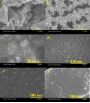


Integration of LaMnO3+δ films on platinized silicon substrates for resistive switching applications by PI-MOCVD
Beilstein J. Nanotechnol. 2019, 10, 389–398, doi:10.3762/bjnano.10.38
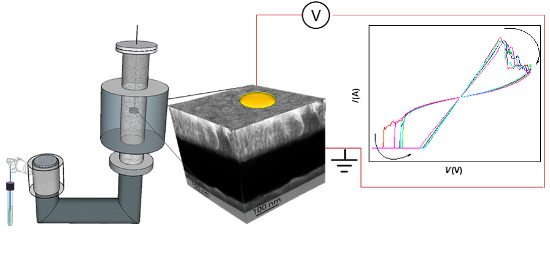
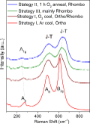
- 1 h, the selected conditions led to dense and homogeneous LMO films. For strategy III, based on two consecutive deposition steps at 500 and 750 °C, the critical parameters were: (i) the LMO layer thickness obtained by growth at low temperature (d1) to stabilize the Pt layer, and the LMO layer




Intuitive human interface to a scanning tunnelling microscope: observation of parity oscillations for a single atomic chain
Beilstein J. Nanotechnol. 2019, 10, 337–348, doi:10.3762/bjnano.10.33
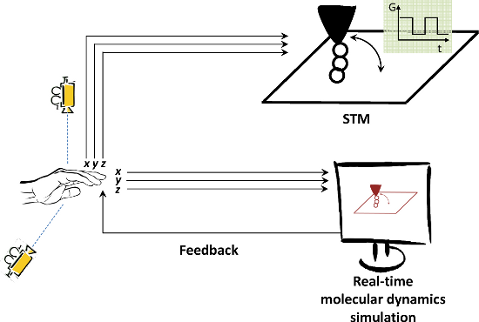
- –machine augmented system in which the operator and the machine are connected by a real-time simulation. Here, a 3D motion control system is integrated with an ultra-high vacuum (UHV) low-temperature scanning tunnelling microscope (STM). Moreover, we coupled a real-time molecular dynamics (MD) simulation
- annealing cycles to obtain an atomically flat Au(111) facet showing herringbone surface reconstruction. We further prepare the surface at low temperature by creating a localized stress pattern [11][12][13][14] on the surface using gentle indentation of the STM tip at a spot on the surface remote from the
- -empirical potentials for such highly under-coordinated systems. As the actual bulk shape of the tip is unknown in our experiments we assume an isotropic tip structure, which could also cause certain discrepancies between the experiment and the simulation. Conclusion We have modified our low-temperature




Geometrical optimisation of core–shell nanowire arrays for enhanced absorption in thin crystalline silicon heterojunction solar cells
Beilstein J. Nanotechnol. 2019, 10, 322–331, doi:10.3762/bjnano.10.31
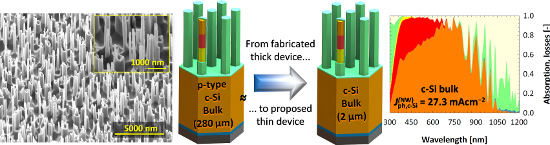
- , a 100 nm thick transparent tin-doped indium oxide (In2O3:Sn, ITO) was deposited at low power and low temperature, using radio-frequency (RF) magnetron sputtering. The cell area was defined as 5 mm × 5 mm, using a mask during ITO deposition. The reported equivalent thickness values of thin films on


Site-specific growth of oriented ZnO nanocrystal arrays
Beilstein J. Nanotechnol. 2019, 10, 274–280, doi:10.3762/bjnano.10.26
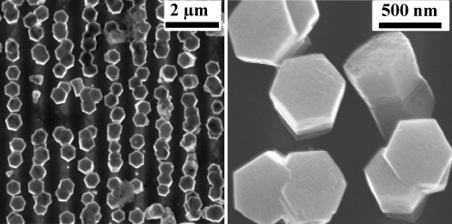
- University, Tietotie 3, 02150 Espoo, Finland 10.3762/bjnano.10.26 Abstract We report on the growth of ZnO nanocrystals having a hexagonal, prismatic shape, sized 700 nm × 600 nm, on bare indium tin oxide (ITO) substrates. The growth is induced by a low ion flux and involves a low-temperature
- patterned substrates and a cost-effective growth technique. In particular, we demonstrate the growth of hexagonal faceted self-assembled twin ZnO NCs on bare indium tin oxide (ITO) substrate via a facile low temperature electrodeposition technique that has the potential of yielding good crystal quality with
- positions by employing polymer-coated ITO substrates patterned with periodic ordered pores. The growth of c-axis-aligned twin ZnO nanocrystal arrays was achieved at specific sites via a low-temperature electrodeposition technique with excellent control over orientation, dimension, and location. The effect





