Search results
Search for "oxides" in Full Text gives 467 result(s) in Beilstein Journal of Nanotechnology. Showing first 200.
Self-standing heterostructured NiCx-NiFe-NC/biochar as a highly efficient cathode for lithium–oxygen batteries
Beilstein J. Nanotechnol. 2020, 11, 1809–1821, doi:10.3762/bjnano.11.163
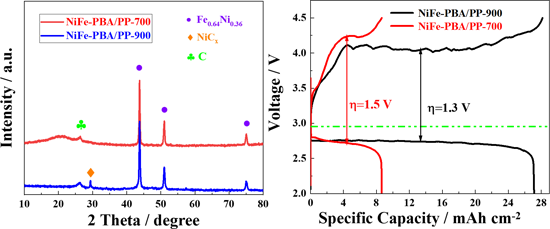
- fairly high ORR and OER activities. Significant progress has been made in the development of alternative ORR and OER catalysts, such as transition metal oxides [16][17][18], heteroatom-doped carbons [19][20], and transition metal nitrides and carbides [21][22][23]. Due to their surface physicochemical






Mapping of integrated PIN diodes with a 3D architecture by scanning microwave impedance microscopy and dynamic spectroscopy
Beilstein J. Nanotechnol. 2020, 11, 1764–1775, doi:10.3762/bjnano.11.159
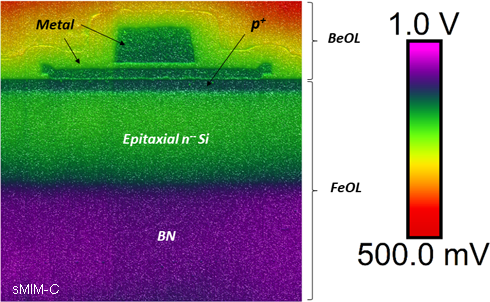
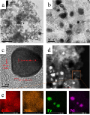
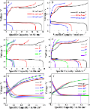
- monolithic silicon integrated PIN diode with a 3D architecture. The studied device includes FEOL regions (doped semiconductors and oxides) and “back end of line” (BEOL) regions (metallic and dielectric layers). After the presentation of the results, the capabilities of the sMIM mode are discussed in detail
- , an electrical back contact is created between the microscope chuck and the sample. Results and Discussion The vertical PIN structure Figure 2 shows the surface topography of the cross section of the PIN diode. The different materials used (silicon substrate, epitaxial layers, oxides, and alloy metals
- oxides with a good reproducibility and stability during the scan. The thickness of the different layers in the diode structure (determined for VDC = 0 V and VAC = 1.0 V) can be extracted from the sMIM-C profile. The p+ (anode) layer has a thickness of approx. 780 nm, whereas the lightly doped n-type


Selective detection of complex gas mixtures using point contacts: concept, method and tools
Beilstein J. Nanotechnol. 2020, 11, 1631–1643, doi:10.3762/bjnano.11.146
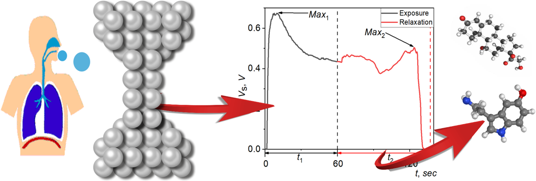
- breath contains oxidizing agents (e.g., nitrogen oxides, carbon oxide, and sulfur oxides), reducing agents (e.g., hydrogen sulfide, ammonia, mercaptans, and organic molecules), and other chemically active components that can participate in various chemical transformations. It is known, for example, that


![[Graphic 4]](/bjnano/content/inline/2190-4286-11-146-i8.svg?max-width=637&scale=1.18182) in th...
in th...

![[Graphic 7]](/bjnano/content/inline/2190-4286-11-146-i11.svg?max-width=637&scale=1.18182) in the...
in the...
Cu2O nanoparticles for the degradation of methyl parathion
Beilstein J. Nanotechnol. 2020, 11, 1546–1555, doi:10.3762/bjnano.11.137
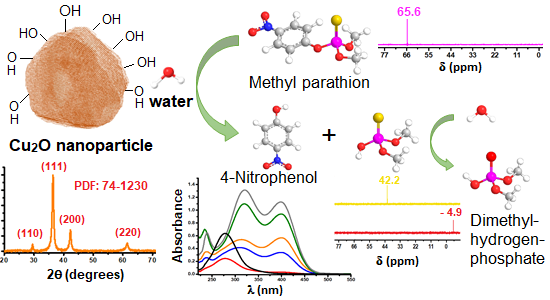
- with size of 16 nm have a stronger basicity because they generate a higher concentration of 4-NPh−. In other words, the chemical basicity of Cu2O increases with decreasing NPs size. This last result is best explained with Pearson’s concept of basicity [45][46], low oxidation number metal oxides are
- alkaline in aqueous medium. Thus, Cu2O is a basic metal oxide. Similarly, as the NP size decreases the surface-to-volume ratio increases. A higher surface area implies a higher amount of hydroxy groups [47][48] and, hence, a higher basicity. MP degradation can be further extended to different metal oxides


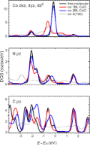
Adsorption and self-assembly of porphyrins on ultrathin CoO films on Ir(100)
Beilstein J. Nanotechnol. 2020, 11, 1516–1524, doi:10.3762/bjnano.11.134
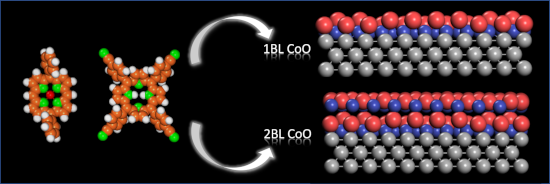
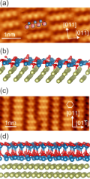
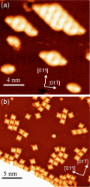
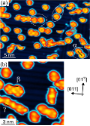
- islands on the 2BL film. The findings demonstrate the guiding effect of the cobalt oxide films of different thickness and the effect of functional surface anchoring. Keywords: adsorption energy; molecular rotors; porphyrins; self-assembly; transition metal oxides; Introduction Due to their variability




Controlling the electronic and physical coupling on dielectric thin films
Beilstein J. Nanotechnol. 2020, 11, 1492–1503, doi:10.3762/bjnano.11.132
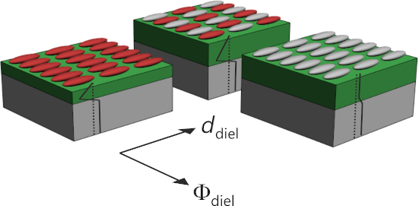
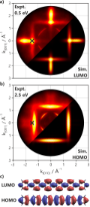
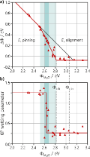
- islands (Figure 2b, Figure 2c), with their long axes aligned parallel to each other and parallel to the substrate surface. This is typical for 6P on atomically clean and ordered substrates obtained from bulk oxides to metal substrates [21][22][23][24][25]. In the submonolayer coverage regime (Figure 2a




Antimicrobial metal-based nanoparticles: a review on their synthesis, types and antimicrobial action
Beilstein J. Nanotechnol. 2020, 11, 1450–1469, doi:10.3762/bjnano.11.129

- nanomaterials which have also presented relevant antimicrobial properties against several pathogenic microorganisms. Zinc oxide, titanium dioxide, copper oxide, and nickel oxide are the most typical metal-oxide NPs with potential antibacterial, antifungal and antiviral activities [127][128]. These oxides have


Growth of a self-assembled monolayer decoupled from the substrate: nucleation on-command using buffer layers
Beilstein J. Nanotechnol. 2020, 11, 1291–1302, doi:10.3762/bjnano.11.113
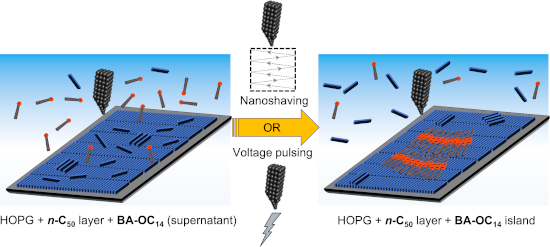
- ], NaCl [40], CuN [41] and oxides [32][42] have been used. Typically, the ultrathin films of these wide band gap materials act as insulating layers while still allowing electron tunneling through them. Chemisorbed iodine layers have been used as passivating layers on metals such as Au for achieving



Structure and electrochemical performance of electrospun-ordered porous carbon/graphene composite nanofibers
Beilstein J. Nanotechnol. 2020, 11, 1280–1290, doi:10.3762/bjnano.11.112
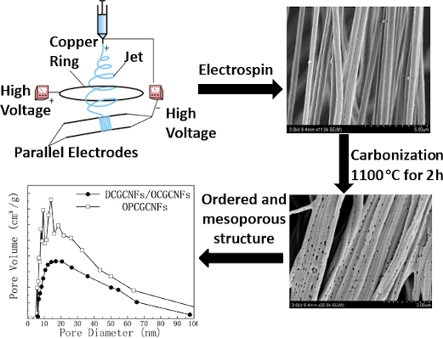
- nanofibers) or metal oxides (manganese oxide, nickel oxide, RuO2, Co3O4, etc.). Carbon is the primary material used to manufacture EDLC electrodes since it has a high specific surface area, which can easily form a double layer to store more electrical energy [6][7][8][9][10]. Since there is still room for


Magnetic-field-assisted synthesis of anisotropic iron oxide particles: Effect of pH
Beilstein J. Nanotechnol. 2020, 11, 1230–1241, doi:10.3762/bjnano.11.107
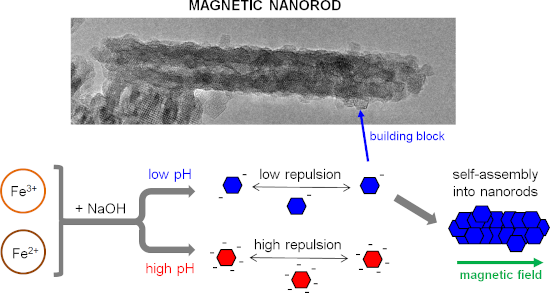
- synthesis and investigation of anisotropic magnetic nanomaterials has received much attention in the last years [1][2][3]. Among different magnetic nanomaterials, iron oxides and hydroxides are of particular interest because of their high magnetization capability, availability, low toxicity and
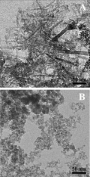
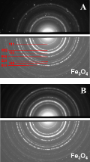
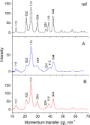
- reference sample (20–50 nm). It is well known that distinguishing between magnetite (Fe3O4) and maghemite (γ-Fe2O3) only using the diffraction technique is not straightforward. However, these samples can be easily distinguished by Raman scattering, since Fe3O4, γ-Fe2O3 and other iron oxides and hydroxides
- synthesized through this route. It should be noted that, due to the wide peaks in the Raman spectrum and to the presence of additional smaller peaks, there might be other iron oxides in the sample [50], although magnetite is prevalent. This is confirmed by energy-dispersive X-ray (EDX) spectrum taken from the






Hybridization vs decoupling: influence of an h-BN interlayer on the physical properties of a lander-type molecule on Ni(111)
Beilstein J. Nanotechnol. 2020, 11, 1168–1177, doi:10.3762/bjnano.11.101
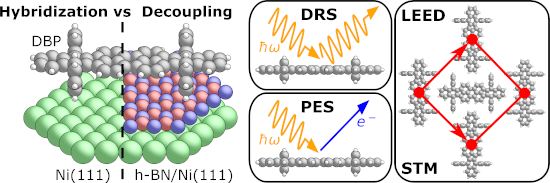
- through different ways such as the usage of wide-band-gap insulator thin films (e.g., oxides, alkali halides) [3][4], a molecular spacer layer [5][6], or sp2-hybridized two-dimensional interlayers (e.g., graphene and hexagonal boron nitride (h-BN)) [7][8]. The advantageous properties of an h-BN monolayer


Applications of superparamagnetic iron oxide nanoparticles in drug and therapeutic delivery, and biotechnological advancements
Beilstein J. Nanotechnol. 2020, 11, 1092–1109, doi:10.3762/bjnano.11.94
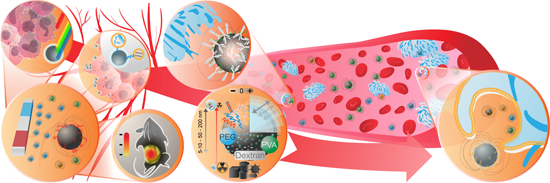
- of iron oxides in the form of magnetite (Fe3O4) or maghemite (Fe2O3) and are easy to produce through a few well-documented synthesis methods yielding different forms and structures (e.g., round, cubic, hexagonal, clusters, core–shell with gold, silica, polymers, or surfactants). A lot of research is
- types of nanoparticles used for MRI, but iron oxide is believed to be less harmful than other nanoparticles, such as lanthanides, which cannot be used on patients with kidney disorders [18], or manganese, which is neurotoxic [19]. Furthermore, excess iron oxides accumulate in liver and spleen as iron
- characteristics, properties, and effects were observed in numerous studies made with SPIONs on animal and human cells in vitro and in vivo, and are concluded at the end of the review. However, these observations are often contradictory. Iron oxide compounds and geometric shapes Iron oxides can be found as


Monolayers of MoS2 on Ag(111) as decoupling layers for organic molecules: resolution of electronic and vibronic states of TCNQ
Beilstein J. Nanotechnol. 2020, 11, 1062–1071, doi:10.3762/bjnano.11.91
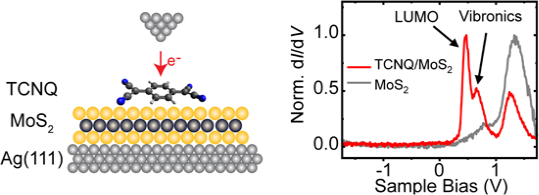
- decouple such flat-lying molecules from a metal, thin insulating layers have been engineered, ranging from ionic salts [15][16], over oxides [17][18][19], nitrides [20], and molecular layers [21][22] to 2D materials, such as graphene [23][24], and hexagonal boron nitride [25]. The most recent development


Gas-sensing features of nanostructured tellurium thin films
Beilstein J. Nanotechnol. 2020, 11, 1010–1018, doi:10.3762/bjnano.11.85
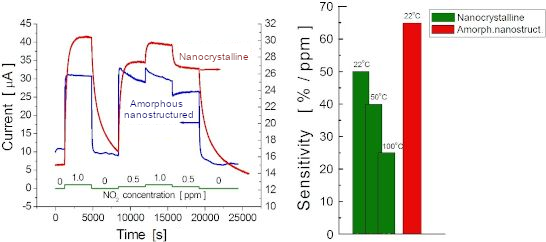
- microcrystalline Te films have remarkable, sensitive properties toward ammonia [8][9] and hydrogen sulfide [10] and, to a lesser extent, to carbon oxides and amines [11]. In the last years, due to the increase in the general interest toward nanodimensional devices and structures, significant attention has been


Adsorption behavior of tin phthalocyanine onto the (110) face of rutile TiO2
Beilstein J. Nanotechnol. 2020, 11, 821–828, doi:10.3762/bjnano.11.67

- stability. Since metal oxides are commonly used as support for the growth of molecular layers in many technological solutions, it is not surprising that Pcs on titanium dioxide faces have been widely studied. Most studies of phthalocyanine adsorption on rutile (110) and (011) faces consider flat Pcs (CoPc


Nickel nanoparticles supported on a covalent triazine framework as electrocatalyst for oxygen evolution reaction and oxygen reduction reactions
Beilstein J. Nanotechnol. 2020, 11, 770–781, doi:10.3762/bjnano.11.62
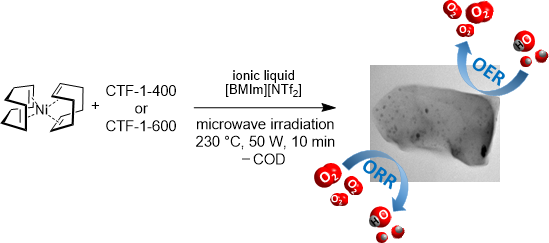
- developed. Noble metals (Ir, Ru) and their oxides are the current commercial electrocatalysts for the OER, whereas Pt metal is the benchmark catalyst for the ORR [4][5]. Yet, all these catalysts have drawbacks such as scarcity and high cost, which are disadvantageous for their large-scale production and


Hexagonal boron nitride: a review of the emerging material platform for single-photon sources and the spin–photon interface
Beilstein J. Nanotechnol. 2020, 11, 740–769, doi:10.3762/bjnano.11.61
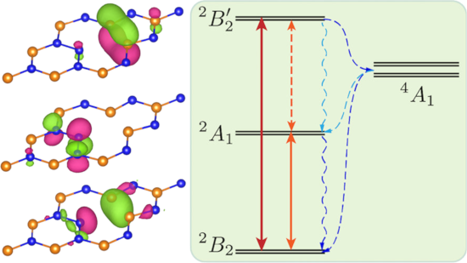
- divacancy (DV) in silicon carbide (SiC) [18][19][20], the silicon monovacancy in SiC [21][22][23], the carbon antisite vacancy pair in SiC [24][25], the silicon vacancy and nitrogen (N) atom on an adjacent carbon site in SiC [26][27][28], and rare-earth impurities in complex oxides [29]. While the NV center





Effect of Ag loading position on the photocatalytic performance of TiO2 nanocolumn arrays
Beilstein J. Nanotechnol. 2020, 11, 717–728, doi:10.3762/bjnano.11.59
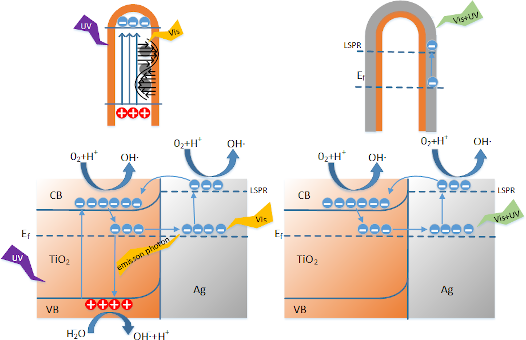
- ], and combination with metal elements or other metal oxides [10]. Compared with the bulk material, one-dimensional (1D) nanostructured TiO2 presents enhanced photocatalytic activity that depends on a variety of factors such as surface area, particle shape, crystalline structure, crystal size, and


Structural optical and electrical properties of a transparent conductive ITO/Al–Ag/ITO multilayer contact
Beilstein J. Nanotechnol. 2020, 11, 695–702, doi:10.3762/bjnano.11.57
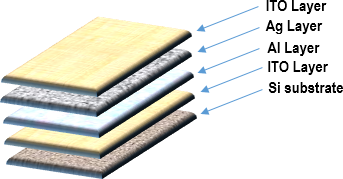
- conducting oxides (TCO) thin films have been receiving much attention regarding their use as contacts in several optoelectronic devices such as LEDs [1], solar cells [2] and flat panel displays [3]. Indium tin oxide (ITO) is the most commonly used TCO for industrial and laboratory applications due to its


Exfoliation in a low boiling point solvent and electrochemical applications of MoO3
Beilstein J. Nanotechnol. 2020, 11, 662–670, doi:10.3762/bjnano.11.52
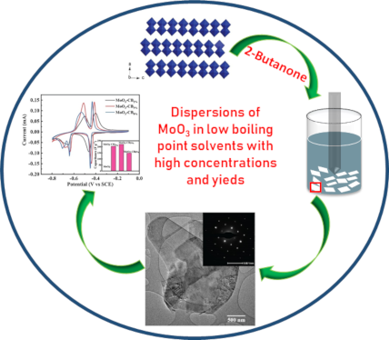
- researchers to look into other layered materials, such as metal dichalcogenides (MoS2, WS2, WSe2), hexagonal boron nitride (h-BN), layered double hydroxides, metal hydroxides (Ni(OH)2, Co(OH)2), metal oxides (MoO3, WO3) and phyllosilicates, for various applications in different fields [2][3][4][5]. Among the



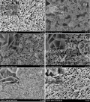
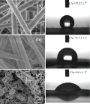
Preparation, characterization and photocatalytic performance of heterostructured CuO–ZnO-loaded composite nanofiber membranes
Beilstein J. Nanotechnol. 2020, 11, 631–650, doi:10.3762/bjnano.11.50
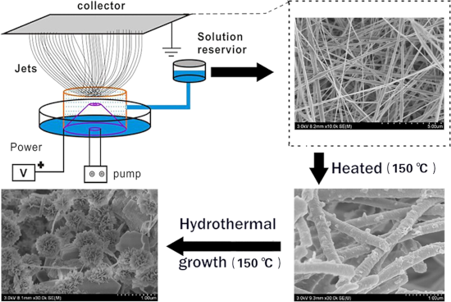
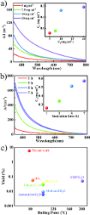
- Wei Fang Liang Yu Lan Xu National Engineering Laboratory for Modern Silk, College of Textile and Engineering, Soochow University, 199 Ren-ai Road, Suzhou 215123, China 10.3762/bjnano.11.50 Abstract Inorganic semiconductor oxides loaded on composite nanofibers (CNFs) have been widely applied in












Electrochemically derived functionalized graphene for bulk production of hydrogen peroxide
Beilstein J. Nanotechnol. 2020, 11, 432–442, doi:10.3762/bjnano.11.34
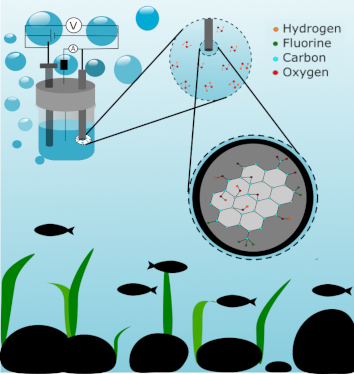
- H2 gas [9]. The major roadblock in this method is the development of a sustainable electrocatalyst for the selective reduction of oxygen to H2O2 [19][20][21][22][23]. Today, most electrochemical H2O2 production methods rely on precious-metal-based materials or transition metal and/or metal oxides


Synthesis and enhanced photocatalytic performance of 0D/2D CuO/tourmaline composite photocatalysts
Beilstein J. Nanotechnol. 2020, 11, 407–416, doi:10.3762/bjnano.11.31
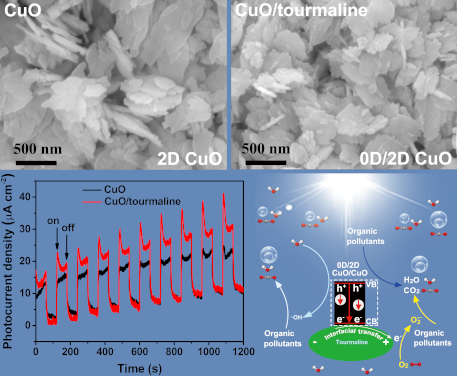
- the treatment of organic contaminants in wastewater is in urgent need owing to the deterioration of the ecological environment [1]. Metal oxides, such as ZnO [2], TiO2 [3], Fe2O3 [4], and CuO [5], have been demonstrated to be promising photocatalysts. In particular, the band gap energy (Eg) of the p


High-performance asymmetric supercapacitor made of NiMoO4 nanorods@Co3O4 on a cellulose-based carbon aerogel
Beilstein J. Nanotechnol. 2020, 11, 240–251, doi:10.3762/bjnano.11.18
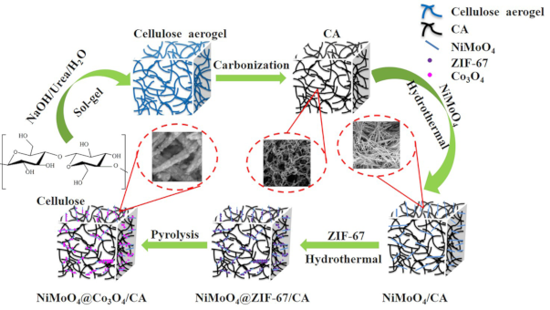
- construction of an integrated hierarchical porous nanoarchitecture by combining two metal oxides is a brilliant way to greatly enhance the overall electrochemical performance owing to synergistic effects [20]. For example, Li et al. synthesized 3D hybrid Co3O4/NiMoO4 nanowire/nanosheet arrays on a carbon cloth
- a capacitance retention of 84.1% after 2000 cycles [23]. Metal-organic frameworks (MOFs) with high porosity and tunable functionality are ideal sacrificial templates to synthesize metal oxides [24][25][26]. As a MOF derivative, Co3O4 derived from the zeolitic imidazolate framework-67 (ZIF-67) is
- electroactive materials, efficiently reducing the internal resistance and enhancing the rate capability. Therefore, novel hybrid nanorods and nanoparticles of the electroactive metal oxides incorporated into a porous, conductive 3D network of CA could be promising electrode materials for supercapacitors. Based






Fabrication of Ag-modified hollow titania spheres via controlled silver diffusion in Ag–TiO2 core–shell nanostructures
Beilstein J. Nanotechnol. 2020, 11, 141–146, doi:10.3762/bjnano.11.12
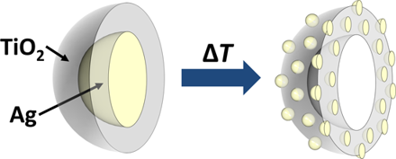
- different forms, i.e., Ag metal, oxides (AgO/Ag2O) and probably in the form of alloys (Figure 3). This observation suggests that silver is present in fabricated nanostructures not only in the form of AgNPs on the surface of the hollow TiO2 spheres, but is also embedded in the other forms within the TiO2 HSs