


Search results
Search for "quantification" in Full Text gives 262 result(s) in Beilstein Journal of Nanotechnology. Showing first 200.
Tuning the performance of vanadium redox flow batteries by modifying the structural defects of the carbon felt electrode
Beilstein J. Nanotechnol. 2019, 10, 1698–1706, doi:10.3762/bjnano.10.165
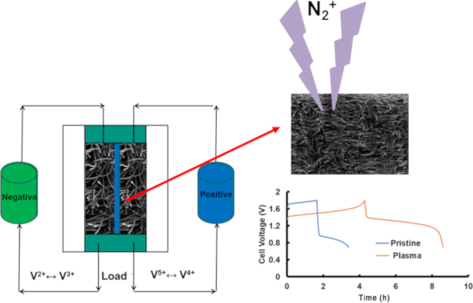
- ) analysis of the samples was carried out. The N2-plasma-treated sample was characterized by a N 1s peak with maxima around 399 eV. The N 1s peak could be deconvoluted into pyridinic and pyrrolic N contributions, with maxima at 398.3 and 399.8 eV, respectively. The XPS results, as well as the quantification
- Voigt profiles (binding energy (BE) uncertainty: ±0.2 eV). The analyzer transmission function, Scofield sensitivity factors [29], and effective attenuation lengths (EALs) for photoelectrons were applied for quantification. The EALs were calculated using the standard TPP-2M formalism [30]. All spectra


Nanoscale spatial mapping of mechanical properties through dynamic atomic force microscopy
Beilstein J. Nanotechnol. 2019, 10, 1332–1347, doi:10.3762/bjnano.10.132
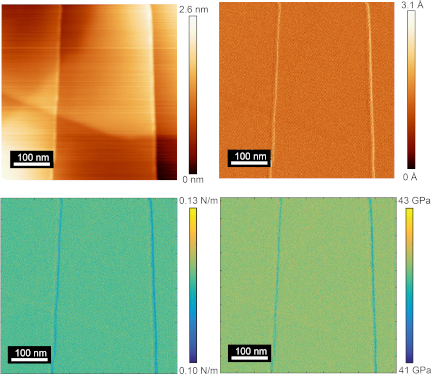
- excluded as a contributing factor to elastic modulus maps produced using dynamic AFM. CR-AFM showed a larger variation in amplitude over the step edges compared with FMM AFM. The quantification of the elastic modulus on the HOPG terrace was performed using FMM AFM and through analysis of the dynamics of




Tailoring the magnetic properties of cobalt ferrite nanoparticles using the polyol process
Beilstein J. Nanotechnol. 2019, 10, 1166–1176, doi:10.3762/bjnano.10.116
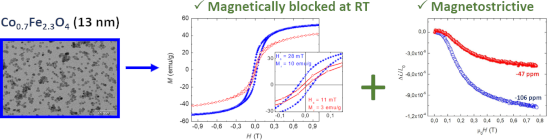
- chemical analysis of the particles was checked by XRF, using a Panalytical MINIPAL4 X-ray fluorescence spectrometer, equipped with a rhodium X-ray tube operating at 30 kV and 87 μA current emission. Quantification was determined from pre-plotted calibration curves using standard Co and Fe solutions




Synthesis and characterization of quaternary La(Sr)S–TaS2 misfit-layered nanotubes
Beilstein J. Nanotechnol. 2019, 10, 1112–1124, doi:10.3762/bjnano.10.111
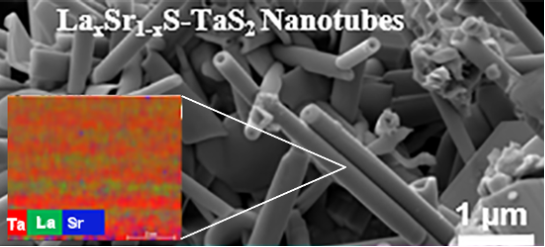
- spectroscopy (EDX) was performed using a SuperX EDX detector attached to this microscope using Bruker Esprit software. The quantification was done using the Cliff–Lorimer method. The samples for electron microscopy were prepared by dispersing the synthesized powder in ethyl alcohol, followed by ultrasonication
- left). The brighter walls and the darker hollow region are typical of a tubular morphology. The compositional map obtained from the nanotube (Figure 3 (top right)) shows that Sr is uniformly distributed in the nanotube. Elemental quantification from the EDX spectra indicates that 7–11 atom % of Sr
- substitution (93–89 atom % La) is achieved in a nanotube. The overlap of the L and Cu K lines for Ta might induce some error in quantification in the case of Ta. Also, due to the overlap of the L line for Sr and the M line for Ta, the weak Sr K line is used for mapping and quantification of Sr. Nanotubes with


CuInSe2 quantum dots grown by molecular beam epitaxy on amorphous SiO2 surfaces
Beilstein J. Nanotechnol. 2019, 10, 1103–1111, doi:10.3762/bjnano.10.110
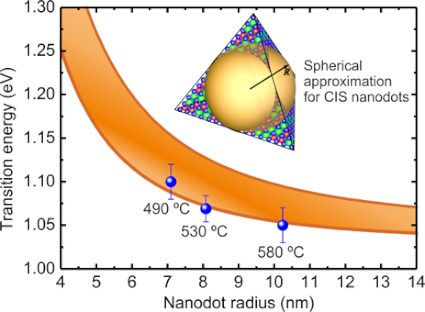
- maps of that area for Se, Cu, In, Si, and O. The EDS mapping confirms that the nanodots are grown on top of a SiO2 layer, as shown by the presence of an oxygen-containing layer between the dots and the Si substrate. An EDS quantification performed in this nanodot (and several others) confirmed the


Glucose-derived carbon materials with tailored properties as electrocatalysts for the oxygen reduction reaction
Beilstein J. Nanotechnol. 2019, 10, 1089–1102, doi:10.3762/bjnano.10.109
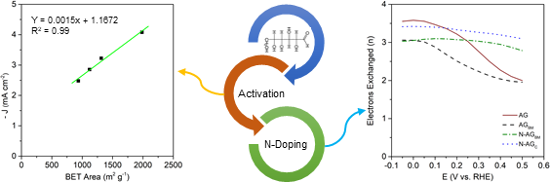
- analysis, a calibration of the CO and CO2 content was carried out, allowing the quantification of the TPD profiles. Electrochemical characterization The electrochemical measurements were performed on a PGSTAT 302N potentiostat/galvanostat by using a three-electrode cell configuration. Ag/AgCl (KCl 3 M) and


Enhanced inhibition of influenza virus infection by peptide–noble-metal nanoparticle conjugates
Beilstein J. Nanotechnol. 2019, 10, 1038–1047, doi:10.3762/bjnano.10.104
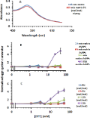
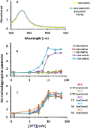
- nanoparticles were synthesised with a range of molar fractions of FluPep ligand. After application of the gold nanoparticles to the column, the non-functionalised gold nanoparticles were collected in the flow-through and the functionalised ones were then eluted. Quantification of the gold nanoparticles by UV
- . Chromatography on CM-Sepharose was carried out with gold nanoparticles functionalised with different molar fractions of FluPep ligand. Top: images of columns after loading and washing with PBS. Bottom: quantification by absorption at 450 nm [18] of unbound (flow-through and PBS wash fractions) and bound (eluted
- cation-exchange chromatography. Silver nanoparticles functionalised with different molar fractions of FluPep ligand were subjected to chromatography on CM-Sepharose. Top: images of columns after loading and washing with PBS. Bottom: quantification of unbound (flow-through and PBS wash fractions) and




Correlation of surface-enhanced Raman scattering (SERS) with the surface density of gold nanoparticles: evaluation of the critical number of SERS tags for a detectable signal
Beilstein J. Nanotechnol. 2019, 10, 1016–1023, doi:10.3762/bjnano.10.102
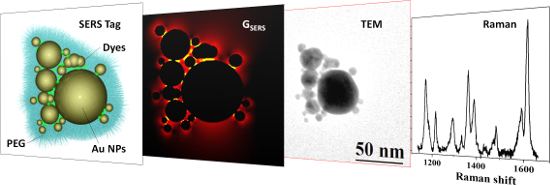
- the absence of blinking or bleaching, and the possibility to excite in the red or near infrared spectral range, where most matrixes and substrates have low fluorescence background [13][17]. Therefore, due to the increasing demand for ultrasensitive identification and quantification of specific
- Scientec Vector calorimeter). The Raman signal was collected on an internal silicon chip which could account for small (less than 5%) intensity fluctuations of the Raman spectrometer and allowed for quantification of the noise intensity in the two measurement conditions. The acquisition time was fixed at


Serum type and concentration both affect the protein-corona composition of PLGA nanoparticles
Beilstein J. Nanotechnol. 2019, 10, 1002–1015, doi:10.3762/bjnano.10.101
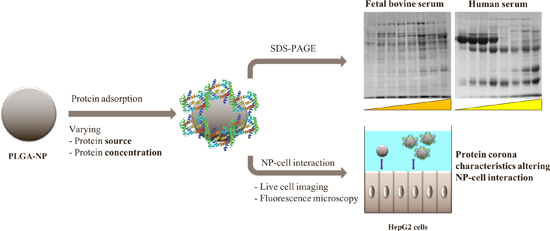
- concentrations above 75% (v/v) [8]. Nonetheless, the most intriguing observation of the present study is that the qualitative composition of the protein corona changed considerably with increasing human serum concentration in contrast to the incubation with FBS (Figure 3) even though the quantification of total
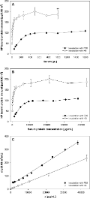
- depending on the serum concentration. The quantification of corona proteins was performed by Bradford assay and revealed a significant higher protein content after incubation with human serum (Figure 2). Nevertheless, this result did not only reflect the higher total concentration of proteins in pure human
- Millipore, Darmstadt, Germany). The elution was performed with pure acetonitrile as mobile phase at a constant flow rate of 1 mL/min and Lumogen® Red was detected using a fluorescence detector at an excitation wavelength of 575 nm and an emission wavelength of 610 nm. Quantification was carried out using a



Effects of gold and PCL- or PLLA-coated silica nanoparticles on brain endothelial cells and the blood–brain barrier
Beilstein J. Nanotechnol. 2019, 10, 941–954, doi:10.3762/bjnano.10.95
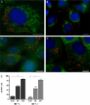
- quantitatively with high-content analysis using a fully automated inverted epifluorescence microscope (Figure 3E). As Au-NPs were only taken up to a very low extent, quantification was not carried out for these. PCL- and PLLA-NP uptake was measured after 0.5, 2 and 24 h of exposure to a concentration of [24.9 µg
- incubated with the respective primary antibody overnight at 4 °C on a shaker (Table 1). Following, the membranes were washed four times, incubated with the corresponding secondary antibody for 2 h at room temperature, and washed again. Quantification was carried out with ImageJ by measuring the intensity of
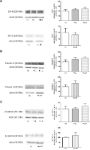
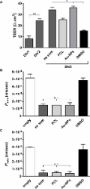
- of Akt or NF-κB (A, C). PCL- and PLLA-NPs led to decreased levels of P-MAPK, whereas Au-NPs caused an increase (B). Representative western blot images are depicted on the left; quantification is shown on the right. Co: control. Concentrations were [24.9 µg/mL] for PCL- and PLLA-NPs and [160.3 µg/mL



Deposition of metal particles onto semiconductor nanorods using an ionic liquid
Beilstein J. Nanotechnol. 2019, 10, 718–724, doi:10.3762/bjnano.10.71
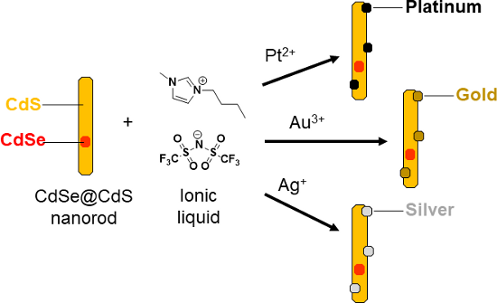
- (Figure 1). Quantification of the TEM images confirmed that both samples had similarly sized platinum nanoparticles and a similar number of platinum particles per nanorod (Table 1, a minimum of 100 particles were counted/sized in each case). Using this information, we estimated comparable platinum to


Commercial polycarbonate track-etched membranes as substrates for low-cost optical sensors
Beilstein J. Nanotechnol. 2019, 10, 677–683, doi:10.3762/bjnano.10.67
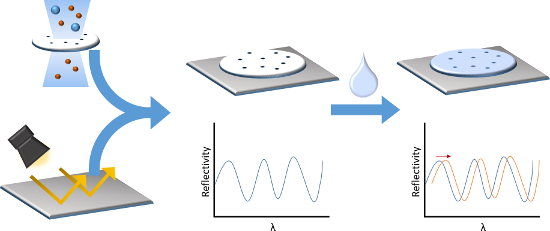
- differences in the response depending on the magnitude of such changes, which indicates the utility of PCTE membranes not only for detection, but also for quantification. This work means the discovery of a new, cheap and readily available transducer for the development of optical sensors. Moreover, as


Review of time-resolved non-contact electrostatic force microscopy techniques with applications to ionic transport measurements
Beilstein J. Nanotechnol. 2019, 10, 617–633, doi:10.3762/bjnano.10.62
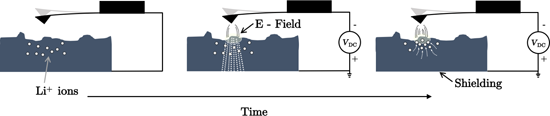
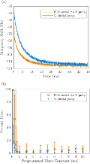
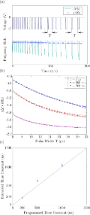
- ionic relaxation. This makes any quantification of the transport properties challenging. To investigate the effect of τPLL on the ability to extract parameters from measured signals, a digitially synthesized voltage waveform varying in time as a stretched exponential (Equation 1, β = 0.7) was applied





Biomimetic synthesis of Ag-coated glasswing butterfly arrays as ultra-sensitive SERS substrates for efficient trace detection of pesticides
Beilstein J. Nanotechnol. 2019, 10, 578–588, doi:10.3762/bjnano.10.59
- -G.b.-20 substrates were shown in Figure 7a. A sensitivity to acephate with a LOD as low as 10−10 mg/mL was achieved. Comparing with the limit of quantification (LOQ) on apples according to the National food safety standard (GB 2763-2014) in China (Table 2), the LOD of Ag-G.b.-20 SERS substrate is far


Quantification and coupling of the electromagnetic and chemical contributions in surface-enhanced Raman scattering
Beilstein J. Nanotechnol. 2019, 10, 549–556, doi:10.3762/bjnano.10.56
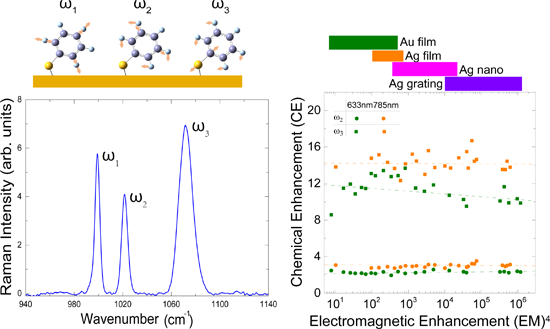
- Chemistry and JILA, University of Colorado at Boulder, Boulder, Colorado 80309, USA 10.3762/bjnano.10.56 Abstract In surface-enhanced Raman scattering (SERS), both chemical (CE) and electromagnetic (EM) field effects contribute to its overall enhancement. However, neither the quantification of their
- intensity dependence of the chemical enhancement and allows for a more systematic design of SERS substrates with desired properties. Keywords: benzenethiol; chemical enhancement; physical enhancement; quantification; surface-enhanced Raman scattering (SERS); Introduction Surface-enhanced Raman scattering
- internal reference then allows for the separation of EM and CE, and the quantification of CE of other modes referenced against that standard. Without loss of generality, and setting the reference CE value to unity, we find a vibrational-mode-specific relative chemical enhancement ranging from 2 to as large


Geometrical optimisation of core–shell nanowire arrays for enhanced absorption in thin crystalline silicon heterojunction solar cells
Beilstein J. Nanotechnol. 2019, 10, 322–331, doi:10.3762/bjnano.10.31
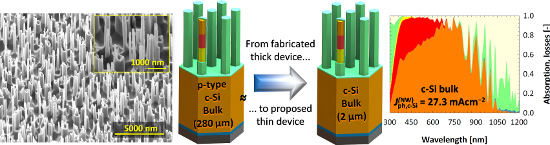
- explain the boost in absorption observed at (III) in Figure 4. The convolution of Ac−Si with the photon flux of the solar spectrum (Equation 1) allows for the quantification of the optical performance improvement introduced by the presence of nanowires. The implied photocurrent density generated in the


Characterization and influence of hydroxyapatite nanopowders on living cells
Beilstein J. Nanotechnol. 2018, 9, 3079–3094, doi:10.3762/bjnano.9.286
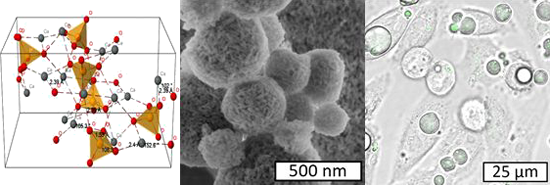
- phenol red was used (Life Technologies Corporation). HAp powder suspensions were ultrasonicated before being brought into the cell environment. WST-8 assay The viability of cells in the presence of hydroxyapatite in different concentrations was analysed using a colourimetric assay for quantification of
- boundaries more clearly than the topographical images. Hence, these maps were used for shape quantification of the HAp NPs (Table 2). AFM imaging of nanopowders is a challenging task. The phase-contrast maps acquisition parameters were changed accordingly to record high-resolution, quality images. The

![[Graphic 1]](/bjnano/content/inline/2190-4286-9-286-i2.svg?max-width=637&scale=1.18182) .
.



Electrostatic force microscopy for the accurate characterization of interphases in nanocomposites
Beilstein J. Nanotechnol. 2018, 9, 2999–3012, doi:10.3762/bjnano.9.279
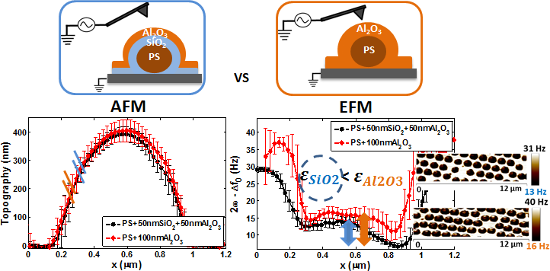
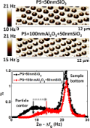
- total particle coverage. The quantification of the dielectric permittivity of the used materials, within all types of association, was possible by comparing experimental data and numerical simulations. This paper also discussed the possibility of using the developed approaches to distinguish the




Ternary nanocomposites of reduced graphene oxide, polyaniline and hexaniobate: hierarchical architecture and high polaron formation
Beilstein J. Nanotechnol. 2018, 9, 2936–2946, doi:10.3762/bjnano.9.272
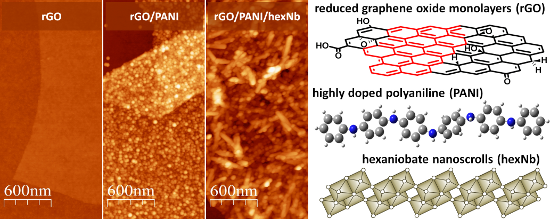
- electrocatalytic activity in the quantification of chemical species compared to the isolated components [5]. In earlier studies, some of us reported the preparation of binary nanocomposites of polyaniline (PANI) and hexaniobate (hexNb) nanoscrolls by layer-by-layer assembly and the characterisation by


In situ characterization of nanoscale contaminations adsorbed in air using atomic force microscopy
Beilstein J. Nanotechnol. 2018, 9, 2925–2935, doi:10.3762/bjnano.9.271
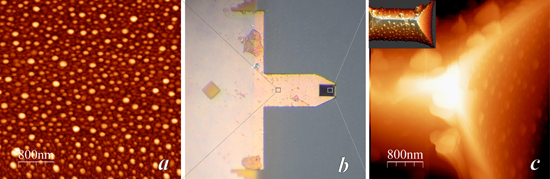
- quantification of surface contamination under ambient conditions is not merely a “technical issue” related only to AFM operation, but rather a topic of much broader relevance. From our work we conclude that not only contamination of the tip, but also that on the surface is quite difficult to visualize and detect


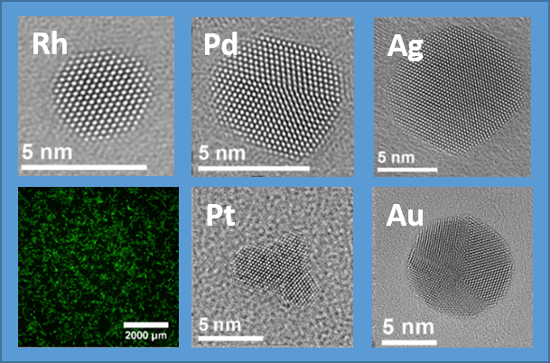
Comparative biological effects of spherical noble metal nanoparticles (Rh, Pd, Ag, Pt, Au) with 4–8 nm diameter
Beilstein J. Nanotechnol. 2018, 9, 2763–2774, doi:10.3762/bjnano.9.258
- (Olympus MVX10, Olympus, Hamburg, Germany). The quantification of cell viability was performed by phase analysis (CellSens Dimensions, Olympus, Hamburg, Germany) of calcein-positive fluorescence signals calculating the fluorescent area. For calculating the phase analysis data, a threshold was set which


Enhanced antineoplastic/therapeutic efficacy using 5-fluorouracil-loaded calcium phosphate nanoparticles
Beilstein J. Nanotechnol. 2018, 9, 2499–2515, doi:10.3762/bjnano.9.233
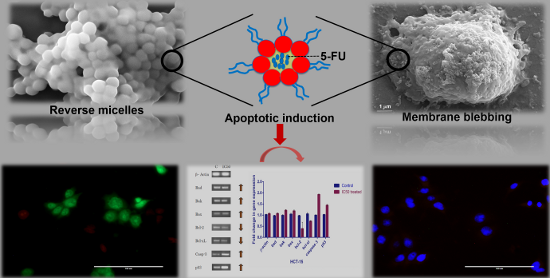
- oxygen species quantification via flow cytometry The apoptotic induction was experimentally determined by staining techniques, as well as fluorescence and electron microscopy. We further investigated the probable cause of apoptotic induction in cells by CaP@5-FU NPs. It was reported that 5-FU-mediated
- propidium iodide staining for DNA quantification and to unveil the different cell cycle phases. Propidium iodide (PI), a fluorogenic dye, intercalates with nucleic acid in a stoichiometric fashion and can be used as an effective indicator dye in cellular DNA quantification with flow cytometry [47]. In
- NP-treated HCT-15 cells was undertaken. The gene-specific amplification in a thermal cycler enables the quantification of protein expression. The apoptosis can occur through either the intrinsic mitochondrial-mediated pathway or by the extrinsic death receptor (FasL) facilitated pathway. With the


A differential Hall effect measurement method with sub-nanometre resolution for active dopant concentration profiling in ultrathin doped Si1−xGex and Si layers
Beilstein J. Nanotechnol. 2018, 9, 1926–1939, doi:10.3762/bjnano.9.184
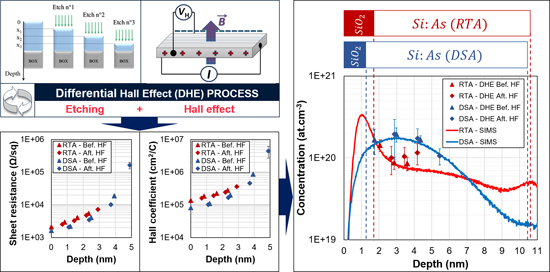
- including time, temperature and Ge content. For this, spectroscopic ellipsometry (with a HORIBA Jobin Yvon system) was used as a fast, reliable and non-destructive method for the measurement of the removed thickness. We developed an empirical model for the quantification of the SiGe thickness measurement
- same typical silicon-dioxide charge densities, the surface depletion is well below 1 nm (about 0.4 nm at 1020 cm−3 and less than 0.2 nm at 5 × 1020 cm−3; Figure S7, Supporting Information File 1) and its impact on the quantification of the DHE depth profiles can therefore be neglected. Differential


Synthesis of rare-earth metal and rare-earth metal-fluoride nanoparticles in ionic liquids and propylene carbonate
Beilstein J. Nanotechnol. 2018, 9, 1881–1894, doi:10.3762/bjnano.9.180
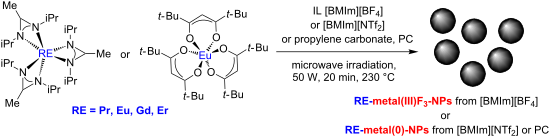
- ) show the expected signals for Eu, Gd or Er and fluoride besides the bands for carbon and copper of the carbon-coated copper grid. The oxygen peak can largely be attributed to air contamination when the sample was introduced into the TEM device. A quantification of fluoride against rare-earth metal was


Know your full potential: Quantitative Kelvin probe force microscopy on nanoscale electrical devices
Beilstein J. Nanotechnol. 2018, 9, 1809–1819, doi:10.3762/bjnano.9.172
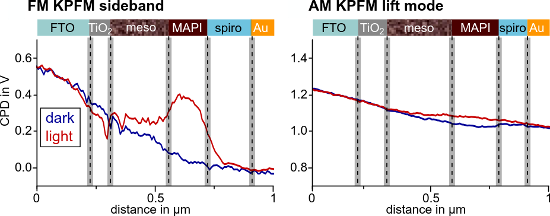
- , the local potential distribution needs to be correlated to the constituent layers of the cell. Therefore, a high lateral resolution together with a reliable quantification of the local potential is required. In the past, KPFM measurements have frequently been used to image potential distributions on





