


Search results
Search for "resistivity" in Full Text gives 248 result(s) in Beilstein Journal of Nanotechnology. Showing first 200.
Gas-sensing behaviour of ZnO/diamond nanostructures
Beilstein J. Nanotechnol. 2018, 9, 22–29, doi:10.3762/bjnano.9.4
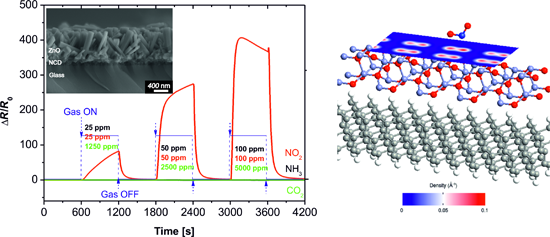
- amount of adsorbed oxygen on the sensor surface, and ii) relatively low working temperature of 150 °C. For the purpose of understanding the decrease or increase in resistivity of our sensor devices, the gas sensing mechanism has to be discussed. After exposing the sensors to oxidizing gas (i.e., NO2
- by the p-type NCD. Therefore, conductivity of this ZnO layer increases (see Figure S3 in Supporting Information File 1). Hence, the relative change of the resistivity of the hybrid ZnO NRs/NCD sensor is larger than that of the pure ZnO sensor. Simultaneously, the active area located at the ZnO/NCD
- configurations (Figure 7). In the case of T-shaped NO2 molecule (Figure 7a) the simulated electron density is lower than that for L-shaped NO2 (Figure 7b), which gives rise to its higher resistivity. According to the above results, all simulated transmissions by the simplified model show changes that are


A robust AFM-based method for locally measuring the elasticity of samples
Beilstein J. Nanotechnol. 2018, 9, 1–10, doi:10.3762/bjnano.9.1
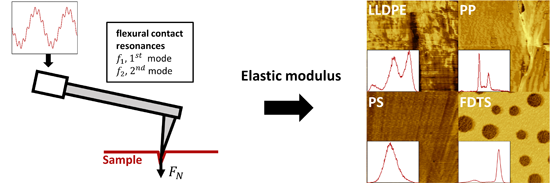
- dividing the cantilever spring constant by the cantilever optical sensitivity Sz. The optical sensitivity of value 229 nm·V−1 was determined by measuring a vertical deflection–distance curve on an n-type silicon(111) sample of electrical resistivity = 10 Ω·m and by taking the inverse of the slope. The two


Localized growth of carbon nanotubes via lithographic fabrication of metallic deposits
Beilstein J. Nanotechnol. 2017, 8, 2592–2605, doi:10.3762/bjnano.8.260
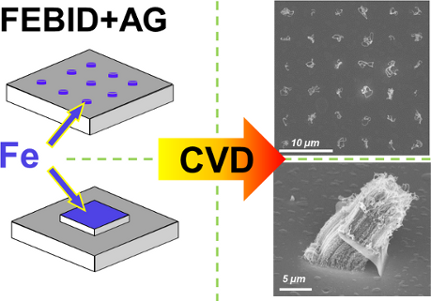
- mbar [22][23][25]. Laser cut Si(100) wafers were purchased from the Institute of Electronic Materials Technology, Warsaw, Poland, and were boron-doped (4.5 × 10¹⁷–5.4 × 10¹⁷ atom cm−3), resulting in a specific resistivity of 0.065–0.074 Ω·cm. The Si sample was utilized with its native oxide. Al2O3 thin




Au nanostructure fabrication by pulsed laser deposition in open air: Influence of the deposition geometry
Beilstein J. Nanotechnol. 2017, 8, 2438–2445, doi:10.3762/bjnano.8.242
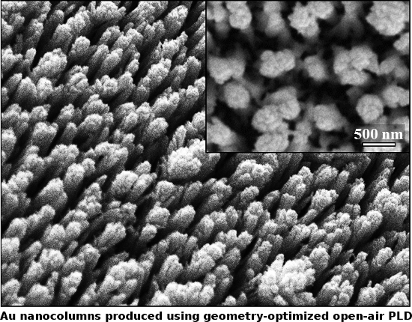
- Optics, HR 4000). The resistivity of the samples was measured using the four-point probe method. The electrical response of the samples was studied during irradiation by a 30 mW CW laser operating at 785 nm. Also, the hydrophobic properties of the samples were tested by measuring the contact angle of a


Comparing postdeposition reactions of electrons and radicals with Pt nanostructures created by focused electron beam induced deposition
Beilstein J. Nanotechnol. 2017, 8, 2410–2424, doi:10.3762/bjnano.8.240
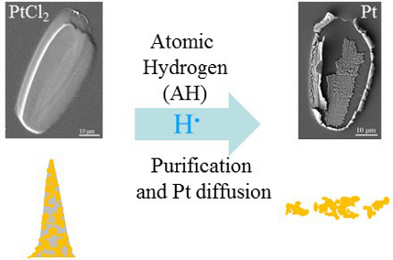
- resistivity only six times greater than pure Pt metal. In a study by Lewis et al. [21], FEBID nanostructures created from MeCpPtMe3 were subsequently purified by electron irradiation in the presence of oxygen and examined by cross-sectional SEM, which revealed that purification occurred in a top-down fashion
- resistivity. Mehendale et al. [14] also observed that high purity Au nanostructures (C/Au < 0.2, compared with C/Au = 0.06 for pure bulk Au) could be generated using electron beam postprocessing in the presence of O2 with minimal shape distortion. Carbon atoms can also be removed by electron beam purification
- Me2Au(tfac) with co-deposition of water vapor resulted in Au FEBID nanostructures with the highest conductivity achieved to date (resistivity of 8.8 μΩ cm, compared with 2.2 μΩ cm for pure Au [12]). Another recent purification method is laser-assisted electron beam induced deposition (LAEBID) [24




Photobleaching of YOYO-1 in super-resolution single DNA fluorescence imaging
Beilstein J. Nanotechnol. 2017, 8, 2296–2306, doi:10.3762/bjnano.8.229
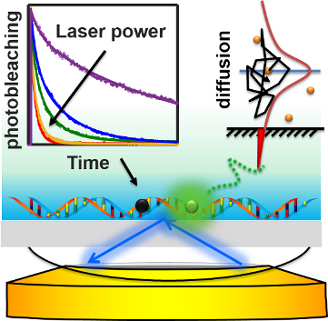
- resistivity of 18 MΩ cm−1. Glass coverslips were first cleaned by sonication in 1% detergent (Liquinox) followed by rinsing with 18 MΩ water. Then the coverslips were immersed in 1:1:5 (v/v/v) of ammonium hydroxide/hydrogen peroxide/water for 15 min at 60 °C. Afterwards they were rinsed with water and dried




In situ controlled rapid growth of novel high activity TiB2/(TiB2–TiN) hierarchical/heterostructured nanocomposites
Beilstein J. Nanotechnol. 2017, 8, 2116–2125, doi:10.3762/bjnano.8.211
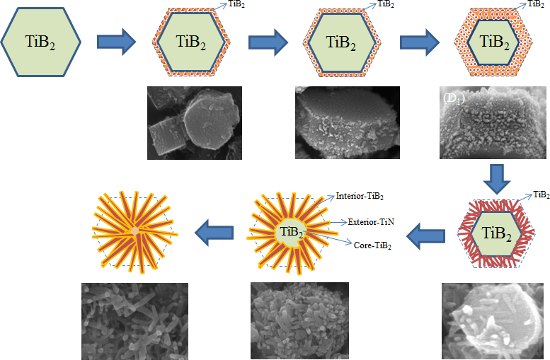
- stability, as well as excellent electrical and thermal conductivity [4][5][6]. On the other hand, titanium nitride (TiN) has some attractive properties, such as high hardness, low electrical resistivity, excellent wear and corrosion resistance [1][2][7]. Therefore, it is expected that these unique


High-stress study of bioinspired multifunctional PEDOT:PSS/nanoclay nanocomposites using AFM, SEM and numerical simulation
Beilstein J. Nanotechnol. 2017, 8, 2069–2082, doi:10.3762/bjnano.8.207
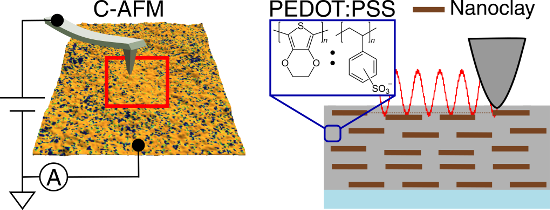
- expression σ = IL/VA (based on the definition of electrical resistivity and Ohm’s law), where I is the total current (sum of all pixels), L is the thickness of the film, V is the applied bias voltage and A is the scanned area (image size). The results are summarized in Figure 1b. Each point represents the
- measured with AFM by the scratch method (a sharp knife was used to remove the coating and expose the substrate). The ITO coated PET (Sigma-Aldrich 639281) with surface resistivity of 100 Ω/sq and the glass slides (micro cover glasses, 22 × 30 mm × 0.13–0.16 mm thick, Ted Pella, Inc.) were cleaned similarly


Identifying the nature of surface chemical modification for directed self-assembly of block copolymers
Beilstein J. Nanotechnol. 2017, 8, 1972–1981, doi:10.3762/bjnano.8.198
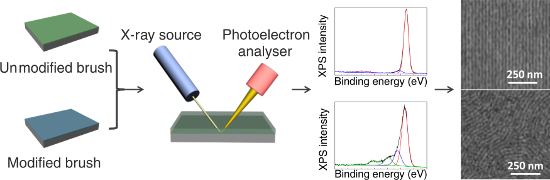
- oxide between the brush layer and the SiO2/Si substrate. Experimental Preparation and chemical modification of brush layers The starting substrates were <100> silicon wafers (p-type silicon of 4–40 Ω·cm resistivity) with a native silicon oxide layer on top. A thin film of hydroxyl-terminated polystyrene


Growth and characterization of textured well-faceted ZnO on planar Si(100), planar Si(111), and textured Si(100) substrates for solar cell applications
Beilstein J. Nanotechnol. 2017, 8, 1939–1945, doi:10.3762/bjnano.8.194
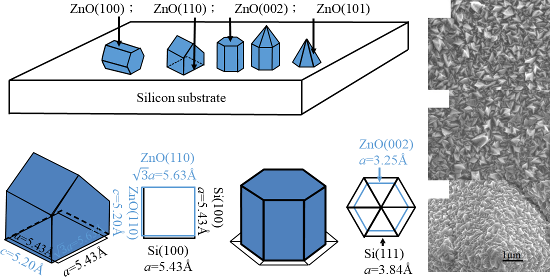
- deposition (LPCVD) can act as good TCOs for thin film silicon solar cells [1][2][3][4][5][6][7][8][9][10]. This is mainly due to its high transparency over the visible and near-infrared (NIR) wavelength range, lower electrical resistivity (down to 1 × 10⁻³ Ω·cm), and the light-trapping capability due to its
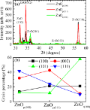

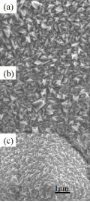


![[Graphic 2]](/bjnano/content/inline/2190-4286-8-194-i4.png?max-width=637&scale=1.18182) × lattice constant a) by 5.20 Å (l...
× lattice constant a) by 5.20 Å (l...
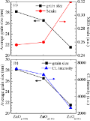


Enhancement of mechanical and electrical properties of continuous-fiber-reinforced epoxy composites with stacked graphene
Beilstein J. Nanotechnol. 2017, 8, 1909–1918, doi:10.3762/bjnano.8.191
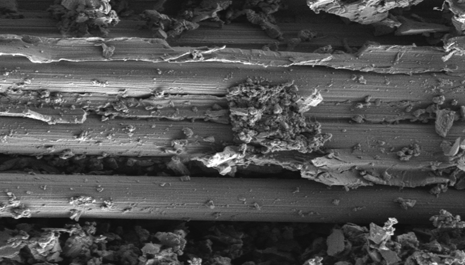
- and at 120 °C for 2 h. Characterization The thermo-mechanical properties of the compositions were measured at 1 Hz according to ASTM D 4065 using a DMA-Dynamic Mechanical Analysis (Q800 TA Instruments). Flexural testing followed ASTM D790 (3 point bending) at 1.3 mm/min. Electrical resistivity, both
- surface resistivity of the composite materials with epoxy/SG matrix systems dropped by 7–8 orders of magnitude, but the volume resistivity remained at the level of carbon fabrics/neat epoxy composite. Resistivities of the carbon/epoxy composite without SG are already lower than the lowest resistivities
- achieved with Kevlar/epoxy/SG. Thus, the volume resistivity is not expected to decrease, yet the surface resistivities are reduced by the effect of SG in the matrix and reach lower values than their Kevlar/epoxy/SG counterparts, probably due to dispersion of some carbon fiber fraction in the resin during


Evaluation of preparation methods for suspended nano-objects on substrates for dimensional measurements by atomic force microscopy
Beilstein J. Nanotechnol. 2017, 8, 1774–1785, doi:10.3762/bjnano.8.179
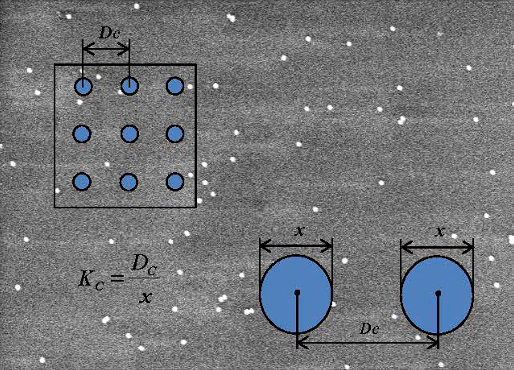
- and ten minutes and diluted with distilled and deionized water (ultrapure water with a specific electrical resistivity of 18.3 MΩ·cm) in the dependence of the known initial particle mass concentration and the given particle diameter (see Table 1) to reach KC-values (see Equation 2) between 2 and 10


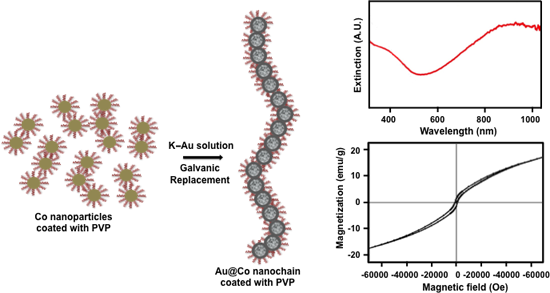
Near-infrared-responsive, superparamagnetic Au@Co nanochains
Beilstein J. Nanotechnol. 2017, 8, 1680–1687, doi:10.3762/bjnano.8.168
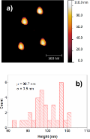
- ), nitric acid (EM Science) and hydrochloric acid (EM Science) were purchased from the indicated suppliers and used without purification. Water was purified to a resistivity of 18 MΩ·cm (Academic Milli-Q Water System; Millipore Corporation). All glassware and equipment was cleaned using an aqua regia


Process-specific mechanisms of vertically oriented graphene growth in plasmas
Beilstein J. Nanotechnol. 2017, 8, 1658–1670, doi:10.3762/bjnano.8.166
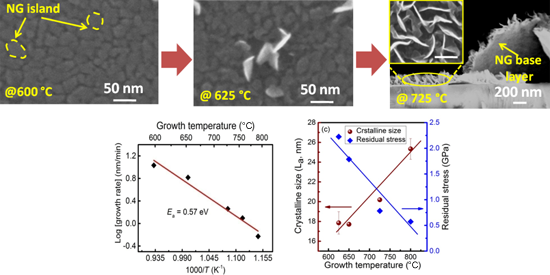
- and disordered carbon, and mainly the sp3 content play key roles in determining the resistivity [9]. Here, the high resistivity of the sample grown at 600 °C can be explained by grain boundary and edge defects of NG, which diminish electron mobility. On the other hand, higher growth temperatures
- improved the crystallinity and resulted in lower resistivity. Conclusion In summary, plasma-enhanced chemical vapor deposition (PECVD) was employed to conduct a series of controlled growth experiments. The experimental results specify the effects of the growth temperature, plasma power and distance from


Group-13 and group-15 doping of germanane
Beilstein J. Nanotechnol. 2017, 8, 1642–1648, doi:10.3762/bjnano.8.164
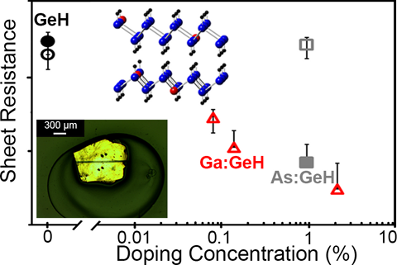
- need of extrinsic dopants to access devices with lower resistivity. In previous studies, the resistivity of germanane was reduced through the incorporation of phosphorus only when activated in the presence of atmospheric water [29]. Recently [30], undoped germanane field-effect transistors were



Luminescent supramolecular hydrogels from a tripeptide and nitrogen-doped carbon nanodots
Beilstein J. Nanotechnol. 2017, 8, 1553–1562, doi:10.3762/bjnano.8.157
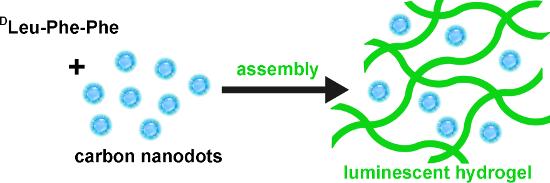
- chemicals were purchased from Sigma-Aldrich. All solvents were from Merck. High purity Milli-Q water (MQ water) with a resistivity greater than 18 MΩ·cm was obtained from an in-line Millipore RiOs/Origin system. Synthesis and characterization The tripeptide DLeu-Phe-Phe was synthesized according standard


Light-induced magnetoresistance in solution-processed planar hybrid devices measured under ambient conditions
Beilstein J. Nanotechnol. 2017, 8, 1502–1507, doi:10.3762/bjnano.8.150
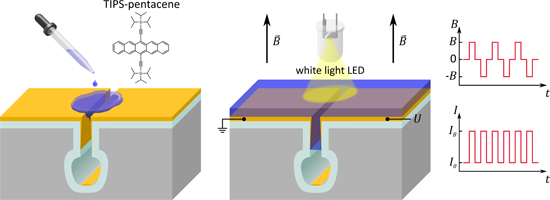
- ) designed and developed in this work. Negative magnetoresistance (positive magnetoconductance) was observed for both types of devices similar to the observations in [9]. Magnetoresistance is defined as the change in resistivity of a material/device due to application of an external magnetic field


Fully scalable one-pot method for the production of phosphonic graphene derivatives
Beilstein J. Nanotechnol. 2017, 8, 1094–1103, doi:10.3762/bjnano.8.111
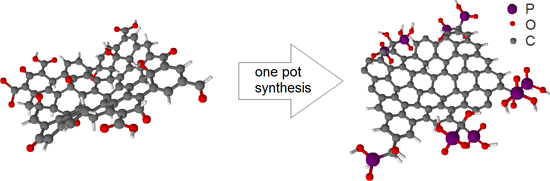
- the usage of GO-P as flame retardant, similarly as was reported by Kim et al. [4]. Finally, a measurement of the electrical properties of GO-P materials was carried out. Before reduction, the GO layers exhibited insulating behavior, with a resistivity higher than 106 Ω·cm. The temperature-dependent


The integration of graphene into microelectronic devices
Beilstein J. Nanotechnol. 2017, 8, 1056–1064, doi:10.3762/bjnano.8.107
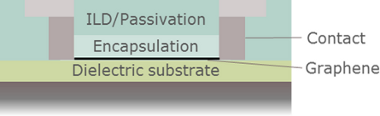
- enormous importance, especially for short-channel devices. Numerous studies have been published during the last few years on the understanding and improvement of graphene–metal contacts, reporting contact resistivity values in a wide range from several ohm-micrometers to several hundred thousand ohm


Study of the correlation between sensing performance and surface morphology of inkjet-printed aqueous graphene-based chemiresistors for NO2 detection
Beilstein J. Nanotechnol. 2017, 8, 1023–1031, doi:10.3762/bjnano.8.103
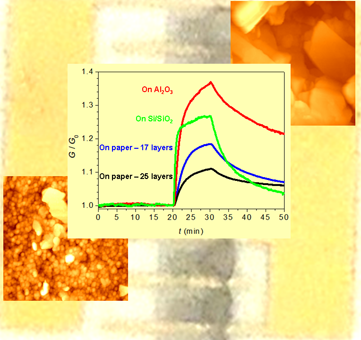
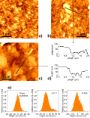
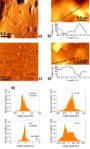
- temperature and under ambient conditions. Sensor-device fabrication Different substrates, paper (Epson, premium glossy photo paper), alumina (purity 96%, Rockwell hardness = 82, resistivity > 1014 Ω·cm, roughness = 12–20 microinches) and Si/SiO2 (thermal oxide 300 nm, Silicon Valley), with gold electrodes


Measuring adhesion on rough surfaces using atomic force microscopy with a liquid probe
Beilstein J. Nanotechnol. 2017, 8, 813–825, doi:10.3762/bjnano.8.84
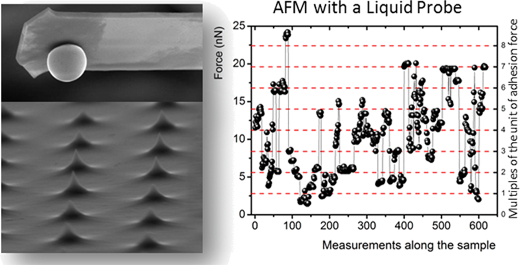
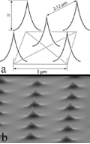
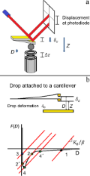
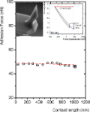
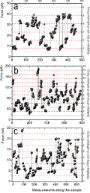
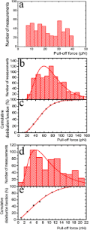
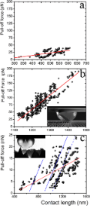
- grating consists of a high-resistivity silicon(100) monocrystalline wafer topped with an array of sharp silicon peaks forming a 2D face-centered rectangular lattice whose primitive translation vectors have equal magnitudes of 3 ± 0.01 μm (see Figure 1a). The manufacturer gives nominal parameters for the

3D Nanoprinting via laser-assisted electron beam induced deposition: growth kinetics, enhanced purity, and electrical resistivity
Beilstein J. Nanotechnol. 2017, 8, 801–812, doi:10.3762/bjnano.8.83
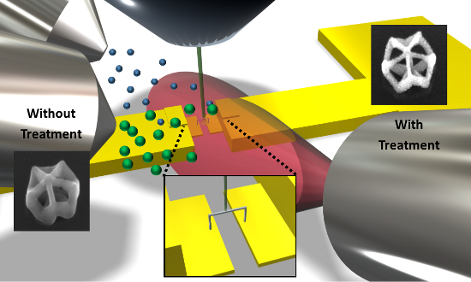
- , grain structure/morphology, and electrical resistivity of 3D platinum nanowires synthesized via electron beam induced deposition with and without an in situ pulsed laser assist process which photothermally couples to the growing Pt–C deposits. Notably, we demonstrate: 1) higher platinum concentration
- critical electron, precursor, and laser parameters necessary to maintain high fidelity while simultaneously promoting high purity and low electrical resistivity. Experimental Electron beam induced deposition Platinum nanostructures were grown onto a silicon substrate from the MeCpPt(IV)Me3 precursor gas
- was created using conventional nanofabrication methods in order to measure the electrical resistivity of freestanding nanoscale bridges. Geometric constraints (the freestanding nature of the nanobridge) necessitated a two-point probe configuration over the standard four-point measurement. A


Silicon microgrooves for contact guidance of human aortic endothelial cells
Beilstein J. Nanotechnol. 2017, 8, 675–681, doi:10.3762/bjnano.8.72
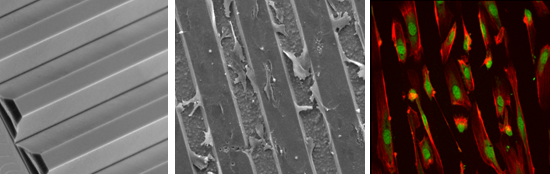
- microscale features. Experimental Fabrication of grooved silicon substrates Groove samples were prepared on p-type silicon(100) wafers with a resistivity of 1–5 Ω·cm. The wafers were thermally oxidized at 1000 °C for 15 min in order to grow a thin SiO2 layer that will act as a mask in the anisotropic


α-((4-Cyanobenzoyl)oxy)-ω-methyl poly(ethylene glycol): a new stabilizer for silver nanoparticles
Beilstein J. Nanotechnol. 2017, 8, 627–635, doi:10.3762/bjnano.8.67
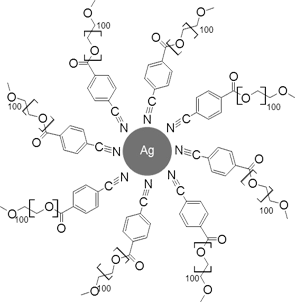
- -ascorbic acid (≥99%, Roth), N,N’-dicyclohexylcarbodiimide (99%, Aldrich), poly(ethylene glycol) methyl ether (Mn = 4830 g·mol−1, Aldrich), silver nitrate (≥99%, Sigma-Aldrich), sodium hydroxide (>99%, Roth), and trisodium citrate dihydrate (99.7%, Merck) were used as received. Water with a resistivity of


Anodization-based process for the fabrication of all niobium nitride Josephson junction structures
Beilstein J. Nanotechnol. 2017, 8, 539–546, doi:10.3762/bjnano.8.58
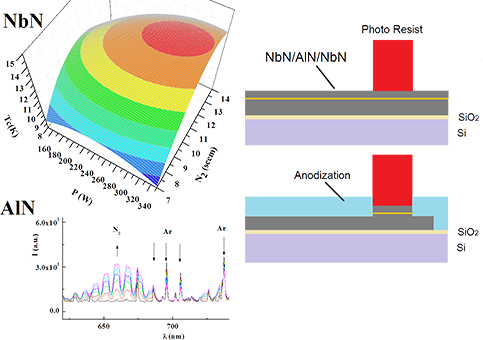
- (reducing it) the superconducting critical temperature, the pattern of the emission lines in the glow discharge provides direct information on the critical temperature of the deposited nitride films. For AlN the gas composition affects the resistivity of the film and, even in this case, the pattern of the
- emission lines in the glow discharge provides information on the final resistivity of the sputtered films. The anodization of the NbN layer was obtained by means of a 1 mol solution of ammonium pentaborate in ethylene glycol. In order to oxidize NbN samples, we used a current-control technique, i.e., the
- during the sputtering process. Under these conditions, we obtained films with different superconducting transition temperatures (Tc) ranging from 9.0 to 15.5 K. The room-temperature sheet resistance (resistivity per unit thickness) of the AlN films was also measured by using the four-probe technique





