Search results
Search for "spin" in Full Text gives 583 result(s) in Beilstein Journal of Nanotechnology. Showing first 200.
Kondo effects in small-bandgap carbon nanotube quantum dots
Beilstein J. Nanotechnol. 2020, 11, 1873–1890, doi:10.3762/bjnano.11.169
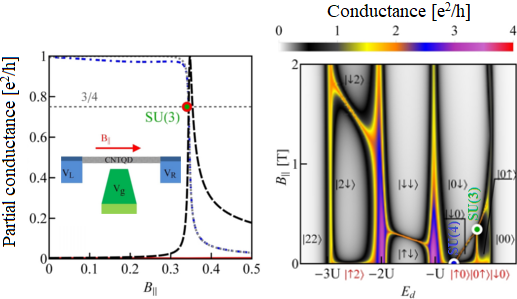
- quantum dots in the presence of spin–orbit coupling in the strong-correlations regime. A finite-U slave-boson mean-field approach is used to study many-body effects. Different degeneracies are restored in a magnetic field and Kondo effects of different symmetries arise, including SU(3) effects of
- different types. Full spin–orbital degeneracy might be recovered at zero field and, correspondingly, the SU(4) Kondo effect sets in. We point out the possibility of the occurrence of electron–hole Kondo effects in slanting magnetic fields, which we predict to occur in magnetic fields with an orientation
- , mechanical, and magnetic properties carbon nanotubes (CNTs) are of great interest in molecular electronics and spintronics with potential applications, for example, as field-effect transistors, nanoelectromechanical devices, logic gates, spin valves, spin diodes, and spin batteries [1][2][3][4][5][6][7][8][9



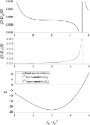
![[Graphic 37]](/bjnano/content/inline/2190-4286-11-169-i52.svg?max-width=637&scale=1.18182) as a functio...
as a functio...


Piezotronic effect in AlGaN/AlN/GaN heterojunction nanowires used as a flexible strain sensor
Beilstein J. Nanotechnol. 2020, 11, 1847–1853, doi:10.3762/bjnano.11.166
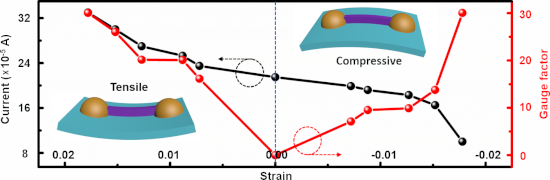
- specific top-down two-step preparation process of freestanding AlGaN/AlN/GaN heterojunction NWs, including isotropic ICP dry etching and selective EC wet etching [25][26], is shown in Figure 2. First, a layer of photoresist was spin coated on the surface of the wafer from MOCVD, and advanced stepper


Electron beam-induced deposition of platinum from Pt(CO)2Cl2 and Pt(CO)2Br2
Beilstein J. Nanotechnol. 2020, 11, 1789–1800, doi:10.3762/bjnano.11.161
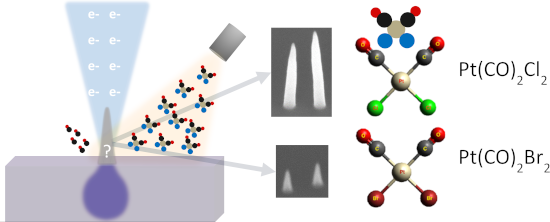
- has very high design flexibility and does not require masks or resist and development. Moreover, it does not need to be performed in a clean room with multiple process stages, such as spin coating, deposition, development, and etching; it is a single step process [1]. The process starts by injecting a


Molecular dynamics modeling of the influence forming process parameters on the structure and morphology of a superconducting spin valve
Beilstein J. Nanotechnol. 2020, 11, 1776–1788, doi:10.3762/bjnano.11.160
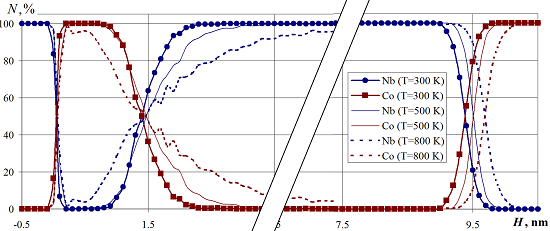
- This work is a study of the formation processes and the effect of related process parameters of multilayer nanosystems and devices for spintronics. The model system is a superconducting spin valve, which is a multilayer structure consisting of ferromagnetic cobalt nanolayers separated by niobium
- atomic structures depending on the main parameters of the deposition process. Keywords: hybrid nanostructure; mathematical modeling; modified embedded-atom method; molecular dynamics; spintronics; spin valve; vacuum deposition; Introduction Multilayer superconductor/ferromagnetic (S/F) hybrid
- nanostructures are a new type of quantum electronics elements based on electron spin transport. Unlike conventional electronics, spintronics uses not only charge transfer, but also the electron spin in solids, solving the problem of transport and recording of information [1][2][3][4][5][6][7]. Based on the basic


Application of contact-resonance AFM methods to polymer samples
Beilstein J. Nanotechnol. 2020, 11, 1714–1727, doi:10.3762/bjnano.11.154
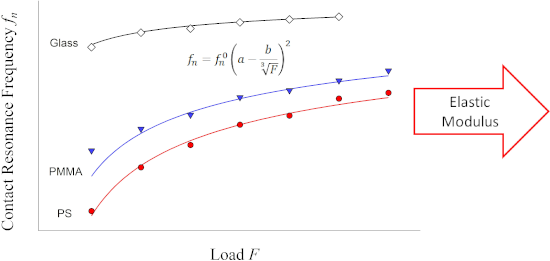
- respective bulk polymers ([3], page 98). These higher values are due to inner stresses and the stretching of the polymer chains during spin coating [3][31][39]. Furthermore, since CR measurements are performed at high frequencies, the time–temperature superposition principle leads to a stiffening of the
- elastic modulus of PS is in agreement with previous measurements on spin-coated samples [3]. The value obtained on bulk PMMA has been checked through force–distance curves on the sample. The measurement performed with a 40 nm tip yielded a reduced elastic modulus of 9.5 GPa, in agreement with the CR value
- (St. Louis, USA). PnBMA has a glass transition temperature Tg of 15 °C, while the Tg value of PS and PMMA is above 100 °C. The polymers have been dissolved in toluene and then spin-coated on glass cover slips, previously cleaned and rinsed with toluene. By changing the polymer concentration, the


Functional nanostructures for electronics, spintronics and sensors
Beilstein J. Nanotechnol. 2020, 11, 1704–1706, doi:10.3762/bjnano.11.152

- superconductivity, triplet pairing and triplet spin-valve and memory effects – just to name some of the new phenomena that have been detected in layered S/F hybrid nanostructures [8]. Moreover, the detected effects are very promising for technical applications directed towards enhancing the storage capacity of
Out-of-plane surface patterning by subsurface processing of polymer substrates with focused ion beams
Beilstein J. Nanotechnol. 2020, 11, 1693–1703, doi:10.3762/bjnano.11.151
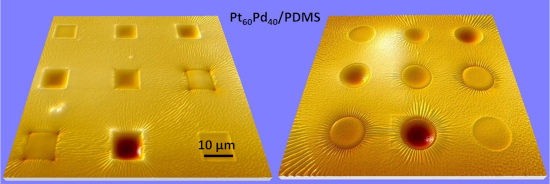
- strain accumulation followed by the relaxation of this strain at a certain critical value. Experimental Materials and samples The PMMA and PDMS substrates used in this study were deposited onto the surface of blank silicon wafers. The deposition of PMMA was performed by spin coating in an RRT Lanz EBS 11
- spin coater, in the same manner described in [4]. After the deposition, the samples were annealed at 200 °C for 90 s to remove solvent residuals. The PDMS polymer used was a two-component Dow Sylgard™184 silicone elastomer with a hardness value of 43 in the Durometer Shore scale. After mixing the
- components, the elastomer was deposited onto the surface of the silicon wafer, degassed in vacuum, and cured for 48 h at room temperature, which resulted in the formation of an approx. 0.8 mm thick PDMS layer. For the preparation of PDMS samples we intentionally avoided any spin coating, in order to


Cu2O nanoparticles for the degradation of methyl parathion
Beilstein J. Nanotechnol. 2020, 11, 1546–1555, doi:10.3762/bjnano.11.137
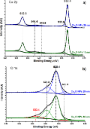
- ]. The peak at 952.3 eV is the corresponding spin–orbit splitting (2p1/2) of Cu2O. Also, in Figure 10a there is a small peak at 933.6 eV that is assigned to Cu 2p3/2 of CuO. This last peak was placed in the fitted spectra because there are two peaks at 943.6 eV and 946.4 eV that have been widely accepted


Design of V-shaped cantilevers for enhanced multifrequency AFM measurements
Beilstein J. Nanotechnol. 2020, 11, 1525–1541, doi:10.3762/bjnano.11.135
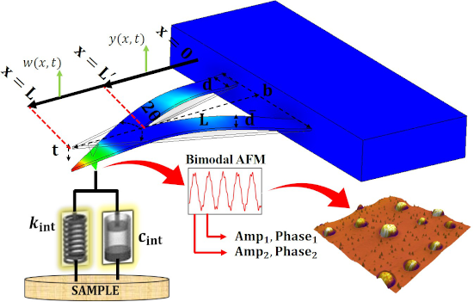
- experiments done. Firstly, a PS polymer solution (molecular weight of 35000 dissolved in tetrahydrofuran (THF)) was spin-coated at 3500 rpm for 60 s on a cleaned Au substrate. All items were purchased from Sigma-Aldrich. After drying the sample, a portion of the PS thin film was scratched to expose the Au


![[Graphic 4]](/bjnano/content/inline/2190-4286-11-135-i26.svg?max-width=637&scale=1.18182) = 15 µm, bref = 8...
= 15 µm, bref = 8...


![[Graphic 17]](/bjnano/content/inline/2190-4286-11-135-i39.svg?max-width=637&scale=1.18182) ) of V-shaped cantilevers for...
) of V-shaped cantilevers for...


Adsorption and self-assembly of porphyrins on ultrathin CoO films on Ir(100)
Beilstein J. Nanotechnol. 2020, 11, 1516–1524, doi:10.3762/bjnano.11.134
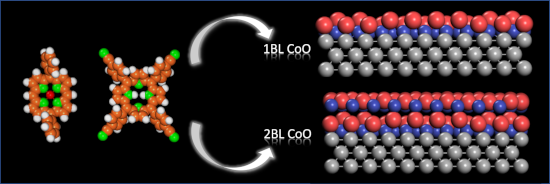
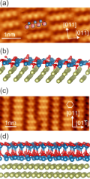
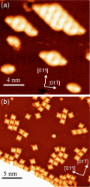
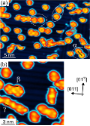
- different molecular conformations. We interpret these findings as a demonstration that the oxide effectively decouples the molecules from the metal substrate and that their electronic structure remains almost undisturbed when adsorbing on the CoO films. Certainly, due to the neglect of spin and correlation




Wafer-level integration of self-aligned high aspect ratio silicon 3D structures using the MACE method with Au, Pd, Pt, Cu, and Ir
Beilstein J. Nanotechnol. 2020, 11, 1439–1449, doi:10.3762/bjnano.11.128
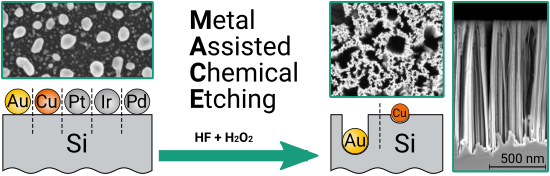
- concentration was 50 mmol/L. After an etching time of 10 min, the wafers have been rinsed with deionised water and dried with a spin rinse dryer or manually in an N2 stream. A micro-spectrophotometer USPM-RU-W NIR (Olympus K. K.) was used to determine the reflectance. The measuring beam is focused on the sample


Controlling the proximity effect in a Co/Nb multilayer: the properties of electronic transport
Beilstein J. Nanotechnol. 2020, 11, 1336–1345, doi:10.3762/bjnano.11.118
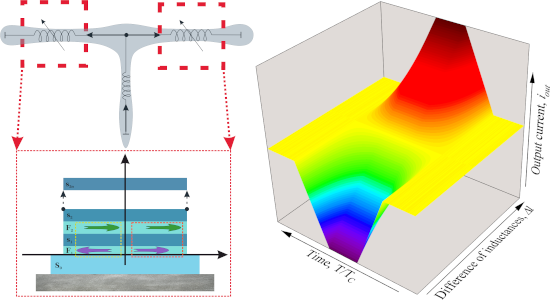
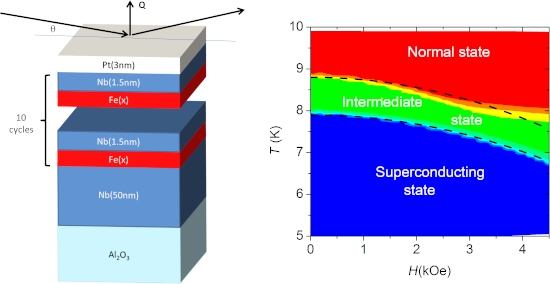
- superlattices can be used as tunable kinetic inductors designed for artificial neural networks representing the information in a “current domain”. Keywords: cryogenic computing; spin-valve; superconducting neural network; superconducting spintronics; Introduction Multilayer superconductor/ferromagnetic (S/F



Proximity effect in [Nb(1.5 nm)/Fe(x)]10/Nb(50 nm) superconductor/ferromagnet heterostructures
Beilstein J. Nanotechnol. 2020, 11, 1254–1263, doi:10.3762/bjnano.11.109
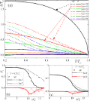
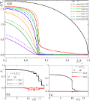
- , differ by a factor of two, which makes neutron reflectometry a better choice to study diffusion in periodic Fe/Nb structures. Another advantage of neutron reflectometry is its sensitivity to the magnetic depth profile. The total SLD for spin-up(+) and spin-down(−) neutrons can be written as ρ±(z) = ρ0(z
- interdiffusion we observed a statistically significant difference of Bragg intensities for spin-up and spin-down neutrons (see inset in Figure 5a), which suggests the presence of magnetism in the periodic structure. A similar picture was also observed for the samples s1 and s2, which shows that the
- show strong intermixing of Fe and Nb atoms, which resulted in a suppressed magnetization of the order of 10% of the bulk value. For sample s4 with Fe(4 nm) we observed a much stronger Bragg peak with significantly stronger difference of spin-up and spin-down channels (Figure 5c). The fit shows (Figure


![[Graphic 13]](/bjnano/content/inline/2190-4286-11-109-i17.svg?max-width=637&scale=1.18182) ) substrate, (b) the Pt cap layer, and the Nb buffer layer grown at...
) substrate, (b) the Pt cap layer, and the Nb buffer layer grown at...


![[Graphic 16]](/bjnano/content/inline/2190-4286-11-109-i20.svg?max-width=637&scale=1.18182) (T) for the samples s4 (black) and s3 (red) in the vicinity of the superconducting transition m...
(T) for the samples s4 (black) and s3 (red) in the vicinity of the superconducting transition m...
3D superconducting hollow nanowires with tailored diameters grown by focused He+ beam direct writing
Beilstein J. Nanotechnol. 2020, 11, 1198–1206, doi:10.3762/bjnano.11.104
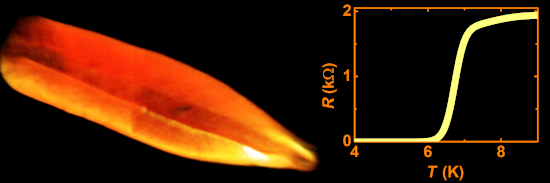
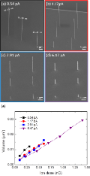
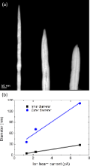
- for quantum computation. The behavior of nanosized superconductors as one-dimensional quantum oscillators [1], Josephson junction arrays [2], electronic transport devices [3][4][5][6][7], very small-scale devices [8][9], micrometer-scale coolers [10], or thermal and spin sensors [11][12] has been



Nonadiabatic superconductivity in a Li-intercalated hexagonal boron nitride bilayer
Beilstein J. Nanotechnol. 2020, 11, 1178–1189, doi:10.3762/bjnano.11.102
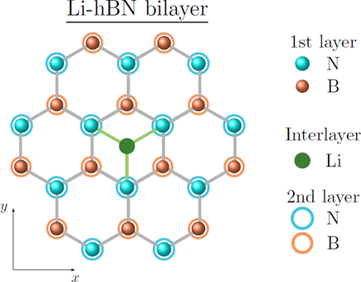
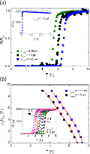
- the other hand, the parameter γ determined by us exceeds the value of γW = 0.034 [87], which was obtained based on the Ward identity [85][88][89]. Note that Ward-type identities result from the conservation of the total charge and the total spin of fermions, as a result of which one can obtain the


![[Graphic 34]](/bjnano/content/inline/2190-4286-11-102-i54.svg?max-width=637&scale=1.18182) for Li-hBN. The results were obta...
for Li-hBN. The results were obta...
Monolayers of MoS2 on Ag(111) as decoupling layers for organic molecules: resolution of electronic and vibronic states of TCNQ
Beilstein J. Nanotechnol. 2020, 11, 1062–1071, doi:10.3762/bjnano.11.91
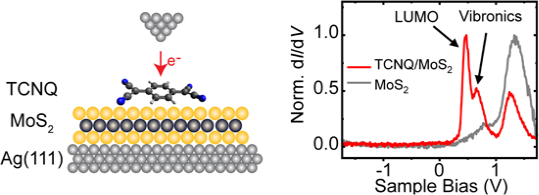
- layer [30][31], the bandgap of the hybrid structure amounts to only approx. 1.7 eV [29]. Interestingly, the states at the K point are much less affected than the states at the Γ point. Hence, the system remains promising for optoelectronic devices with selective access to the spin–orbit-split bands at K


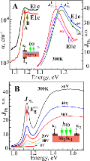
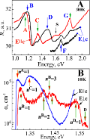
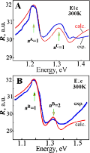
Excitonic and electronic transitions in Me–Sb2Se3 structures
Beilstein J. Nanotechnol. 2020, 11, 1045–1053, doi:10.3762/bjnano.11.89
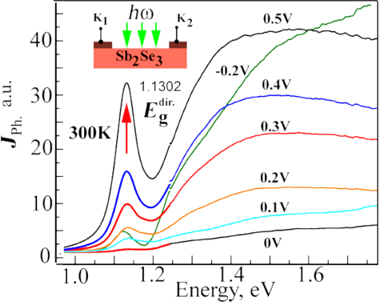
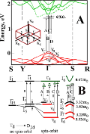
- the electrons at the bottom of the conduction band (mc* = 0.67m0) as well as the holes at the four top valence bands (mv1* = 3.32m0, mv2* = 3.83m0, mv3* = 3.23m0 and mv4* = 3.23m0) were calculated in the Г-point of the Brillouin zone. The magnitude of the valence band splitting V1–V2 due to the spin
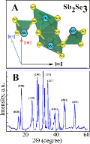
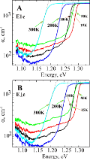
- absorption, reflection and excitonic spectra were obtained. The Sb2Se3 crystalline anisotropy of the ground and excited states of four excitonic series were determined at 300 and 11 K. Due to the crystal field (Δcf) and spin–orbit (Δso) interactions, the high valence band splittings were estimated in the
- symmetries), respectively [27]. Considering that the bands originate from the structures with a higher symmetry (tetragonal) to the structures with an orthorhombic symmetry (D2h), it should be noted that the bands in k = 0 are split by a crystal field and a spin–orbit interaction [27]. The lower conduction


A new photodetector structure based on graphene nanomeshes: an ab initio study
Beilstein J. Nanotechnol. 2020, 11, 1036–1044, doi:10.3762/bjnano.11.88
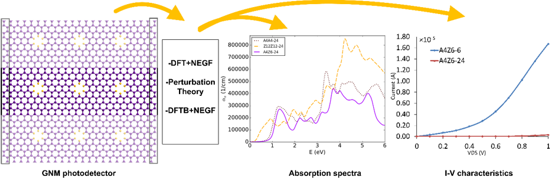
- Green’s functions and α is the lowest and highest self-energies due to coupling to the electrodes. The current at the electrode α (left to right) with spin σ is calculated using [28][29]: The following relation determines the effective crossing coefficients [30]: To investigate and compare photodetectors


Uniform Fe3O4/Gd2O3-DHCA nanocubes for dual-mode magnetic resonance imaging
Beilstein J. Nanotechnol. 2020, 11, 1000–1009, doi:10.3762/bjnano.11.84
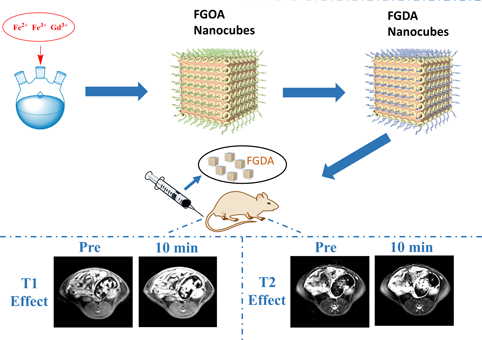
- received FGDA nanocubes as the contrast agent. The animals were anesthetized with 2% isoflurane inhalation anesthesia while the MRI was being performed. T1WI and T2WI were acquired by the turbo spin echo (TSE) sequence with TR/TE = 550/14 ms and TR/TE = 2510/101 ms, respectively. After the FGDA nanocubes



Electrochemical nanostructuring of (111) oriented GaAs crystals: from porous structures to nanowires
Beilstein J. Nanotechnol. 2020, 11, 966–975, doi:10.3762/bjnano.11.81
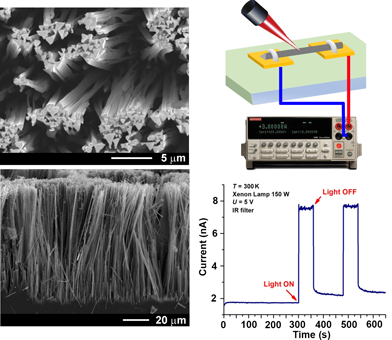
- -layer resist (LOR 3B and ma-P 1205) was spin-coated on the glass substrate with the GaAs nanowires and was exposed with the pattern containing the contact pad structure of 1.5 mm × 1.5 mm using the laser writer. After the development of the exposed contact pad structure, a thin layer of 50 nm Cr


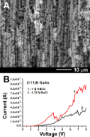
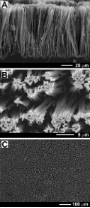


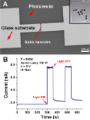

Band tail state related photoluminescence and photoresponse of ZnMgO solid solution nanostructured films
Beilstein J. Nanotechnol. 2020, 11, 899–910, doi:10.3762/bjnano.11.75
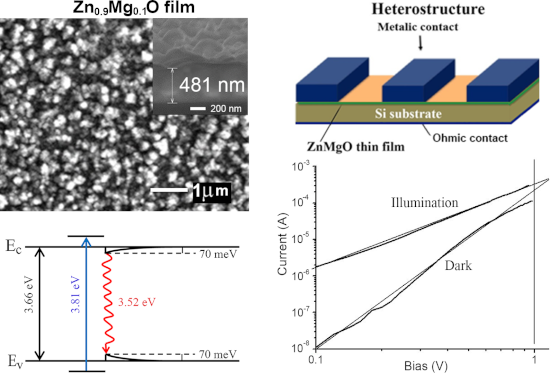
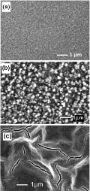
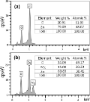
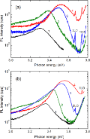
- the composition range x = 0.00–0.40 has been prepared by sol–gel spin coating on Si substrates with a post-deposition thermal treatment in the temperature range of 400–650 °C. The morphology of the films was investigated by scanning electron microscopy and atomic force microscopy while their light
- ; photoluminescence; photosensitivity; spin coating; thin films; ZnMgO semiconductor alloy; Introduction The ZnMgO solid solution system is of interest due to the possibility to tailor many important physical properties by varying their composition. This alloy system covers a wide ultraviolet (UV) spectral range
- (MOCVD) [18][19], hydrothermal [4], chemical bath deposition (CBD) [20], sol–gel spin coating [21][22][23][24][25][26][27][28][29], and spray pyrolysis [28][29][30][31][32][33][34]. Among these techniques, the sol–gel spin coating method has the advantage of ensuring easy control and handling of

A Josephson junction based on a highly disordered superconductor/low-resistivity normal metal bilayer
Beilstein J. Nanotechnol. 2020, 11, 858–865, doi:10.3762/bjnano.11.71
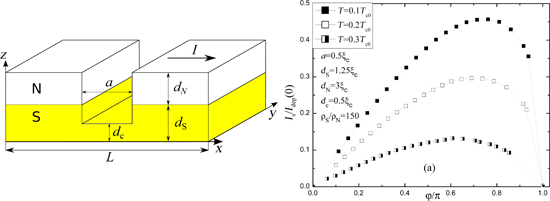
- : where is the electron heat conductivity of the S layer in the normal state, and N(0) is the one-spin density of states on the Fermi level, is the thermal healing length, β = [γτesc 450ζ(5)T/[τ0π4Tc0], ζ(5) ≈ 1.03, τesc is the escape time of nonequilibrium phonons to the substrate, γ = 8π2Ce(Tc0)/Cp(Tc0


Epitaxial growth and superconducting properties of thin-film PdFe/VN and VN/PdFe bilayers on MgO(001) substrates
Beilstein J. Nanotechnol. 2020, 11, 807–813, doi:10.3762/bjnano.11.65
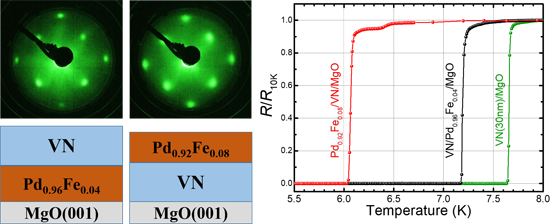
- magnetically soft, tunable and weak in the sense of small spin-polarization of the conduction band [10][28]. The latter provides a large superconducting coherence length and hence bypasses a necessity to deposit flat, nanometer-thick continuous layers expected for strong elemental ferromagnets. A combination
- are indications of non-homogeneous, nanoclustered magnetism in Pd0.99Fe0.01 films grown on niobium [31], which may cause a shortening of the spin-memory length [32] and a reduction of the Josephson critical current. In general, the metallic Nb lattice (body-centered cubic with aNb = 329.4 pm) poorly


Light–matter interactions in two-dimensional layered WSe2 for gauging evolution of phonon dynamics
Beilstein J. Nanotechnol. 2020, 11, 782–797, doi:10.3762/bjnano.11.63
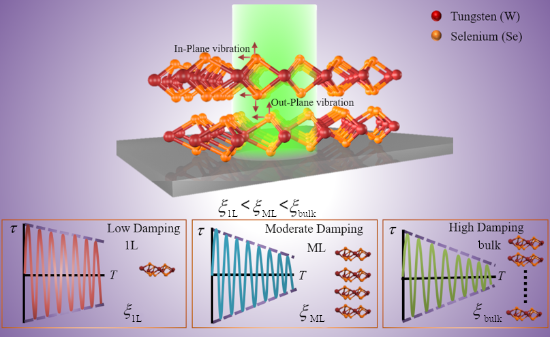
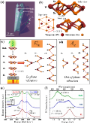
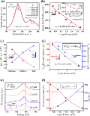
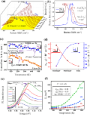
- includes its high mobility of ≈500 cm2/V·s at room temperature, and a strong spin–orbit coupling [3][13][14]. Thus, it is not surprising that a rich variety of electronic and optoelectronic devices have already been demonstrated using 1L WSe2 which harnesses its exceptional properties [13][15][16]. It is
Hexagonal boron nitride: a review of the emerging material platform for single-photon sources and the spin–photon interface
Beilstein J. Nanotechnol. 2020, 11, 740–769, doi:10.3762/bjnano.11.61
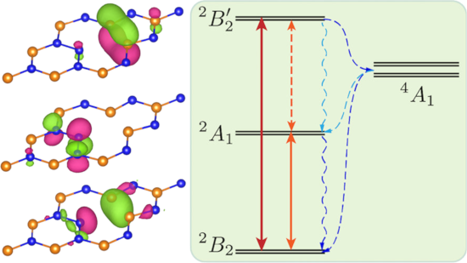
- , Gunma, 370-1292, Japan Mechanical Engineering Department, College of Engineering, Prince Mohammad Bin Fahd University, Al Khobar 31952, Kingdom of Saudi Arabia 10.3762/bjnano.11.61 Abstract Single-photon sources and their optical spin readout are at the core of applications in quantum communication
- ) with proven single-photon emission from the visible to infrared, a quantum spin–photon interface, and ancilla qubits, it is expected that other material platforms could emerge with similar characteristics in the near future. These two materials also naturally lead to monolithic integrated photonics as
- spin–photon interfaces for remote spin–photon entanglement with available nuclear spins as ancilla qubits for quantum memory [11][12]. These include the nitrogen-vacancy (NV) center in diamond [13], the silicon-vacancy center in diamond [14][15][16], the germanium-vacancy center in diamond [17], the