


Search results
Search for "switching" in Full Text gives 260 result(s) in Beilstein Journal of Nanotechnology. Showing first 200.
Synthesis of hafnium nanoparticles and hafnium nanoparticle films by gas condensation and energetic deposition
Beilstein J. Nanotechnol. 2018, 9, 1868–1880, doi:10.3762/bjnano.9.179
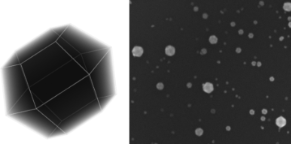
- embedded into a metal-oxide layer, result in a completely new behavior of resistive switching compared with pristine metal-oxide layers, which is important for operation and understanding of nonvolatile resistive random-access memory (ReRAM) [20]. Furthermore except of size, shape and structure of NPs, a






The role of the Ge mole fraction in improving the performance of a nanoscale junctionless tunneling FET: concept and scaling capability
Beilstein J. Nanotechnol. 2018, 9, 1856–1862, doi:10.3762/bjnano.9.177
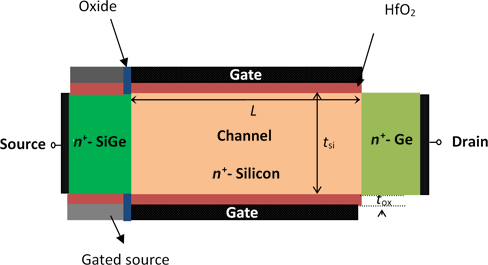
- investigated. Moreover, the impact of the Ge mole fraction in the proposed Si1−xGex source region on the electrical figures of merit (FoMs) of the transistor, including the swing factor and the ION/IOFF ratio is analyzed. It is found that the optimized design with 60 atom % of Ge offers improved switching
- , where the optimized design exhibits an improved switching behavior at the nanoscale level. These results make the optimized device suitable for designing digital circuit for high-performance nanoelectronic applications. Keywords: ambipolar conduction; heterojunctions; junctionless tunneling field
- structure demonstrates a superior switching behavior. This makes the optimized structure a potential alternative for providing energy-efficient transistors with suppressed ambipolar conduction for designing high-performance nanoelectronic circuits at low manufacturing cost. Numerical Simulations Figure 1



Increasing the performance of a superconducting spin valve using a Heusler alloy
Beilstein J. Nanotechnol. 2018, 9, 1764–1769, doi:10.3762/bjnano.9.167
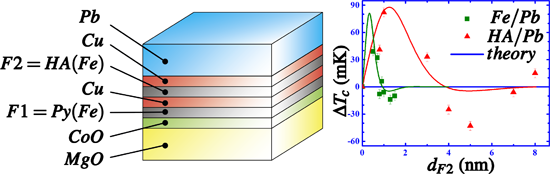
- polarization of the conduction band. The heterostructures demonstrate a significant superconducting spin-valve effect, i.e., a complete switching on and off of the superconducting current flowing through the system by manipulating the mutual orientations of the magnetization of the F1 and F2 layers. The
- magnitude of the effect is doubled in comparison with the previously studied analogous multilayers with the F2 layer made of the strong ferromagnet Fe. Theoretical analysis shows that a drastic enhancement of the switching effect is due to a smaller exchange field in the heterostructure coming from the
- Heusler film as compared to Fe. This enables to approach an almost ideal theoretical magnitude of the switching in the Heusler-based multilayer with a F2 layer thickness of ca. 1 nm. Keywords: ferromagnet; proximity effect; spin valve; superconductor; Introduction Historically, the first concept to

![[Graphic 4]](/bjnano/content/inline/2190-4286-9-167-i9.svg?max-width=637&scale=1.18182) on the thickness of layer F2, dF2 in the SSV heterostructures AFM/F1/N1/F2/N2/S. Tri...
on the thickness of layer F2, dF2 in the SSV heterostructures AFM/F1/N1/F2/N2/S. Tri...
Magnetic properties of Fe3O4 antidot arrays synthesized by AFIR: atomic layer deposition, focused ion beam and thermal reduction
Beilstein J. Nanotechnol. 2018, 9, 1728–1734, doi:10.3762/bjnano.9.164
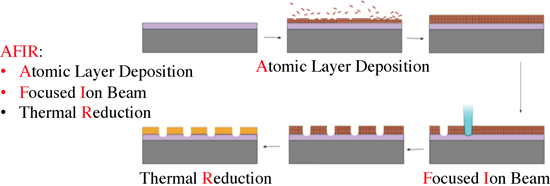
- presence of the ordered non-magnetic holes induces a demagnetization field distribution that changes the magnetization switching mechanisms [6], acting as pinning centers for domain walls [7], enhancing coercivity compared to that of the continuous film [8][9][10][11][12], and affecting the magnetic




Multimodal noncontact atomic force microscopy and Kelvin probe force microscopy investigations of organolead tribromide perovskite single crystals
Beilstein J. Nanotechnol. 2018, 9, 1695–1704, doi:10.3762/bjnano.9.161
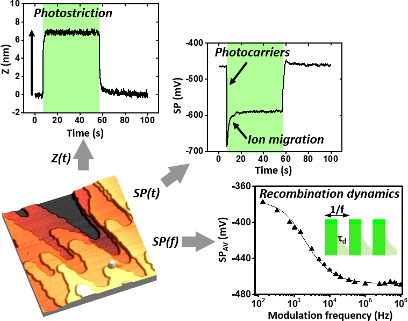
- form of a negative shift of ≈240 mV after switching the light pulse on. This fast change is followed by a slower evolution and a subsequent stabilization of the SP under illumination at a timescale of a few tens of seconds. The surface photovoltage (SPV) at equilibrium (or “stabilized SPV”, SPVStab) is
- therefore equal to the sum of a negative and a positive term, which will be referred to hereafter as “fast” and “slow” SPV components (SPVFast and SPVSlow, see Figure 2a) with regards to their different photoresponse dynamics. After switching the light off, the SP displays a fast positive shift followed by
- that the SP is slightly more positive than initially just after switching the light pulse off. This SP overshoot becomes much more pronounced at higher fluence (as shown in Figure 3c and Figure S3d in Supporting Information File 1). Our interpretation is that most of the photocarriers recombine quickly


Josephson effect in junctions of conventional and topological superconductors
Beilstein J. Nanotechnol. 2018, 9, 1659–1676, doi:10.3762/bjnano.9.158
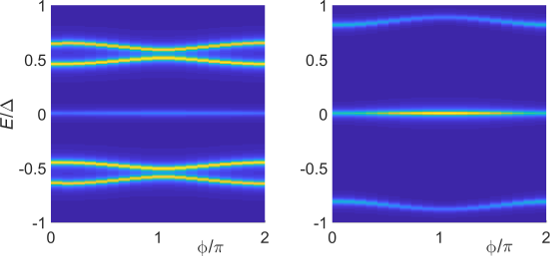
- chosen in Figure 9, the ABSs provide the dominant contribution to the current in this regime. S–TS–S junctions: Switching the parity of a superconducting atomic contact Model We now proceed to the three-terminal S–TS–S setup shown in Figure 1b. The CPR found in the related TS–S–TS trijunction case has
- the odd parity sector of the SAC. For λ1 ≠ 0, the MBS-mediated switching between odd and even parity sectors will now be activated and thereby lift the supercurrent blockade. Conventional midgap level A similar behavior as predicted above for the MBS-induced parity switch between = ±1 sectors could


![[Graphic 75]](/bjnano/content/inline/2190-4286-9-158-i137.svg?max-width=637&scale=1.18182) = 1 in Figure 6, for different bulk Zeeman fields Vx (in meV) near the crit...
= 1 in Figure 6, for different bulk Zeeman fields Vx (in meV) near the crit...


Solid-state Stern–Gerlach spin splitter for magnetic field sensing, spintronics, and quantum computing
Beilstein J. Nanotechnol. 2018, 9, 1558–1563, doi:10.3762/bjnano.9.147
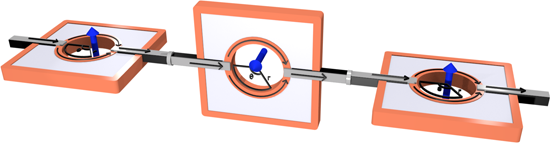
- sensitivity, or switching field, b, is related to the characteristic size of the device, r, through b = h/(2πqr2), with q being the unit of electric charge. Keywords: Aharanov–Bohm; quantum computing; spintronics; Stern–Gerlach; SU(2); topological insulator; Introduction Two famous examples of the
- “on” and “off” states for n even and odd, respectively, and we therefore define the magnetic switching quantum An alternative way to encode 1 and 0 is to use the currents of up- and down-spins, respectively. This requires normal leads through which both up- and down-spins can be transported. We
- and a NOT-gate, simply by changing B by the switching quantum in Equation 4. Quantum computer gate Having seen how a TI SG apparatus can be used to construct classical logic gates for spintronics, we finally turn to possible applications in quantum computing. It has been shown that a universal quantum


Cathodoluminescence as a probe of the optical properties of resonant apertures in a metallic film
Beilstein J. Nanotechnol. 2018, 9, 1491–1500, doi:10.3762/bjnano.9.140
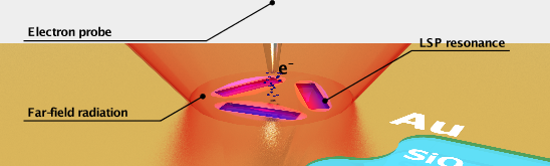
- including the thickness of the metal film [13]. Other than the excitations discussed above, sharp Fano resonances arising from the interference of two modes [14] have promising applications in sensing, switching and lasing. These resonances have been investigated in various structures such as thin film


Electrostatically actuated encased cantilevers
Beilstein J. Nanotechnol. 2018, 9, 1381–1389, doi:10.3762/bjnano.9.130
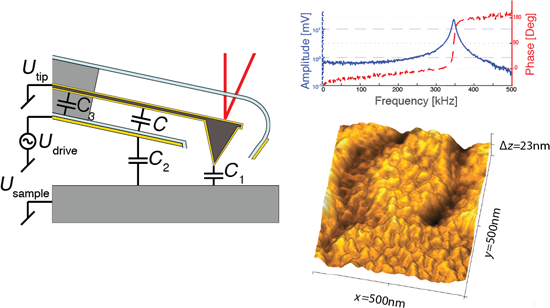
- an annealed ultra-flat gold surface. The surface is imaged in tapping mode using harmonic excitation with amplitude modulation feedback, a free amplitude of 1 nm and a set-point of 0.8 nm. In harmonic excitation, we observe that intentional switching of the applied Udc by a few volts would result in




Andreev spectrum and supercurrents in nanowire-based SNS junctions containing Majorana bound states
Beilstein J. Nanotechnol. 2018, 9, 1339–1357, doi:10.3762/bjnano.9.127
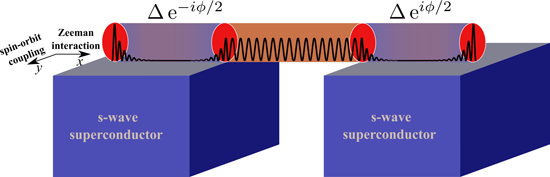
- , transitions between the negative and positive energies are not allowed, because of an energy gap originating from Majorana overlaps. Strategies to detect the presence of MBSs beyond the equilibrium supercurrents described here include the ac Josephson effect, noise measurements, switching-current measurements


![[Graphic 44]](/bjnano/content/inline/2190-4286-9-127-i52.svg?max-width=637&scale=1.18182) in a short SNS j...
in a short SNS j...


![[Graphic 73]](/bjnano/content/inline/2190-4286-9-127-i81.svg?max-width=637&scale=1.18182) = 0 (a,b)...
= 0 (a,b)...


![[Graphic 84]](/bjnano/content/inline/2190-4286-9-127-i92.svg?max-width=637&scale=1.18182) ), fo...
), fo...


![[Graphic 119]](/bjnano/content/inline/2190-4286-9-127-i127.svg?max-width=637&scale=1.18182) at B = 1.5Bc. Contributions to the supercurrent for (a,b) short and ...
at B = 1.5Bc. Contributions to the supercurrent for (a,b) short and ...

![[Graphic 163]](/bjnano/content/inline/2190-4286-9-127-i171.svg?max-width=637&scale=1.18182) ), in (a,b) a short and (c,d) a long junction. (a,...
), in (a,b) a short and (c,d) a long junction. (a,...

![[Graphic 175]](/bjnano/content/inline/2190-4286-9-127-i183.svg?max-width=637&scale=1.18182) ), in (a,b) a...
), in (a,b) a...

![[Graphic 186]](/bjnano/content/inline/2190-4286-9-127-i194.svg?max-width=637&scale=1.18182) ) in (a,b) a short and (c,d) a long ...
) in (a,b) a short and (c,d) a long ...
Formation and development of nanometer-sized cybotactic clusters in bent-core nematic liquid crystalline compounds
Beilstein J. Nanotechnol. 2018, 9, 1288–1296, doi:10.3762/bjnano.9.121
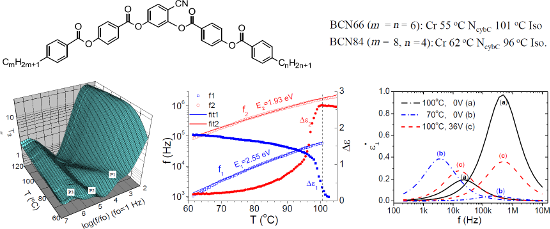
- -range translational order. The optical switching by rotation around the long molecular axes is much faster and easier than switching by rotation around the short axes. In 1970, Freiser predicted that the long and flat LC molecules could form a biaxial nematic phase (Nb), and furthermore, a second-order
- either a glass, a smectic and/or a crystal being formed. In spite of the several setbacks of not unambiguously obtaining a biaxial nematic LC, the subject continues to be of great scientific and technological interest [4] as it has the potential to obtain faster switching devices that incorporate such a
- molecules were aligned by surface treatment and one of the short axes was also aligned by the electric field. In more recent studies, the biaxiality of the sample studied was confirmed [3][4][5] by electro-optical switching [23], polarizing infrared spectroscopy (PIR) [24], polarizing optical microscopy


Artifacts in time-resolved Kelvin probe force microscopy
Beilstein J. Nanotechnol. 2018, 9, 1272–1281, doi:10.3762/bjnano.9.119
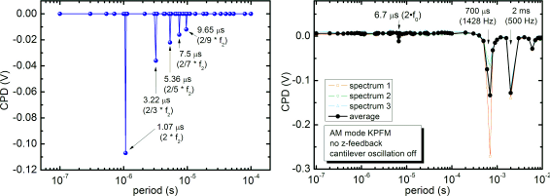
- difference between the CPD under illumination and in the dark – after switching on and off a laser light source. The CPD change resulting from the separation of the excited charge carriers was monitored in real time over the course of several minutes. Similar experiments were also performed using


Heterostuctures of 4-(chloromethyl)phenyltrichlorosilane and 5,10,15,20-tetra(4-pyridyl)-21H,23H-porphine prepared on Si(111) using particle lithography: Nanoscale characterization of the main steps of nanopatterning
Beilstein J. Nanotechnol. 2018, 9, 1211–1219, doi:10.3762/bjnano.9.112
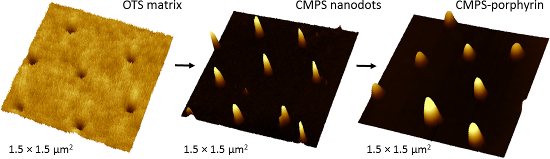
- differences in structure and conformation [15]. The submolecular structure of cobalt and copper phthalocyanines on gold substrates were resolved with STM by Lu et al. [16]. The differences in central metals were resolved for a mixed sample. The molecular orientation and molecular switching properties of a


Inverse proximity effect in semiconductor Majorana nanowires
Beilstein J. Nanotechnol. 2018, 9, 1184–1193, doi:10.3762/bjnano.9.109
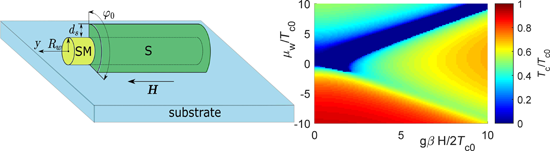
- whole system. The analysis of this inverse proximity phenomenon is important to find out the optimal range of parameters that allows one to realize the switching between the topologically trivial and nontrivial states of the semiconducting wire used in various braiding protocols. The goal of this work


Magnetic characterization of cobalt nanowires and square nanorings fabricated by focused electron beam induced deposition
Beilstein J. Nanotechnol. 2018, 9, 1040–1049, doi:10.3762/bjnano.9.97
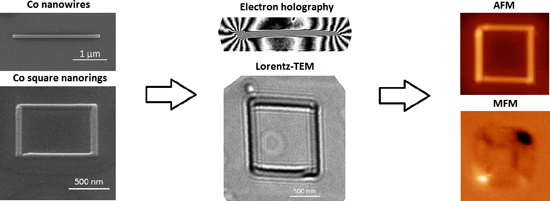
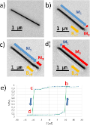
- within this limited timescale. Therefore, time-resolved imaging of magnetization switching is unfortunately not possible. An interesting analysis can be carried out by plotting the ratio of the length of the M1 domain to the length of the NW as a function of Beff, as shown in Figure 2e. A value of 1 or 0
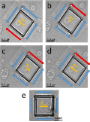
- , at the bottom left, which is aligned in the opposite way, in response to the direction of the applied magnetic field. In the following, the ability of L-TEM to provide a direct visualization of the switching process of the horseshoe state in a square nanoring is demonstrated. Just as for nanowires
- is confirmed also by the analyses presented in the next paragraph. Horseshoe and onion states have been observed during the switching of square permalloy rings, when slight ring asymmetry [43] or slight misalignment of the external field from the square side [17] are present. By decreasing the
Mechanistic insights into plasmonic photocatalysts in utilizing visible light
Beilstein J. Nanotechnol. 2018, 9, 628–648, doi:10.3762/bjnano.9.59
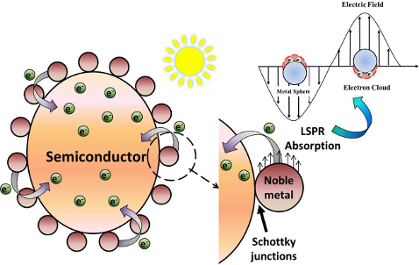
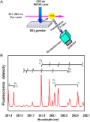
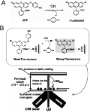
- were found to be efficient at reducing a wide range of epoxides, azo compounds, and ketones at ambient temperature under visible light. Their reduction potential highly depends on the incident wavelength [174]. The team revealed the selectivity tuning by plasmon-mediated photo-switching and





High-contrast and reversible scattering switching via hybrid metal-dielectric metasurfaces
Beilstein J. Nanotechnol. 2018, 9, 460–467, doi:10.3762/bjnano.9.44
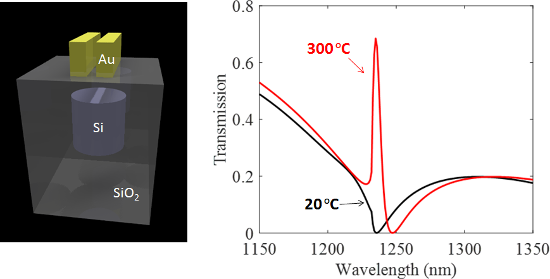
- , composed of silicon disk and gold bar lattices, with a reversible switching capability of the Kerker scattering condition. The tunability is achieved by the active control on the excitation and interference between the electric and magnetic resonances through heating the metasurface. It is shown that the


Design of polar self-assembling lactic acid derivatives possessing submicrometre helical pitch
Beilstein J. Nanotechnol. 2018, 9, 333–341, doi:10.3762/bjnano.9.33
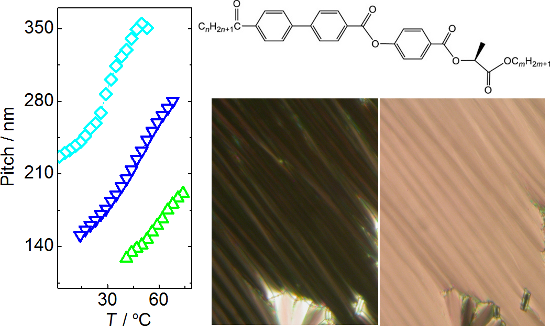
- magnitude of 10 V/μm. The driving voltage was supplied by an Agilent 33210A function generator amplified with a linear amplifier, providing a maximum amplitude of about ±100 V. The Tektronix DPO4034 digital oscilloscope provided information about the switching current profile versus time. Spontaneous tilt


Review: Electrostatically actuated nanobeam-based nanoelectromechanical switches – materials solutions and operational conditions
Beilstein J. Nanotechnol. 2018, 9, 271–300, doi:10.3762/bjnano.9.29
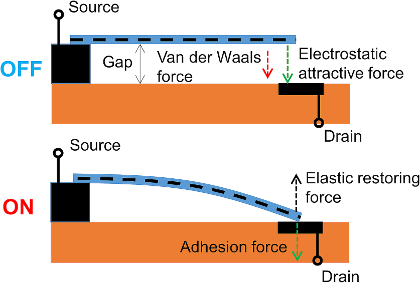
- are covered. An examination of the complex nanocontact behaviour during various stages of the switching cycle is provided. The choice of the switching element and the electrode is addressed from the materials perspective, detailing the benefits and drawbacks for each. An overview of experimentally
- demonstrated NEM switching devices is provided, and together with their operational parameters, the reliability issues and impact of the operating environment are discussed. Finally, the most common NEM switch failure modes and the physical mechanisms behind them are reviewed and solutions proposed. Keywords
- controlling the electrical current. NEM switches have attracted attention as low-power [1] devices, demonstrating abrupt on/off switching characteristics and minimized sub-threshold swing, as well as reduced leakage currents leading to improved on/off ratios [2]. In the context of existing


Dynamic behavior of a nematic liquid crystal with added carbon nanotubes in an electric field
Beilstein J. Nanotechnol. 2018, 9, 233–241, doi:10.3762/bjnano.9.25
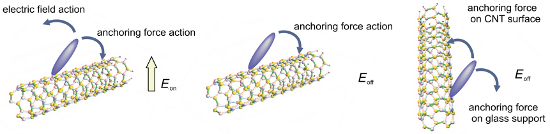
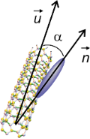
- long period of time, x0 is a constant parameter and τon is the relaxation time when the field is switched on. Following a similar procedure as in [22][23][24], we get: We consider two different cases for switching the field off: First, when the field is switched off immediately, the nanotubes are still

![[Graphic 1]](/bjnano/content/inline/2190-4286-9-25-i33.svg?max-width=637&scale=1.18182) is the undistu...
is the undistu...



Electrical properties of a liquid crystal dispersed in an electrospun cellulose acetate network
Beilstein J. Nanotechnol. 2018, 9, 155–163, doi:10.3762/bjnano.9.18
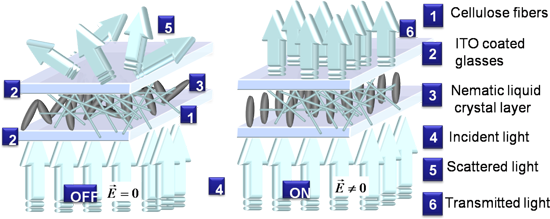
- switching cycles. Conclusion CA electrospun nanofibers were deposited onto ITO-coated glass and an electro-optic cell was formed by two such glass plates with fibers in between. By filling in the nematic liquid crystal E7 a light scattering device with a polymer-dispersed liquid crystal was obtained


Electron-driven and thermal chemistry during water-assisted purification of platinum nanomaterials generated by electron beam induced deposition
Beilstein J. Nanotechnol. 2018, 9, 77–90, doi:10.3762/bjnano.9.10
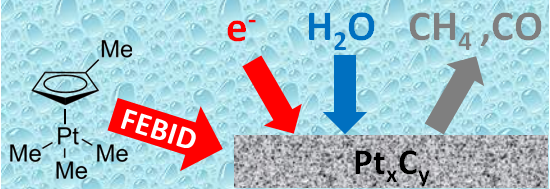
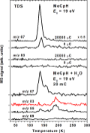
- electron exposure in the presence of H2O. Electron irradiation was switched off again when ESD of CH4 had decreased to about 10% of its initial value (at 1700 s). Again, dosing of H2O alone (starting at 1800 s) led to only a small desorption signal of CH4. In contrast, switching on electron exposure (at



Study of the vertically aligned in-plane switching liquid crystal mode in microscale periodic electric fields
Beilstein J. Nanotechnol. 2018, 9, 11–19, doi:10.3762/bjnano.9.2
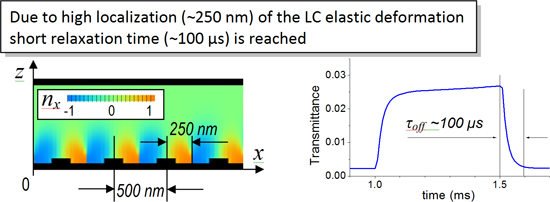
- .9.2 Abstract The ongoing interest in fast liquid crystal (LC) modes stimulated by display technology and new applications has motivated us to study in detail the in-plane switching (IPS) vertically aligned (VA) mode. We have studied how the decrease of the period of the interdigitated electrodes (down
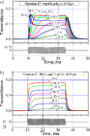
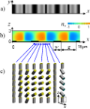
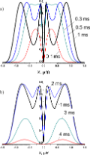
- to sub-micrometer scale) influences the switching speed, especially the LC relaxation to the initial homeotropic state. We have found that there are two types of the relaxation: a fast relaxation caused by the surface LC sub-layer deformed in the vicinity of the electrodes and the slower relaxation
- grating period can result in significant increase of switching speed compared to the traditional LC modes, where the bulk relaxation dominates in electrooptical response. We have studied thoroughly the conditions defining the surface mode applicability. The numerical simulations are in good agreement with






Electro-optical characteristics of a liquid crystal cell with graphene electrodes
Beilstein J. Nanotechnol. 2017, 8, 2802–2806, doi:10.3762/bjnano.8.279
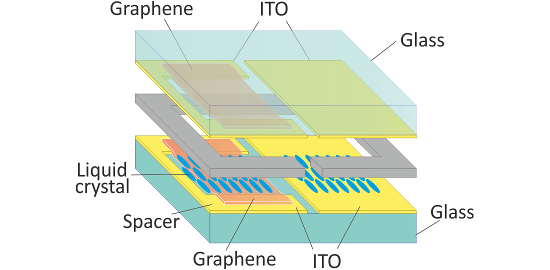
- can be successfully used as a transparent conductive layer in LC devices. Keywords: conductive layer; graphene; ITO; liquid crystal cell; optical switching time; Introduction In modern optical devices based on liquid crystals (LCs) the electro-optical control is realized using a transparent
- due to the reorientation of the LC to be observed (Figure 5). Hence the LC cell can operate as an electrically controlled light valve, where the intensity of the transmitted light is changed from minimum to maximum and vice versa with an associated π-phase shift. The switching time of the light valve
- depends on the value of the applied voltage. In order to determine the voltage corresponding to the minimum switching time, an experiment was carried out to obtain the dependence of the light intensity (transmitted through the cell located between crossed polarizers) on the control voltage (see Figure 5


Thermo- and electro-optical properties of photonic liquid crystal fibers doped with gold nanoparticles
Beilstein J. Nanotechnol. 2017, 8, 2790–2801, doi:10.3762/bjnano.8.278
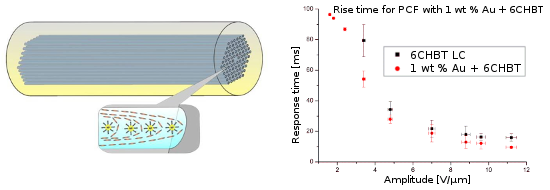
- external electric field (with a focus on switching time). In the first part, different host structures were used: i) a LC cell, ii) microcapillaries, and iii) a photonic crystal fiber, in order to compare the influence of a NP-doped LC in setups with different geometries. This also allowed us to specify if
- frequency and amplitude modulation of 5 Hz. The definition of switching time was 10–90% and the uncertainty of the measurements is about 2 ms. Results and Discussion Nematic–isotropic phase transition temperature As reported elsewhere [22][23], Au NPs have a tendency to reduce the N–I phase transition
- temperature, the higher NP concentrations start to create clusters and hence the nematic LC phase is disrupted. In [34], numerical calculations confirmed the possibility of lowering the N–I phase transition temperature for a host material with metallic NPs. Switching times under an external electric field In





