Search results
Search for "valence" in Full Text gives 349 result(s) in Beilstein Journal of Nanotechnology. Showing first 200.
Rapid thermal annealing for high-quality ITO thin films deposited by radio-frequency magnetron sputtering
Beilstein J. Nanotechnol. 2019, 10, 1511–1522, doi:10.3762/bjnano.10.149
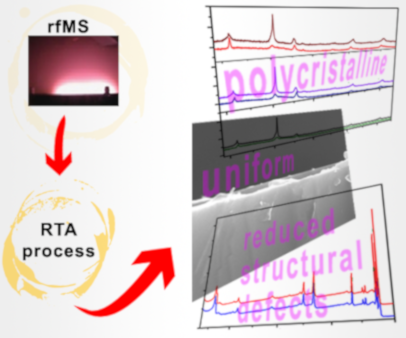
- RTA-treatment in an open atmosphere. The percentage of oxygen pressure used in the experiments is shown in Table 1. It is obvious that the oxygen flux during deposition affects the difference between the maximum valence band and the Fermi level. In this way oxygen-induced acceptor states are formed
- near the valence band (such as oxygen interstitials and indium vacancies) and the number of states increases with increasing oxygen flow. A poor crystalline quality with abundant structural defects leads to effective compensation of doping [33][48]. The metallic nature of the highly conductive ITO


BiOCl/TiO2/diatomite composites with enhanced visible-light photocatalytic activity for the degradation of rhodamine B
Beilstein J. Nanotechnol. 2019, 10, 1412–1422, doi:10.3762/bjnano.10.139
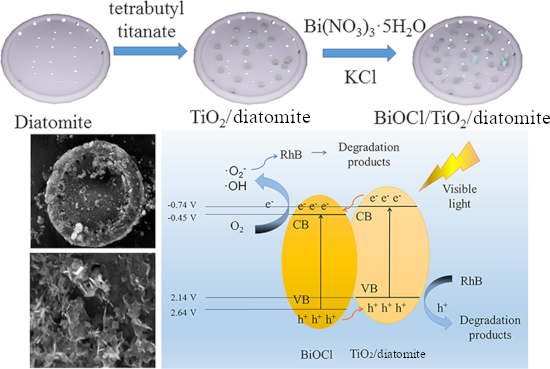
- TiO2/diatomite: Therefore, the positions of the valence band (VB) for BiOCl and TiO2/diatomite are 2.64 V and 2.14 V, respectively. The photocatalytic activity is determined not only by the band structure but also by the carrier transport efficiency [47]. In order to study the carrier migration


Construction of a 0D/1D composite based on Au nanoparticles/CuBi2O4 microrods for efficient visible-light-driven photocatalytic activity
Beilstein J. Nanotechnol. 2019, 10, 1360–1367, doi:10.3762/bjnano.10.134
- novel visible-light-driven photocatalysts. Due to the valence-band hybridization of O 2p and Bi 6s, the bismuth-based photocatalysts possess a relatively narrow bandgap. Moreover, benefiting from the filled Bi 6s band of Bi3+ or the empty 6s band of Bi5+, Bi-containing compounds strongly absorb visible
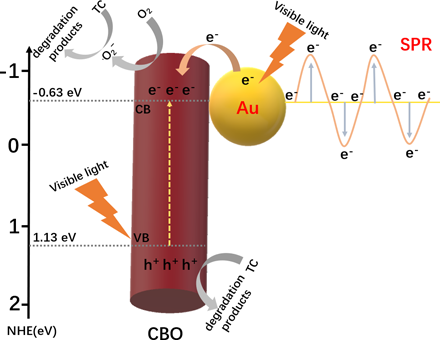
- suggests that h+ and·O2− are crucial active species during the photocatalysis. Based on the above experimental results, a possible photocatalytic mechanism was proposed (Figure 9). The valence band (VB) and conduction band (CB) positions of CBO can be estimated based on the following equation: where X is


Luminescence of Tb3Al5O12 phosphors co-doped with Ce3+/Gd3+ for white light-emitting diodes
Beilstein J. Nanotechnol. 2019, 10, 1237–1242, doi:10.3762/bjnano.10.123
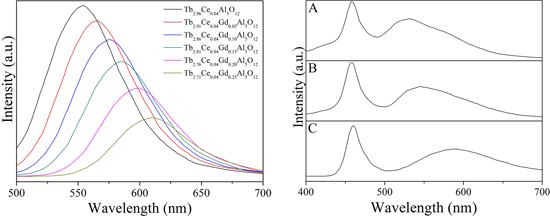
- increasing x values, which is induced by the substitution of Tb3+ with Ce3+/Gd3+. The ionic radii of Tb3+, Ce3+ and Gd3+ are 1.040 Å (CN = 8), 1.143 Å (CN = 8) and 1.053 Å (CN = 8), respectively. Due to the same valence and similar ionic radii of Tb3+, Ce3+, and Gd3+, Tb3+ ions are replaced by Ce3+ and Gd3


Imaging the surface potential at the steps on the rutile TiO2(110) surface by Kelvin probe force microscopy
Beilstein J. Nanotechnol. 2019, 10, 1228–1236, doi:10.3762/bjnano.10.122
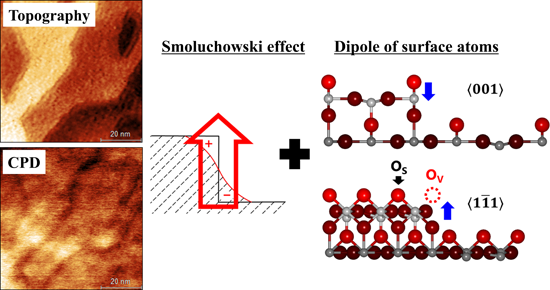
- to the step is localized closely to the top of the valence band compared to a more distant oxygen atom, resulting in decrease of oxygen vacancy formation energy and consequent vacancy migration towards the step. This geometry produces a massive positive charge pinned around a vacancy, see Figure 5c
![[Graphic 16]](/bjnano/content/inline/2190-4286-10-122-i16.svg?max-width=637&scale=1.18182) and
and ![[Graphic 17]](/bjnano/content/inline/2190-4286-10-122-i17.svg?max-width=637&scale=1.18182) .
.

![[Graphic 38]](/bjnano/content/inline/2190-4286-10-122-i38.svg?max-width=637&scale=1.18182) and
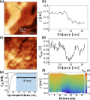
and ![[Graphic 39]](/bjnano/content/inline/2190-4286-10-122-i39.svg?max-width=637&scale=1.18182) steps. (a) Topographic image...
steps. (a) Topographic image...


![[Graphic 72]](/bjnano/content/inline/2190-4286-10-122-i72.svg?max-width=637&scale=1.18182) , b)
, b) ![[Graphic 73]](/bjnano/content/inline/2190-4286-10-122-i73.svg?max-width=637&scale=1.18182) , c) reduced
, c) reduced ![[Graphic 74]](/bjnano/content/inline/2190-4286-10-122-i74.svg?max-width=637&scale=1.18182) , and d)
, and d) ![[Graphic 75]](/bjnano/content/inline/2190-4286-10-122-i75.svg?max-width=637&scale=1.18182) steps. B...
steps. B...
Quantitative analysis of annealing-induced instabilities of photo-leakage current and negative-bias-illumination-stress in a-InGaZnO thin-film transistors
Beilstein J. Nanotechnol. 2019, 10, 1125–1130, doi:10.3762/bjnano.10.112
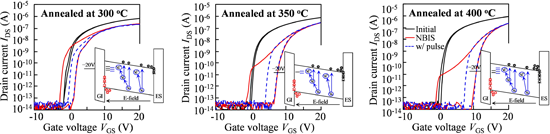
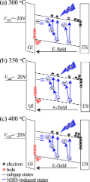
- conduction is insensitive to disorder because the conduction band edge depends on the In s-orbital [1]. However, there is a high density of oxygen-containing trap states (ca. 1020 cm−3) in the region above the valence band [2], which is sensitive to irradiation with light [3]. The typical staggered/coplanar
- the valence band (EV). When the annealing temperature increases to 350 °C, the transfer curves exhibit outstanding initial electrical properties. However, a positive shift accompanied by the appearance of a hump and SS degradation occurs and gradually increases with increasing stress duration. The


Synthesis and characterization of quaternary La(Sr)S–TaS2 misfit-layered nanotubes
Beilstein J. Nanotechnol. 2019, 10, 1112–1124, doi:10.3762/bjnano.10.111
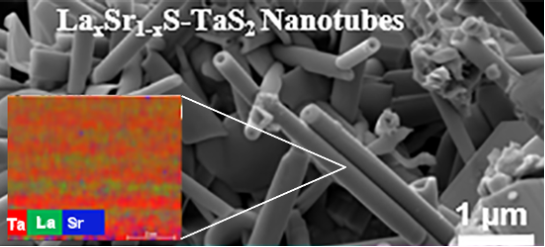
- treated, applying norm-conserving Troullier–Martins pseudopotentials. The pseudopotential core radii (given in the following in brackets, in aB units) for the valence shells were chosen as 6s2(3.47)6p0(3.74)5d1(3.22) for La, 6s1(2.55)6p0(2.74)5d4(2.55) for Ta, 5s2(3.58)5p0(3.76)4d0(3.58) for Sr, and 3s2
- content. At a Sr content of about 40 atom % the DOS difference with respect to the DOS of pristine LaS–TaS2 MLC becomes more pronounced: a clear shoulder of the valence band appears at −1.0...1.5 eV (see Figure S4, Supporting Information File 1). It consists of S3p-states, which are responsible for the Sr


CuInSe2 quantum dots grown by molecular beam epitaxy on amorphous SiO2 surfaces
Beilstein J. Nanotechnol. 2019, 10, 1103–1111, doi:10.3762/bjnano.10.110
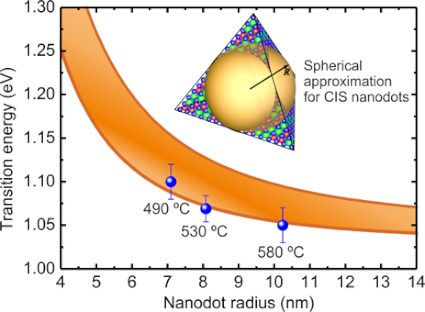
- energy for the QD [48] and QW [49] can be calculated as: where Eg is the CIS low-temperature bandgap energy, h is the Planck constant, me is the effective conduction-band mass, mh is the effective valence-band mass, e is the rest electron charge, ε is the CIS dielectric constant and Ex is the exciton


Electronic and magnetic properties of doped black phosphorene with concentration dependence
Beilstein J. Nanotechnol. 2019, 10, 993–1001, doi:10.3762/bjnano.10.100
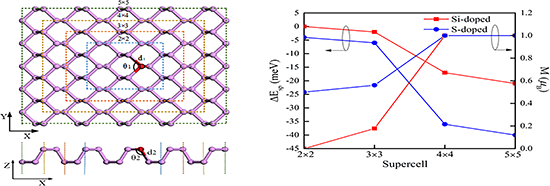
- to 4 × 4, corresponding to an impurity concentration of 1.56%, the direct bandgap of S-doped phosphorene between the conduction band minimum (CBM) and the valence band maximum (VBM) at Γ is opened to 0.32 eV suggesting the S-doped phosphorene becomes a magnetic semiconductor. When the in-plane size


Synthesis of novel C-doped g-C3N4 nanosheets coupled with CdIn2S4 for enhanced photocatalytic hydrogen evolution
Beilstein J. Nanotechnol. 2019, 10, 912–921, doi:10.3762/bjnano.10.92
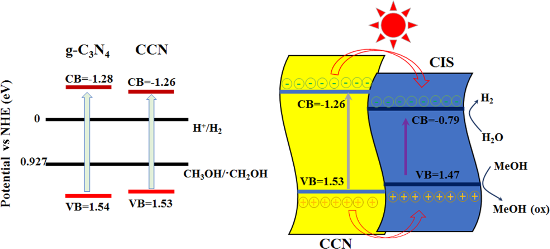
- absorption coefficient, h being Planck’s constant, and v being the frequency. The Eg of g-C3N4, CCN and CdIn2S4 are estimated as 2.82 eV, 2.79 eV and 2.26 eV, respectively. Besides, the position of the valence band is determined by the following equation: EVB = X − Ec − 0.5Eg, where Ec is the energy of free
- electrons on the hydrogen scale (about 4.5 eV), X is the electronegativity of the semiconductor, and Eg is the band gap energy of the semiconductor. The edge of the valence band (VB) and conduction band (CB) of g-C3N4, CCN and CdIn2S4 are summarized in Table 1. The separation–recombination rate of photo
- position of the conduction and valence bands of the g-C3N4 and CCN samples. CCN has a narrower band gap than the original g-C3N4 because of the C-doping, allowing for more visible light to be harvested. Furthermore, C-doping can increase the π-electron availability and reduce the hydrogen absorption energy


Comparing a porphyrin- and a coumarin-based dye adsorbed on NiO(001)
Beilstein J. Nanotechnol. 2019, 10, 874–881, doi:10.3762/bjnano.10.88
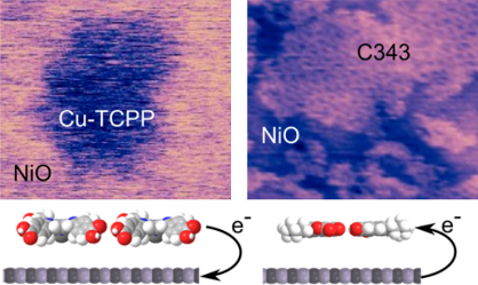
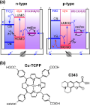
- first step towards the design of tandem solar cells with two photoactive electrodes [17][18]. In p-type DSSCs, the charge transfer is in the opposite direction to that in n-type devices. Holes are injected from the highest occupied molecular orbital (HOMO) of the dye to the valence band (VB) of the



Electronic properties of several two dimensional halides from ab initio calculations
Beilstein J. Nanotechnol. 2019, 10, 823–832, doi:10.3762/bjnano.10.82
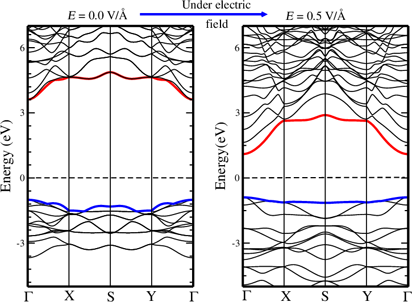
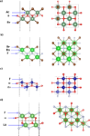
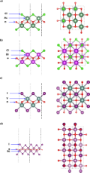
- to the top of the valence bands. For instance, for AcOBr, the top of the valence bands is made of states coming from Ac, O, and Br, while Ac-derived states constitute most of the bottom of the conduction bands, as seen in the corresponding PDOS. Similarly, we have computed the DOSs and PDOSs of XOCl
- (where X = Cr, Ga, In, La) monolayers, as presented in Figure 4. For instance, we can see from the PDOS of AcOCl that the valence bands come from the Ac, O, and Cl atoms while the bottom of the conduction bands correspond mainly to states derived from the Ac atoms. The DOSs and PDOSs of the fluoride
- monolayers CrOF, GaOF, InOF and LaOF are shown in Figure 5. From the DOS, it can be seen that the CrOF monolayer has a finite spin polarisation, and its magnetic moments are ordered ferromagnetically. Also, it is seen that the fluorine atoms contribute to the valence bands for all fluorides monolayers, while


Tungsten disulfide-based nanocomposites for photothermal therapy
Beilstein J. Nanotechnol. 2019, 10, 811–822, doi:10.3762/bjnano.10.81
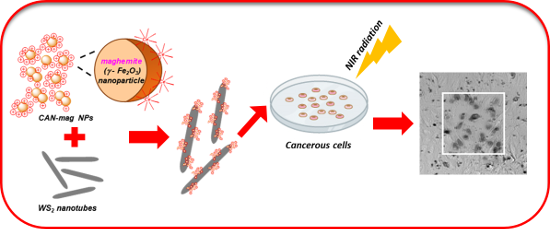
- chemistry, thanks to an available valence electron in its 4f orbital. In our group, cerium was utilized in the complex form of ceric ammonium nitrate [(NH4)2Ce(IV)(NO3)6, or CAN]. In CAN the cerium ion is coordinated with six nitrate ligands through their oxygen atoms. CAN is a strong oxidizer, turning






Trapping polysulfide on two-dimensional molybdenum disulfide for Li–S batteries through phase selection with optimized binding
Beilstein J. Nanotechnol. 2019, 10, 774–780, doi:10.3762/bjnano.10.77
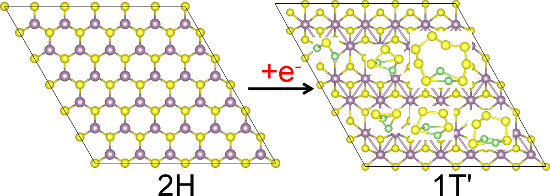
- (CBM) and valence band maximum (VBM) are located at the K point, which is consistent with previous DFT calculations [39]. 1T'-MoS2 is a narrow-bandgap semiconductor with a bandgap of 0.15 eV. Various intermediates, Li2Sx (x = 1–8), of LPSs were observed in Li–S batteries [40]. The optimized atomic


The effect of translation on the binding energy for transition-metal porphyrines adsorbed on Ag(111) surface
Beilstein J. Nanotechnol. 2019, 10, 706–717, doi:10.3762/bjnano.10.70
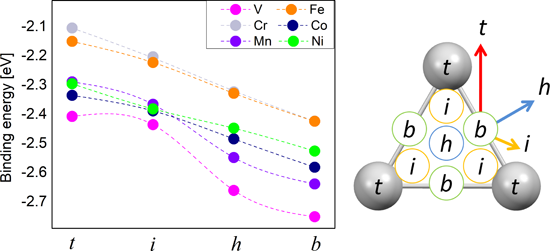
- valence bonding or quenching of magnetic moments [73][74][75][76][77]. Since the quantitative estimation of the Kondo effect is beyond the limits of mean-field theories (such as DFT) we can provide a qualitative discussion based on experimental results for the Kondo effect in similar systems. It was shown


![[Graphic 1]](/bjnano/content/inline/2190-4286-10-70-i1.svg?max-width=637&scale=1.18182) , for all systems and relative molecule–surface positions. Right: symm...
, for all systems and relative molecule–surface positions. Right: symm...


![[Graphic 7]](/bjnano/content/inline/2190-4286-10-70-i7.svg?max-width=637&scale=1.18182) for selected TMPP systems (M = V, Mn, Co; red: positive values, blue: negative value...
for selected TMPP systems (M = V, Mn, Co; red: positive values, blue: negative value...
A carrier velocity model for electrical detection of gas molecules
Beilstein J. Nanotechnol. 2019, 10, 644–653, doi:10.3762/bjnano.10.64
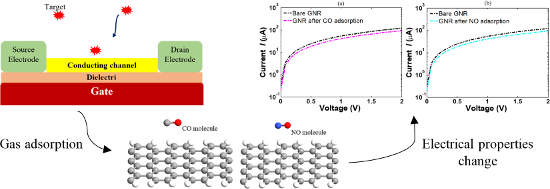
- and valence band can be introduced. The matrix element between neighbouring carbon atoms as upper diagonal or lower diagonal of the matrix was assumed to be equal to t, whereas other elements are assumed to be equal to zero [23][24]. In our model, the adsorption of gas molecules on a second atom (we
- are no electrons hopping from the valence band to the conduction band at the energy gap, as there are no energy states at the band gap. In addition to the DOS, we first need to calculate the carrier concentration and then we can calculate the carrier velocity. In order to calculate carrier
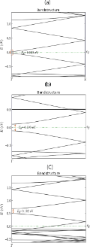
- of gas molecules can modulate the AGNR band structure and modify the energy band gap. Based on Figure 5b, the band gap increased after CO adsorption on the AGNR. The conduction band level increased to EC = 0.0952 eV above the Fermi level, and the valence band decreased to EV = −0.0975 eV below the




Hydrophilicity and carbon chain length effects on the gas sensing properties of chemoresistive, self-assembled monolayer carbon nanotube sensors
Beilstein J. Nanotechnol. 2019, 10, 565–577, doi:10.3762/bjnano.10.58
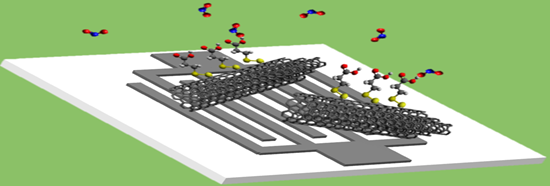
- it quite reactive with the sensor surface. Oxygen acts as an electron acceptor due to its lone pairs of valence electrons and can be adsorbed on the sensor surface, p-doping CNTs [39]. To correctly identify the response towards target species (i.e., nitrogen dioxide and ethanol), the oxygen


Mo-doped boron nitride monolayer as a promising single-atom electrocatalyst for CO2 conversion
Beilstein J. Nanotechnol. 2019, 10, 540–548, doi:10.3762/bjnano.10.55
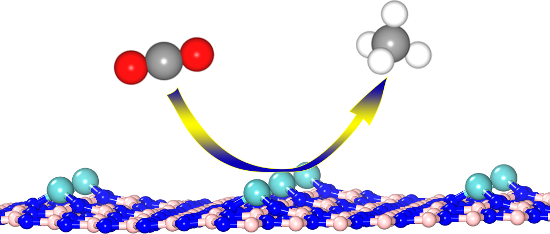
- of gases on BN nanomaterials [35][45][47]. The transition metal atoms were produced by density functional semi-core pseudopotential (DSPP), and the valence electronic structure is shown in Supporting Information File 1, Table S7, in which the core electrons are replaced by a single effective


Ceria/polymer nanocontainers for high-performance encapsulation of fluorophores
Beilstein J. Nanotechnol. 2019, 10, 522–530, doi:10.3762/bjnano.10.53
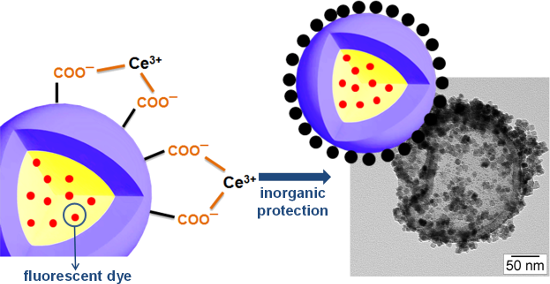
- excellent antioxidant properties, ideal for applications such as water-gas shift catalysis [40], combustion catalysis [41], oxygen ion conductors, and solid-oxide fuel cells [42]. Due to the valence and oxygen defect properties of cerium(IV) oxide, nanoparticles of this material are also used as efficient


A porous 3D-RGO@MWCNT hybrid material as Li–S battery cathode
Beilstein J. Nanotechnol. 2019, 10, 514–521, doi:10.3762/bjnano.10.52
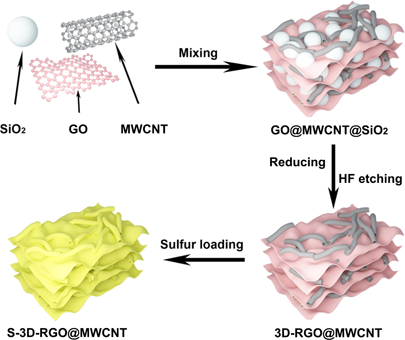
- (SmartLab, Rigaku Corporation) with Cu Ka radiation. X-ray photoelectron spectroscopy (XPS, Shimadzy Axis Ultra) was applied to investigate the chemical valence states and compositions of the sample. Scanning electron microscopy (SEM, Hitachi S4800) and high-resolution transmission electron microscopy



Reduced graphene oxide supported C3N4 nanoflakes and quantum dots as metal-free catalysts for visible light assisted CO2 reduction
Beilstein J. Nanotechnol. 2019, 10, 448–458, doi:10.3762/bjnano.10.44
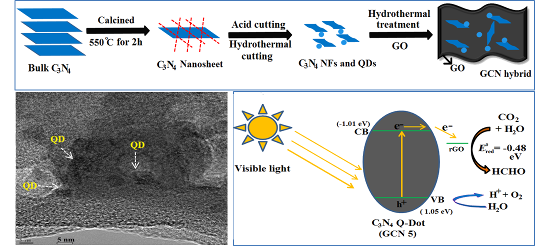
- conduction band (CB) and valence band (VB) edge positions, exhibit efficient charge separation, have a large surface area, and it must be cost effective. Considering the above factors, nontoxic metal-free catalysts, such as graphitic carbon nitride (g-C3N4) and reduced graphene oxide (rGO) have received wide
- by X-ray photoelectron spectroscopy (XPS) analysis, which is carried out to study the surface composition and the interactions and valence states of the elements present in the hybrid materials. The full XPS survey spectrum of the GCN-5 hybrid material reveals the presence of C, N and O, while no
- NFs and QDs are also calculated from UV–visible diffuse reflectance spectra (Supporting Information File 1, Figure S5), which are found to be 2.06, 2.15, 2.20, 2.22, 2.32 and 2.41 eV for the GCN-5, GCN-20, GCN-10, CN-5, CN-20 and CN-10 samples, respectively. The conduction and valence band potential





Integration of LaMnO3+δ films on platinized silicon substrates for resistive switching applications by PI-MOCVD
Beilstein J. Nanotechnol. 2019, 10, 389–398, doi:10.3762/bjnano.10.38
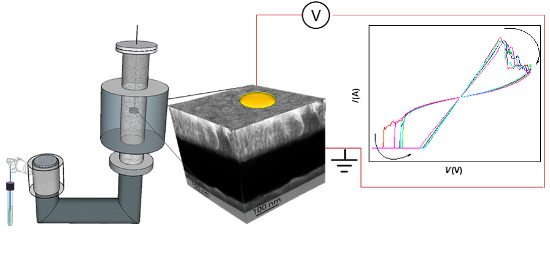
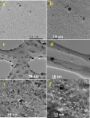
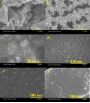
- -based devices fabricated using optimized growth strategies. Keywords: manganite; metal organic chemical vapour deposition (MOCVD); resistive switching; thin film; valence-change memory; Introduction Resistive switching (RS) denotes the phenomena occurring in capacitor-like heterostructures (metal
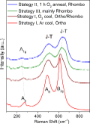
- films is expected to be compensated by a mixed valence state of the manganese cation (Mn3+/Mn4+). Particularly, RS in LMO has been reported to be larger for oxygen vacancy-rich films [6][7]. Depending on the oxygen content (δ), the LMO structure changes from orthorhombic to rhombohedral at high δ [8
- metallization memory chips, ions from the electrode (such as Cu or Ag) [18][19] migrate to the other electrode generating a filament across the memristive material. Another example is the case of valence-change memories, in which the nature of the contact varies depending on the difference between the work




Sub-wavelength waveguide properties of 1D and surface-functionalized SnO2 nanostructures of various morphologies
Beilstein J. Nanotechnol. 2019, 10, 379–388, doi:10.3762/bjnano.10.37
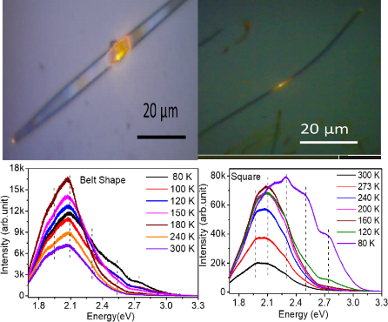
- 2.6 eV are assigned to band edge transitions. Earlier, it was shown from DFT calculations using an all-electron Gaussian approximation that formation of an acceptor state close to 1 eV above the valence band occurs due to the stable oxygen vacancies [31]. Thus, the above mentioned studies point out
- belt-shaped NWs. Visible luminescence in SnO2 NWs was observed and attributed to the transitions between shallow donor states to an acceptor level, which is nearly ≈1 eV above the valence band. FESEM images of the (a) square-shaped NWs grown at 950 °C, (b) cylindrical- shaped NWs grown at 1000 °C


Intuitive human interface to a scanning tunnelling microscope: observation of parity oscillations for a single atomic chain
Beilstein J. Nanotechnol. 2019, 10, 337–348, doi:10.3762/bjnano.10.33
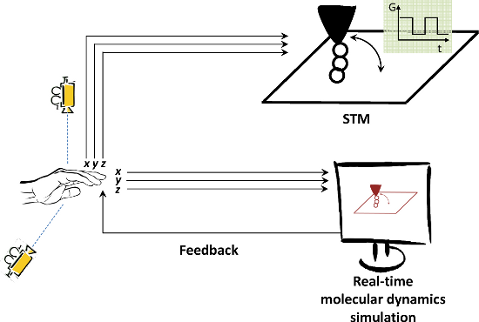
- valence electrons in metals [34]. It is possible to image the atomic configuration by functionalizing the STM tip by adsorbates (for example CO molecules [35] or other foreign adsorbates [36]) at the tip apex, and by quantum point contact microscopy [37]. To keep the surface clean we did not introduce




A Ni(OH)2 nanopetals network for high-performance supercapacitors synthesized by immersing Ni nanofoam in water
Beilstein J. Nanotechnol. 2019, 10, 281–293, doi:10.3762/bjnano.10.27
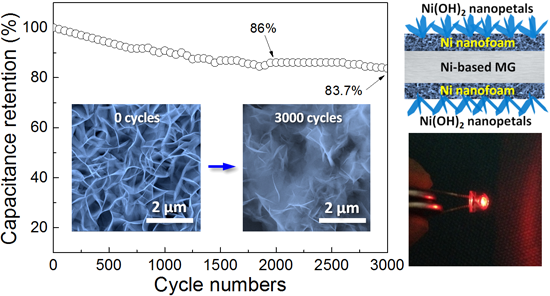
- between active materials and electrolyte, for which transition metal oxides/hydroxides with multiple valence are used as electrode materials [8][9]. EDLCs hold a high power density and long cycling stability, but their practical application is limited by the low energy density. In comparison, pseudo
- , Bruker D8) with Cu Kα radiation. Chemical composition and valence state of the products were studied using X-ray photoelectron spectroscopy (XPS, Thermo Fisher Scientific). The surface morphology of the samples was characterized using a scanning electron microscope (SEM, Nova nanoSEM 450) equipped with