Search results
Search for "XRD" in Full Text gives 586 result(s) in Beilstein Journal of Nanotechnology. Showing first 200.
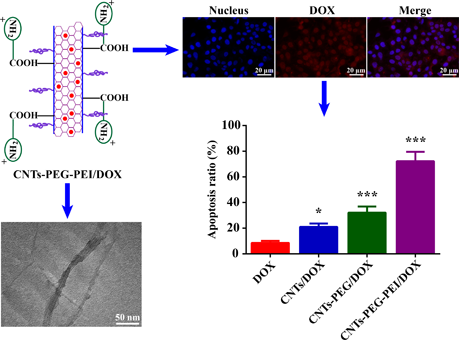
PEG/PEI-functionalized single-walled carbon nanotubes as delivery carriers for doxorubicin: synthesis, characterization, and in vitro evaluation
Beilstein J. Nanotechnol. 2020, 11, 1728–1741, doi:10.3762/bjnano.11.155
- ). Fourier-transform infrared (FTIR) spectra in the range from 500 to 4000 cm−1 were recorded with a FTIR spectrometer (Nicolet IS10). X-ray diffraction (XRD) analysis was conducted using a BRUKER D8 X-ray diffractometer in the 2θ range of 0–100° at a scanning rate of 5°·min−1. For atomic force microscopy
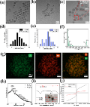
- the successful conjugation of amino groups onto the surface of CNTs-PEG-PEI. XRD results (Figure 4D) show diffraction peaks of different carbon nanomaterials at 26° and 42°. In comparison with the raw SWCNTs, the diffraction peaks of CNTs-COOH samples become notably sharper. Furthermore, the
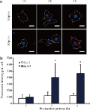
- different acid solutions: (B) H2SO4/H2O2, (C) HNO3, (D) H2SO4/HNO3, (E) CNTs-PEG and (F) CNTs-PEG-PEI. Characterization of different nanocarriers. (A, B) XPS spectra, (C) FTIR spectra, (D) XRD diffraction patterns (a: raw SWCNTs; b–d: CNTs-COOH synthesized using different acid solutions, b: H2SO4/H2O2, c




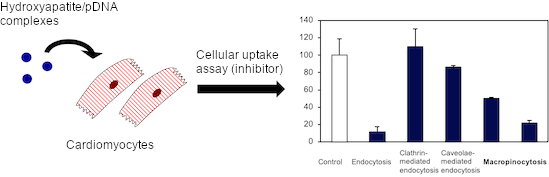
Cardiomyocyte uptake mechanism of a hydroxyapatite nanoparticle mediated gene delivery system
Beilstein J. Nanotechnol. 2020, 11, 1685–1692, doi:10.3762/bjnano.11.150
- HAp nanoparticles were prepared using the water-in-oil (W/O) emulsion method. The characterization of the prepared HAp nanoparticles was carried out using transmission electron microscopy (TEM), X-ray diffraction (XRD), and Fourier-transform infrared spectroscopy (FTIR). TEM provided insight into the
- morphology of the obtained product. As presented in Figure 1a, the nanometer-sized particles exhibited identical spherical-like morphology. The average particle diameter of the prepared HAp was 159 ± 47 nm (Figure 1b). The XRD pattern of the product is illustrated in Figure 1c. All the diffraction peaks of
- centrifuged and washed with distilled water and ethanol to remove oil and surfactant. The resulting particles were dispersed in distilled water. Physicochemical characteristics were examined using XRD (D8 Advance, Bruker), FTIR (FT/IR-4100, Jasco), and TEM (H-7100, Hitachi). The product was filtered using a


Piezoelectric sensor based on graphene-doped PVDF nanofibers for sign language translation
Beilstein J. Nanotechnol. 2020, 11, 1655–1662, doi:10.3762/bjnano.11.148
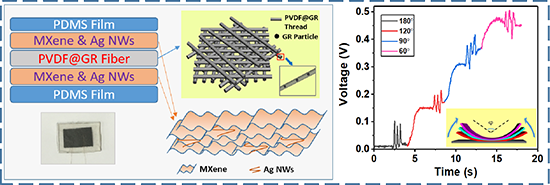
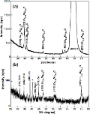
- , and 1.0 wt %. Figure 2b shows SEM images after doping with different concentrations. It can be found that all spinning solutions yield a uniform fiber film without GR agglomeration after electrospinning. Figure 2c shows the FTIR spectra of samples with different doping concentrations. Further, XRD was
- concentrations. (c) FTIR spectra of the PVDF fibers. (d) XRD patterns of the PVDF fibers. (e) Stress–strain curves of the PVDF fibers. (a) Schematic diagram of the PES under external pressure. (b) Output voltage as a function of the applied pressure for different doping concentrations. (c) Waveforms


Oxidation of Au/Ag films by oxygen plasma: phase separation and generation of nanoporosity
Beilstein J. Nanotechnol. 2020, 11, 1608–1614, doi:10.3762/bjnano.11.143
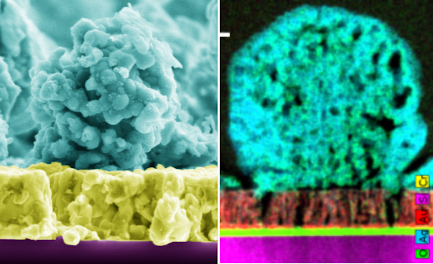
- formation of unique features, consisting of silver oxide nanoporous microspheres (Figure 1). Our observation was supported by various characterization techniques, including scanning electron microscopy (SEM), transmission electron microscopy (TEM) and X-ray diffraction spectroscopy (XRD). We conducted our
- nanoporosity was not limited to the surface of the microspheres. To investigate the crystalline structure of the phases formed during the oxidation process, XRD patterns were recorded as a function of the oxidation time (Figure 4). The XRD pattern of the as-grown Au/Ag film (i.e., zero minutes of oxidation
- , black line) matches the cubic Au/Ag phase. Even though the Au/Ag film consisted of 75 atom % Ag, no crystalline silver phase was detected. After three minutes of oxidation no significant changes were observed in the XRD pattern (Figure 4, red line). This is probably due to the fact that both the size


High-responsivity hybrid α-Ag2S/Si photodetector prepared by pulsed laser ablation in liquid
Beilstein J. Nanotechnol. 2020, 11, 1596–1607, doi:10.3762/bjnano.11.142
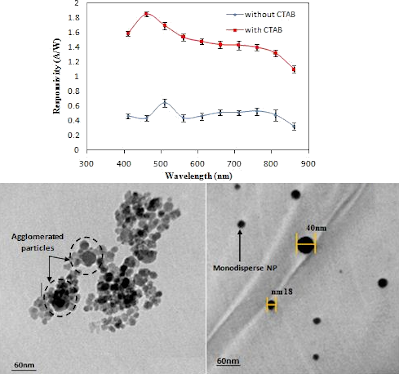
- ) mixed with cationic cetyltrimethylammonium bromide (CTAB) as surfactant. The effect of the CTAB surfactant on the structural, morphological, optical, and elemental composition of Ag2S NPs was evaluated using X-ray diffraction (XRD), transmission electron microscopy (TEM), scanning electron microscopy
- (SEM), energy-dispersive X-ray spectroscopy (EDX), and UV–vis spectroscopy. The optical absorption decreased and the optical energy gap of α-Ag2S increased from 1.5 to 2 eV after the CTAB surfactant was added to the Tu solution. XRD studies revealed that the synthesized Ag2S NPs were polycrystalline
- reference in one cuvette and the second cuvette was filled with thiourea solution and Ag2S nanoparticles. An X-ray diffractometer (XRD-6000, Shimadzu) was used to investigate the structural properties of Ag2S NPs deposited on the glass substrate. A Fourier-transform IR (FTIR) spectrophotometer (8400S




Cu2O nanoparticles for the degradation of methyl parathion
Beilstein J. Nanotechnol. 2020, 11, 1546–1555, doi:10.3762/bjnano.11.137
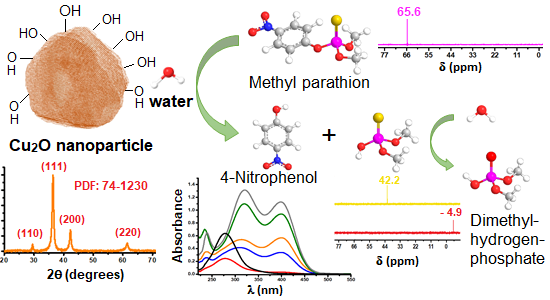
- different NPs sizes (16, 29 and 45 nm), determined with X-ray diffraction (XRD) and high-resolution transmission electron microscopy (HRTEM), were synthesized using a modified Benedict’s reagent. 1H nuclear magnetic resonance (NMR) results show that the hydrolytic degradation of MP leads to the formation of
- with a double-way optic fiber coupled to a PC. The powder X-ray diffraction (XRD) patterns were collected with a Bruker D2 Phaser diffractometer equipped with a conventional X-ray tube (Cu Kα radiation, 30 kV, 10 mA) and the LYNXEYE one-dimensional detector. A primary divergence slit module width of 1
- and a HSA of 50 eV pass energy. Results and Discussion Characterization of Cu2O NPs with powder XRD and HRTEM The structural and morphological characterization of Cu2O NPs was carried out using powder X-ray diffraction and high-resolution transmission electron microscopy. Copper(I) oxide is


Impact of fluorination on interface energetics and growth of pentacene on Ag(111)
Beilstein J. Nanotechnol. 2020, 11, 1361–1370, doi:10.3762/bjnano.11.120
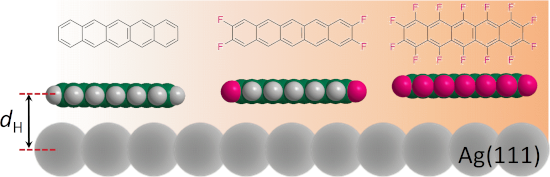
- , C 1s and F 1s core levels, full UPS survey spectra, XRD measurement and analysis of PFP on Ag(111) and a set of XSW measurements. Supporting Information File 158: Additional experimental data. Acknowledgements The authors thank the Diamond Light Source for access to beamline I09, and the staff, in


Structure and electrochemical performance of electrospun-ordered porous carbon/graphene composite nanofibers
Beilstein J. Nanotechnol. 2020, 11, 1280–1290, doi:10.3762/bjnano.11.112
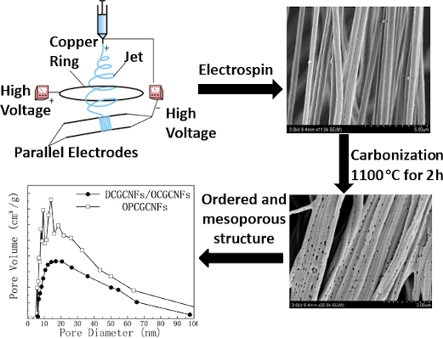
- (National Institute of Mental Health, USA). The Brunauer–Emmett–Teller (BET) specific surface area and porosity of the CCGNFs were determined by using a surface area analyzer (Micromeritics, ASAP 2020, USA) at 77 K, taking into consideration the N2 adsorption and desorption isotherms. X-ray diffraction (XRD
- porous structure on the surface of the CGCNFs, due to the decomposition of the PGCNFs and PAN coating during carbonization. FTIR and XRD spectra analysis The FTIR spectra were used to analyze whether there was any interaction between PAN and graphene. In the PAN spectrum, the absorption peaks at 1239
- , indicating that most of the CNFs were decomposed after carbonization, leaving behind only the carbon skeleton in the CGCNFs. Figure 3b shows PAN nanofibers, graphene, PGCNFs and CGCNFs crystalline structures obtained via XRD. According to the XRD results, the peak observed at 2θ = 17° can be designated as


Proximity effect in [Nb(1.5 nm)/Fe(x)]10/Nb(50 nm) superconductor/ferromagnet heterostructures
Beilstein J. Nanotechnol. 2020, 11, 1254–1263, doi:10.3762/bjnano.11.109
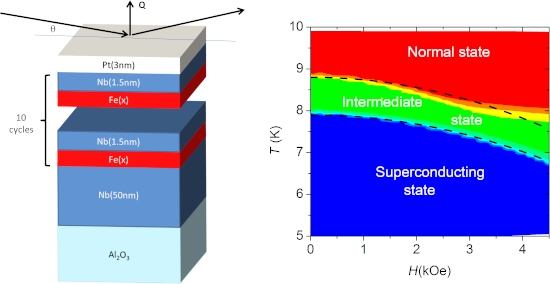
- show borders of the intermediate state. Main characteristics of the prepared samples. Here x is the thickness of the Fe layers, the column “XRD” gives the corresponding Miller indices of the peaks observed in the experiment, TNb and TSL are the temperatures of deposition of the thick Nb layer and the


![[Graphic 13]](/bjnano/content/inline/2190-4286-11-109-i17.svg?max-width=637&scale=1.18182) ) substrate, (b) the Pt cap layer, and the Nb buffer layer grown at...
) substrate, (b) the Pt cap layer, and the Nb buffer layer grown at...


![[Graphic 16]](/bjnano/content/inline/2190-4286-11-109-i20.svg?max-width=637&scale=1.18182) (T) for the samples s4 (black) and s3 (red) in the vicinity of the superconducting transition m...
(T) for the samples s4 (black) and s3 (red) in the vicinity of the superconducting transition m...
Gas sorption porosimetry for the evaluation of hard carbons as anodes for Li- and Na-ion batteries
Beilstein J. Nanotechnol. 2020, 11, 1217–1229, doi:10.3762/bjnano.11.106
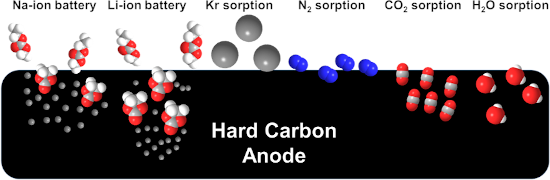
- carbonization (HT carbons), and two samples were obtained from carbonized resorcinol–formaldehyde resins (RF carbons). The electrochemical sodium storage characteristics of the RF carbons were previously reported [28][29]. Characterization of hard carbons The X-ray diffraction (XRD) patterns consistently point
- carbonized at 1000 or 1600 °C for 2 h in a stream of argon gas (1 L min−1). The carbon samples derived from RF gels (RF carbons) were labeled with the carbonization temperature, namely RF-1000 and RF-1600. Characterization Powder X-ray diffraction (XRD) measurements and Raman spectroscopy were employed to


High permittivity, breakdown strength, and energy storage density of polythiophene-encapsulated BaTiO3 nanoparticles
Beilstein J. Nanotechnol. 2020, 11, 1190–1197, doi:10.3762/bjnano.11.103
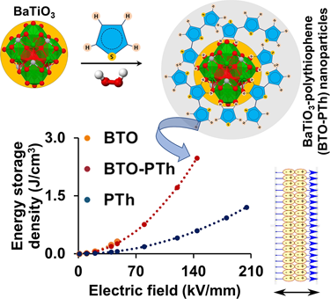
- °, which corresponds to the intermolecular π–π stacking structure and amorphous packing of the polymer [19]. The XRD pattern of hydrothermally prepared BTO nanoparticles shows good agreement with the tetragonal perovskite structure (JCPDS No. 05-0626) with the P4mm space group [20][21]. The major
- common impurities such as BaCO3 [22]. XRD pattern of core–shell BTO-PTh nanoparticles shows the characteristic diffractions of tetragonal BTO along with the additional peaks corresponding to certain impurities or by-products formed during the oxidative polymerization of Th. Albeit the crystallinity of
- + ions from BTO nanoparticles during the polymerization reaction [24], which can react with SO42− ions in the solution to form insoluble BaSO4. Nevertheless, XRD patterns of BTO and BTO-PTh nanoparticles confirm the dominant tetragonal perovskite structure of the BTO lattice. Figure 4a shows a SEM image




Gram-scale synthesis of splat-shaped Ag–TiO2 nanocomposites for enhanced antimicrobial properties
Beilstein J. Nanotechnol. 2020, 11, 1119–1125, doi:10.3762/bjnano.11.96

- obtain homogeneous Ag–TiO2 nanocomposites with a high yield. The prepared compounds were characterized by XRD, SEM, EDS, FTIR and UV–vis spectrophotometry. The cell viability upon exposure to the splat-shaped Ag–TiO2 nanocomposites was evaluated by using the Cell Counting Kit-8 assay. The antimicrobial
- with ethanol and centrifuged for further use. Pure TiO2 NPs were also prepared by using the above method without the addition of Ag as a precursor. Sample characterizations The crystal structure of the samples was investigated through X-ray diffraction (XRD, ARL X'TRA, Thermo Techno, USA) using a
- solutions, dried and applied on the culture plates. Finally, the plates were incubated at 37 °C for 24 h and the zone of inhibition was measured around the disc to estimate the antimicrobial activity [22]. Results and Discussion The XRD spectra were analyzed to verify the crystal structure and the phase


Plant growth regulation by seed coating with films of alginate and auxin-intercalated layered double hydroxides
Beilstein J. Nanotechnol. 2020, 11, 1082–1091, doi:10.3762/bjnano.11.93
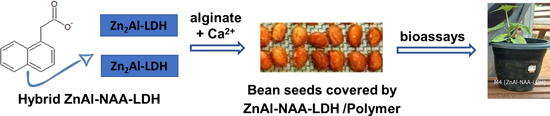
- seeds to evaluate germination rate and germination speed index (GSI), and biometric analyses with the values of root area, root fresh matter, and shoot length of the plants. Results and Discussion Characterization of ZnAl-NAA-LDH The powder X-ray diffraction (XRD) patterns of neat NAA and ZnAl-NAA-LDH
- software by image) [33]. Root fresh matter determination was performed with the aid of a high-precision analytical scale (Shimadzu AUY 220). The length of the shoot of the plants was measured directly with a high-grade ruler (1:1.000). Characterizations techniques Powder X-ray diffraction patterns (XRD
- ) were recorded in a Shimadzu X-ray Diffractometer XRD-6000 mode using Cu Kα1 radiation (λ = 1.5406 Å), 40 kV, 40 mA, sweep range 2θ from 2° to 70° with a scan step of 0.02°/s. Electronic absorption spectra were acquired in an equipment Thermo Scientific model Evolution 300. The morphology of the LDH



Excitonic and electronic transitions in Me–Sb2Se3 structures
Beilstein J. Nanotechnol. 2020, 11, 1045–1053, doi:10.3762/bjnano.11.89
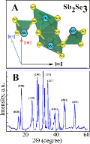
- a 1:2 aperture and 7 Å/mm linear dispersion. Results and Discussion The quality and composition of the single crystals were verified by optical and X-ray diffraction (XRD) analysis. The position of the atoms relative to the crystal lattice axes and the crystal XRD pattern is shown in Figure 1. A
- typical Sb2Se3 diffractogram is shown in Figure 1B. This result indicates the complete miscibility of the components during the synthesis process. The Sb2Se3 lattice parameters were determined based on the XRD analysis. The experimental interplanar distances dhkl, obtained from the X-ray data for Sb2Se3
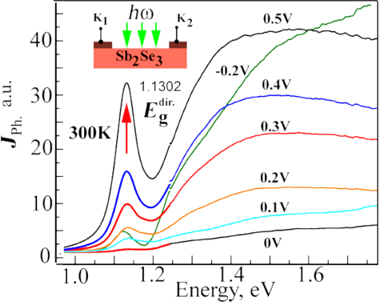
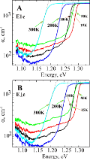
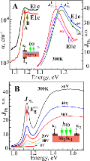
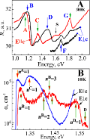
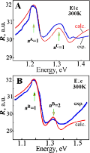
- investigated. The features associated with the excitonic states were shown in the measured photoconductivity spectra. (A) Positions of the Sb and Se atoms in the Sb2Se3 crystals. (B) The Sb2Se3 crystalline XRD pattern. The absorption spectra of the Sb2Se3 crystals, with thickness d = 113 µm, measured at


Microwave-induced electric discharges on metal particles for the synthesis of inorganic nanomaterials under solvent-free conditions
Beilstein J. Nanotechnol. 2020, 11, 1019–1025, doi:10.3762/bjnano.11.86
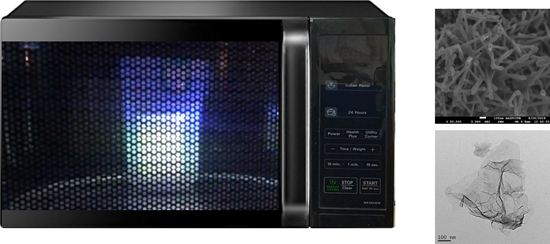
- treatment is essential before using metal particles in further microwave arc experiments. All metal powders were treated with 0.5 M nitric acid under sonication for 10 min to create rough surfaces. In this process, copper partially gets oxidized to Cu2O. The X-ray diffraction (XRD) patterns show reflections
- copper. Graphitic carbon nitride (g-C3N4) or graphite powder (commercially available) are used as carbon source. g-C3N4 is synthesized and characterized according to [18]. X-ray diffraction (XRD) and X-ray photoelectron spectroscopy (XPS) confirms the formation of g-C3N4 (Figure S1 in Supporting
- with either graphite or graphitic carbon nitride (g-C3N4) yields carbon-coated or nitrogen-doped carbon-coated metallic nanoparticles. When these reactions are conducted in a Teflon reactor, the products are further functionalized with fluorine. Figure 3a shows XRD patterns of Cu and Ni nanoparticles


Gas-sensing features of nanostructured tellurium thin films
Beilstein J. Nanotechnol. 2020, 11, 1010–1018, doi:10.3762/bjnano.11.85
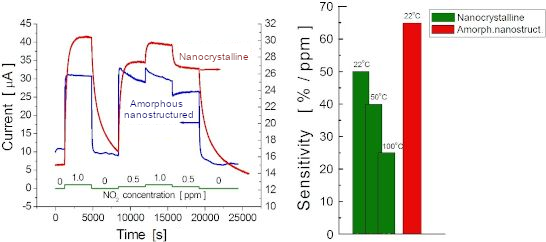
- one another. No Te crystallites were observed in this case. The structural phase state of the grown films was adequately confirmed by X-ray diffraction (XRD). Figure 2 shows the XRD patterns of Te films grown on either Pyrex glass (Figure 2A) or nanostructured Al2O3 substrates (Figure 2B). According
- to Figure 2A, the XRD pattern of films grown on Pyrex glass substrates reveals a highly crystalline structure with a predominant Te hexagonal phase. The positions of the most intense peaks matched the reference values: from right to left, the first peak occurs due to the reflection from the (100
- predominant growth orientation of the nanocrystals. As a counter example, the XRD pattern of a Te film grown on Al2O3 substrates with a higher deposition rate ≈30 nm/s (Figure 2B, adapted from [27]) only shows two weak Te peaks (ASTM, 4-554). These type of films are considered amorphous. It should also be


Uniform Fe3O4/Gd2O3-DHCA nanocubes for dual-mode magnetic resonance imaging
Beilstein J. Nanotechnol. 2020, 11, 1000–1009, doi:10.3762/bjnano.11.84
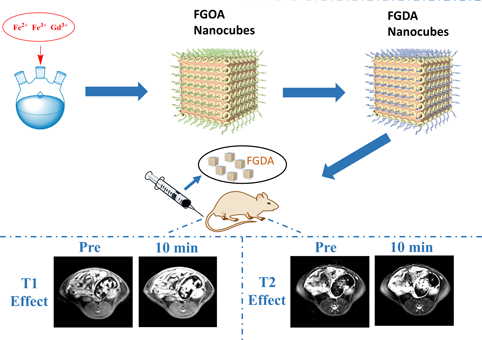
- planes in Fe3O4 [29]. In order to further analyze the FGDA nanocube composition, XRD analysis was performed. According to Figure 2h, the major diffraction peaks were consistent with the diffraction peaks of pure Fe3O4 and Gd2O3 [23][30], confirming that the FGDA nanocubes were constituted by uniformly
- analyze the distribution of the elements within the samples. The samples were ultrasonically homogenized for 30 minutes and an 8 μL aliquot was collected in a copper mesh and kept at 55 °C for 2 h. After drying, the samples were placed in the HRTEM for imaging. X-ray diffraction (XRD, UltimalV, Japan; Cu
- EDS spectrum shows the main elements that constitute the FGDA nanocubes. (g) The EDS mapping shows that Gd (green, left panel) and Fe (red, middle) are homogeneously distributed throughout the nanocubes (overlay, right panel). (h) The XRD pattern of FGDA nanocubes shows that the spectrum peaks



Electrochemical nanostructuring of (111) oriented GaAs crystals: from porous structures to nanowires
Beilstein J. Nanotechnol. 2020, 11, 966–975, doi:10.3762/bjnano.11.81
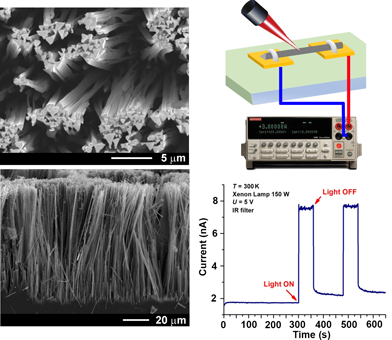
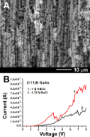
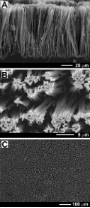
- passivation during anodization of the huge internal surface of the porous sample [18]. The preservation of the quality of the GaAs compound after anodization is also confirmed by the results of XRD analysis (Figure 6). The high quality of the material produced by anodization is indicated by narrow reflexes
- with a full width at half maximum (FWHM) of about 0.08°. The predominance of (111) and (333) reflexes in the XRD pattern indicates also to the preservation of the initial (111)B crystallographic orientation of the sample. To demonstrate the applicability of the nanowires for device fabrication, a
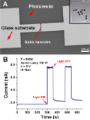
- bulk (curve 1) and anodized (curve 2) GaAs samples measured at a temperature of 10 K. XRD pattern of the anodized GaAs(111)B sample. (A) Optical microscopy image of the opened regions in the photoresist on the glass substrate for deposition of the metal contacts on the selected GaAs nanowire. The inset





Atomic layer deposition for efficient oxygen evolution reaction at Pt/Ir catalyst layers
Beilstein J. Nanotechnol. 2020, 11, 952–959, doi:10.3762/bjnano.11.79
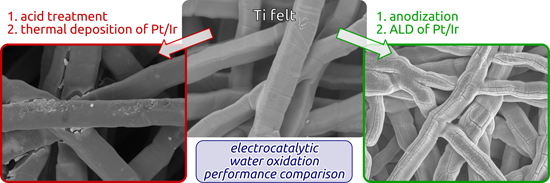
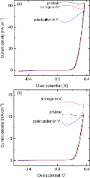
- particular, we have determined particle sizes by transmission electron microscopy (TEM), investigated the homogeneously mixed nature of the Pt/Ir catalyst by X-ray diffraction (XRD), selected-area electron diffraction (SAED), and X-ray photoelectron spectroscopy (XPS). We have also examined various ALD


Band tail state related photoluminescence and photoresponse of ZnMgO solid solution nanostructured films
Beilstein J. Nanotechnol. 2020, 11, 899–910, doi:10.3762/bjnano.11.75
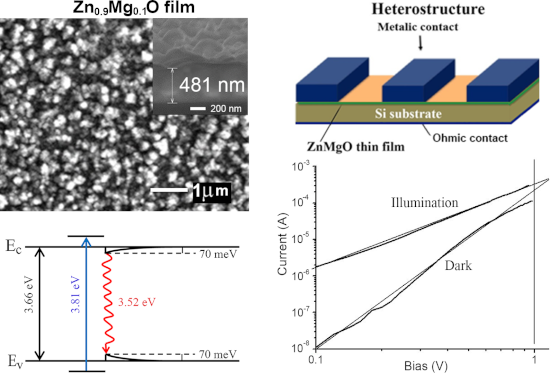
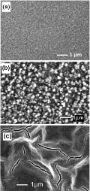
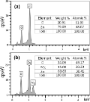
- nanoparticles embedded into the ZnMgO matrix are useful for fast electron transport and high charge balance in quantum dot light emitting diodes [22]. The multiphase composition of films prepared by spin coating and annealed at temperatures lower that 450 °C was revealed by X-ray diffraction (XRD) analysis. As
- treatment at lower temperatures is not enough for producing single phase films, ZnO nanoparticles being embedded into the ZnMgO matrix, as deduced from photoluminescence spectra and XRD analysis. Nevertheless, such films could also find specific applications, for instance in quantum dot light emitting
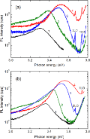
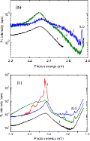
- ), annealed at 400 °C and measured at a) 300 K and b) 20 K. For comparison, the spectrum of a bulk ZnO single crystal is shown by curve (4). a) XRD pattern of a Zn0.8Mg0.2O film deposited by spin coating on a Si substrate and annealed at 500 °C. b) XRD pattern of a Zn0.8Mg0.2O film deposited by spin coating

Templating effect of single-layer graphene supported by an insulating substrate on the molecular orientation of lead phthalocyanine
Beilstein J. Nanotechnol. 2020, 11, 814–820, doi:10.3762/bjnano.11.66
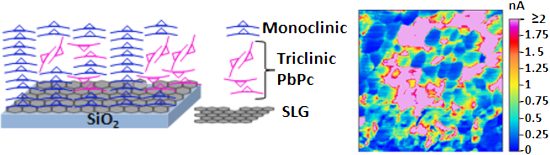
- ) reflection is measured at an azimuthal angle (Figure 3c). The 2D-XRD also shows the presence of a peak at 0.49 Å−1 along the qz direction, which may be assigned to the (200) reflection of the monoclinic phase or the (001) reflection of the triclinic phase, occurring at the same positions with d = 12.82 Å


Epitaxial growth and superconducting properties of thin-film PdFe/VN and VN/PdFe bilayers on MgO(001) substrates
Beilstein J. Nanotechnol. 2020, 11, 807–813, doi:10.3762/bjnano.11.65
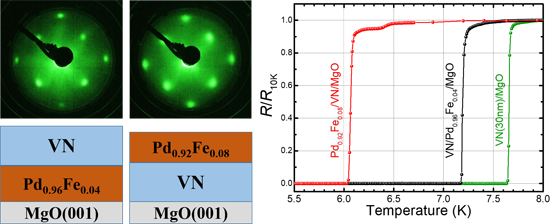
- , VN and Pd: aMgO = 421.2 pm, aVN = 413.7 pm [35] and aPd = 389.1 pm. Thus, the lattice mismatch between MgO and VN is only about 1.7%, and between Pd and VN it is as small as 5.95%. The in situ LEED analysis was corroborated with ex situ X-ray diffraction (XRD, BRUKER D8, Germany) measurements using
- Cu Kα (λ = 1.5418 Å) radiation in the Bragg–Brentano geometry with a scanning rate of 0.002°/s in the 2θ range from 17° to 82° and a step width of 0.0153°. Room-temperature XRD patterns of the pristine MgO(001) substrate, the VN thin film on MgO, Pd0.96Fe0.04 on MgO and the Pd0.96Fe0.04/VN
- ) film can be easily identified. The significant peak broadening of the diffraction maxima of VN and Pd0.96Fe0.04 is primarily due to small coherent scattering range τ along the normal to the film plane (Scherrer broadening); XRD data with accounting for the instrument function [33] yields estimates of τ


Structural optical and electrical properties of a transparent conductive ITO/Al–Ag/ITO multilayer contact
Beilstein J. Nanotechnol. 2020, 11, 695–702, doi:10.3762/bjnano.11.57
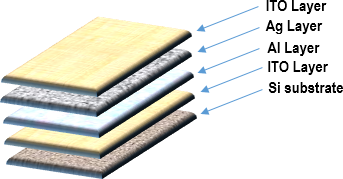
- –Ag/ITO) are examined. Moreover, annealing was carried out at 400 °C with an ITO/Al–Ag/ITO (IAAI) multilayer film and a pure ITO film for comparison. Results and Discussion Figure 1 shows the X-ray diffraction (XRD) patterns for as-deposited and annealed IAAI multilayer films. The as-deposited film
- contact measurements at room temperature before Hall mobility and carrier concentration measurements. XRD spectra of as-deposited and annealed IAAI films. EDXS spectra of (a) the as-deposited IAAI film and (b) the annealed IAAI film. AFM 3D images of (a) the as-deposited IAAI film, (b) the annealed IAAI


Exfoliation in a low boiling point solvent and electrochemical applications of MoO3
Beilstein J. Nanotechnol. 2020, 11, 662–670, doi:10.3762/bjnano.11.52
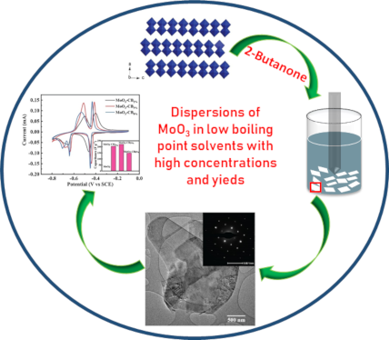
- the MoO3 layers were recorded using a 532 nm excitation laser. X-ray diffractograms (XRD; Rigaku Smart lab) of the bulk and exfoliated MoO3 were obtained using a Cu Kα (1.54 Å) X-ray source. The surface potential of MoO3 dispersions was determined by zeta potential measurements using a Malvern
- retention of the orthorhombic phase of exfoliated MoO3 nanosheets are evident from XRD (Figure S4, Supporting Information File 1). The HRTEM micrograph in Figure 2b shows a d-spacing of 0.38 nm corresponding to the (110) planes of orthorhombic MoO3 (indexed with JCPDS file No. 05-0506). The AFM micrograph

Preparation, characterization and photocatalytic performance of heterostructured CuO–ZnO-loaded composite nanofiber membranes
Beilstein J. Nanotechnol. 2020, 11, 631–650, doi:10.3762/bjnano.11.50
- -transform infrared spectroscopy (FTIR, Nicolet5700, Thermo Nicolet Company, Waltham, MA, USA), carrying out 32 scans within the wavenumber range of 400–4000 cm−1 with a resolution of 4 cm−1. X-ray diffraction (XRD) analyses were carried out using a Philips X’Pert-Pro MPD (PANalytical, Almelo & Eindhoven
- studies. FTIR and XRD analysis: FTIR was used to characterize the CNFMs with different [Cu(Ac)2/Zn(Ac)2]/[PVDF/PAN] weight ratios (Figure 7). The peaks at 879 cm−1 correspond to the asymmetric stretching vibration of –CF2– in PVDF. The peaks at 1070 and 1276 cm−1 represent the β-phase of PVDF. There was
- influence of the [Cu(Ac)2/Zn(Ac)2]/[PVDF/PAN] weight ratio on the crystallinity of the CNFMs, XRD analyses were performed and the XRD patterns are shown in Figure 8 and Figure 9. Pure PVDF/PAN CNFMs show the characteristic diffraction peaks at 17° and 21° (Figure 8a). The pure Cu(Ac)2 and Zn(Ac)2 powders